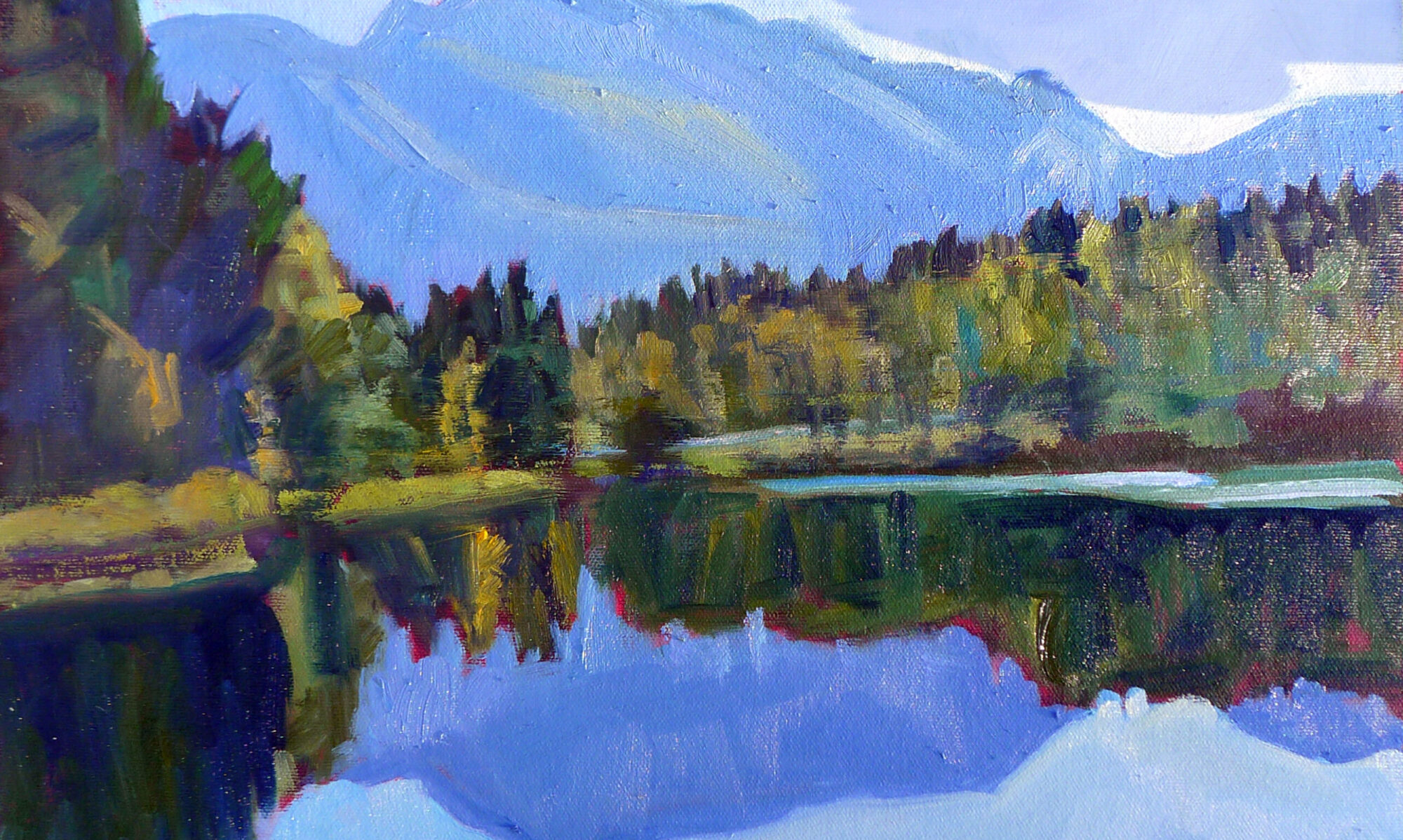
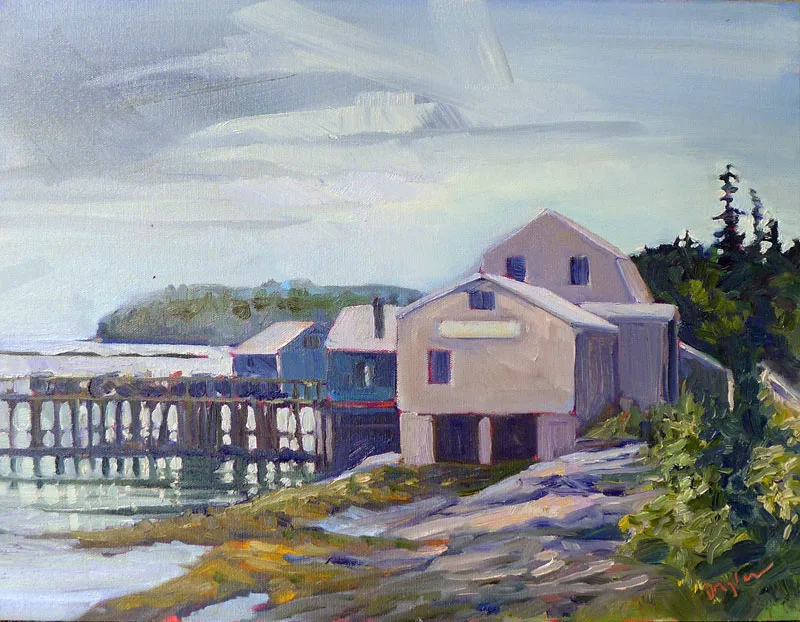
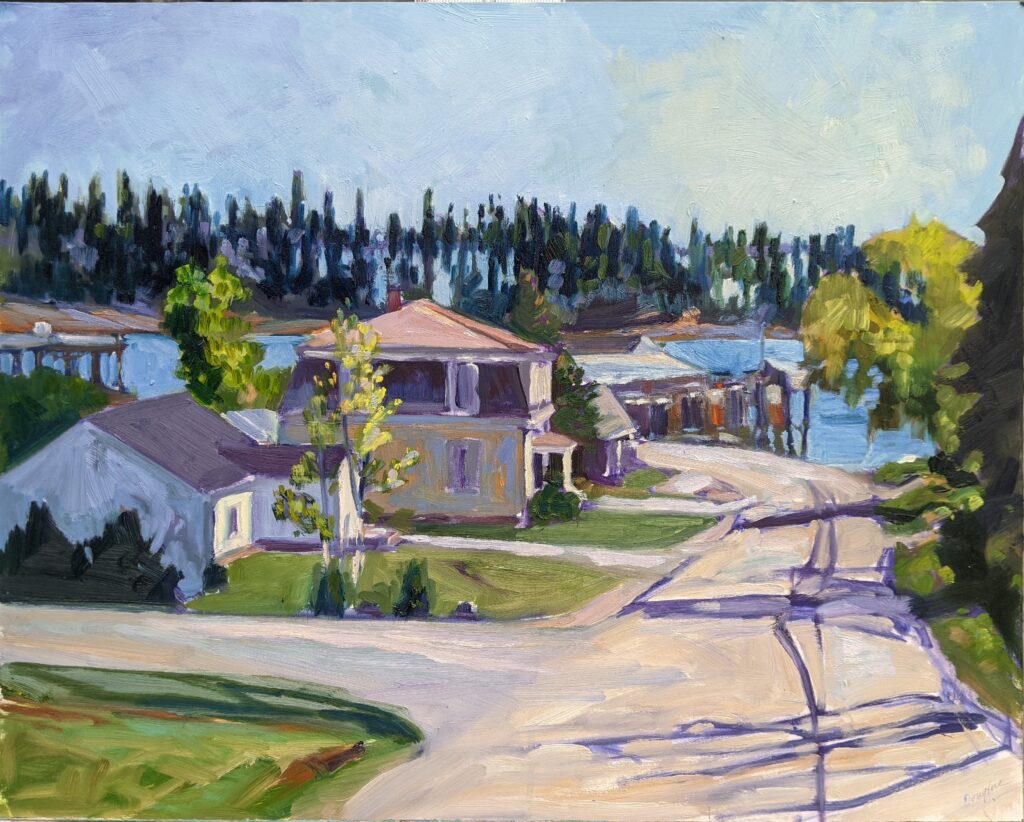
When possible, I like to take my workshop students to see Colin Page. Not only is he a gifted painter, he’s very articulate about process and equally generous with his time.
He was once speaking to a large group and someone asked him, “how do you decide which color to start with?”
“I start with the easiest,” he answered. I cracked up, which was both rude and disruptive. (Don’t worry; I’ve already apologized.) It took me a year, but I finally realized what he was saying. By starting with the easiest (i.e. most obvious) color and building color harmonies around it, he ends up with coherent color in his paintings.

Stop being reactive
Scientists estimate that the human eye-brain combination can distinguish about a million different colors. If you doubt that, just look around the room you’re sitting in. As I write this, there’s the color in my wallpaper, which is lit differently on each wall. There is light streaming in through my south window, but the same blinds appear very different in each of the east-facing windows. There are multicolored books and papers, and all the different shades in the folds of the laundry on my dresser. There are variations in my dog’s coat, my quilt, the wooden furniture and the painted floor… and on and on. It’s very easy to get bogged down in that mass of color. Nature offers infinite color information; our job is to edit.
What colors are we looking at?
Unless we’re doing art, most of us don’t spend a lot of time thinking about the colors we see. We track a dominant color environment, a few supporting color families and perhaps a handful of accidental color notes (accents). If we’re interested in making paintings that replicate human perception, we should ruthlessly simplify nature’s color complexity into something coherent.
That starts with identifying the fundamental color structure. Is our painting about warm light and cool shadow? Dusty desert neutrals? Dim light and suppressed chroma? High-key, bouncing light? We should answer that before we pick up our brushes, because everything is subordinate to that color structure. I can (and do) teach about color harmonies, but the specifics matter less than understanding why they’re important.
One partner (color) must lead in this dance; supporting colors should then harmonize with it. Then there are accent notes, or accidental colors. These are brief moments that energize the whole composition. Remember, if everything is an accent, nothing is. If everything is too rigidly controlled, your painting will be a yawn.
Value structure is a critical part of color strategy. Yes, you can put cool notes in warm highlights, as long as they’re done judiciously and don’t overrun the structure. Likewise, there can be warm notes in cool shadows, with the same restriction. But what is sacrosanct is the value structure itself.
Color strategy makes for more efficient painting
Thinking out your color strategy in advance will save you lots of flailing around. Plein air painters in particular don’t have the luxury of endless correction. If you already know your palette relationships, you can mix decisively.
Muddy color is almost always caused by dithering. When you don’t know where you’re going, you keep adjusting. Eventually everything averages into a grey-brown dreariness.
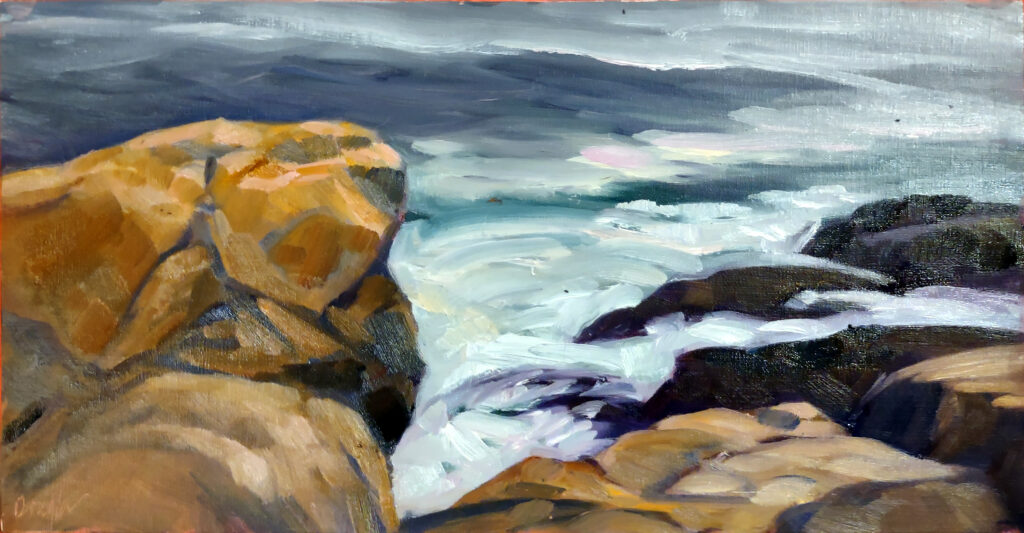
Practical hints
Before you start your next painting, you should:
Know what color you’re going to lead with;
Know what color harmony you’re going to use to support that color;
Understand the color temperature of the light and the shadow.
My Sedona workshop, Canyon Color for the Painter, will focus on mastering color relationships. They’re so easy to see in the clear light of the southwest, but you can take those lessons anywhere. I’m really looking forward to seeing you there!
Registration is now open for workshops in 2026! Reserve your spot:
- Sea & Sky | Acadia National Park, ME, August 2–7, 2026
- Find your Authentic Voice in Plein Air | Berkshires, MA, August 10-14, 2026
- New! Color Clinic 2026 | Rockport, ME, October 3-4, 2026
- New! Composition Week 2026 | Rockport, ME, October 5-9, 2026
Can’t commit to a full workshop? Work online at your own pace:
Great article! Thanks for sharing this advice!
No problem!