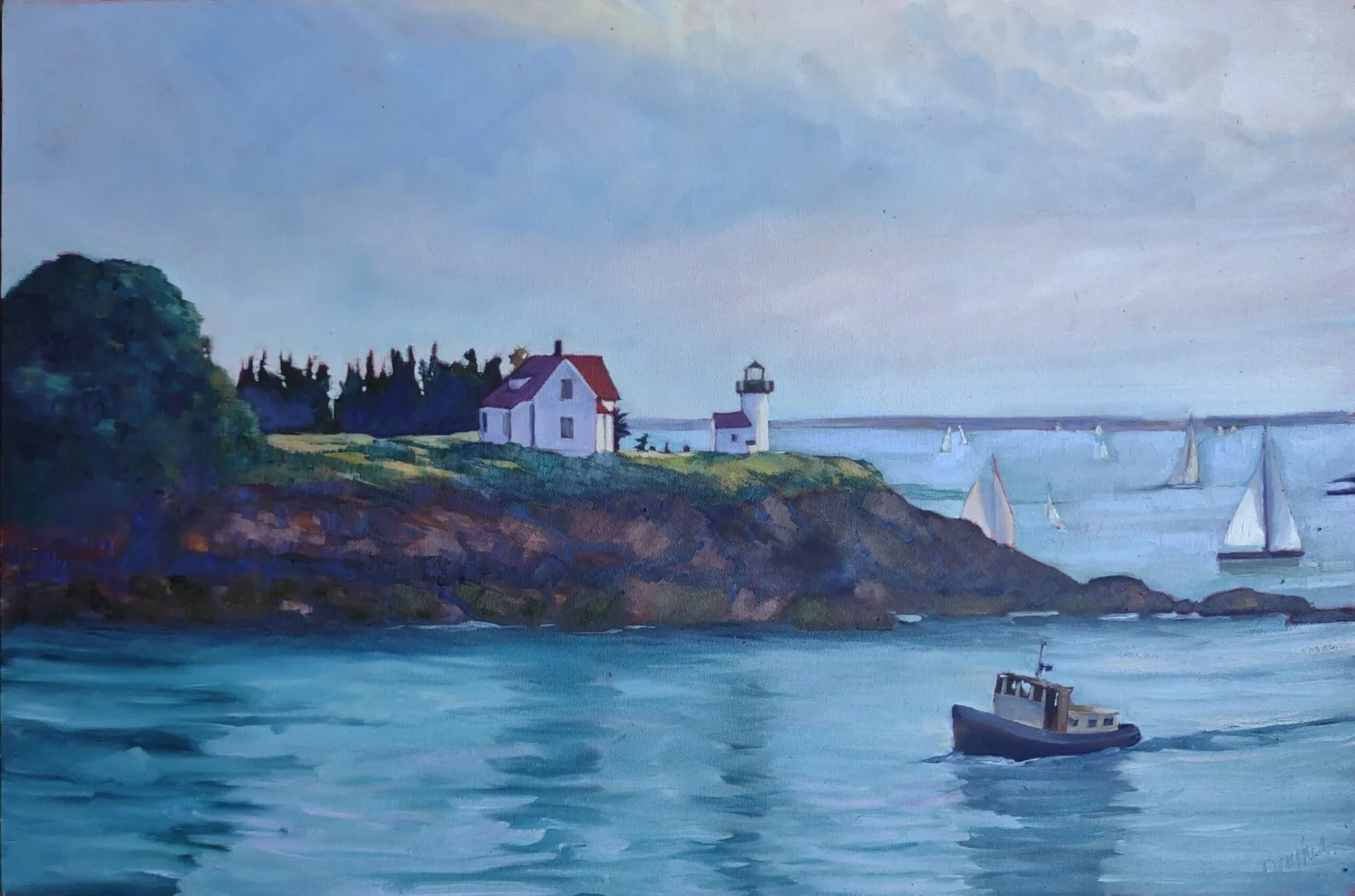
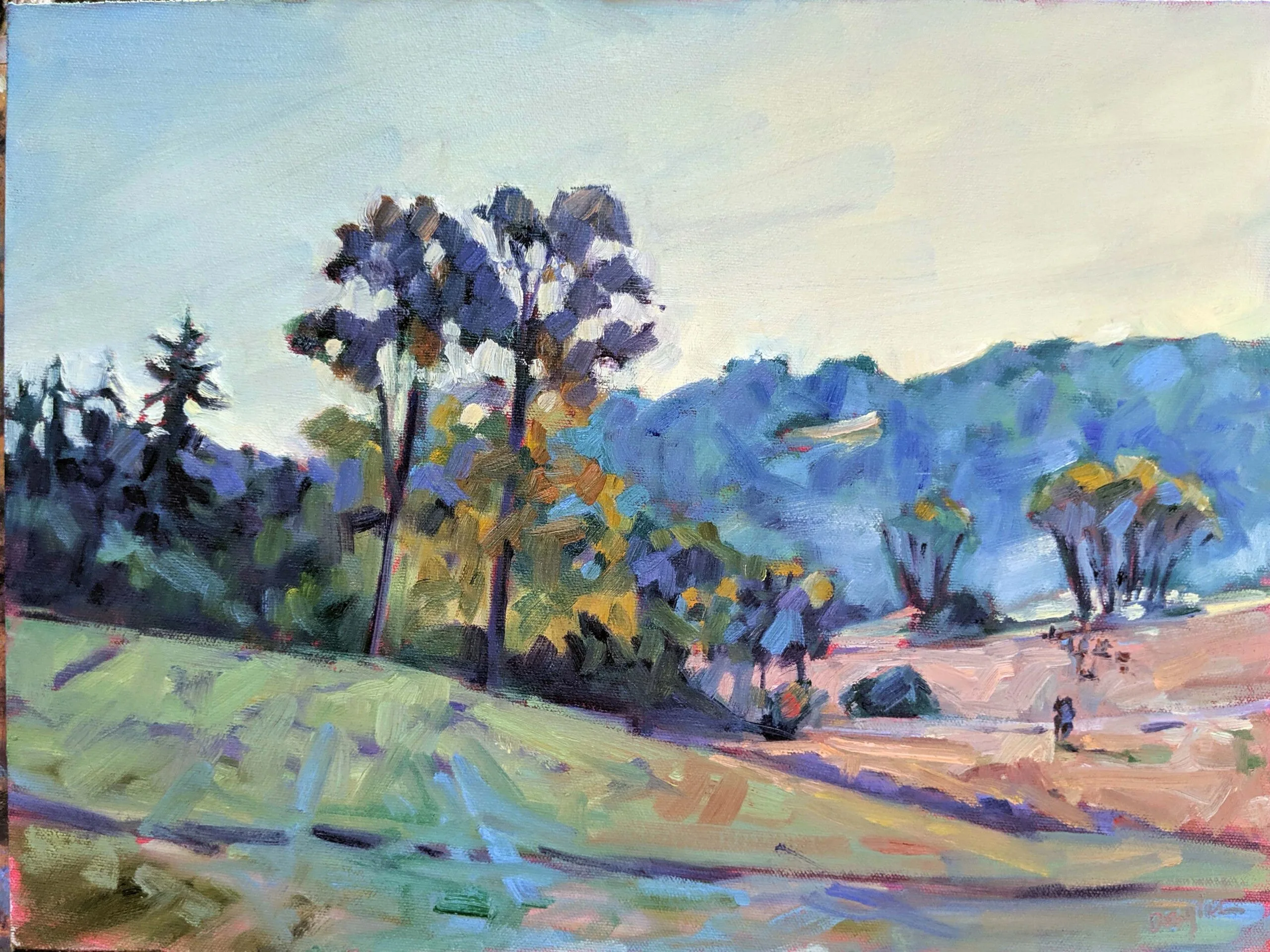
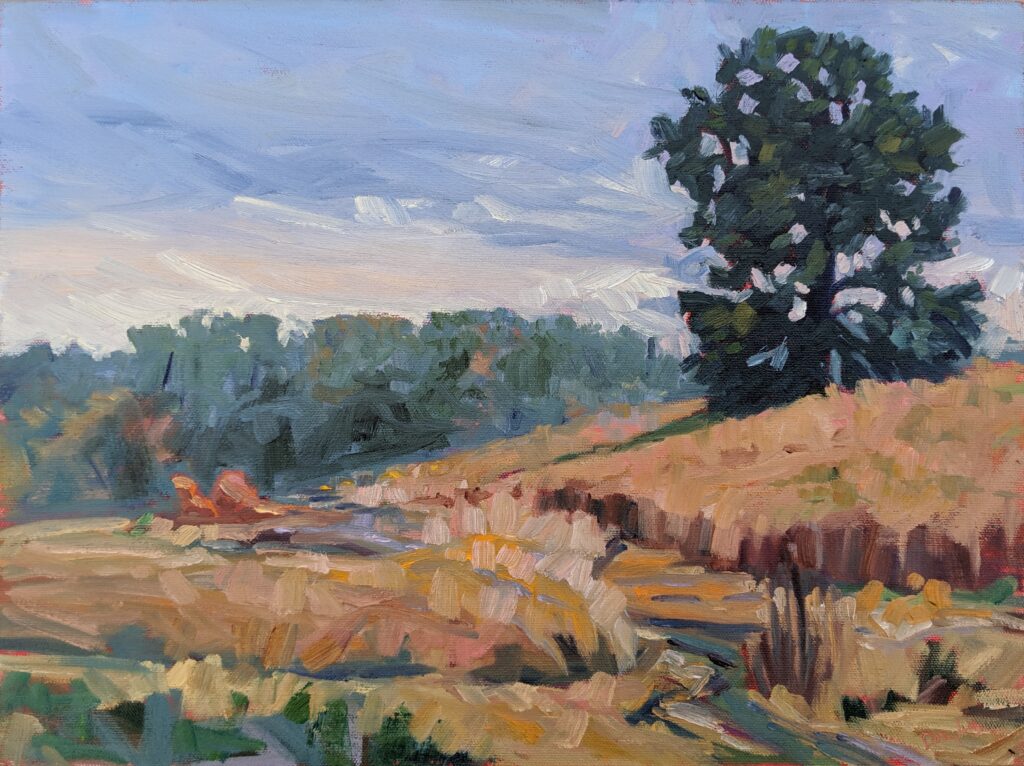
When I’m bored or stressed, I doodle a human eye. I’ve been doing this since I was a little girl, and my drawing has (naturally) gotten better. Still, I’m not really drawing an eye, but my idea of an eye.
This is fine when doodling, but not so good when painting from life. There has been a red boat in Rockport harbor for years. It used to be Becca & Meagan, but in 2017 it was replaced by Hemingway. Over several weeks, I corrected Ann when she drew it. Finally, exasperated, she pointed out to me that I was wrong. I had looked at Becca & Meagan for so long that I was no longer seeing what was there.
Most trees are several times as tall as their canopy is wide. Proportional to their canopy, their trunks are mere slivers. Yet painting students often shorten trees and broaden their trunks. This is because we’re anthropocentric. We perceive their trunks as up close, their canopies as far away. Our tree-shaped idea is shaped by our experience and perception.

Drawing based on experience and assumptions feels fluent. These are well-trodden pathways in the brain. Stepping back, however, we realize that our drawing falls short of reality.
(For the record, I’m all for drawing from the mind’s eye outward, but that’s a different discipline, and it requires the best drawing chops of all.)
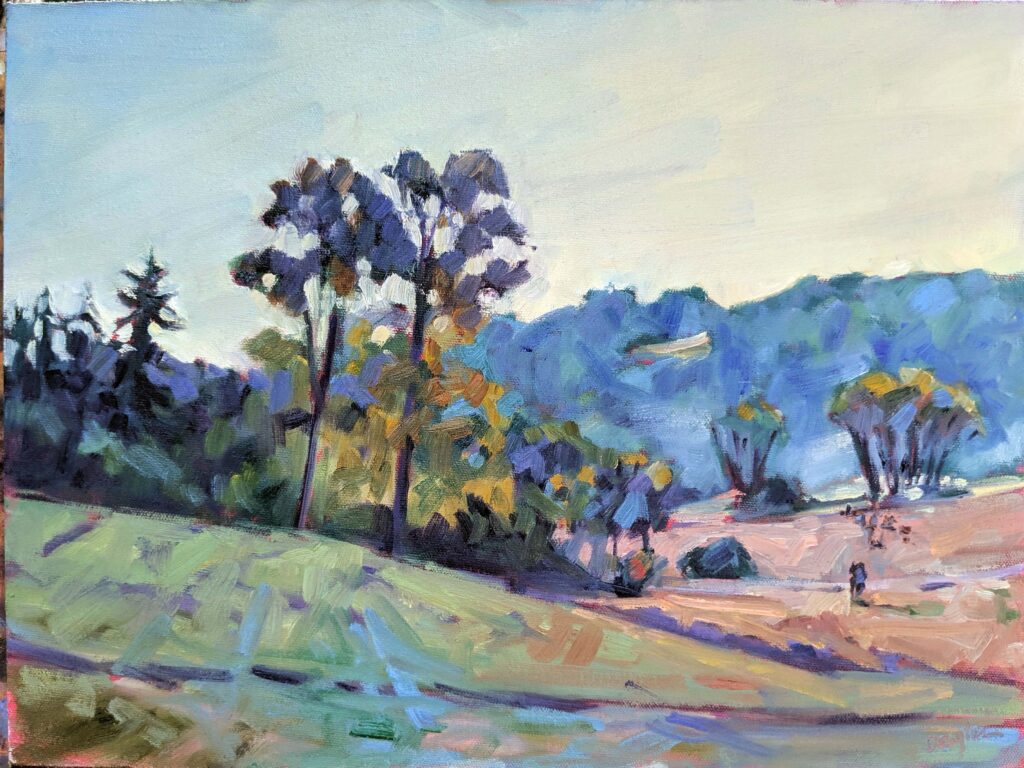
Retraining your eyes is a lifelong practice
Our everyday vision edits aggressively, both for efficiency and sanity. Any activity that requires fast reflexes would otherwise be impossible. Our brains quickly name things and move on to deal with them.
Painterly seeing, on the other hand, must be the exact opposite of this. The brain has to be tricked into slowing down. It must replace instant recognition with relationships: light against shadow, warm against cool, hard edges dissolving into soft ones, shapes locking together like pieces of a puzzle. When we don’t do this, we default to clichés: green leaves, brown rocks, blue skies.
As my confession above tells you, even experienced painters get visually lazy. We rely on habits that once served us well but now quietly flatten our work. The cure is not more paint, better brushes or a new medium. The cure is learning and relearning how to actually see.
Painting improves fastest when seeing improves first. Brushwork follows perception. Color follows value. Confidence follows clarity. When painters struggle, it’s rarely because they can’t paint, because that’s actually the easy part. It’s because they aren’t seeing what’s there.
How to See Like a Painter, my Zoom class starting February 23, is designed to interrupt symbolic thinking and rebuild visual awareness from the ground up. We focus on how painters analyze scenes, simplify complexity and organize chaos into clear, compelling compositions.
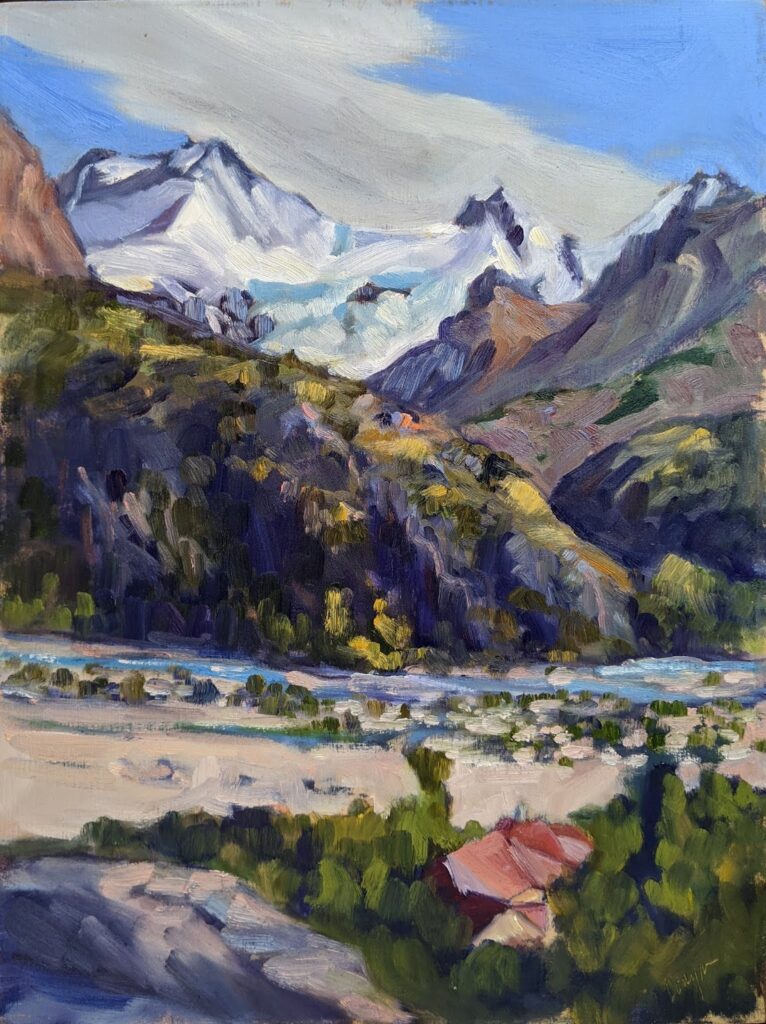
This isn’t about copying reality or painting tighter. It’s about painting truer to the experience of light and spatial relationships. If you’ve ever said, “It looked better in real life,” this class is for you.
Whether you work in oil, watercolor, acrylic or pastel, the fundamentals of painterly seeing apply. If you’re ready to retrain your eyes, question your assumptions, and sharpen the most important tool you have—your perception—I’d love to work with you. There’s more information here. (For my upcoming Tuesday class on painterliness, see here.)
Registration is now open for workshops in 2026! Reserve your spot:
- Sea & Sky | Acadia National Park, ME, August 2–7, 2026
- Find your Authentic Voice in Plein Air | Berkshires, MA, August 10-14, 2026
- New! Color Clinic 2026 | Rockport, ME, October 3-4, 2026
- New! Composition Week 2026 | Rockport, ME, October 5-9, 2026
Can’t commit to a full workshop? Work online at your own pace:
These paintings take my breath away a bit. Omg
Aww, thank you!