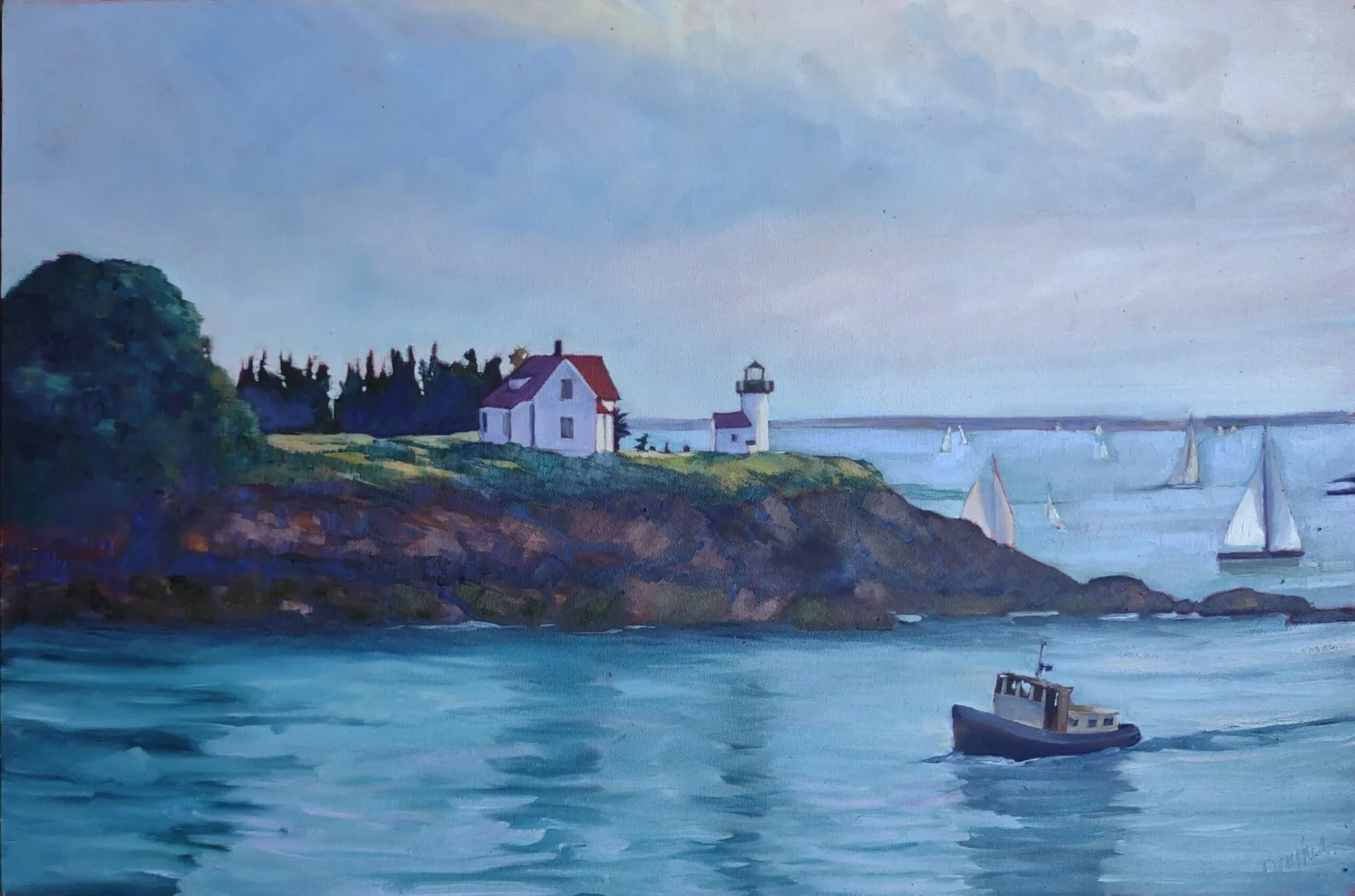
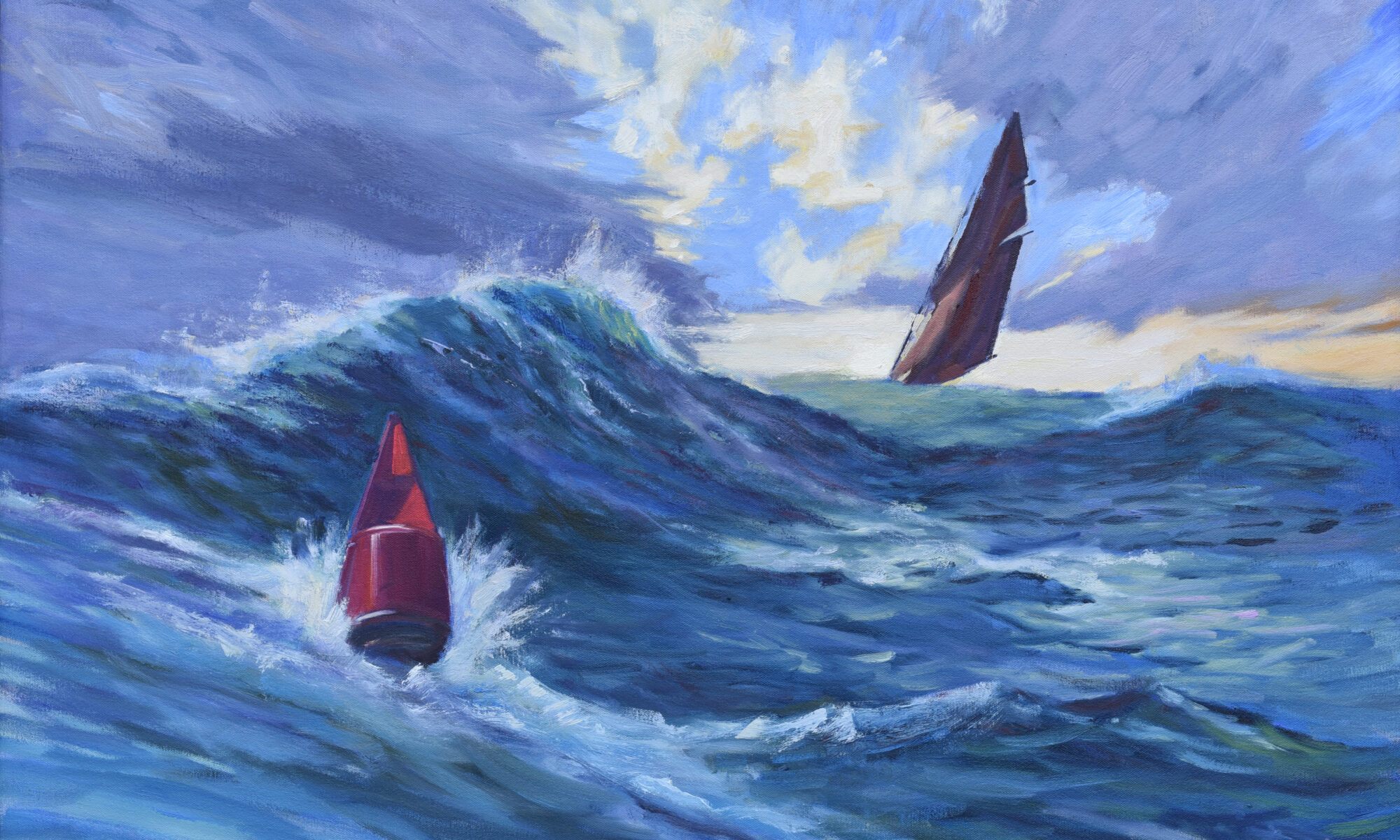

“Big shapes to small shapes” describes the order in which you should build a picture. It means that you should start by laying down the largest, simplest forms. Once you’ve established the major masses of light and dark and broad color areas, you can gradually refine into smaller shapes.
Starting with detail too soon means you won’t get the value relationships or compositional elements right. That’s important because big masses determine how we read visual images.
Sadly, new painters often get this backwards. They get stuck in the detail zone early on. This is a trap caused by fear of failure.
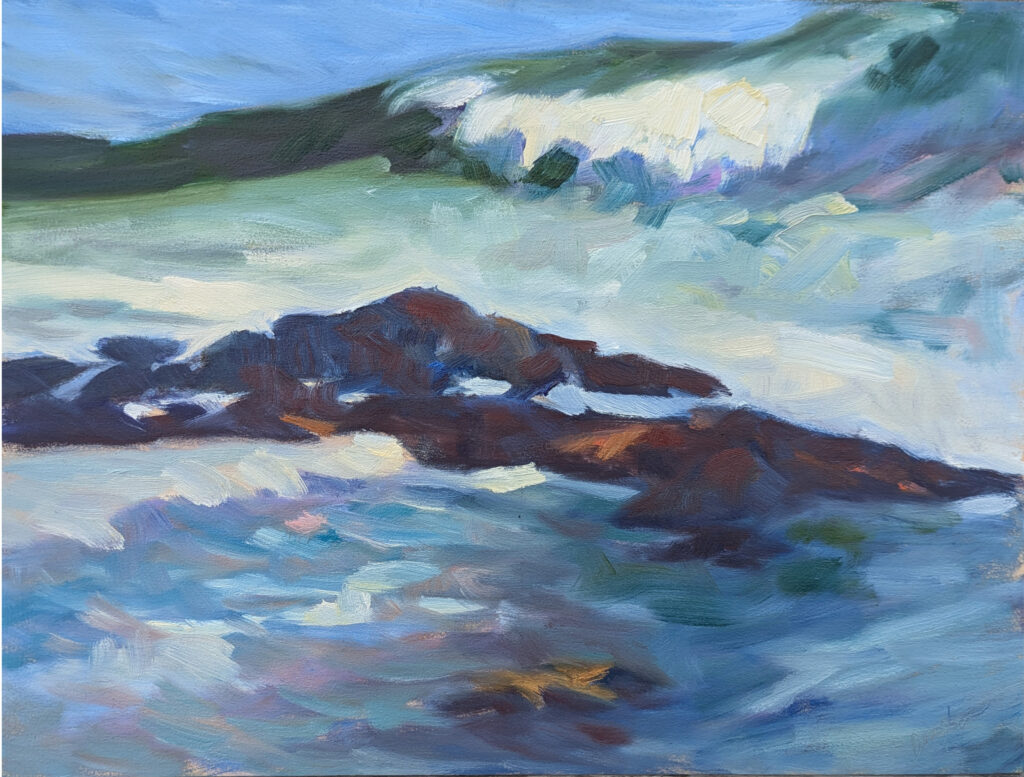
Perseveration is a stall tactic
The big shapes, values, and composition are harder to commit to because they carry all the weight of a painting; detail is, conversely, relatively unimportant. But insecure painters subconsciously jump to detail to avoid making hard compositional decisions. Obsessing over detail lets you delay facing whether the bones of the painting are working.
(This is not an argument in favor of sloppy, fast drawing. Edges are an important part of the big shapes and value masses of a painting, and you should take the time to get them right.)
The detail zone gives us a false sense of progress. Adding fussy little marks feels productive, but if the big design isn’t solid, details can’t save a painting. It’s like putting lipstick on a pig.
When you stay in the detail zone, you don’t have to confront whether the big picture is successful. It feels safer to buff up one section of a canvas than face the risk of failure. Focusing on detail can also be a way of trying to maintain control.
Details are familiar, soothing, and lots easier than value decisions. By hiding in detail, painters stay where they feel safe instead of pushing the work forward.
But if the painting works at arm’s length, the details will always fall into place. If it doesn’t work at arm’s length, no amount of fiddly work will fix it.
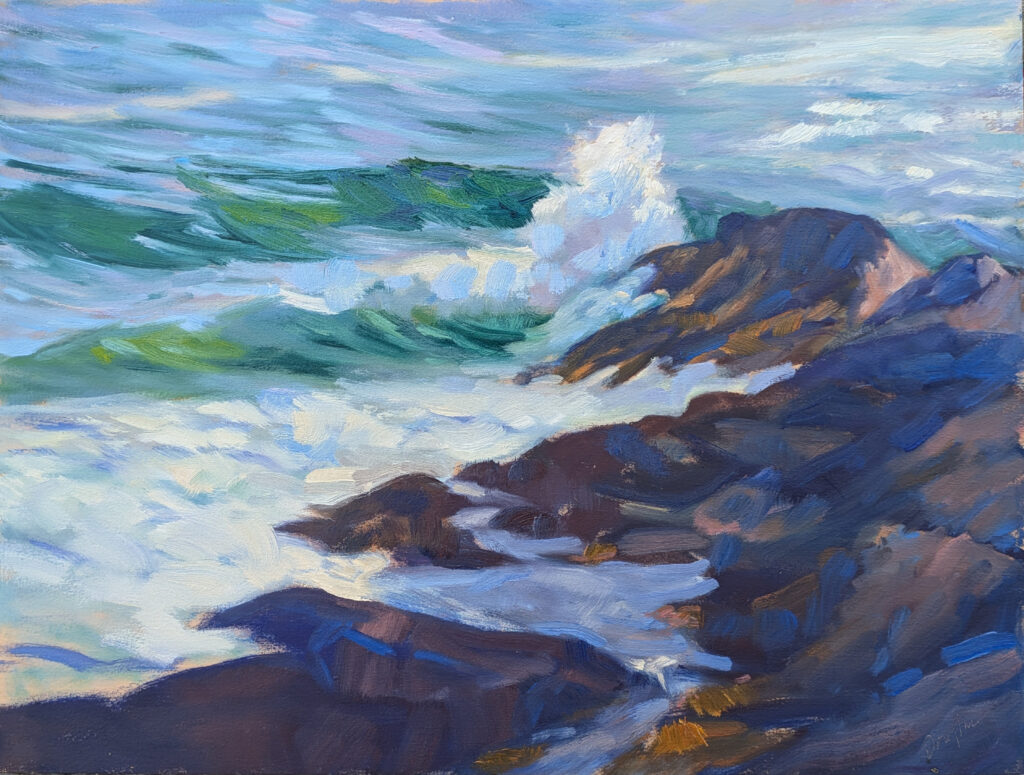
Move along
Going back to the same passage of a painting over and over probably means that something else entirely has gone wrong with your painting. Move on and you’ll break your frustration logjam. In fact, you’ll often solve your original questions subconsciously just by stepping away from the easel (which is why I often suggest to perseverating students that they take a snack break).
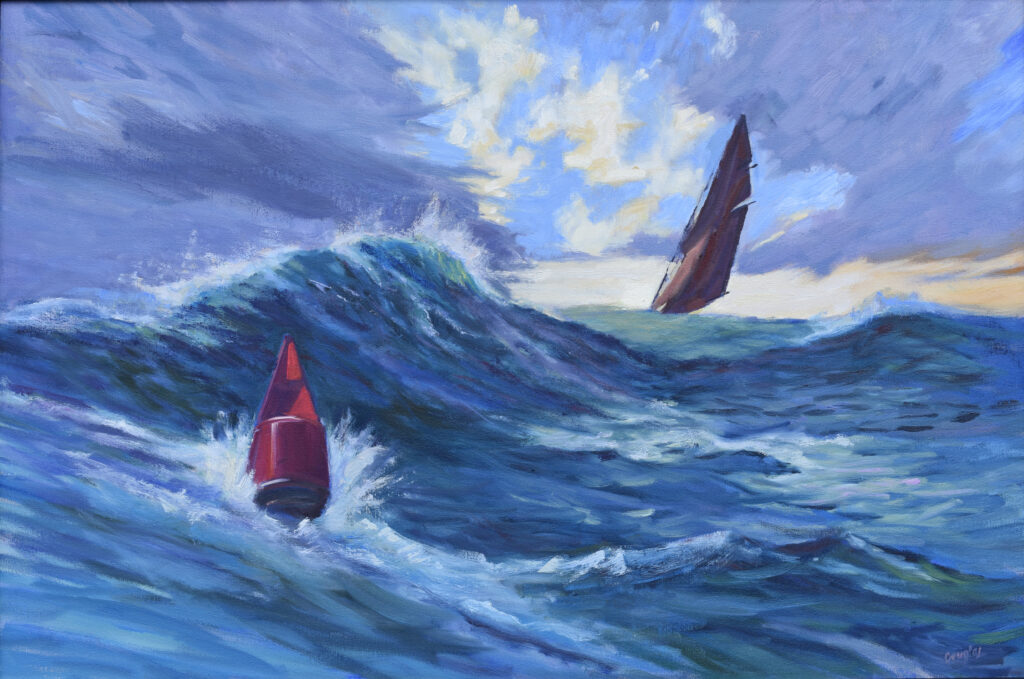
How to break out of the detail zone
There are several tried-and-true techniques to focus on the big picture:
- Step back every few minutes. Ask yourself: Does it read? Are the big shapes clear?
- Squint so that small details disappear. What’s left are the big shapes, where you should focus your effort.
- Don’t paint any details until the entire image is blocked in with larger shapes.
- Use the largest brush you can get away with for as long as possible. A big flat won’t let you paint individual blades of grass.
- Stop relying so much on reference photos. They suck you into petty detail. After twenty minutes or so, set your cell phone aside and work from memory.
- Work in layers, general to specific, going over the whole surface before starting to break shapes into the next smaller units.
Registration is now open for workshops in 2026! Reserve your spot:
- Find your Authentic Voice in Plein Air | Berkshires, MA, August 10-14, 2026
- New! Color Clinic 2026 | Rockport, ME, October 3-4, 2026
- New! Composition Week 2026 | Rockport, ME, October 5-9, 2026
Can’t commit to a full workshop? Work online at your own pace:
Great tips! You clearly know what you’re talking about.
There is a time for details and it’s at the end of the painting process.
Thank you!
Thinking you have given away the store, here! Stepping back, after large shapes with a large brush, works wonders.
You mention these points in your courses, and this will unlock the whole process. Well explained. I think you have
finally penetrated my thick head.
Thank you, Tim!