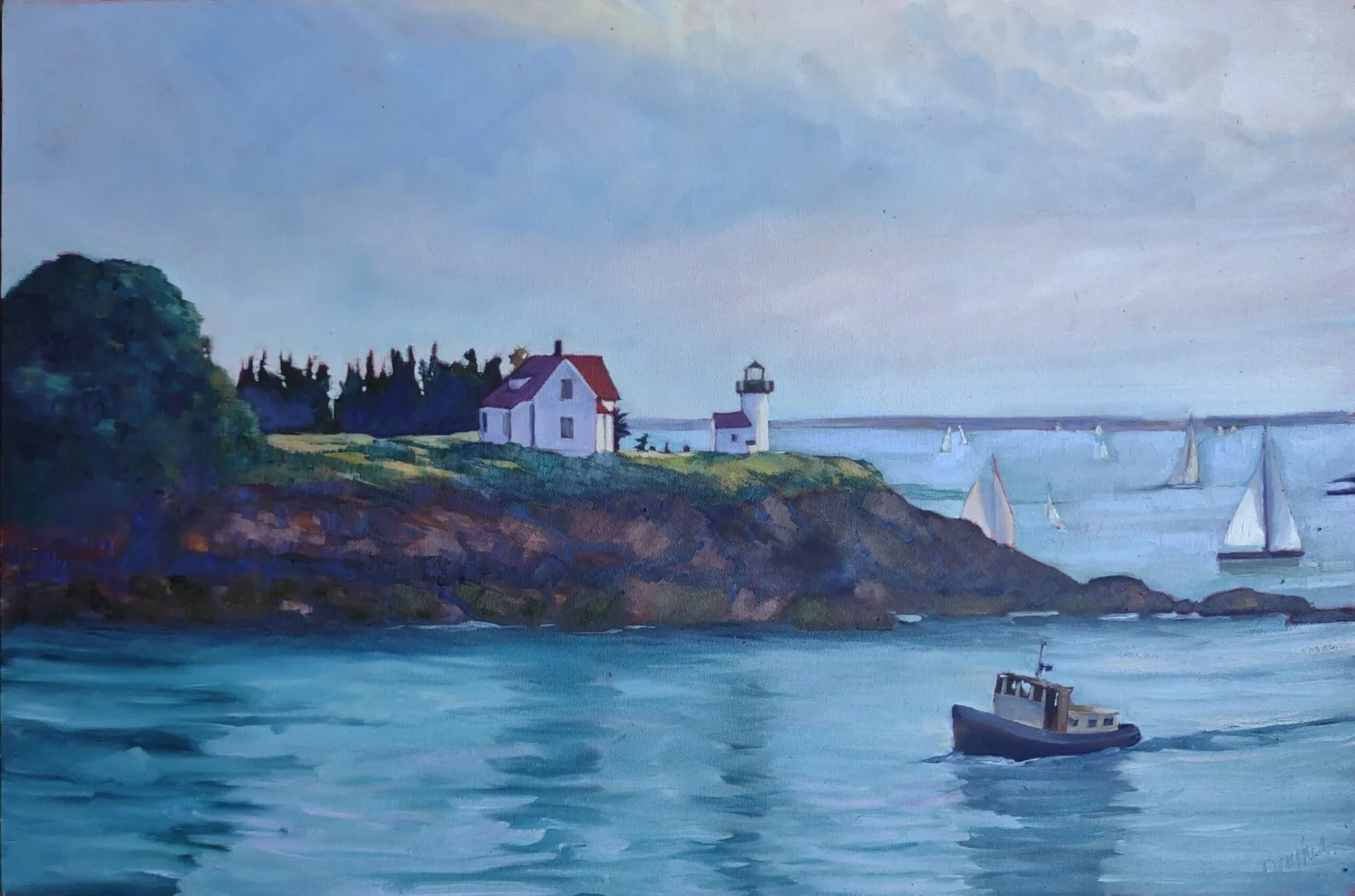
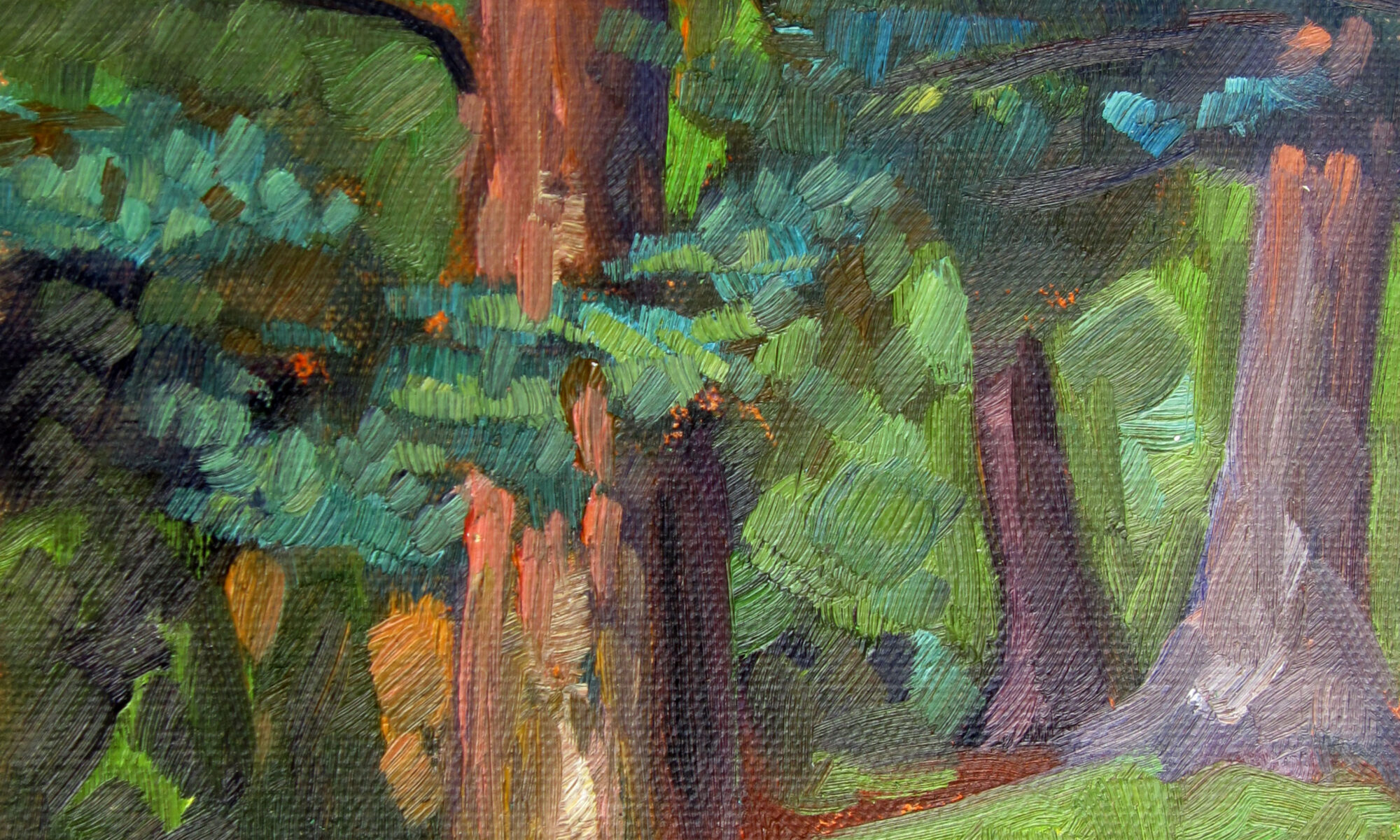
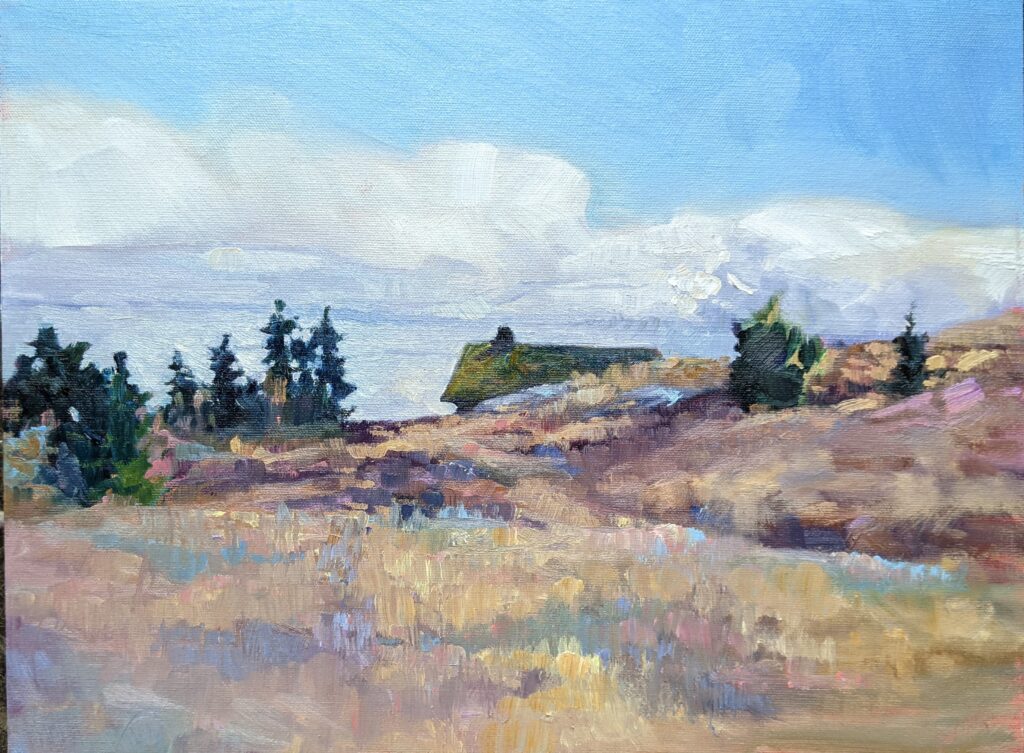
People talk to you when you’re painting outdoors. I don’t mind, but sometimes people say strange things.
“I used to paint, but I had to get a real job.”
“That looks like so much fun!” (Especially comforting when you’re struggling.)
“You’re so lucky to have talent!”
Talent is a comforting lie. If someone else has talent and we don’t, we’re off the hook. But after decades of teaching and painting, I know that good paintings have very little to do with innate talent and everything to do with habits, decisions, and ways of seeing.
Clarity of intent
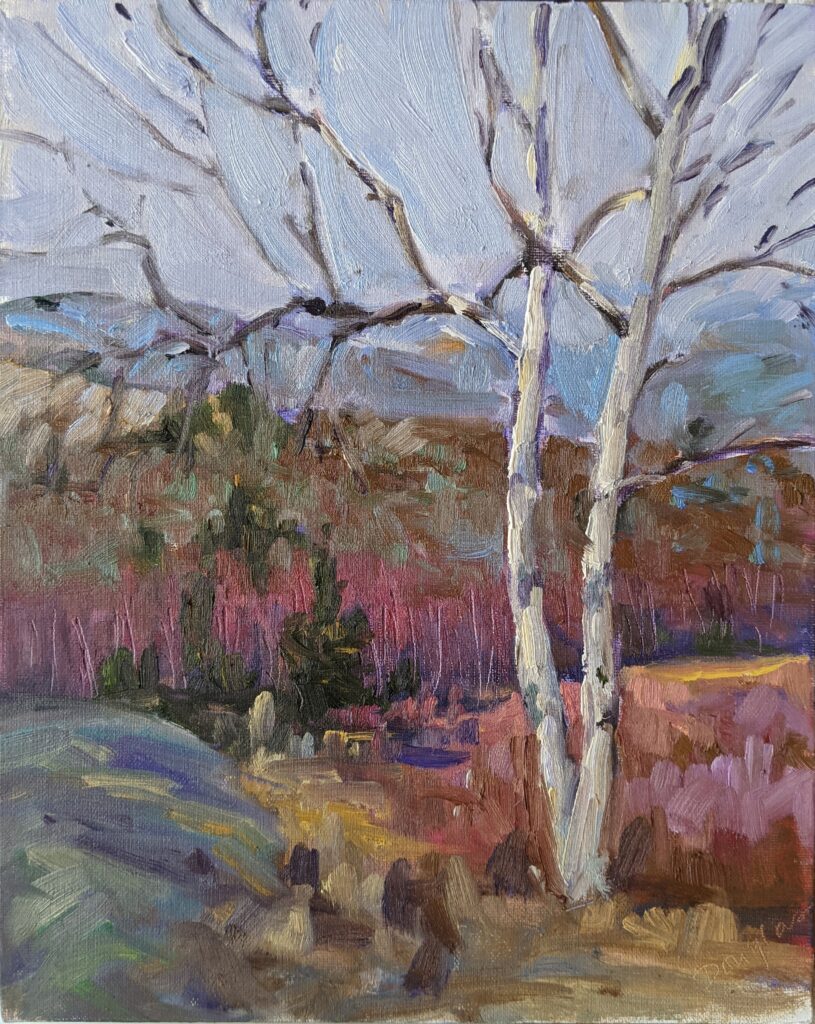
Good paintings start with knowing what we want to say. That isn’t ideological; last week I was painting solely about the feathery tops of leafless trees. Good paintings have subject and direction. They’re edited to support that.
They also share strong design. This is the quiet architecture underneath the painting. Beginners chase detail, but experienced painters simplify. They block in big shapes first, establish a clear value pattern, and make sure the composition reads from across the room. If it doesn’t work at ten feet, it ain’t gonna work at any distance.
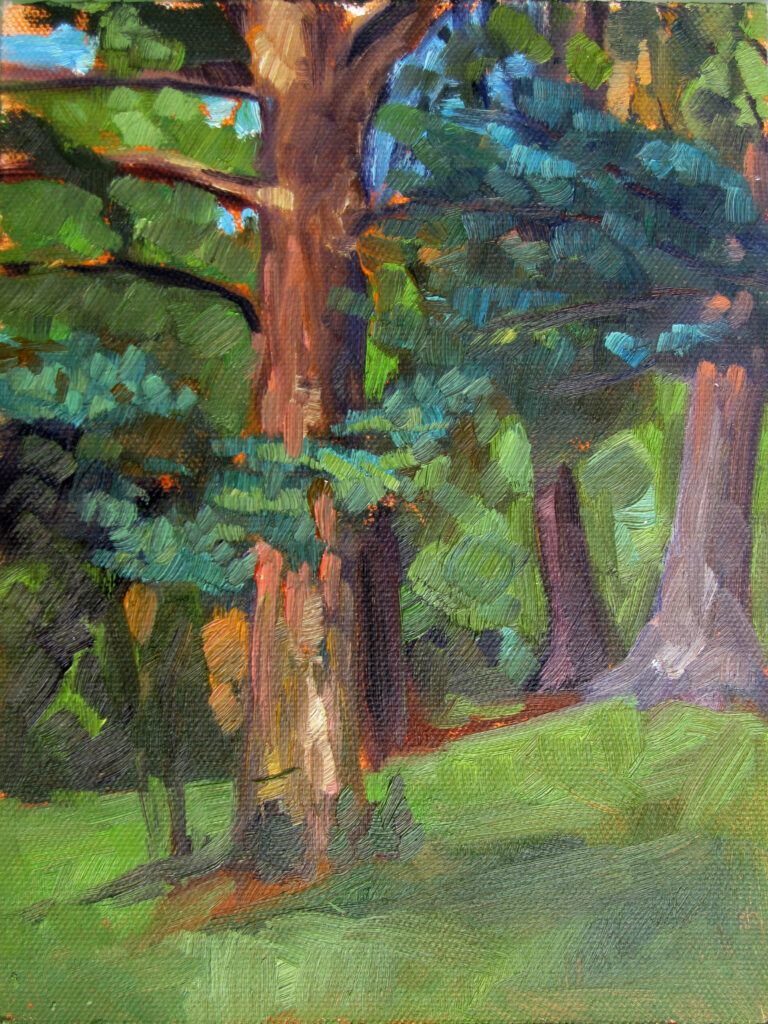
Value and edges
Good paintings have a clear range from dark to light, with intentional value groupings. The artist is organizing from the sketch forward. Whether or not a painting is detailed has nothing to do with this; all paintings start with value structure.
Good painters understand that lines direct the viewer’s eye. The lost-and-found edge is often more compelling than literal lines. Good paintings are soft where they should recede and sharp where they need attention.
Backing off the throttle
Restraint might be the hardest thing to learn. Good paintings don’t spell out everything. They leave space for the viewer to participate. At some point, the painter has to stop futzing and trust his or her own work. This is where experience—not talent—comes into play.
Good paintings are internally consistent. That doesn’t mean they’re boring, and there’s certainly room for surprises. But brushwork, color harmony, composition and the degree of finish all go together. There’s a unity of vision that makes the piece feel resolved. It doesn’t look like a collection of parts; it looks like a whole.
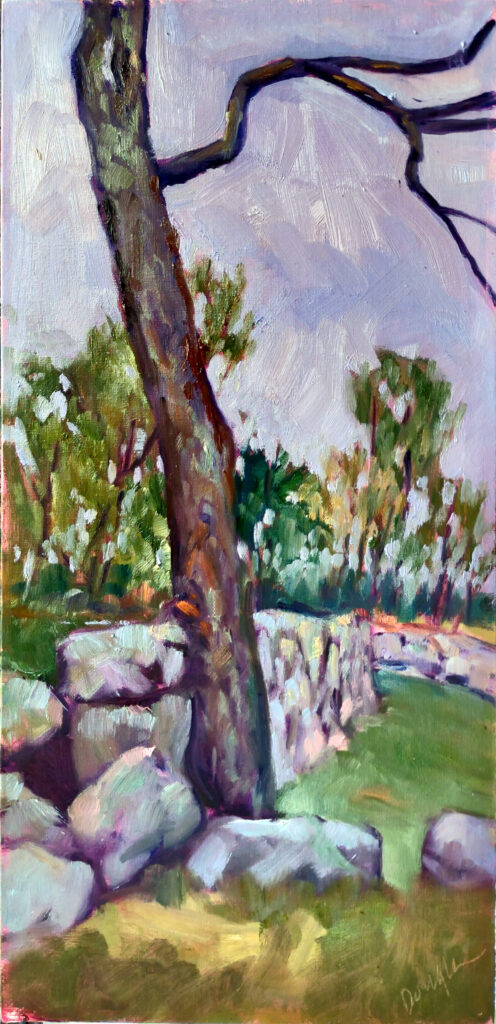
Bad passages can be repainted, but timid paintings never come to life. Confidence is earned. It comes from miles of canvas, from making and correcting mistakes and from sometimes overworking paintings. Painters who produce strong work are building on heaps and heaps of failure.
None of this is mysterious or requires magical talent. It requires practice, patience and a willingness to look honestly at your own work.
If you want to make better paintings, start paying attention to these fundamentals. Slow down. Simplify. Be deliberate. That’s the real common ground of good painting—and it’s available to anyone willing to do the work.
If you’re ready to sharpen your eye and start seeing your paintings with more clarity, I invite you to join my Fresh Eyes Critique Zoom class on Tuesday evenings, 6-9 PM on April 14, 21 and 28. After that, you’re on your own for a few weeks, because I’ll be in the Cotswolds.
Online classes start again soon!
- Cozy Winter Painting, Monday evenings, 6-9 PM for three weeks starting November 2.
- Painting Figures in Real Spaces, Tuesday evenings, 6-9 PM for six weeks starting November 3.
- Painting Nocturnes, Monday evenings, 6-9 PM for three weeks starting November 30.
I have just two workshops left in 2026! Reserve your spot:
- New! Color Clinic 2026 | Rockport, ME, October 3-4, 2026
- New! Composition Week 2026 | Rockport, ME, October 5-9, 2026
- High-Desert Light & Monumental Form | Sedona, AZ, Apr 26, 2027 – Apr 30, 2027
Can’t commit to a full workshop? Work online at your own pace: