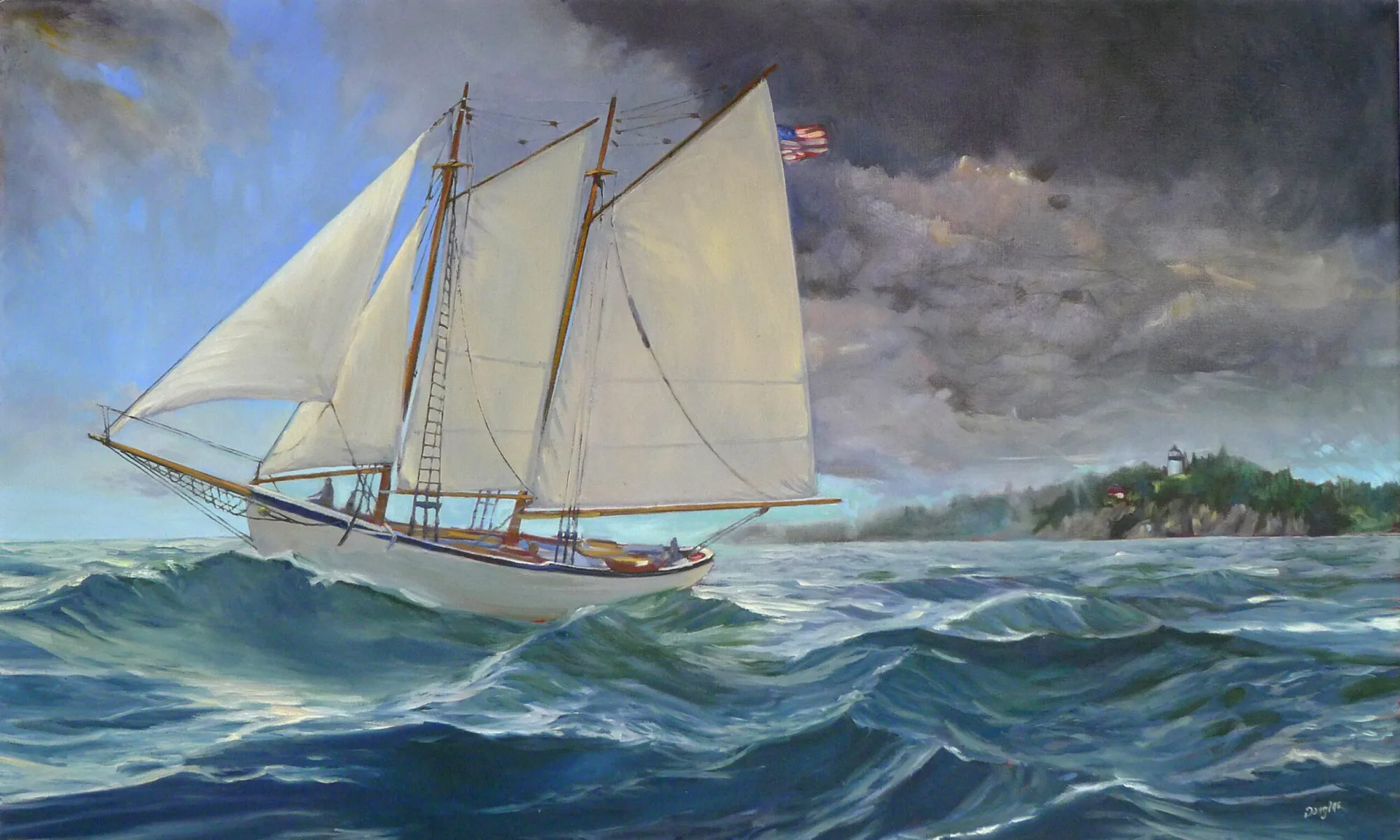
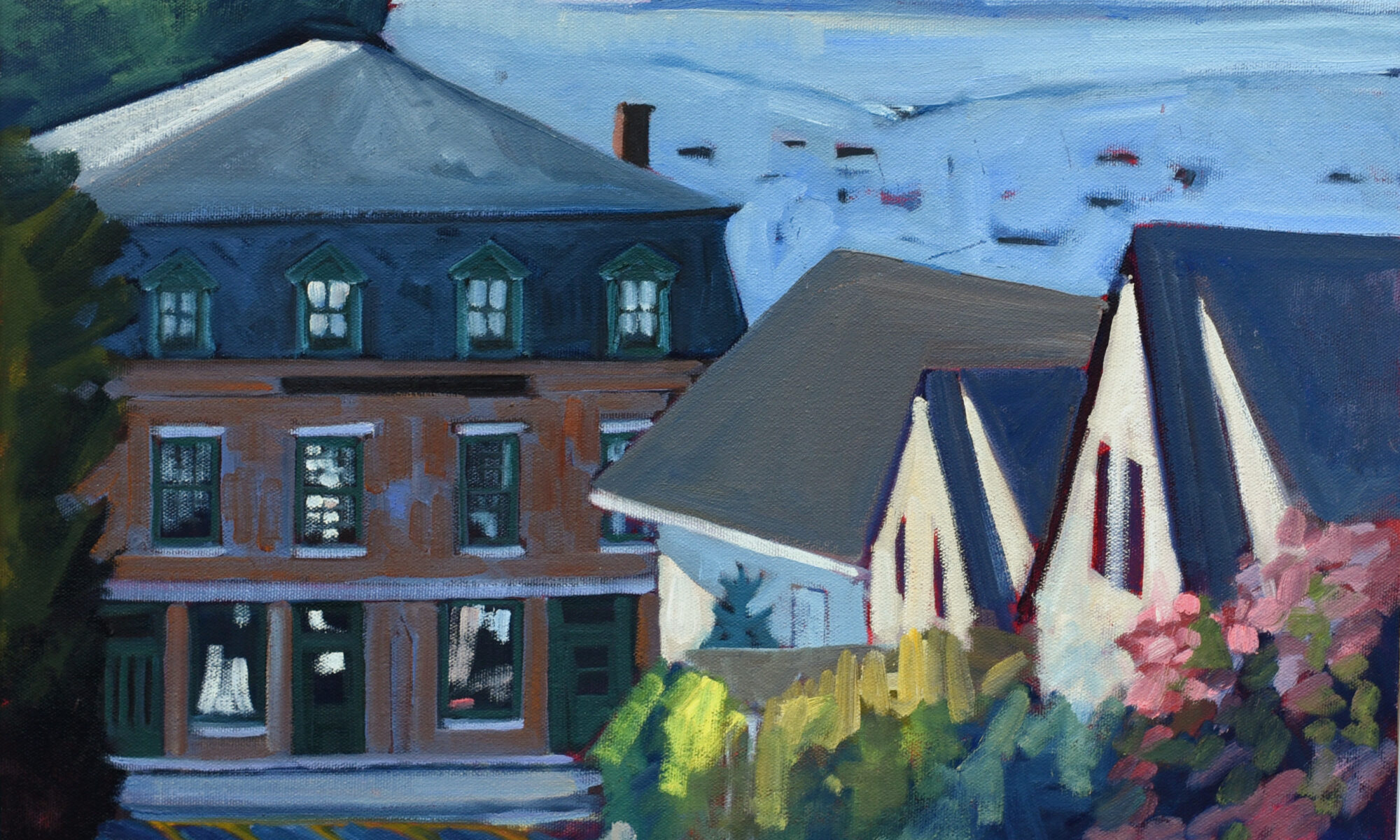
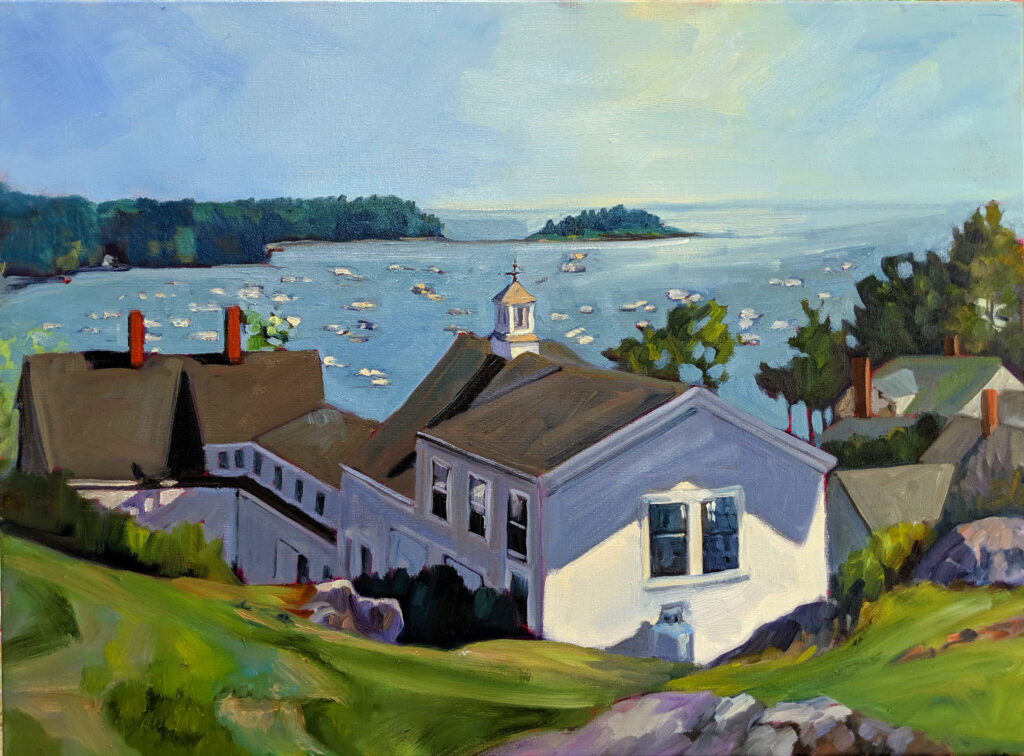
One of the hardest things about painting is figuring out whether the painting is actually working while you’re in the middle of making it.
When you’ve been noodling at the same spot for twenty minutes, you’re no longer seeing the painting. You’re seeing the sum of your decisions. That’s when you need to step back and analyze the painting objectively.
The big picture
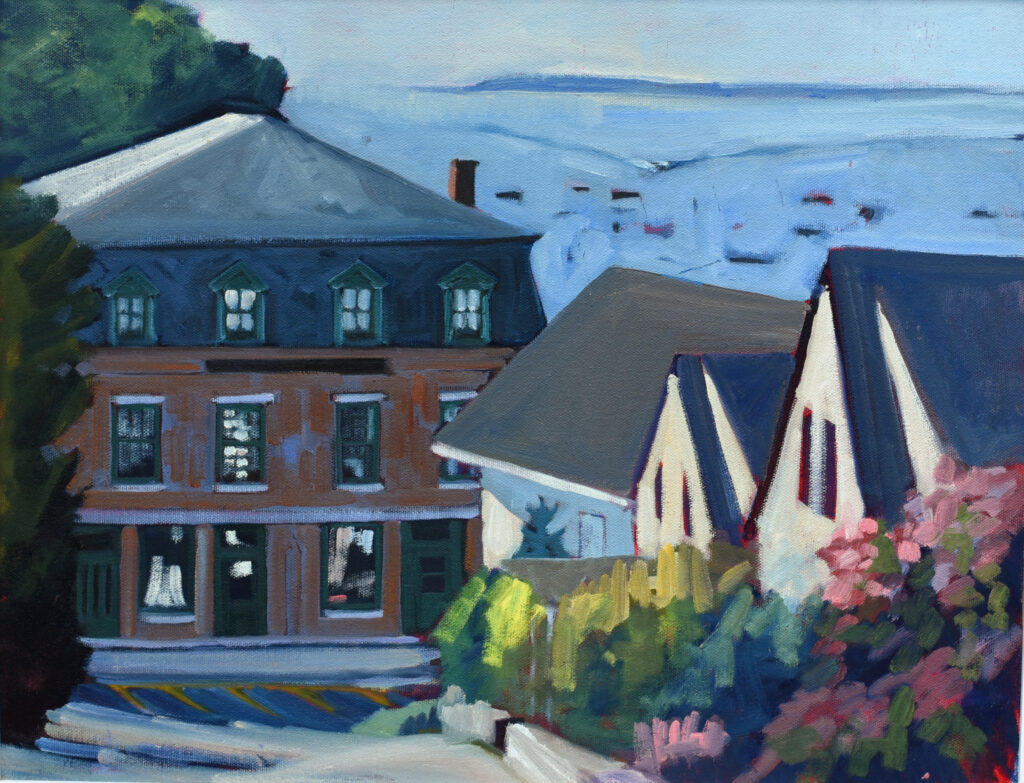
NC Wyeth is credited with the idea that a painting should compel at three feet and thirty feet. At a distance of thirty feet, a painting relies entirely on its abstract qualities to grab a viewer’s attention. At three feet, it should hold us with texture, edge quality, brushwork and narrative depth. Mastering both ensures that a piece of art is structurally sound from afar and intellectually stimulating up close.
Get some distance
Let’s start with the long view: step back. And I mean really step back.
If you’re painting in the studio, put the painting across the room. If you’re painting outside, put your brush down and walk many feet away. You want enough distance that you can no longer engage with individual brushstrokes.
At a distance, details disappear and the big things become obvious.
Is the focal point actually the focal point? Is the value pattern holding together? Is there enough contrast? Is your eye traveling through the painting, or getting stuck somewhere you didn’t intend?
Squint or take off your glasses. When you squint, small details disappear and larger shapes of value become easier to see. You can suddenly tell whether the darks and lights are grouped effectively instead of being distracted by every little color shift.
You’re testing the painting’s focus and movement. Where does your eye go? Where does it go next? Is there a motive line—an underlying thrust or energy—that carries you through the picture?
If you can’t move back without falling off a cliff, try taking a picture of your painting and holding your phone at arm’s length. It’s not as effective but it does work.
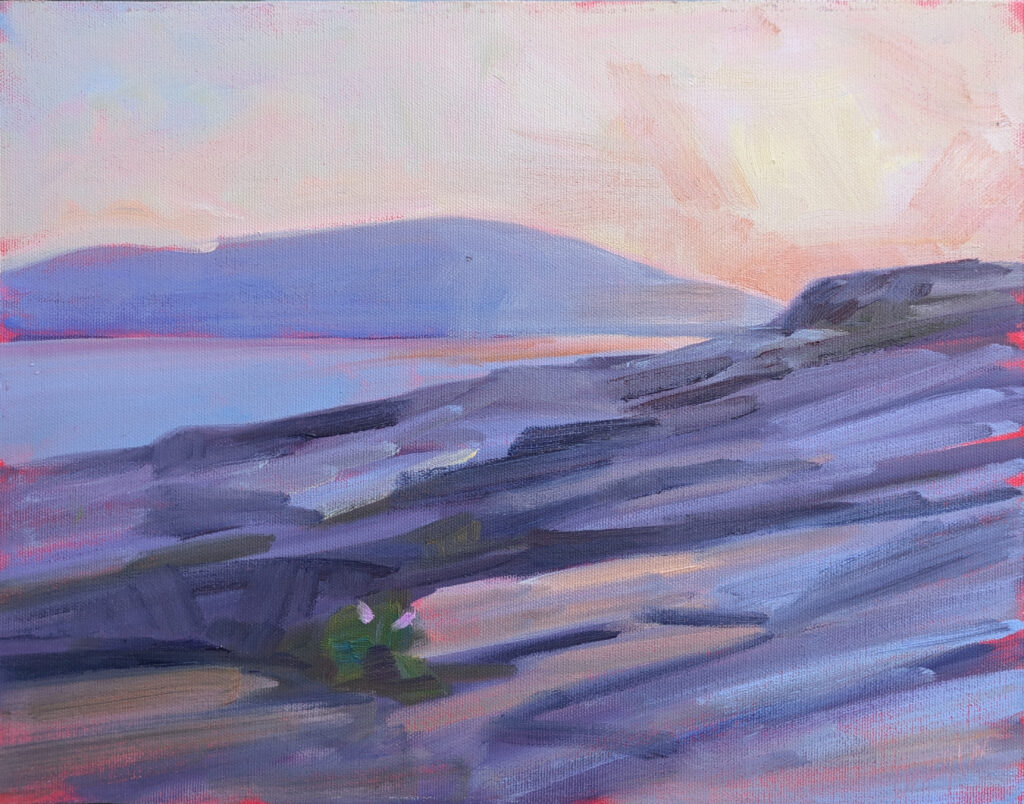
The elements of design are your checklist
When a painting feels wrong, don’t immediately start flailing around.
Instead, work through the basic elements of design. I teach formal critique as a way of developing executive function as an artist, but it’s really a discipline anyone can develop over time.
Look at line first. Where are the strongest edges? Are they leading the eye somewhere useful? Remember that a line in painting doesn’t have to be an actual drawn line. Every edge between two shapes creates one.
Then look at shape and form. Are your big shapes convincing? Do they have enough variation to create interest? Is the drawing solid enough that the forms actually sit in space?
What is happening in the positive and negative spaces? Are the proportions and placements creating believable depth? Sometimes the problem isn’t the object you’ve painted; it’s the shape of the empty space around it.
Then look at color. Separate hue, chroma, and value in your thinking. Is the color doing useful work, or are you adding brighter and brighter notes simply because the painting feels dull?
And finally, look at texture and brushwork. Are your marks supporting the painting, or are you fussing with them because you’re afraid to leave the surface alone?
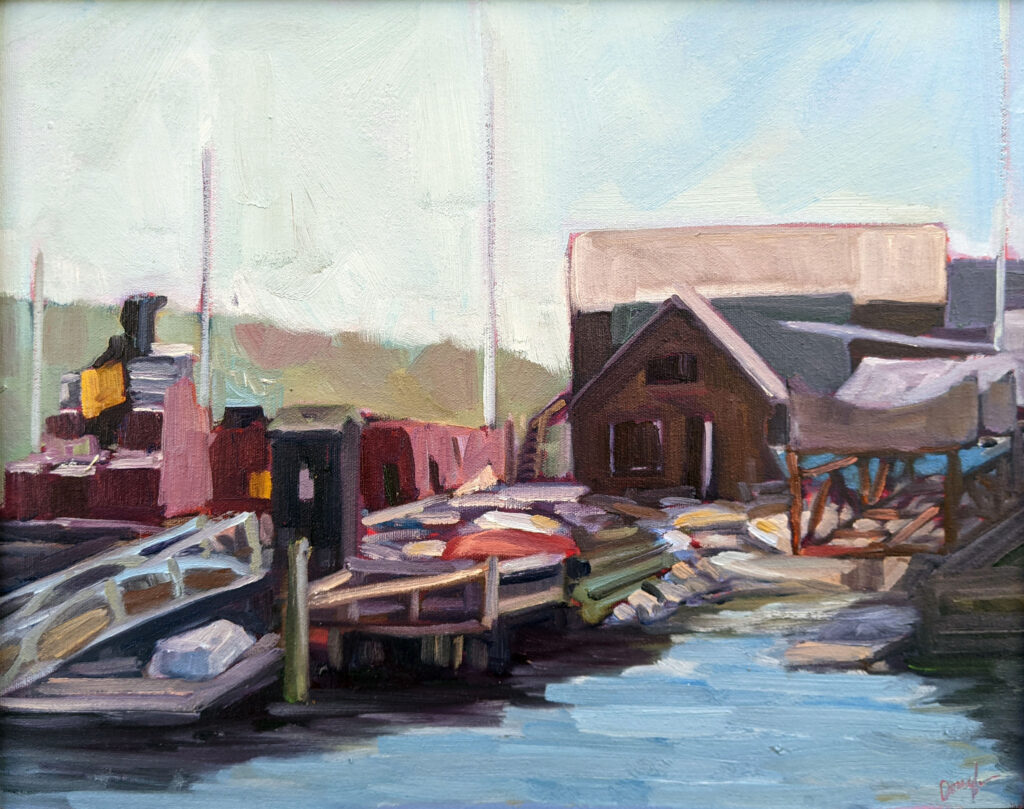
Turn it upside down
Turning a painting upside down temporarily disconnects you from the subject. That’s invaluable.
A tree becomes a dark shape. A house becomes a rectangle. A person becomes a pattern of light and dark.
That makes it easier to see balance, proportion, shape, and movement without your brain helpfully supplying what it knows should be there.
You can also turn the painting sideways. If the composition still holds together, you’re probably looking at a sound arrangement of shapes rather than merely a recognizable subject.
Look for unity
Does everything knit together? A painting can contain perfectly good individual passages and still fail as a whole. One edge may be too sharp. One color may be too intense. One object may be too clearly described.
Unity doesn’t mean making everything equally important. Quite the opposite. You need hierarchy.
The focal point should have the strongest reasons for attention. Secondary areas should support it. Some passages should be quieter.
Ask questions instead of judging
Instead of beating yourself up and saying, “This is bad,” ask:
- What problem am I trying to solve?
- Where does my eye go first?
- What is the most important shape?
- Where is my darkest dark and lightest light?
- What is the motive line?
- Are the positive and negative spaces balanced?
- Are my edges helping me create depth and focus?
- Is anything competing with the focal point?
- Does the painting have unity?
Those questions turn criticism into problem-solving, and that is what painting really is.
You don’t need to know whether the painting is good while you’re making it. You just need to know what problem comes next.
Online classes start again soon!
- Cozy Winter Painting, Monday evenings, 6-9 PM for three weeks starting November 2.
- Painting Figures in Real Spaces, Tuesday evenings, 6-9 PM for six weeks starting November 3.
- Painting Nocturnes, Monday evenings, 6-9 PM for three weeks starting November 30.
I have just two workshops left in 2026! Reserve your spot:
- New! Color Clinic 2026 | Rockport, ME, October 3-4, 2026
- New! Composition Week 2026 | Rockport, ME, October 5-9, 2026
- High-Desert Light & Monumental Form | Sedona, AZ, Apr 26, 2027 – Apr 30, 2027
Can’t commit to a full workshop? Work online at your own pace:
Really helpful! thanks.
xc
You’re very welcome, my friend!