I had surgery on my hand last week. I can paint a little bit, I can’t draw, but I especially can’t type. It makes me keenly aware of how our thinking isn’t just done in the brain; it’s also kinesthetic. I don’t write the same with voice-to-text.
A quick note on classes before we get into it
My upcoming session of evening Zoom classes starts next week. Painting water is already sold out. Claim your spot in Painting clouds or From field sketch to final studio work (which starts tomorrow) before they sell out too.
Value
Why do some paintings grab your attention from across the room while others seem muddled? The answer is always value. I spent a year experimenting with ways to disprove this, and the result were a lot of high-key paintings that didn’t read well.
Color is comprised of three aspects:
- Value—lightness or darkness;
- Hue—position on the color wheel;
- Chroma—intensity or saturation.
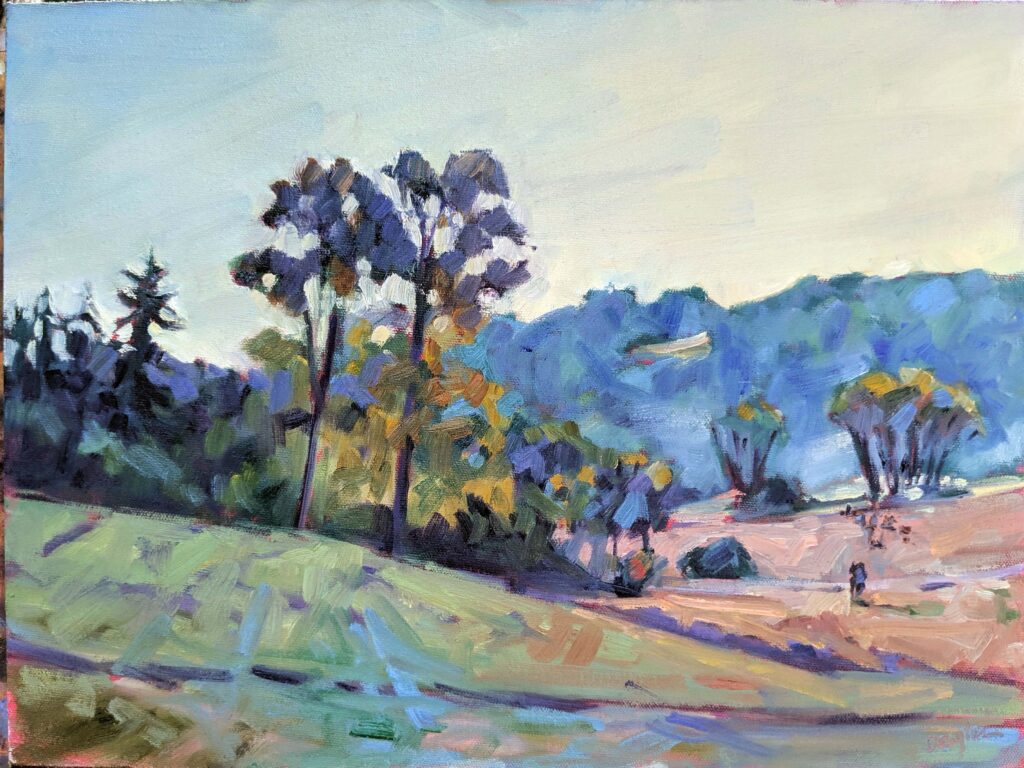
And the greatest of these is value.
The position on the color wheel (hue) is what non-artists call color. Ironically, it’s the least important aspect of color. That’s why nobody bats an eye at Vincent van Gogh’s yellow skies or Claude Monet’s pink and blue wheat field. Our brains take it in stride.

#/media/File:Claude_Monet_-_Stacks_of_Wheat_(End_of_Summer)_-_1985.1103_-_Art_Institute_of_Chicago.jpg)
Before viewers notice anything else, they register a value pattern (and remember, they do that in as little as 50 milliseconds). Our eyes are hardwired for this. If your value structure is strong, your painting can be read almost instantly. If it’s weak, no amount of detail will rescue it.
Take off your glasses
I’m blessed with imperfect vision, so I paint with my glasses off. Others may have to squint, but blurry vision reduces visual information and compresses values into large, simple masses. The artist is immediately freed from the tyranny of fine detail and texture. (If, at the end you feel like adding those things, you can put your glasses back on.)
In the planning stages, ask yourself: do the major shapes separate clearly? Can you immediately identify a series of focal points that drive your eye through the composition?
Strong paintings
I advocate plein air to learn painting because the time constraints force us to simplify. This is one of the hardest skills for new painters to learn. They carefully record every detail, creating a wall of visual noise.
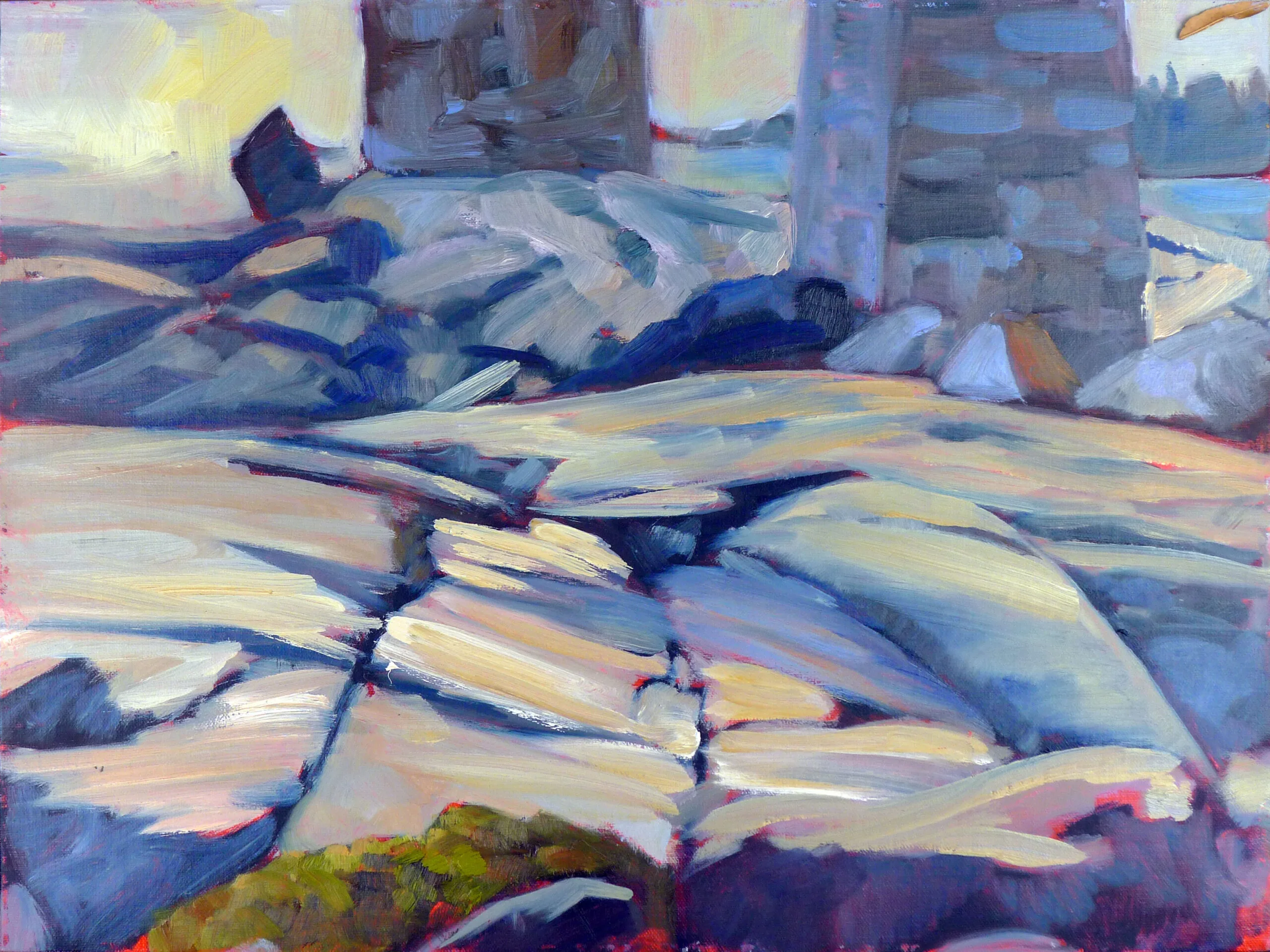
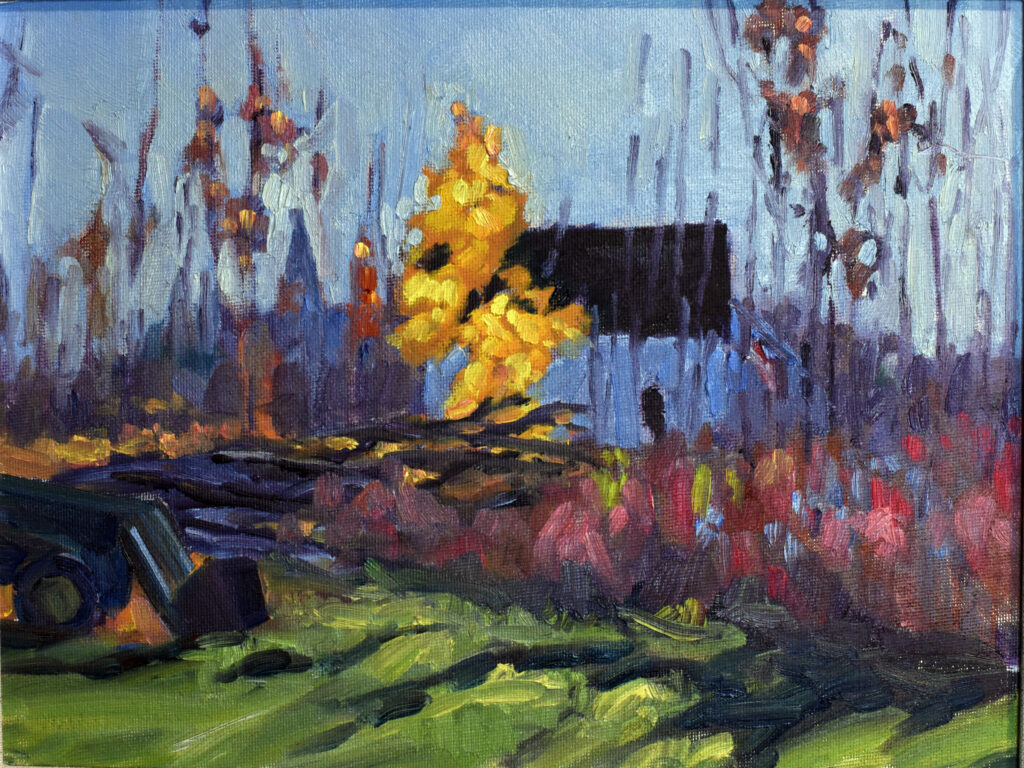
Strong paintings organize the world into a few dominant value masses and subordinate everything else.
That doesn’t mean a bunch of big, unbroken shapes. A meadow, for example may be all one close value family but contain dozens of different hues. It might be set against a darker tree line—again in a tight value family, with different hues. If there was value discontinuity in those larger shapes, you’d have visual chaos, but the tight value structure keeps them organized.
Note that I’m not suggesting these larger shapes be simple. They need compelling edges that are sometimes staccato, sometimes smooth, sometimes broken, but always interesting.
Start with a sketch
A successful pencil sketch is a fast investment before you sink a lot of time into a painting. I encourage my students to use a sketchbook. If you draw on your canvas, your notes get buried under your painting.
Periodically step back and look at your work from a distance. If this is impossible (for example, if you’d fall off a cliff) take a picture and look at it on your phone. Compare it to your initial sketch. Are your large value masses intact, or are you chasing the light? Have you fussed the shapes apart with unnecessary detail? Are your focal points still reading?
Painting is all about editing reality into a clear visual statement. If you’re an experienced painter and want to learn more about value and composition, join my Advanced Plein Air Painting workshop and learn practical techniques to simplify complex scenes, strengthen value structure and create paintings that read instantly.
Online classes start again soon!
- Cozy Winter Painting, Monday evenings, 6-9 PM for three weeks starting November 2.
- Painting Figures in Real Spaces, Tuesday evenings, 6-9 PM for six weeks starting November 3.
- Painting Nocturnes, Monday evenings, 6-9 PM for three weeks starting November 30.
I have just two workshops left in 2026! Reserve your spot:
- New! Color Clinic 2026 | Rockport, ME, October 3-4, 2026
- New! Composition Week 2026 | Rockport, ME, October 5-9, 2026
- High-Desert Light & Monumental Form | Sedona, AZ, Apr 26, 2027 – Apr 30, 2027
Can’t commit to a full workshop? Work online at your own pace: