Recently I’ve been writing about the crippling problem of self-judgment—here and here, for example. Here are some exercises you can try to loosen self-judgment’s death grip on your painting.
These exercises work because they focus on the process, not the product. Your goal is to build confidence through the act of painting. You do this by letting go of the idea that you can perfectly represent anything—either the vision in your mind’s eye or the scene in front of you. (I’ve never painted anything that matched my initial vision, and yet I’ve happily surprised myself many times.)
My goal is for you to focus on the joy and curiosity of painting. The happier you are with a brush in your hand, the better you’ll get at painting.
These exercises are not a replacement for good technique, and they don’t stand in for regular learning. They’re quick ‘practice swings’ that detach your idea of self-worth from your limitations.
Paint solely from your imagination
This means no reference and no trying to match your painting to anything in front of you. It’s a chance to swish paint around and just feel what your brushes can do.
Let your memory do the work
Draw from reference (real world or photos) and then paint solely from memory. After about twenty minutes, you’ve memorized the scene anyway. Do you like the results more than slavishly copying reality?
The 20-brushstroke painting
Read how to do it here. It’s a good way to stop yourself from overworking or overthinking.
The 20-minute painting
Set a timer. Paint. When time’s up, stop. No re-dos.
The goal, like the 20-brushstroke painting, is to break the habits of overworking or overthinking.
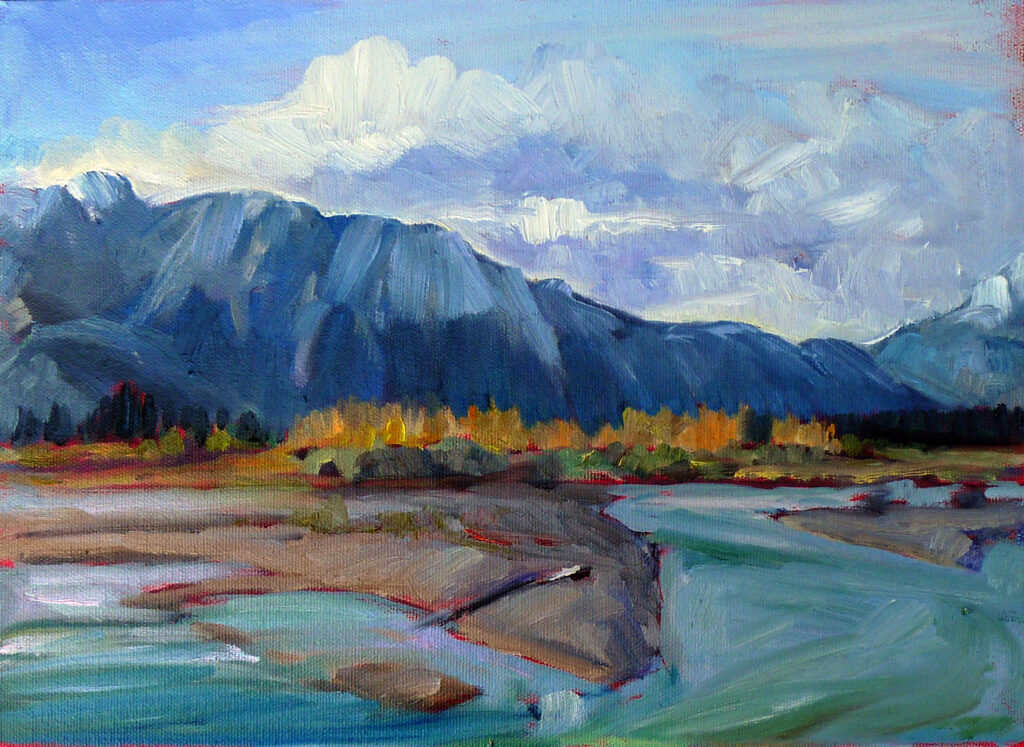
Copy a failed painting
Take a painting you hate and paint it a second time, without belaboring the fix.
What changed the second time around? (Note: this will work for bad paint application or drawing, but never for bad design.)
Paint in monochrome
Paint a scene using in only one color. Limiting color choices frees you up to focus on value, shape and brushwork. What do you lean on when you can’t rely on color?
Paint something with no planning
While I don’t recommend a steady diet of this, painting something without preparatory drawing can free you up to use raw and expressive brushwork. How much have you been perseverating on ‘getting it right’?
Paint with the intention of tearing it up when you’re done
Think of this as an Etch-a-Sketch experiment. Knowing something is temporary frees you from perfectionism. You might be surprised how strong your work gets when you stop being attached to the outcome.
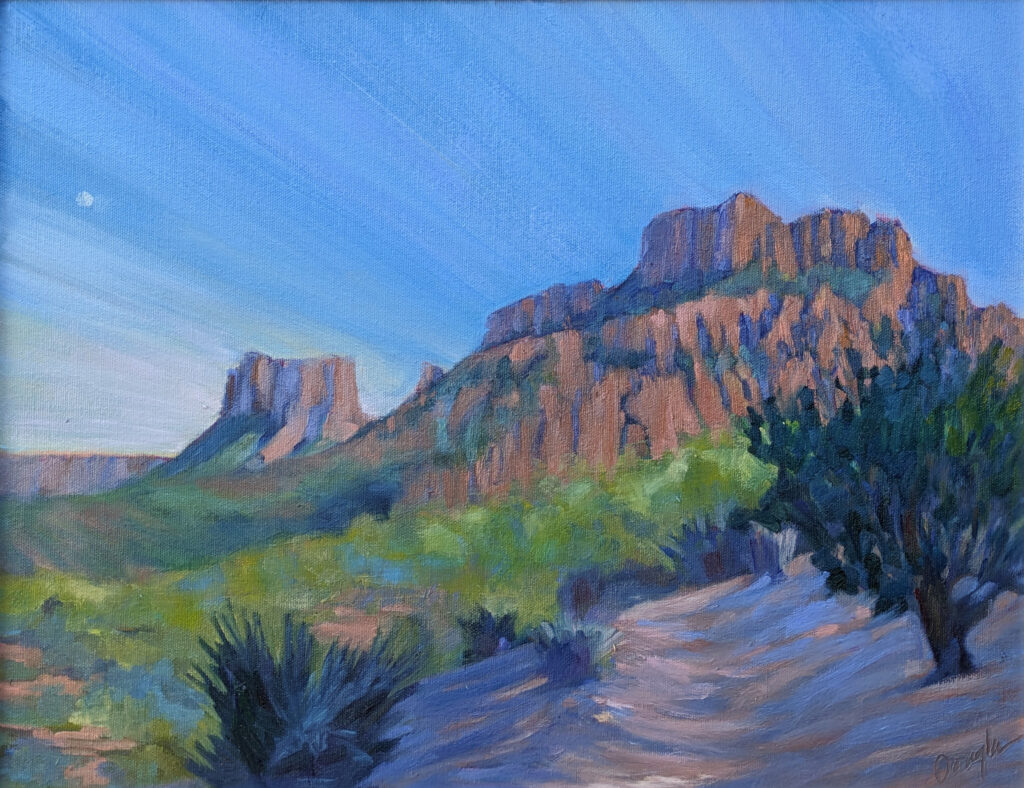
Online classes start again soon!
- Cozy Winter Painting, Monday evenings, 6-9 PM for three weeks starting November 2.
- Painting Figures in Real Spaces, Tuesday evenings, 6-9 PM for six weeks starting November 3.
- Painting Nocturnes, Monday evenings, 6-9 PM for three weeks starting November 30.
I have just two workshops left in 2026! Reserve your spot:
- New! Color Clinic 2026 | Rockport, ME, October 3-4, 2026
- New! Composition Week 2026 | Rockport, ME, October 5-9, 2026
- High-Desert Light & Monumental Form | Sedona, AZ, Apr 26, 2027 – Apr 30, 2027
Can’t commit to a full workshop? Work online at your own pace:
I did a 20 brushstroke exercise and it was enlightening! I had to make long, committed strokes, without going over them as improvement. Uncharacteristic of me. It was also fun to see the result.
I think that’s a good general rule… one I regularly break.
I have been following you for quite a while and this is just what I needed. THANK YOU!
jan
You are very welcome!