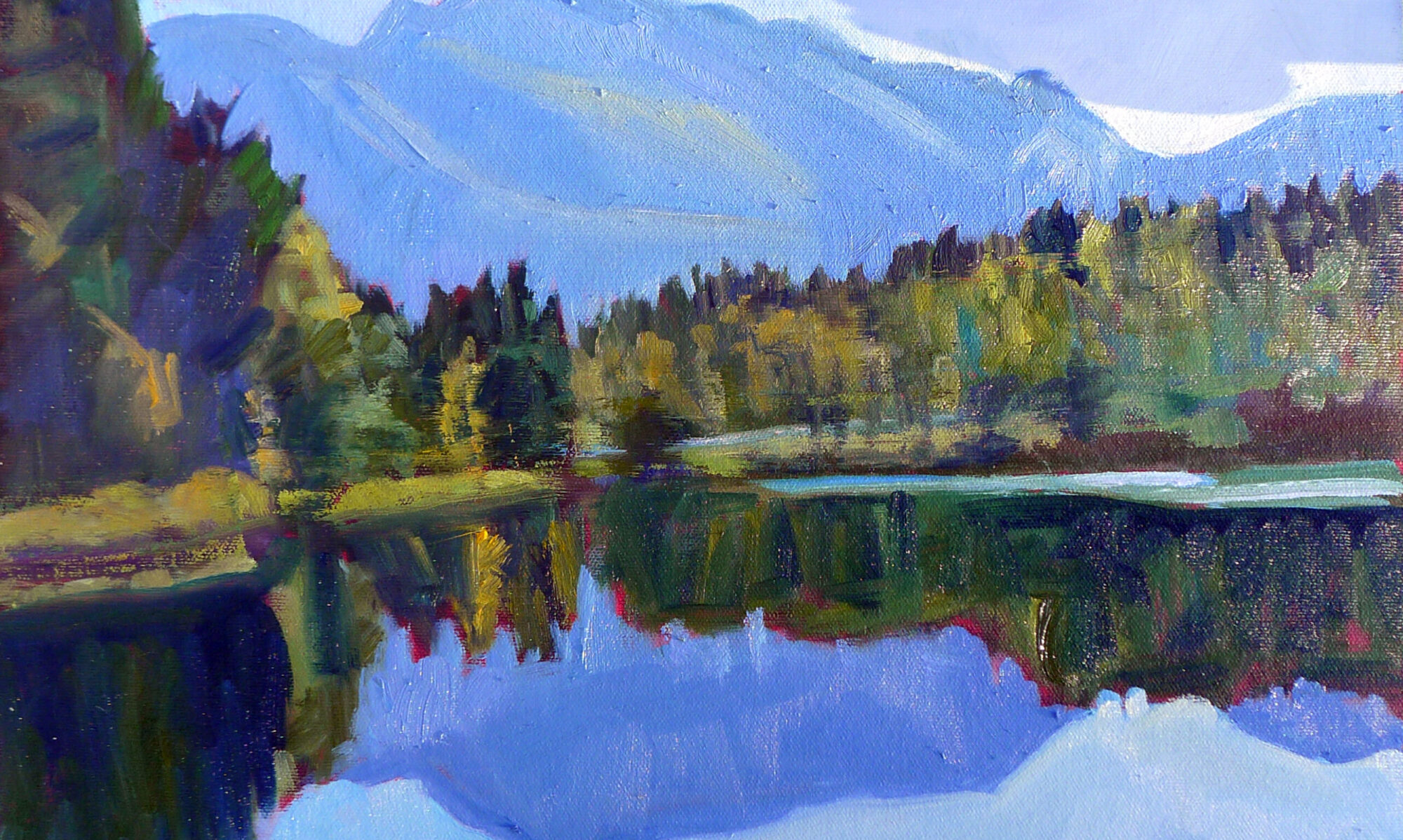
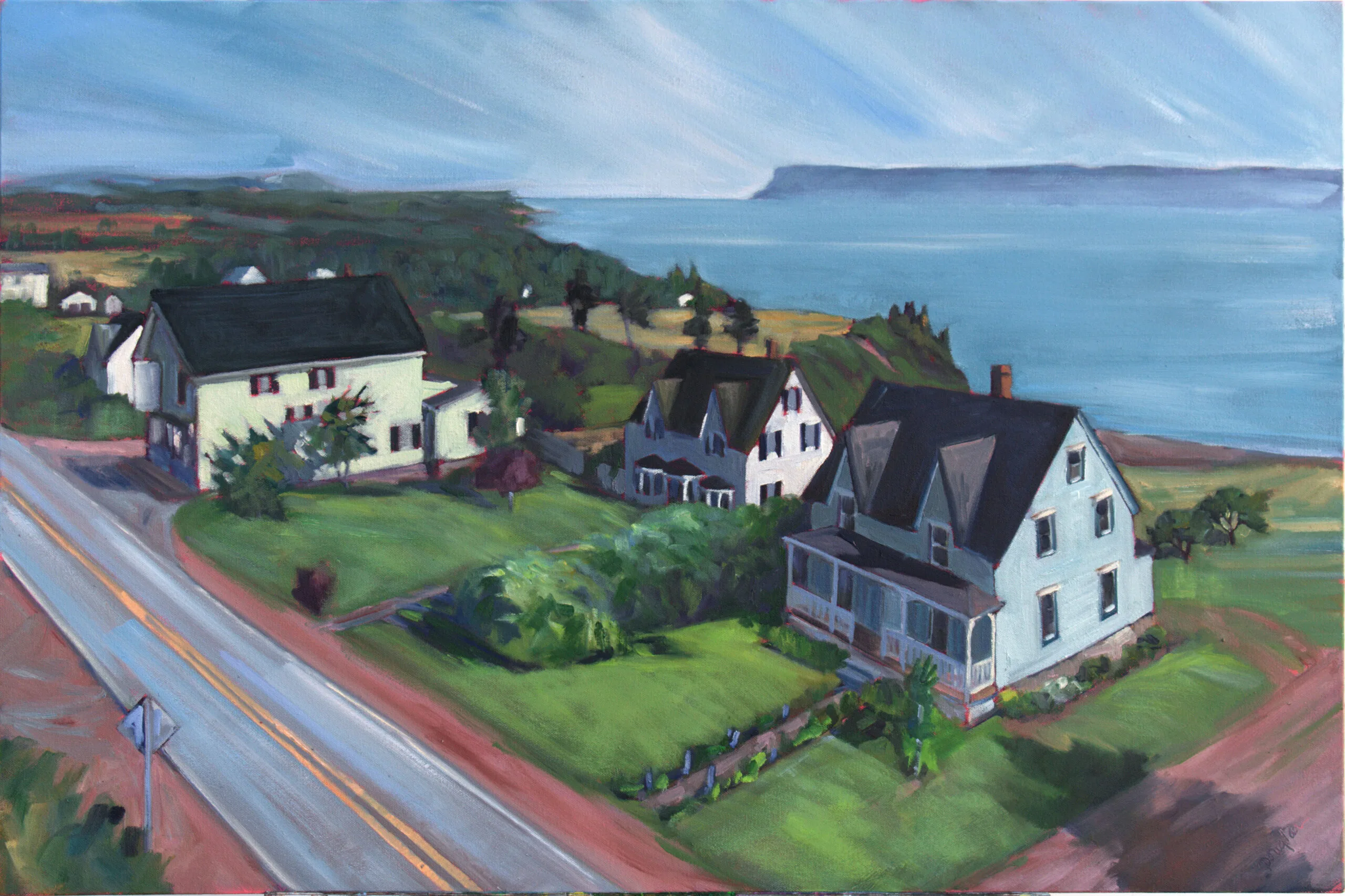
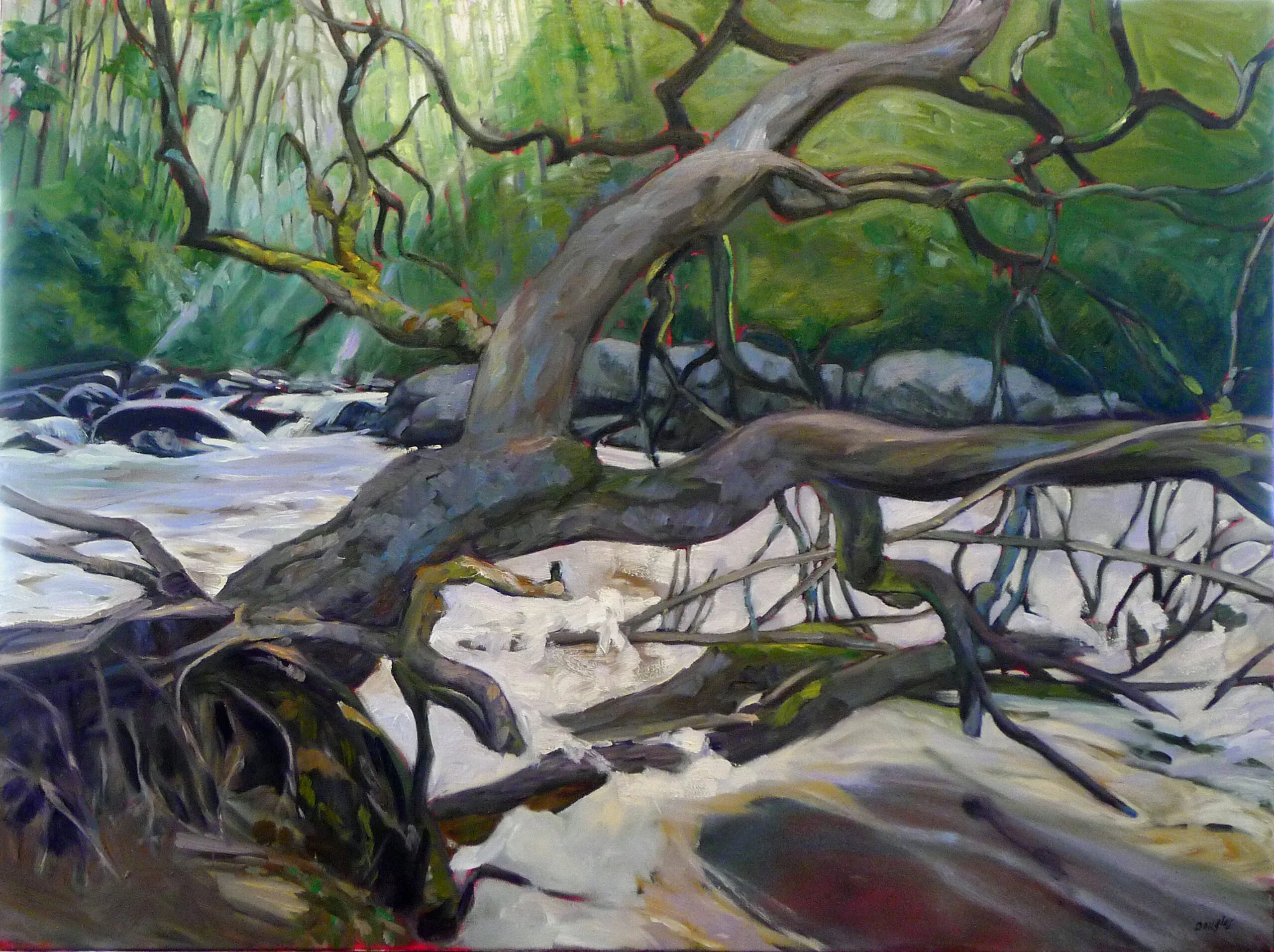
I can blather on endlessly about what I call the three mantras of oil painting. They’re simple to understand, time-tested and should be habit for anyone who wants to avoid flailing around.
Fat over lean
Oil paint is bound by siccative oils (usually linseed but sometimes walnut or safflower). These oils harden through oxidation, which is a chemical process. Solvent (odorless mineral spirits) dries through evaporation.
Each successive layer should contain more oil than the one beneath it. The lean layers, thinned with solvent, dry quite quickly. Fatter layers (richer in oil) set up slowly and remain flexible.
If you have too much oil in the bottom layers, the top will trap the slower-setting paint underneath. That results in cracking and wrinkling. Conversely, if there’s solvent in the top layer, it will evaporate and leave tiny air pockets between the pigment particles. Colors which looked brilliant when you applied them sink into dusty shadows of their former selves. You shouldn’t have to varnish to correct this.
Learn to start thin and build richness gradually. Your block-in can be as thin as watercolor. Your final passages should be buttery and confident.
Darks to lights
It’s far easier to go from dark to light than the reverse. There are two reasons for that. First, the bones of all good paintings are their value structures, which create drama and clarity. (Watercolorists do greyscale paintings to compensate for their order of operations.)
In oils, it’s far easier to lighten a passage than to darken it. Titanium white is the slowest-drying pigment, and it’s almost impossible to wipe away completely when it’s in the wrong spot. Putting a light value where a dark one belongs is a time-consuming error, whereas darker pigments are easier to lift, lighten or cover.
This is a rule that I sometimes break. I get away with it because I’ve already established a value structure in my grisaille.
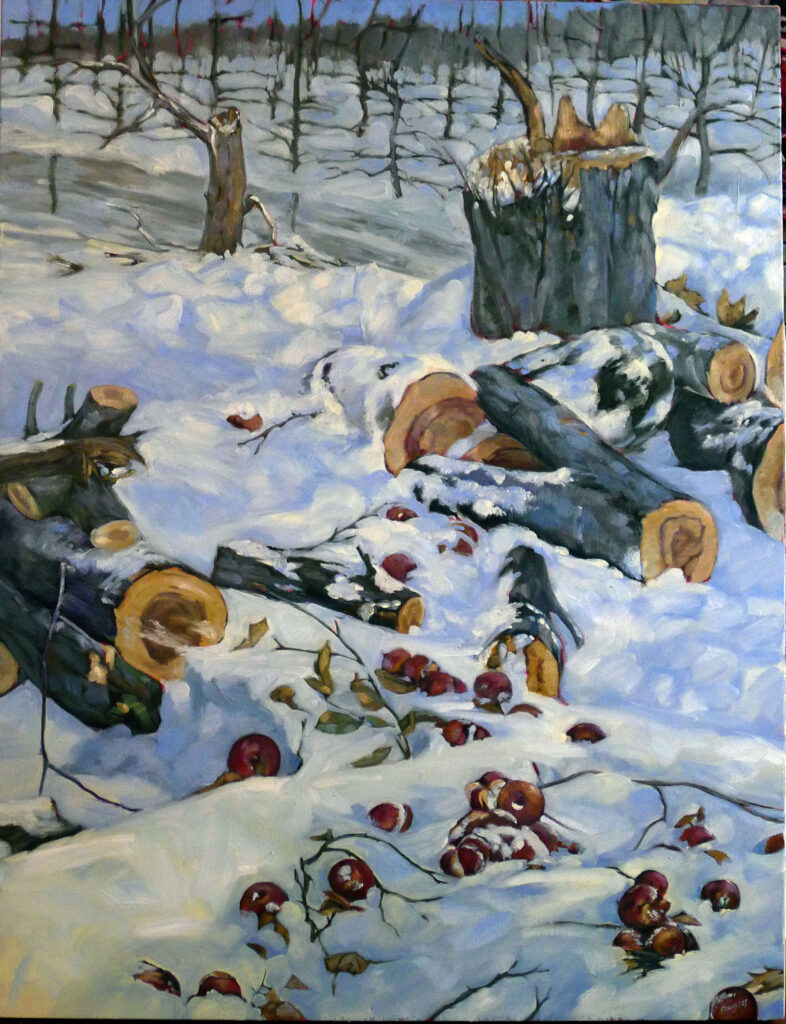
Big shapes to small shapes
It’s easy to muck up a painting if you get sucked into the eyelashes before you get the planes of the face right. The same is true of landscape; no amount of precious foliage can salvage a badly-organized painting.
The human eye reads masses before it reads details. Look across the room and you’ll realize that other than a small focal cone in the center of your vision, almost everything is indistinct.
Start by organizing your subject into large, simple shapes. Squint. Reduce the scene to a few value masses. Place them boldly and accurately. Only when those relationships are working should you begin to subdivide.
If you love detail, think of it as your reward for getting the big shapes right. If your large shapes are off, no amount of clever brushwork will save you. If they’re right, you can say very little and still have a powerful painting.
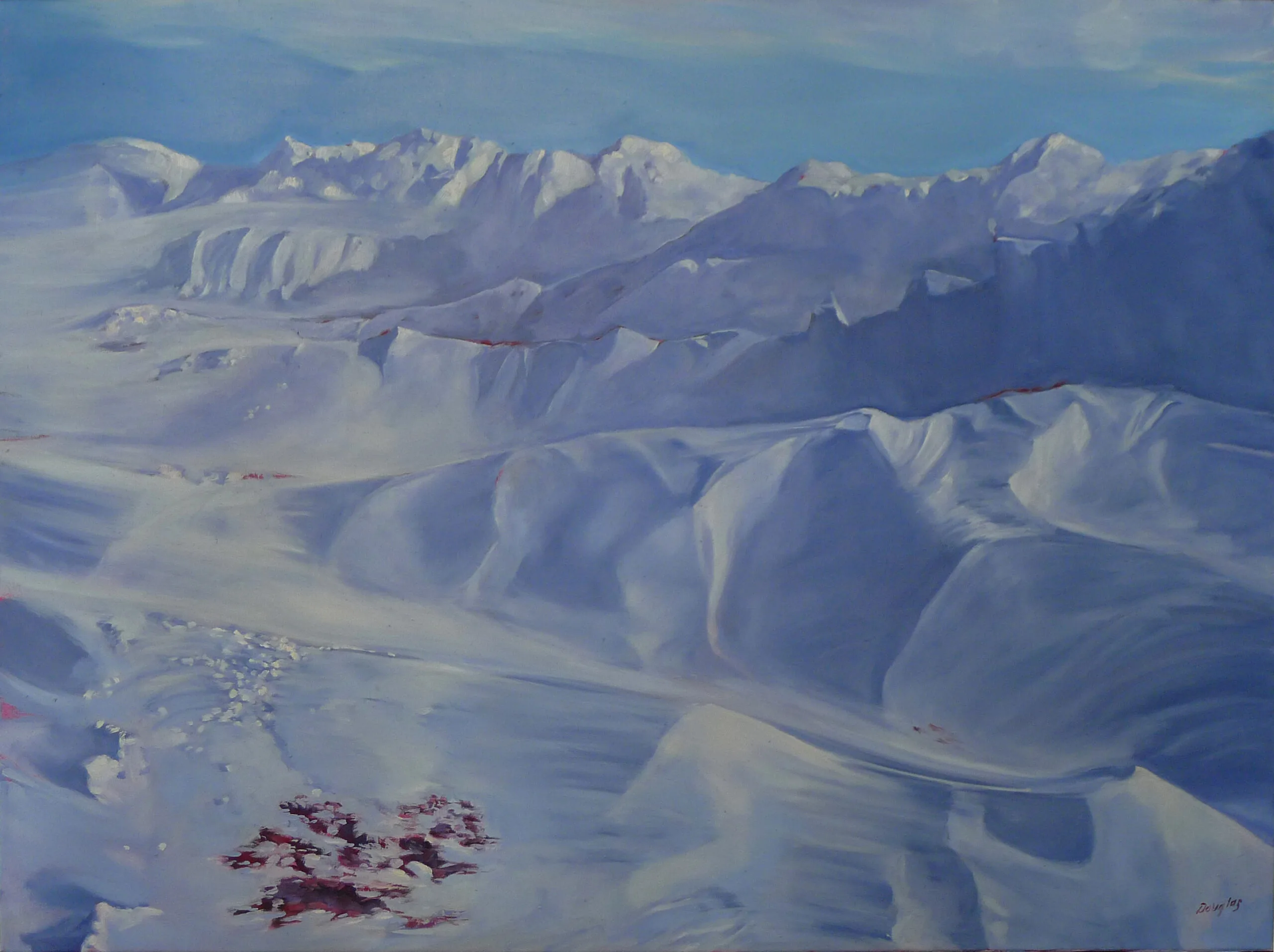
When good paintings go bad
When a painting goes wrong, it’s almost always because one of these principles has been ignored. Color sinks because paint was applied out of order. Values collapse because the white you used too early has made fifty shades of grey. Composition falls apart because you got lost in trivia.
Start lean. Nail your darks. Think in masses. Then, and only then, indulge in the pleasure of detail.
I have just two workshops left in 2026! Reserve your spot:
- New! Color Clinic 2026 | Rockport, ME, October 3-4, 2026
- New! Composition Week 2026 | Rockport, ME, October 5-9, 2026
- High-Desert Light & Monumental Form | Sedona, AZ, Apr 26, 2027 – Apr 30, 2027
Can’t commit to a full workshop? Work online at your own pace:
These paintings certainly hit the mark. Love them all.
Thank you, Laurie!
Always a good reminder! Thanks, Carol. I’ve pulled out about 30 of my “almost done but never finished” paintings. They haven’t been touched in anywhere from 7 months to 3 years. I think they are pretty dry. Does the fat over lean rule still apply? In other words, should I be automatically adding medium to my paint as I start to rework them?
That rule never really goes away, because it takes years for oil paint to fully cure.