Monday Morning Art School: oil or acrylic gesso?

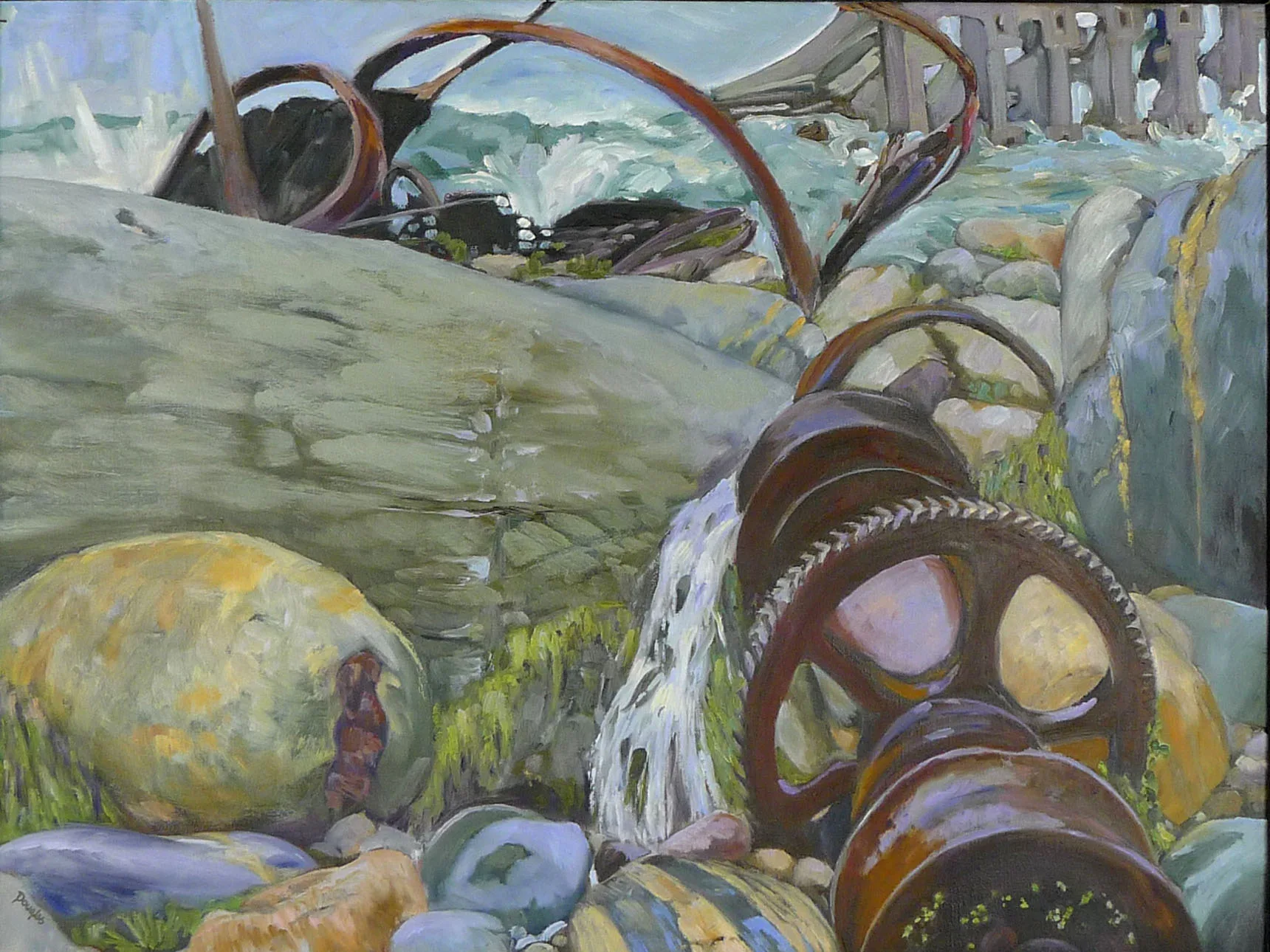
If we’re gonna talk about sinking, let’s start with The Wreck of the SS Ethie, oil on canvas, 18X24. It’s the only shipwreck I’ve ever painted. For more information, click on image.

“Could you talk about the differences between acrylic and oil gessoes, primers and grounds and whether/how they might contribute to issues such as sinking in?” Beth Barger asked in response to Choosing the right surface for oil painting. She was referring specifically to oil painting.

The preparation of the surface affects both its archival durability and how it handles paint. However, the substrate itself is also a critical player, because of its texture, stability and durability.
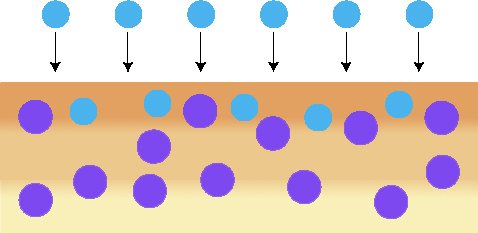
Oil paint doesn’t dry; it oxidizes. That means the oil in the paint absorbs oxygen from the air. These oxygen molecules create a chemical bridge between the oil molecules, locking them together into a hard, firm bond. If something happens to deplete the oil between the pigment particles, you get color sinking.

The layers of your painting surface

Sizing is the first layer applied to a substrate when using oil gesso. In my youth, it was rabbit-skin glue. It stunk but did a good job separating the ground from the linen or cotton substrate and tightening the raw fabric to its frame. Today, it’s been replaced by acrylic sizing. I can’t get the tautness from acrylic sizing that was possible from animal glue, so I use acrylic gesso instead.

Primer seals metal or wooden surfaces and provides a stable foundation for subsequent layers. It’s slick, so gesso is often applied above it for tooth. When I paint on Baltic birch, I use three layers of Golden GAC 100 followed by Winsor & Newton clear gesso.

A ground is the actual painting surface—the layer your brush encounters. It determines the tooth, absorbency and texture of the support. The word gesso is often used interchangeably with ground, but that’s not always true.

Oil gesso is made with chalk or marble dust bound in siccative (drying) oil. It cures slowly but produces a non-absorbent surface that allows oil paint to remain open longer. Brushstrokes glide across it beautifully, and thin layers of color stay rich because less oil is pulled from the paint.

Oil gesso must be kept separate from the backing. Siccative oils create free fatty acids when curing. These create the beautiful, tough bond of oil paint, but they also rot fabric, paper or wood if allowed to touch them.

Acrylic gesso is acrylic polymer containing titanium white and mineral fillers. It dries quickly, is flexible, and works well on canvas, panels and paper. It doesn’t require sizing, it’s easy to use and remarkably durable.

While you can paint with oils directly over an acrylic ground, never paint in acrylics over an oil ground. The paint will delaminate.
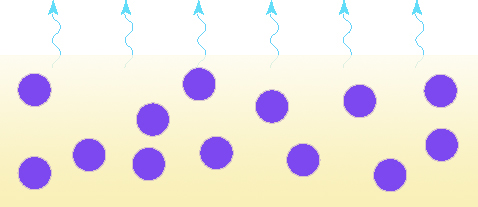
Solvent evaporates, which leaves microscopic gaps between the pigment particles where oil should be. Whether those gaps happen because the fat-over-lean rule was broken or because the ground absorbed too much oil, the result is the same—a flat, dusty surface with dull color.

Sinking

Sinking happens when the ground absorbs some of the oil binder from fresh paint. The pigment remains, but without enough oil surrounding it, dark passages become dull and matte. It isn’t that the color has changed; the leaking away of the oil has left a microscopically-pitted surface that scatters light differently than oil in a tough bond.

That also happens (more commonly, in fact) when you’ve ignored the fat-over-lean rule and used too much solvent in the upper layers.

Acrylic grounds are absorbent and thus prone to sinking. Inexpensive pre-primed canvases with thin factory coatings suffer from this, and sometimes don’t have enough gesso to stop oil from leaching through to the backing.

That doesn’t mean acrylic gesso is bad. I use it. Be sure there’s enough gesso for a solid barrier with the background. Toning the canvas or adding a very thin coat of oil ground after the acrylic has fully cured can dramatically change how paint handles.
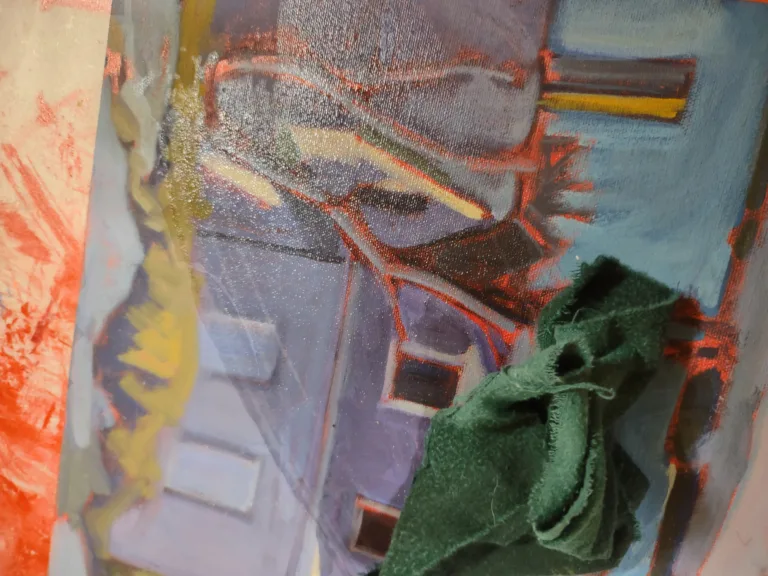
If running a rag with solvent over your (dry) painting causes the color to come back, your painting has sunk. You can bring it back with varnish; however, it’s best to avoid the problem in the first place.

To some degree, the ideal ground depends on your working method. When I did illustration, the highly-absorbent surface of Ampersand Clayboard was great for fast, detailed work. Today, I paint on toned boards or canvases, sketch in color masses with thinned paint and then build impasto. I like the slightly-absorbent grip of acrylic gesso. If you prefer the smooth slide of wet-on-wet paint, you might prefer oil primer.

As with almost everything in oil painting, there isn’t one perfect choice for a ground. There is only the surface that best supports your process.

I have just two workshops left in 2026! Reserve your spot:

Can’t commit to a full workshop? Work online at your own pace:
Seven Protocols for Successful Oil Painters

Genius, bloomers and discipline

Coal Seam, 6X8, oil on archival canvasboard, click on image for more details.

Periodically, I come across a quote that seems so apropos to painting that I save it to share with you. Here are three of my favorites:

Genius is a screw-up

“Have you observed, Emily, that talent only fluctuates about its own middle line whereas genius nearly always makes great walloping bloomers?” (Ngaio Marsh)

Look no further than the career of Winston Churchill for proof; the same man who saved England also oversaw the disastrous naval attack on the Dardanelles.

In painting, there’s tremendous freedom in the willingness to fail spectacularly.

I’m a great fan of Édouard Manet, but if you want to see some significant screw-ups, look at his seascapes. I love A Bar at the Folies-Bergère but I really don’t know what he’s on about in Le Déjeuner sur l’herbe. Both are statements about sexual politics, but I (and most art historians) don’t pretend to understand the latter.

If you look at most great painters’ oeuvres, you’ll find some stinkers. Students often ask how to avoid bad paintings. That’s the wrong question. The goal should be to avoid safety and mediocrity.

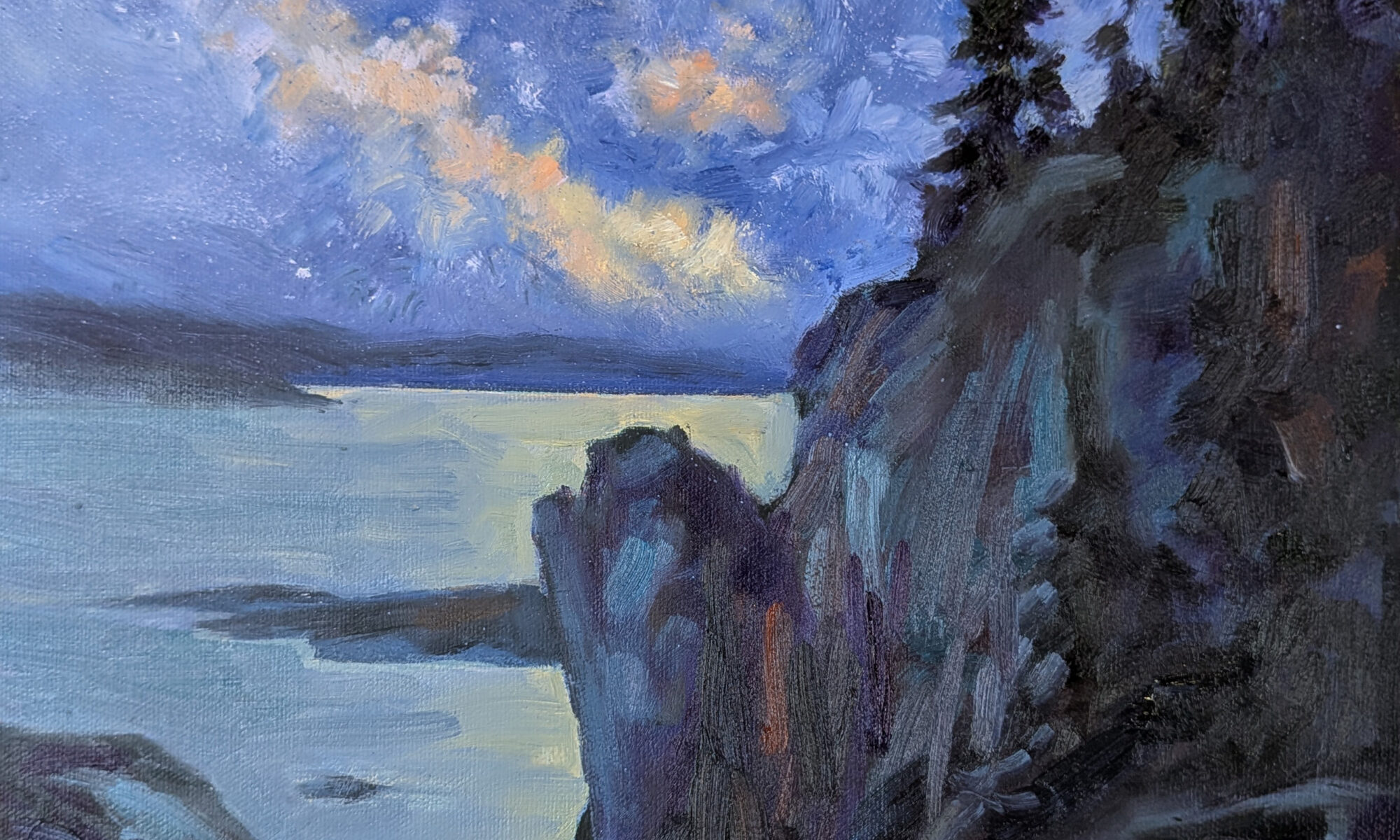
Moonrise, 12X16, $1159 includes shipping and handling in continental US.

Let me pull a rabbit out of my hat

“The most important tool the artist fashions through constant practice is faith in his ability to produce miracles when they are needed.” (Mark Rothko)

When I sit down in my studio, I generally haven’t a clue what’s gonna happen next. I’m in a constant fight with my anxiety. It’s not such a big deal when I’m experimenting; it can be nerve-wracking when I’m up against expectations, mine or others.

Notice that Rothko doesn’t say talent or skill are the artist’s greatest tools. He says faith, fashioned through constant practice. That requires courage, which I have in differing amounts depending on the day.

Pensive 8X10, oil on archival canvasboard. Click on image for more information.

“It didn’t come out like what’s in my mind,” my friend and student Cheryl Ryan told me recently. It never does, I’m afraid. But that doesn’t matter because nobody else can see what’s in your mind; they only see what you put on the canvas.

Meanwhile, we paint studies that don’t quite work. We wrestle with impossible ideas and compositions that collapse under their own weight. Eventually, we’ve solved enough problems that we’re just resigned; there’s no more energy for panic.

Faith in this context means the accumulated experience that lets you paint your way through uncertainty. Faith is trusting that your hands and eyes have learned enough to find the answer.

That kind of confidence only grows one painting at a time.

Early Light is 11X14, oil on archival canvasboard. Click on image for more information.

Less is more

“He swallowed his chagrin and summoned up the professionalism that he had once sourly defined as an infinite capacity to notice less and less with more and more accuracy.” (Ngaio Marsh)

As experience grows, you notice less. You’re editing automatically, on the fly.

I don’t ignore detail because I can’t paint it. In fact, the older I get, the more hyperrealism annoys me, unless it’s married to surrealistic ideas. I ignore detail because there’s a difference between information and noise.

Art is all about priorities. Every brushstroke ought to say, ‘this matters more than that other thing.’ The fewer things you choose to emphasize, the more convincing the whole painting becomes.

Perhaps that’s where these three quotations meet. Practice gives us faith. Faith gives us courage to make spectacular mistakes. Those mistakes teach us what deserves our attention and what can safely be left out.

I have just two workshops left in 2026! Reserve your spot:

Can’t commit to a full workshop? Work online at your own pace:
Seven Protocols for Successful Oil Painters

Amusing myself

A wobbly moose. Alas, he didn’t make the cut.

On Sunday, I lost my Staedtler 0.9mm Mechanical Pencil, which was loaded with Pentel HB drawing lead. This was particularly annoying since it was just a few weeks after I’d dropped my cartridge eraser.

That left me drawing in church with a ball-point pen. That meant no revisions, which in turn meant I couldn’t take my drawing too seriously.

In Genesis 2:19-20, Adam names “the livestock, the birds in the sky and all the wild animals.” Animals in the Garden of Eden have been a popular subject for genre painters since the Renaissance. These paintings generally show a vast, encyclopedic gathering of wildlife. They’re interesting because they show us the limits of zoological knowledge at different times. They also tell us something about the preoccupations of the artists and their cultures.

Alligator and rooster. Even in the Garden of Eden, that rooster ought to have kept his distance.

As PQ talked, I sketched some animals I might throw into the Garden of Eden, including a wobbly moose, an alligator, a chimp, some sheep and a rooster. Meh, I thought, this has all been done. Instead, what about a wooly mammoth, a dinosaur or a dodo-bird?

We know what dodo-birds look like, because they’ve ‘only’ been extinct for almost 400 years. Woolly mammoths began to diverge about 800,000 years ago in Siberia, and have been extinct for 4000 years. However, we have frozen carcasses from both Russia and North America, lots of fossil material and even prehistoric cave paintings to guide us.

Adam naming the dodo-bird, with a thumbnail of Adam naming the woolly mammoth.

When I started to paint, I had to look up the details of what woolly mammoths really looked like. They (like so many other mammals) had five toes on each foot, although only their front feet had an equal number of visible toenails. They walked on their tippy-toes, which must have been hard considering their size. Although their closest living relative is the Asian elephant, mammoths didn’t have elegant elephant ears. In fact, their ears look kind of like ours. Overall, they were ungainly and a bit ugly.

Biblical literalists are likely to tell me my painting is cobnuts; the earth is only 10,000 years old. Scientific literalists will counter that modern homo sapiens only emerged around 300,000 years ago, so weren’t around when woolly mammoths were created. (Hey, I’ve read the Bible and I met Richard Leakey when I was a child.)

Adam naming the Woolly Mammoth, ~11X17, watercolor on Yupo.

God’s timing is not our timing so who’s to say that God’s days are the same length as ours? The Bible is equally prophecy, history and poetry. Its creation story has more in common with science than either side will admit.

“Where were you when I laid the earth’s foundation?” God asked Job. “Tell me, if you understand. Who marked off its dimensions? Surely you know!”

That’s poetry (with a healthy dollop of sarcasm thrown in). Like any art, it doesn’t need to settle arguments about theology or paleontology or anything else. We draw, we paint and we tell stories because imagination is the greatest gift mankind has been given.

Is this a great painting? Absolutely not. But before we can create anything with staying power , we need to learn to relax and have a little fun.

I have just two workshops left in 2026! Reserve your spot:

Can’t commit to a full workshop? Work online at your own pace:
Seven Protocols for Successful Oil Painters

Monday Morning Art School: choosing the right surface for oil painting

Breaking Storm, oil on linen, 30X48, for more information, click on image.

“How you choose what to paint on when working with oil: canvas, linen or board, and what is the right degree of smoothness?” a reader asks. (I wrote about watercolor paper supports, here.)

The list of options is surprisingly broad

  • Cotton canvas is the most economical and common backing. It comes available stretched, in sheets (which can be taped down on a painting board) or by the roll. It has a medium texture that suits a broad range of painting styles. Cotton can sag over time, but in most sizes and applications is perfectly fine.
  • Linen is made from flax fibers and also available stretched, in sheets or by the roll. Linen sags less than cotton and is available in a range of weaves ranging from very fine (portrait) to very rough. It’s significantly more expensive than cotton.
  • Polyester canvas is a newer player. It doesn’t absorb moisture, and is stable and sag-resistant.
  • Canvas or linen boards, mounted on cardboard or fiberboard. These boards are inexpensive and portable, but they are not archivally-sound.
  • Canvas or linen boards, adhered to MDF or hardboard are commonly used by professional artists for plein air painting. They’re rigid, lightweight and durable. (There is no advantage to linen once it’s glued to a board; only pay extra if you love the texture.)
  • Birch plywood is smooth, rigid and relatively inexpensive. It should be sealed on all sides to minimize warping.
  • Baltic birch plywood is a higher-grade plywood that is more stable. It’s my personal favorite substrate, but it requires a lot of preparation.
  • Untempered hardboard (Masonite) is extremely smooth when properly primed and is inexpensive and durable. It’s heavier than other boards.
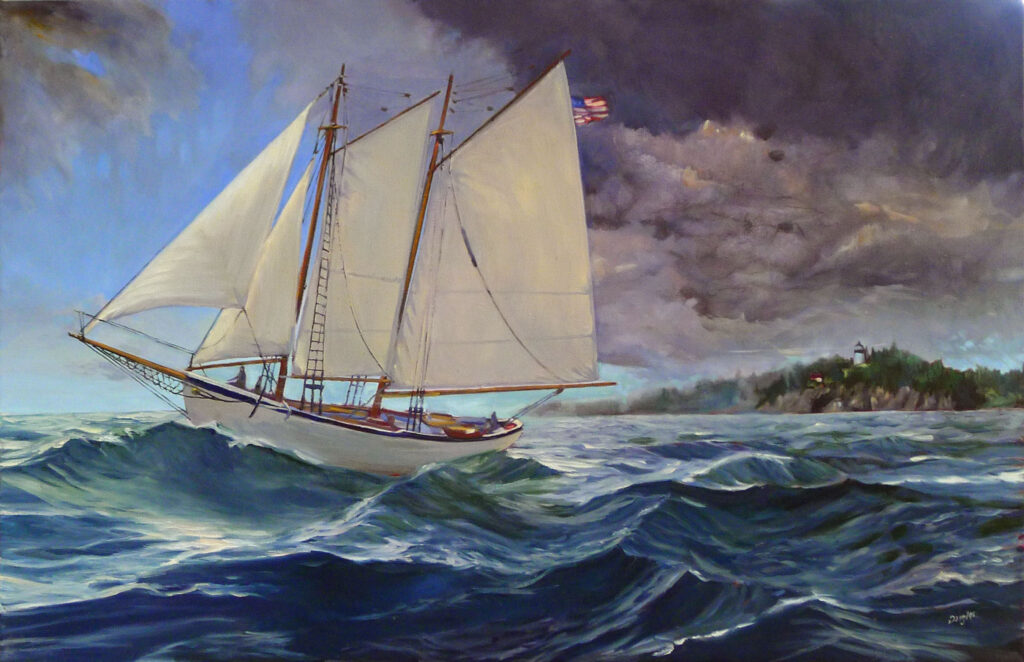
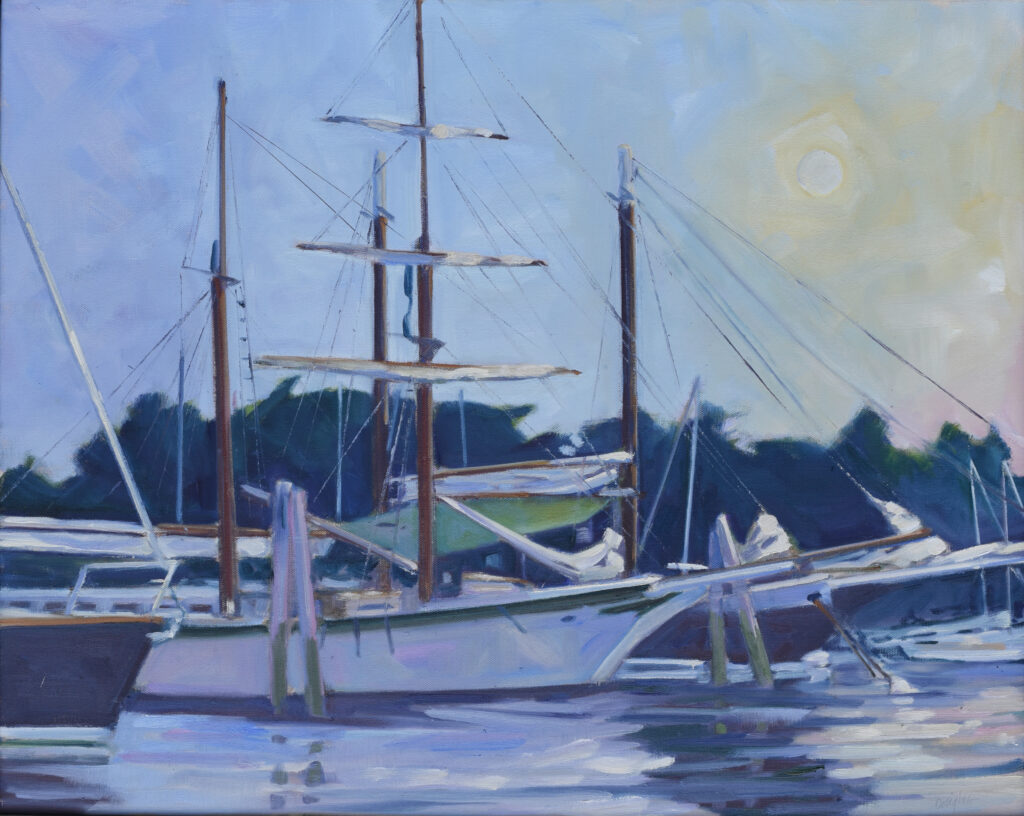
Brigantine Swift in Camden Harbor, 24X30, oil on canvas, framed, for more information, click on image.
  • Commercial gessoed hardwood panels (such as Ampersand boards) have a smooth, consistent surface that’s archivally-sound. They can be more absorbent than gesso over canvas.
  • Wood cradled panels have a frame (cradle) on the back. Cradling is not necessary on small boards, but becomes important for larger work where warping can be a problem. It makes for elegant unframed work.
  • Oil painting paper is specifically manufactured to resist oil penetration. It is inexpensive, making it great for studies.
  • Heavy watercolor paper can be used if properly primed. This is a good solution for studies and experimentation.
  • MDF (Medium Density Fiberboard) is smooth and heavy. It is susceptible to moisture problems.
  • Aluminum composite material (ACM) is extremely rigid, won’t warp, and is light in weight. It is one of the most stable supports available.
  • Copper can produce luminous effects if allowed to show through. It is very expensive and must be degreased, abraded and sealed before painting.
  • Wood supports have included oak panels (Northern Renaissance) and poplar panels (Italian renaissance. Most paintings before 1500 were painted on wood rather than on canvas.
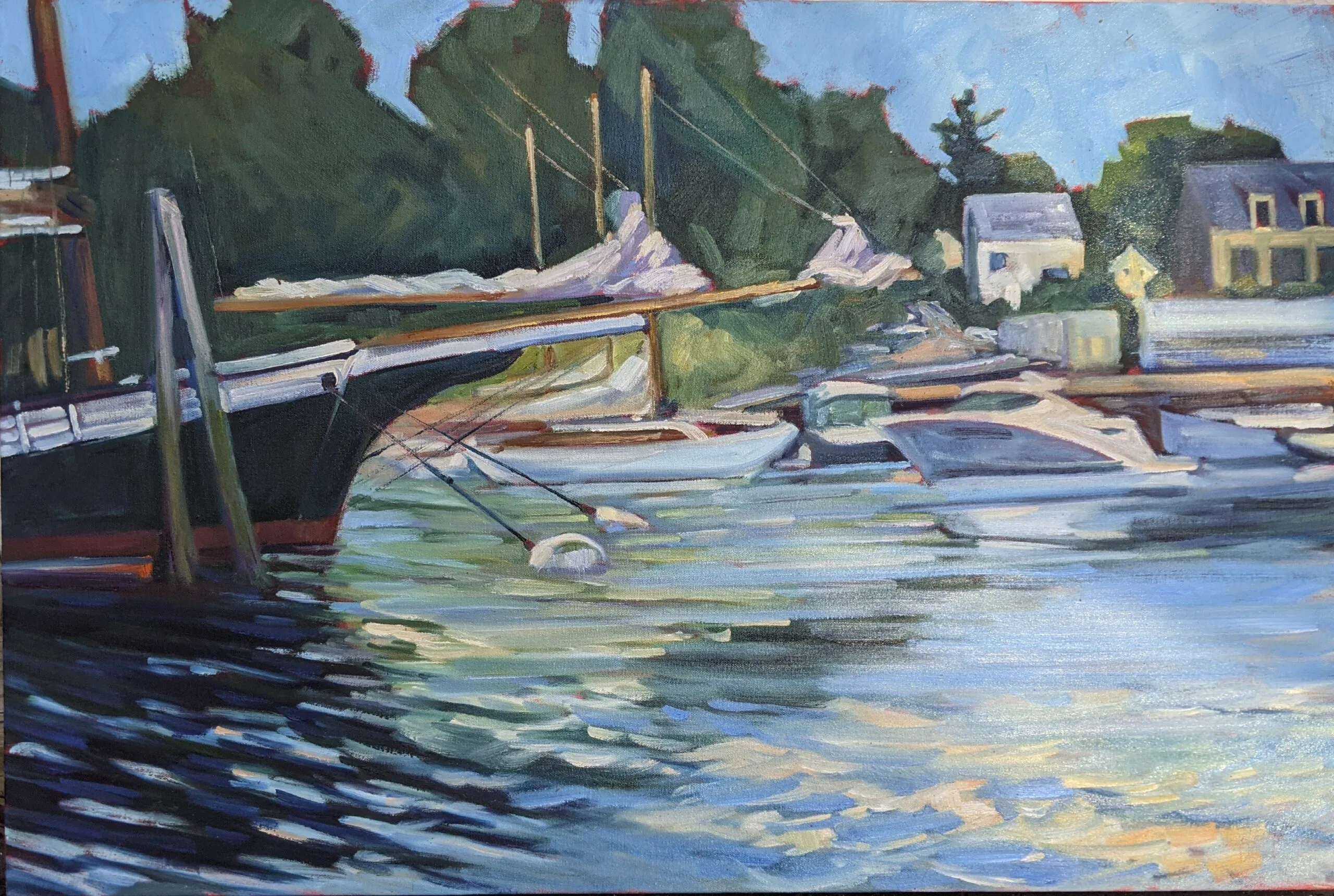
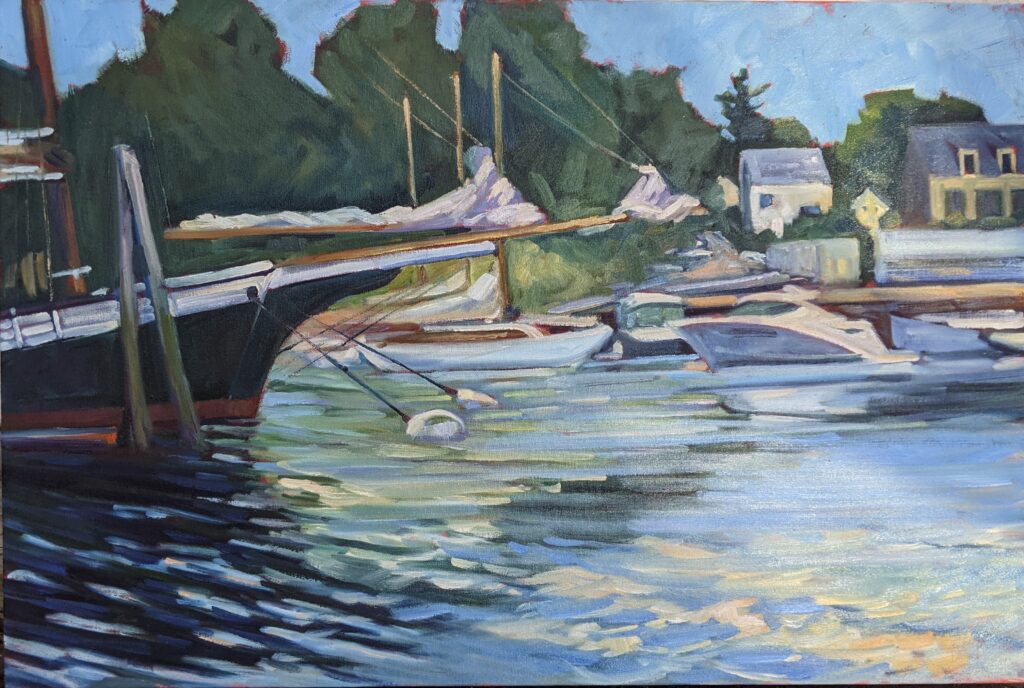
Camden Harbor, Midsummer, oil on canvas, 24X36. For more information, click on the image.

What’s the best texture?

  • Ultra-smooth surfaces are best for highly detailed work.
  • Fine weave is versatile and is often selected for portraiture.
  • Medium weave is the most common texture and is useful for a range of brushwork.
  • Rough weave is suitable for expressive, broken brushwork.

Why do plein air painters work on panels?

Professionals use archival-quality canvas panels; they’re significantly more expensive than the paper-backed canvas panels sold in most art stores.

These panels are moisture-resistant, easy to transport and fit neatly into wet-panel carriers. They are easier to frame than stretched canvas. They also prevent light infiltration from the back of the canvas. However, after a certain size (in my experience, about 20X24) they are heavy and prone to warpage. Above this size, I switch to stretched canvas.

Winter lambing, oil on linen, 30X40. For more information, click on image.

Here’s the sad truth

I’d prefer you always painted on great supports, but every artist makes do at times.

A wonderful painting on an inexpensive panel is still a wonderful painting. A lousy painting on Belgian linen is still a lousy painting. While conservators can rescue a painting on a bad support, no support cannot rescue weak composition, muddy values or bad ideas.

I have just two workshops left in 2026! Reserve your spot:

Can’t commit to a full workshop? Work online at your own pace:
Seven Protocols for Successful Oil Painters

This is your brain on art: tricking the mind

Cape Breton Highlands, 8X10, oil on archival canvasboard, click on image for more information.

Why does one painting move you to tears while another bores you to tears? The human brain is remarkable, but never more so than in how it processes visual art.

Despite being completely debunked as a theory, people persist in believing we ‘draw on the right side of the brain.’ But art requires a vast network of specialized regions working together.

Let’s run through the hardware

Our retinas detect light levels and process contrast before signals go to the brain. Where there’s value contrast, our retinal neurons amplify the difference.

That’s why the most important element in composition is value. High contrast and hard edges grab attention because your visual system is wired to notice these.

Our retinas also compare color signals in opposition: red vs. green, blue vs. yellow. This is why complementary colors seem to vibrate when next to each other. It’s also why neutrals can appear warm or cool depending on what’s nearby.

The human retina contains roughly 125 million photoreceptors but only (!) a million optic nerve fibers. Information is already analyzed and compressed by more than 100-to-1 before leaving the eye.

Thomaston, ME, 14X18, oil on archival canvasboard. Click on image for more information.

The visual cortex

The visual cortex rapidly records the raw information coming through your eyes: lines, edges, colors, values, movement and contrast. From there, the information travels along two major pathways. The ventral stream identifies objects. It tells you whether you’re looking at a dog or a lighthouse. Meanwhile, the dorsal stream analyzes spatial relationships, perspective, distance, and movement.

While non-artists often focus on what an object is, painters tend to focus on where it sits in space and how it relates to everything around it.

Interpretation

At the same time, the amygdala is assessing emotional content. Long before you’ve consciously decided whether you like a painting, your brain has responded emotionally. Color, contrast, rhythm, and composition trigger feelings of excitement, calm, tension or boredom.

Meaning emerges from the prefrontal cortex. The brain connects what you’re seeing with memory, experience, culture and personal history. That’s why two people can come away with completely different interpretations of a painting.

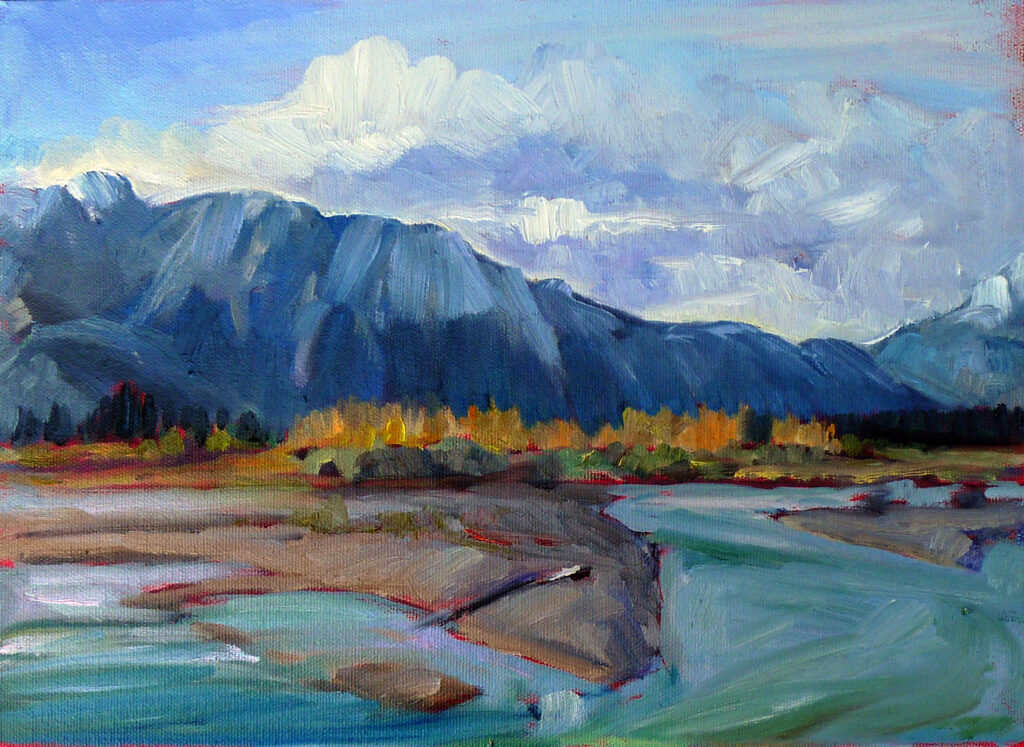
Athabasca River Confluence, 9X12, click on image for more information.

We read realism and abstraction differently

With realistic images, the brain recognizes familiar forms and quickly identifies them. We experience a sense of comfort proportional to how closely the image matches our experience.

Abstract art doesn’t give the brain this opportunity. While we’re always prone to recognize objects in patterns (the basis of the Rorschach test), we primarily see colors and shapes in abstract art. The viewer becomes an active participant, searching for meaning, emotion, and relationships in the absence of labels.

How we perceive color and depth

Color is an illusion of the brain. Our retinas compare wavelengths of light and create the sensation we call color. As noted above, context matters enormously. This is why painters think in terms of color relationships rather than individual colors.

Perspective works similarly. Paintings are flat but the brain eagerly accepts the illusion of three-dimensional space. Overlapping forms, atmospheric perspective, value shifts, edge quality, and relative size all activate the dorsal stream’s spatial processing. The brain assembles these clues into a convincing semblance of distance.

Brain architecture, how we see, retina, visual cortex, perception
Eastern Manitoba River, 6X8, oil on archival canvasboard, click on image for more information.

Collaboration

Every successful painting is a partnership between artist and viewer. The painter provides the clues. The viewer responds.

Of course, viewers never see paintings as they exist on canvas. They see a version constructed by their visual system.

This is why painters can create convincing form with very few brushstrokes. Our brains don’t need complete information. They were built to infer reality from incomplete clues.

I have just two workshops left in 2026! Reserve your spot:

Can’t commit to a full workshop? Work online at your own pace:
Seven Protocols for Successful Oil Painters

Painters who invented the past

Isabella and the Pot of Basil, 1868, William Holman Hunt, courtesy Laing Art Gallery

When I’m dying for a reason to be cranky, I look at paintings by the Pre-Raphaelite Brotherhood. They were roughly the contemporaries of the Impressionists, but with little interest in the observed world. The Pre-Raphaelites were fantasists for the repressed Victorian age. They painted women as low-browed, passive, mysterious, tragic, seductive, doomed and sensuous. With some exceptions (including Ford Madox Brown’s The Last of England) the Pre-Raphaelites painted cloying sentimentality and rampant romanticism. And they invented how we see historical England: knights in shining armor and noble ladies with flowing hair, living out rigid gender roles in castles bathed in golden light.

Almost none of that comes from actual medieval life.

The Pre-Raphaelites weren’t trying to teach history. They were reacting against the Industrial Revolution. To artists like John Everett Millais, Dante Gabriel Rossetti, and Edward Burne-Jones, medieval themes represented the beauty and romance sadly destroyed by Blake’s “dark satanic mills.” Then there’s Frederic Leighton, who exploited classical themes to paint scantily clad beauties.

The Knight Errant, 1870, John Everett Millais, courtesy Tate Britain

The real medieval world was cold, dirty, violent and—by modern standards—desperately poor. Disease was common. Life expectancy was short.

On the other hand, Victorian gender roles were psychologically and socially more oppressive than in the Middle Ages. That’s where the Pre-Raphaelites did their most blatant lying. Medieval women lacked legal rights, but so did most men. Women’s labor was essential to the family unit. In contrast, the Victorians actively stripped middle-class women of economic agency.

Yet the images created by the Pre-Raphaelites became so powerful that they helped to permanently shape our view of medieval life.

Flaming June, 1895; Lord Frederic Leighton, courtesy Museo de Arte de Ponce. I hate everything about this painting.

Artists don’t just record culture. They create it.

Ask someone to describe a dinosaur and they’ll likely talk about a giant reptile covered in scales. Much of that visual imagery can be traced back to Charles R. Knight. He worked closely with paleontologists in the early twentieth century. His colorful, lively murals and illustrations appeared in museums, books, magazines and classrooms throughout the world.

Leaping Laelaps, 1897, Charles R. Knight.

Unlike the Pre-Raphaelites, Knight was extraordinarily diligent in his research. However, our scientific knowledge at the time was slim. Scientists thought dinosaurs were giant reptiles, so his dinosaurs looked like giant reptiles.

Today, evidence suggests that many dinosaur species possessed feathers or feather-like structures. Current science says that birds are the last dinosaurs. Yet the image of the scaly dinosaur remains embedded in popular culture thanks to Knight’s skill and popularity as a painter.

There’s a lesson in this for us

We often talk about art as if it merely reflects reality. In fact, art determines what reality looks like in our collective imagination. For example, how much do movies and television shape what you think you know about the world?

Sometimes those visions are accurate. Sometimes they’re whimsical. Sometimes they’re harmful. Often, they’re a mixture of fact and fiction.

Once a compelling image takes hold, it can persist for decades or even centuries. That’s the extraordinary power of all art, including painting.

I have just two workshops left in 2026! Reserve your spot:

Can’t commit to a full workshop? Work online at your own pace:

Seven Protocols for Successful Oil Painters

Monday Morning Art School: no, you didn’t suddenly forget how to paint

Along Beech Hill Road, 12X16, oil on archival canvasboard, click on image for more information.

I’ve spent the last two weeks painting dreck. It’s not bothering me, although I may be driving Bobbi Heath nuts with my process photos.

I’m experimenting with brushwork. Suddenly everything I know has gone phut. My compositions are poor, I can’t keep darks and lights separated, and I’m covered head-to-toe with paint (always a sign that it’s not working, and dangerous in a house with a white sofa).

A quick note on classes before we get into it

Claim your spot in Painting clouds, which starts this evening. There are just two seats left and this is my last Zoom class before fall.

By the way, you can always go back to watch the videos of these classes. That’s also true for those who’ve taken Seven Protocols for Successful Oil Painters. As long as there’s YouTube, the lessons will be available to those who’ve taken the classes.

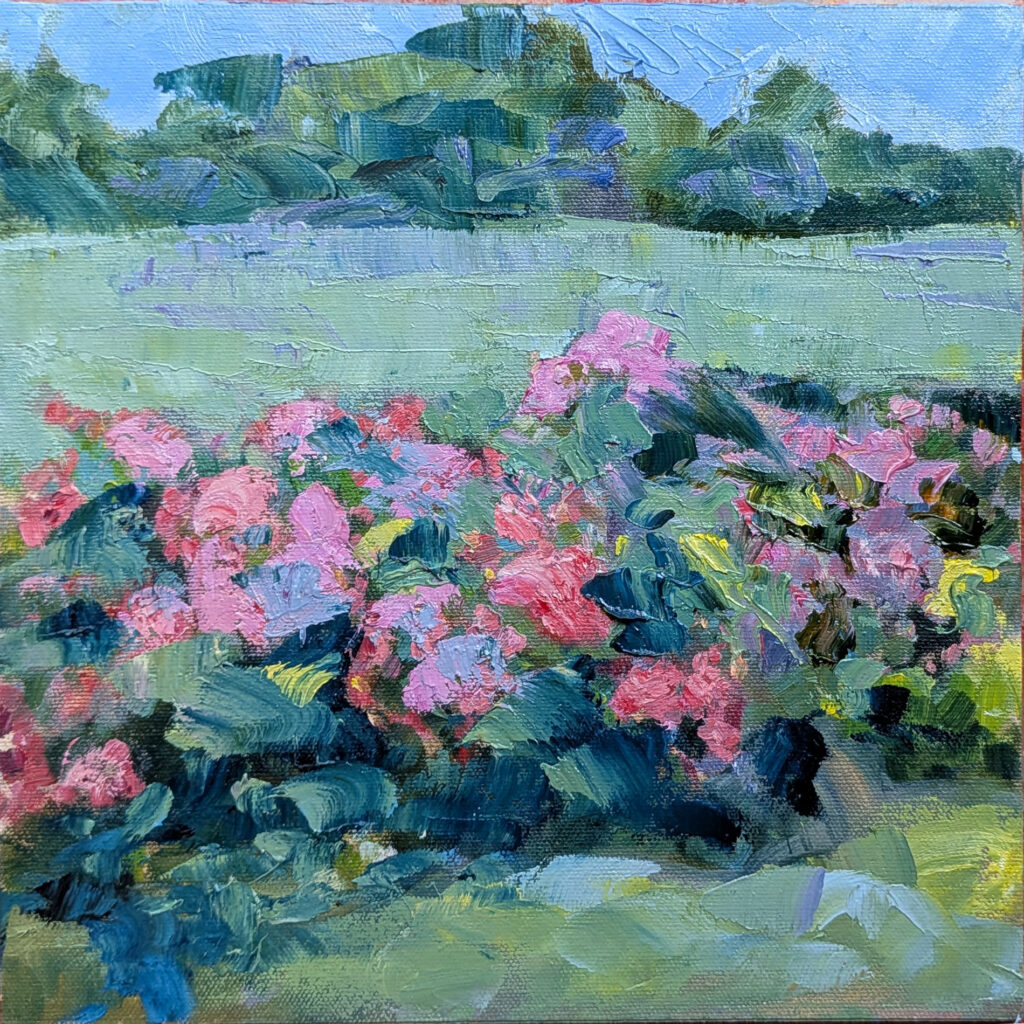
Beach Roses, 10X10 on sealed Baltic birch, for more information, click on image.

I’m not worried

I used to play baroque keyboard music. I’d run through the left-hand part a few times, then I’d do the same with my right hand. No problem. Then I’d put them together and it felt like a train wreck.

I don’t know why the human brain is wired like that, but complicated skills don’t operate in isolation. Change one thing in your process and it can feel as if you’ve forgotten everything you know. It’s easy to psych ourselves out when that happens.

Painting isn’t a collection of isolated skills. It’s a network. Composition affects drawing; drawing affects value; value affects color; color affects edge handling; edge handling affects brushwork; brushwork affects composition… Pull one thread and the whole tapestry temporarily unravels.

Perhaps you’ve painted from photographs for years and are trying plein air. Perhaps you’ve abandoned your tiny brushes and are forcing yourself to work with giant flats. Your new challenge disrupts all the little compensations you’ve developed over time. It feels uncomfortable. Many artists mistake this discomfort for failure. Don’t give up; it’s actually evidence that learning is taking place.

Grand Canyon at sunset, oil on canvasboard, 9X12, click on image for more information.

I’m cheerfully incompetent right now

Painting through an intentional challenge is not fun. It’s so much easier to slip back into what one knows, where one feels competent and larky.

Our brains like efficiency far more than struggle. Once we’ve learned a process, we bundle dozens of small decisions together and run them automatically. That’s wonderful, but it can be self-limiting. Growth sometimes requires unpacking those decisions and examining them one at a time.

Unfortunately, that can feel like negative progress.

However, I’m a wily old bird who’s done this before. I know I haven’t suddenly become a worse painter overnight. I’ve simply moved into unfamiliar territory.

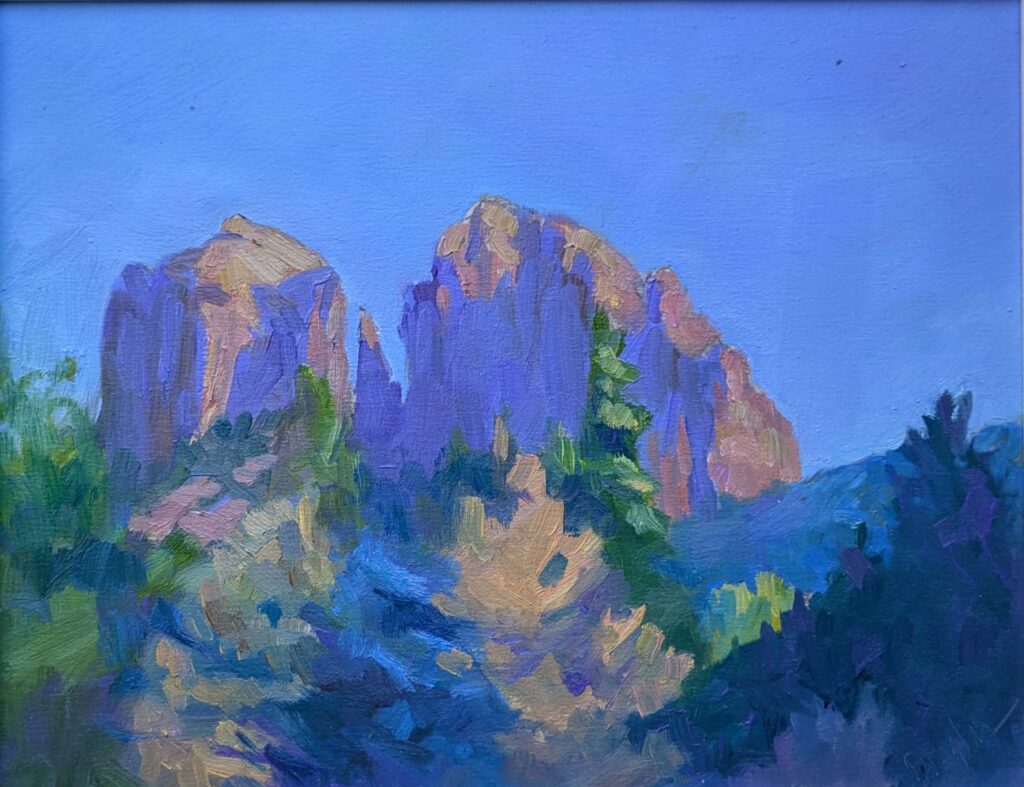
Blue and purple, Sedona, 11X14, oil on archivally-prepared Baltic birch, click on image for more information.

How long does this last?

Generally, it doesn’t last nearly as long as you fear. The first few paintings after a process change are usually terrible. The next few are awkward. Then, almost without noticing, your new skill begins to integrate itself with everything else you already know.

Your prior knowledge didn’t desert you; your brain simply had to reorganize itself around the new information.

“Just try it my way for one week,” I ask my workshop students. Then I watch their first painting with this new process come out pretty awful. I don’t enjoy watching them be temporarily disheartened. However, it always seems to work; they manage to integrate their new knowledge and come out better, stronger painters. Since that’s my job, I’m satisfied.

If every painting feels easy, you’re probably repeating yourself. Growth can feel very uncomfortable, but keep going anyway.

Experienced painters embrace a cycle of failure. We know that today’s clumsy experiment may become next year’s indispensable technique. The trick is to not panic.

I have just two workshops left in 2026! Reserve your spot:

Can’t commit to a full workshop? Work online at your own pace:

Seven Protocols for Successful Oil Painters

There are only so many summers

Country path, 14X18, oil on archival canvasboard. Click on image for more information.

Yesterday, Laura and I were trying to figure out when to schedule a six-week Zoom session of Figure in the Landscape.

“You have room for only two more sessions this calendar year,” she told me.

That stopped me cold. My calendar is crowded with workshops, travel, shows and other obligations. But it seems like 2026 is racing by.

A quick note on classes before we get into it

Claim your spot in Painting clouds, which starts Monday evening. There are just two seats left.

Brilliant Summer Day, 6X8, oil on archival canvasboard, click on image for more information.

It’s just a dream until you give it a plan, deadline and action

When you’re young, time feels infinite. Someday I’ll learn to paint. Someday I’ll take that workshop. Someday I’ll get serious about doing art.

Around the time you feel your first twinges of arthritis, you realize that someday is a fantasy.

This is one of the liberating truths of aging. The older we get, the more precious time becomes. I’m not afraid of running out of it, but I do understand its true value.

Age is just a number, pffft.

One of my few regrets in life is not learning to say ‘no’ to things I really don’t care about at a much younger age. I’m 67 and I’m still not great at it.

One of my doctors has a device that calculates metabolic age. I thought it was cool until it told me my metabolic age is 69 and some change.

Yes, painters have done remarkable work well into their nineties. See Wayne Thiebaud, David Hockney, Lois Dodd, Claude Monet and more. However, a few weeks ago, my younger cousin—a paragon of healthy living—died suddenly. It was an acute reminder that healthy habits are great, but none of us gets a guarantee. I could fall off my twig tomorrow or live to 100.  None of us knows what next year will bring.

Milky Way, 12X16, oil on archival canvasboard, click on image for more information.

I’ve been meaning to take one of your classes for years…

I hear variations on, “I’ve been meaning to take one of your classes for years” all the time. Some people said that so many times about my schooner workshop that they literally missed the boat. They were genuinely shocked when I told them it was finished.

Procrastination

We wait until we’re less busy. We wait until we have the right equipment, the right studio, the right amount of confidence.

Meanwhile, it’s summer again, the leaves turn again, the snow blows again, the cherries blossom again. Another year has slipped past, and then another.

I’ve noticed that when they’re purely in my imagination, every painting I think up is brilliant. Procrastination means we don’t have to wrestle with our mere adequacy. But art doesn’t exist in our imagination; it’s a tangible object that exists only when you make it. Although it might be different from what you imagined, it is often actually better.

New growth, old growth

This week two workshop students sent me pictures of new plein air paintings. They are much more mature and self-assured than they were a year ago. That’s because they’re doing the work to improve. I’m still teaching because I enjoy watching those transformations.

Summer Day, 16X20, oil on linen, private collection.

Urgency

If you’ve thought about studying with me, whether online or in person, I encourage you to consider doing it sooner rather than later. I’m not trying to create a false sense of urgency here; I don’t need to.

Urgency is built into life. Every person is their own universe of thoughts, feelings, relationships and potential. When we pass on, the world we created and lived in and all the possibilities we entertained are gone forever.

Time may be infinite, but our human time is finite and therefore valuable. What we do with it is up to us. Paintings can, of course, wait forever, but the opportunity to paint them cannot.

I have just two workshops left in 2026! Reserve your spot:

Can’t commit to a full workshop? Work online at your own pace:

Seven Protocols for Successful Oil Painters

The urge to create: lessons from prehistoric cave painters

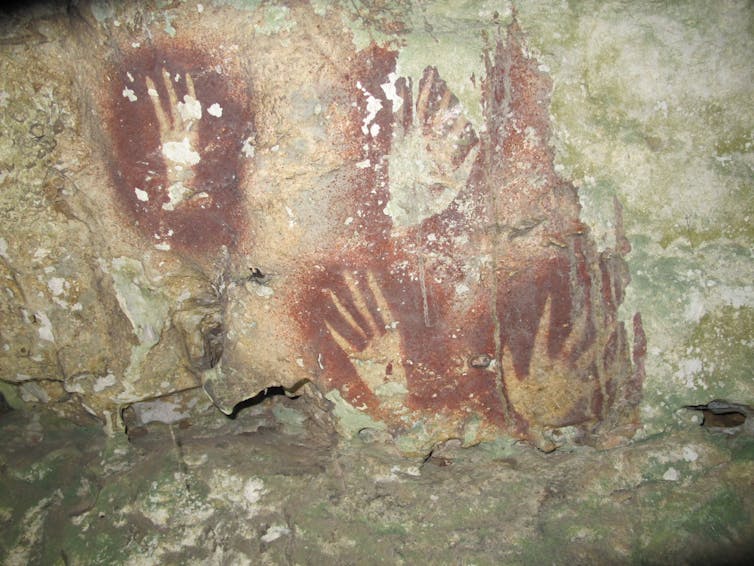
Narrowed finger hand stencils in Leang Jarie, Maros, Sulawesi, courtesy Leakey Foundation

Humans have deep, innate creativity. Where does it come from? For me, the answer is simple: I’m made in the image of the Creator, therefore I create. For those of a materialist turn of mind, the question is impossible. There is no biological or evolutionary need for artistry.

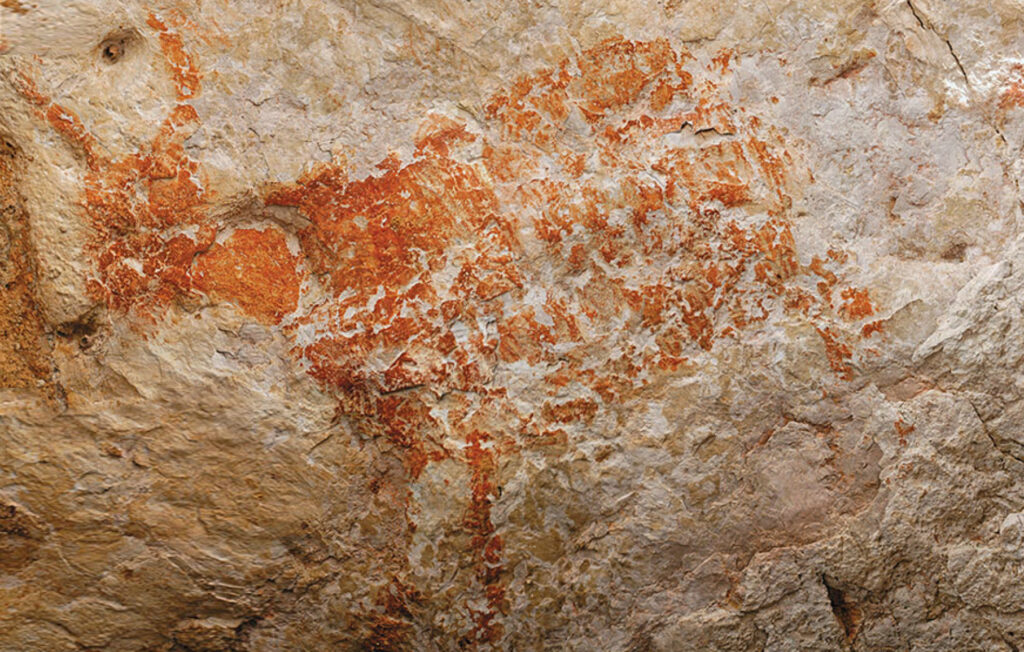
When I was a student in the last millennium, we arrogantly assumed that all ancient hominins were knuckle-draggers with no inner life at all. Today we have an example of cave art from Sulawesi in eastern Indonesia, dated to at least 67,800 years ago. There are at least three cave art sites in Europe that predate the arrival of homo sapiens by 20,000 years, meaning they were most likely made by Neanderthals. These dates will be pushed farther and farther back as more sites are discovered and analyzed.

Bull from Lubang Jeriji Saléh cave, 40,000-52,000 years old, courtesy Le Kalimanthrope, Indonesia

A quick note on classes before we get into it

Claim your spot in Painting clouds, which starts next Monday evening. There are just two seats left.

What art lessons can we learn from our hominin ancestors?

I often tell students that technique—as important as it is—isn’t the point. The real question is what you’re trying to say. Everything else is subservient to that.

Your message doesn’t have to be some grandiose theme; these have a way of seeming dated in just a few years. But more modest ambitions speak loudly. Cave art tells us something profound: that a long-gone artist once paused long enough to notice things.

Noticing and recording are spiritual acts. I’m not talking about religion here; I’m talking about the belief that there is something beyond our material existence. Art is symbolic thinking. That makes the hominins who engaged in it a lot like you and me.

All art history is a bridge to long-lost minds. Cave art tells us that someone, long ago, looked at the same world as I do today, slapped some ochre onto their hands and made an image that interpreted what they saw.

I will never see a cave painting; they’re too fragile for casual visitors. But there’s something incredible about the idea of art made by people tens of thousands of years ago. Stripped of all cultural reference, it is the embodiment of a universal language of art.

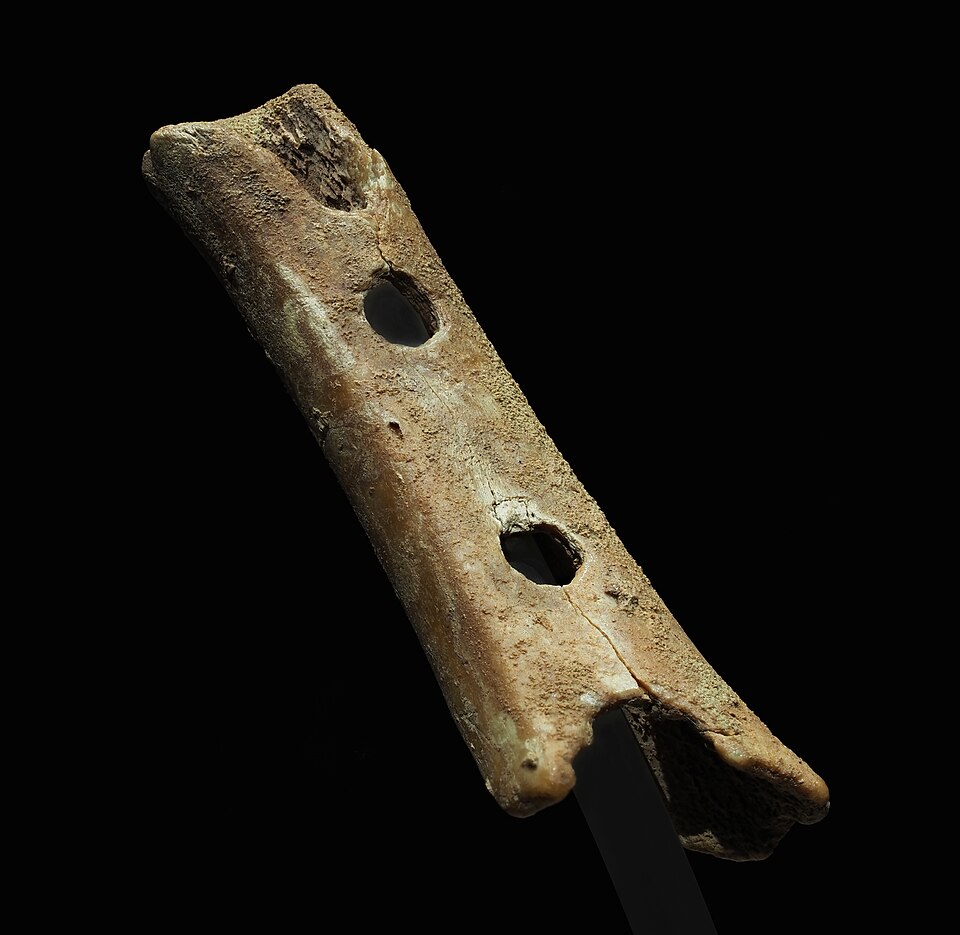
Divje Babe flute estimated to be 50,000-60,000 years old, courtesy National Museum of Slovenia

Where does art fit into human history?

Let’s set some date-markers here: agriculture (as in cereal cultivation) is about 23,000 years old; cities are about 10,000 years old; written language about 5,000. These are all the achievements of homo sapiens. All the other hominins were either extinct or gathered into the human gene pool by then.

Before they became farmers, hominins spent all their time catching and cooking their food. (At least they had fire, thank goodness.) Nobody had the time to develop civilization, which is why cities and written language were such late inventions.

Art is way older than civilization. The oldest known musical instrument is at least 50,000 years old. Hominins were decorating cave walls almost 70,000 years ago and carving figurines some 40,000 years ago. Art and music predate almost everything of practical material culture.

My Neanderthal great-granddaddy

We now know that the Neanderthals buried their dead, used pigments, made jewelry from shells and claws, and created abstract cave markings. Since all Europeans carry Neanderthal genes, we can also infer that our homo sapien ancestors found them attractive enough to have children with them.

The lion man from the Stadel Cave in Hohlenstein, Lonetal is estimated to be 35,000-41,000 years old.

Imagination is symbolic thought

When Neanderthals carefully placed items within a ritual burial or painted on a wall, they were investing time and energy in something that served no immediate need. That is the very definition of art.

Could your work speak to someone in ten thousand years?

Heck, could your work speak to someone in twenty years? Leaving aside the impermanence of modern media, what in your art transcends the culture in which we live? What can speak to something universal in the soul of man? Is that even important?

I have just two workshops left in 2026! Reserve your spot:

Can’t commit to a full workshop? Work online at your own pace:

Seven Protocols for Successful Oil Painters

Monday Morning Art School: who’s painting—you or the camera?

The Vineyard, oil on linen, 30X40, for more details, click on image.

“Why do you keep falling back into painting directly from a single photograph?” I asked my Tuesday Zoom class.

“I have very little time to make art,” said Beth, “and I want to just dive into it. I’m working from my own photos so I think I’ve already done the composition. It looks good when I start but…”

“There’s not a lot of ego involved in copying one single photograph,” said Jay. “Painting from a single photo is fun and at times meditative.

“As soon as the challenge is raised by having to integrate designs, it gets much more difficult. When you start working with more than one reference you have to start asking yourself why you’re including individual elements.”

All Flesh is as Grass, oil on linen, 30X40. For more information, click on image.

A quick note on classes before we get into it

Claim your spot in Painting clouds, which starts in two weeks. There are just two seats left.

Painting from a photo

Jay put his finger on something important: painting from a single photograph feels safe. The decisions are already made. The photographer chose the framing, established the relationships between objects, froze the light and compressed a three-dimensional world into an image. All that’s left is transcription.

Careful observation is always a valuable skill. But copying is not the same thing as creating.

You, the creator

When you move beyond one photograph, you’re forced into the role of designer.

Suppose you start with a glowering sky in one reference, a wheatfield in another, and a harvester in a third. You know these can make a beautiful painting; you were there. You took the pictures and felt the weather in the air. But now you must establish a series of focal points through a painting. You must think of what passages to delete and what to emphasize. You must tread the fine line between saying nothing and saying too much.

Winter lambing, oil on linen, 30X40. For more information, click on image.

That’s thinking like a painter

That can be uncomfortable. There is no longer a single right answer to these questions, but it feels like there are many potential wrong ones. Some choices will strengthen your painting. Others will weaken it. The responsibility shifts from the photo to you.

(That, by the way, is one reason I insist my students start by sketching. It cuts down the failure rate.)

The masters edited relentlessly—moved mountains, widened rivers, changed the weather, simplified architecture and arranged figures. (Heck, most of them didn’t have photography at all.) They wanted viewers to feel and understand important concepts. They manipulated their compositions to serve that.

That goes for you, too

Learning to combine references forces you to make choices based on design rather than convenience. You begin to understand how value structure, color harmony and focal points work together to guide the viewer’s eye.

Most importantly, you stop treating photographs as masters and start treating them as servants.

The camera is an extraordinary tool, but it has no imagination. It is as good or bad as the operator behind it. In my experience, brilliant photos seldom make brilliant paintings. They’re two different art forms.

Deadwood, oil on linen, 30X40. For more information, click on image.

Moving past the single photo

Good painters take different photographs for reference than they do for fine art. They choose a wider frame, because cropping through the viewfinder for composition can mean leaving something important out.

I challenge you to choose three related reference photos and study them by sketching them. Then, set them aside for a day. Come back and sketch your Big Idea without looking at your sources. If the result is good, make it a painting. If it isn’t, rinse and repeat.

I have just two workshops left in 2026! Reserve your spot:

Can’t commit to a full workshop? Work online at your own pace:

Seven Protocols for Successful Oil Painters