What do “indirect” and “alla prima” mean?

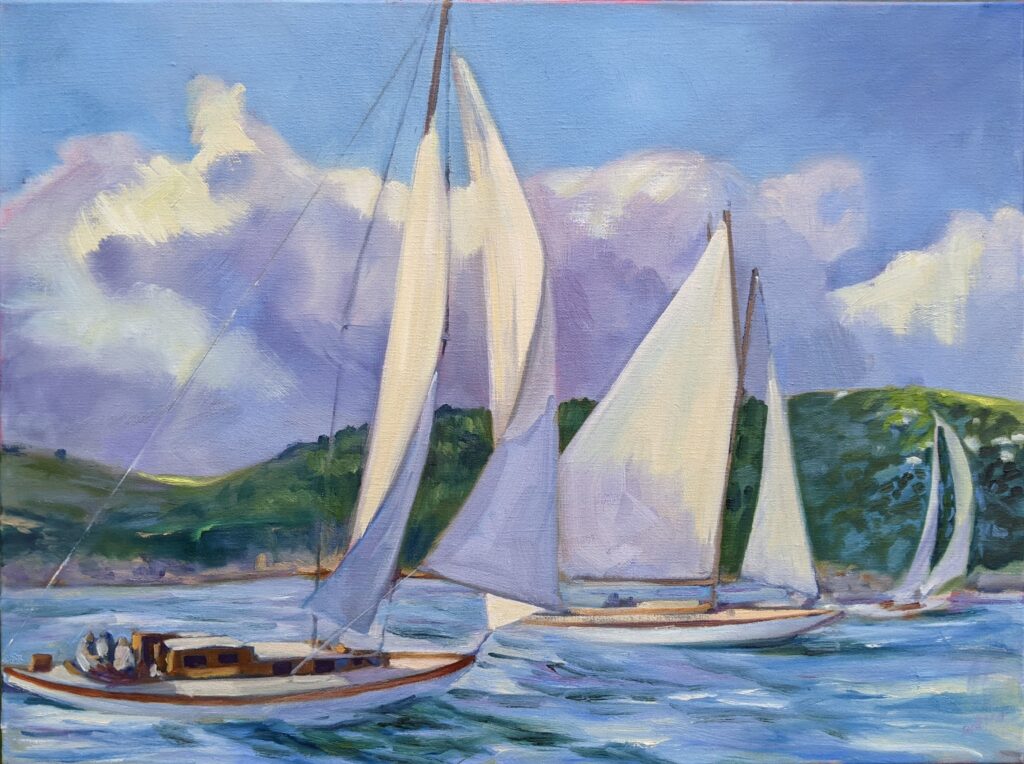
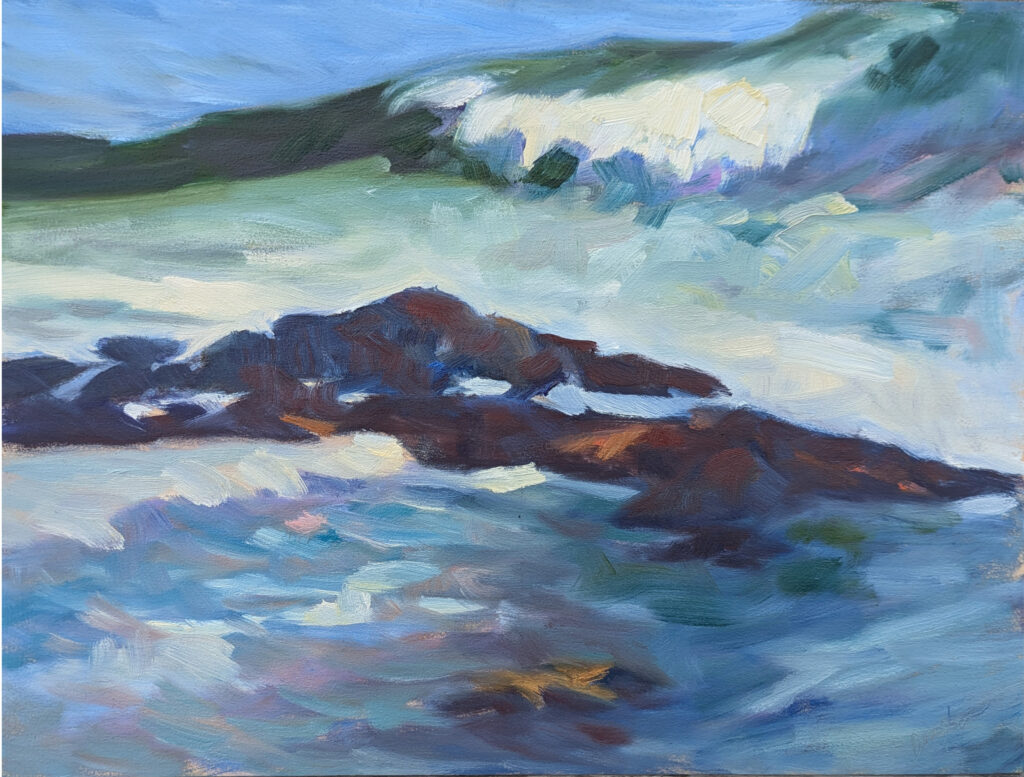
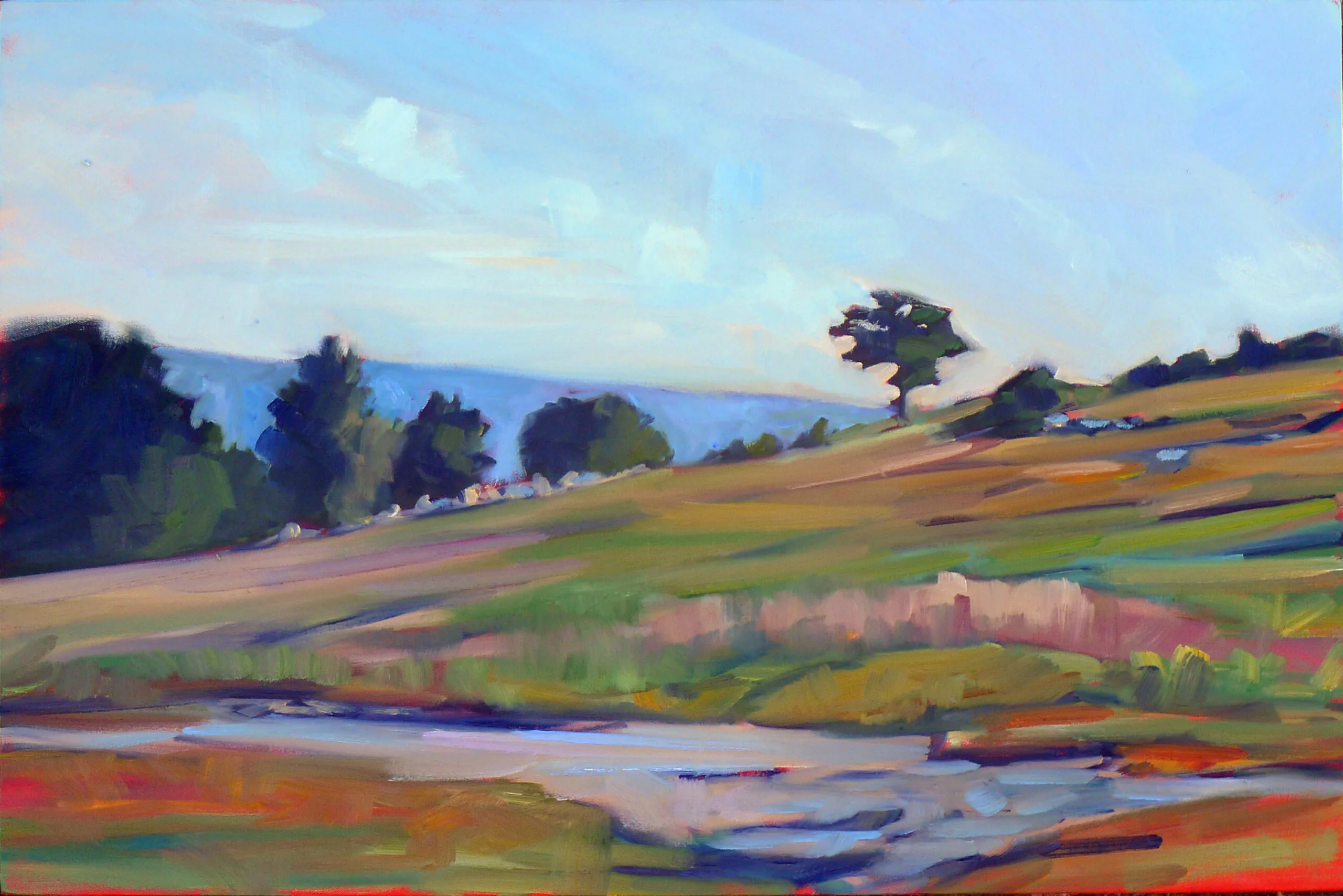
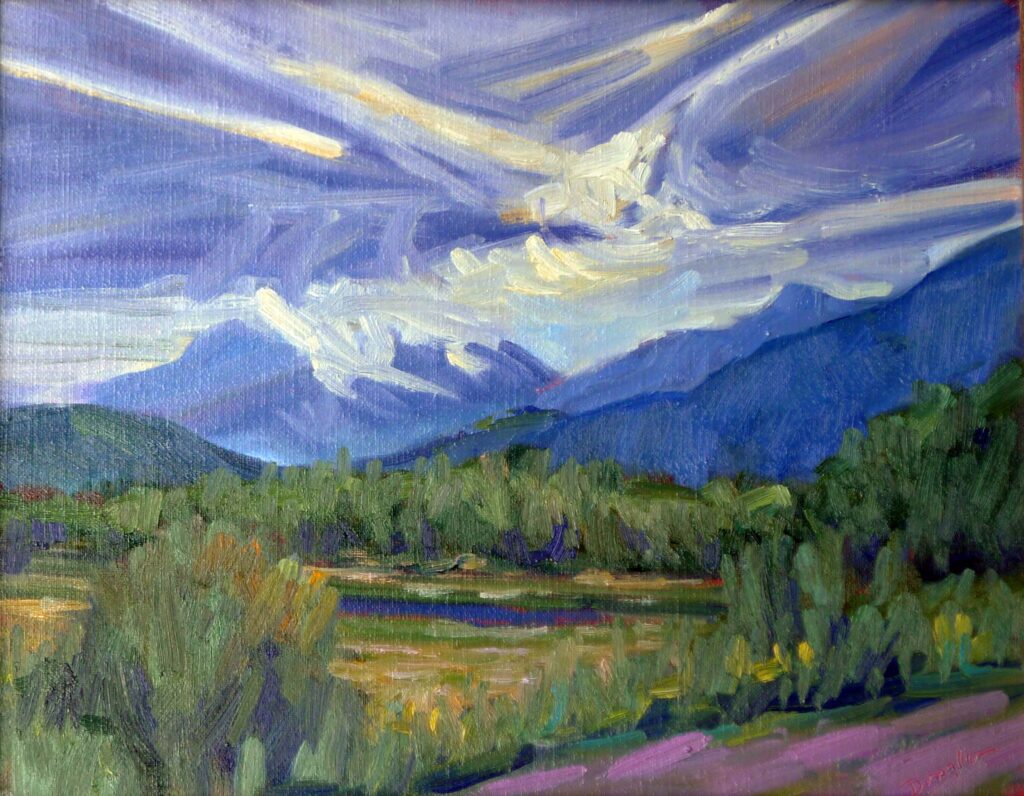
Breaking Storm, oil on linen, 30X48, $5579 framed includes shipping and handling in continental US.

I learned to paint indirectly, meaning with glazes. When I finally got around to studying with Cornelia Foss, she told me, “If this was 1950, I’d say ‘brava,’ but that is so out of date.” (To be fair, 1850 might have been more accurate, since the heyday of indirect painting was before the Impressionists.) She then proceeded to deconstruct and reconstruct my practice using alla prima technique.

There really isn’t such a strict boundary between the two. They are more like endpoints on a continuum. Most painters use techniques from both, although plein air painters almost always work alla prima. It’s faster.

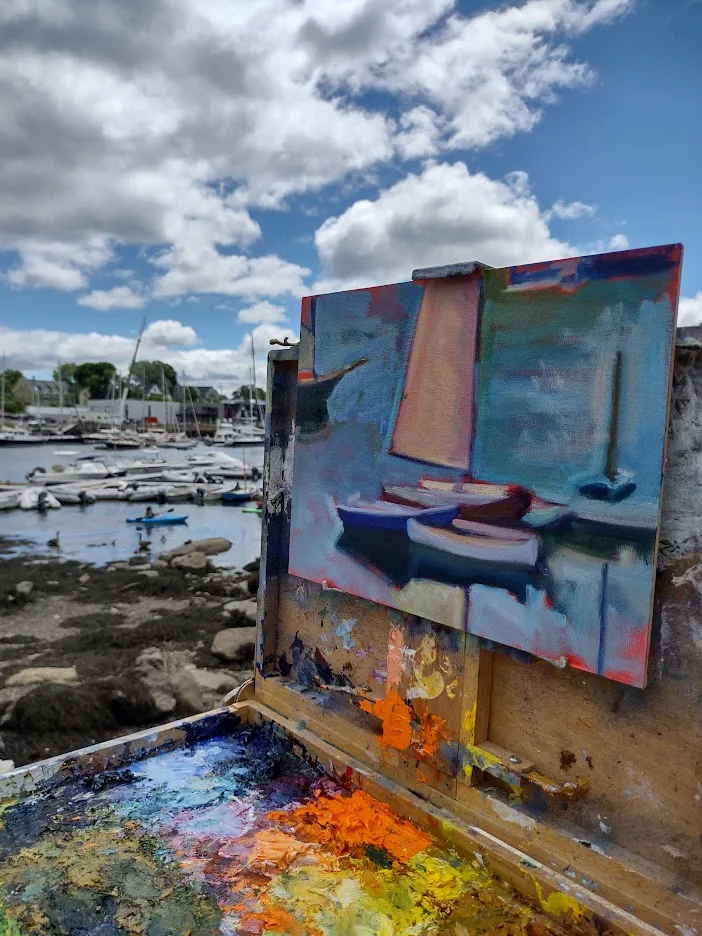
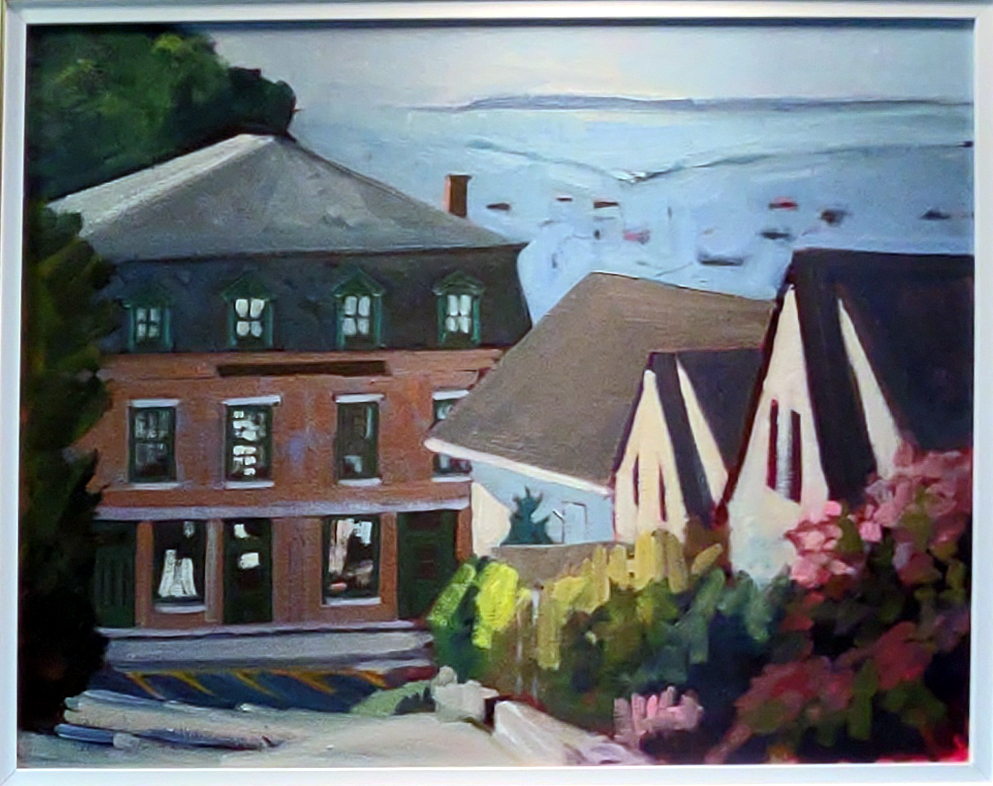
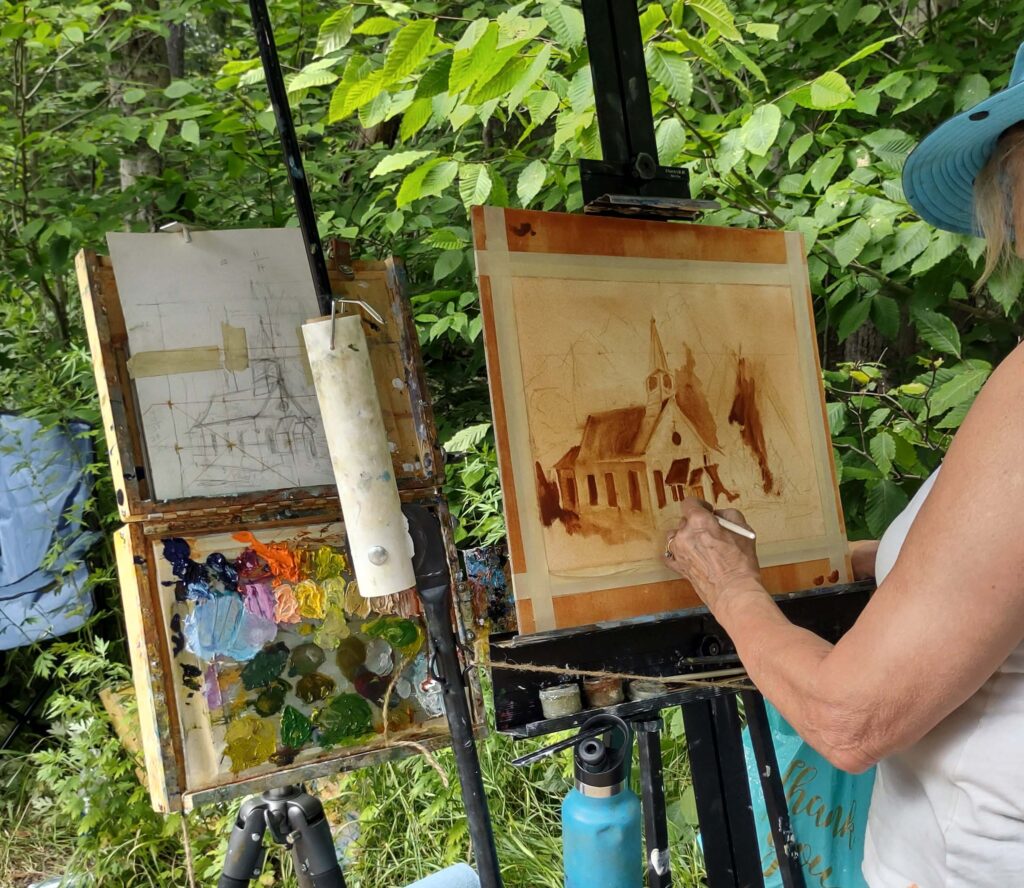
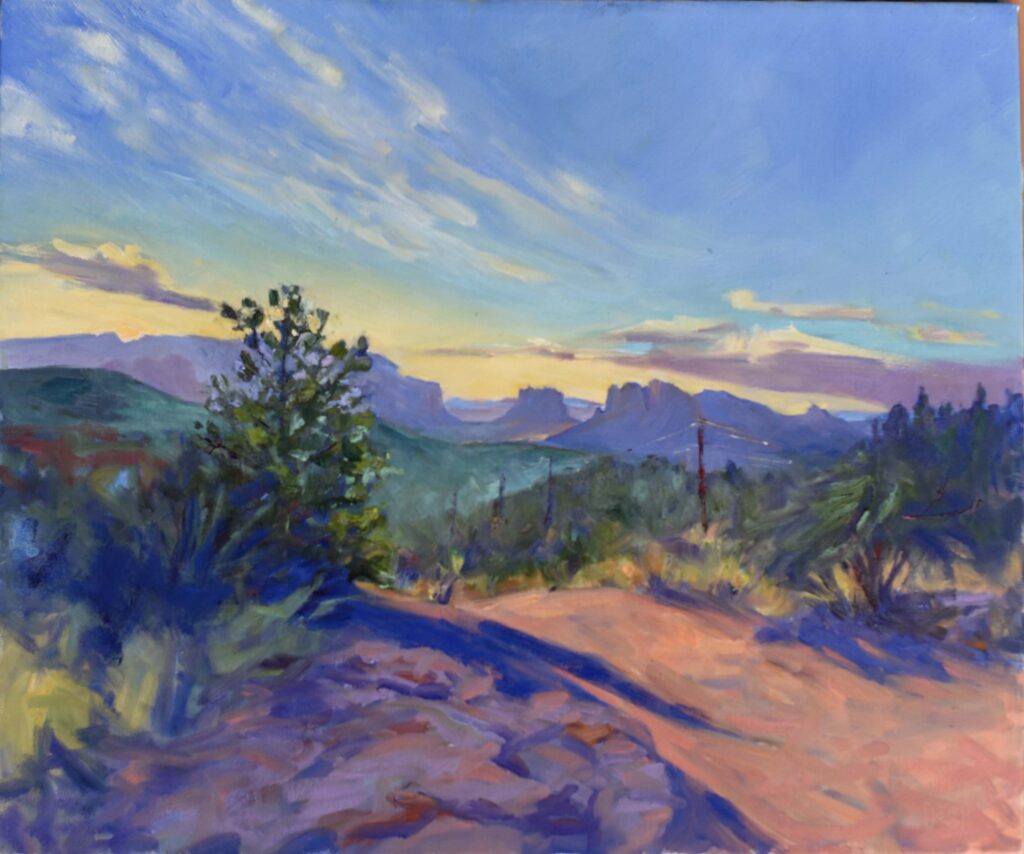
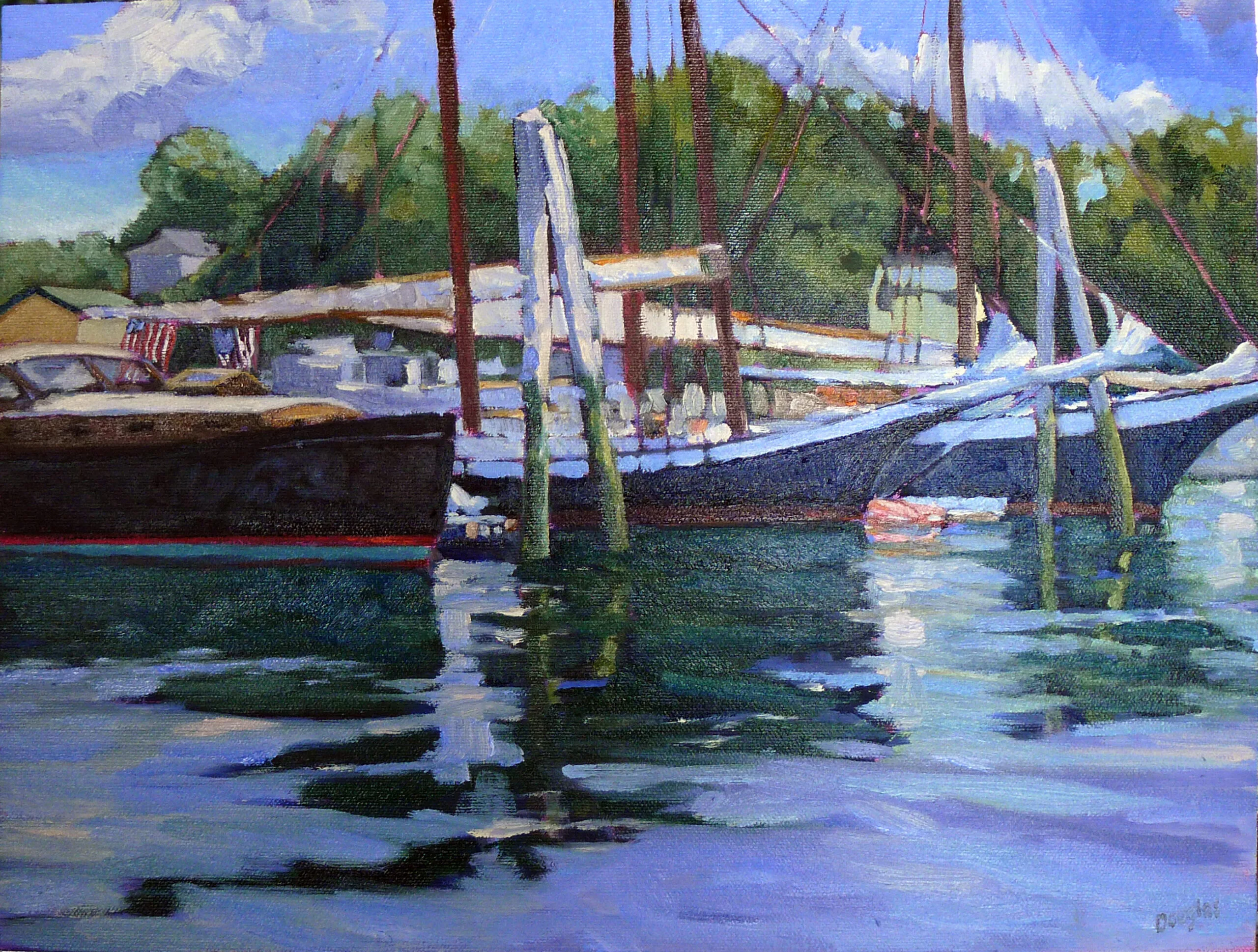
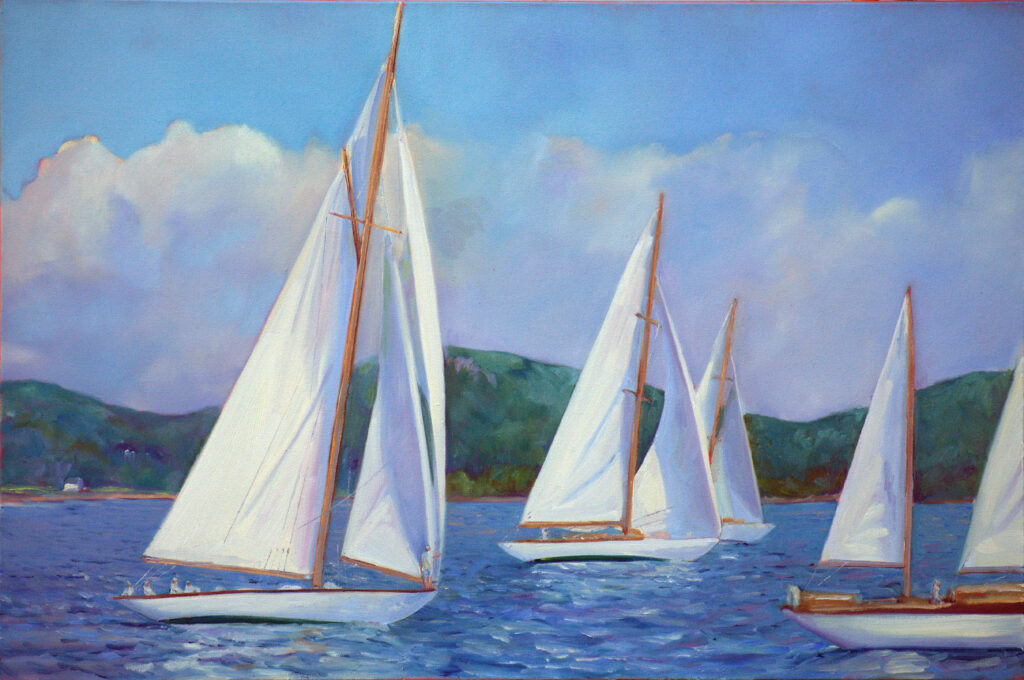
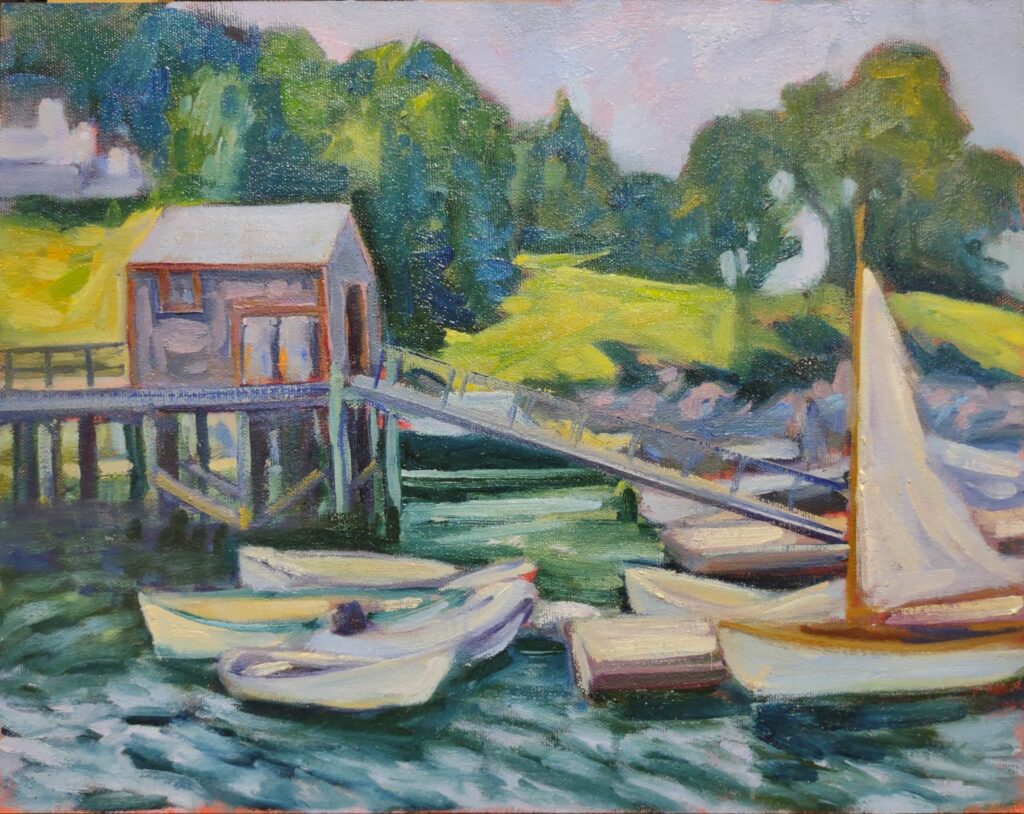
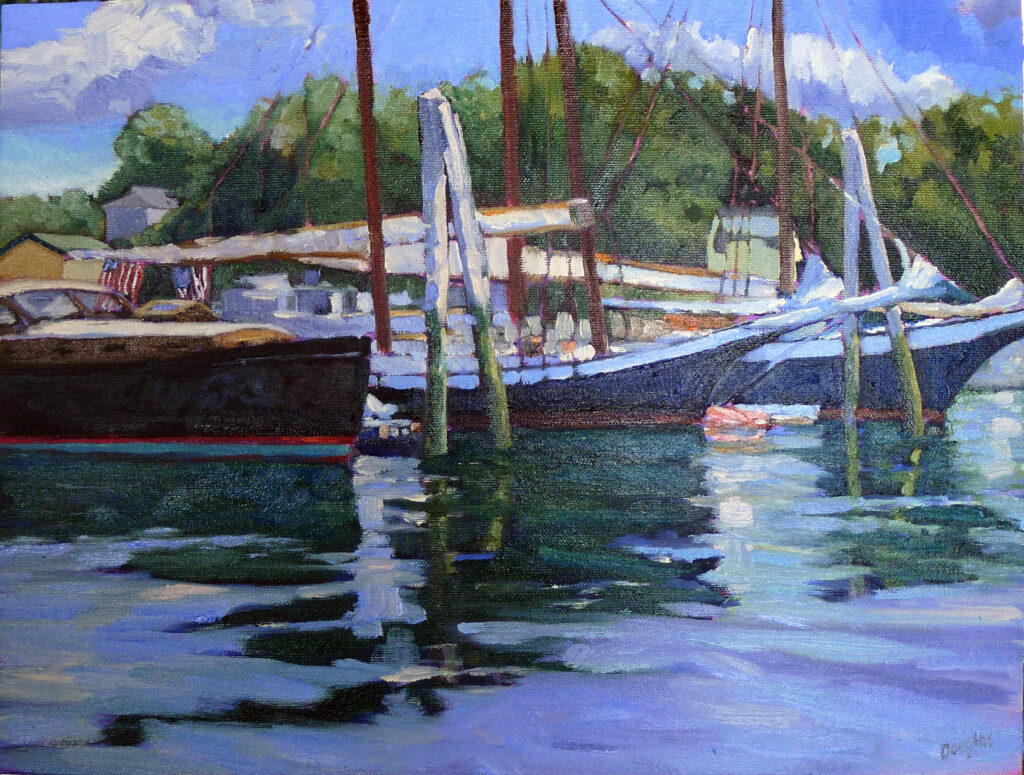
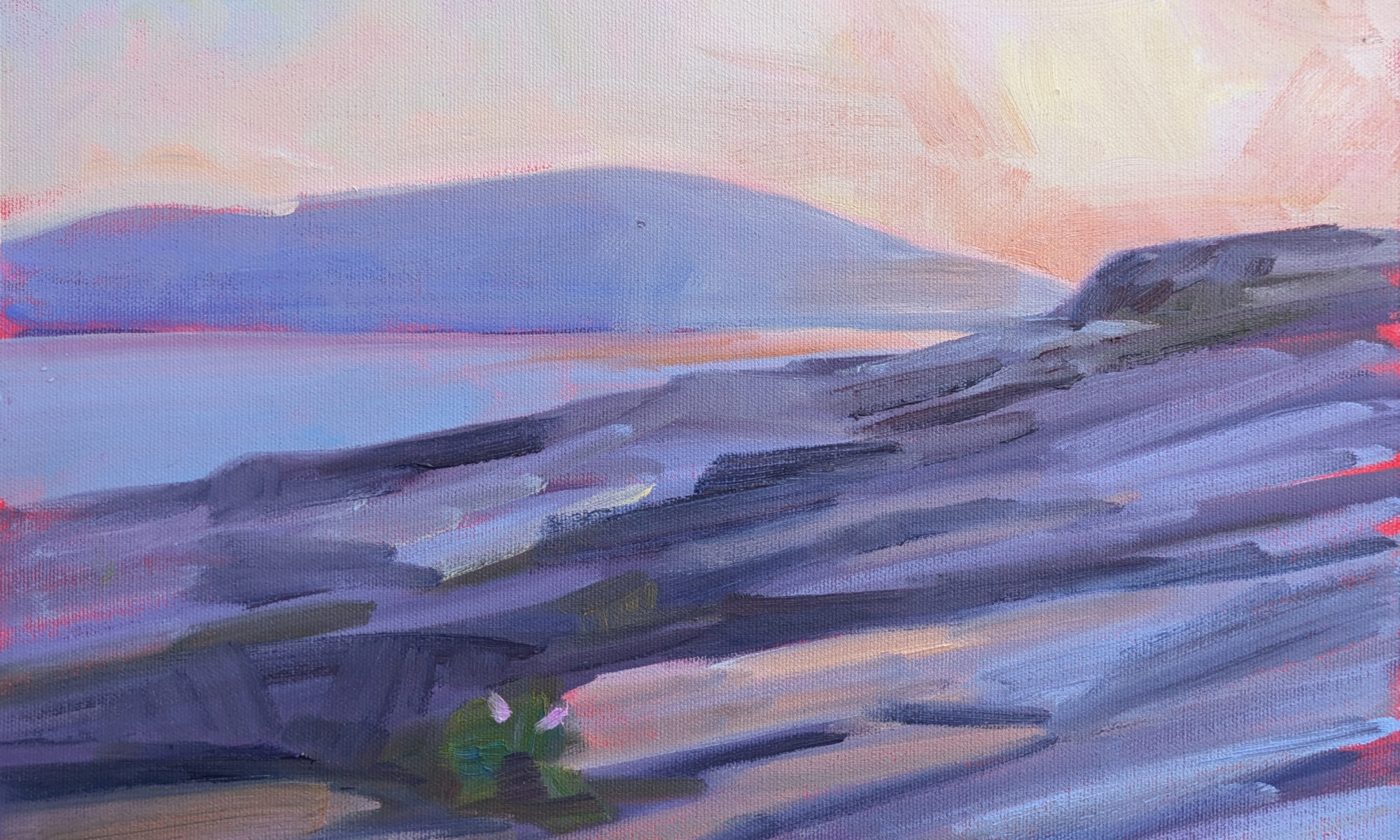
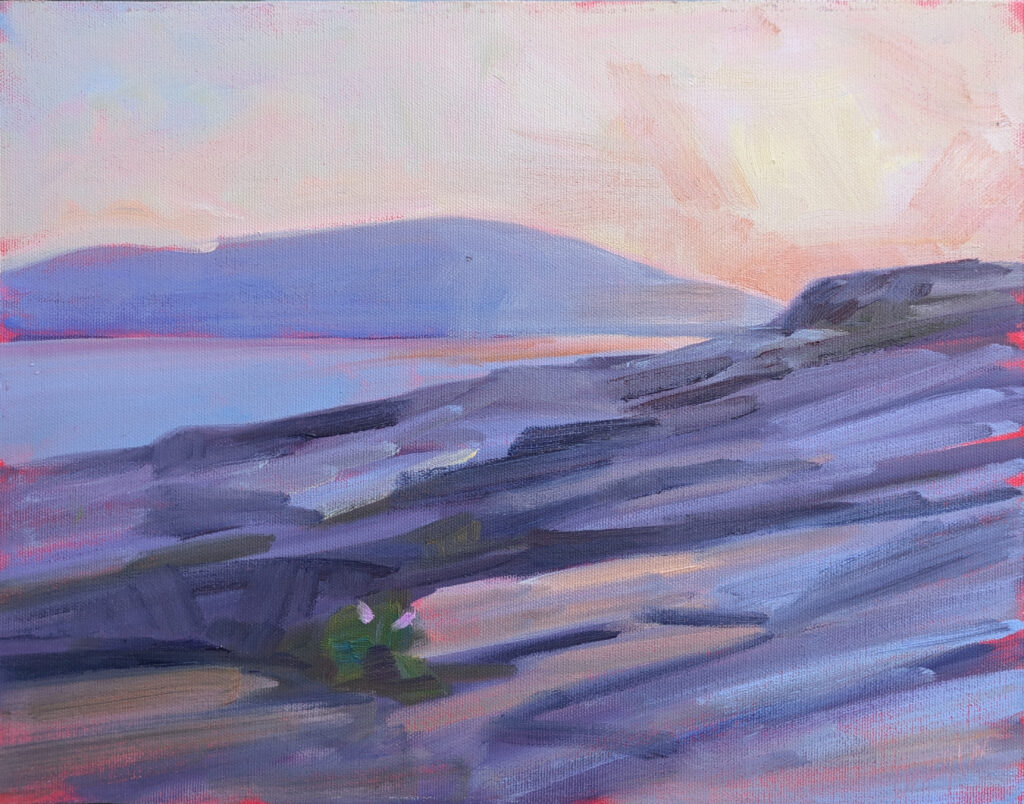
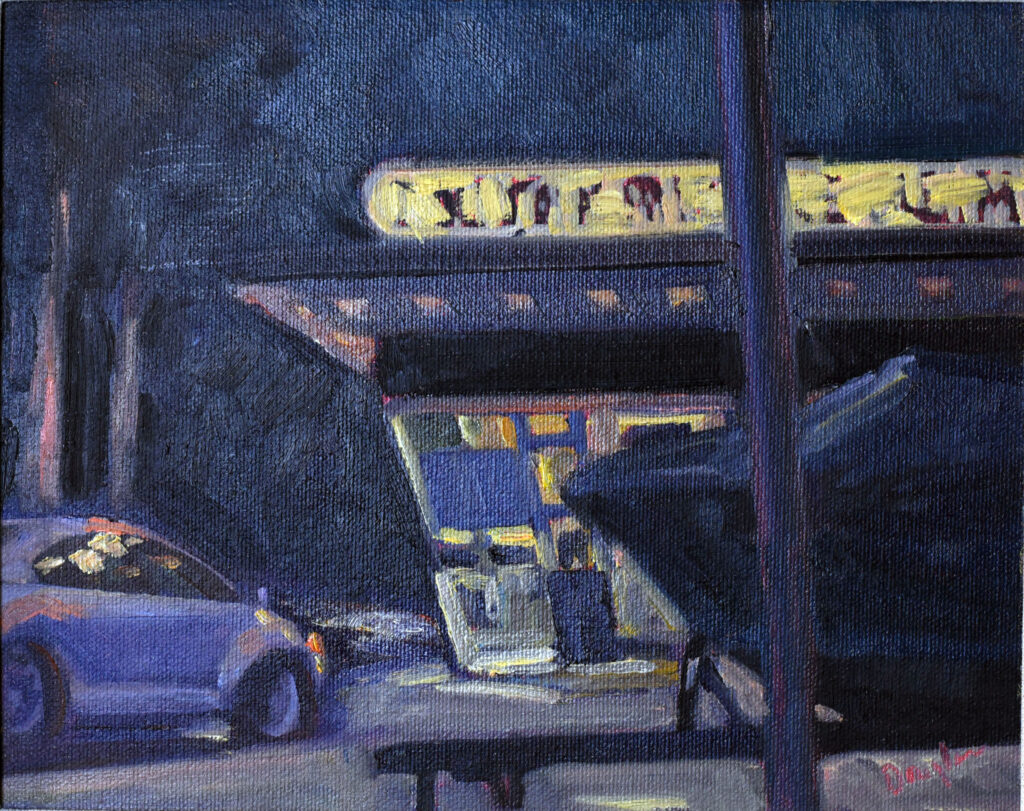
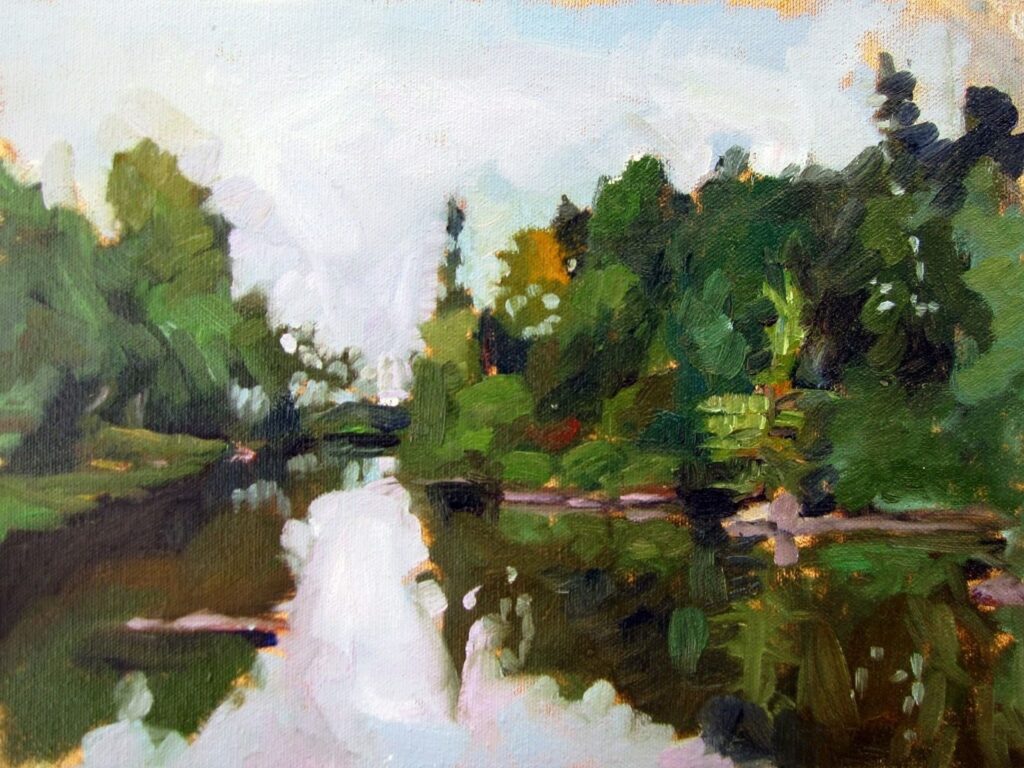
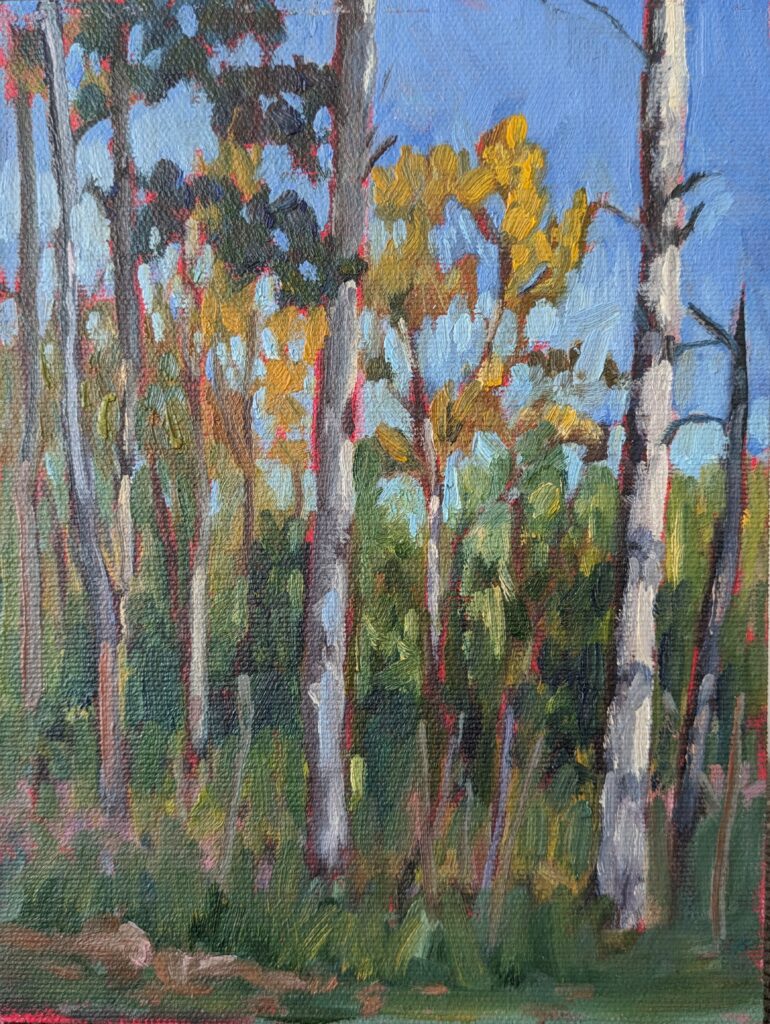
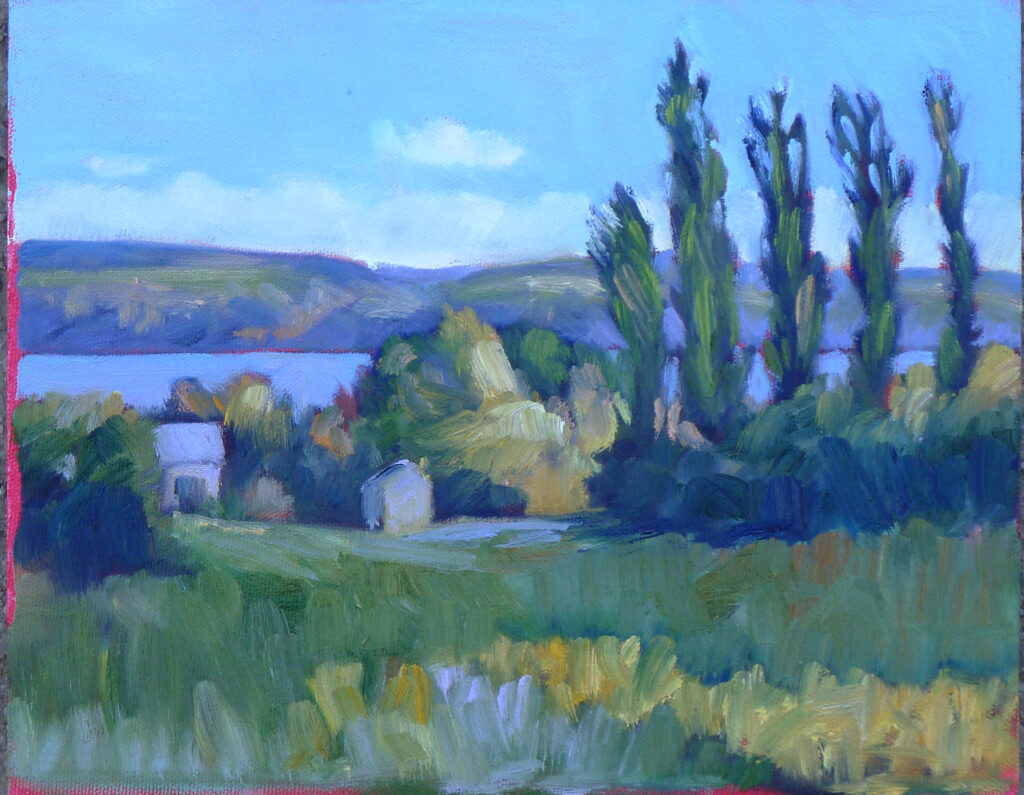
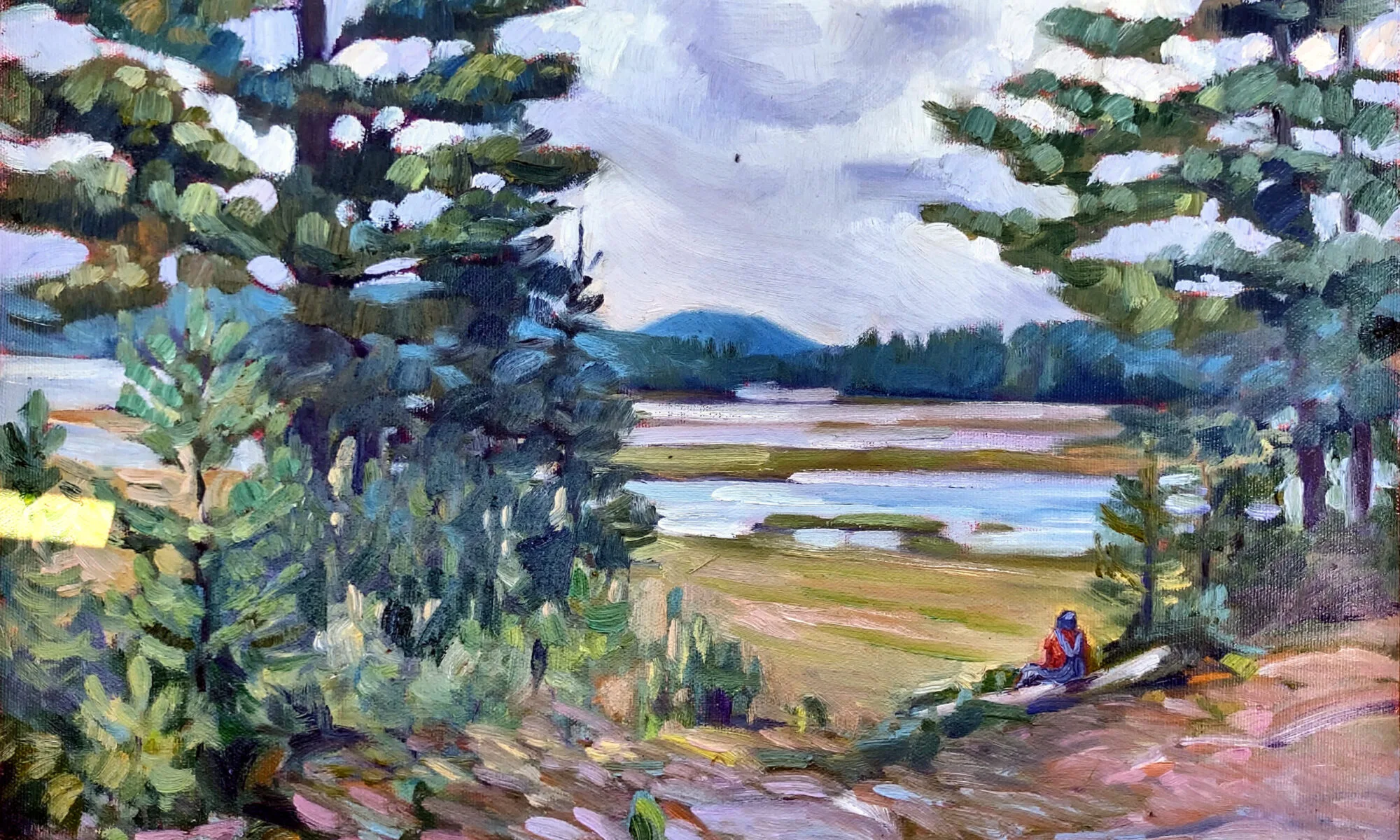
I’ve included two of each kind of work here. Let’s see if you can tell which is which.

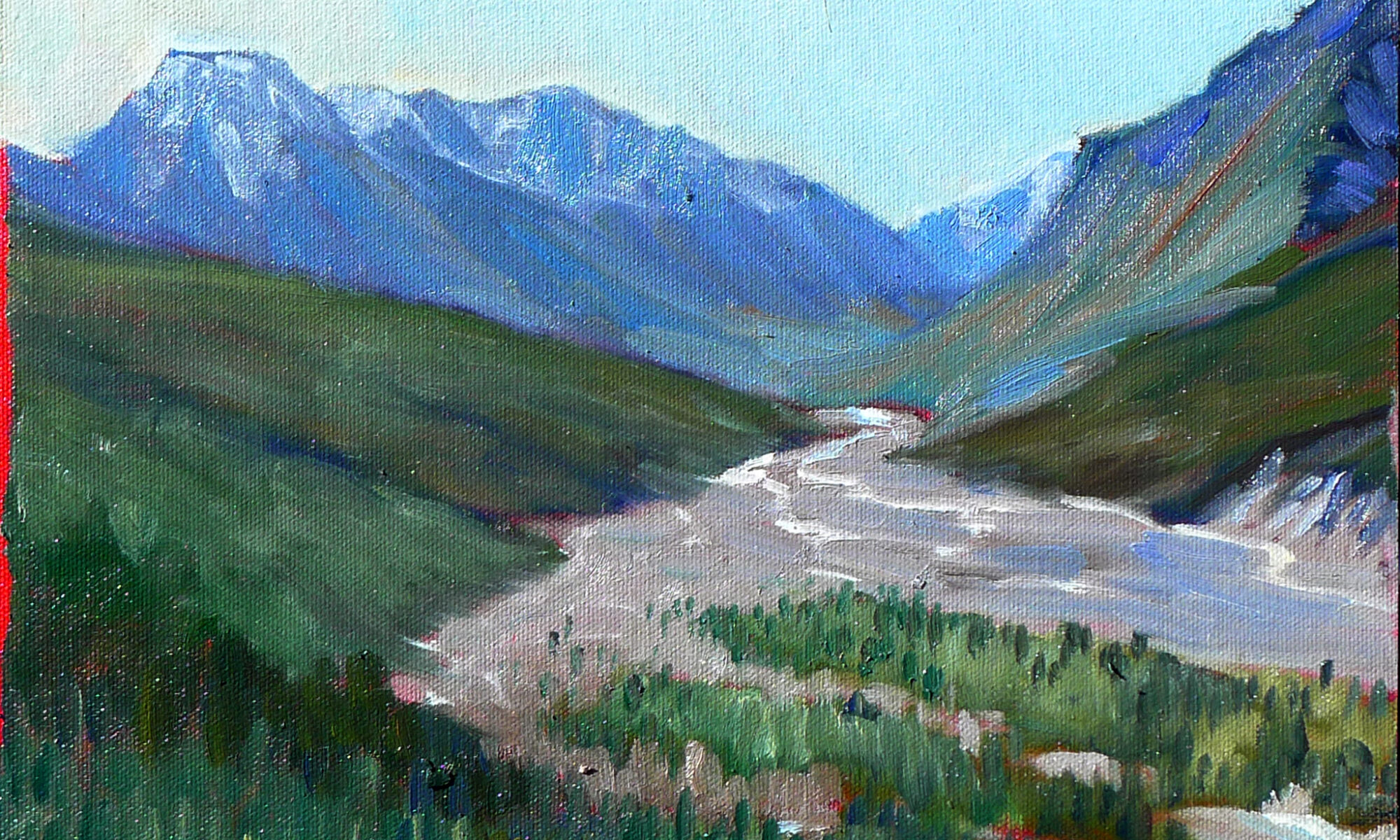
Grand Canyon, late morning, 8X16, oil on archival linenboard.

Both practices have long, uninterrupted lineages, and both are used in all media. However, they demand different kinds of thinking, even when they use the same materials. Understanding where these approaches diverge and overlap will clarify your process no matter what medium you use.

For oils and acrylics, alla prima painting starts with toning the surface. A thin neutral or warm ground kills the white, establishes a middle value, and helps the artist judge color and value accurately from the start. This step isn’t necessary in watercolor, where the paper supplies the light. Pastel painters can bypass the whole question by choosing colored paper.

In indirect painting, the process of doing the grisaille essentially lays in the tone, since it’s worked more thoroughly than in alla prima painting. That doesn’t mean you’re allowed to be slipshod in alla prima painting. In both cases, the drawing, value structure, composition, and mood are worked out thoroughly before a brush ever touches the canvas.

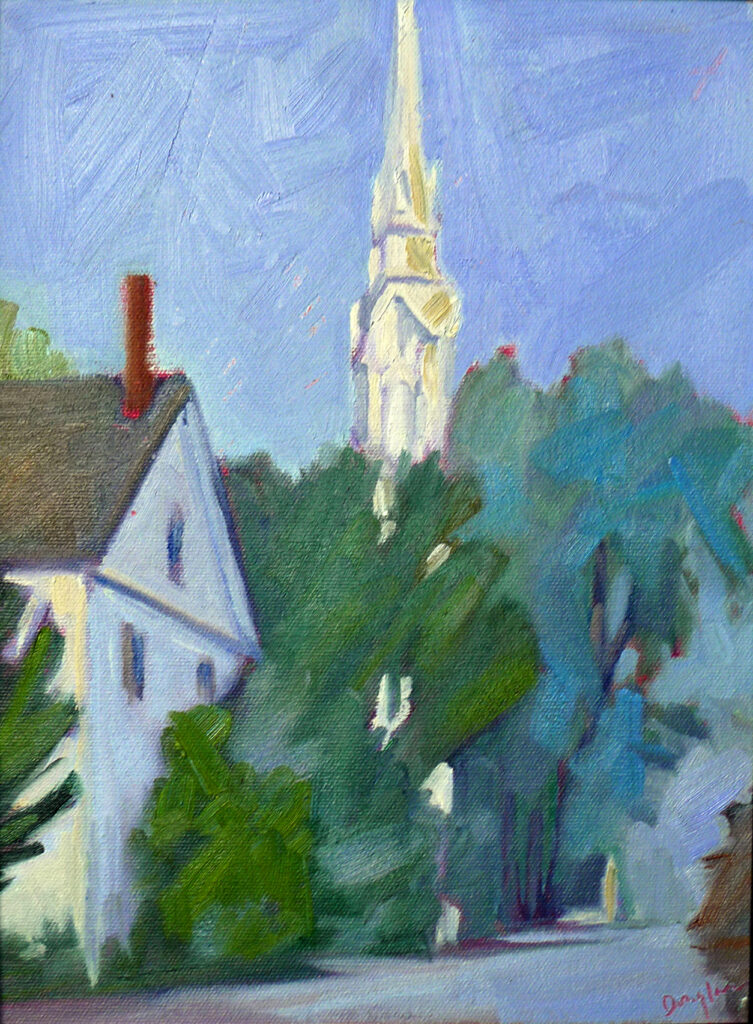
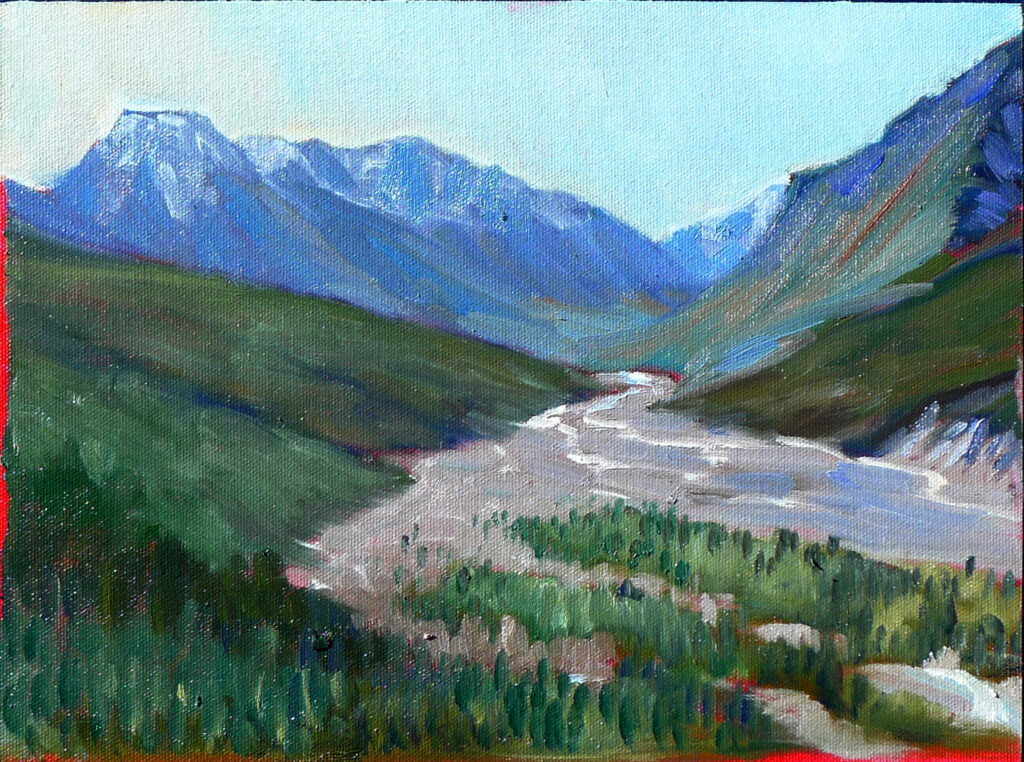
Country path, 14X18, oil on archival canvasboard, $1,275 includes shipping and handling in continental US.

In alla prima painting, large value and color masses are laid in quickly, with no details. The artist thinks in simple shapes and major value relationships, establishing lights, midtones and darks early. Alla prima depends on value accuracy far more than detail. Color is laid in directly—mixed purposefully, placed once, and left alone. Excessive blending kills freshness; fresh color over fresh color keeps the surface alive.

As the painting develops, the artist works from general to specific. Forms are refined only after the structure is solid. High-chroma accents, detail, bravura brushwork and highlights come last. Alla prima paintings fail from overworking, not underworking. As those old Ronco Rotisserie ads used to say, “Set it and forget it.”

Indirect painting, by contrast, is cumulative. It starts with a monochromatic underpainting done with lean paint and organized clearly in lights and darks. This is where the major thinking happens. If the values and shapes are wrong here, no amount of glazing will fix them. Each layer must dry completely before the artist proceeds, and depth comes from multiple thin, transparent glazes. Only at the very end is opacity used.

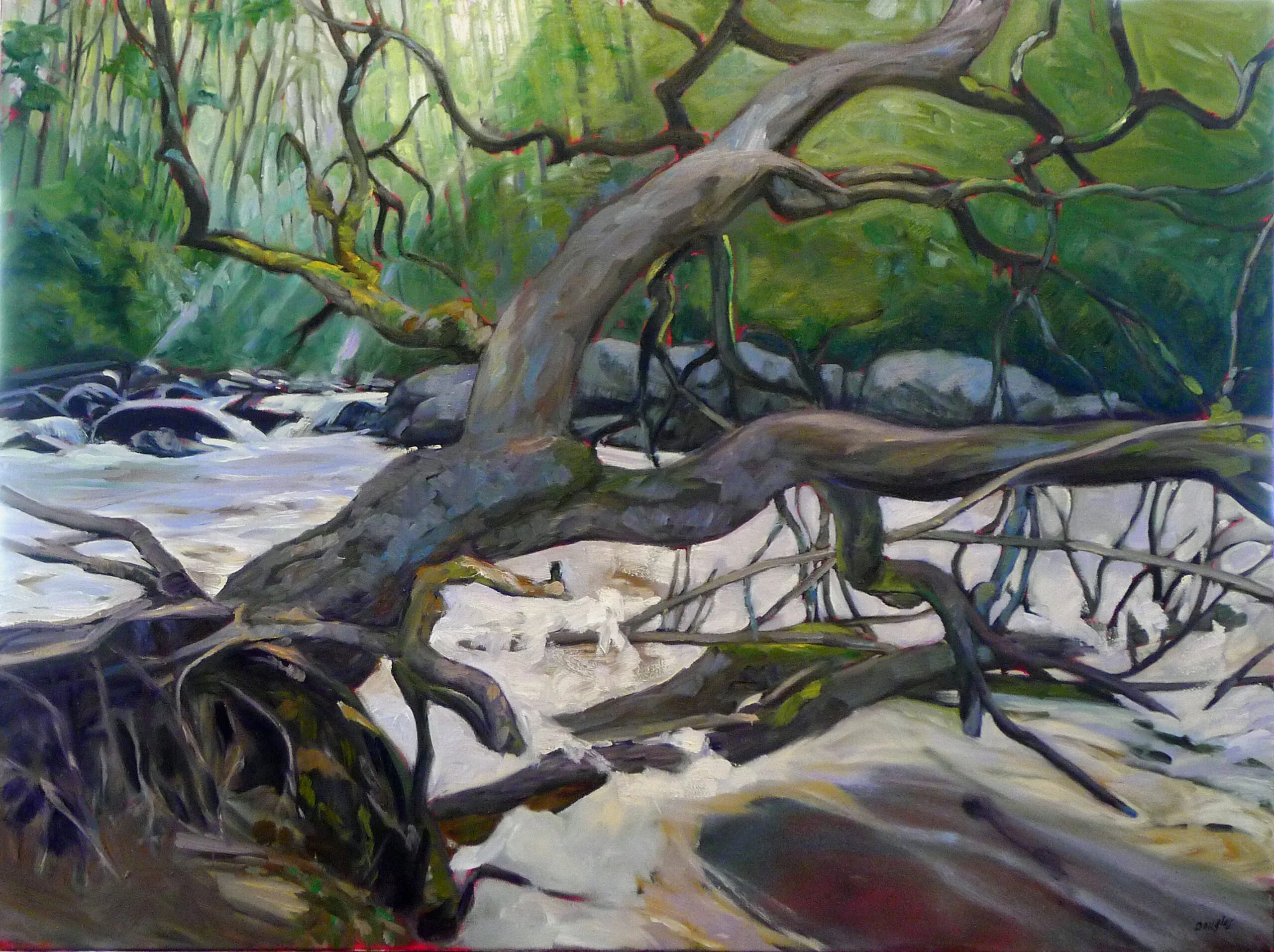
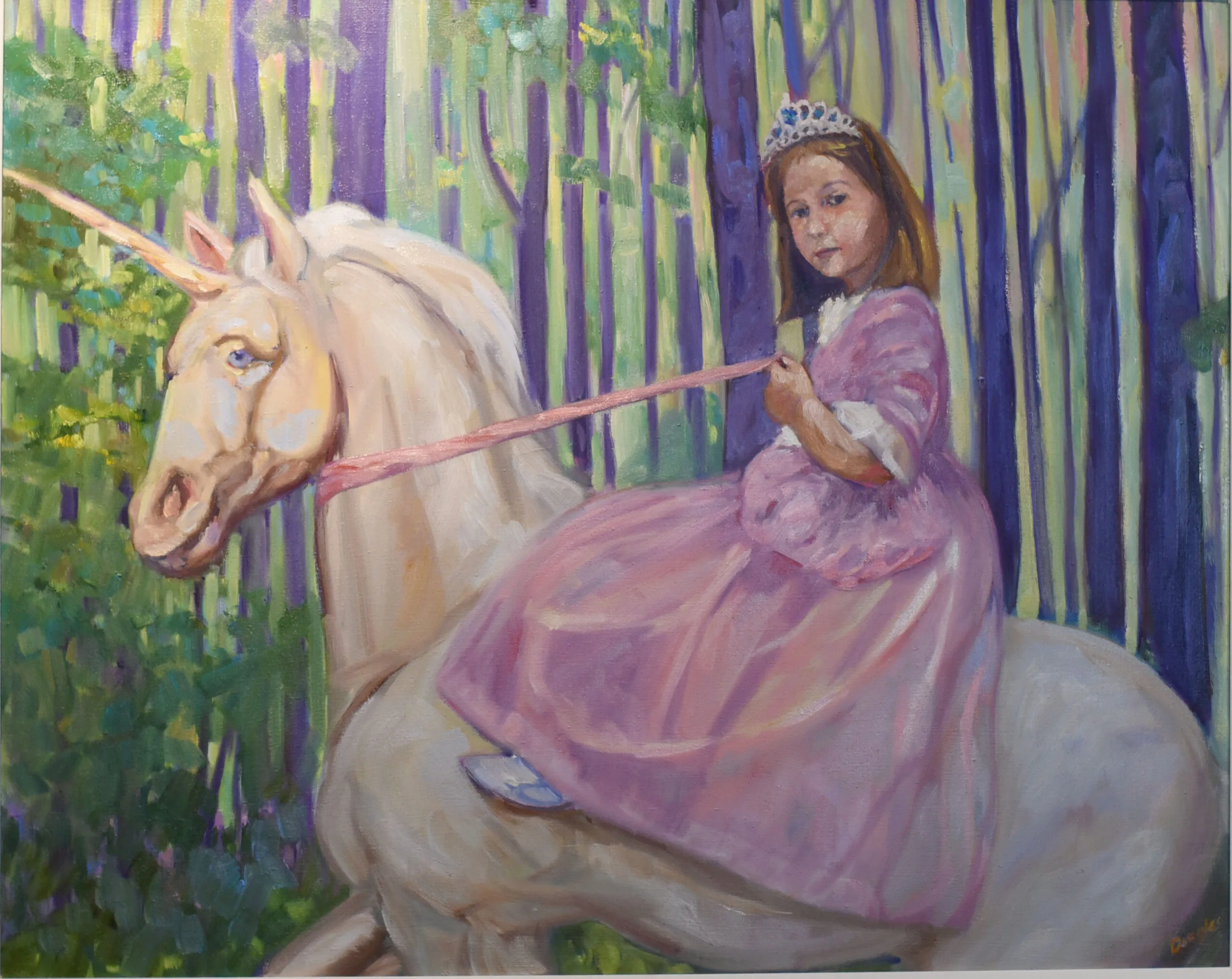
The Servant, oil on linen, 36X40, $4042.50 framed, includes shipping and handling in continental US.

Because each layer is allowed to dry thoroughly before the next is applied, glazes can be wiped back as needed and kept very thin. Think of it as tinting light, not covering form. Color temperature and depth are adjusted gradually—warming lights, cooling shadows, deepening darks without repainting them. You’re refining, not reinventing. Many painters finish with opaque or semi-opaque accents, combining indirect depth with direct clarity.

If you want to see that in practice, look at Rembrandt’s later self-portraits, where he uses impasto on his skin to imply the vicissitudes of age.

I’d love to have you join me for Trust the Process (making technique tell the story you want to tell), my live Zoom class designed to help you build a dependable, joyful, repeatable painting practice. We’ll dig into technique, creative decision-making and the mindset that frees you to paint with confidence. We meet Monday nights, 6-9 PM EST, starting on January 5, 2026. It’s suitable for all levels and all media. You can learn more here.

Registration is now open for workshops in 2026! Reserve your spot:

Can’t commit to a full workshop? Work online at your own pace:
Seven Protocols for Successful Oil Painters

Monday Morning Art School: the danger of safe color

Towpath on the Erie Canal
“Pulteney vineyard,” private collection. For another treatment of the same vineyard, see here.

There’s nothing inherently wrong with a delicate painting, but safe color can make an otherwise accomplished painting boring. That’s true even when the drawing is solid, the values are controlled and the technique is assured. There are certainly days when the light is dull and the color is duller. But you need to translate that into something that will compel the viewer to walk across the room.

The modern world loves color saturation. My phone edits my photos to be hyperintense; social media is full of high-chroma color. In this world, paintings that whisper can disappear entirely.

High chroma, however, must be balanced with lower-chroma passages. Otherwise, it overwhelms. The goal isn’t maximum saturation everywhere; it’s contrast of saturation.

Towpath on the Erie Canal
“Towpath on the Erie Canal,” 30X40, oil on canvas, private collection.

How to mix mud… or not

Clean color mixing starts with understanding warmth and coolness within individual pigments. Overtones matter. You can’t randomly mix any blue and any red and expect a high-octane purple. If either pigment carries yellow overtones, you’ll get mud. It’s easy to subdue a wild color; it’s impossible to enliven a dead one. Paint can never be mixed more intensely than it comes out of the tube.

The three historical palettes (and that’s a vast oversimplification) are classical, impressionist, and 20th-century. The 20th century palette has the highest chroma, widest temperature spread and hits the most points on the color wheel. Starting there saves you aggravation, because buying more paint than you need is a waste of money and a fast track to confusion.

Paired primaries can get you to anywhere you need to go in paint-mixing. For more information, see here.

Some specific color concerns

I recommend against heavy-metal pigments for environmental and safety reasons. They also tend to make muddy colors. For example, cadmium pigments mix true only to the warm side.

Viridian is a very cool green and almost always needs warming for foliage. If you mix lemon yellows with any blues, you’ll get cool spring greens. Most natural greens are warmer. Yellow ochre and Indian yellow temper greens because you’re actually adding a lot of red.

For the same reason, darkening with red kills chroma. Instead, use quinacridone magenta or violet.

It’s easy to drop the chroma of high-chroma 20th century pigments.

How to hit the perfect color every time

Start with the pigment closest to your goal. Ask: in which direction on the color wheel do I need to go? Does chroma need lowering? Does it need to go darker? Lighter? Once you’ve answered those questions, you can stop fiddling.

And remember, you can lie about hue if you tell the truth about value.

If you mix the color right but you still make mud, the culprits may be:

  • Too much solvent or medium;
  • Too many layers;
  • Overworking and fussing;
  • Digging in with a vertical brush.

As the old Ronco ads used to say, “set it and forget it.”

By the way, one reason we tend to use too much solvent or medium is that we’ve let our paint half harden on the palette and are trying to open it back up. Suck it up and put out fresh paint.

Want to try painting? I’d love to have you join me for Trust the Process (making technique tell the story you want to tell), my live Zoom class designed to help you build a dependable, joyful, repeatable painting practice. We’ll dig into technique, creative decision-making and the mindset that frees you to paint with confidence. We meet Monday nights, 6-9 PM EST, starting on January 5, 2026. It’s suitable for all levels and all media. You can learn more here.

Registration is now open for workshops in 2026! Reserve your spot:

Can’t commit to a full workshop? Work online at your own pace:
Seven Protocols for Successful Oil Painters

Am I being selfish?

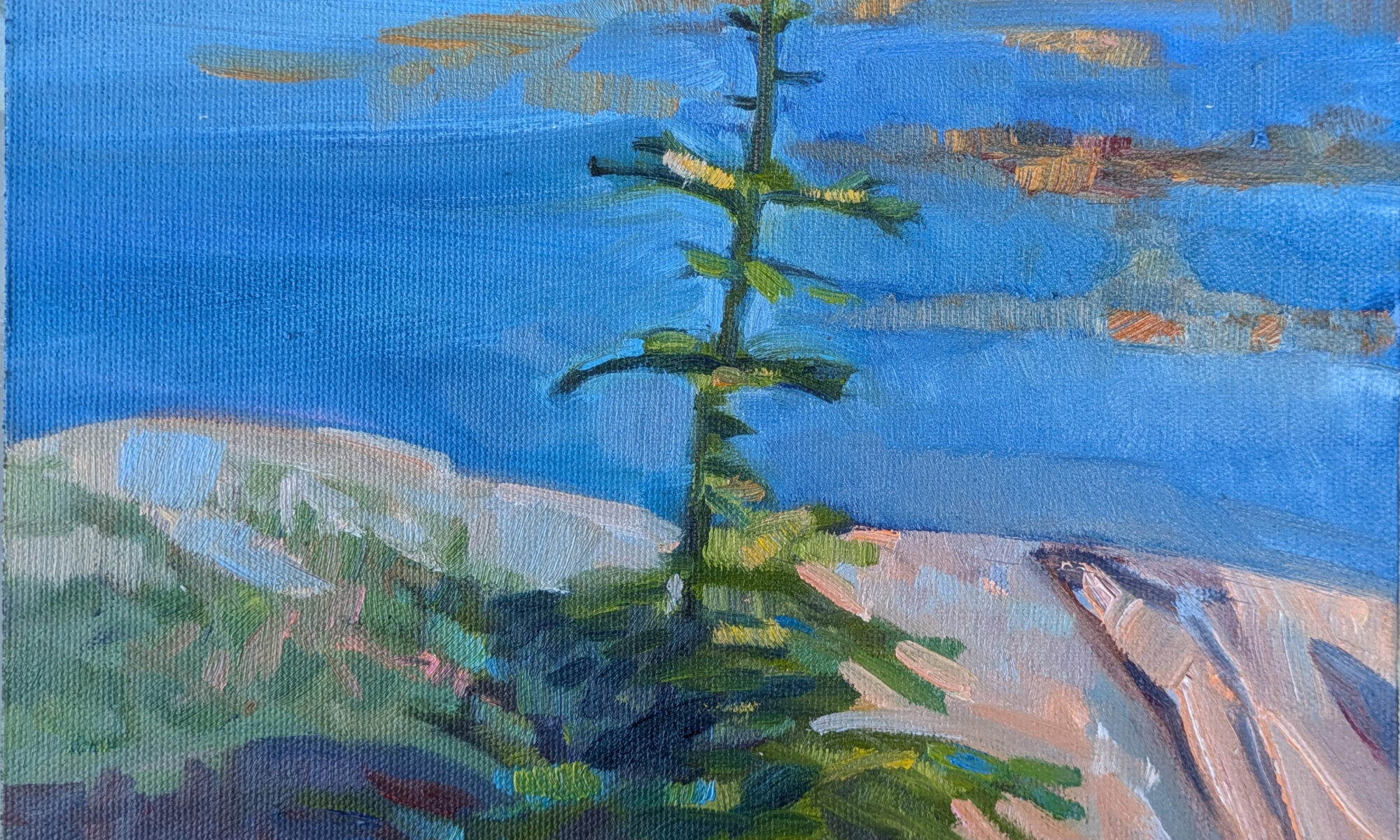
The Pine Tree State, 6X8, oil on archival canvasboard, $348 includes shipping and handling in continental US.

Am I being selfish?

I hope you’re all sitting quietly amid the remnants of Christmas and Hanukkah. I’m always glad to celebrate with my loved ones (and almost as glad to be done with it). This year, however, I’m on a mad rush to paint the rooms in my daughter’s first house so they can move in this weekend.

There’s a nagging little voice that I’d like to stomp out whenever it shows up in my life. It sounds practical, even virtuous. Isn’t this selfish? Shouldn’t I be spending this money and time on something more useful? I know that voice well; it torments me by telling me to do administrative tasks before painting. For others, it’s particularly loud when they consider signing up for a painting workshop.

I’ve spent my life hearing how art is secondary to the serious pursuits of math, science, history and economics. We tend to treat art education as optional, but scores of studies point to its importance both for the developing mind and for adults.  That moves it up in priority, from something you earn only after all responsibilities are met to something that’s vital for health and happiness.

No other discipline is framed this way. Nobody suggests that continuing education for engineers, teachers, or physicians is selfish. In those fields, learning is understood as maintenance. Painting is no different. If you care about your work, you need input—fresh eyes, structured guidance, and time to think deeply about what you’re doing.

The Late Bus, oil on archival canvasboard, 6X8, $435.00 framed, includes shipping and handling in continental US.

Self-indulgence or stewardship?

When you enroll in a painting workshop or online class, you’re hardly buying a luxury object. You’re investing in skill, clarity, and confidence. These are durable goods. They don’t wear out. They compound. A single breakthrough in understanding composition, value structure, or color harmony can quietly reshape every painting you make going forward. That’s not selfish; that’s efficient.

The Road to Seward, 6X8, oil on archival canvasboard, $348 includes shipping and handling in the continental US.

At a good painting workshop, you’re no longer guessing in isolation. You see how other painters solve problems. You learn why certain approaches fail and others succeed. Most importantly, you learn how to look. That’s the real product of art education, and it can’t be downloaded from a quick video or absorbed by osmosis.

Most painters don’t lack ability; they lack time and space. A workshop gives you sanctioned time to focus on your practice without apology. For caretakers, professionals, and anyone used to putting themselves last, this can feel transgressive. But it’s precisely why it matters. When you invest in your creative life, you model seriousness—about art, about learning, and about your own inner life.

From a practical standpoint, workshops often save time and money in the long run. How many years have you spent circling the same problems? Muddy color. Weak focal points. Paintings that never quite resolve. A few days of clear instruction can untangle issues that have stalled progress for a decade. That’s not extravagance; it’s problem-solving.

Last light at Cobequid Bay, 6X8, oil on archival canvasboard, $348 includes shipping and handling in continental US.

But wait, there’s more

Art isn’t just something you produce. It’s something that shapes how you think. Painting teaches patience, discernment and restraint. It trains you to make choices, live with them, and revise intelligently. Those skills don’t stay in the studio. They ripple outward into how you handle uncertainty everywhere else.

Investing in a painting workshop isn’t selfish; it’s a vote of confidence in your capacity to grow. And that’s one of the most responsible choices an artist can make.

I’d love to have you join me for Trust the Process (making technique tell the story you want to tell), my live Zoom class designed to help you build a dependable, joyful, repeatable painting practice. (It’ll give you something to focus on besides the bleak midwinter.) We’ll dig into technique, creative decision-making and the mindset that frees you to paint with confidence. We meet Monday nights, 6-9 PM EST, starting on January 5, 2026. It’s suitable for all levels and all media. You can learn more here.

Registration is now open for workshops in 2026! Reserve your spot:

Can’t commit to a full workshop? Work online at your own pace:
Seven Protocols for Successful Oil Painters

Riley the Museum Dog

Riley at work, courtesy of the Museum of Fine Arts, Boston.

“Cats are not dogs!” is the opening line of P.G. Wodehouse’s short story The Story of Webster. As with so many statements originating in the bar-parlour of the Angler’s Rest, it’s unassailable fact.

I’m a fan of both dogs and cats and have lived with both. They have very different minds. Both are very intelligent, but in different directions. Dogs are natural born empaths, thriving on human interaction and group dynamics. They will work for humans for a morsel of affection (but deserve so much more). Cats are independent thinkers and not in the least bit subservient. This is why society is full of service dogs, but nobody keeps service cats.

Riley hanging out with a distant relative, courtesy of the Museum of Fine Arts, Boston.

My friend Martha, purveyor of all facts esoteric, recently told me about Riley the Museum Dog. He works at the Museum of Fine Arts (MFA) in Boston. His is such a feel-good story that I thought I’d share it for Christmas.

Riley before he grew into his ears, courtesy of the Museum of Fine Arts, Boston.

Riley is more than just another beautiful face. Born on October 14, 2017, this Weimaraner joined the MFA Boston family in January 2018 as the first museum dog trained to detect pests that could harm the museum’s collection.

Weimaraners are known for their incredible noses, making them great at scent work, tracking, search and rescue and even bomb detection. So, it makes perfect scents (sorry for the dad joke) for Riley to apply his nose to support the Conservation, Protective Services and Facilities departments. He sniffs out pests that can damage textiles, wood, and other sensitive materials.

I’m both a dog fancier and a gallery goer, so I think it’s a pity that Riley’s duties happen mostly behind the scenes. Mice and moths tend to wreck things in storage areas rather than gallery halls. But Riley’s a nice boy; when he was first introduced at a press conference in early 2018, reporters and visitors alike were delighted by his calm temperament and cute curiosity.

The museum partnered with The Boston Globe to publish the children’s book The Adventures of Riley the Museum Dog. The book sends Riley on a playful adventure chasing Wiley, a tiny moth with a big appetite for artwork, through the MFA’s own galleries. Through Riley’s travels, young readers encounter art from Egyptian mummies to modern glass sculptures. That’s a clever way to interest kids in art.

Riley even had a plush toy in his likeness. My dog is jealous.

Anyone who has ever walked with a dog won’t be surprised at his human companion’s assessment of his skills: “It’s amazing. It’s easier for him to find it than a conservator would need to really comb through something, and it would take hours and hours,” said Nicki Luongo of MFA Protective Services. “Riley can run by something, catch a scent, and oh, there it is.”

And that story, my friends, is your Christmas gift from me. I’m going to go sit by the fire with my own canine companion and scratch his ears. A Happy Christmas to all, and to all a good night!  

Registration is now open for workshops in 2026! Reserve your spot:

Can’t commit to a full workshop? Work online at your own pace:
Seven Protocols for Successful Oil Painters

Monday Morning Art School: design elements

Santa Claus, 6X8, oil on archival canvasboard, $435 framed includes shipping and handling in continental US.

Design elements are in themselves neither good nor bad. They are ideals that can be used in many ways. That’s why two paintings with identical subject matter can land so differently.

You can understand the principles of design intuitively, without being able to name design elements, but it helps to have a common language.

The basic design elements

  • Line—that’s either a long mark or boundary between two shapes; 
  • Shape—an area defined by boundaries;
  • Form—that has different meaning in 2D and 3D design. In painting it means how we represent three-dimensional space;
  • Color, which is made up of:
    • Hue—the position on the color wheel,
    • Chroma—how intense the color is, and,
    • Value—the lightness or darkness of a color, creating contrast and dimension; 
  • Texture—the surface quality of the work, which in practice means brushwork;
  • Rhythm and movement—the organized repetition of objects, and the path through the painting;
  • Balance—how far the painting moves off from symmetry;
  • Focal points—the areas that draw the viewer’s eye first.
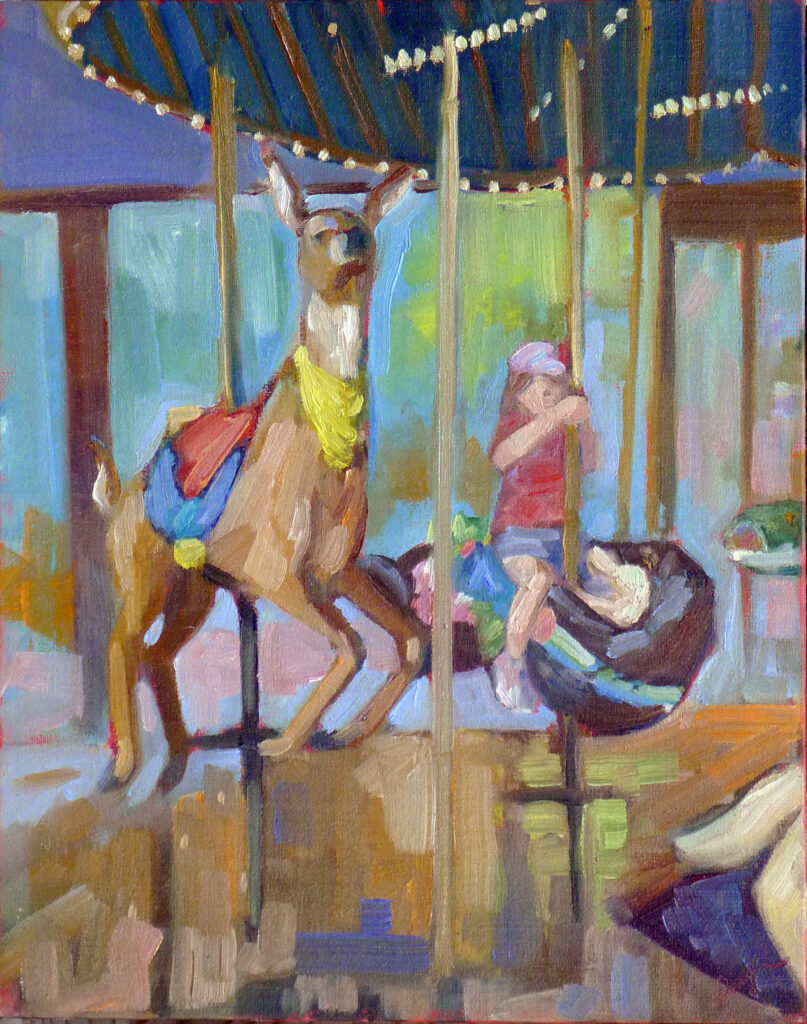
Toy Reindeer with double rainbow, oil on archival canvasboard, 6X8, $435 framed, includes shipping in continental US.

No artist can focus on all these at one time. Composition depends on which design elements we choose to stress and how they relate to each other. For example, almost all paintings have line in some form. But is that line restrained? Kinetic? Is it meant to support focal points or recede into the background?

A masterpiece may have quiet, smooth brushwork or bravura brushwork. Neither is ‘better,’ no matter how many times you’ve been told to loosen up. Bravura brushwork may be associated with the brilliant palettes of modern painters, but there were many Old Masters, including Diego Velázquez, Frans Hals and Rembrandt, who painted loosely. Conversely, there are contemporary painters using polished surfaces. What matters is how design elements fit together.

Subject matter has little to do with design.

I have taken tens of thousands of photos I’ll never paint. A strong photo is not necessarily a strong painting. The camera records everything with glacial indifference; we, the artists, must emphasize what’s important.

I find nature a very compelling subject, but nature itself doesn’t guarantee a strong painting. Paintings fail when the value structure is vague, focal points are accidental or don’t exist at all, and nothing is dominant.

Example of nōtan from Composition: Understanding Line, Notan and Color (1899) by Arthur Wesley Dow.

This has been a guiding principle of painting in all times and places. Compare Francisco Goya’s The Third of May, 1808, Jusepe de Ribera’s The Martyrdom of St. Andrew, Winslow Homer’s Weatherbeaten,  Wayne Thiebaud’s Around the Cake and Hasegawa Tōhaku’s The Pine Trees. They’re from different times and places and about radically different subjects. However, they all pare representation down to its essentials. Design is not a modern invention.

Arthur Wesley Dow was one of the great American painting teachers. He pioneered the ideas of space-cutting and nōtan. Both ideas emphasized the arrangement of beautiful shapes, and they’re skills worth practicing.

Example of space cutting from Composition: Understanding Line, Notan and Color (1899) by Arthur Wesley Dow.

Want to learn more about this? I’d love to have you join me for Trust the Process (making technique tell the story you want to tell), my live Zoom class designed to help you build a dependable, joyful, repeatable painting practice. We’ll dig into technique, creative decision-making and the mindset that frees you to paint with confidence. We meet Monday nights, 6-9 PM EST, starting on January 5, 2026. It’s suitable for all levels and all media. You can learn more here.

Registration is now open for workshops in 2026! Reserve your spot:

Can’t commit to a full workshop? Work online at your own pace:
Seven Protocols for Successful Oil Painters

There is no ‘artistic type’

Best Buds, 11X14, oil on canvasboard, $1087 framed includes shipping and handling in continental US.

“[X] might be my favorite of your students,” my husband told me in one of our regularly- repeated conversations. The funny thing is, the identity of X constantly changes.

“I have so many favorites,” I sighed.

“The interesting thing is, there’s no particular ‘type’ among them,” he said.

I get the relationship between math and music, but it also exists between math and the visual arts. But there’s an old canard that ‘arty people’ are not good at math—a leftover from the now-refuted left-brain, right-brain theory. But it means that sometimes my students are afraid of math. While they easily see spatial relationships, they’ve never learned the language of math.

But I’ve had enough students who excelled in science and engineering to know that there’s no conflict between the math-brain and the art-brain. And I myself had math up through multivariable calculus, although I can now barely remember how to figure the area of a circle.

Home Farm, 20X24, oil on canvas, $2898 framed includes shipping and handling in continental US.

When I was younger and much dumber, I thought there was an artistic type. Naturally, it conformed almost exactly to my personality. “I have never had a lawyer for a student,” I once said. I just hadn’t been teaching long enough; I’ve since had many lawyers in my classes.

The myth of the artistic type

The myth of the artistic type is comforting. You either have it or you don’t. No mess, no uncertainty, no responsibility. And that’s exactly what’s wrong with it.

This usually comes packaged as a look or a temperament: messy studio, emotional intensity, natural talent that just shows up. The artistic type has been part of our culture for so long that we take it for granted. We see it in mass media and the way art is marketed.

It flatters the few and excuses the many. In this worldview, the rest of you are off the hook. You can admire from a distance without risking failure yourselves.

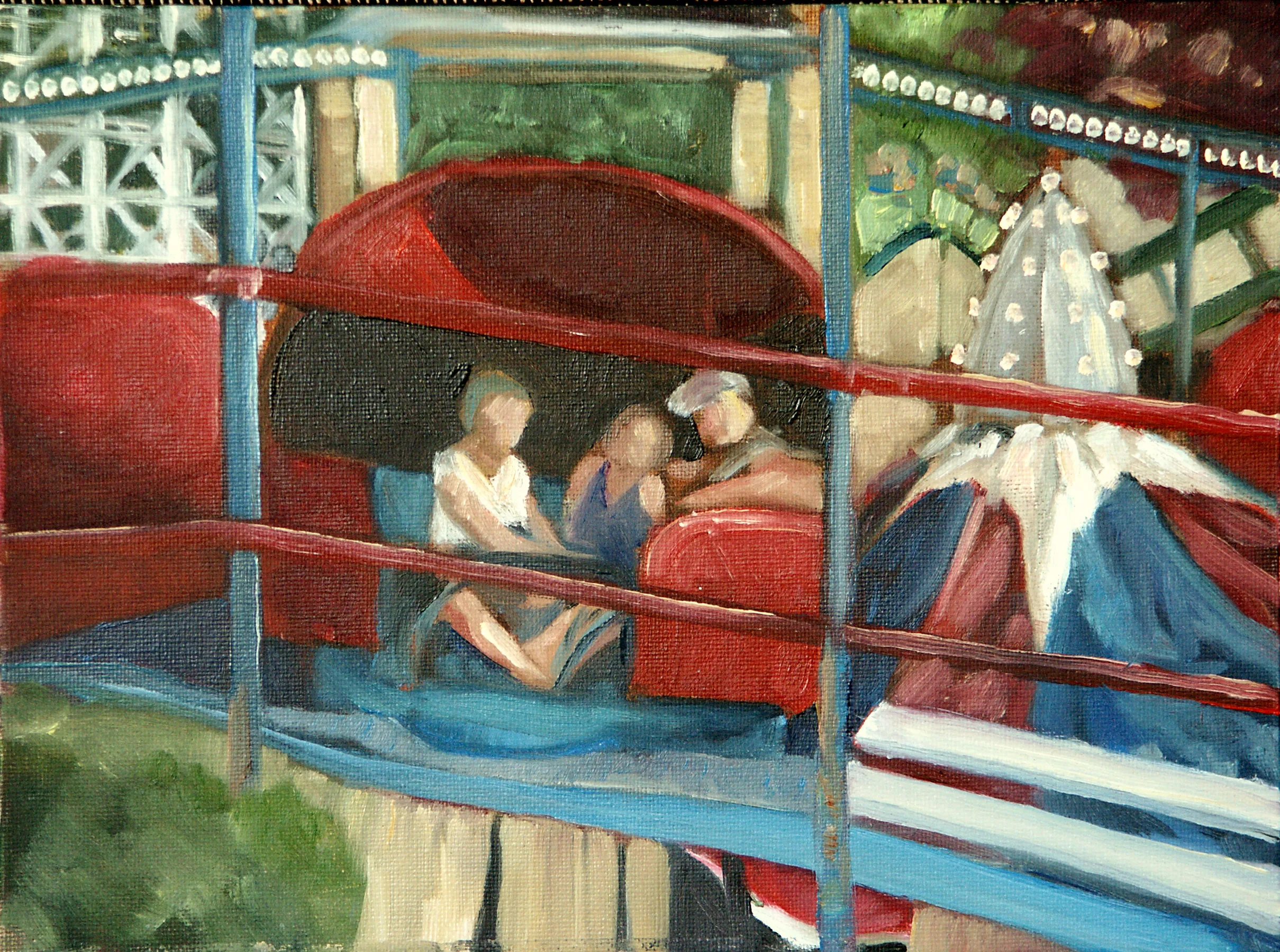
Tilt-A-Whirl, oil on archival canvasboard, $869 framed includes shipping and handling in continental US.

‘Talent’ doesn’t work that way

Talent is the visible result of repeated decision-making. People who draw, paint, compose, or design develop the skills to see or hear relationships. From the outside, that looks like intuition. However, it’s really just experience.

The ‘artistic type’ concept confuses outcome with identity. Someone produces great work, so we assume they must be fundamentally different from the rest of us. They are; they’ve invested years in awkward sketches, bad compositions and failed canvases.

Great painters are not born seeing better than the rest of us. They have trained themselves to pay attention longer. They’ve learned to organize chaos, simplify complexity and edit what doesn’t serve the idea. These are learnable skills that improve through use.

While there’s some comfort in the myth of the ‘artistic type’ or talent, it also keeps people from ever picking up a brush or instrument.

The Vineyard, oil on linen, 30X40, $5072 framed, includes shipping and handling in continental US.

Art is process, and process is teachable. When you replace the question “Am I talented?” with “What interests me enough to learn?” the whole conversation changes.

Want to try painting? I’d love to have you join me for Trust the Process (making technique tell the story you want to tell), my live Zoom class designed to help you build a dependable, joyful, repeatable painting practice. We’ll dig into technique, creative decision-making and the mindset that frees you to paint with confidence. We meet Monday nights, 6-9 PM EST, starting on January 5, 2026. It’s suitable for all levels and all media. You can learn more here.

Registration is now open for workshops in 2026! Reserve your spot:

Can’t commit to a full workshop? Work online at your own pace:
Seven Protocols for Successful Oil Painters

Why care about composition?

Forgotten Man, 1937, Maynard Dixon, courtesy Brigham Young University Museum of Art

Composition is the quiet engine of a successful painting. It’s the part viewers feel before they start thinking rationally. It’s also the part painters often skip past too quickly. I’m busy writing my upcoming Zoom class, Trust the Process (making technique tell the story you want to tell), and of course composition is a big part of that.

Rouen Cathedral, Full Sunlight, 1894, Claude Monet, courtesy Musée d’Orsay

The first pillar of composition is harmony

Harmony in notan is about space cutting—the abstract division of the picture into dark and light shapes. This is not strict value modeling or chiaroscuro. It’s closer to pattern and rhythm. When Whistler painted Symphony in White, No. 2, he wasn’t describing light so much as arranging shapes.

Harmony in line is about the boundaries between shapes and the relationships between those boundaries and the surrounding space. The Charioteer of Delphi is a masterclass in this. Even in stillness, the interlocking lines guide the eye with clarity and restraint. Strong line harmony keeps a painting readable from across the room.

Harmony in color depends on hue, saturation, and value working together. Monet’s Rouen Cathedral series shows how disciplined color harmony can create vastly different moods using the same motif. Color isn’t decoration; it’s structure.

Vitruvian Man, c. 1490, Leonardo da Vinci, courtesy Gallerie dell’Accademia

What’s my number one rule?

If you’ve taken any of my classes, you’ve probably already answered, “Don’t be boring!” All rules can be broken, but only once you know what they are. Jacques Henri Lartigue’s Cousin Bichonnade works precisely because it bends expectations with confidence. Predictability is the real enemy, and that means being unpredictable even to yourself.

Dividing the frame in interesting ways helps avoid that trap. The rule of thirds is just the very beginning. There’s no law that says you can’t put the subject smack dab in the center of your composition. Look no farther than Leonardo da Vinci’s Vitruvian Man to see the power of symmetry and geometry in design.

Maynard Dixon’s Forgotten Man and Abandoned Ranch demonstrate how restraint, scale, and placement create emotional gravity. Both tell the story of the Great Depression indirectly, yet powerfully. Which brings us to focal points, which are different from the subject of a painting. Know what and where they are before you paint. Use contrast and line to support them—and never park them on the edge of the canvas.

Before the Race, 1882–1884, Edgar Degas, courtesy The Walters Art Museum

Finally, consider the motive line, or kinetic line. It’s tied to the major area of focus, divides contrasting values, and must be complex and intentional. Edgar Degas and Winslow Homer both used motive line to energize still scenes, guiding the viewer through the painting with quiet authority.

Want to learn more about this? I’d love to have you join me for Trust the Process (making technique tell the story you want to tell), my live Zoom class designed to help you build a dependable, joyful, repeatable painting practice. We’ll dig into technique, creative decision-making and the mindset that frees you to paint with confidence. We meet Monday nights, 6-9 PM EST, starting on January 5, 2026. It’s suitable for all levels and all media. You can learn more here.

Registration is now open for workshops in 2026! Reserve your spot:

Can’t commit to a full workshop? Work online at your own pace:
Seven Protocols for Successful Oil Painters

Monday Morning Art School—trust the process

Rachel’s Garden, ~24×35, watercolor on Yupo, museum-grade plexiglass, $3985 includes shipping and handling in continental US.

I’m busy writing my upcoming Zoom class, Trust the Process (making technique tell the story you want to tell). That could easily be one of those glib phrases that’s so repeatable that it starts to lose its meaning. However, I think creative success depends on it.

Many painters define their artistic identity based on their successes or failures. But when our sense of worth gets tied to outcome, our confidence flickers: one day we’re geniuses, the next we’re frauds. That’s no way to sustain a joyful or productive painting practice.

Midsummer, 24X36, oil on canvas, $3,188 includes shipping and handling in continental US.

That’s the trap of outcome-based thinking. It’s familiar to almost everyone who’s ever picked up a brush. When we chase external validation—awards, sales, praise and, especially, social-media likes—we create a cycle of euphoria followed by despair. The highs are fleeting; the lows are dismal and feel interminable.

That whole rollercoaster puts our sense of artistic self-worth in the hands of someone or something else. No wonder so many artists live in states of constant insecurity. When others control the verdict, we never feel settled in our own skin.

How process helps

But process-based painting restores our sanity. Art isn’t the sum of our accolades; it’s our creative thinking made visible. What happens on the canvas is a reflection of curiosity, observation, and problem-solving, not a performance. When we remember that the painting process matters as much as the final outcome, the ground under our feet steadies. The joy of painting comes from the physical act of making marks, mixing color, exploring edges and taking risks, not from waiting breathlessly to see whether someone else approves.

Bunker Hill overlook, watercolor on Yupo, approx. 24X36, $3985 framed includes shipping and handling in continental US.

Creativity requires relaxation. Exploration and play happen only when ego steps aside and you drop into the moment. If you’re tense, self-critical or worrying whether your painting will be good enough, you’ve already shut down the important part of your mind. The more you separate your ego from the results, the more freely you’ll work, and the better your painting will be. The joy, and the results, are all in the making.

A few decades ago, I had a student who started every class by announcing: “This painting is for my mother’s birthday,” or “This is going to be a housewarming gift.” I couldn’t talk her out of that, but it was consistently paralyzing. She worried about what the recipient would think and whether it would be good enough for the recipient. Sadly, her work never measured up to the expectations she set before she even picked up a brush. In trying so hard to make great paintings, she froze. She squeezed the growth out of them. Along with that went all her enjoyment, experimentation and play. There was no vitality and no joy. Not surprisingly, she eventually quit painting.

Blueberry barrens, Clary Hill, oil on canvas, 24X36, $3985 framed includes shipping and handling in continental US.

What does Trust the Process really mean?

Trust the Process means having a reliable, repeatable way of working that will carry you through the rough patches. When technique becomes second nature, you can stop thinking about it and start thinking creatively. That requires painting enough for mastery, but it also helps to understand how painting technique has developed over the last six hundred years. There really are right and wrong ways to do it.

When the mechanics fade into the background, you paint in the moment. And from that place, both skill and satisfaction grow naturally. The process is where art actually lives.

If this idea resonates, then I’d love to have you join me for Trust the Process (making technique tell the story you want to tell), my live Zoom class designed to help you build a dependable, joyful, repeatable painting practice. We’ll dig into technique, creative decision-making and the mindset that frees you to paint with confidence. We meet Monday nights, 6-9 PM EST, starting on January 5, 2026. It’s suitable for all levels and all media. You can learn more here.

Registration is now open for workshops in 2026! Reserve your spot:

Can’t commit to a full workshop? Work online at your own pace:
Seven Protocols for Successful Oil Painters

‘I should have done that’ is a pointless sentiment.

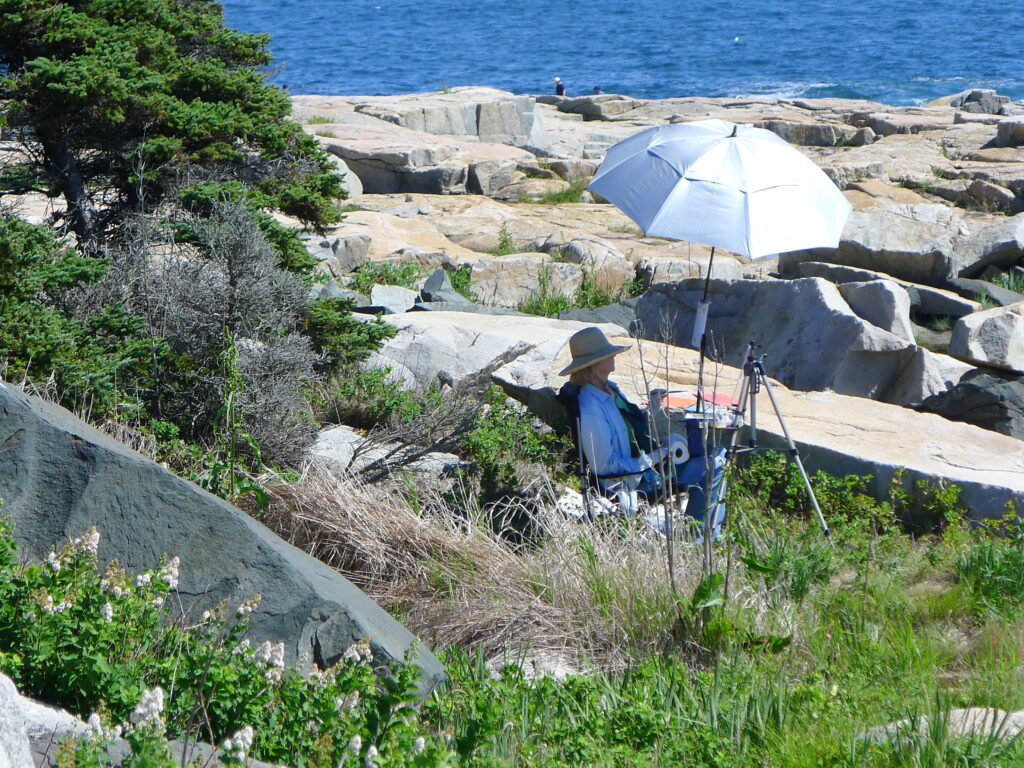
Carol L. Douglas painting at Acadia National Park
A student painting a nocturne during my October workshop in Rockport.

One of my friends and students (the terms are redundant) asked me to help with her Christmas list for her grandkids. I’ve had a great time thinking through the possibilities, because Susan is both inventive and specific.

I wish I’d shown the same flair when it came to my own family. I asked my daughter what my oldest grandson wants. A cell phone and cheese. I don’t endorse the cell phone, and cheese is ridiculous. Instead, he’s getting a circuit-design kit. Maybe he can build his own cellphone.

I don’t like shopping and I’m not good at it. Now that most things are wrapped and under the tree, I’m second-guessing my choices. But I remind myself that “I should have done that,” is a pointless sentiment.

Carol L. Douglas painting at Acadia National Park
Me teaching composition at Acadia National Park.

Regrets about bad choices

I’ve thought about the futility of regret many times over the years, usually when I’ve done something particularly bone-headed. That includes times when I haven’t painted because events or emotions got in the way. But what’s the value in that kind of thinking? I’m a pretty larky person, and that’s the net result of all those decisions. And if I weren’t happy, regrets wouldn’t make it better; I have only today to start changing things.

Holiday deadlines

One deadline that’s irrevocably past is my shipping deadline for paintings. (You could still get our great brush soap in time for stocking stuffers, but we only have two left in stock. We’ll get right on that, but not in time for Christmas.)

But the best gifts are bookable, not shippable. A 2023 study showed that a staggering 92% of Americans would rather receive a shared experience. Of these, half (51%) would like to travel or take a trip, especially among Millennials (56%). A survey published last month showed that travelers prefer skills over souvenirs:

In 2026, skill-building is the new sunbathing. Seventy-six percent of travelers say the idea of learning something new on holiday is more appealing than ever. Gen Z are the generational force driving this shift, with almost a third (31%) saying they’d rather come home from a holiday with a new skill than a keepsake.

A bouncy watercolor by Stacy White, from my last Sedona workshop.

No more regrets

December has a way of distracting us. Creativity gets siphoned off into transitory things—and that’s okay. But once we get done with the Christmas rush, we’ll remember there’s a creator hiding under the busy-work. January is right around the corner. The ‘dead of winter’ is a season of no distractions, which means we can get back to our easels.

The first step to a reset is to forgive yourself for the time you ‘wasted’. The second step is to make a concrete plan to restart your creative life. Consider this your nudge toward a 2026 workshop. Not a vacation, per se, but a time when the only thing asked of you is to make marks, mix color, breathe deeply, and remember why you paint. It’s a promise you make to yourself that your creative life matters.

Maggie Daigle painting at Waconah Falls during my Berkshires workshop.

We live in a culture where things can always be bought. But time is a finite resource, and uninterrupted creative time must be intentionally carved out. If someone in your family wants to help you with that, rush to say yes.

Registration is now open for workshops in 2026! Reserve your spot:

Can’t commit to a full workshop? Work online at your own pace:

Seven Protocols for Successful Oil Painters

A maritime painting that’s not out to sea

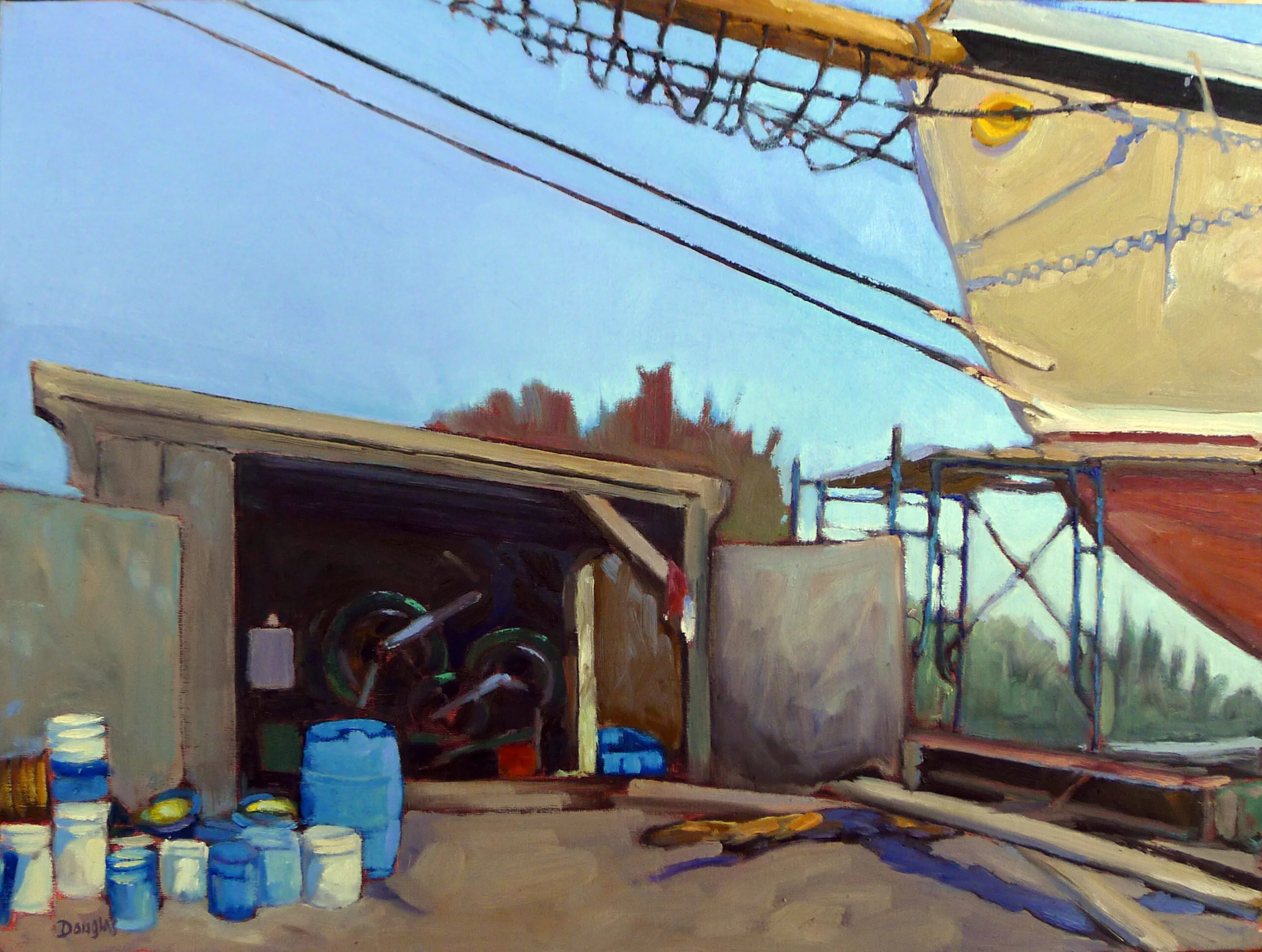
American Eagle in Drydock, 12X16, $1159 unframed includes shipping and handling in continental US.

Google tells me a lot of things I never knew I needed to know. One of these is that American Eagle in Dry Dock, above, is the most-viewed painting on my website, followed by Skylarking and Inlet. All three are watery paintings, although the water in American Eagle in Dry Dock is just out of the frame.

Not many people see boatyards in the dead of winter or early spring, but that’s when they’re the most interesting. I like to visit the North End Shipyard during the off-season. It has a marine railway, an ancient contraption on which a boat is slowly hauled onto dry land for its annual servicing, or fitting-out. Big old wooden boats don’t come out of the water often, since the planks would dry out and warp. Don’t feel sorry for them; up here the water is generally warmer than the air in winter.

Skylarking II, 18×24, oil on linen, $1855, includes shipping in the continental US.

During those few days when they’re up on the ways, all kinds of mysterious rites are performed over them—planks steamed and fitted and seams caulked with oakum. A Coastie goes around with a hammer pinging on the ribs to make sure everything is in order for the coming season. In another part of the boatyard, the blocks are sanded and varnished. (By the way, “in a trice” comes from another term for blocks. That’s how fast something can be pulled up with these nautical pulleys.)

The boat is sailed into a huge cradle and wooden supports are fitted underneath it. It’s then towed up by a winch-and-cable system attacked to the diesel engine, which is incredibly noisy and even older than the boatyard itself.

Why I like this painting

American Eagle in Dry Dock evokes the spirit of fitting-out to me. It’s got a sweeping curved prow, a wooden hull laid bare, and that ancient diesel engine.

The emphasis is on the boatyard’s heavy machinery in contrast to the elegant geometry of the schooner’s hull. Sometimes I like loose brushwork, but in this case, I ruthlessly pruned the details, making them subservient to the composition. You, the viewer, are left with two concepts in counterpoint to each other.

Whether you frame it in a traditional plein air frame or opt for a modern narrow black frame or even a grey coastal finish, American Eagle in Dry Dock will adapt beautifully to any décor.

Inlet, 9X12, oil on archival canvasboard, $869 includes shipping and handling in continental US

Beyond mere picturesque appeal, the painting embodies my reverence for maritime history and craftsmanship. Schooner American Eagle was built in 1931 as part of the final generation of Gloucester fishing schooners. It was meticulously restored by Captain John Foss and is now maintained by Captain Tyler King.

For lovers of nautical art, coastal living or New England heritage, this piece is more than decoration, it’s a story. A story of wood and salt air, of salt-stained decks and wooden ribs exposed to the Maine cold during fitting-out. It calls to those who find solace in the quiet rhythms of boatyards, in the geometry of rigging, and in the romance of sail and tradition.

Ketch and Schooner, 8X10 in a solid silver leaf frame, $652 includes shipping in the continental US

Last call for Christmas

With the holiday season upon us, American Eagle in Dry Dock makes a unique and meaningful gift — for yourself or a fellow maritime-art admirer. Order now to enjoy the painting in time for Christmas. Its size (12X16) means it packs a punch without overwhelming your walls. And shipping is included within the continental United States, making this an accessible and impactful nautical oil painting.

However, I don’t have much time to get it to you before Christmas. Don’t miss this chance to bring home a piece of Maine coastal tradition that evokes sea, history, and craftsmanship, just in time for the holidays.

Registration is now open for workshops in 2026! Reserve your spot:

Can’t commit to a full workshop? Work online at your own pace:

Seven Protocols for Successful Oil Painters