Monday Morning Art School: the 10-Minute sketch

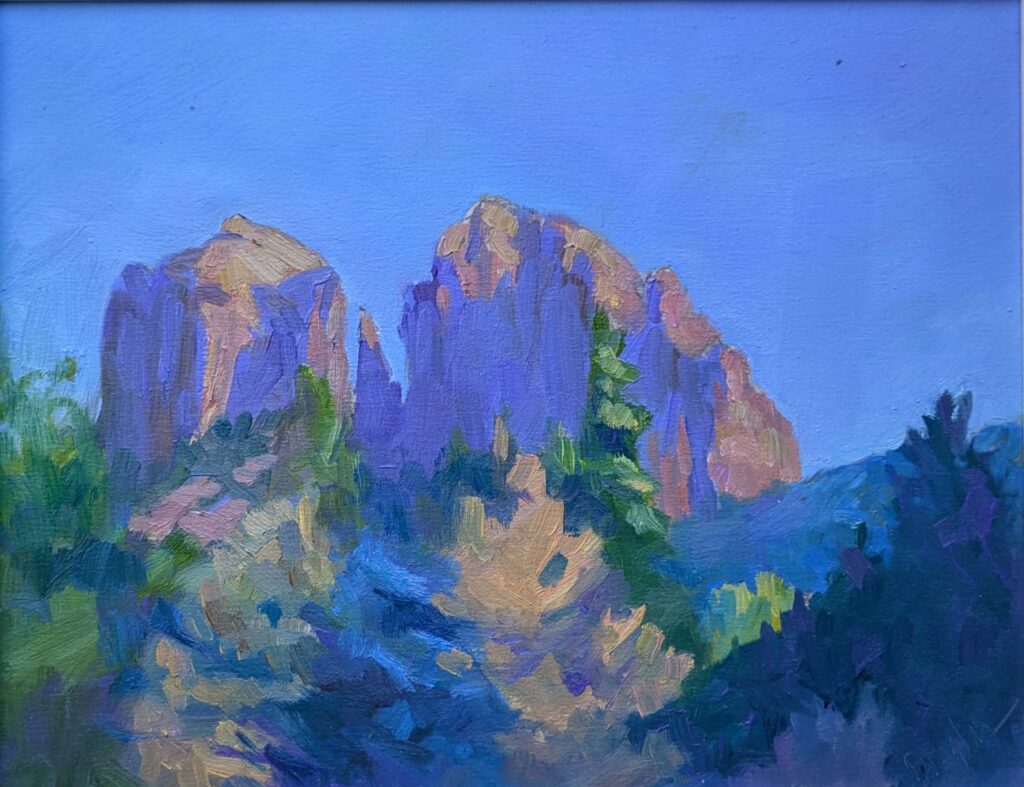
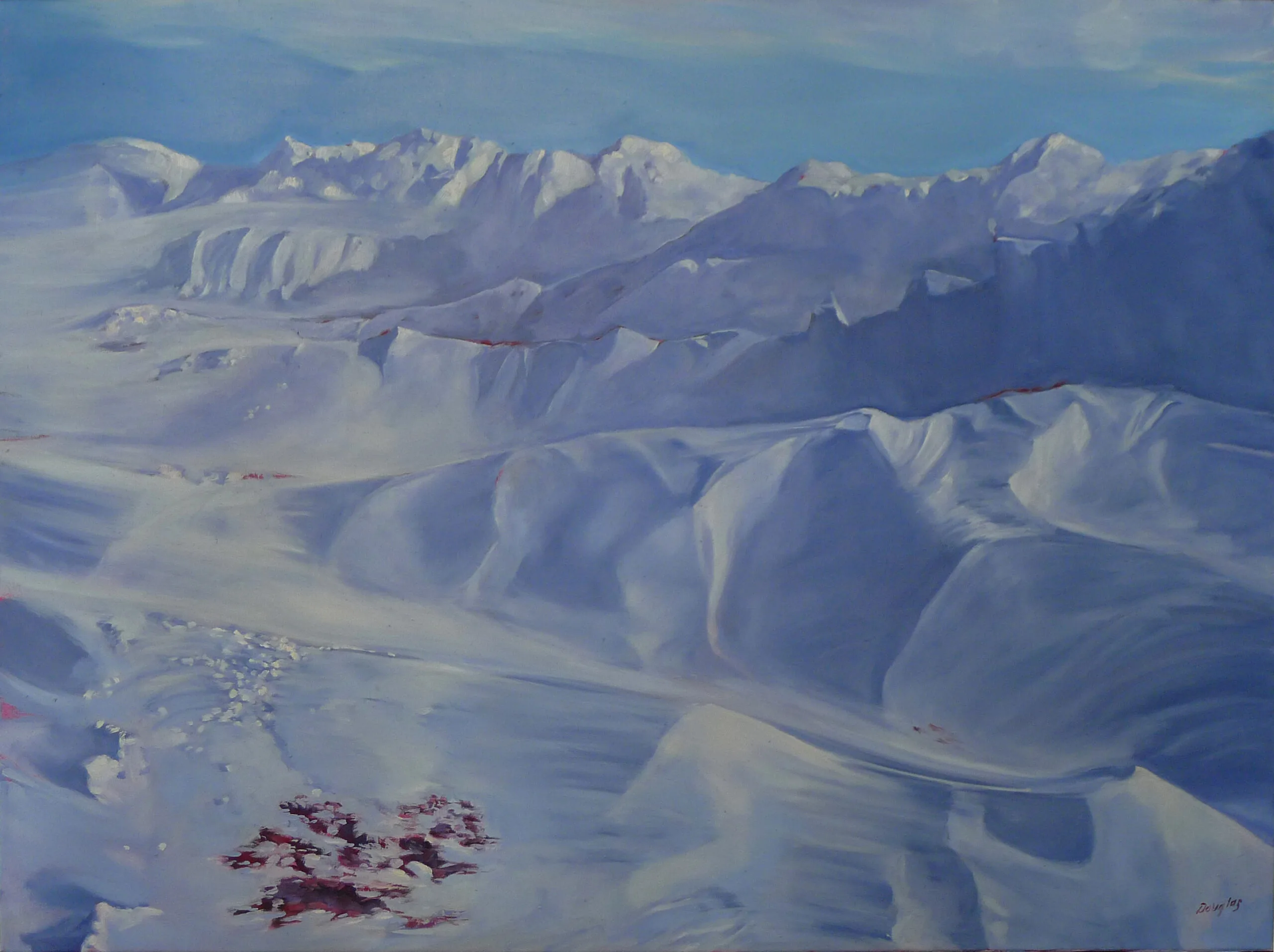
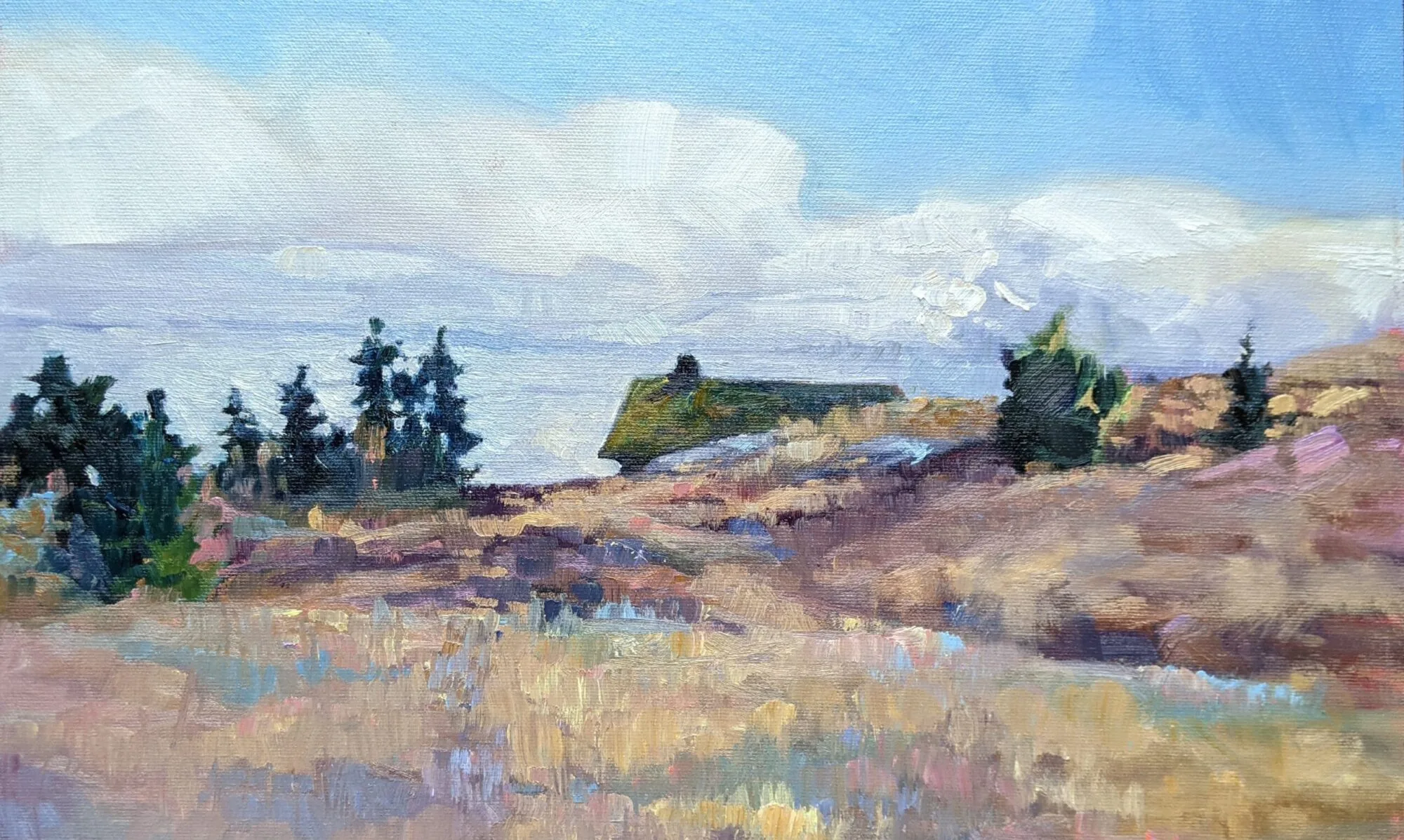
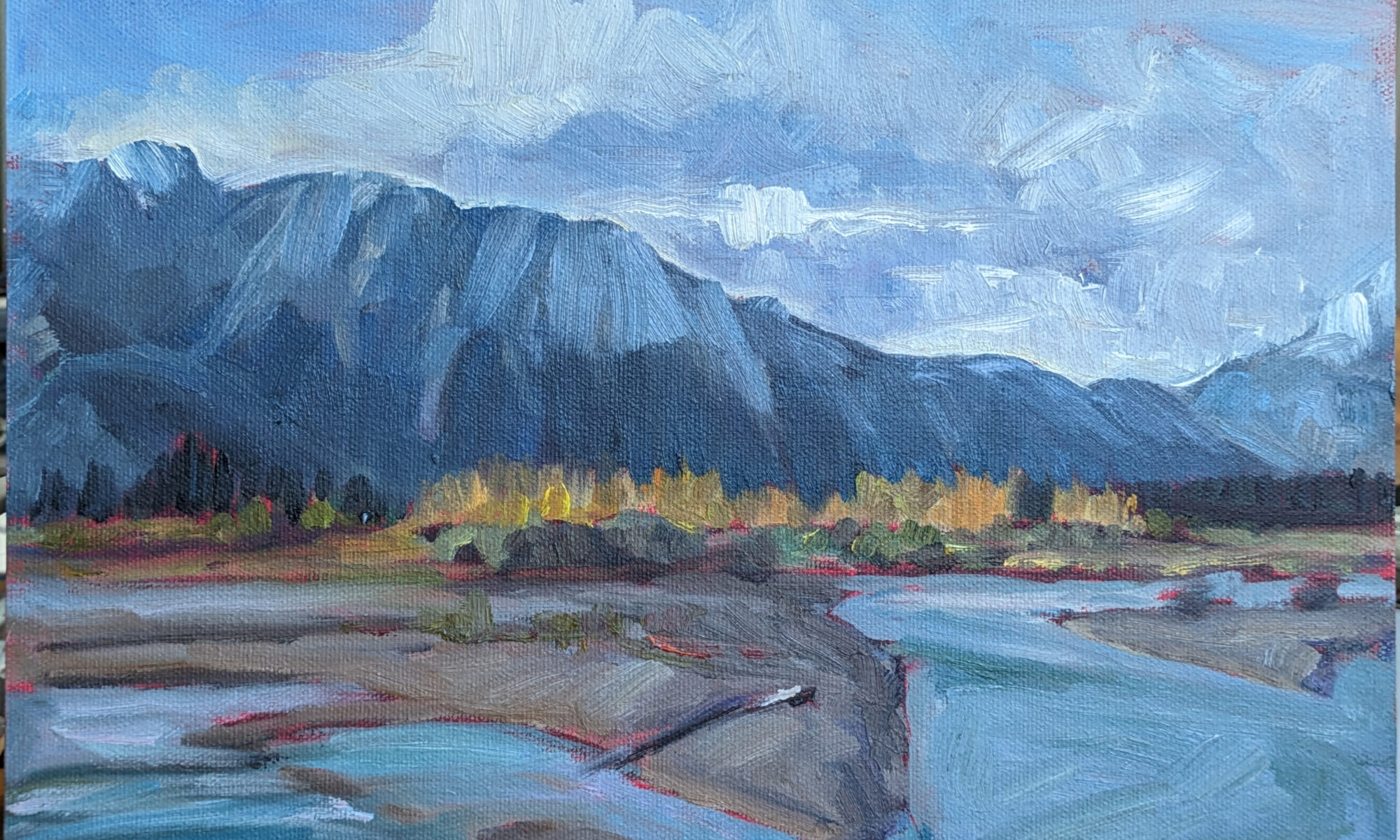
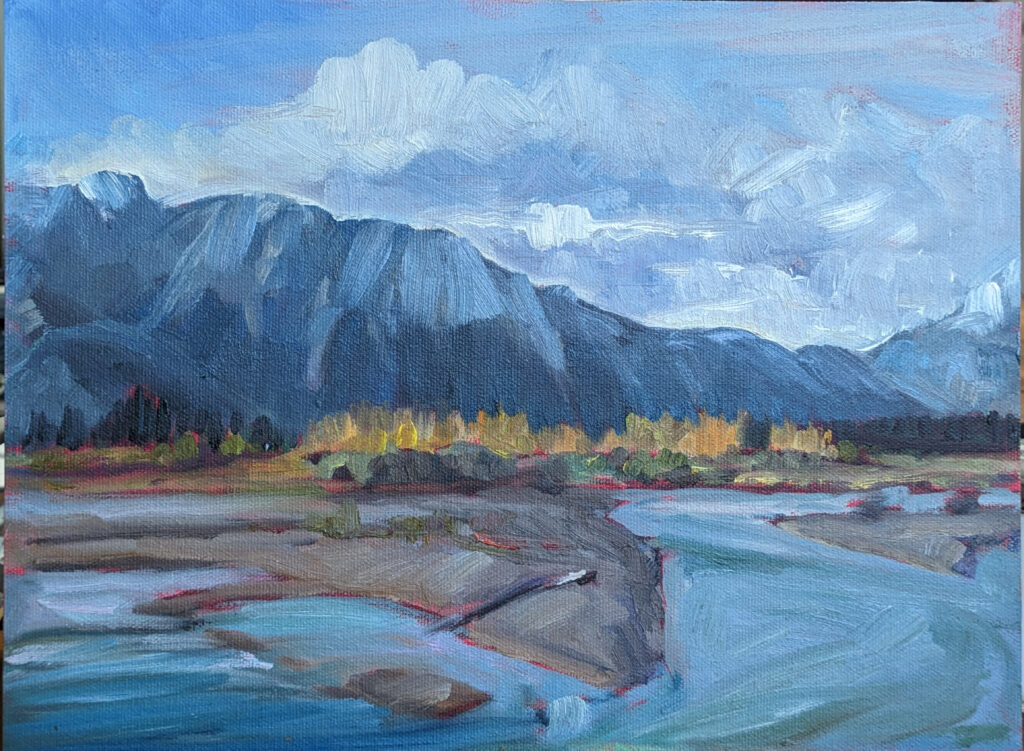
Glaciar Cagliero from Rio Electrico, 12X16, $1159 unframed, available.

I’m writing this post between my tasks making coffee at my church. As with many other things in my life, the workload for this once-mellow task has ramped up, as our church has blown up to three overflowing services a week. That’s pure blessing, but it also means I’m snatching small moments to write. I don’t like working on Sundays, but I’m trying to get my January classes written before I leave to help my daughter paint her new house. As I wrote on Friday, there are seasons in life when we can’t concentrate on making art, and this is one for me.

I promise I’ll attend one service without my laptop. As always, I’ll bring my sketchbook. I hear better when my hands are busy, and I get a half hour of uninterrupted drawing.

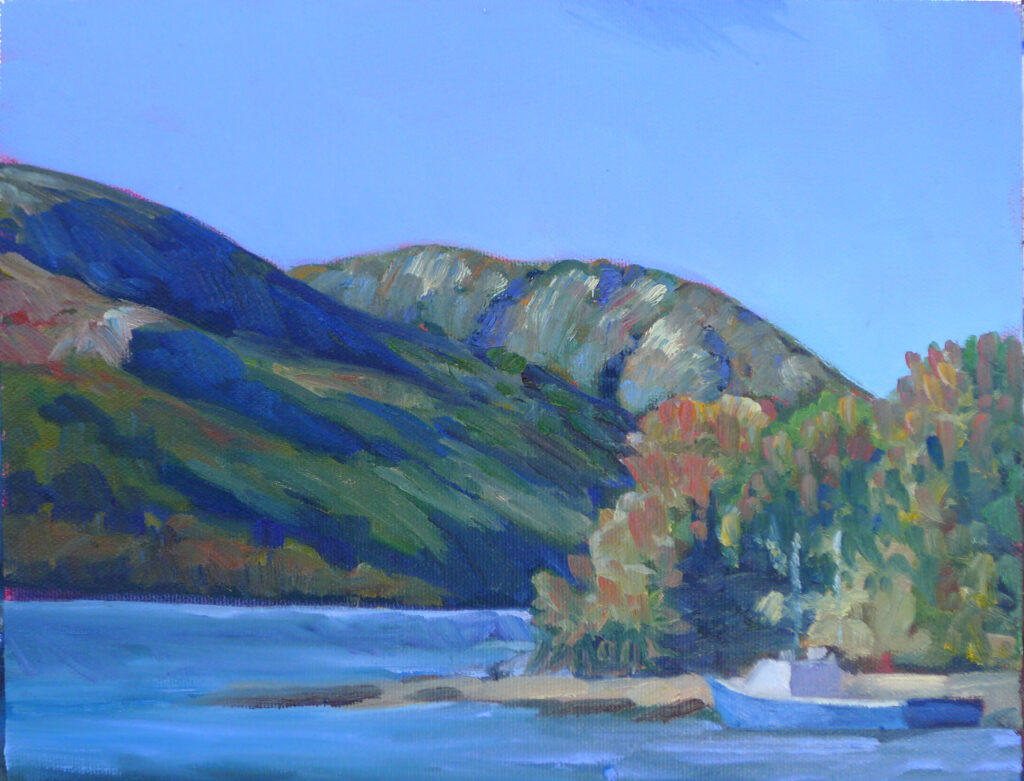
Cliffs and glaciers, 12X16, oil on Baltic birch, $1159 includes shipping and handling in continental United States.

There is no perfect moment

I’ve known many women who can’t paint until their chores are finished. That’s a laugh; our chores are never finished. At 67, I’m aware that we have only finite time, and that the perfect moment will never arrive. But here’s the good news: you don’t need a perfect moment. You just need ten minutes.

A 10-minute sketch is the smallest and kindest gift you can give your creative self. No masterpiece required, no pressure and certainly no grand plan. Just pick up a pencil, a brush or a pen and let your hand move. The goal isn’t a frame-worthy piece. The goals are to start and then to strengthen the habit of daily sketching. Ten minutes is short enough to be doable and long enough to crack open the door to deeper artistic thought.

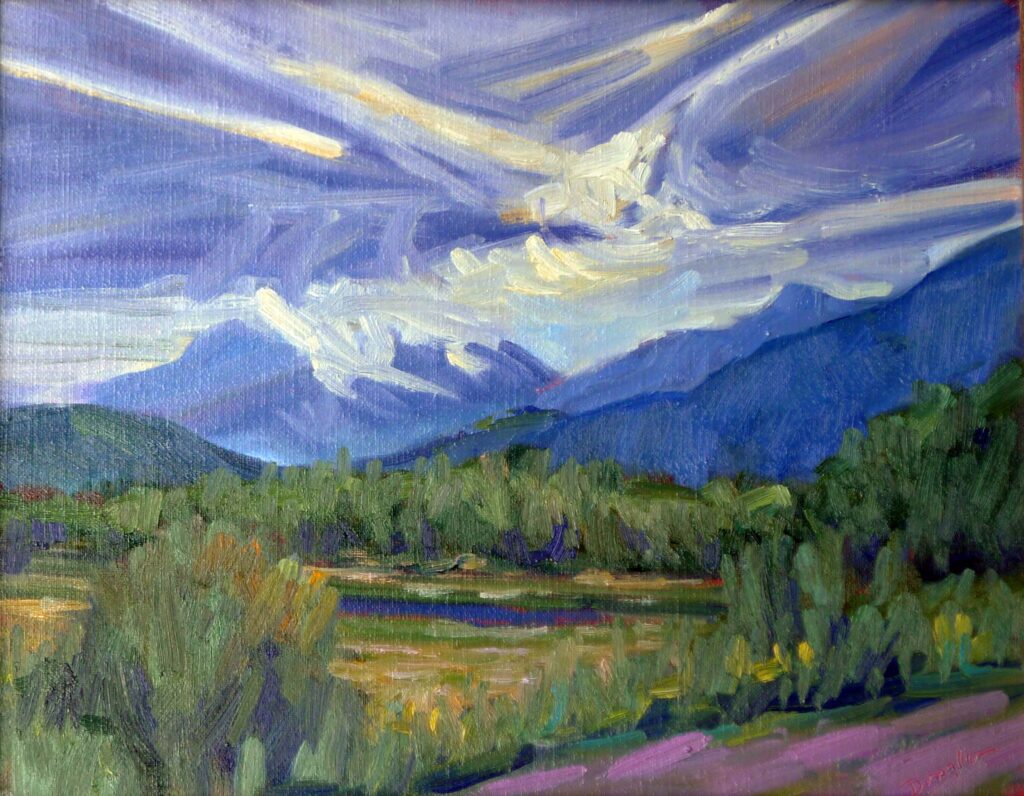
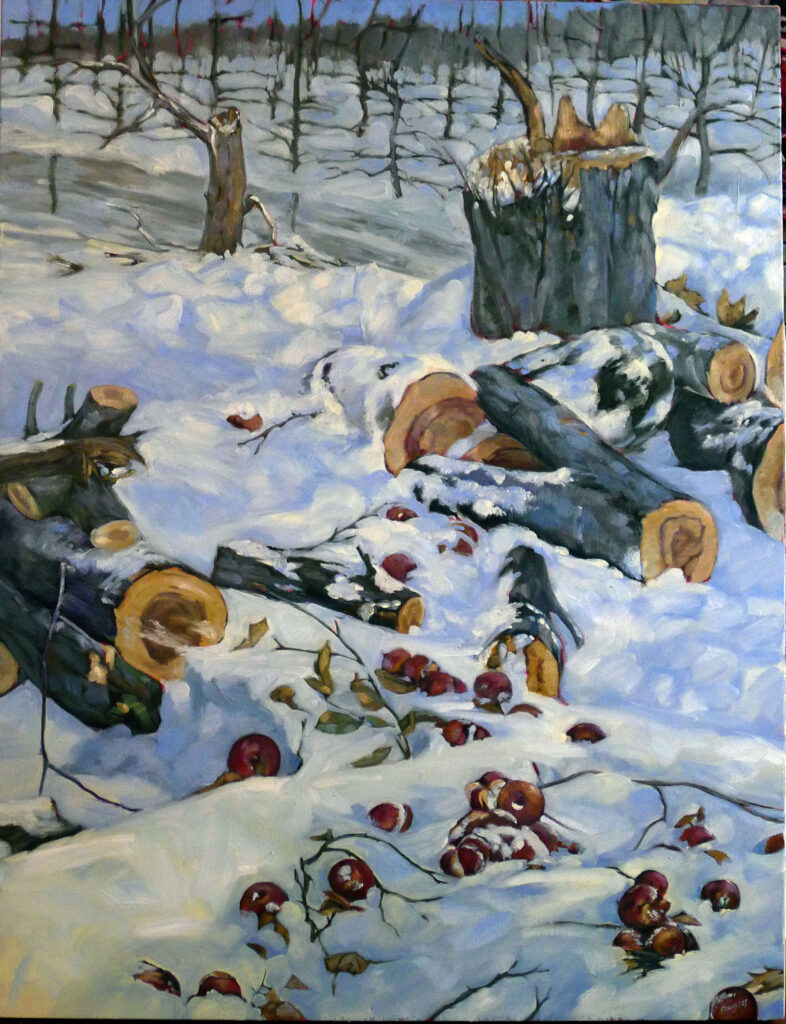
The Whole Enchilada, 12X16, oil on archival canvas, $1159 unframed.

Just show up

You become an artist by showing up, not by waiting for conditions to improve. Every time I lead a workshop or Zoom class, I see this in action. There are always students who are nervous about the process, but before they know it they’re lost in the quiet pleasure of looking and responding. That tiny window of attention changes everything.

A 10-minute sketch bypasses your inner critic. There’s no time for self-doubt, perfectionism, or overthinking. It’s all action and seeing. When you return to that small practice day after day, you’re not just improving your drawing skills, you’re building a creative habit that reinforces your identity as an artist.

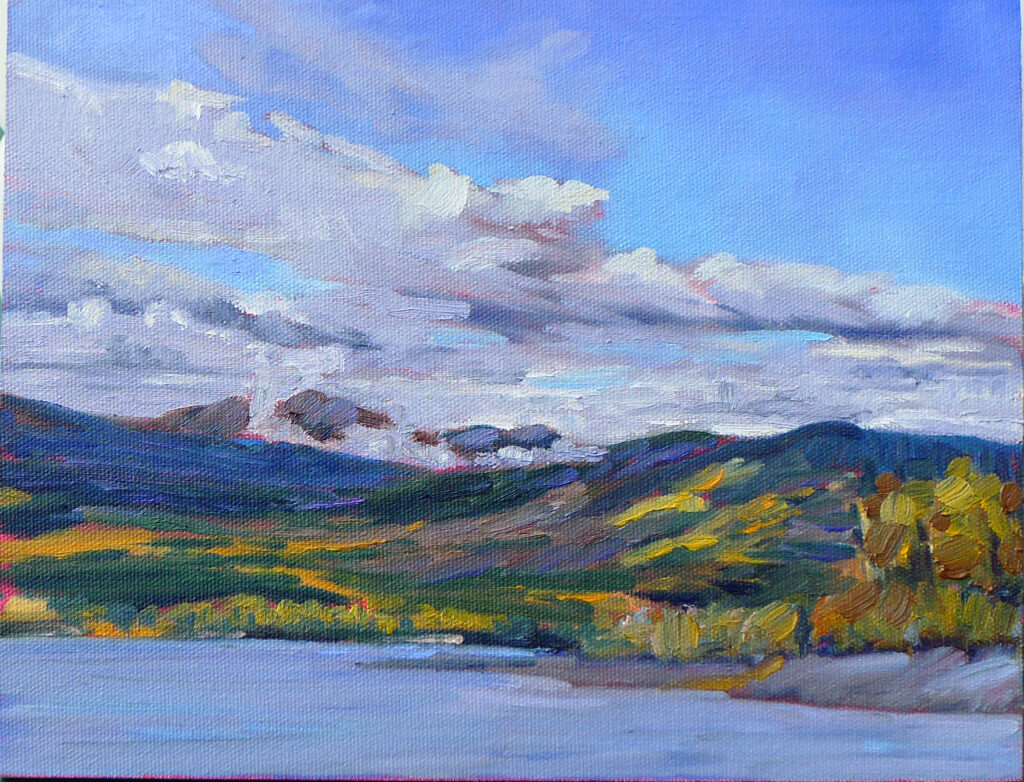
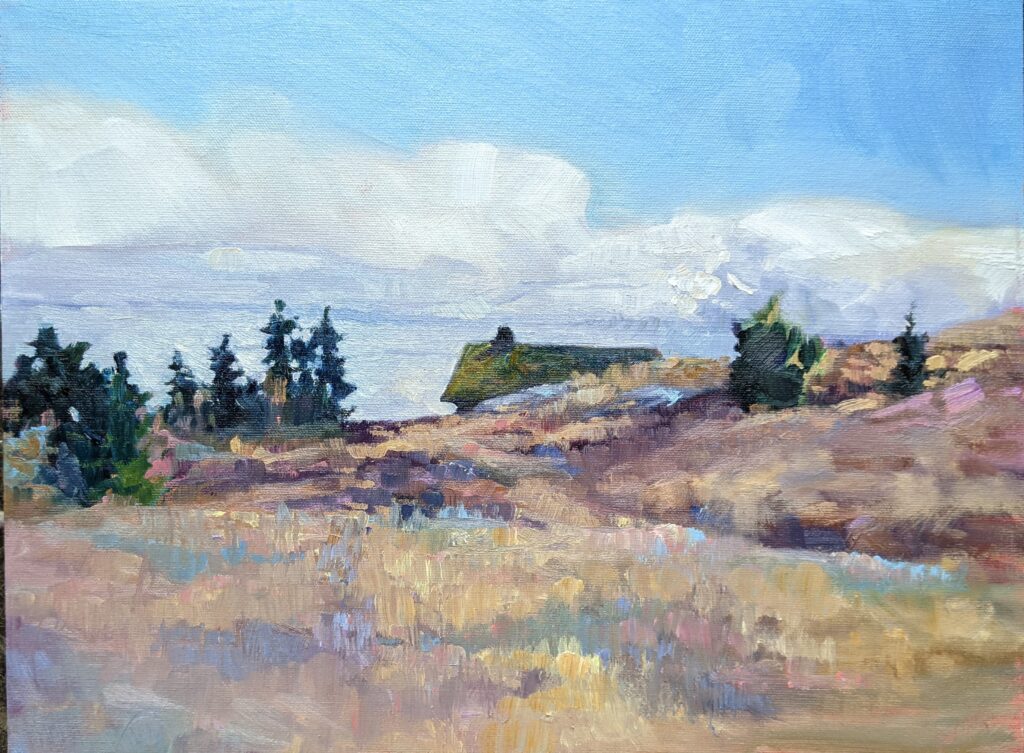
Cerro Electrico from the path to the National Park, 11X14, oil on Baltic birch, $869 includes shipping and handling in continental United States.

Your 10-minute sketches are the spark

So, start today. Do a fast contour drawing of your coffee mug or a quick value study from the window, even if it’s on the back of a receipt with a ballpoint pen. Keep it light, simple and curious.

But if ten minutes can settle your mind and sharpen your eye, imagine what six weeks of an evening Zoom class or five uninterrupted days of painting will do. This removes you from your routine and drops you into a world where your creative practice matters. You spend time surrounded by other painters, working from life, refining technique, laughing, learning and remembering what it feels like to be fully immersed.

Registration is now open for workshops in 2026! Reserve your spot:

Can’t commit to a full workshop? Work online at your own pace:
Seven Protocols for Successful Oil Painters

Permission to pause (and I’m talking to you, sisters)

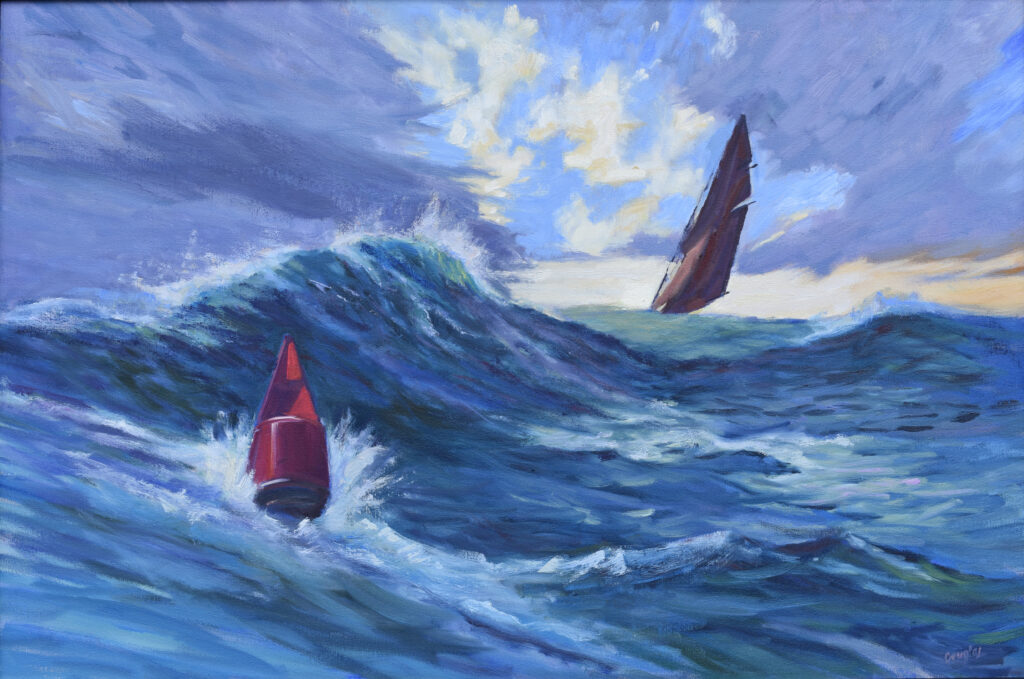
High Surf, 12X16, oil on prepared birch painting surface, $1159 includes shipping and handling in continental US.

If you’re like me, you’re tottering on your kitten heels in the run-up to Christmas. In addition to being an artist and teacher, I’m a wife, mother and grandmother. I wouldn’t have it any other way, but there are times when the daily grind wears me out.

I haven’t painted this little since 2000, when I had my first cancer. These things are cyclical, and it happens to be one of those years. I’m not alone, of course. Modern women juggle family, work, holidays, logistics and expectations, often beautifully and frequently invisibly. I asked a student recently if she’s been painting. “No,” she said, and then rattled off a list of responsibilities that would daunt anyone.

Surf’s Up is 12X16, on a prepared birch surface. $1159 includes shipping and handling in the Continental US.

If you’re like me, you need strategies, not someone nattering at you to paint.

Reframe painting as self-care, not as a luxury

Women are conditioned to see creativity as optional, something we earn after everything else is done. That’s why so many women can’t paint until their housework is finished. But painting isn’t indulgence; it’s mental health care and self-definition. Making that shift in thinking helps more than any number of planning apps.

Steal moments

When I don’t have time to paint, I can still draw. That’s why I carry a sketchbook with me. I may only have fifteen or twenty minutes while waiting for an appointment, but I can still think visually. Some ideas:

  • Sketch during kids’ naps, homework, or sports;
  • Do color studies while dinner simmers;
  • Leave a small gouache or watercolor kit open on the table.
Windsurfers at La Pocatière, 6X8, oil on archival canvasboard, $348 includes shipping and handling in continental US.

Establish some protected time

Caregivers are always on call. But you can establish some protected time without feeling guilty about it. Whether that’s thirty minutes after supper or before you leave for work in the morning, everyone deserves some time to themselves. Remember to communicate that, so that everyone knows you’re serious.

Create workflow systems that reduce friction

The easier it is to start, the more you’ll paint. Some ideas:

  • A permanent workspace, even if it’s a corner of a table. I painted in a corner of my kitchen when my kids were little;
  • A travel box with everything ready to go;
  • Watercolor or gouache instead of oils or pastels. The set-up and cleanup is faster.

Involve the people you care for

My kids not only spent lots of time at the kitchen table drawing, they were free to comment on my work. Today they (and my husband) are among my most trusted critics.

Make sketching part of family outings. I painted and drew with my father when I was very young. I not only learned to paint, I learned to respect the process of art.

The Surf is Cranking Up, 8X16, oil on linenboard, $903 includes shipping and handling in continental US.

Be willing to outsource tasks

The German artist Käthe Kollwitz defied the norms of her time by insisting on domestic help so she could work as a full-time artist, before she agreed to marry and have children. Like many women, I resisted hiring help when my kids were young. I regret that. A few years ago, I hired a cleaner. It’s the best value for money in my budget.

Say yes to workshops, because they create space you can’t at home

A workshop isn’t just instruction; it’s sanctioned art time. Students tell me workshops reset their creative lives because they:

  • Give permission to focus;
  • Provide uninterrupted hours to work;
  • Rekindle identity;
  • Build community.

It’s the ‘paint first, responsibilities later’ experience many women never get at home.

Registration is now open for workshops in 2026! Reserve your spot:

Can’t commit to a full workshop? Work online at your own pace:
Seven Protocols for Successful Oil Painters

A live Zoom painting class that builds your skills… and your voice

Saskatchewan Grain Elevators, oil on archival canvasboard, 8X10, $522 includes shipping and handling in continental US.

This week, I’m writing my Zoom classes that start in January. That’s a task I always enjoy. If you want the Tuesday class, Where do I fit in? you’d better hit the plunger fast; there’s only one seat left. However, there are multiple openings in my Monday evening class, Trust the Process, which runs from January 5 to February 9, from 6-9 PM, EST. That surprises me, since I think it’s such a cool class.

It’s for anyone who has ever felt stuck, second-guessed every brushstroke or, worse, overpainted the same passage over and over without fixing anything. We’re going to discuss how process helps you avoid that. Here’s the content as I visualize it right now:

  • Foundations and what trust the process means;
  • Composition and value as structure for meaning;
  • Finding your voice through color and palette;
  • Brushwork, layers and risk-taking;
  • Narrative and storytelling in painting;
  • Developing a body of work with a cohesive voice.
Grain elevators, Buffalo, NY, 18X24 in a handmade cherry frame. $2318 includes shipping in continental US.

In other words, this is a little different from my usual how-to classes; it’s a guide to developing a painting practice that supports your ideas instead of getting in their way.  My goal is to help you shift from wrestling with technique to making technique the handmaiden to personal expression. Over the weeks, we’ll walk through a flexible but structured methodology addressing how to begin a painting, how to build layers, and—crucially—how to know when to stop.

Whether you work in oil, acrylic, watercolor, gouache or pastel, you’re very welcome in this class. That goes for whatever level you’re currently painting at, too.

Why process matters

Painting is more than mere decorative art. Done thoughtfully, it is a deeply personal form of narrative. That doesn’t just mean obvious storytelling, either. Color, composition, brushwork, and layering are abstract concepts, but they work together to evoke and support emotional truth.

Although there’s an order-of-operations to painting, technique is more than just a rigid checklist. It’s a language through which you communicate meaning and emotion. Process is liberating, because it allows you to stop futzing around and concentrate on what you’re really trying to say.

Mather Point at dawn (Grand Canyon), oil on canvasboard, 9X12, , $696 includes shipping and handling in continental United States.

Who is this class aimed at?

  • Beginners who are eager to learn foundational painting skills;
  • Intermediate painters who have good technique but tend to overthink every move;
  • Advanced painters who find themselves getting stuck at the same point without understanding what’s going wrong.

By the end of the course, you’ll walk away with:

  • A reliable painting workflow;
  • A more confident brush hand and color-mixing ability;
  • A deeper understanding of how process helps shape narrative and emotional impact;
  • A small body of work that reflect your personal creative voice — not someone else’s.
Pensive 8X10, oil on archival canvasboard, $522 includes shipping and handling in continental US.

Trust the Process offers real-time guidance and community, a space where you can experiment, ask questions and engage with me and your classmates while you paint. Whether you’re just starting out or you’ve painted for years consider stepping into Trust the Process. It isn’t about teaching you how to paint, but rather helping you build a painting practice that lets you tell the story you want to tell.

Registration is now open for workshops in 2026! Reserve your spot:

Can’t commit to a full workshop? Work online at your own pace:
Seven Protocols for Successful Oil Painters

Monday Morning Art School: the #1 mistake painters make

Skylarking, 24X36, oil on canvas, $3985 framed includes shipping and handling in continental US.

Even when we work with a very competent instructor or institution, painters are largely self-taught. That’s true of most creative disciplines, since every hour of instruction is followed by hours of practice and self-discovery.

Eventually, we all run into a frustrating truth: effort doesn’t always equal results. We work for hours, even days, and still end up with a painting that feels fussy, flat, or somehow not quite right. Mostly that comes down to one simple mistake: prioritizing detail over the big picture.

Breaking Storm, oil on linen, 30X48, $5579 framed includes shipping and handling in continental US.

“It looks just like a photograph” is not usually a compliment

“It looks just like a photograph” is something casual passers-by will sometimes say to painters, and it always makes me wince. It generally means the details are all there, but the big sweep of movement and energy is lacking. As artists, most of us are drawn to detail; it’s almost instinctive to notice the sparkle on the water or the delicate branching pattern of new leaves in the spring. (In real life, we’re attracted to those sparkles and branches because they’re gently moving, which doesn’t translate to canvas.)

Frankly, detail is fun to burrow into, and I’m not saying don’t do it—that is a question of your own personal style and vision. But diving into detail before establishing the big shapes and values is the fastest way to derail an otherwise promising piece.

Brigantine Swift in Camden Harbor, 24X30, oil on canvas, framed, $3478 includes shipping and handling in continental US.

Structure vs. detail

Painting isn’t built from details outward; it’s built from structure inward. When your underlying shapes, values, and composition are strong, the painting sings before you ever add a highlight. But when the structure is weak, no amount of careful rendering can save it. If you doubt that, go back and look at the work of Baroque painters like Caravaggio or Peter Paul Rubens. As crazily detailed as their canvases are (by our modern standards) they rest first and foremost on solid value structure.

Avoiding this trap is simple

I’ve mentioned that I paint without my glasses; it prevents me from focusing on detail. But even clear-sighted individuals can remember to start with the largest shapes and the biggest value relationships. Ask yourself: Where is the light? Where is the shadow? What are the major masses of the scene? Block those in with confidence and clarity. Only after the bones of the painting are solid should you refine, adjust, and bring in the detail.

American Eagle in Drydock, 12X16, $1159 unframed includes shipping and handling in continental US.

Helping you learn

Watching someone move from frustration to epiphany is absolutely the most rewarding part of teaching. It’s also why plein air workshops are transformative. “I’m just asking you to trust me for one week,” I tell my students. I’m there to stop you when you fall back into the habit of fussing or adding tchotchkes to try to fix a not-fully-thought-out composition. We all do it at times, from exhaustion, nerves or sheer obstinacy. But one of my jobs is to intercept that and put you on the road to good design.

Over the course of my workshops and classes, we revisit this idea again and again: simplify first, refine later. You’ll learn to organize values swiftly, make decisive compositional choices and build paintings that hold their structure from the first brushstroke. Once you truly internalize this approach, painting becomes easier, faster and far more joyful. You stop fighting the canvas and start working with it.

I have two types of offerings to help you with this process. The first is a class starting in January called Trust the Process: making technique tell the story you want to tell. It’s on Monday evenings, 6-9, and is open to painters of all levels. The second is my workshop schedule for 2026, below.

If you’ve been feeling stuck, unsure, or just ready for a real leap forward, this is your invitation.

Registration is now open for workshops in 2026! Reserve your spot:

Can’t commit to a full workshop? Work online at your own pace:
Seven Protocols for Successful Oil Painters

A gift you can share: “Next year, we’re making art together!”

Downtown Rockport, 14X18, oil on archival canvasboard, framed, $1594 includes shipping and handling in continental US.

Last year I had several workshops where friends signed up together. Usually, it was one of my old friends (also known as students) bringing along someone who would become my new friend. I’ve had workshops where groups signed up together as well—a group of sisters and artists who show together in a cooperative gallery, for example. I’ve had people take my Zoom classes in teams as well—a husband and wife, a grandmother and grandson, and a mentor and her student. It seems like there’s exponential value in doing something you love with someone you love.

I don’t enjoy wrapping presents (although I know a lot of people who do). I do like watching people open gifts, however. But there’s something even better about giving a gift you get to share.

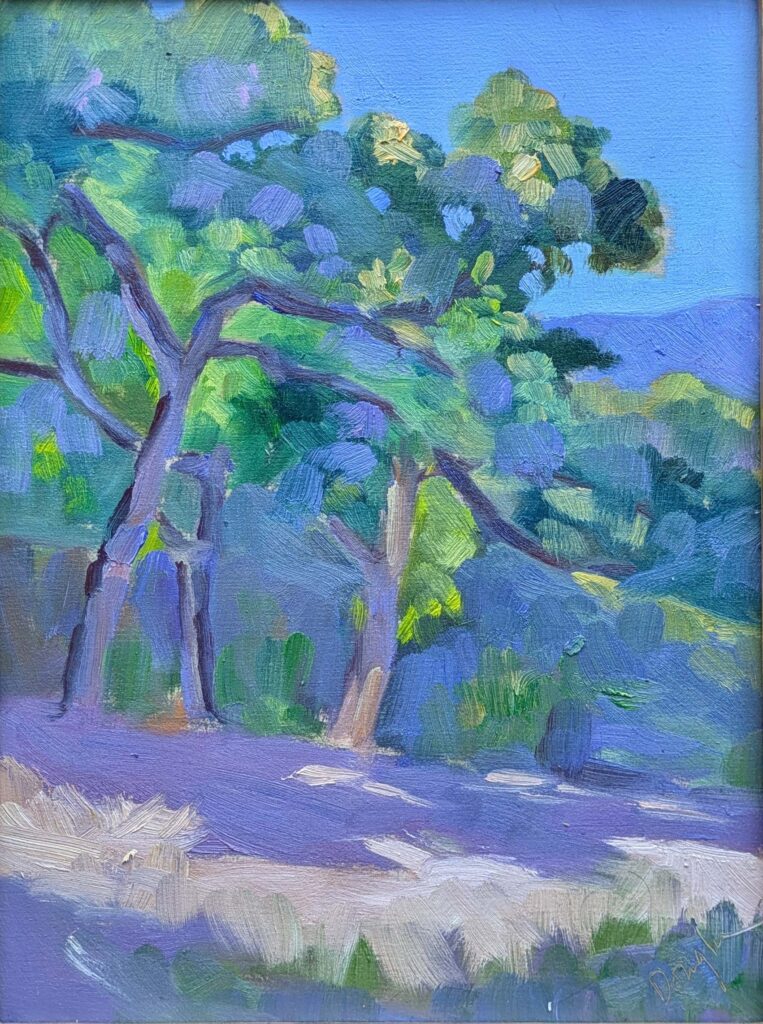
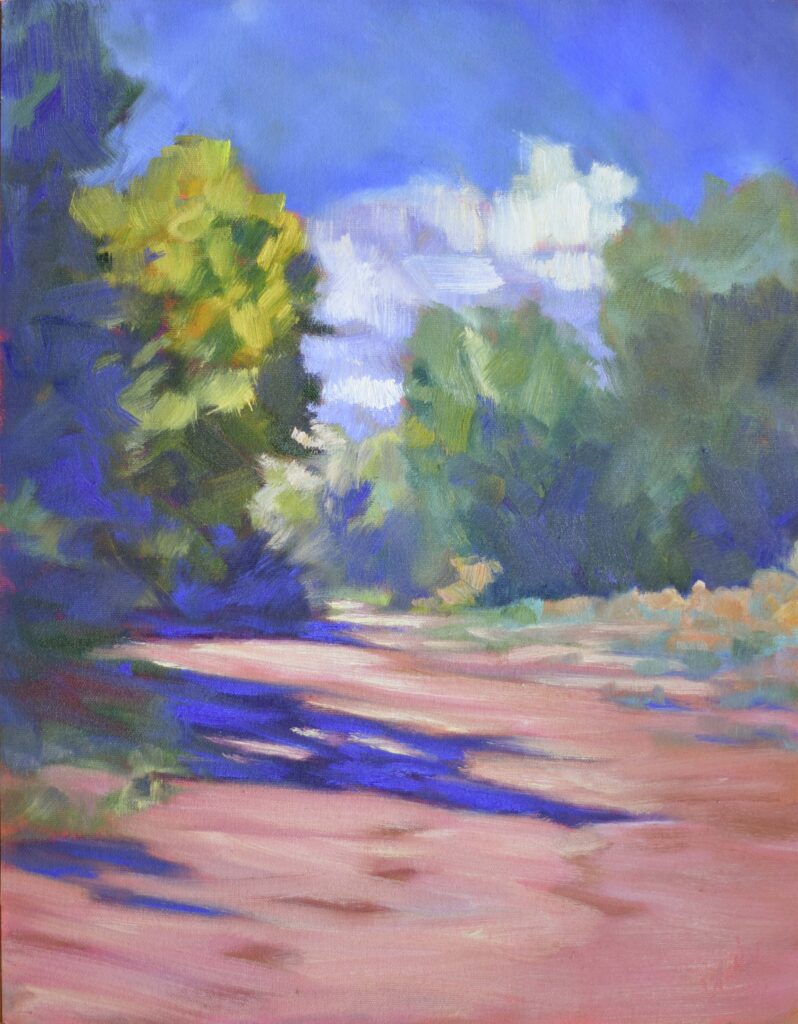
Cottonwoods along the Rio Verde River, $696 unframed, oil on Baltic birch.

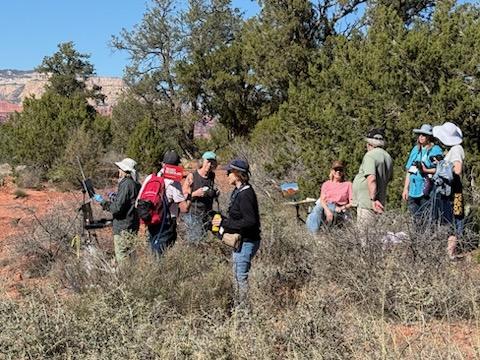
I’m very serious about teaching painting, but my workshops aren’t just art classes. They’re adventure because they happen in places that are out of the ordinary, like Sedona, Rockport, the Berkshires and Acadia National Park. Shared adventure makes for stories you can dine out on for years to come.

Every workshop student has their moment of doubt, when I’ve deconstructed what they think they know and what’s new doesn’t seem to be working. That always resolves in new, better ways, but it’s disconcerting to the student when he or she is in the throes of self-doubt. Suddenly, there’s the Eureka moment, when it gels. When there are two or more friends painting together, it’s fascinating to watch that moment of success hit them in rapid succession as they spark off each other.

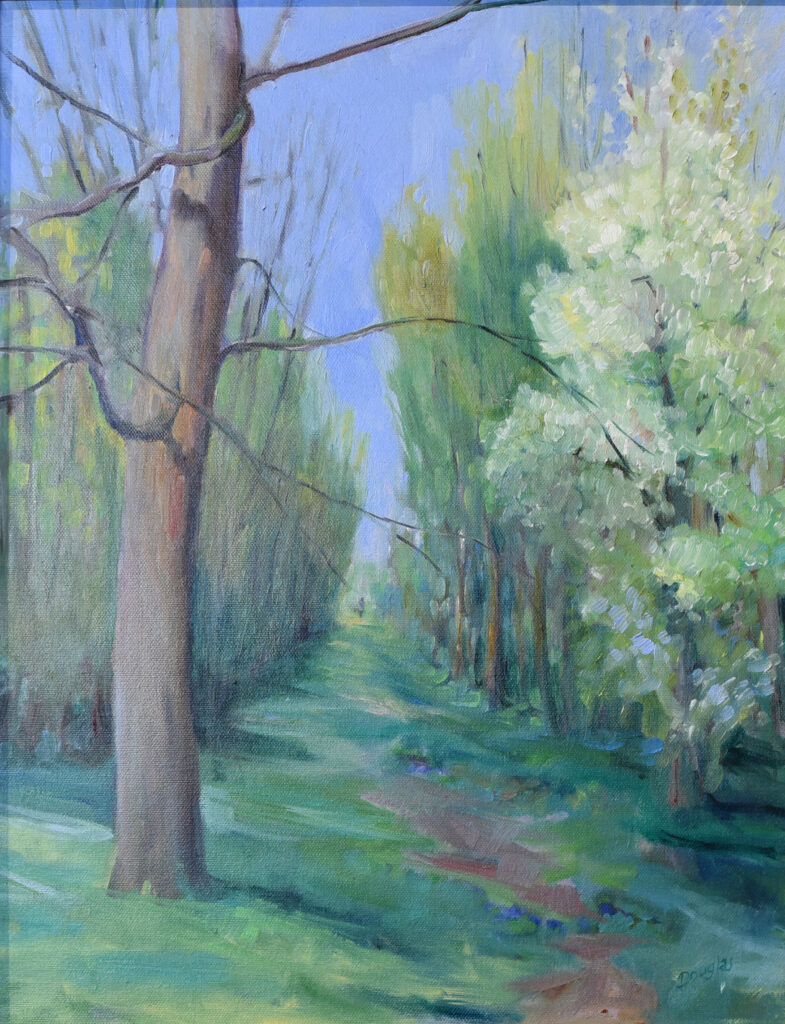
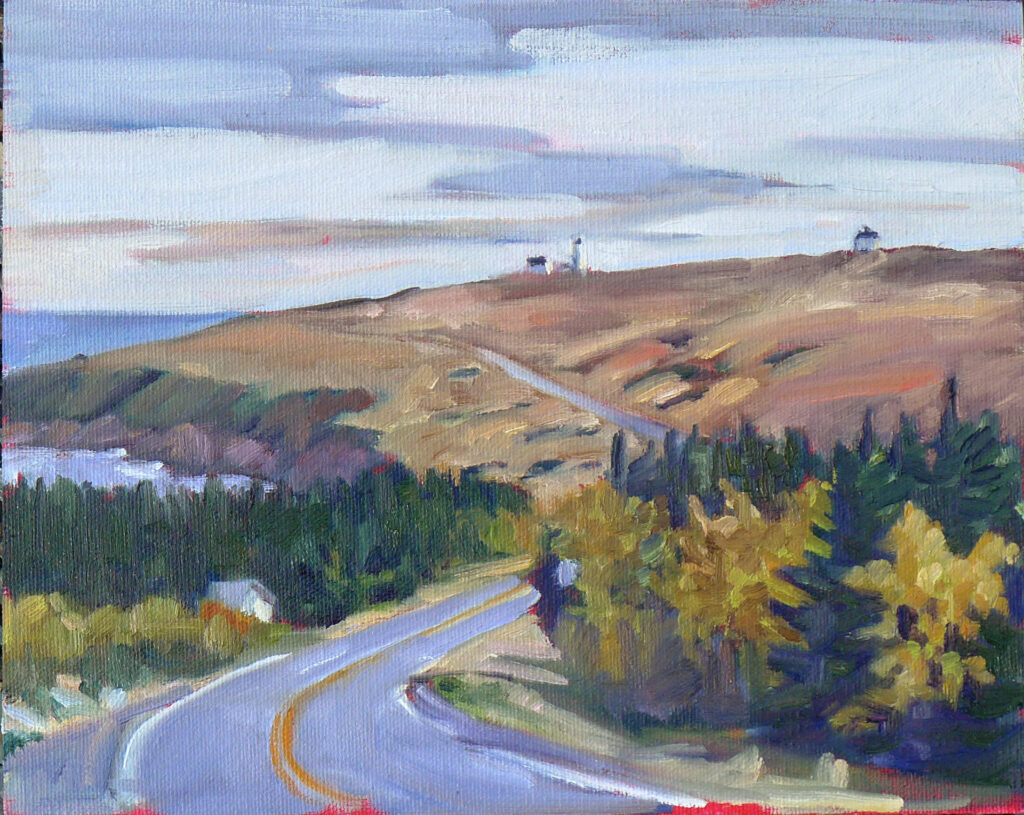
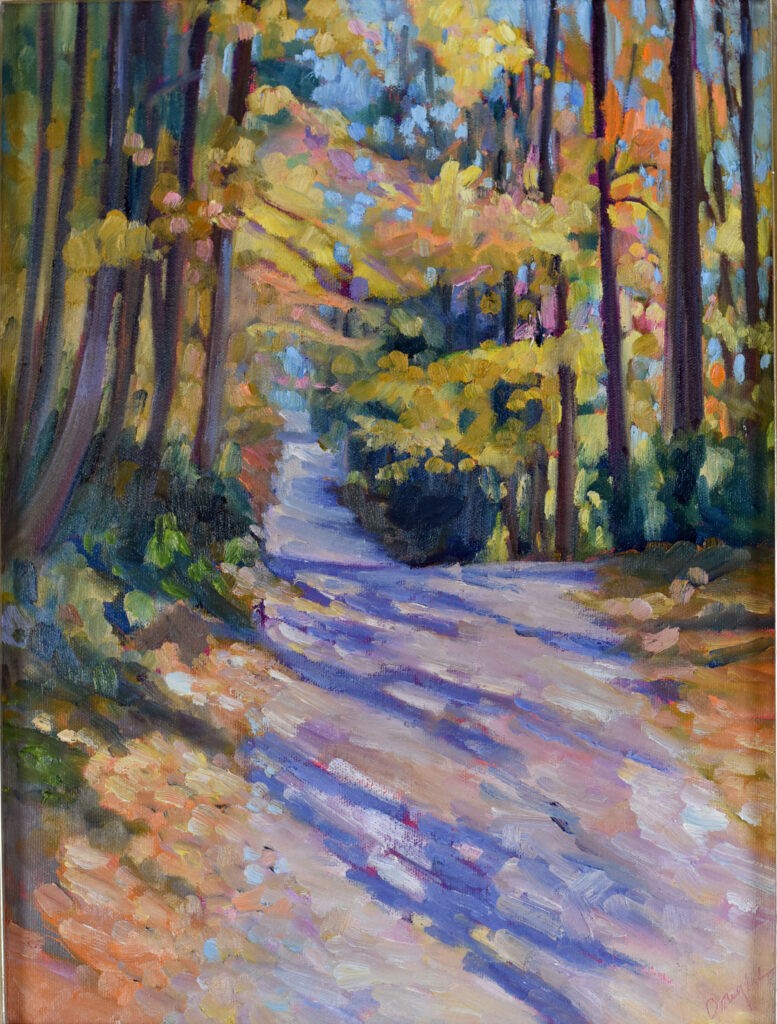
Country path, 14X18, oil on archival canvasboard, $1,275 includes shipping and handling in continental US.

There’s not much that brings people together more quickly or tightly than making something together. (Except assembling flat-pack furniture. That’s a team-stressor, but I won’t be asking you to do that.)

Blocking off time in 2026 for a shared workshop means carving out time for both your creativity and your relationship. Planning ahead gives both of you something wonderful to look forward to. It becomes a commitment to make art together in the coming year.

If you’re thinking, “I’d like to do something with my friend, but she’s an artist and I can’t paint, even though I’ve always wanted to,” that’s wonderful. With the exception of my advanced workshop in July, my workshops are all designed to welcome every level, from absolute beginners to hobbyists to professional artists. That’s because they’re small enough that I can focus on individuals. An artist is someone who makes art, period. What matters isn’t talent; it’s willingness. It’s the openness to try, explore, and play. And when you try something new side-by-side with someone you care about, it becomes a shared story you’ll both treasure.

As you think ahead to meaningful gifts for the new year—and especially for 2026—consider choosing a shared workshop. It’s more than a present. It’s an experience, a memory, and a promise for the future.

High Surf, 12X16, oil on prepared birch painting surface, $1159 includes shipping and handling in continental US.

By the way, my Tuesday Zoom class for January and February, Where do I fit in, is almost full. Register soon if you want a seat. My Monday class, Trust the Process: making technique tell the story you want to tell, has several openings, but if you’re planning on taking it, I’d love to know soon!

Registration is now open for workshops in 2026! Reserve your spot:

Can’t commit to a full workshop? Work online at your own pace:
Seven Protocols for Successful Oil Painters

Why my art gallery isn’t doing Black Friday

Toy Reindeer with double rainbow, oil on archival canvasboard, 6X8, $435 framed, includes shipping in continental US.

When I lived in Rochester, I used to have a Black Friday sale the weekend after Thanksgiving. It was a chance to sell unframed work at discounted prices and see and thank my collectors. However, I now live in a town of 3,644 permanent residents. It just wouldn’t work.

Anyway, Black Friday was just an excuse for a party. I can’t compete with Walmart or Target on doorbusters, and nobody is going to get in a 6 AM fight in my gallery. I don’t have pallets of flat-screen TVs wrapped in shrink-film, and my idea of a limited-time offer is when the last streak of sunset slips behind Beech Hill.

Toy Monkey and Candy, oil on archival canvasboard, $435 framed.

With a large family I have Christmas shopping of my own to do, so I too scan Black Friday sales. As always, I’m struck by how ephemeral the stuff on deep discount is. Many are bargain gifts that recipients will have completely forgotten by February, which is why I’m impressed when people like my friend Sharron put their effort into warm hats for the needy instead of focusing on shopping.

I understand that we have to shop. And there’s excitement in the chase. But here in my studio, the only line you’ll stand in is the one that leads you closer to your easel. The only rush is the thrill of color. Everything sells out because it’s limited-edition (except Seven Protocols for Successful Oil Painters, which is a learn-at-your-own-speed online class). That includes my workshops and Zoom classes because I keep them small.

It’s especially true of paintings. Original art is the antithesis of shopping frenzy; it’s about stillness. When you buy from a real artist, you’re not just purchasing wall décor. You’re taking home a moment that actually happened, a slice of time the artist stood in, the air he or she breathed, and his or her personal translation into paint. It’s the way morning fog lifts off Beech Hill, or how the spruce shadows stretch long and blue across winter snow. I’ve never seen those things in a doorbuster bin.

Grand Canyon at sunset, oil on canvasboard, 9X12, $696 includes shipping and handling in continental United States.

Of course, I run a business, and businesses need customers. So yes, I have to market my workshops, classes and paintings. I’m truly grateful when my work finds a place in your home or that of someone you love.

On Friday, while others wake up at dawn to chase bargains, I’ll be going outside because it’s my favorite time of day. I’ll take the dogs for a tromp across the fields and I’ll watch the sun rise (unless it’s raining or snowing, in which case I’ll watch the gloaming lift).

If you find yourself exhausted by the noise of the season, step inside my online art shop, and just immerse yourself in paintings. I promise, there will be no shoving.

Prom Shoes 2, oil on archival canvasboard, 6X8, $435.

On that note, thank you to all my kind readers, friends, students and collectors. Enjoy this holiday, wherever you’re spending it.

Registration is now open for workshops in 2026! Reserve your spot:

Can’t commit to a full workshop? Work online at your own pace:
Seven Protocols for Successful Oil Painters

Monday Morning Art School: emotional resonance

The Late Bus, oil on archival canvasboard, 6X8, $435.00 framed, includes shipping and handling in continental US.

A friend sent me an AI-generated song that recently made it to the top of iTunes and is climbing the Christian Billboard charts. While a casual listen might make you think it’s a decent tune, it’s cliched in both musical and lyrical terms. Like the Shenandoah River, it’s a mile wide and an inch deep.

Before you get bummed about that, ask yourself what humans have that AI doesn’t. The answer is emotional resonance. That isn’t magic, but rests on craft. Painters often think emotion comes from subject matter alone, but the truth is that feelings live in the technical decisions we make long before the final varnish.

Value masses are the bones of emotional clarity. A high-contrast pattern creates energy and tension; a softer, compressed value range evokes calm or melancholy. Before you even load your brush, decide what feeling you want the viewer to sense, then design your value map to support it. This single step makes your painting feel intentional instead of accidental.

Next, consider color harmony. Emotional color isn’t about picking sad blues or angry reds. It’s about temperature shifts and relationships. Push your warm lights warmer; let your cool shadows carry the complementary hues that make the painting vibrate. A thoughtful color harmony prevents color chaos and builds unity. Viewers respond strongly to controlled harmonies because the painting feels calm, confident and purposeful.

Ravenous Wolves, oil on canvas, 24X30, $3,478.00 framed includes shipping and handling in continental US.

Now look at edges. Hard edges naturally attract the eye. Soft edges whisper atmosphere. Lost edges give the viewer’s mind room to fill in the details and tell the viewer that something is felt more than seen. Emotional resonance often lives in this liminal space, in the edges rather than the focal point. If everything is sharp, nothing is special, something AI doesn’t seem to understand. Use edge hierarchy to guide the eye and deepen the story.

Artists can leverage brushwork to match their own emotional engagement with the subject. Smooth, blended strokes create serenity; broken color and textured marks deliver energy. Let your brush describe not just what something looks like, but what it feels like. That means, don’t overblend; let your own instinctive handwriting stay visible. People respond emotionally to gestural painting because it reveals the person behind the paint.

In Control (Grace and her Unicorn), 24X30, $3,478 framed, oil on canvas, includes shipping in continental United States.

Finally, simplify your composition. Emotional impact disappears when a painting is cluttered. Use compositional flow, negative space, and focal point placement to create a visual path. Ask yourself: “What single idea am I communicating?” Remove anything that dilutes that intention. This clarity is what makes paintings linger in the mind.

If you like the idea of emotional resonance, you could do worse than buying one of my paintings. Or, if you’re a painter, sign up for a workshop or Zoom class to get better at this yourself. You’ll develop stronger, more expressive artwork—and there will be no confusion between your painting and AI-generated images.

The Logging Truck, oil on archival canvasboard, 16X20, $2029.00 framed includes shipping and handling in continental US.

Registration is now open for workshops in 2026! Reserve your spot:

Can’t commit to a full workshop? Work online at your own pace:

Seven Protocols for Successful Oil Painters

My holiday gift guide for 2025

Rowan Branch Brush Soap, $12 plus shipping and handling.

Brushes are where quality matters, but they’re pricey, so they’re where most artists flinch. Start by encouraging your artist to take care of the ones he or she has. Oil and acrylic painters need Rowan Branch Brush Soap. My daughter Mary makes it for me, and I’ve used it for several years with great results. (Watercolor brushes don’t need or want brush soap.)

Watercolor brushes

My current watercolor brush love is the 3/8” Silver Brush Limited 3/8” Black Velvet Dagger Striper Paintbrush. Its full belly means it carries a lot of paint, while its fine point means you can slip from fat to fine in the same brushstrokes. I have a collection of very expensive watercolor brushes but the ones I continually grab are Princeton Neptunes. This nifty travel kit would make any watercolor painter happy.

Santa Claus, 6X8, oil on archival canvasboard, $435 framed includes shipping and handling in continental US.

Oil and acrylic brushes

I’m a fan of hog bristle brushes for oils and acrylics but I borrowed a Rosemary & Co. Evergreen from Olena Babak. It was enough to make me get a few for when control is more important than heft.

But for most alla prima painting I like muscular hog-bristle brushes. Isabey is a French company that makes very nice interlocking bristle brushes that stand up to hard use without splaying. Here’s a #8 bright, #6 flat, #8 filbert and #8 round that will give more mileage than three times the number of lesser brushes.

It’s easy to wipe out tiny brushes, so I have a few of these Princeton 9650 size 2 around for when I need to sign my name or paint a squiggle.

Eric Jacobsen, that incomparable mark-maker, got me a Princeton Catalyst W-06 wedge, and it’s become an indispensable part of my kit. Last month I noticed Krystal Brown using the same wedge for mark-making. You can’t be precise, so it’s a great tool for loosening up your brushwork. In fact, the whole series of these wedges are fun. They’re meant for any heavy-body paints, and they’d be especially appreciated by any encaustic painter on your list.

Gouache is so on-trend right now.

Gouache and other colorful things

Many painters are interested in experimenting with gouache, and for good reason—its results are completely on-trend. Schmincke Horadam is a fabulous, high-pigment brand. M. Graham has a primary-color starter set that’s about half the price and nearly as luscious.

A great combo for mixed media experimentation is oil paint and oil pastels. Sennelier’s 24 color starter kit is a great introduction. 

Similarly, you can add chalk pastels to watercolor or acrylic paintings. My preferred soft pastel is Unison. I love NuPastel hard pastels for both underdrawing and blending instead of with a stump. For just plain fun, try these Caran d’Ache Classic Neocolor II Aquarelle watercolor crayons.

Easels: the good, the bad, and the ugly

If your painter struggles with a knock-off Gloucester-style easel, you can make him or her ecstatic by buying the Take-It Easel, which costs twice as much and is worth every penny. After breaking one of the cheap ones and then buying a second one that arrived warped, I shelled out for the real thing. I’m glad I did.

As a teacher, I see a lot of pochade boxes and easels, and can steer you away from the bad ones as well as recommend good ones. I’ve had a version of the Mabef Field Painting Easel for decades and recommend it highly as a good starter tool for plein air. It has a swing head so can be used for oils and watercolor. The Leder Easel is simple, effective and light-weight, and the more I use it, the more I like it for all media. Tell Ed I sent you and he’ll give you 10% off (and, no, I don’t get a spiff for that).

Terrie Perrine working in pastels on her Leder easel.

I use an EasyL Pro on a carbon-fiber Manfrotto tripod with a ball head. It is very lightweight and has survived incredible abuse (including saltwater), but it’s not a cheap combination.

For studio work, I swear by the Stanrite #700 Professional Studio Easel. I use its little brother, the Testrite #500, for students. The difference between the two models is in the maximum size canvas they’ll accept. They’re aluminum so they don’t warp or crack. I’ve had them for decades. The only maintenance I’ve ever done was replace parts that wandered off.

Miscellany

The danger of “park and paint” plein air is other drivers. One of the nicest gifts I ever received was a pair of safety cones. This set of collapsible ones is more practical: they’re reflective, come with LED lights, and will fit easily in a car trunk.

I have an Artwork Essentials umbrella, but I also like the Shade Buddy, which won’t pull your pochade box over in heavy wind.

I have more than one taboret cabinet but my current favorite is this simple six drawer rolling cart. Mine sits under my teaching desk and holds all the art supplies I might need while teaching. Watch for discounts; I got mine on a Woot daily deal.

If your artist is starting to frame and sell work, the Fletcher FrameMaster point driver will save him or her a world of aggravation. Mine is decades old and still works fine.

Registration is now open for workshops in 2026! Reserve your spot:

Can’t commit to a full workshop? Work online at your own pace:
Seven Protocols for Successful Oil Painters

This page contains affiliate links for some but not all products. If you choose to make a purchase after clicking a link, I may receive a commission at no additional cost to you. Thank you for your support!

Sedona at dawn

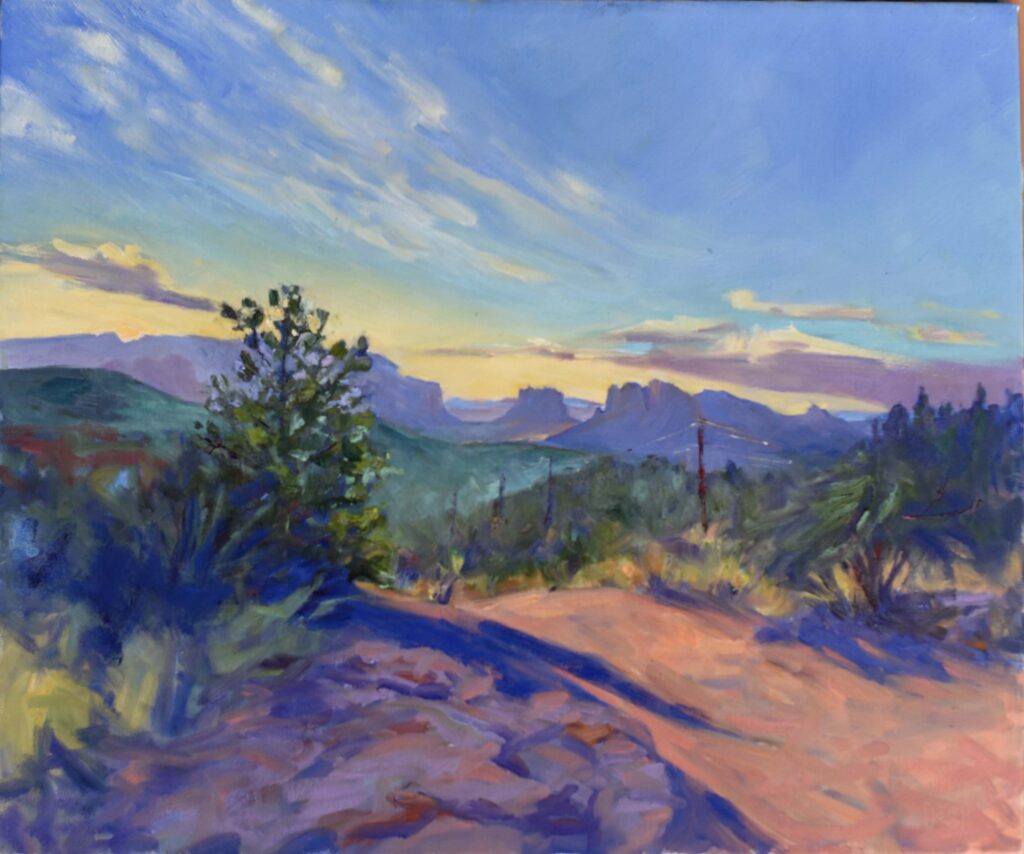
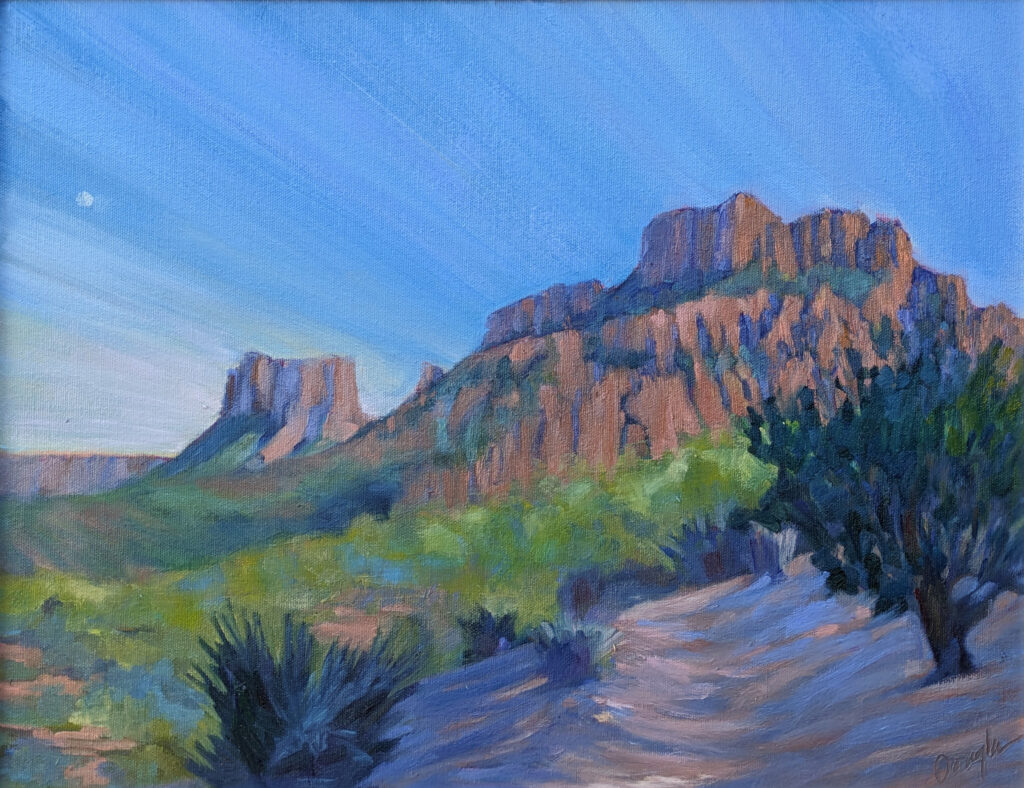
Dawn along Upper Red Rock Loop Road, Sedona, 20X24 oil on canvas, $2318 unframed includes shipping and handling in continental US.

I have a strong preference for painting at dawn instead of sunset. At dawn, twilight seems to last longer and the light changes more slowly and smoothly. Early morning air tends to be clearer with less dust and pollution. That makes morning haze softer than evening glare. There’s seldom anyone around except me and my trusty dog. And you can make last-minute adjustments without fiddling with your head-lamp.

Early Morning at Moon Lake, 6X8, oil on archival canvasboard, $348 includes shipping and handling in continental US.

But mostly it’s because I’m an early riser (a trait that’s exaggerated when I travel west). While the predawn hours can be chilly, that rapidly resolves when the sun rises. I’ve spent so much time outdoors watching the dawn that the changes are predictable to me. There’s the first birdsong in the gloaming, followed by color on the eastern horizon and finally the morning breeze as the air starts to warm up.

Are you a collector looking for an original fine art piece that captures the true spirit of the Southwest? I think Dawn along Upper Red Rock Loop Road has the potential to bring the quiet beauty of Sedona directly into your home.

Dawn Wind, Twin Lights, 9X12, oil on archival canvasboard, $869 includes shipping and handling in the continental US.

I returned to the same spot before dawn over multiple mornings to paint Dawn along Upper Red Rock Loop Road. My dog and I got there in darkness, set up and then painted until the dimness resolved into daylight and the lizards and hikers came out. These are the authentic colors and atmosphere of the desert at first light, caught in real time.

There’s an immediacy in painting from life that’s different from studio paintings, even when the plein air paintings are as carefully measured and executed as this one.

Why did I include the power poles and wires? I’m perfectly happy to edit things out, but I thought their linearity balanced the soft dawn colors and iconic red-rock forms. That blend of the natural landscape with everyday human presence is fundamental to Sedona and gives the work depth and narrative.

But if you really love sunsets, here’s Sunset over Cadillac Mountain, oil on archival canvasboard, $869 includes shipping and handling.

I hope this plein air Southwest landscape also radiates the peaceful, calm energy I feel whenever I paint in Sedona. If it resonates with you, the painting is available here. Or, you can join me in Sedona in March, 2026 for my weeklong workshop, Canyon Color for the Painter.

Registration is now open for workshops in 2026! Reserve your spot:

Can’t commit to a full workshop? Work online at your own pace:
Seven Protocols for Successful Oil Painters

Monday Morning Art School: use a bigger brush

Mather Point at dawn, oil on canvasboard, 9X12. $696 includes shipping and handling in continental US.

Artists should choose a bigger brush far more often than they think, especially when they want stronger compositions, clearer value statements, and more confident paint handling. I have few small brushes at all—a single #2 round for oils and a dagger brush with a fine point for watercolors.

Bigger brushes force us to think in big shapes

A painting succeeds or fails on its large value masses, not on its detail. When we work with a larger brush, we naturally block in shapes rather than fuss. This keeps our attention where it belongs: on composition, value relationships, and the overall movement of the piece.

Grand Canyon at sunset, oil on canvasboard, 9X12. $696 includes shipping and handling in continental United States.

Bigger brushes prevent overworking

Small brushes are perfect for poking, fussing, and destroying the freshness of a painting. Larger brushes won’t let us over-refine areas. They help avoid the muddy, overworked look that happens when we keep adjusting the same small spot again and again.

Bigger brushes teach us to paint with a light hand

I can paint a better fine line with a #4 flat on its side than I can with a rigger. A bigger brush is more stable and holds more paint, meaning less jiggling and fewer stops to reload. There’s a world of tonality that comes from learning to control the pressure in a brush. Bigger brushes can go from bold to delicate, something small brushes just can’t do.

Grand Canyon, late morning, 8X16, oil on archival linenboard. $722 includes shipping and handling in continental United States.

Bigger tools make bolder decisions

When we’re holding a brush the size of a small spatula, we’re forced to paint with intention. We choose our strokes more carefully. We commit. When students tell me they want to learn ‘looser brushwork,’ I start by picking out bigger brushes for them. They encourage broad, authoritative marks, which bring energy and confidence to our work.

Bigger brushes improve surface quality

More paint means juicier, cleaner and more expressive strokes. Instead of scrubbing thinly with a tiny brush, we can place full-bodied, deliberate marks that convey texture, light, and form with immediacy.

Bigger brushes speed up our process

Of course a bigger brush covers more area, faster. But beyond the square-inch question, covering the canvas quickly means we see the painting as a whole early on. This is essential for alla prima work. We get to the heart of the piece before the light changes. I’ve included four paintings here that were done in rapidly-changing light. None of them would have been feasible had I messed around with a tiny brush.

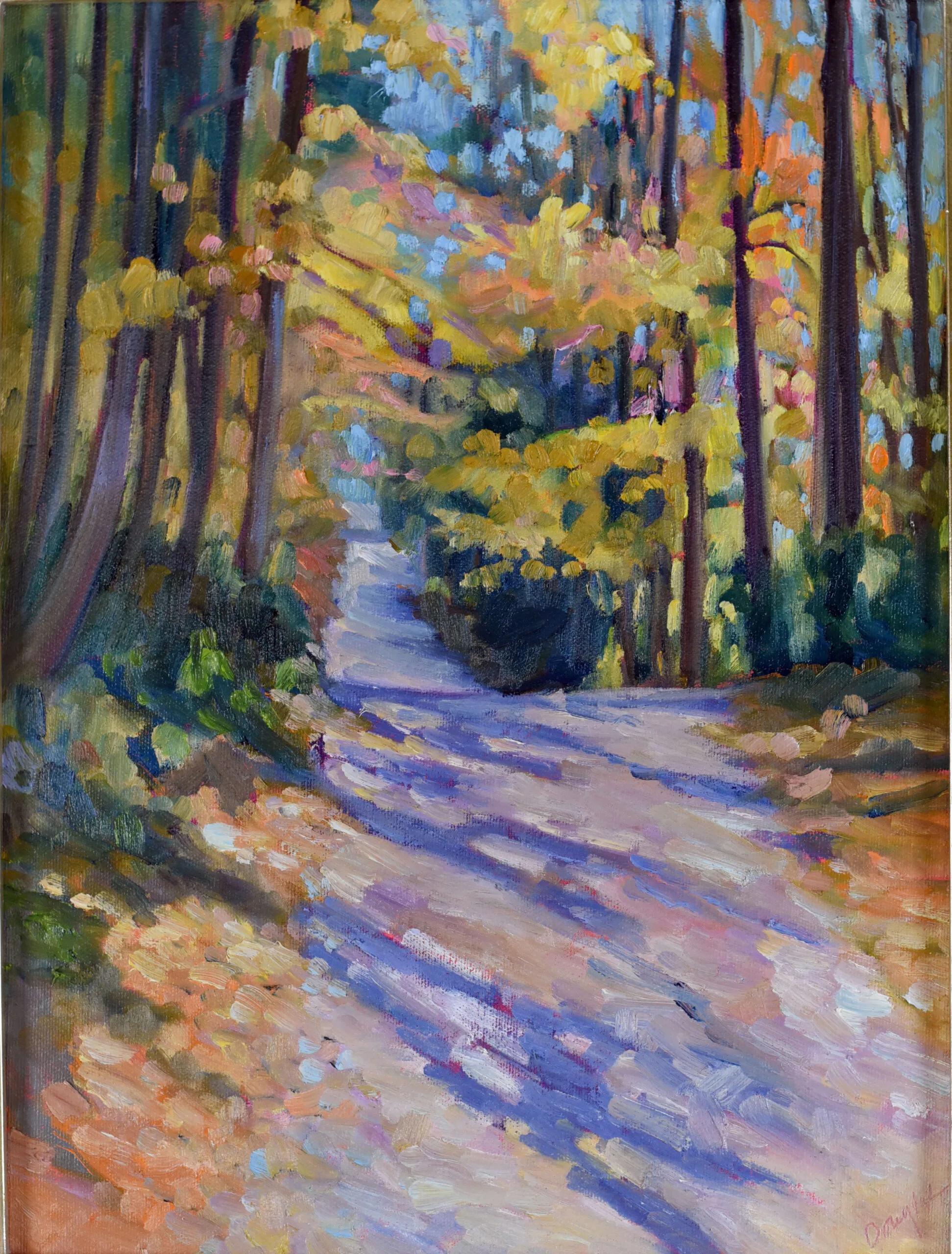
Cowpath, 9X12, oil on Baltic birch, $696 includes shipping and handling in continental United States.

Bigger brushes help us learn faster

Students often think their problems come from a lack of detail control, when in reality they’re struggling with proportion, value, or composition. A big brush forces us to address these essentials head-on. When the big shapes are right, the details practically paint themselves.

Are you a noodler?

I’ve watched countless students hesitate at the exact moment when their painting needs a courageous reframing. Painting with confidence sometimes means accepting that our first idea may not be our best. We need to be willing to accept that and make corrections with authority.

“Big shapes to small shapes” isn’t just a catchy phrase; it’s foundational to painting. When the big shapes are right, you can suggest detail with a few breezy, economical marks.

This approach is actually harder than futzing around with detail. It’s the discipline of stepping back, really looking, and making corrective moves while the painting is still fresh and malleable.

If you’re ready to break the habit of overworking your paintings, I go into more detail about this in my workshops.  

Registration is now open for workshops in 2026! Reserve your spot:

Can’t commit to a full workshop? Work online at your own pace:
Seven Protocols for Successful Oil Painters