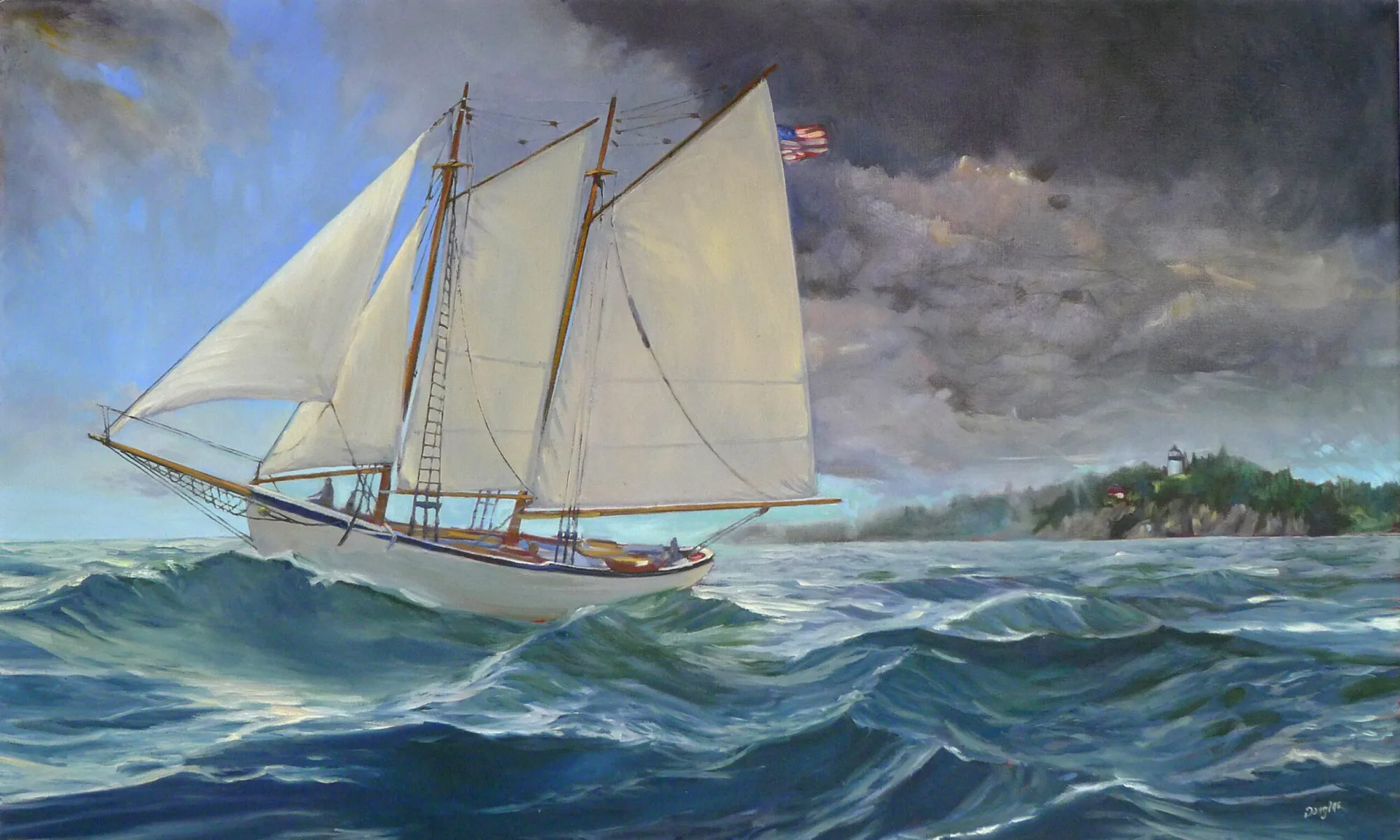
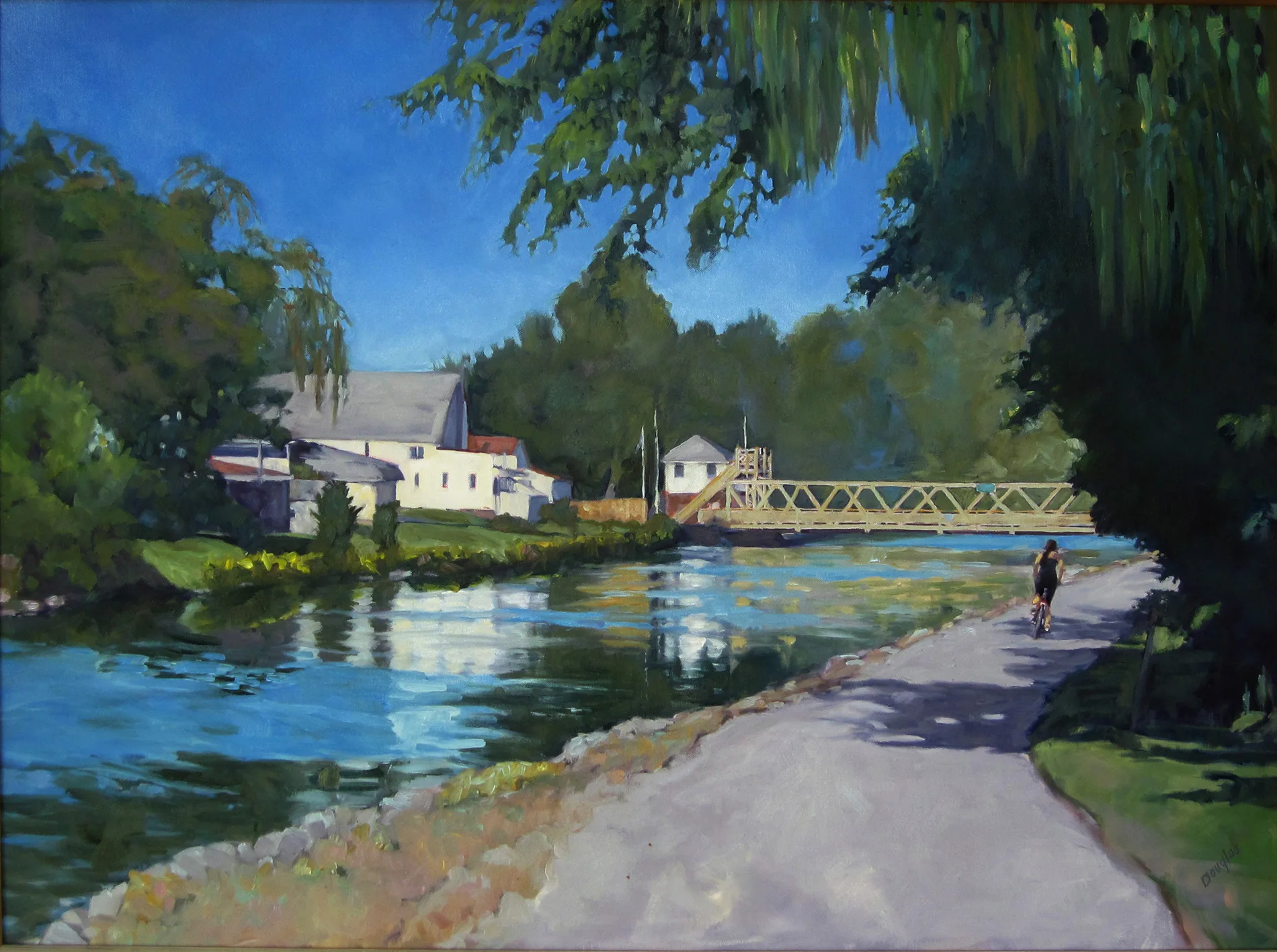

There’s nothing inherently wrong with a delicate painting, but safe color can make an otherwise accomplished painting boring. That’s true even when the drawing is solid, the values are controlled and the technique is assured. There are certainly days when the light is dull and the color is duller. But you need to translate that into something that will compel the viewer to walk across the room.
The modern world loves color saturation. My phone edits my photos to be hyperintense; social media is full of high-chroma color. In this world, paintings that whisper can disappear entirely.
High chroma, however, must be balanced with lower-chroma passages. Otherwise, it overwhelms. The goal isn’t maximum saturation everywhere; it’s contrast of saturation.

How to mix mud… or not
Clean color mixing starts with understanding warmth and coolness within individual pigments. Overtones matter. You can’t randomly mix any blue and any red and expect a high-octane purple. If either pigment carries yellow overtones, you’ll get mud. It’s easy to subdue a wild color; it’s impossible to enliven a dead one. Paint can never be mixed more intensely than it comes out of the tube.
The three historical palettes (and that’s a vast oversimplification) are classical, impressionist, and 20th-century. The 20th century palette has the highest chroma, widest temperature spread and hits the most points on the color wheel. Starting there saves you aggravation, because buying more paint than you need is a waste of money and a fast track to confusion.

Some specific color concerns
I recommend against heavy-metal pigments for environmental and safety reasons. They also tend to make muddy colors. For example, cadmium pigments mix true only to the warm side.
Viridian is a very cool green and almost always needs warming for foliage. If you mix lemon yellows with any blues, you’ll get cool spring greens. Most natural greens are warmer. Yellow ochre and Indian yellow temper greens because you’re actually adding a lot of red.
For the same reason, darkening with red kills chroma. Instead, use quinacridone magenta or violet.

How to hit the perfect color every time
Start with the pigment closest to your goal. Ask: in which direction on the color wheel do I need to go? Does chroma need lowering? Does it need to go darker? Lighter? Once you’ve answered those questions, you can stop fiddling.
And remember, you can lie about hue if you tell the truth about value.
If you mix the color right but you still make mud, the culprits may be:
- Too much solvent or medium;
- Too many layers;
- Overworking and fussing;
- Digging in with a vertical brush.
As the old Ronco ads used to say, “set it and forget it.”
By the way, one reason we tend to use too much solvent or medium is that we’ve let our paint half harden on the palette and are trying to open it back up. Suck it up and put out fresh paint.
Want to try painting? I’d love to have you join me for Trust the Process (making technique tell the story you want to tell), my live Zoom class designed to help you build a dependable, joyful, repeatable painting practice. We’ll dig into technique, creative decision-making and the mindset that frees you to paint with confidence. We meet Monday nights, 6-9 PM EST, starting on January 5, 2026. It’s suitable for all levels and all media. You can learn more here.
Registration is now open for workshops in 2026! Reserve your spot:
- Advanced Plein Air Painting | Rockport, ME, July 13-17, 2026
- Sea & Sky | Acadia National Park, ME, August 2–7, 2026
- Find your Authentic Voice in Plein Air | Berkshires, MA, August 10-14, 2026
- New! Color Clinic 2026 | Rockport, ME, October 3-4, 2026
- New! Composition Week 2026 | Rockport, ME, October 5-9, 2026
Can’t commit to a full workshop? Work online at your own pace:
You should charge for this one. Great stuff!
Thank you, Mark. Of course you know how to build on it because you’ve actually taken my classes and workshops. 🙂