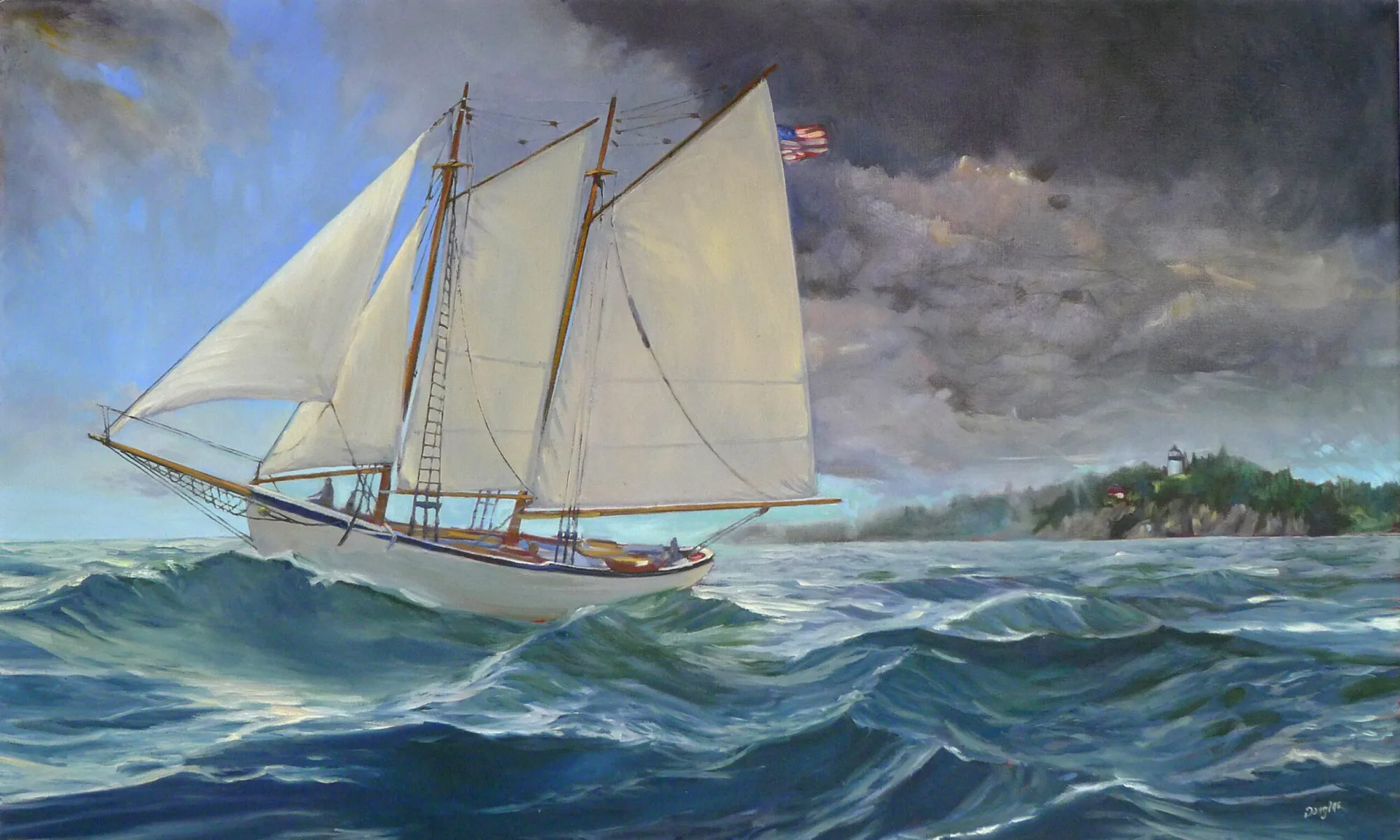
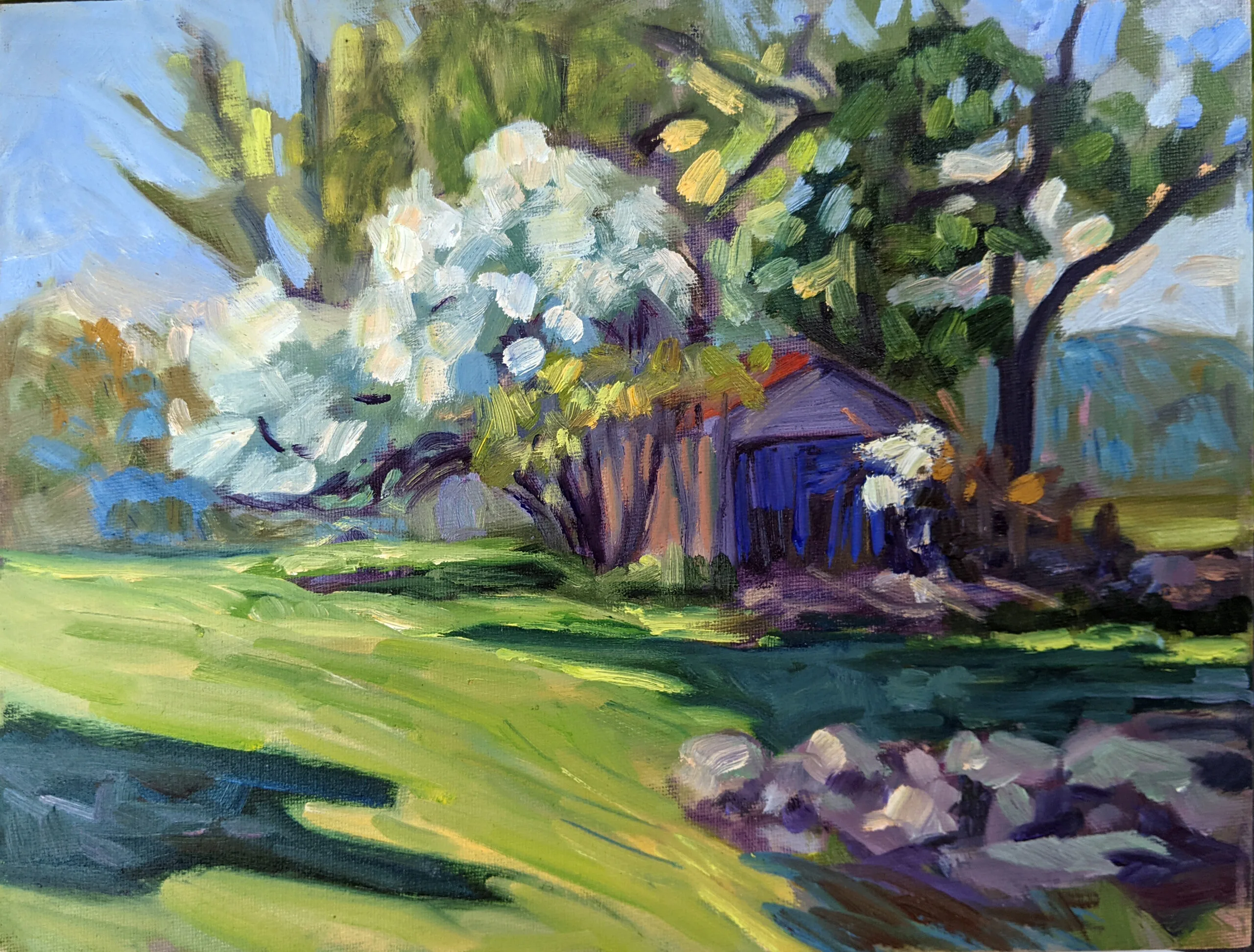
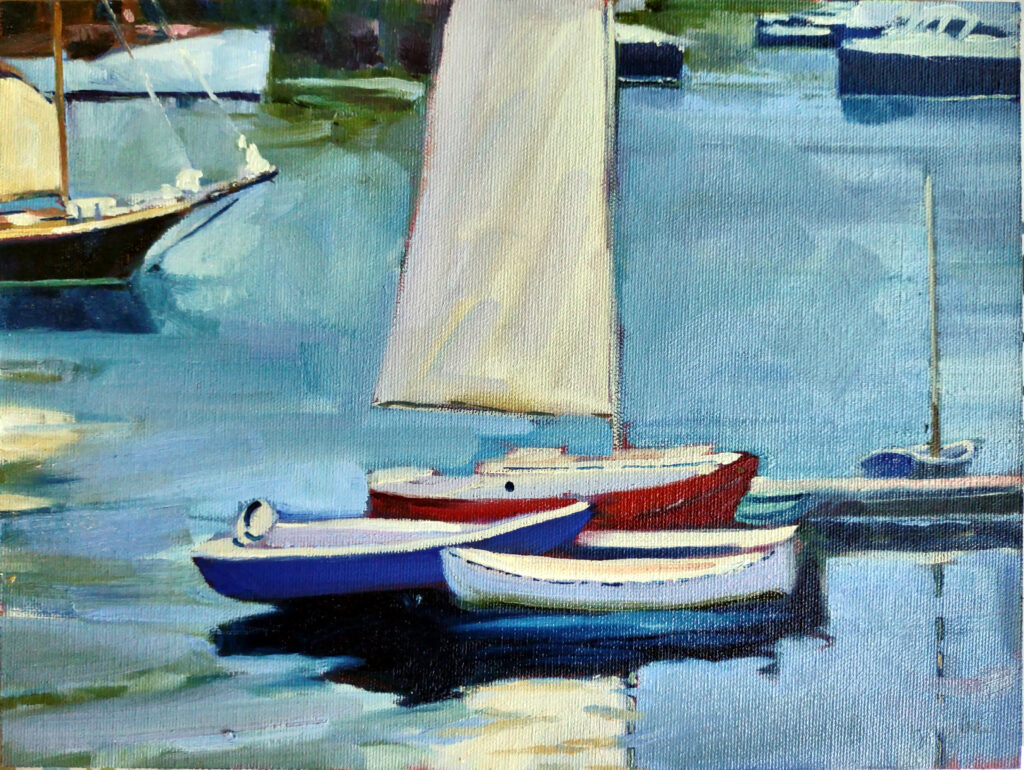
We spend years learning to paint. What happens on the viewer’s side is a whole different story. People make snap decisions about what they like—as fast as 50 milliseconds to form a stable opinion. That our brains are capable of making judgments that fast, before we are consciously aware of the details, should awe us.
That means we’d better get it right straight off the bat, because if we don’t grab our audience instantly, we’re not going to get them at all.
Humans process paintings differently from other visual information. We don’t simply see a painting the way we see objects in real life. Instead, the brain rapidly organizes shape, color, composition, balance, contrast and emotional meaning into the gist of the image.
A quick note on classes before we get into it
My upcoming session of evening Zoom classes starts next week. Painting water is already sold out. Claim your spot in Painting clouds or From field sketch to final studio work before they sell out too.
The physiology of meaning
We’ve all stepped back from a canvas and instantly felt that something was wrong, although it takes time (and sometimes outside help) to figure out what offends us. The inverse is when we know something clicks. That’s not subjective; it’s our visual system processing relationships, hierarchy and structure at astonishing speed.
The retina is actually a piece of the brain that migrated out into the eye during fetal development. Unlike our other sensory tools, the retina performs brain-level data-processing. It’s part of the central nervous system.
The only other sense that approaches this (incompletely) is our sense of smell. It’s interesting that both paintings and smells trigger not just the visual and olfactory pathways, but also emotion and memory. (That, by the way, is the whole point of the madeleine sequence in Marcel Proust’s Remembrance of Things Past. Now you don’t have to read it.)
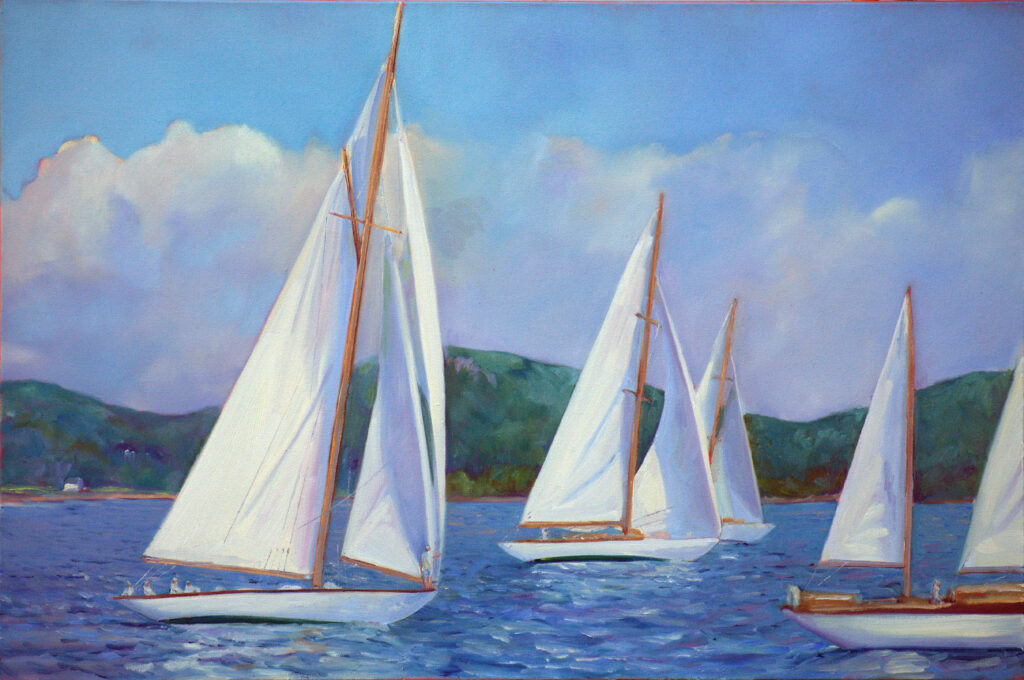
There’s more to this than mere technique
This emotional/memory trigger is instantaneous. It means that viewers don’t just decode paintings, they experience them physically and emotionally.
Yes, you need drawing, value structure, color harmony, edges and composition. The painter is a magician, using these rational systems as sleight of hand to elicit that instantaneous response. At this level, painting is about controlling attention. The artist decides where the eye travels, where it rests, what it notices first and what remains implied. Great painters understand that the brain reads the whole painting before it reads the parts.
This is also why beginner painters often over-render everything. They’re painting objects instead of orchestrating perception.
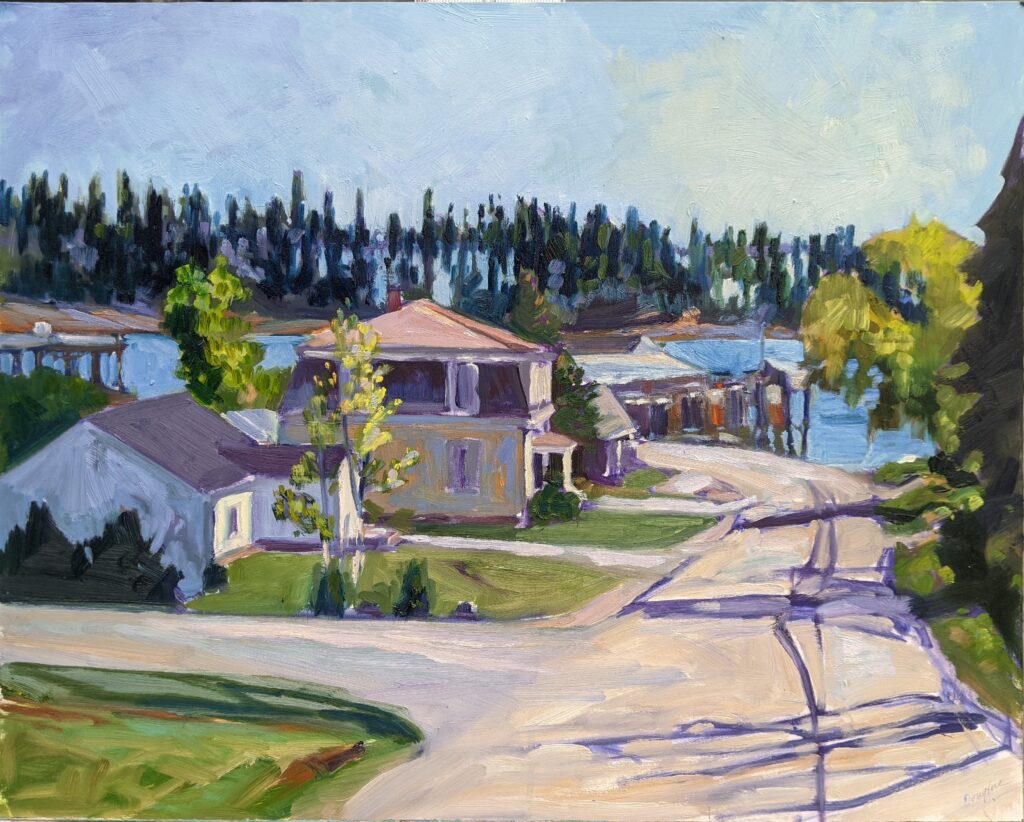
Science is fascinating, but painters figured this out centuries ago
Baroque painters played their audiences with dramatic chiaroscuro. Impressionists manipulated luminance and color relationships for shimmering light effects that the brain interprets as movement and atmosphere. Abstract painters learned that balance, rhythm, and spatial relationships alone produce strong emotional responses.
That’s why, in my advanced painting workshop, we spend less time fussing over trivia and more time asking the important questions:
- What carries the emotional weight of the painting?
- Where does the eye focus and how does it travel through the painting?
- What can be simplified?
- What deserves sharpness, and what should dissolve into atmosphere?
- How much information does the viewer actually need?
The exciting thing is that this is learnable. The brain responds predictably to shape, contrast, hierarchy, rhythm and color relationships. The more you understand those principles, the more intentional your painting becomes.
If that sounds like the direction you want your work to grow, join me in my advanced painting workshop. We’ll dig into composition, simplification, edges, color structure, and the psychology of how viewers actually experience paintings—not just how to copy what’s in front of you, but how to make people feel something when they look at your work.
Registration is now open for workshops in 2026! Reserve your spot:
- Find your Authentic Voice in Plein Air | Berkshires, MA, August 10-14, 2026
- New! Color Clinic 2026 | Rockport, ME, October 3-4, 2026
- New! Composition Week 2026 | Rockport, ME, October 5-9, 2026
Can’t commit to a full workshop? Work online at your own pace: