“Set it and forget it” is something I say a lot in painting class. This is only funny to people of a certain age, who remember it as the slogan on late-night TV. You put a chicken in your Ronco Rotisserie, turned it on, and walked away until dinner was ready. My friend Toby swore by hers.
It’s also pretty good advice for painting. If you want to make better brushstrokes, create cleaner color mixtures and paint with more confidence, start by thinking before you touch the brush.
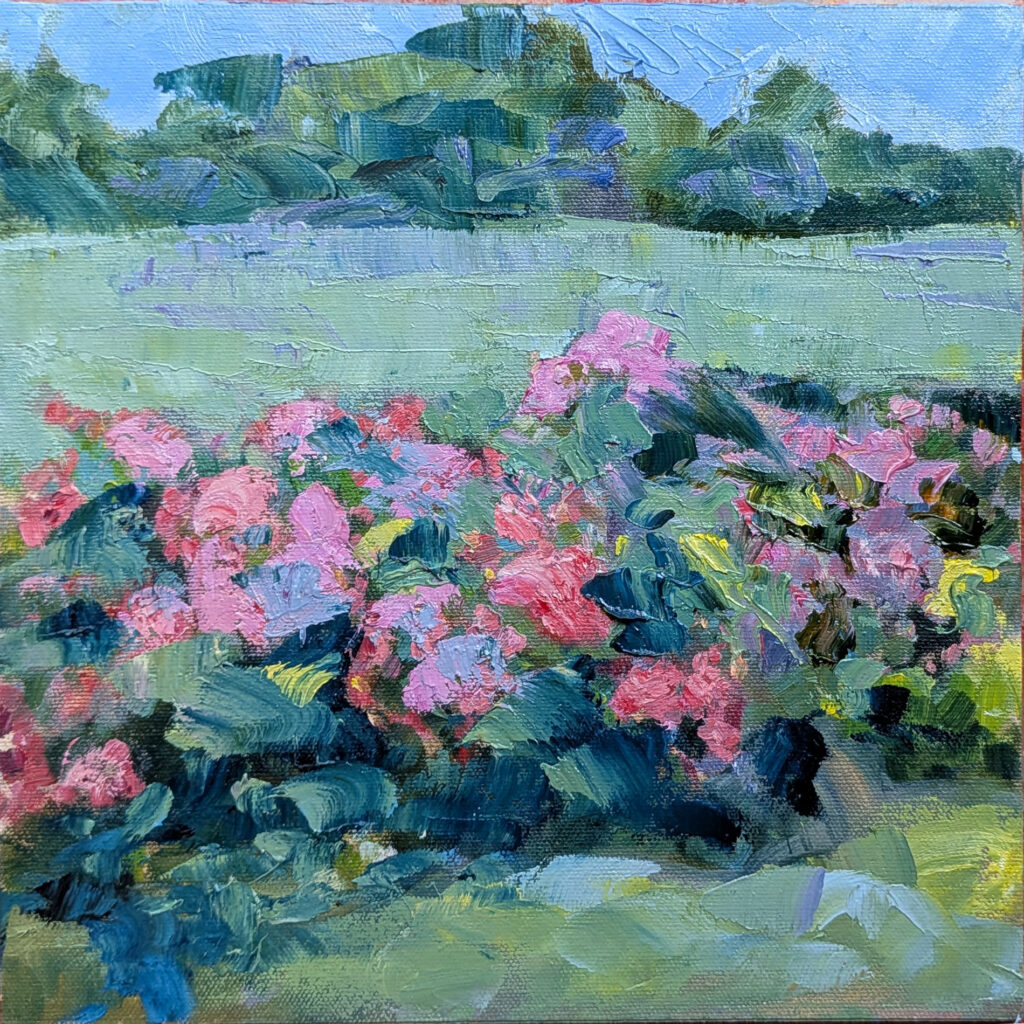
Good painting starts with deliberate brushstrokes.
Unnecessary noodling is a deadly painting mistake. A painter sees something that doesn’t look quite right, grabs a brush and starts moving paint around. A few strokes later, the original problem has disappeared into a collection of new ones. Colors get muddy, shapes lose their clarity and the distinction between light and shadow becomes harder to see.
My friend Brad Marshall memorably called this “flailing around.” It’s a remarkably efficient way to make a good painting into a muddy mess.
The solution is to decide what each brushstroke needs to accomplish before you make it.
Are you trying to darken a shape? Separate two forms? Soften an edge or make it sharper? Lead the viewer’s eye toward the focal point? Each of these requires a different approach. When you know what you want a brushstroke to do, you’re more likely to mix the right color and apply it with confidence.

Avoid muddy color
Before putting your brush to the canvas, decide what the correct hue, value and chroma of the brushstroke should be. Mix paint with a knife and test it in an inconspicuous spot to be sure you have it right. Apply it with a confident stroke that describes the form you were seeking. Then leave it alone unless you have a specific reason to change it.
Resist the temptation to keep dragging darker paint through your lights, or lighter paint through your darks because you’re uncertain if you got the value right in the first place. You should have figured that out in your value sketch and underpainting. But when in doubt, step back and look at the painting as a whole. Are the colors, shapes and edges doing their job? If so, move on.
Every time you swish back and forth through wet paint, you risk mixing colors that should remain separate. Your darks lose strength and your lights get muddy. The clear separation between the two disappears.
Thinking before you paint can save you a great deal of time and frustration.
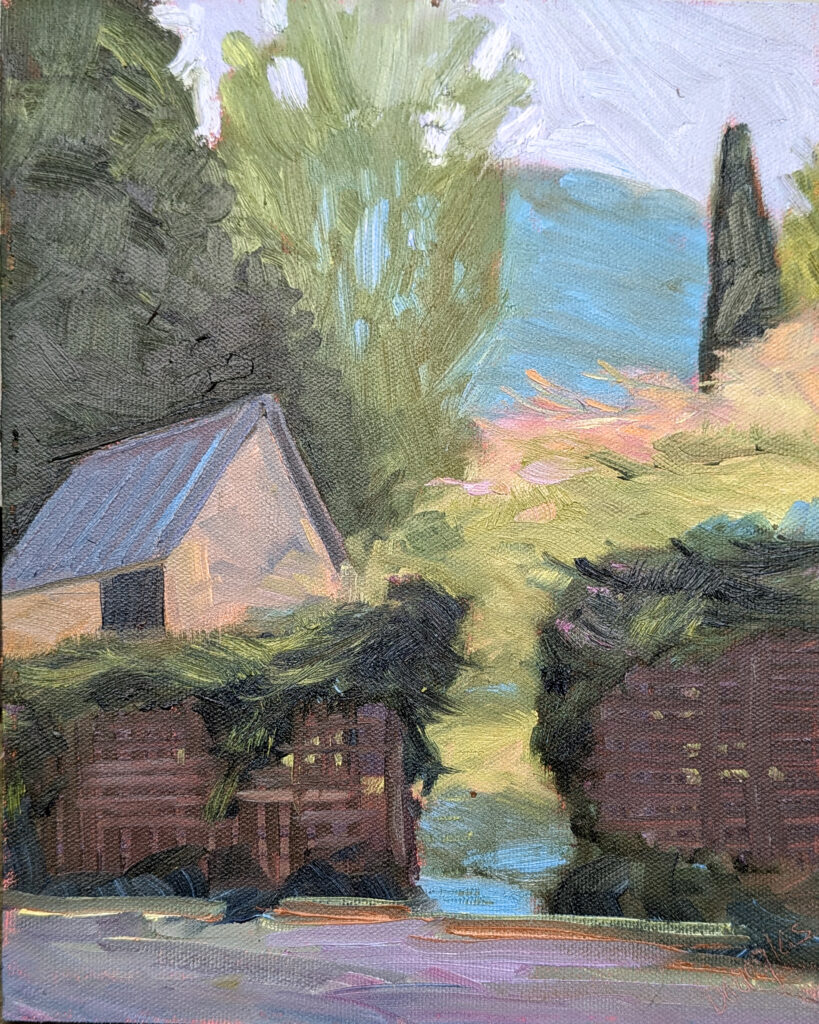
Painting should be a series of decisions, not a series of corrections.
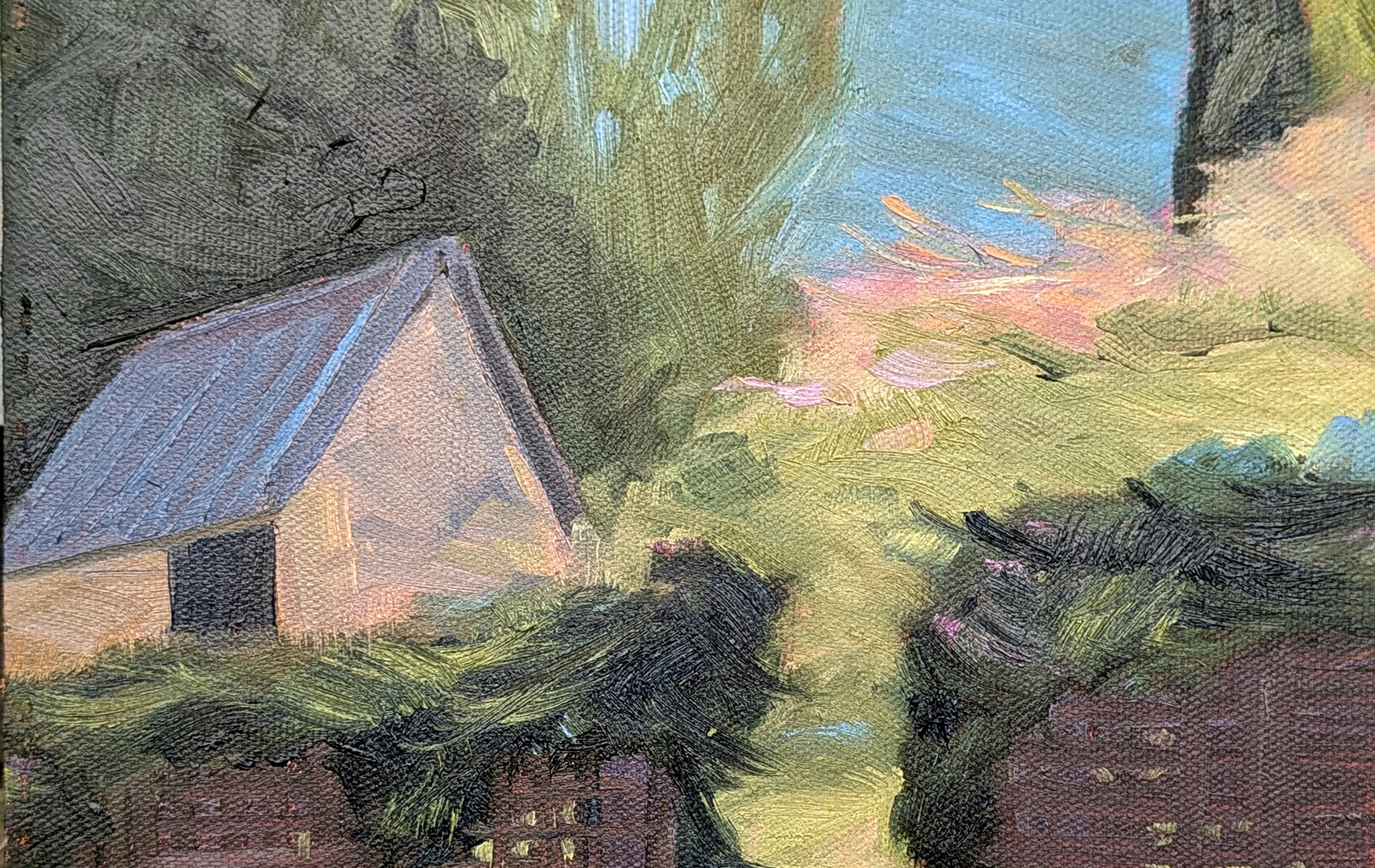
Loose brushwork isn’t the same thing as sloppy brushwork. In fact, painterly brushwork requires sound decisions about composition, color and value. A confident stroke can describe a form with remarkable economy. Five hesitant dabs can obscure it.
Of course, everyone changes their mind sometimes. Painting involves constant evaluation. Sometimes your first decision is wrong. The trick is learning to distinguish a necessary correction from nervous fiddling. One solves a problem. The other creates one.
The next time you paint, pause before each brushstroke. Look at your painting, identify the problem you want to solve, and decide what the stroke needs to accomplish. Mix the right paint, apply it, and give it a chance to work before you touch it again. Your colors will stay cleaner, your values will remain distinct and your brushwork will be more decisive.
The voices in your head
Mark Gale told me recently that something I say to my students goes through his mind when he’s painting. I love the idea that I’m making people hear voices, especially my own. He wondered what of my sayings go through other students’ heads. If something I’ve told you sticks with you and you’re willing to share it, could you email me?
Online classes start again soon!
- Cozy Winter Painting, Monday evenings, 6-9 PM for three weeks starting November 2.
- Painting Figures in Real Spaces, Tuesday evenings, 6-9 PM for six weeks starting November 3.
- Painting Nocturnes, Monday evenings, 6-9 PM for three weeks starting November 30.
I have just two workshops left in 2026! Reserve your spot:
- New! Color Clinic 2026 | Rockport, ME, October 3-4, 2026
- New! Composition Week 2026 | Rockport, ME, October 5-9, 2026
- High-Desert Light & Monumental Form | Sedona, AZ, Apr 26, 2027 – Apr 30, 2027
Can’t commit to a full workshop? Work online at your own pace:
“Before putting your brush to the canvas, decide what the correct hue, value and chroma of the brushstroke should be. Mix paint with a knife and test it in an inconspicuous spot to be sure you have it right. Apply it with a confident stroke that describes the form you were seeking. Then leave it alone unless you have a specific reason to change it.
This advice has been working so well for me! I really embraced it during it during my Berkshires workshop. It was nice to practice with Carol reviewing my work every now and then. I love to “swish”, whether it’s to fix color or just feel the movement of the paint on a canvas.
Thank you, Carol!
Thanks, Linda.
I love this advice.
The “twenty stroke painting” exercise is a great way to bring the concept home.
My motto is: Lay it and leave it.
And: More detail doesn’t add up to a better painting.
Which is why it’s important to walk away at regular intervals, advice I don’t take often enough myself.