Monday Morning Art School: the right support for your painting

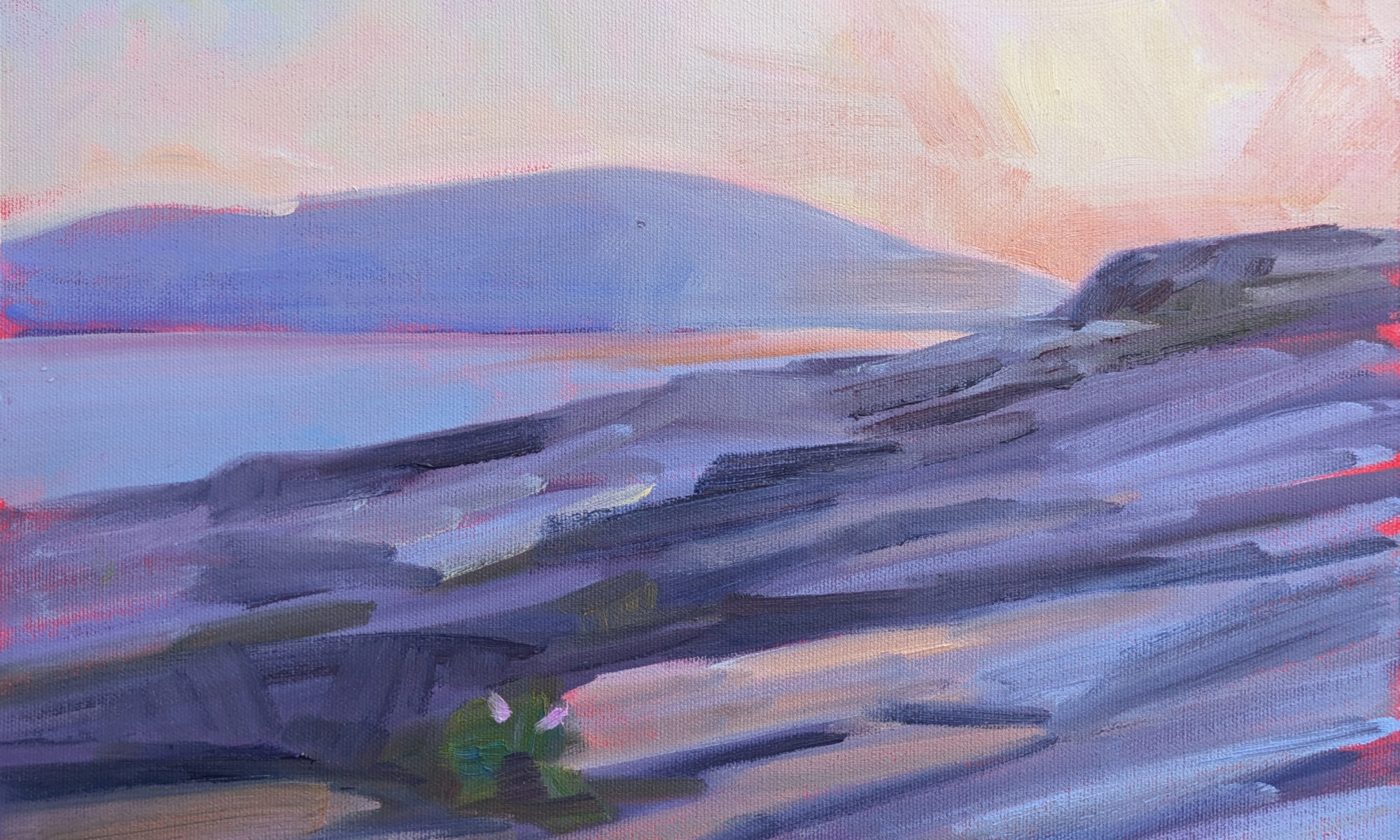
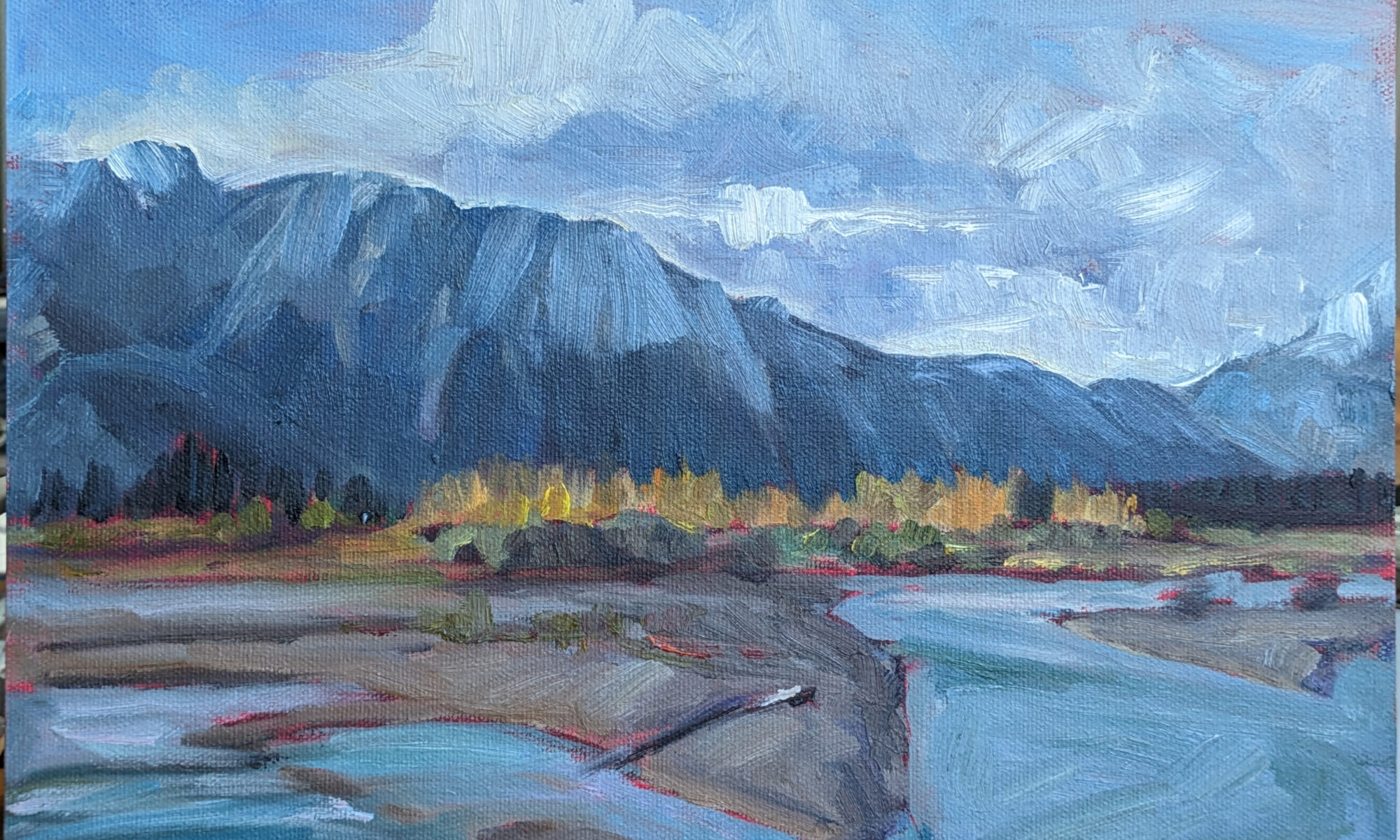
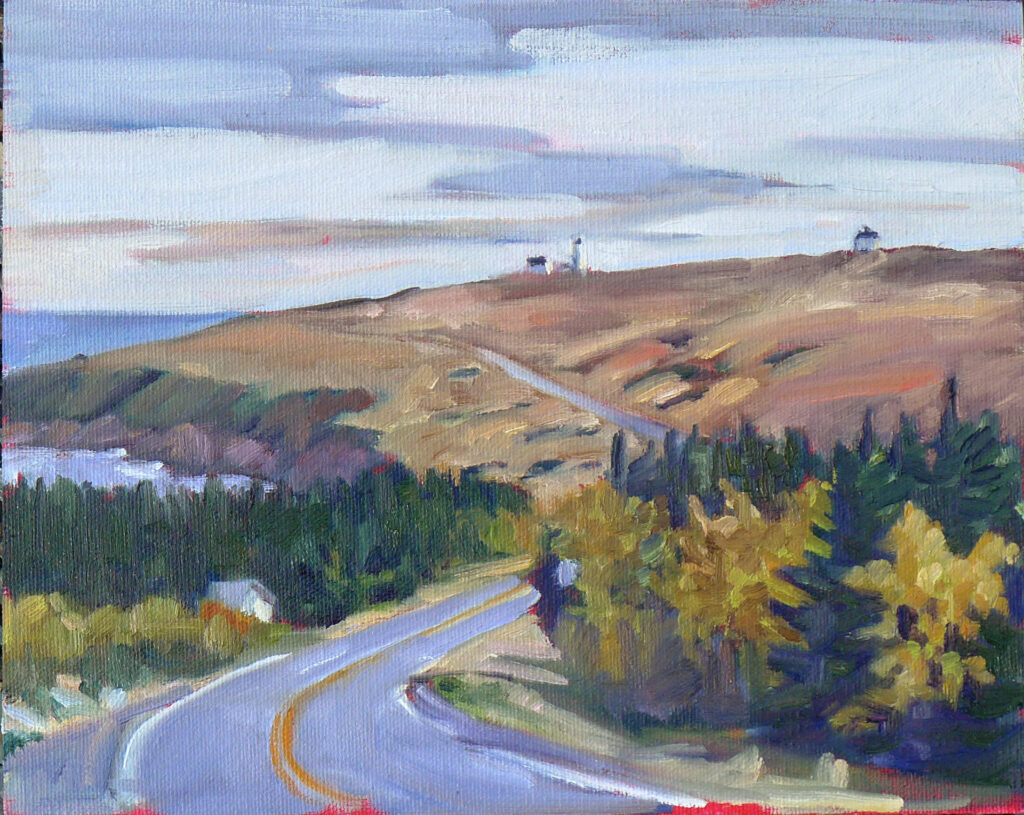
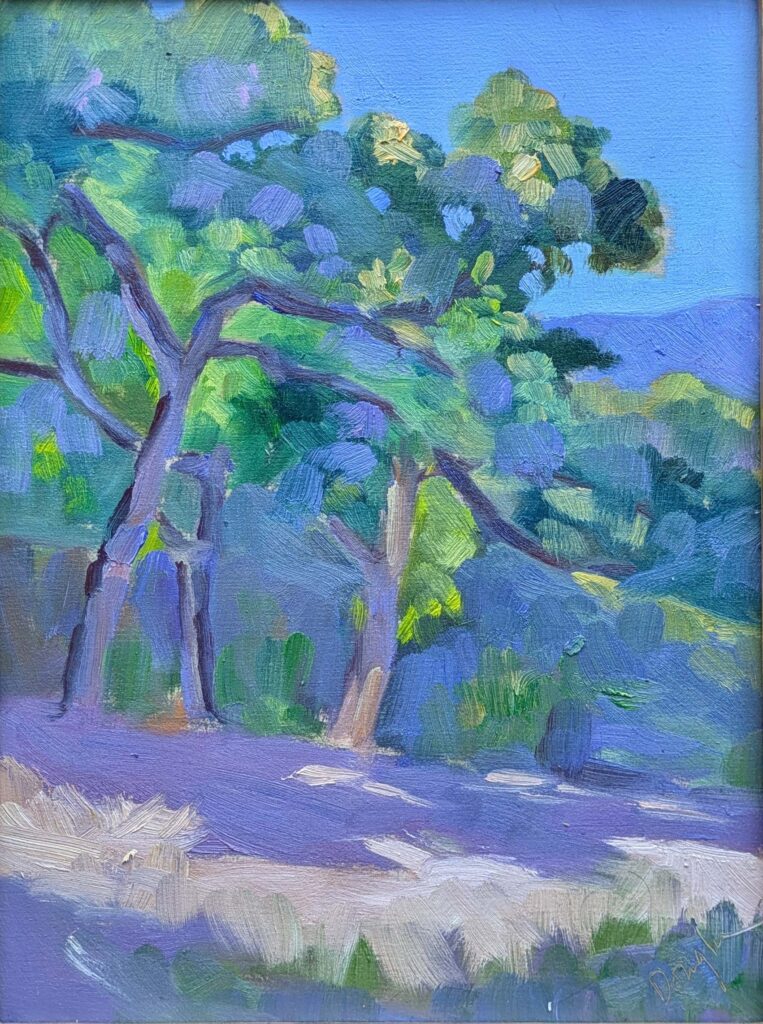
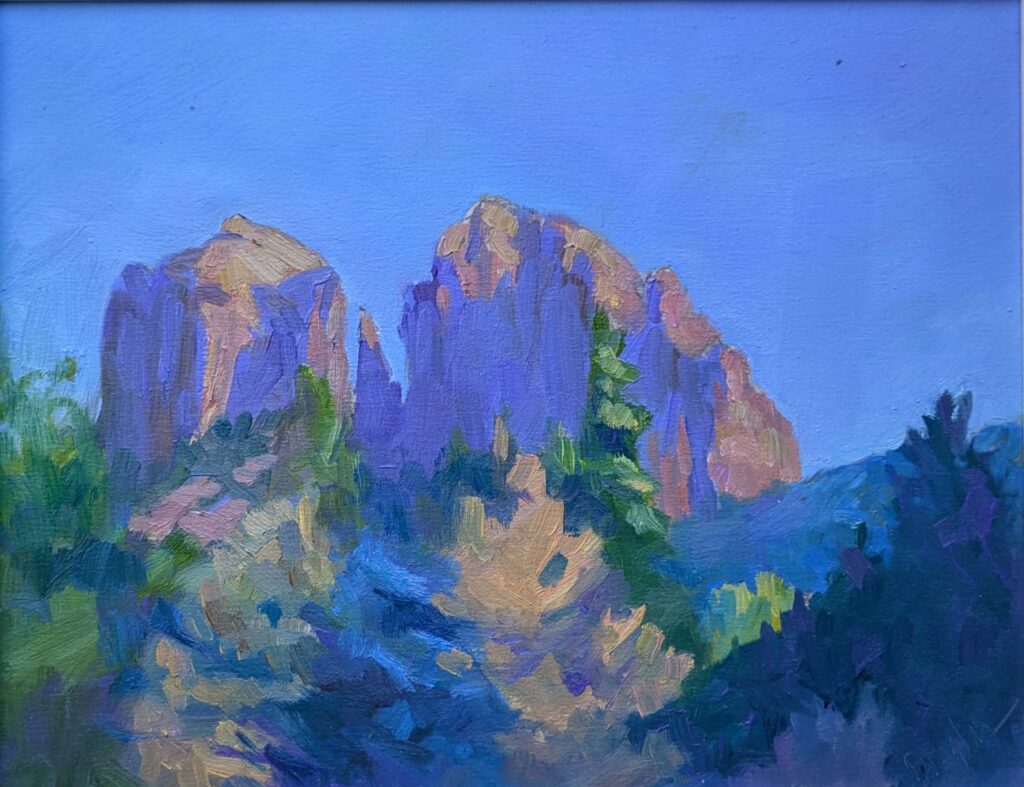
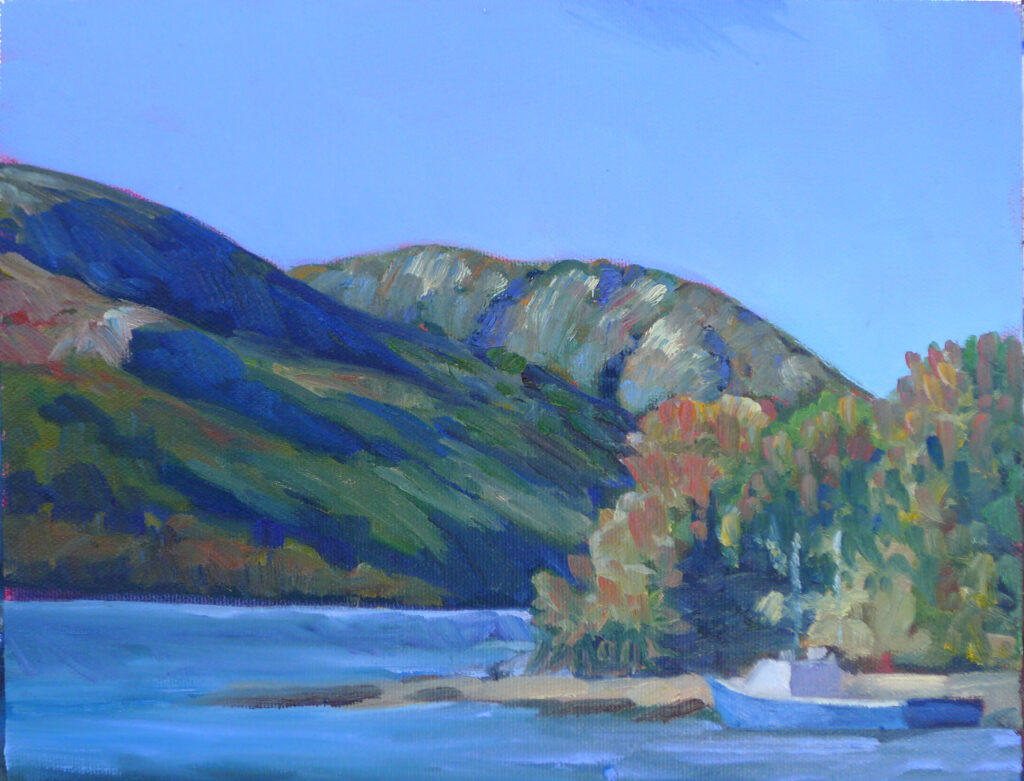
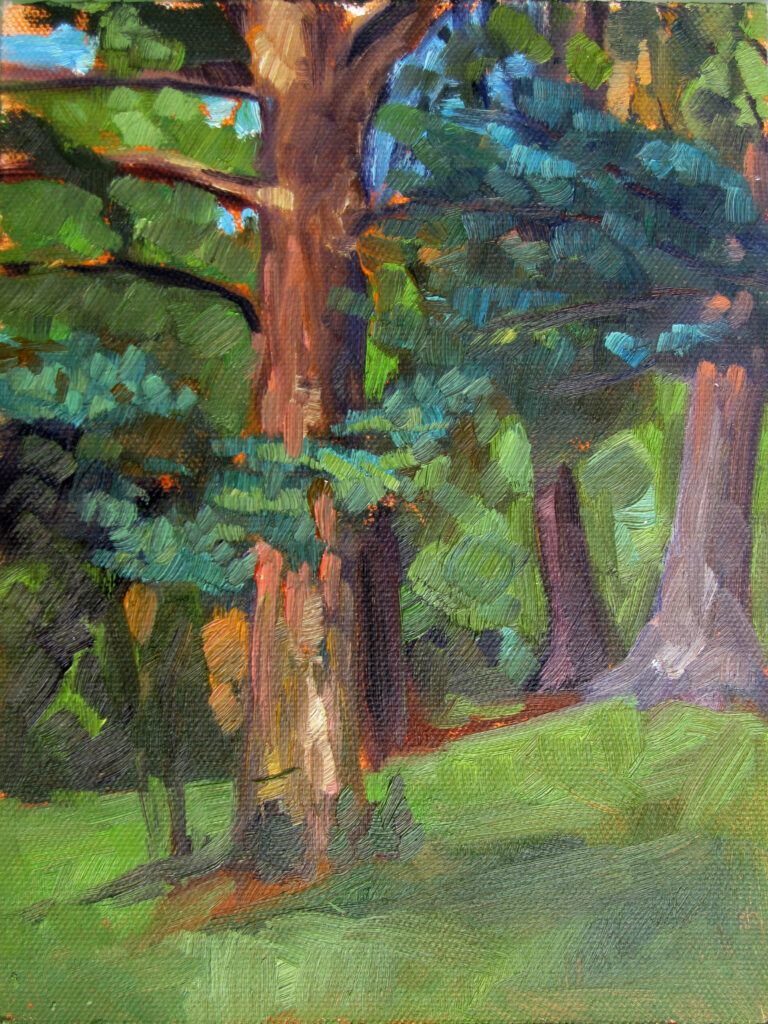
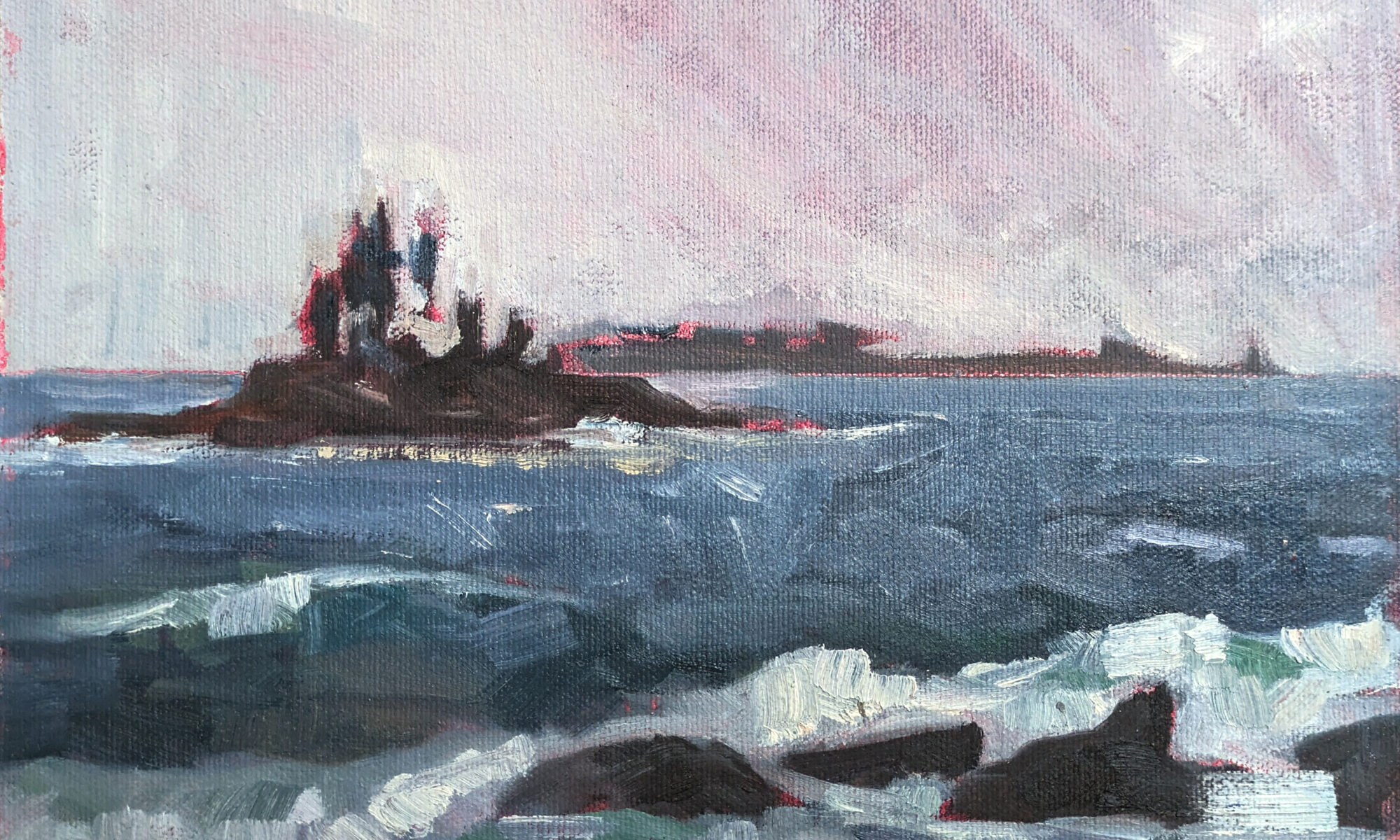
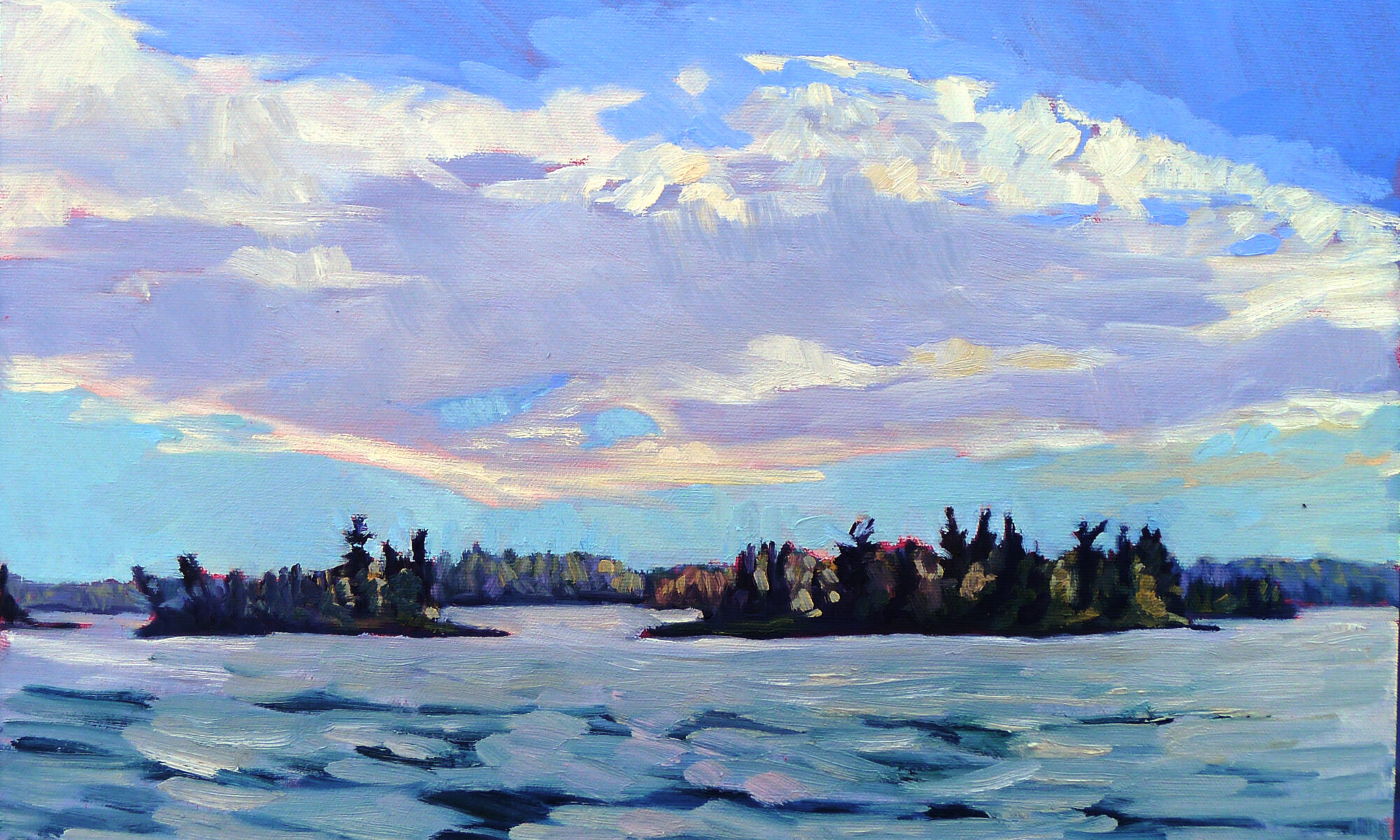
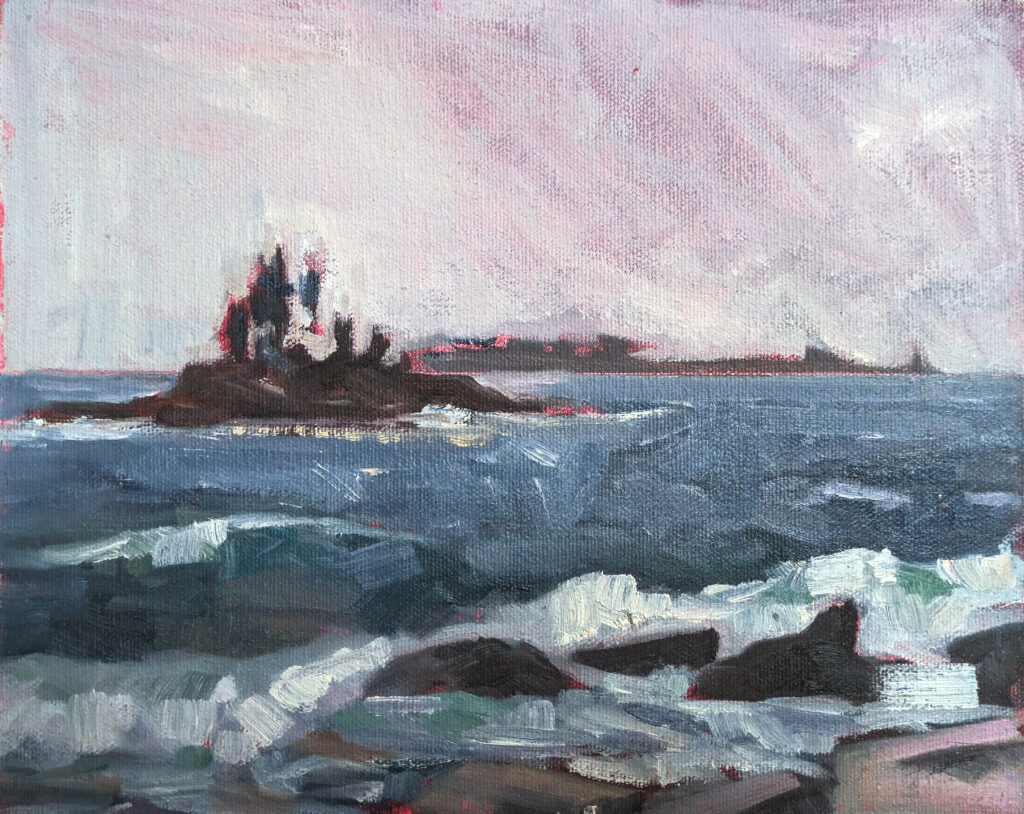
https://www.watch-me-paint.com/product/brooding-skies/Brooding Skies, 8X10, oil on archival canvasboard. Click on image for more information.

“What kind of paper/canvas should I buy” is among the first questions I’m asked by new workshop students. While I can’t recommend museum-grade panels to beginners, it’s disheartening to watch students struggle with cheap painting supports.

The painting support you choose affects how your paint behaves, how your marks read and whether your work lasts.

A quick note before we get into it

It’s time to claim your spot in Advanced Plein Air Painting, July 13-17 in Rockport, ME. If you have any questions about whether you fit into an advanced class, just ask!

Let’s discuss medium first

Watercolor depends on controlled absorbency. The paint sits in the surface, not on top of it. That’s why the quality of watercolor paper matters so much. 100% cotton papers hold water evenly, allow controlled washes, allow for scrubbing out changes and resist breakdown over time. Cheaper wood-pulp papers buckle, blotch, and lose clarity.

The best support for gouache is heavy-weight paper (at least 140 lb.) that can handle water without warping. Because texture isn’t as important as for watercolor, hot-pressed paper—also known as Bristol—is ideal. Other options include illustration board, watercolor journals, and heavy mixed-media paper. Gouache can be painted on gessoed board, but it’s not necessary.
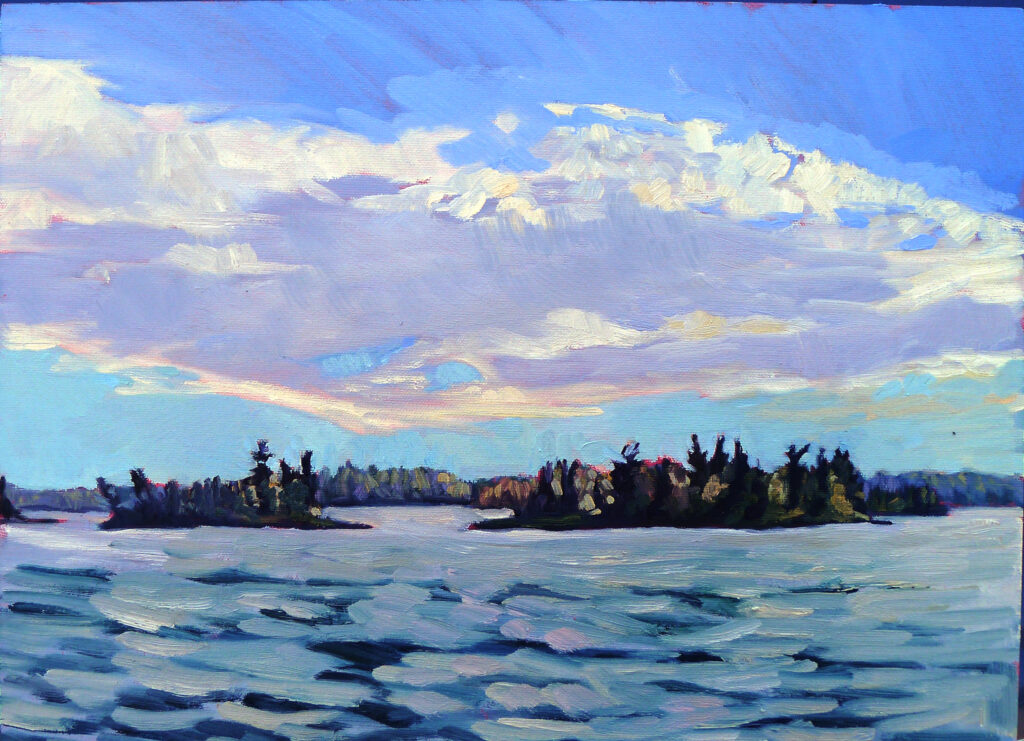
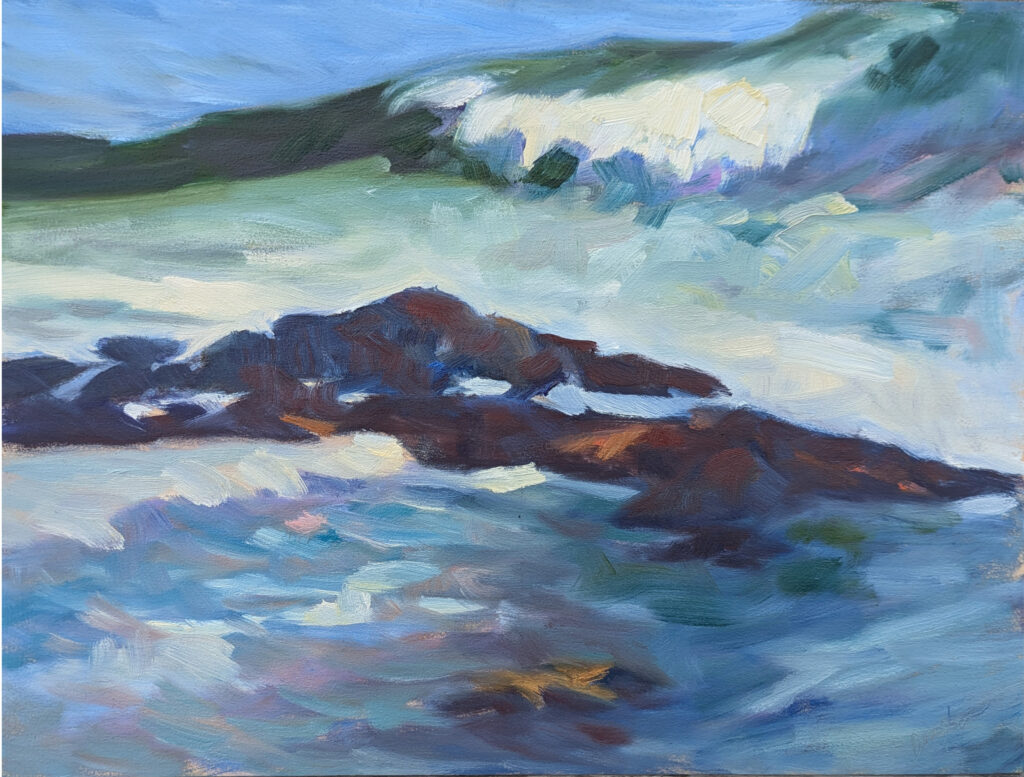
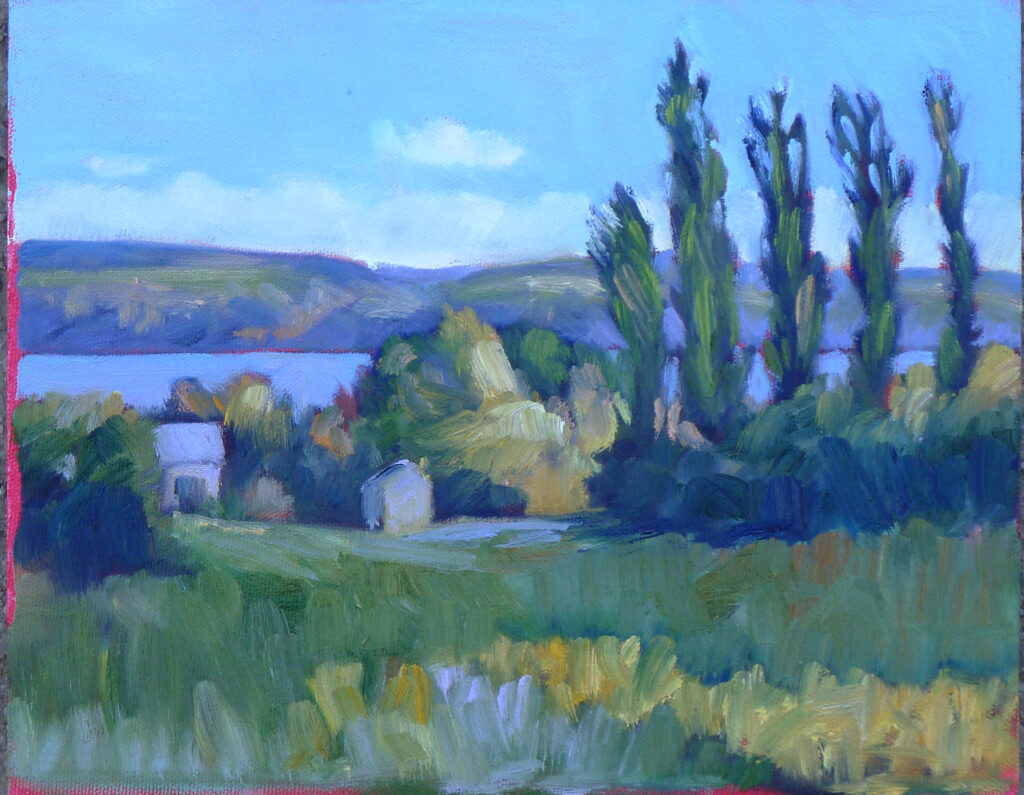
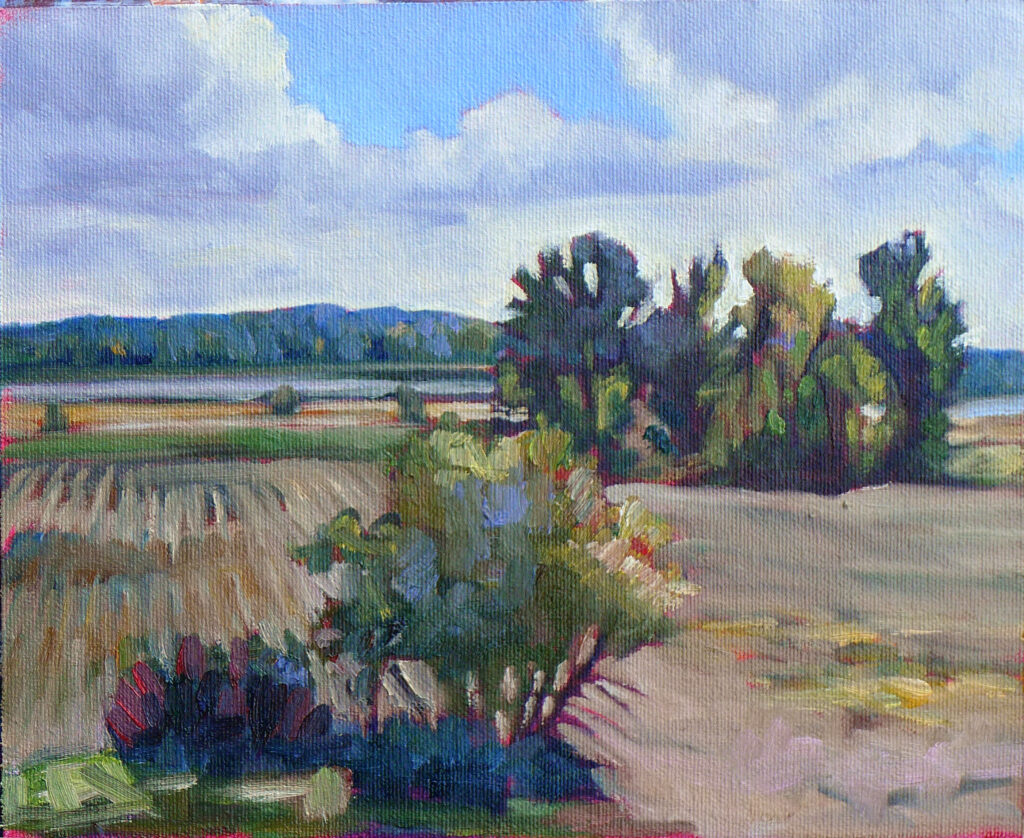
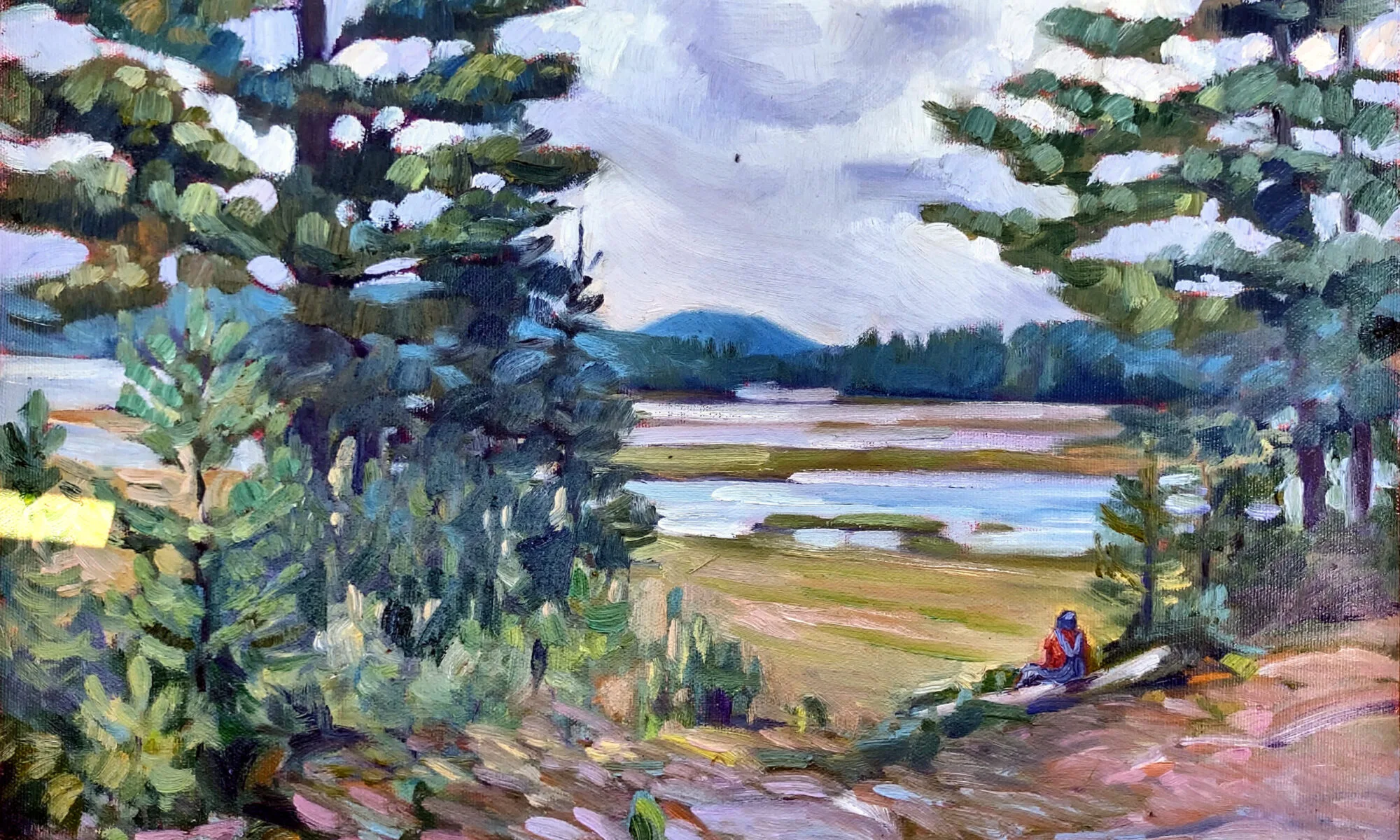
Lake of the Woods, 12X16, oil on archival canvasboard. Click on image for more information.

Acrylics will stick to almost anything, but a properly gessoed surface controls absorbency and prevents paint from sinking in unevenly. Cheap surfaces can feel draggy or dead.

Oils absolutely require a sealed, primed ground. Oil paint binders are acidic, which reacts with and destroys the support over time. If painting on paper or a wood board, prime with either clear or regular gesso.
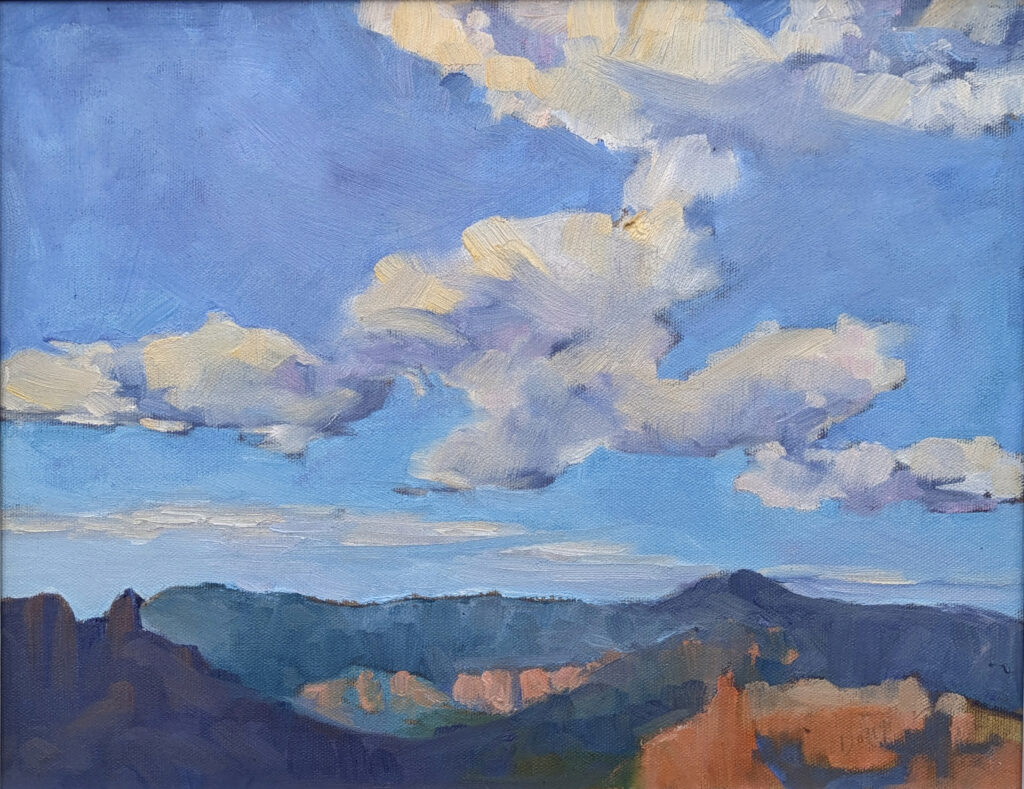
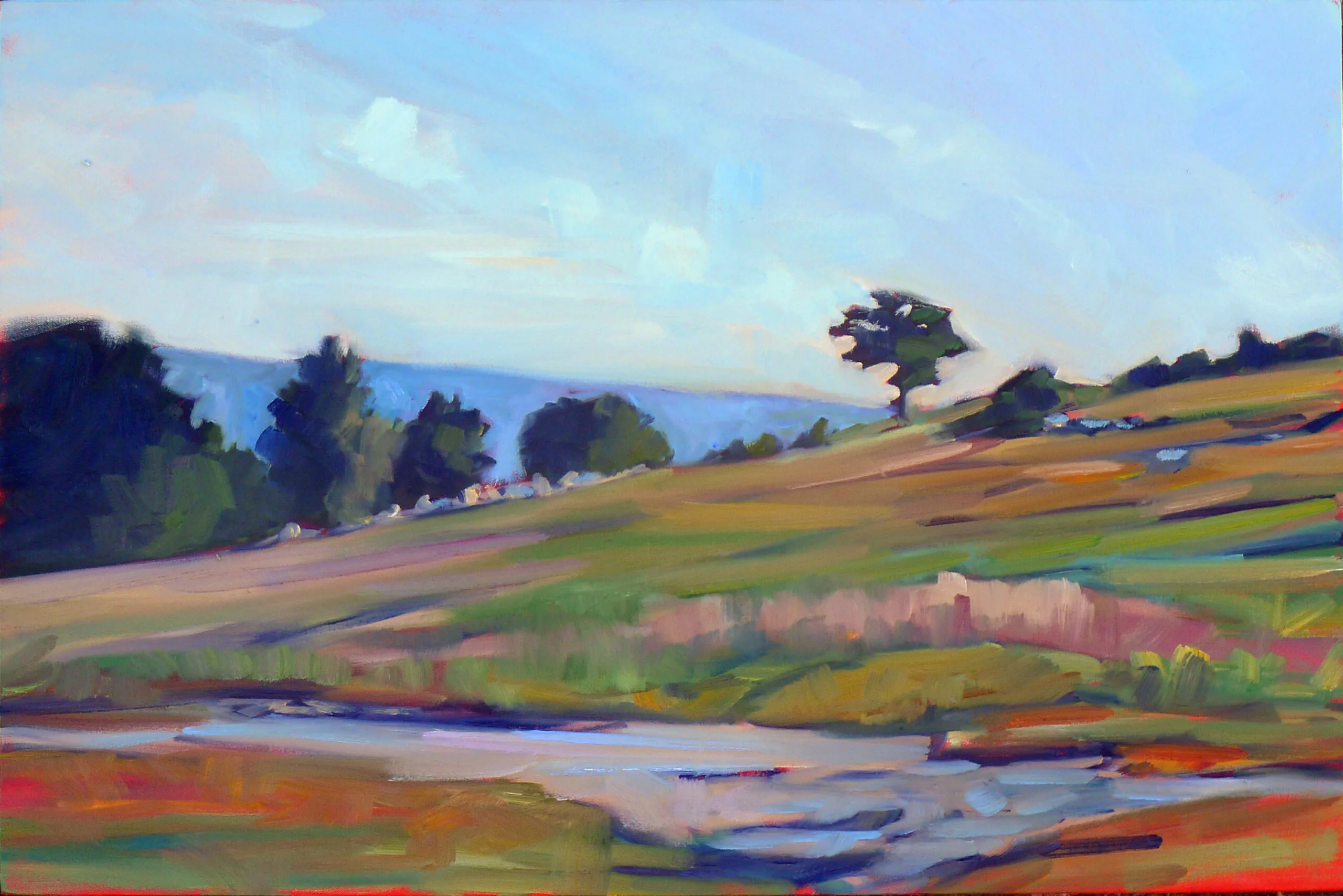
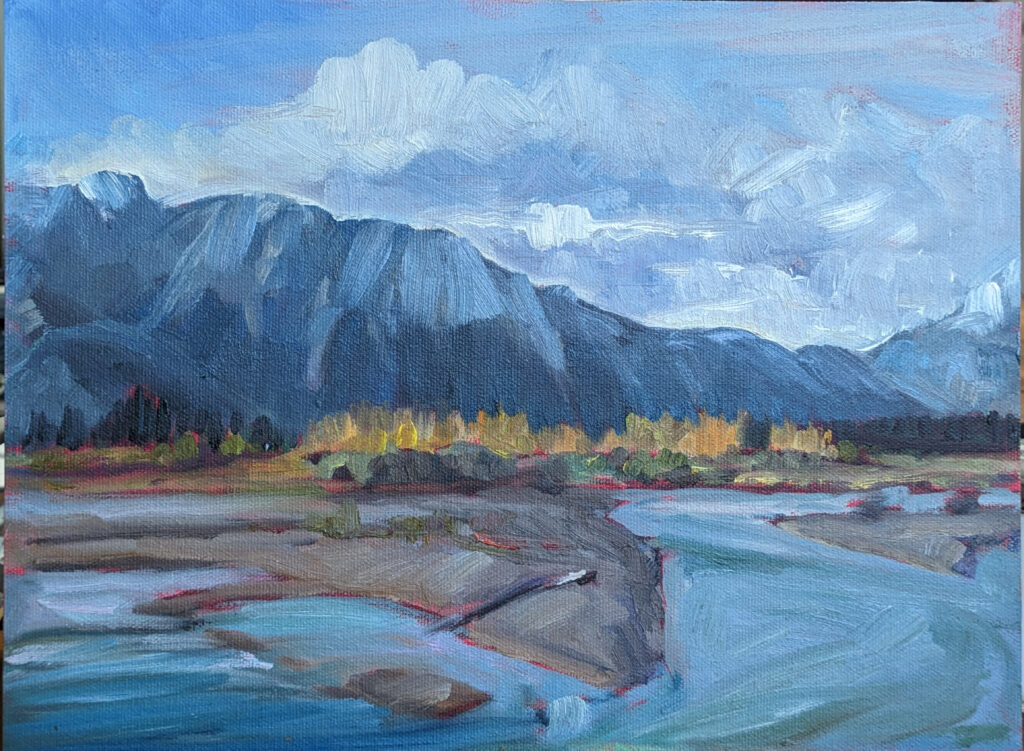
Maynard Dixon Clouds, 11X14, oil on archival canvas board. Click on image for more information.

Rigid versus paper supports

Paper is immediate and responsive. It’s ideal for watercolor and gouache, and perfectly good for acrylic studies. But quality varies wildly. Good paper has proper sizing (which controls absorbency) and consistent texture; poor paper acts like a blotter or warps under even modest moisture. Paper must be properly prepared for oil and acrylic painting.

There are many good paper watercolor boards on the market. They’re more convenient and less prone to buckling than watercolor paper, but they cost more.

For oils or acrylics, I use archival canvas-boards for all smaller paintings. They’re easier to frame and carry, and I don’t have to worry about light coming through the back of the canvas. However, larger boards can be prone to warping.

When I travel, I sometimes bring loose canvas and tape it to a board. That gives me less bulk when flying, but floppy wet sheets of canvas can also be difficult to transport.

Stretched canvas and linen are the traditional choices for oils and acrylics, and I use them for all larger work. It can sometimes be hard to determine the quality of packaged canvas, so research before you buy. Cheap canvas can sag or distort, and insufficient gesso allows paint to bleed through to the backing.

In practice student-grade panels and canvases are fine for students but can have inconsistent tooth and weaker priming.
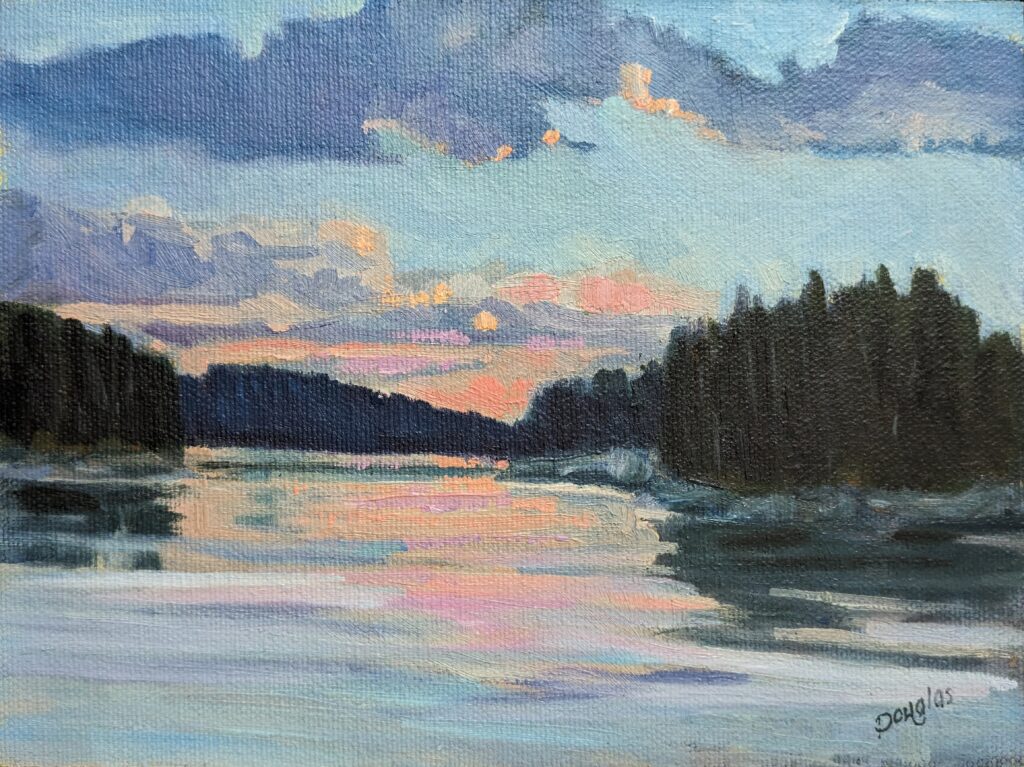
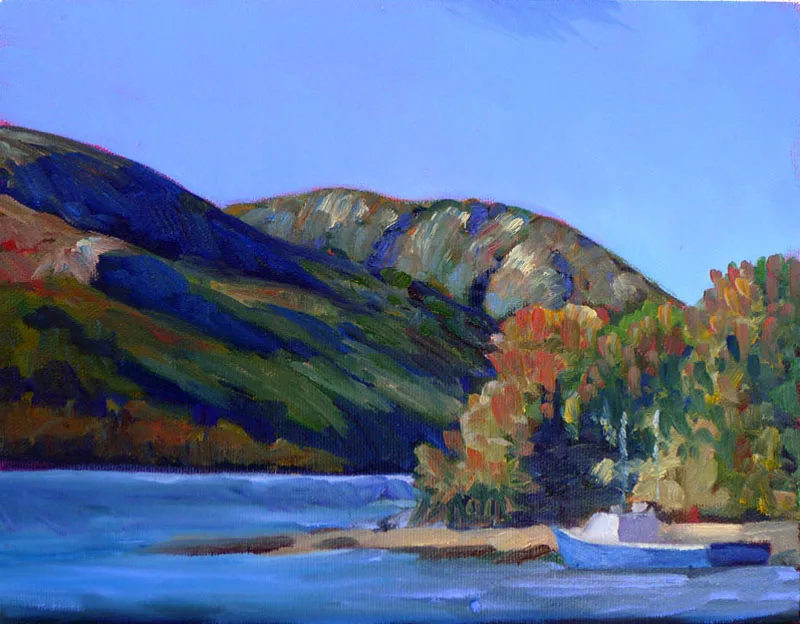
No Northern Lights Tonight, 6X8, oil on archival canvasboard. Click on image for more information.

Size matters

I tell students to prepare to paint two 9X12 paintings a day during a workshop. In practice, some will paint more, some less. Some students produce small jewels on 4”X5” canvases; others love working big. This is personal preference.

When preparing for an event, I usually bring canvases and frames in all sizes. I never know how a scene will inspire me.

What separates good from mediocre?

  • Absorbency control–good surfaces absorb just enough paint or water without sinking color or bleeding through.
  • Surface consistency—cheap painting supports have inconsistent surfaces. Good ones behave predictably.
  • Longevity—archival materials including cotton paper, proper sizing and rigid supports, keep your work intact over time.

The right painting support isn’t magic, but it will improve your painting.

Want to learn more?

I have three upcoming Zoom classes. In From Field Sketch to Final Studio Work (six weeks on Tuesday evenings) we talk about how your initial decisions carry through to a fully-realized studio painting. In Painting Clouds (a three-week Monday session), you’ll learn practical ways to paint these all-important natural phenomena.

Registration is now open for workshops in 2026! Reserve your spot:

Can’t commit to a full workshop? Work online at your own pace:

Seven Protocols for Successful Oil Painters

Monday Morning Art School: glazing vs. scumbling

A very old painting by me, using indirect painting technique.

Being the World’s Oldest Living Person, I learned to paint from my old friend Rembrandt van Rijn. That meant I learned to paint indirectly, through glazes. When I went to the Art Students League, I jumped forward a few centuries and learned to paint directly, or alla prima.

A quick note before we get into it

It’s time to claim your spot in Advanced Plein Air Painting, July 13-17 in Rockport, ME. If you have any questions about whether you fit into an advanced class, just ask!

Alla Prima

Alla prima painting is done in a continuous pass, or as close as you can get within the limitations of size and time. You mix colors and put them down in their final form. It’s characterized by immediacy and loose brushwork.

Indirect painting is built in stages, layer over layer, with drying time in between. Each layer modifies but doesn’t obscure the one beneath it. Indirect painting trades immediacy for control.

Most painters end up using a hybrid approach, especially when working large. Scumbling and glazing are opposite in method and effect, but can appear in the same painting (see Rembrandt’s self-portraits, for example). However, it’s hard to glaze over impasto, as the glaze sits in the valleys of existing paint.

Glazing is very useful in making revisions on a dry painting, provided there is little texture.

What is glazing?

Glazing is transparent. You take a thin, translucent layer of paint and lay it over a dry underpainting. In oils and acrylics, that paint is thinned with medium, not solvent. In watercolor, it’s thinned with water. In gouache, it doesn’t work.

If the layer underneath isn’t completely set, you’re not glazing, you’re just mixing. You’ll end up with mud. A proper glaze allows light to pass through the new layer, bounce off the layers below, and return to the viewer’s eye. That’s what creates depth and luminosity.

White, yellow ochre and other opaque pigments have no place in glazing. Only transparent and semi-transparent pigments work. How do you know which is which? Good paint manufacturers put it right on the tube.

Glazing can build rich shadows, unify color passages, and create atmospheric distance. A cool glaze over a warm passage can push it back in space. Done well, glazing doesn’t sit on the surface; it seems to glow.

Glazing is slow. It requires more patience, planning, and restraint than I’m currently capable of. I can’t brute-force my way through an entire indirect painting, but I do use glazing to make editorial changes.

You can’t scumble if the paint is too wet.

What is scumbling?

Scumbling, on the other hand, starts with heftier paint. In watercolor, that means less water; in oils and acrylics it means opacity. (All pigments can be made opaque with a drop of white or yellow ochre.)

Drag a lighter, drier layer of paint across the surface so that it skips over the high points of the texture, allowing bits of the underlayer to show through. Scumbling is broken, irregular, and tactile. It’s a very lively texture.

Scumbling can suggest the roughness of stone, the sparkle of light on water, or the haze of distant atmosphere. It’s especially effective over a darker, dry layer, where the broken application creates a vibrating edge between colors. Unlike glazing, which deepens and unifies, scumbling disrupts and enlivens.

The drier the paint and the more horizontal the brush, the more the painted line will break.

It’s all technique

For glazing, use a soft brush, plenty of medium and a light touch. The paint film should be thin and even. Don’t scrub; if you break the surface of the lower layer, you’ll make mud.

For scumbling, use a stiffer brush and reduce the water or medium. Physically drag the paint, keeping the brush at a low angle to the surface. The brush should skip. If it’s laying down a smooth, continuous stroke, you’re not scumbling.

Either can be overused

Too many glazes, and everything turns murky. The transparency that once created depth becomes mud. Too much scumbling, and your painting can look overworked, with no clear hierarchy of edges or forms.

These are advanced topics, and if you want to learn more, you’re a candidate for Advanced Plein Air Painting in Rockport, ME, July 13-17, 2026. This is for experienced painters ready to level up: work side‑by‑side with experienced painters to deepen skill and spark new ideas.

Registration is now open for workshops in 2026! Reserve your spot:

Can’t commit to a full workshop? Work online at your own pace:

Seven Protocols for Successful Oil Painters

Monday Morning Art School: cast versus form shadows

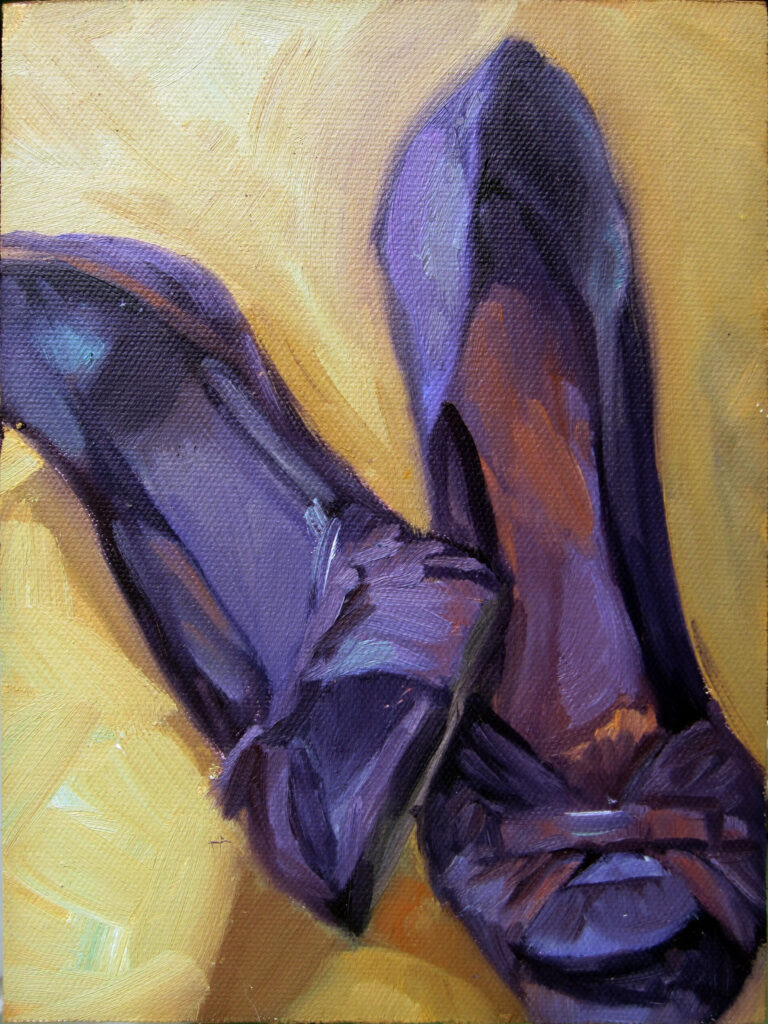
Prom Shoes 2, oil on archival canvasboard, click on image for more information. One of the great benefits of painting still life is that it teaches you to manage form vs. cast shadows.

We tend to lump shadows together into one vague, dark idea, kind of like Halloween. Despite the dangers of noun-thinking in painting I’m going to throw two more labels at you: cast shadows and form shadows. When you understand the difference, your paintings will sit solidly in space.

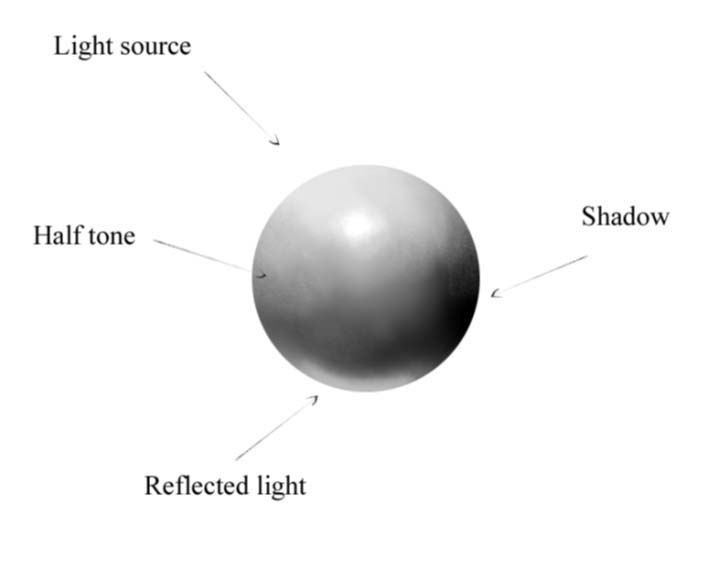
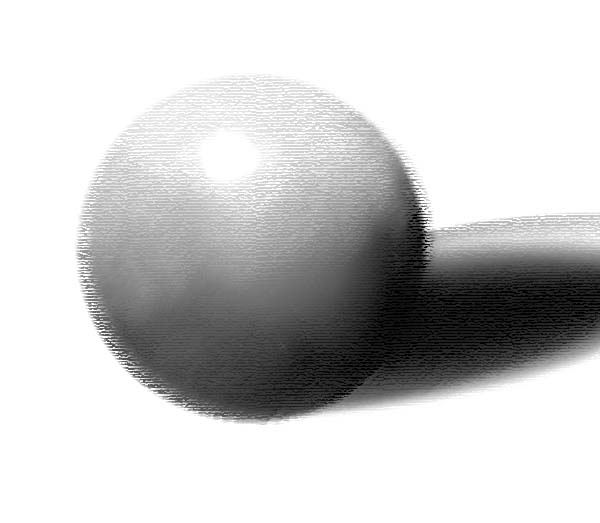
Form shadow on a sphere.

Form shadows belong to the object itself. They describe the turning of a surface away from the light. Above, I’ve illustrated a sphere: one side faces the light, the other gradually rolls into darkness. That transition—from light into halftone into shadow—is a form shadow. It’s soft, gradual, and tied directly to the geometry of the object. Form shadows are what give volume. They’re how a circle becomes a ball.

Cast shadows, on the other hand, are thrown by one object onto another surface. A tree casts a shadow on the ground. A nose casts a shadow across a cheek. These shadows are graphic and shape-driven. Their edges depend on the sharpness of the light source. They primarily describe the interruption of light rather than the turning of form.

Cast shadows are opposite the light source.

Not all shadows behave the same way

Form shadows will have softer edges when they are created by gradual changes in light across a curved surface. The more matte the surface, the softer the shadow. Even in strong light, the transitions of a form shadow are rarely abrupt. A hard edge in a form shadow will flatten the object. When we paint with form shadows, we’re doing what’s called ‘modeling’.

Cast shadows, especially close to their source, tend to have firmer edges. They can soften as they move away from the object, and the softer the light source, the softer the shadow. But cast shadows are usually crisp near the object that’s casting them. If you paint cast shadows with mushy edges, your painting loses definition. Everything feels vague and unanchored.

Form shadows are part of the object’s local color family, darker and often cooler. Cast shadows, however, can drop dramatically in value; they represent areas where light is blocked entirely. That said, they’re rarely as dark as beginners make them. There is almost always reflected light bouncing into them, especially outdoors.

Where cast and form shadows meet

There may be almost no differentiation where cast and form shadows meet; they can sometimes run into each other as an unbroken dark. A great example is Johannes Vermeer’s Girl with a Red Hat, which is a delightful exercise in lost and found edges.

Color temperature

Form shadows will generally shift cooler relative to the light, particularly in natural light. Cast shadows also follow this general rule. However, depending on the environment, they can pick up surprising color such as warm, reflected light.

In either case, shadows can have reflected color in them. For example, the insides of daffodils—despite being in shadow—will be a clear, deep yellow. They’re reflecting the yellow back on themselves.

Baby spruce on the shoreline at Corea, 8X10, private collection.

This is a good place to ban black

Shadows may, in certain situations, appear black. If, for design purposes, that works for you, make yourself a chromatic black from ultramarine blue and burnt sienna or a blue-magenta-yellow combination if you’re working in severely-limited palette. Tube black is useful for making greens, for making tones and shades, or for painting your grand piano. But it has no place in your shadows.

But in any case, most shadows are simply more charming if they have color in them, or many colors in them.

Your practical takeaway

One of the great virtues of painting still life is learning to manage cast and form shadows differently. When you see a shadow, ask yourself what it’s doing. Is it describing the turning of a form, or is it being cast onto a surface? That will help you handle its edge crispness, its value and its color.

Registration is now open for workshops in 2026! Reserve your spot:

Can’t commit to a full workshop? Work online at your own pace:

Seven Protocols for Successful Oil Painters

Monday Morning Art School: what is hardest to paint?

Surf’s Up is 12X16, on a prepared birch surface. Click on image for more details.

(The answer, of course, is ‘yes.’)                                         

Students ask me how to paint water, portraits, clouds, trees, rocks, animals and many other things. That’s thinking in nouns, not visually. Getting hung up on a subject (for example, “I can’t paint people”) is just psyching yourself out.

Every subject is equally difficult, or easy. While there are things to learn about the properties of these subjects, the overall process is universal:

  1. Observe carefully through drawing;
  2. Create a compositionally-strong value sketch;
  3. Organize color harmony;
  4. Commit to canvas or paper in the most-economical brushwork possible.
High surf, 12X16, oil on prepared Baltic birch surface. Click on image for more information.

Strong paintings are built on a foundation of strong shapes. The world doesn’t compose for you. Even the desert offers abundant visual imagery rather than austere elegance. Your job is to edit that down.

Think in terms of masses, not objects

Children paint in those aforementioned nouns—car, sun, tree, house, rainbow. When we paint what we know instead of what we see, we’re falling back into that childhood habit. But painting works better when you think in shapes and values.

When you shift from object-thinking to shape-thinking, drawing gets easier and composition starts to organize itself. “Every good picture is fundamentally an arrangement of three or four large masses – a design of masses or large blocks of color – light, dark and half dark or half light,” wrote John F. Carlson. If those shapes are clear and well-arranged, the painting will hold together, even without detail.

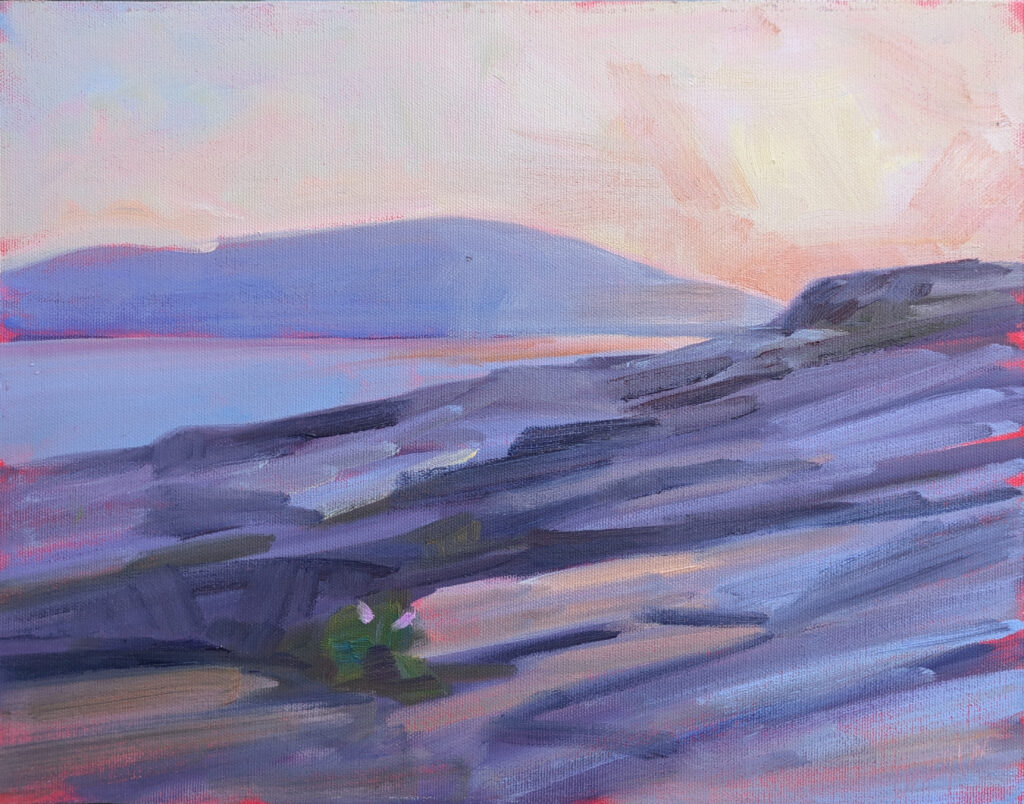
Sunset over Cadillac Mountain, oil on archival canvasboard. Click on image for more information.

Painting by design

A perfectly copied scene will still feel flat or confusing if the shapes aren’t well-organized. Feel free to move things around. Adjust the size of a shadow. Merge shapes. Eliminate distracting elements. Strengthen a silhouette.

Ask yourself:

  • Does this shape help or hinder the design?
  • Is there a clearer, more attractive way to group these elements?
  • Where do I want the viewer to look first? Second? Third? How am I encouraging that?

Simplification is about emphasis. When everything is important, nothing is.

Use edges and contrast to reinforce your shapes

Once you’ve established strong shapes, protect them. Avoid breaking them apart with unnecessary edges or fussy detail. Keep your major masses intact. You can always add complexity later, but it should sit on top of a clear structure.

Focal point is established by line and by contrast in value, hue and chroma. No intricate detail can draw the viewer’s eye as effectively as a sharp edge between two radically-different color masses.

Blueberry barrens, Clary Hill, oil on canvas, 24X36. Click on image for more information.

The value of value sketches

Practice doing quick, simplified sketches that map out value relationships. That means no color, no details, and just a few value levels. This trains your eye to see what matters.

Ultimately, painting is about seeing those relationships, and once you can do that, you can paint any subject with equal confidence.

These are skills I stress in my workshops (below) and online classes. Turning a complex subject into a paintable scene is not a talent questions. It’s a decision-making process you can learn, practice and refine.

Registration is now open for workshops in 2026! Reserve your spot:

Can’t commit to a full workshop? Work online at your own pace:

Seven Protocols for Successful Oil Painters

Monday Morning Art School: why most beginner paintings fail

Inlet, 9X12, oil on archival canvasboard, click on image for details.

Most beginner paintings don’t fail because of lack of hard work. In fact, the problem is often the opposite: too much effort in the wrong places. Careful rendering and earnest attention can’t fix a fundamentally-flawed painting.

Detail is seductive

I’ve only known one painter who could start from a single detail and work outward; even he doesn’t always succeed. Most artists end up floundering when they do that. Of course, when you’re new to painting, detail is seductive; it’s just so much fun to focus on the apple rather than the branch. But when you do that, you’re overwhelmingly likely to put that apple in the wrong spot or use the wrong values. And then, you’ll either get to repaint the whole thing or admit defeat.

There have been times when I’ve been tempted to ignore this rule, for example when storm clouds are rolling in. I have learned from sad experience that this never works.

Eastern Manitoba River, 6X8, oil on archival canvasboard, click on image for details.

Good paintings are built from big shapes, not tiny parts. If the underlying structure isn’t solid, no amount of detail will fix it. And painting any one area to completion without considering its relationship to the whole is a recipe for failure.

Learn the art of aggressive simplification. Use a big brush and don’t pick up its smaller cousin until all your shapes are blocked in. Take your glasses off while looking at your subject, or, if you’re cursed with perfect vision, squint.

Value is king

Color has three facets:

  • Value—how light or dark something is;
  • Hue—the position on the color wheel (i.e., red, blue, yellow, etc.);
  • Chroma—the intensity of the color.
Île d’Orléans waterfront farm, 8X10, oil on archival canvasboard, click on image for details.

You can play fast and loose with hue, but if you don’t have a good value structure, your painting will collapse. Value is the bones of all 2-D art.  

Beginner paintings often suffer from compressing the value range into a narrow band of midtones. The result is flat, muddy, and lifeless. That’s first an observational question, but it’s also an issue of design. The painter hasn’t considered whether there is an interesting pattern of lights and darks.

Start with a sketch limited to just four values. Make sure it’s attractive and interesting before you move on to paint. Then, establish your value range early and stick to it. Work the whole canvas at once, comparing constantly. Ask yourself: should this shape be lighter or darker than the one next to it? That simple question can transform your painting.

Step back frequently. If you can’t do that, use your cellphone to take a picture of your work in progress; that can sometimes give you the necessary distance. If you’re really in doubt, convert that photo to greyscale and see what it tells you.

Grand Canyon at sunset, oil on canvasboard, 9X12, click on image for more details.

You can’t fix a weak painting by adding more paint

No amount of detail or bravura brushwork can salvage a weak composition. Instead, stop and figure out what’s wrong. If you can train yourself to see big shapes first and organize your values with intention, your paintings will immediately improve.

Registration is now open for workshops in 2026! Reserve your spot:

Can’t commit to a full workshop? Work online at your own pace:

Seven Protocols for Successful Oil Painters

Monday Morning Art School: how to start a painting

Île d’Orléans waterfront farm, 8X10, oil on archival canvasboard, click on image for more details.

Everyone is Polish on Dyngus Day

As all good Buffalonians (even those of us in exile) know, today is Dyngus Day. It has been called the Polish Sadie Hawkins Day, a celebration of the Baptism of Poland or the first real post-Lenten party. To me, it’s the first true sign of spring, and the perfect metaphor for beginning a painting: energetic, a little chaotic, and full of possibility.

Set the energy

If you’re as bleary as I feel, start with loud, perky music. May I recommend polkas?

Starting a painting can feel like looking at the far horizon. It’s exciting, but overwhelming. The way to keep from getting lost is to start simple, think big and be patient. Every successful painting begins not with detail, but with confident, broad moves that establish the foundation.

Marshes along the Ottawa River, Plaisance, 8X10, oil on archival canvasboard, click on image for more details.

Start by drawing

To start a painting successfully, start with drawing. No time spent with pencil or paper is ever wasted. You can do twenty loose, inventive, exploratory sketches in the time it takes to struggle through one flawed underpainting. These quick studies build confidence, sharpen observation and clarify your composition before you ever touch the canvas.

Toning (oils, acrylics and gouache only)

A warm or neutral wash knocks down the glaring white of gesso. (You’re not sealing the canvas; gesso is formulated to take paint.) Tone helps your eye judge values more accurately. From there, I draw my sketch in with paint; others use vine charcoal. I try to keep this loose and responsive while still honoring my drawing.

Cape Spear, Newfoundland, 8X10, oil on archival canvasboard, click on image for more details.

Less flailing, more looking

In a comment on Friday’s blog post, student Bonnie Daley noted that careful observation would also help in fishing. What if we committed to spending time looking before we cast our lines, metaphorically as well as physically? Careful observation is one of the most important painting techniques for beginners and professionals alike.

Study your subject until the complexity simplifies into two or three major value shapes. These large shapes form the structure of your painting. If they’re correct, everything else will fall into place.

The beauty of a more limited palette

A common trap for beginners is buying too many paints. Instead, use a limited palette of paired primaries with a few earth tones. This approach simplifies decision-making and creates natural harmony.

Think of color in terms of value and temperature rather than exact hue. That apple doesn’t need to be the perfect red; it needs to relate correctly to the colors around it. In painting, color is relational.

Athabasca River Confluence, 9X12, $696 includes shipping and handling in continental US.

Simple block-in, solid foundation

Once your drawing and big shapes are in place, block in shapes with broad color masses. If you keep the edges soft at first, you can tighten as you move along. Note how values and edges interact.

If you’re tempted to add detail now, put down your brush and dance another polka. Student Beth Carr reminded me of just how much Euan Uglow could say with almost no detail at all. Solid block-in reads beautifully without detail, but it’s important no matter how much refinement you want to do. What you place here determines how later layers will work. Once the big relationships work, you can enjoy laying in details and flourishes, if that’s your bag.

An unbiased eye

If you’re ready to sharpen your eye and start seeing your paintings with more clarity, I invite you to join my Fresh Eyes Critique Zoom class on Tuesday evenings, 6-9 PM on April 14, 21 and 28. After that, you’re on your own for a few weeks, because I’ll be in the Cotswolds.

Registration is now open for workshops in 2026! Reserve your spot:

Can’t commit to a full workshop? Work online at your own pace:
Seven Protocols for Successful Oil Painters

Monday Morning Art School: critique is executive function for the artist.

Pink Carnation, 8X10, oil on Baltic birch, is heading out west for Courageously Created Fine Art Show & Auction, Washington State.

Executive function is a core concept in psychology. It means a set of mental processes and skills that allow us to manage tasks, regulate our emotions and achieve goals. These help us plan, focus and multitask.

Executive function is also a core concept in painting. It’s the ability to critique our work as we’re doing it. We secretly fear outside criticism. But without some way to measure ourselves against artistic principles, we repeat the same mistakes.

Each of us has experienced harsh or unfounded criticism. But harsh words have no place in formal criticism, which is a structured, time-tested tool for growth. (I became a happier person the day I forgave those people, but that’s another story, one of slowly learning to extend the same grace to others that I want for myself.)

Cottonwoods along the Rio Verde, 9X12, oil on archivally-prepared Baltic birch, , is heading out west for Courageously Created Fine Art Show & Auction, Washington State.

“Do you like this work?”

When we submit our work to thoughtful analysis, the question, “Do you like it?” becomes almost irrelevant. However, a strong negative reaction can mean something. The work may be objectively failing or it may prick others’ beliefs or values.

How can you set your ego aside to figure out which is happening? Ask how the work measures up against the elements of design and design principles. Once we learn to ask these questions while our work is in process, we have developed the ability to self-critique. This pulls us out of the haze of subjectivity.

These design elements and principles transcend style and preference; they are the bones of painting.

Blue and purple, Sedona, 11X14, oil on archivally-prepared Baltic birch, click on image for details.

What are the elements of design?

The elements of design are line, shape, color, form/mass, edges, texture, perspective/depth/space. No painting excels in every area; we are mere humans. However, each of these can be strengthened as we get better at critiquing our own work.

What are the principles of design?

The principles of design are pattern, dominance/emphasis/focal points, unity/variety, harmony, balance, contrast, and rhythm and movement. These are different from the elements of design because they operate on a sliding scale, where neither end is best. For example, serenity and energy are both beautiful, but each serves different goals. The question is whether your painting goals are met by your approach.

Fresh eyes

My Painting Clouds class sold out in 24 hours; its goal is easily understood. That doesn’t make it more useful than Fresh Eyes (Critique). Critique is for experienced painters who want to get better, who want to develop that inner voice that guides their painting.

Not all critique is useful, and that goes double for self-doubt. That is vague, overly personal and usually just plain wrong. Disciplined critique is specific, grounded in the elements of design and delivered with clarity, objectivity and respect. It identifies strengths as well as weaknesses. Knowing what works is just as important as knowing what doesn’t.

Cape Breton Highlands, 8X10, oil on archival canvasboard, click on image for details.

This is for everyone who’s ever asked me for private lessons

When you analyze someone else’s painting, you sharpen your own visual literacy. You begin to see patterns: what creates movement, what deadens a composition, how color relationships sing or collapse. You learn the language of art criticism. That transfers directly back into your own work. You become both painter and editor, creator and critic. You’re able to diagnose problems before they harden into habit. The shared experience accelerates learning in radical ways.

You’ll bring your own work to Fresh Eyes (Critique) and we’ll analyze it together. You’ll learn how to self-critique effectively, creating that executive function for painting. This is a short Zoom session (April 14, 21, 28) meeting from 6-9 PM, EST. If you’re ready to stop second-guessing and start seeing your work clearly, register now.

Registration is now open for workshops in 2026! Reserve your spot:

Can’t commit to a full workshop? Work online at your own pace:
Seven Protocols for Successful Oil Painters

Monday Morning Art School: a small-space home studio

One of my students at last week’s plein air workshop at Sedona Art Center lives in a small space in New York. She wants a home studio but is worried about how to fit it into her apartment. When I first started painting professionally, I worked in a corner in my kitchen.

I recently got an excited video from another workshop student giving me a tour of her new studio in a spare bedroom in her house. I was thrilled because I’ve noticed that my students with a designated painting space—no matter how small—always work more consistently

A home art studio can work in a spare bedroom, a corner of the dining room or even a spot in the basement. Almost any space in a modern home beats the garrets in which some of art’s greatest masterpieces have been made.

Pink Carnation, 8X10, oil on Baltic birch, currently on hold for someone.

Natural light or the next best thing

Natural light is the gold standard for painting, but in its absence there are excellent LED full-spectrum bulbs available today. My last studio had north-facing windows. My current one faces east, but it’s not much of a hardship. I just close the blinds if there’s glare. The vast majority of us don’t live in purpose-built studios, so we work with what we have.

Even with the best natural light, you’ll need supplemental lighting. Fixtures should be positioned so the light falls across your canvas and palette, not creating glare into your eyes.

Your light shouldn’t be too close or it will be uneven. Check that it doesn’t cast shadows across your canvas and palette, and that the light is more or less balanced between the two. Uneven light makes it difficult to judge your painting accurately.

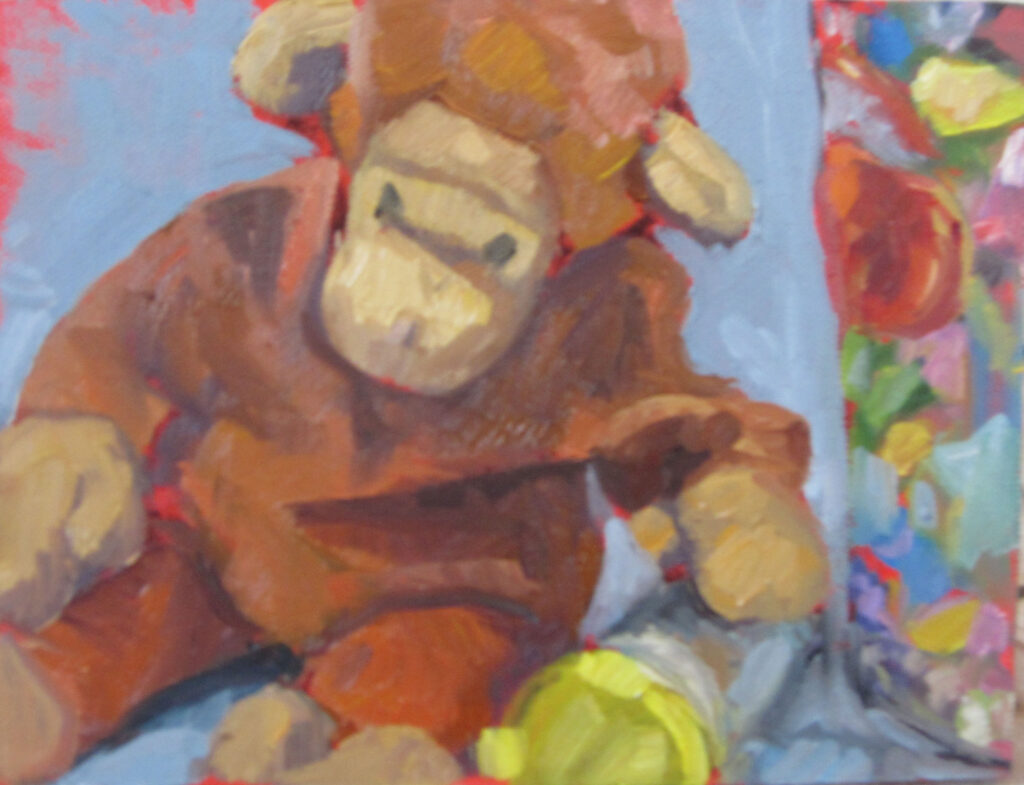
Toy Monkey and Candy, oil on archival canvasboard, $435 framed.

Protect your walls and floors

I’m the messiest painter ever. I had a brand-new laminate floor in my kitchen, so I had a hard plastic floor mat and checked regularly for spills that escaped it.

I also had a small plastic rolling cart next to my easel in which I kept my brushes, paints and supplies. Efficiency mattered more than aesthetics. Everything was within easy reach.

Ventilation

For pastelists, a HEPA filter will keep dust down, which reduces the health risk of powdered pigments. That doesn’t work for volatile organic compounds (VOCs) so oil painters will need an exhaust fan. It doesn’t have to be complicated; your kitchen fan will probably be sufficient. Or, simply crack open a window.

Don’t wash your brushes in the kitchen sink

I’ve had utility sinks in all my houses, and I’ve washed my brushes there. On the road I sometimes wash them in the shower. If you have no choice, be sure to wipe out the sink thoroughly when you’re done, and don’t wash brushes over your dishes.

Prom Shoes 2, oil on archival canvasboard, 6X8, $435.

Choose the right easel

Your easel should hold your work securely and at a comfortable height. I started with this style single-mast easel (the exact model is no longer available) and eventually graduated to this model, which I still use today. If you have a pochade box or plein air easel, you can always use them in the house as well.

The smaller the space, the more organized you have to be

Nothing kills momentum like hunting for tools or supplies. Keep your brushes together in jars or where you can see them. Store paints in a shallow box or drawer so colors are visible at a glance. You don’t need lots of materials. In fact, less is usually more when it comes to art supplies.

Leave room to step back

You must be able to step back to judge your work. Arrange your workspace so you can easily step back six or eight feet away from your canvas. That may mean standing in front of the stove, but you can give the risotto a quick stir while you’re there.

Make it a place you want to work

You don’t need a grand atelier for serious work. What you need is a functional space where painting becomes a habit rather than a logistical challenge. Make it comfortable and inviting and you’re more likely to develop a regular painting habit.

Registration is now open for workshops in 2026! Reserve your spot:

Can’t commit to a full workshop? Work online at your own pace:
Seven Protocols for Successful Oil Painters

Monday Morning Art School: why a repeatable painting process matters

Mather Point at dawn (Grand Canyon), oil on canvasboard, 9X12, , $696 includes shipping and handling in continental United States.

I put a premium on repeatable process. That’s not because I’m rigid; it’s because a consistent painting process delivers consistent results. Every noted artist in art history has had one.

Study the working methods of masters and you’ll see variation, of course. Claude Monet worked serially, revisiting the same subject in shifting light to explore optics, color and atmosphere. John Singer Sargent was famous for his bravura brushwork, but beneath that flair was a disciplined structure of drawing and value control. Georgia O’Keeffe simplified and distilled her subjects through careful design and a deliberate studio practice.

They had different approaches, different temperaments and lived in different places and times, yet all were grounded in method.

Grand Canyon at sunset, oil on canvasboard, 9X12.

The bones don’t change

Color and design principles don’t change. They’re the bones of painting. You can glaze or paint alla prima, work from life or from photos, but you cannot escape the fundamentals of color harmony, value structure, and composition.

How you get there, however, will become increasingly tailored to your own painting approach and personality as you grow and evolve. These are workflow decisions. Over time, you will discover which sequence of steps makes you clear-headed instead of flustered.

Learn a process before you break it

If you’re serious about improving your painting, find a teacher who suits your personality. That doesn’t mean someone whose finished paintings you admire, but someone whose method makes sense to your brain.

Learn and treasure that teacher’s process (and enjoy learning while you’re at it). Practice it until it is second nature. Build muscle memory around it. A structured painting process gives you something to fall back on when you’re tired, discouraged, or staring at a blank canvas.

That is how artists move from dabbling to building a body of work.

Just as with painting style, your process will evolve over time. You’ll streamline steps and discover shortcuts that don’t sacrifice quality. That evolution isn’t rebellion; it’s maturity.

Grand Canyon, late morning, 8X16, oil on archival linenboard, $722 includes shipping and handling in continental United States.

Haphazard in, haphazard out

There is a pernicious myth in art that spontaneity equals authenticity. But haphazard approaches deliver haphazard paintings. Yes, there will be a few happy accidents. Chance always plays a role in creative work. Serendipity is real.

But if you rely on accident as your primary strategy, your success rate will be low. A consistent painting workflow gives you a framework. Within that framework, you can take risks. You can experiment with brushwork or color temperature or edges. You can push yourself compositionally.

Without a framework, you are reinventing the wheel every time you paint. That’s exhausting, and it makes it nearly impossible to create a cohesive portfolio or professional body of work.

Pensive 8X10, oil on archival canvasboard, $522 includes shipping and handling in continental US.

Build your own normal

Adopt a repeatable art process. Follow it faithfully. Track what works. Notice where you stumble. Refine gently.

Over months and years, that method will bend toward your temperament. It will begin to reflect your visual priorities and technical strengths. Eventually, it will feel less like a borrowed system and more like your own studio rhythm.

That’s when you’ve found your normal. And from that normal—steady, disciplined, evolving—you’ll produce not just better paintings, but a happier, more confident artistic life.

Registration is now open for workshops in 2026! Reserve your spot:

Can’t commit to a full workshop? Work online at your own pace:
Seven Protocols for Successful Oil Painters

Monday Morning Art School: perfection in painting is impossible

Camden Harbor from Curtis Island, oil on canvas, $2782 unframed includes shipping and handling in continental United States.

The thing that trips you up will almost always be unexpected. It won’t be the sky or figure you feared. It will be something small and stubborn. If you let it, that tiny snag can hijack your whole painting. But in painting, as in life, perfection is a pernicious mirage that can keep us from trying or finishing anything.

The ugly side of perfection

We talk about perfection as if it’s synonymous with beauty. It isn’t.

Think about the strange results of extreme cosmetic surgery: tight faces, overfilled lips, pneumatic breasts. Enormous sums of money are spent in our culture chasing youth. And yet, we gravitate toward faces etched with experience and humanity: Corrie ten Boom, Mother Teresa, Georgia O’Keeffe.

We value bravura brushwork in part because it photographs well for social media. Quieter virtues like solid drafting, subtle value control, and compositional integrity might be dismissed as dull. But bravura without structure is just noise.

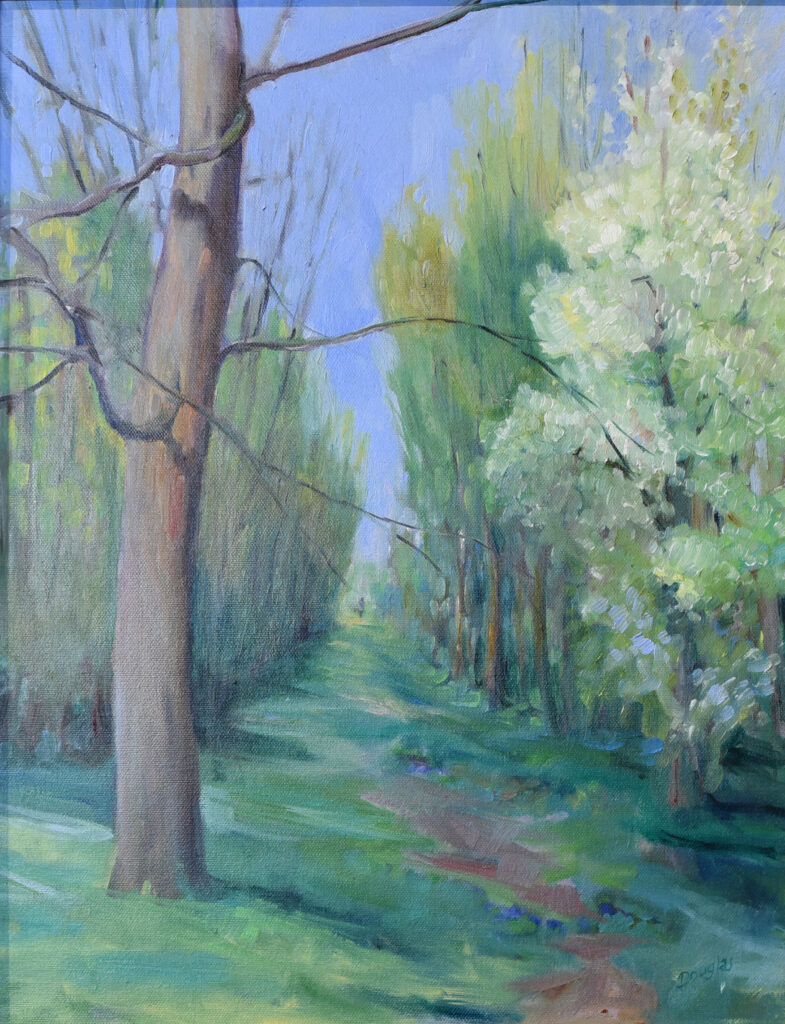
Spring Allee, oil on archival canvasboard, 14X18, $1594.00 framed includes shipping and handling in continental US.

Cultural blind spots in painting

One of the great conceits of our times is that modern ‘rational’ people have fewer blind spots than our benighted ancestors.

We are all the sum of our upbringing and our culture. That includes aesthetic preconceptions. We think we’re being objective when we judge art, but all judgments are freighted with assumptions.

In the studio, blind spots can keep us from seeing real problems. For example, we value color but denigrate drawing, so we polish color harmonies while ignoring bad drafting. Sometimes we can’t see the issue at all, because it doesn’t fit our internal narrative of what matters.

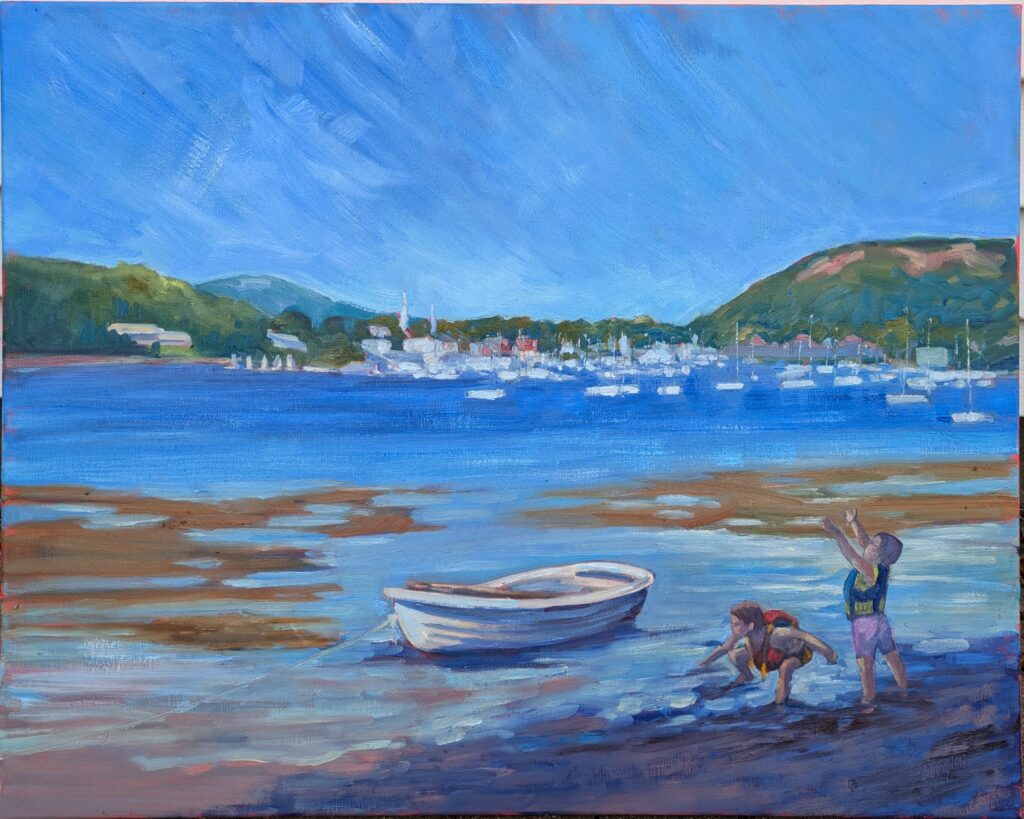
Brooding Skies, 8X10, oil on archival canvasboard, $522 includes shipping and handling in continental US.

The moment

The goal is not perfection in the abstract. It’s getting as close as we can for the moment of that painting. It might stretch over hours, days, or even weeks. It’s the point at which the painting coheres under the specific conditions in which it was made: skill level, materials, emotional state, light, deadline and more.

The real danger is not imperfection. It’s failing to recognize your achievement in that moment. If you keep telling yourself, “I suck,” you’ll never get better. You’re trying to fix something that ain’t broke. That usually means turning a resolved work into a labored one. Instead, set it aside and see what it tells you in a year.

The four paintings I included in this post are all examples of work I thought failed at the time I painted them, but that I quite like today.

A painting exists as a success or failure within its time and context. Your job is to nurture it into clarity, not force it into something it was never meant to be.

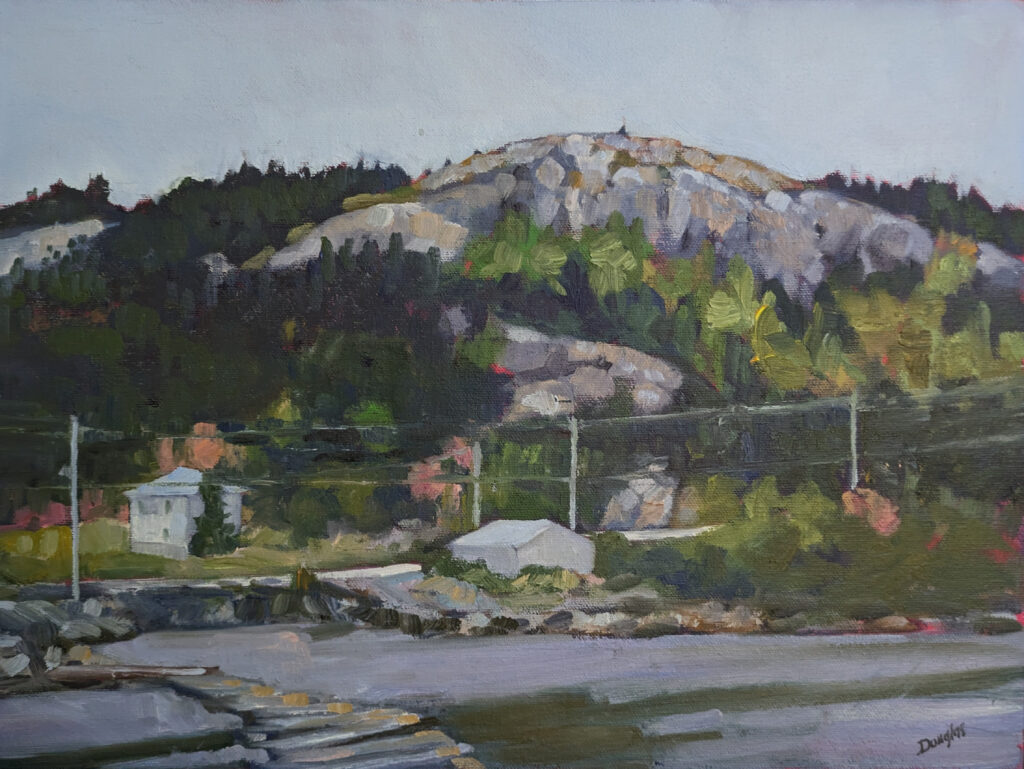
Hare Bay, Newfoundland, 12X16, $1159 includes shipping and handling in continental US.

One minor variable

I am making my daughter’s wedding dress, and was recently tripped up by something I never thought would be a problem. I’ve worked with tulle and beading before, but I’m using a ‘new to me’ sewing machine. The pearls kept catching, so I kept stopping and clipping them farther from the seams. What I expected to take an hour stretched into two days. Despite my great care there are pinholes where I nicked the tulle removing pearls. Which means a fine mending job.

That happens in painting, too. A small, unanticipated issue can derail momentum. You can’t eliminate all variables; you must accept that they’re part of the process.

Perfection in painting is impossible. But presence, discipline, and the humility to recognize the moment of enough? These are always within reach.

Registration is now open for workshops in 2026! Reserve your spot:

Can’t commit to a full workshop? Work online at your own pace:

Seven Protocols for Successful Oil Painters