Monday Morning Art School: why choose non-toxic pigments?

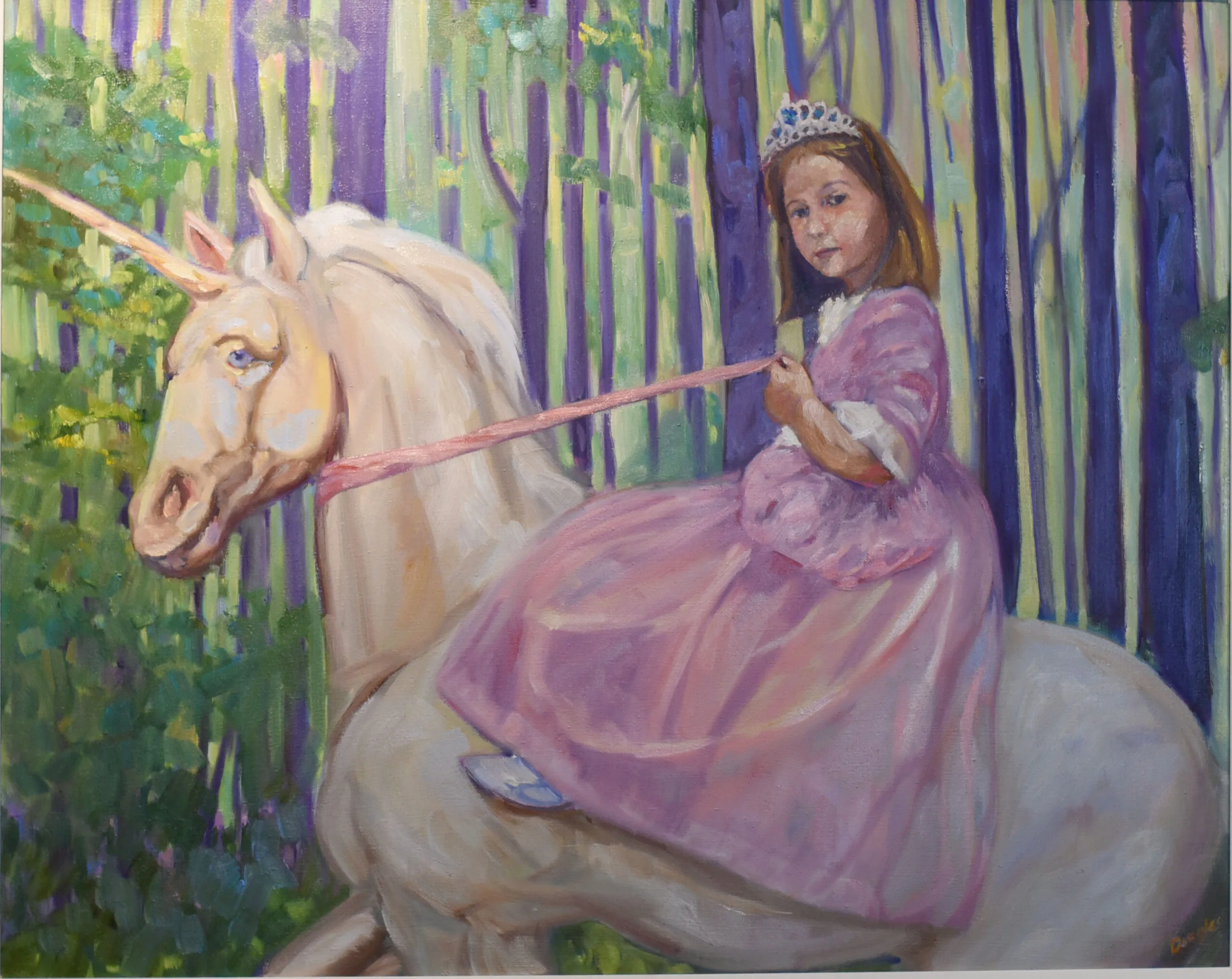
In Control (Grace and her Unicorn), 24X30, $3,478 framed, oil on canvas, includes shipping in continental United States.

One of my students in Sea & Sky at Acadia National Park last week is a PhD researcher in the health sciences. I was thrilled to hear her disparage cobalt blue, not for its rather muddy color, but for the health risks associated with metal pigments.

Many traditional artist pigments contain toxic metals. These include cadmium (cadmium red, cadmium yellow), cobalt (cobalt blue, cobalt green), lead (lead white, flake white), and chromium (chromium oxide, viridian). In powdered form, heated as encaustics, or when sanded, they can be inhaled or ingested. Their health effects can be very serious, including organ damage, neurological problems and cancer risk. (As a three-time cancer survivor, I take this seriously.) The problem is most serious with loose pigments (as in pastels) or when heated in encaustics. But even when bound in oil or acrylic binders, small chips, dust or contaminated hands still pose hazards.
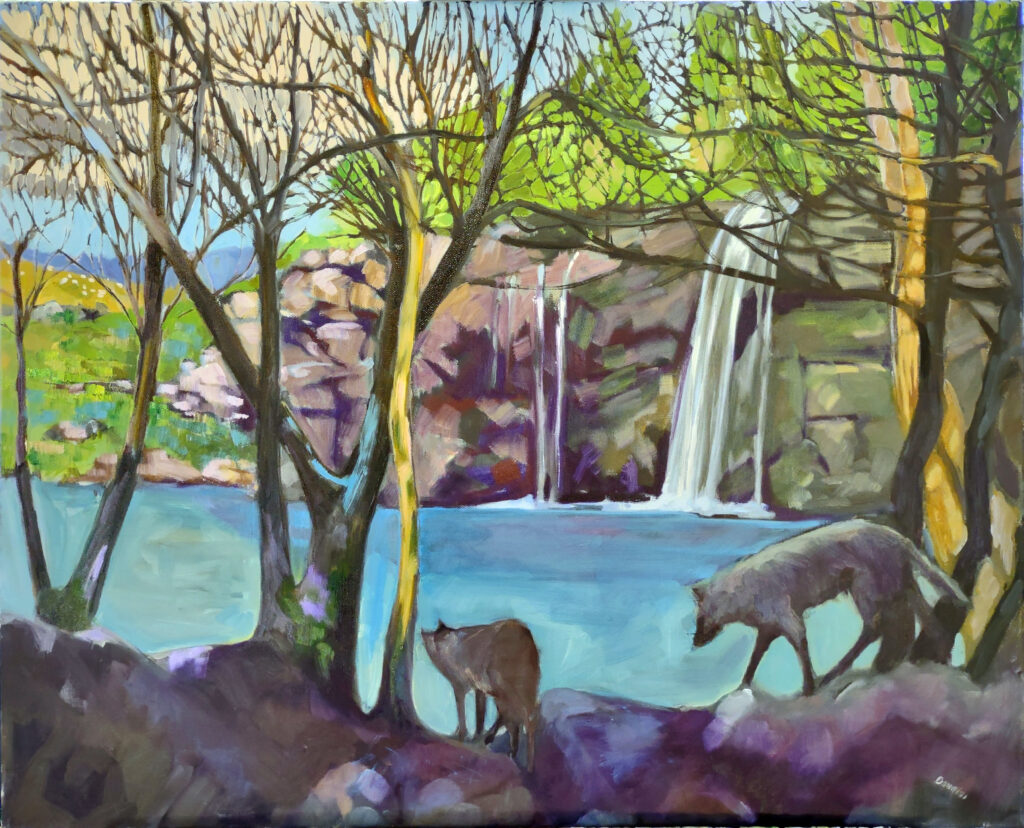
Ravenous Wolves, oil on canvas, 24X30, $3,478.00 framed includes shipping and handling in continental US.

As real as these health hazards are, they pale in comparison to the risks to the people making these pigments. We’ve shipped our most egregious safety hazards to the developing world, where health and safety regulations are severely limited, and child labor isn’t unknown. Sadly, pigment manufacture is done almost entirely in those places. When you buy a tube of paint including heavy metal pigments, you’re contributing to that problem.

How do you know what pigments are in your paint?

All good manufacturers tell you what’s in their paints, either online or on the tube. The marketing name can be confusing, so I wrote this blog post to explain how to determine what’s in your paint.
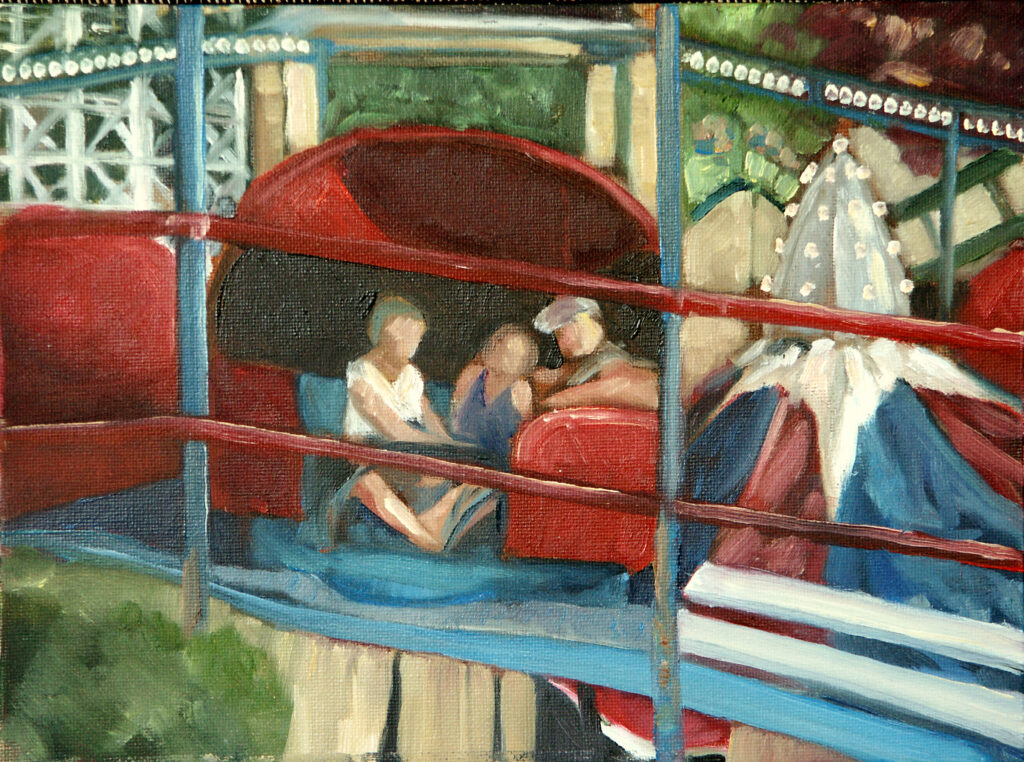
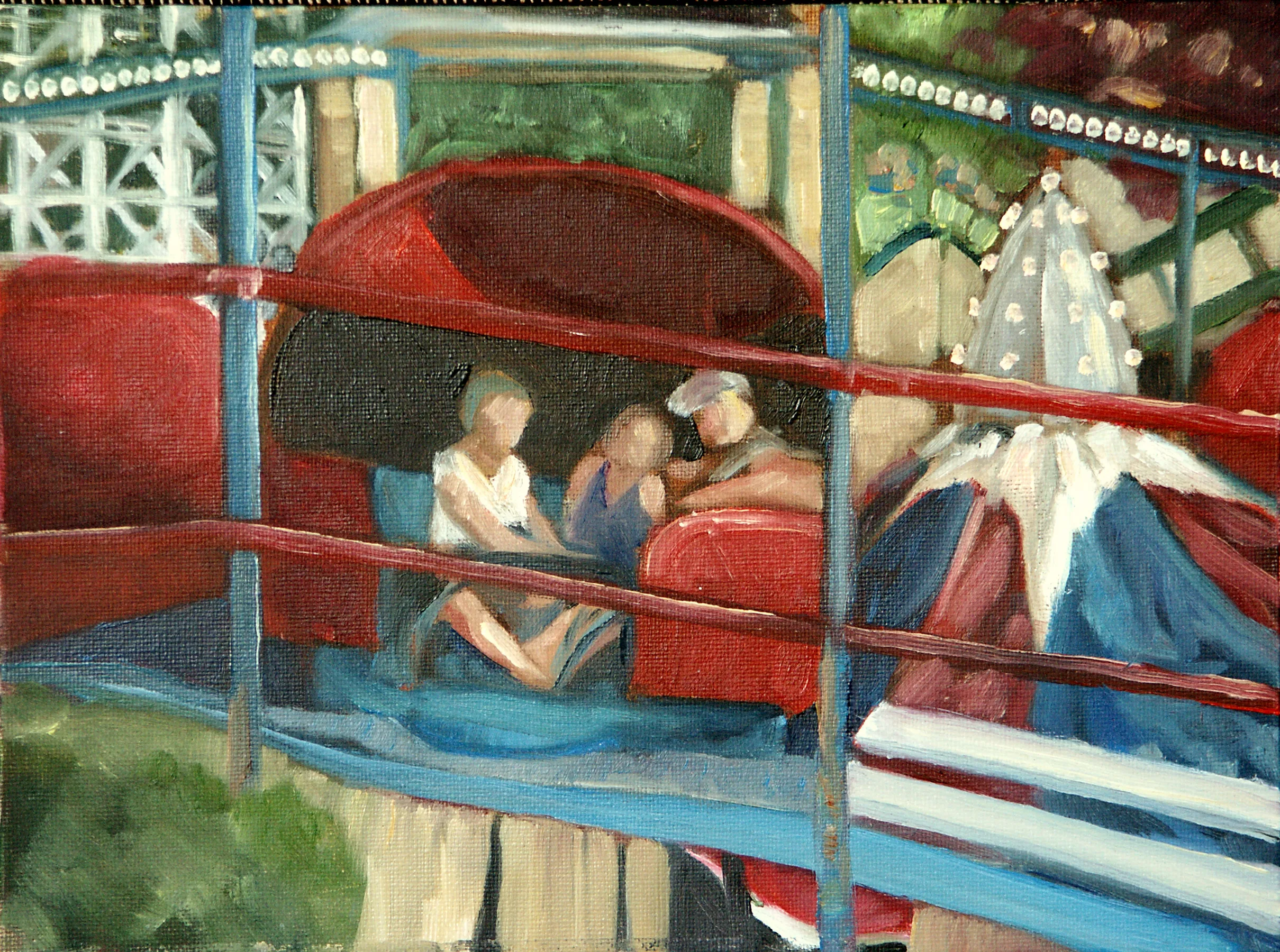
Tilt-A-Whirl, oil on archival canvasboard, $869 framed includes shipping and handling in continental US.

Environmental toxicity
When you wash brushes in a sink or dispose of leftover paint, these same metals enter the wastewater stream. From there, they can accumulate in soil and waterways. Heavy metals don’t break down—they persist in the environment, harming wildlife and contaminating the food chain.

Safer alternatives now exist
Modern synthetic pigments generally surpass the brightness, permanence, and opacity of these ‘legacy’ heavy metal pigments, without the same toxicity profile. Painters should switch to these options for safety and ethical reasons.

However, heavy metal paints are still legal and still widely used. If you feel you must (and I hope you don’t), take the following safety precautions:

  • Work in a well-ventilated room (open windows, use fans to exhaust air outside). Keep children and pets out of your painting area.
  • Have a separate sink bucket for brush water—never dump pigment water into household drains. When the brush water has completely evaporated, dispose of solids as toxic solid-waste.
  • Dispose of painting rags as solid hazardous waste.
  • Wear nitrile gloves while handling paints.
  • Wear a particulate mask while sanding and do so in a well-ventilated area.
  • Use a palette knife to mix colors (you should be doing that anyway).
  • Wear dedicated painting clothes, and don’t track pigment dust into your home.
  • Wash your hands before leaving the studio or handling food or drink.
  • Work in a well-ventilated space.
  • Keep food and drinks out of the studio.
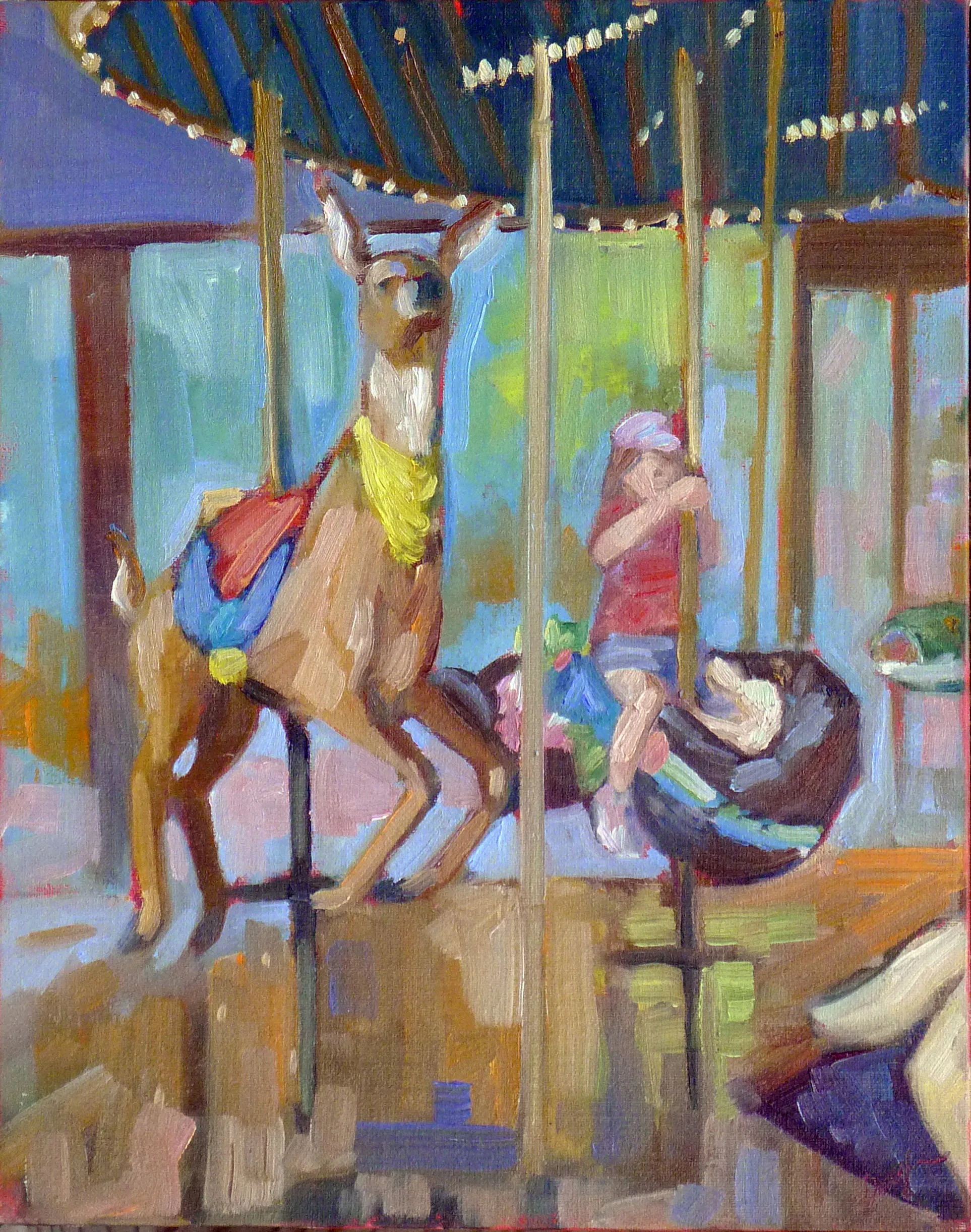
Best Buds, 11X14, oil on canvasboard, $1087 framed includes shipping and handling in continental US.

Doesn’t that sound like a complete pain?

Instead, why not use non-toxic pigments? They’re generally higher-chroma and less prone to fading anyway.

Here is a chart of toxic pigments and modern, non-toxic pigments:

Registration is now open for workshops in 2026! Reserve your spot:

Can’t commit to a full workshop? Work online at your own pace:

Seven Protocols for Successful Oil Painters

Talent is overrated

Painting (unfinished) by Lynda Mussen

I’ve just spent the week with a very competent group of student artists in my annual Sea & Sky at Acadia National Park workshop. “What a talented group!” a passer-by said yesterday.

What’s wrong with calling artists ‘talented’?

Calling an artist ‘talented’ might at first glance seem complimentary. However, successful artists come from all kinds of different skill sets—some are good at spatial relationships, some at math, some at language. They have one thing in common—a capacity for hard work. I’m seeing that here this week, as my band of painters spend hours standing in the hot sun on the rocky ledges of Schoodic Peninsula. Their goal is to develop their skills, and they’re indefatigable.

Painting by Jennifer Abromowitz

Calling them ‘talented’ is dismissive. It downplays their hard work and discipline. It implies that they were born with a gift, rather than having earned their skill through years of effort, learning, failure, and practice. It makes their accomplishments seem effortless, which is never the case. Great art doesn’t spring fully-formed from the minds of geniuses. It is made incrementally.

Artists are often asked how long it took to make a specific work. The smart ones answer, “Three hours, and many years,” because every work of art is based on all our prior works.

Painting (unfinished) by Linda Delorey

‘Talented is discouraging

Ascribing success to talent discourages beginners. A person who believes that great art is the result of talent rather than skill-building may conclude that they’re not talented, so there’s no point in even trying.

Being told you’re talented (as I was as a child) can also be crippling. The child raised to believe he or she is talented may coast, or be reluctant to challenge that talent in the marketplace of ideas. How much easier it is to believe that you could be the best, if only…

Painting by Michael Prairie

The Cult of Genius

The Cult of Genius gained prominence in the 18th century. It was the idea that genius is an inherent, almost divine, gift. It has resulted in the elevation of select individuals, overemphasizing their unique and seemingly superhuman abilities.

True genius is just rebellion against conventional thinking. It’s an iconoclastic way of looking at things. As such, it belongs to anyone of reasonable intelligence. A momentary, “yes, but…” can lead to revolutionary ideas.

Painting by Kimberly Quinn-Jones

Labeling someone as “talented” feeds into the romantic idea that great ideas spring fully formed from an inner muse. Artists, like other professionals, refine their craft over time. Real success comes from a combination of curiosity, grit, feedback, and many, many hours of work.

Our society denigrates art. That’s easier to do that when you think ‘talent’ is just a genetic trait, like eye color.

It’s fine to admire someone’s abilities

Not all art criticism needs to be expert. It’s okay to tell an artist, “That’s beautiful,” or “I love the colors,” or “this moves me.” It’s equally okay to ask questions, like “why did you use that composition,” or “what are you trying to say in this painting?” These are comments directed to the piece, not something in the artist’s makeup.

Painting by Roxanne Glazier

Registration is now open for workshops in 2026! Reserve your spot:

Can’t commit to a full workshop? Work online at your own pace:

Seven Protocols for Successful Oil Painters

Plein air painting workshop second-day takeaway

Mike's watercolor
Mike's watercolor
Mike’s watercolor

I’m at the Schoodic Institute teaching my annual plein air painting workshop, Sea & Sky at Acadia National Park. At the close of play on the second day I asked my students for their
takeaways so far.

“Even an inexperienced beginner can do plein air,” said Jackie. “I was nervous at first, but first time plein air is doable. The public passers-by are so appreciative and supportive.”

“I found that if I suspend expectations about the outcome, I can let go and loosen up enough to discover things I didn’t know I could do,” said Mike. “‘The suspension of disbelief makes amazing things possible.’ And it’s probably best not to use a 3-inch hake brush for small details.”

Kimberly's grisaille
Kimberly’s grisaille

“The more I learn, the less I know,” said Kimberly, which got a big groan of recognition from all of us. “If you take shortcuts, you’re going to get caught out sooner or later,” she added, and “I’ve learned how it’s done and why.” (To me, why is at least as important as how.)

After she told me she’d finally internalized ‘big shapes to little shapes,’ Linda said, “I am so
appreciative that I managed to get into this class this year… After years of attending the course, it just gets better.”

Linda hard at work
Linda hard at work

“I’m doing better than I thought,” said Jennifer. “If I pace myself, and get the drawing right first, and don’t overwork things, it works out okay. I’m learning perspective, how to control chroma and not to make rocks too uniform.”

Roxanne’s takeaway was simple: “I got some good oil painting techniques and also am having a really fun time.”

“I think I finally understand ‘fat over lean’,” said Lynda. “I did the whole painting without ever
touching medium, and I’m finally happy with the paint consistency.”

Lynda's painting of Blueberry Hill
Lynda’s painting of Blueberry Hill

And last but certainly not least, Sharron said, “There’s a lot of satisfaction in finishing a project.” True dat!

My takeaways are that I need to drink more water, and that I’m still in love with the beauty and grandeur of the Maine coast. It never gets old.

Monday Morning Art School: five ways to create focal points

By the time you read this, I’ll be embarking on my first day of two weeks of teaching—first at Schoodic Institute in Acadia National Park, and then in the Berkshires. (Schoodic is now closed, but there’s still room in the Berkshires.) This morning I’m starting with composition and focal points.

Focal points are crucial in painting. They guide the viewer’s eye and create visual interest and impact. Not everything in a painting should compete for attention. Focal points help establish a clear visual order, telling the viewer where to look first. This hierarchy makes the painting more readable and engaging.

Understanding focal points is fundamental to intentionally designing your paintings. Focal points influence and interact with rhythm, value structure, color, edges, and detail—in short, the most critical elements of design.

For a more in-depth description of focal point, see here.

How to Create a Focal Point:

Here are five ways to create focal points in your paintings

Line—the human eye naturally follows lines.

Line is the boundary between two shapes. There are two fundamental kinds of line: actual lines, which are visible marks, and implied lines, which are suggested by a sequence of objects—like a row of trees or the gaze of the subject.

Line directs the eye, so you can use it to guide the viewer through the painting.

Value contrast—the eye sees shifts in value first.

This makes it the most important design element in visual art. Value contrast defines form and structure and creates the illusion of depth and volume. But most importantly, it controls the viewer’s eye.

Because of the physical construction of our eyes, we are drawn to areas of strong contrast. You can use value contrast to highlight focal points, draw the viewer through your composition and emphasize what’s important (and downplay what isn’t). That’s the theatrical power of chiaroscuro right there.

Chroma contrast—use high-chroma focal points in contrast to a neutral background.

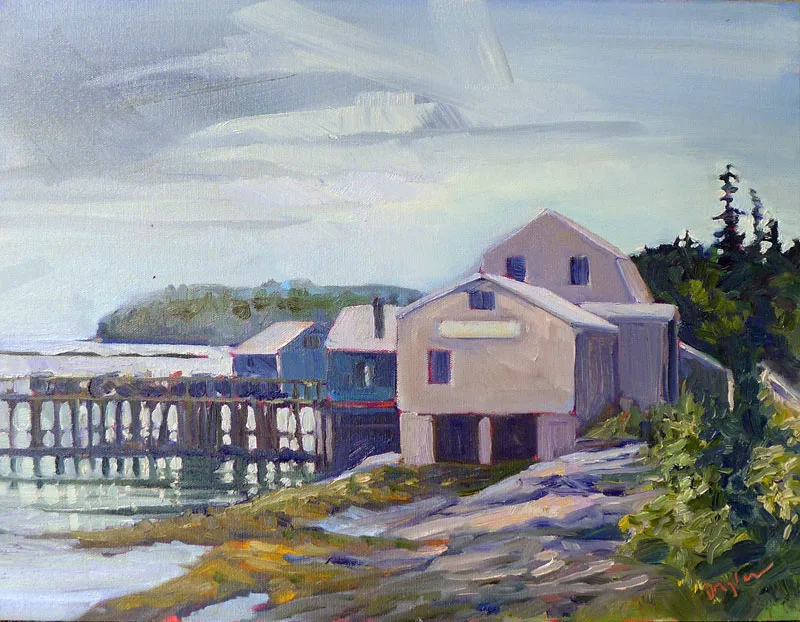
Lobster pound, 14X18, oil on canvas, $1594 framed includes shipping and handling within the continental US.

First, some definitions. High chroma means intense, pure, vivid color. Low chroma means dull, neutral, or grayed-out color.

Passages of high chroma against low chroma draw attention and create focal points. Our eyes are drawn to areas of strong chroma contrast. For example, a splash of bright yellow in a painting full of muted tones instantly commands attention.

Varying chromatic intensity also adds emotional power, creates depth and space, and supports color harmony.

Warm vs. cool contrast—use warm tones against cool tones to create focal points.

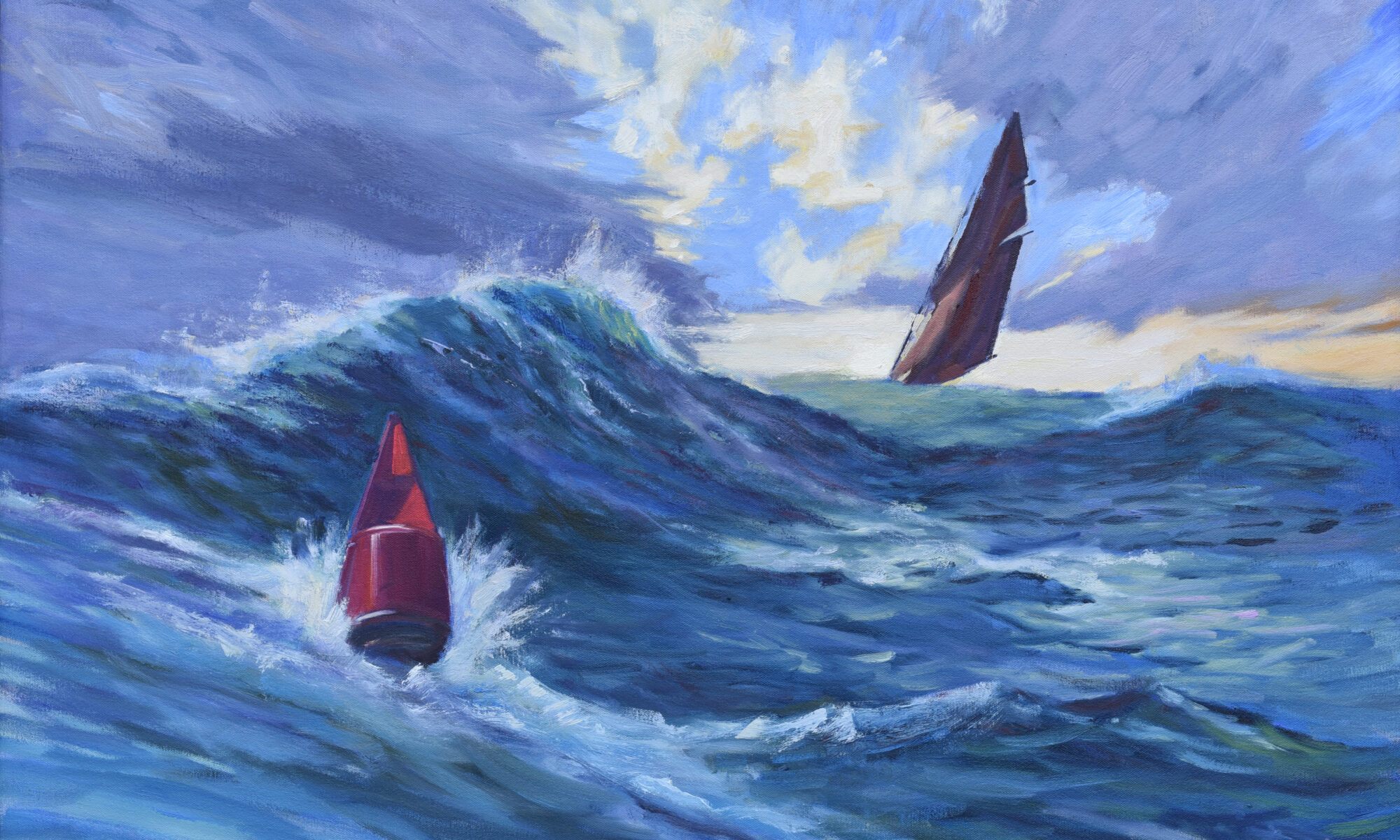
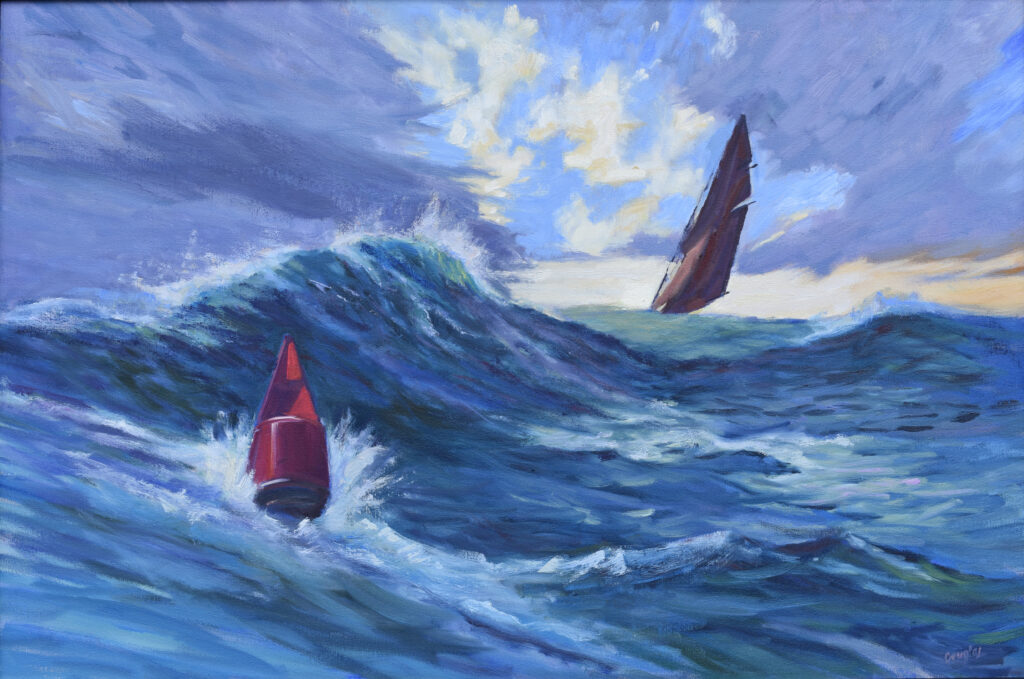
Heavy Weather (Ketch Angelique), 24X36, oil on canvas, framed, $3985 includes shipping and handling in continental US.

Contrasting warm and cool colors draw the eye. The viewer instinctively notices where temperatures shift, especially if warm and cool are placed side by side.

Warm vs. cool contrast is one of the most useful tools in a painter’s toolbox. It helps create spatial depth, especially when describing light and shadow. It adds emotional tone. Used properly, it creates color harmony.

Place focal points at strategic compositional points

Placing focal points at visually strategic points in a painting is essential. You would be unwise to place focal points on the edge of the canvas, for example. That looks unbalanced and will encourage the viewer’s eye to just leave the picture entirely.

Careful placement of focal points guides the viewer’s eye naturally. These have to be considered in relation to each other, and their placement is as important as the patterns of darks in your painting.

Strategic placement always takes into account the shape and orientation of the canvas. It’s about using the visual geometry of the space to strengthen the painting’s design.

Registration is now open for workshops in 2026! Reserve your spot:

Can’t commit to a full workshop? Work online at your own pace:

Seven Protocols for Successful Oil Painters

Monday Morning Art School: the overwhelming landscape

The Vineyard, oil on linen, 30X40, $5072 framed, includes shipping and handling in continental US.

Last summer, one of my students arrived at my workshop with a problem I see frequently. She could draw beautifully from photos, but when she set up outdoors, she froze. “The landscape is overwhelming,” she said. “There’s too much going on. I don’t even know where to start.”

That’s the problem of infinite options, and at times it can be a stumbling block for even the most experienced painters, especially in a new environment. There is a sense that the whole world is pressing in, demanding to be painted. If you succumb to that and don’t break the scene down, you end up fussing endlessly over detail. Or, by trying to include everything, you end up with a painting about nothing in particular.

On the first day, I gave this student one simple assignment: big shapes first. We stood on the edge of a blueberry barren, facing a stand of spruces set against the immensity of the ocean and the sky. “Squint,” I told her. “What are the three biggest shapes you see?” She hesitated, then answered: “The sea, the sky and the trees.”

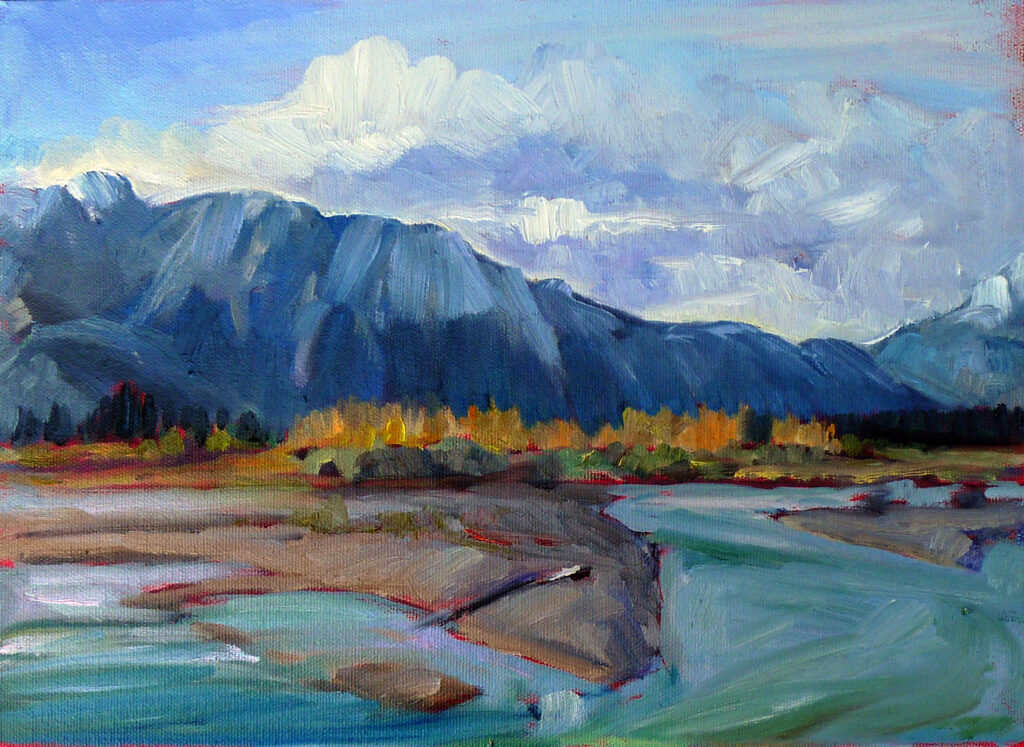
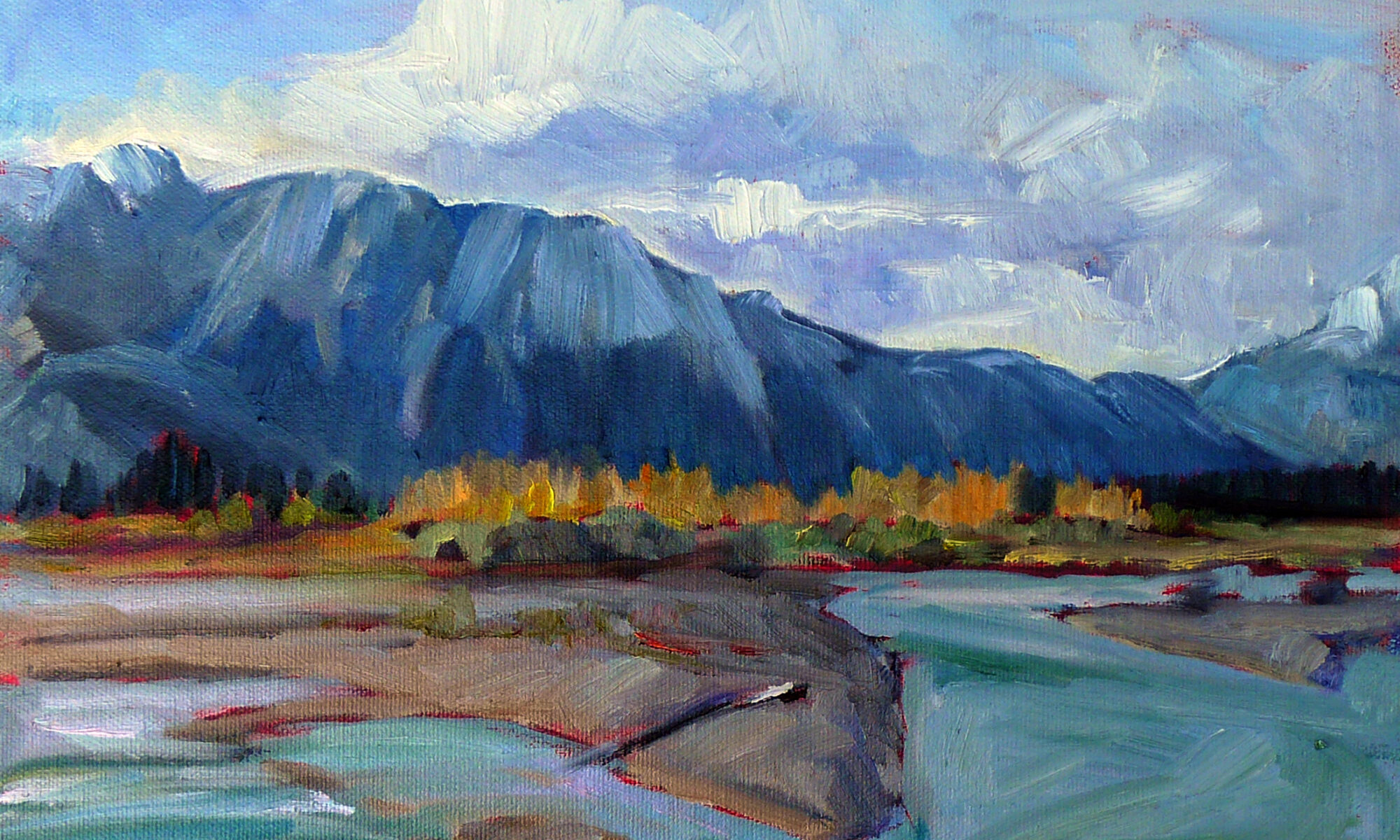
Athabasca River Confluence, 9X12, $696 includes shipping and handling in continental US.

That became, in the end, both her composition and her focal points. Once she blocked these in on her sketch, she could move easily into a structured, sensible painting. She was no longer struggling to find a starting point in an immense landscape, and the mindless chatter of too much detail faded.

By the end of that day, she had a painting that was loose, fresh, and alive. More importantly, she had an epiphany. She realized she didn’t have to paint everything, only the essence of the scene. From that point onward, the workshop was a romp for her.

Every painter has hurdles like this—sometimes it’s drawing, sometimes color, sometimes just getting past his or her own nerves. The good news is: once you know the roadblock, you can break it down. That’s where good instruction and practice make all the difference.

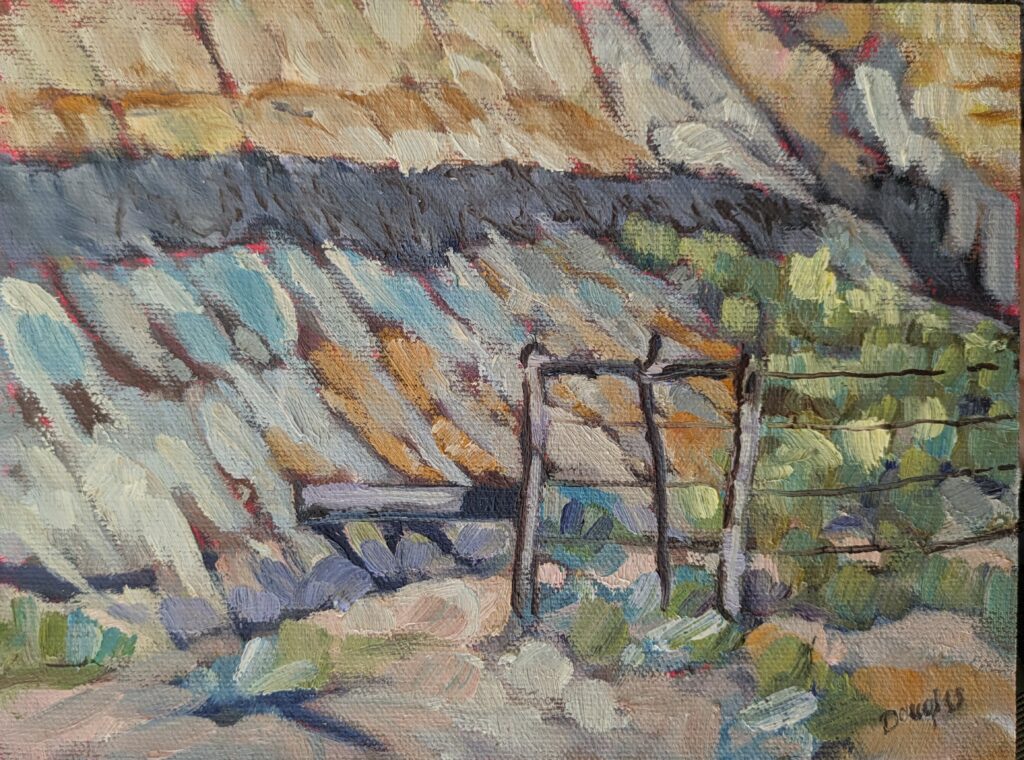
Coal Seam, 6X8, oil on archival canvasboard, $348 includes shipping and handling in continental US.

But don’t take my word for it

Here are some of the comments I received after last year’s October immersive plein air workshop:

“The week started as an exercise in frustration, for all the varied reasons that make watercolor challenging. But Carol, with a sprinkling of her magic dust, managed to turn it into a high by Friday afternoon.” (Rebecca)

“It was a week of growth for me! Thank you, Carol, for a wonderful learning experience.” (Lynda)

“What a magnificent experience this has been to meet everyone, be a part of a week of learning, living, creating, with like-minded artists and a teacher with significant range… I loved our week together and would do it again in a heartbeat.  I learned so much from Carol, which was the icing.” (Jody)

“I had a wonderful week! I learned a lot and am left energized and motivated to put all my new-found methodology to work.” (Beth)

“Thank you for the abundant art wisdom, patience and willingness to give of yourself.” (Sandy)

“This is the first workshop I’ve attended without a 2–3-hour demo to start every day and it was WAY better!  The personal attention addressing my painting–where I’m at and where I’m trying to go–was so much more helpful than watching someone paint then trying to relate it to my work.  The demo at the end of the week solidified all that we had discussed all week. (Christine)

Eastern Manitoba River, 6X8, oil on archival canvasboard, $348 includes shipping and handling in continental US.

If you’ve ever felt overwhelmed when standing in front of a landscape, don’t put off tackling it. My October immersive plein air workshopis your chance to face it head-on. With its sweeping views and ever-changing light, Beech Hill is one of the best classrooms you’ll ever step into.

But space is limited, and October will be here before you know it. Don’t wait—secure your spot today, and give yourself the breakthrough you’ve been waiting for.

Click here to reserve your place before it’s gone.

Can AI paint a picture?

Why are the fishes all over the ground? Why is Jesus wearing a cross?

AI is useful for lots of things, including writing code, meeting minutes and generating copy. We’ve seen it used to make fake news, and my family likes to use it to create visual absurdities. But can AI paint a picture, thinking like an artist? I have a paid subscription to Canva so I put it to the test on a modern version of the miracle of the loaves and fishes.

The subject is iconic; AI could have no trouble understanding it. Bible scenes in contemporary settings are as old as oil painting itself. I wasn’t looking for painterly output, just a design that would tell the story in a compelling way.

Over and over, I got Jesus images that looked like they were cribbed from mid-century tracts.

A little background

For those of you not familiar with the Gospels, the miracle of the loaves and fishes happened on the northeastern shore of the Sea of Galilee. The people who lived there in Jesus’ time were mostly poor to modestly self-sufficient. These farmers, fishermen and laborers were burdened by heavy taxes and oppressive colonial government. The subtext of the story is that they were physically and spiritually hungry.

How do you translate that to today’s world?

To make a meaningful update, one needs to ask not just what would Jesus look like, but what would his listeners look like.

Today, it’s estimated that about 1.1 billion people worldwide live in slums or slum-like conditions. These informal settlements are characterized by overcrowding, a lack of basic services, and economic insecurity. Over 85% of them live in three regions: central and southern Asia, eastern and southeastern Asia, and sub-Saharan Africa. While Dharavi in Mumbai isn’t the largest slum in the world (that honor goes to Orangi Town in Karachi, Pakistan), it’s certainly representative. Any of the world’s great slums would have done just as well.

Sometimes you get loaves; other times you get crackers. My request for contemporary garb gave me a cross between a t-shirt and a Biblical-era tunic and shawl.

Why didn’t I just use a pencil?

There are two kinds of clothes in an artist’s wardrobe: those with paint on them, and those that will have paint on them. I was enjoying being clean for a change. I was also curious how AI would handle my instructions. Bear in mind, however, that even before I started to create images, I’d already come up with the concept.

My first request was simple: show Jesus preaching in the slums of Mumbai. Over and over, Jesus towered over the other people in the frame. “Make Jesus smaller, darker, and more Jewish in appearance,” I suggested. I could never get him to look like anything other than European, like something from a mid-century illustration from The Watchtower.

AI also had trouble with the loaves and fishes. The bread sometimes looked like crackers and sometimes like plantains. When fish showed up at all, they were either absurdly stylized or, bafflingly, thrown all over the ground.

But it was in the composition that AI really failed. The output had no drama, no structure and no color harmony. I didn’t expect it to be quite so bad, because the elements of design and rules of composition are objective and quantifiable.

This was my favorite, even though it’s a giant Jesus sitting among plantains. At least there’s a diagonal.

My takeaway

I think my job as a fine artist is quite safe. Have you used AI for image generation? If so, what were your results like?

Registration is now open for workshops in 2026! Reserve your spot:

Can’t commit to a full workshop? Work online at your own pace:

Seven Protocols for Successful Oil Painters

Making the jump to being a professional artist

Inlet, 9X12, oil on archival canvasboard, $869 includes shipping and handling in continental US

A., who is a regular in my classes, just sold her first two paintings. “I am so proud of you,” I told her.

It happens more frequently that you might think. As painters get more accomplished, the line between amateur and professional artist starts to blur, until one day a painter realizes he or she has just hopped over it.

Are you an artist?

In Art & Fear: Observations On the Perils (and Rewards) of Artmaking, David Bayles and Ted Orland say that you’re an artist if you make art. Your financial success and audience aren’t any part of this definition. (I would add that your financial success is usually an indication of your success as a businessperson, not as an artist.)

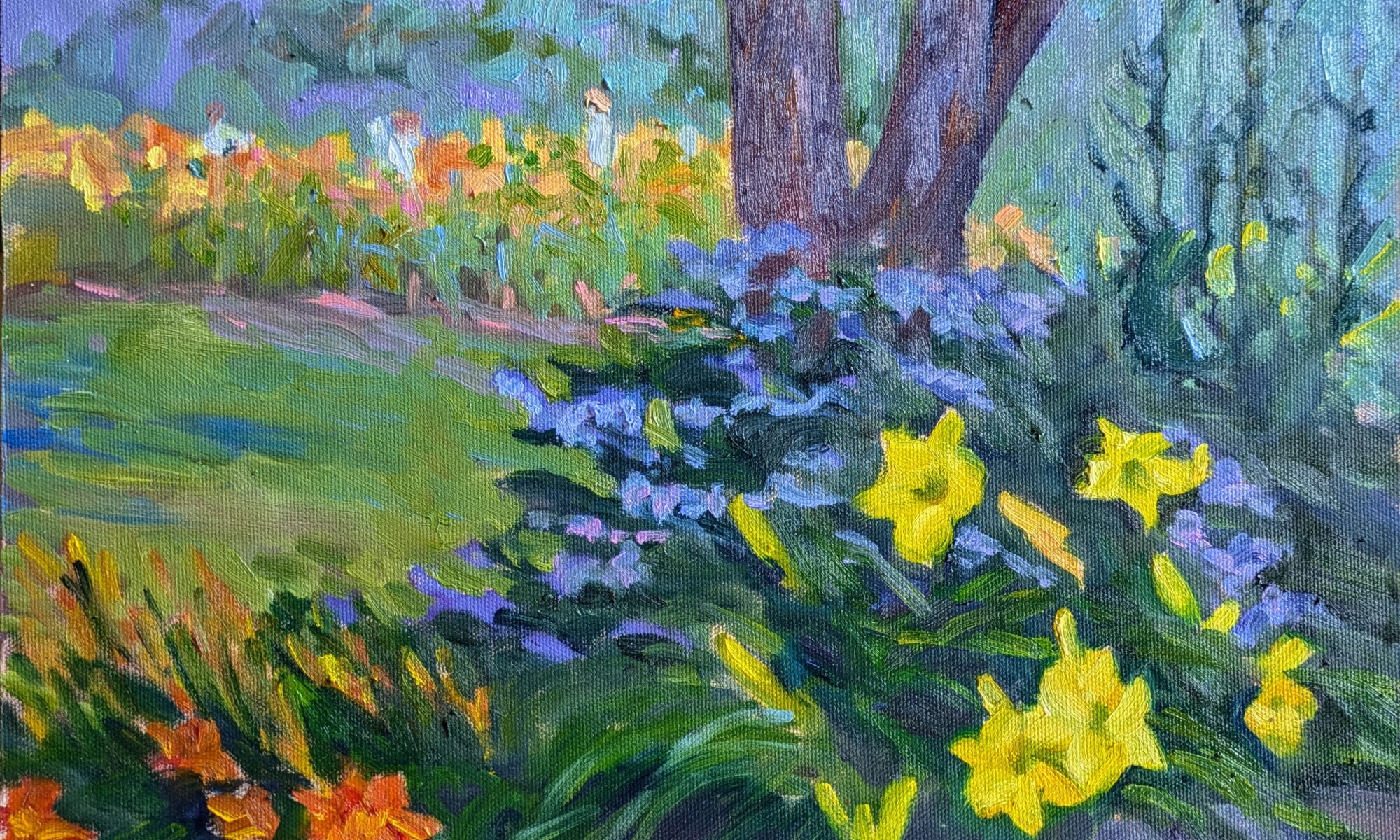
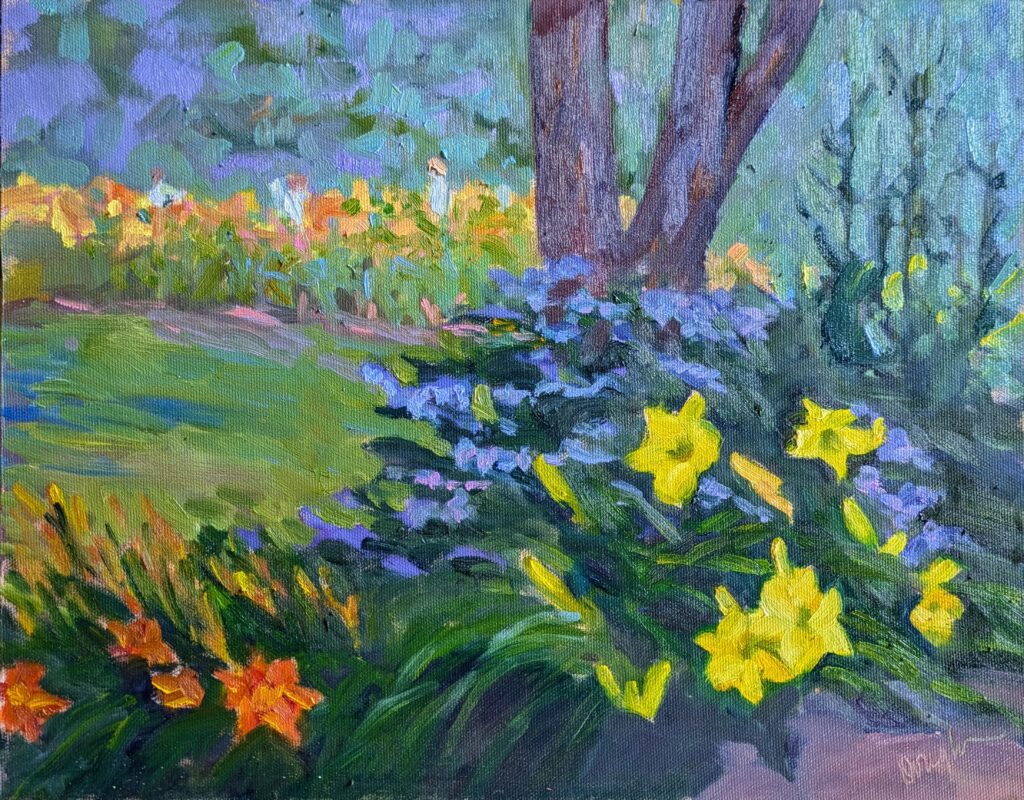
Lacecap and Daylilies, 11X14, oil on archival canvasboard, $869 unframed includes shipping and handling in continental United States

What is the difference between an amateur and a professional artist?

That distinction is based in part on skill, but it’s more about mindset and commitment. Amateurs create art for personal satisfaction or exploration. Professional artists approach art within a framework of audiences and markets. Neither status is inherently more worthwhile than the other.

Amateurs may sell work occasionally, but that isn’t their primary focus. Professionals have crossed the line to earning all or part of their income through painting sales, teaching, etc. That makes the professional more accountable to deadlines and regular work habits. Professional artists also collect sales tax and pay income tax on their art revenues. 

Brilliant Summer Day, 6X8, oil on archival canvasboard, $435.

With that come some downsides. The amateur can experiment without consequence, whereas the professional artist always considers commercial context as part of their calculations. That means the pro engages with critics, galleries, juried shows, or clients who have expectations and standards—even when he or she doesn’t want to.

Being an amateur isn’t less valid; in fact, there’s freedom in not being locked into producing art to deadlines or expectations. The real difference is how the artist chooses to relate to their art—whether it’s a calling, a career, or a pastime. They’re all good.

Having said that…

Most people who want to make the jump to selling paintings don’t know how to make that a reality. Putting your work in the marketplace is tough; not only is selling paintings hard, so is sharing your personal worldview with so many strangers.

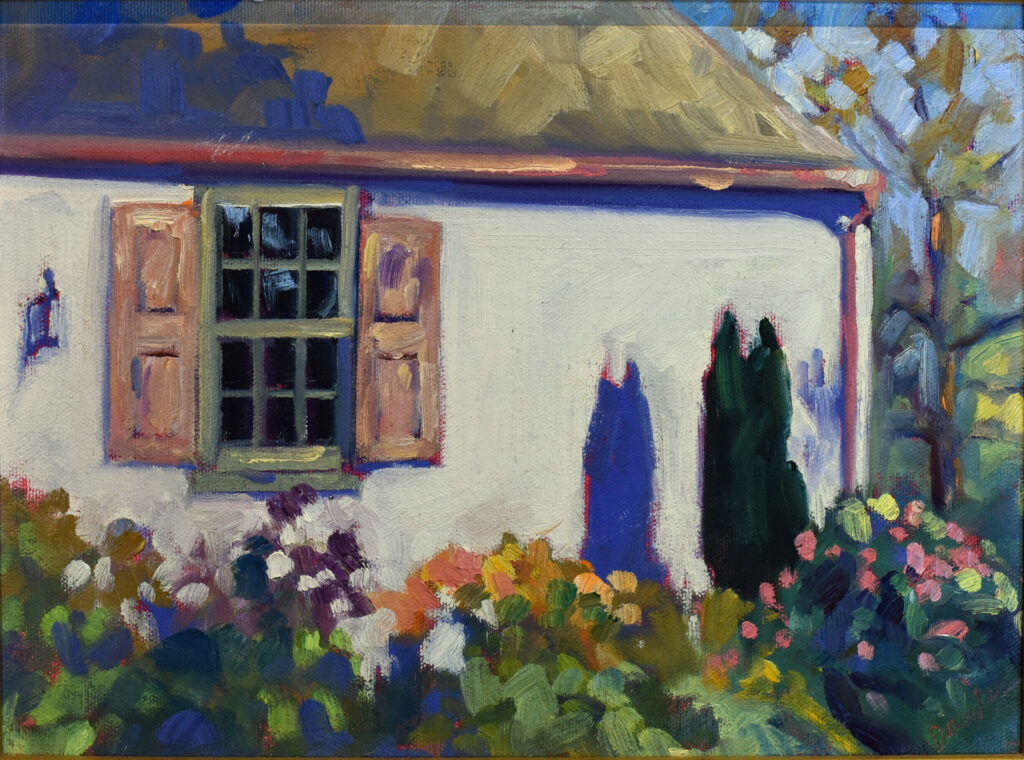
Evening in the Garden, 9X12, oil on archival canvasboard, $869 framed includes shipping and handling in continental US.

For most of the students I know who’ve crossed the line to professional artist, a class or workshop with like-minded students provided the support and encouragement they needed to share their work with a larger audience. For some people, however, that’s not possible, either due to financial or time constraints. For them, learn-at-your-own-pace is a better option. But learning to paint properly is always the first step. We may all be misunderstood geniuses deep down, but the public still demands quality.

I’ve added a footnote to this post telling you all the classes and workshops I’m offering to help you be a better painter. Won’t you sign up for one of them today?

Registration is now open for workshops in 2026! Reserve your spot:

Can’t commit to a full workshop? Work online at your own pace:

Seven Protocols for Successful Oil Painters

Monday morning art school: loosen the grip of self-judgment

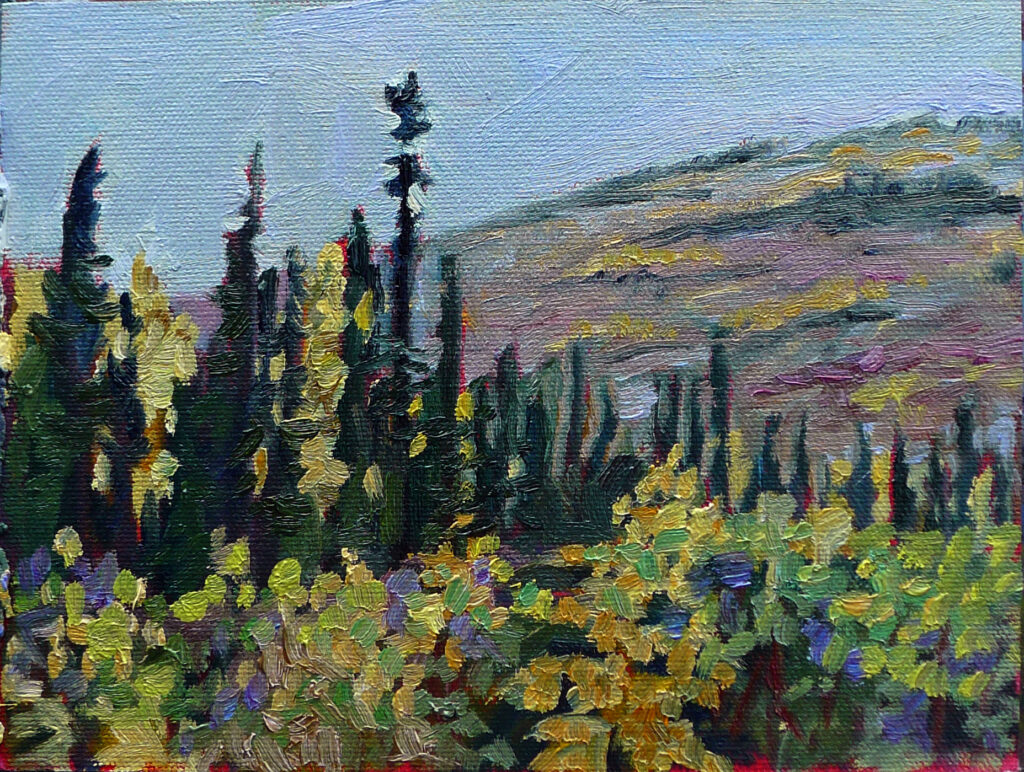
Above the Arctic Circle, 6X8, oil on archival canvasboard, $348 includes shipping and handling in continental US.

Recently I’ve been writing about the crippling problem of self-judgment—here and here, for example. Here are some exercises you can try to loosen self-judgment’s death grip on your painting.

These exercises work because they focus on the process, not the product. Your goal is to build confidence through the act of painting. You do this by letting go of the idea that you can perfectly represent anything—either the vision in your mind’s eye or the scene in front of you. (I’ve never painted anything that matched my initial vision, and yet I’ve happily surprised myself many times.)

My goal is for you to focus on the joy and curiosity of painting. The happier you are with a brush in your hand, the better you’ll get at painting.

These exercises are not a replacement for good technique, and they don’t stand in for regular learning. They’re quick ‘practice swings’ that detach your idea of self-worth from your limitations.

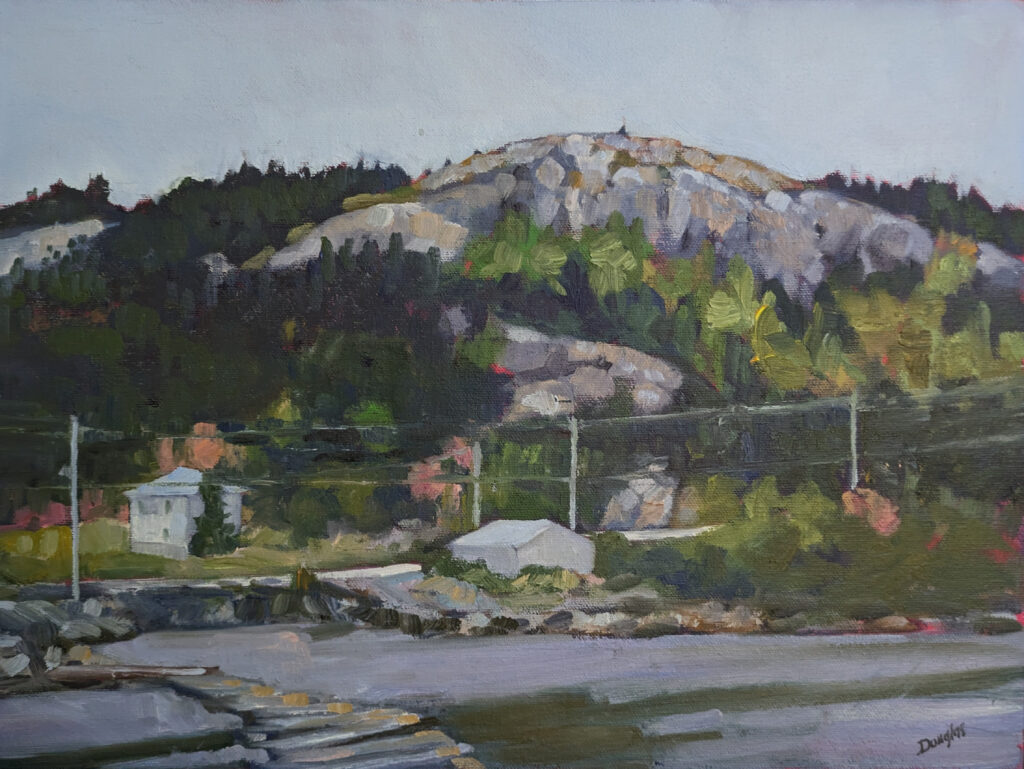
Hare Bay, Newfoundland, 12X16, $1159 includes shipping and handling in continental US.

Paint solely from your imagination

This means no reference and no trying to match your painting to anything in front of you. It’s a chance to swish paint around and just feel what your brushes can do.

Let your memory do the work

Draw from reference (real world or photos) and then paint solely from memory. After about twenty minutes, you’ve memorized the scene anyway. Do you like the results more than slavishly copying reality?

The 20-brushstroke painting

Read how to do it here. It’s a good way to stop yourself from overworking or overthinking.

The 20-minute painting

Set a timer. Paint. When time’s up, stop. No re-dos.

The goal, like the 20-brushstroke painting, is to break the habits of overworking or overthinking.

Athabasca River Confluence, 9X12, $696 includes shipping and handling in continental US.

Copy a failed painting

Take a painting you hate and paint it a second time, without belaboring the fix.

What changed the second time around? (Note: this will work for bad paint application or drawing, but never for bad design.)

Paint in monochrome

Paint a scene using in only one color. Limiting color choices frees you up to focus on value, shape and brushwork. What do you lean on when you can’t rely on color?

Paint something with no planning

While I don’t recommend a steady diet of this, painting something without preparatory drawing can free you up to use raw and expressive brushwork. How much have you been perseverating on ‘getting it right’?

Paint with the intention of tearing it up when you’re done

Think of this as an Etch-a-Sketch experiment. Knowing something is temporary frees you from perfectionism. You might be surprised how strong your work gets when you stop being attached to the outcome.

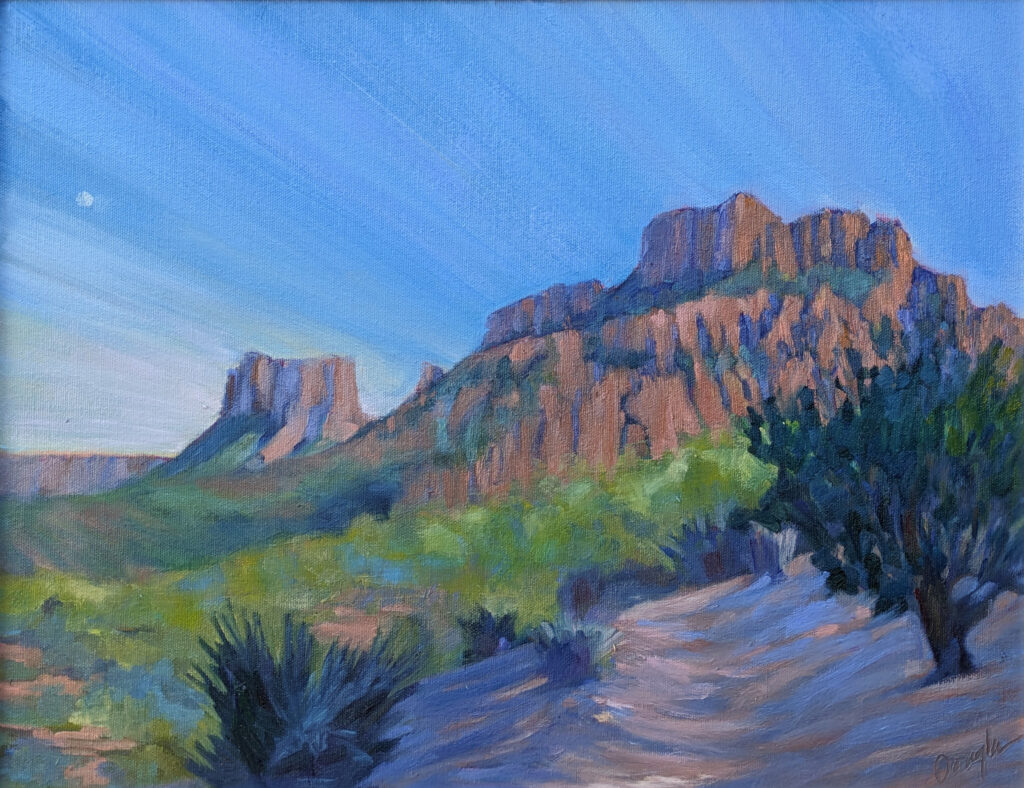
Moonrise, 12X16, $1159 includes shipping and handling in continental US.

Registration is now open for workshops in 2026! Reserve your spot:

Can’t commit to a full workshop? Work online at your own pace:

Seven Protocols for Successful Oil Painters

Camden Public Library’s Art in the Stacks

Southern Island: Afternoon Sun, 16X20, Björn Runquist for Art in the Stacks

Camden, ME was Edna St. Vincent Millay’s childhood home; that’s why the opening lines of her first major poem are inscribed across the rotunda at the Camden Public Library:

All I could see from where I stood
Was three long mountains and a wood;
I turned and looked another way,
And saw three islands in a bay.

It seems like artists have lived here ever since, and the same views that inspired Millay inspire us today.

Landscape, 11X14, Eric Jacobsen for Art in the Stacks

Camden Public Library was founded in 1796, when the town had fifteen houses. It was built by local public subscription, a tradition that continues. Today, the library board is responsible not only for the library but for the amphitheater and Harbor Park. That’s a pretty big chunk of the town’s most visible real estate. These three areas are important not only locals but visitors from all over the world. That is one reason why Maine artists are glad to help the library raise money to continue their programming.

The Colors of a Gray Day, 12X16, Ken DeWaard for Art in the Stacks

Art in the Stacks is a new summer fundraiser based on Camden on Canvas, but with a fresh look and feel. This two-week silent auction is being held from July 20 to August 3. The artwork of 30 well-known artists is on display in the library, with bidding taking place entirely online.

Early Spring Beech Hill, 12X16, Carol Douglas for Art in the Stacks

If you’re in the area, stop in and visit. Art in the Stacks gives library-goers a chance to engage with art as they do their everyday errands. There is of course no admission fee, but you will be tempted to sit down and read in this most beautiful of libraries.

Autumn Meadow, 12X16, Stephen Florimbi for Art in the Stacks

Whether you’re an art lover, a casual browser, or just someone stopping in to pick up your next summer read, Art in the Stacks offers something unexpected and enriching. It reminds us that art isn’t confined to museums and galleries. It lives everywhere (including within the pages of books).

Dam Falls, 14X19.5, Mary Ann Heinzen for Art in the Stacks

Art in the Stacks will close with a small reception in the historic Reading Room on Sunday, August 3, 2025 from 4-6 PM.

Quiet Sidewalks, 18.5X22, Colin Page for Art in the Stacks

How to see all the pieces

I had a very tough time choosing paintings for this blog post, so go to the auction website here to see all 30 pieces. These artists are donating all proceeds to the Camden Public Library. That means every penny raised goes directly to the library fund.

Schooners, Camden Harbor, 12X16, Doug Smith for Art in the Stacks

All bidding takes place online and all bids are final. Winning bids will be automatically charged to your chosen payment method; choose either credit card or PayPal as you check out.

Registration is now open for workshops in 2026! Reserve your spot:

Can’t commit to a full workshop? Work online at your own pace:

Seven Protocols for Successful Oil Painters

Come for the horses, stick around for the barns

Above all, there are beautiful horses, some rescues, some boarders, but all given loving care. Photo courtesy Lauren Hammond.

I’ll be teaching at HomeFarm at Undermountain in Lenox, MA as part of my Berkshires workshop in August (and, yes, I still have openings). They’ve very graciously opened their facility to us for three years running, and it’s one of the most beautiful places I get to teach. HomeFarm has started a capital campaign to raise $1.5 million by the end of this year. The goal is a thorough revamp of the property. Executive Director Lori Pestana recently told me that donations are currently being matched, which is why I’m bringing it to your attention.

HomeFarm at Undermountain is a rare, intact estate farm. It was built in 1902 by Boston surgeon Henry P. Jaques and his brother Eustace Jaques. The property includes the Jaques Stables and dairy barn, the sheep barn, the field barn, and the chicken house. A tenant cottage was added later in the 20th century, and a large horse barn and riding arena were added in 1987.

Historic barns at HomeFarm at Undermountain, courtesy of Maggie Daigle.

The original barns are beautiful, complete and complex in their geometry, making them a painting teacher’s dream. I’ve never seen a similar set-up anywhere else. However, they’re also in serious need of restoration and preservation.

HomeFarm’s goal, then, is to restore and adapt these buildings for educational, cultural, and therapeutic programming. In addition, the farm is just across Parsons Marsh from bustling Lenox, so the capital campaign will have the secondary benefit of preserving greenspace.

The incredible marsh and mountain view from HomeFarm at Undermountain, courtesy Berkshires Online.

There’s far more to HomeFarm than just beautiful buildings

HomeFarm at Undermountain has a working horse farm (with donkeys, sheep and goats as well), where they run equine-assisted programs including therapeutic group sessions for anxiety, PTSD, depression, and more. They teach kids, both in riding and camp programs. The farm is also a resource for horse rescue, sanctuary, and retirement.

HomeFarm hosts other workshops besides mine, in painting, writing, photography, and organic farming. It serves as an outdoor classroom for youth, homeschoolers, and schools.

DonkeyTrek donkeys, courtesy HomeFarm at Undermountain.

But what I like almost as much as the barns are the 95 acres of pasture, forest, and hayfields that they steward. The farm overlooks Parsons Marsh and distant mountain vistas, and the views in every direction are fabulous. Right now, they’re returning twenty acres to active haying and fixing drainage problems. My inner artist loves a good hayfield, and my inner farmer rejoices at the return to sustainable hay crops for the animals.  

My painters at HomeFarm at Undermountain, courtesy of Maggie Daigle.

A tangible impact

HomeFarm at Undermountain operate with over 97% coming from donations. Individual, tax-deductible contributions fuel the bulk of their impactful work.

By donating, you’ll help:

  • Preserve local heritage and historic architecture.
  • Support wellness programs that change lives.
  • Educate future generations and foster the arts.
  • Rescue and care for animals in need.
  • Conserve green space in the Berkshires.
  • Empower a financially responsible nonprofit, tax benefits included.
  • Make it possible for us painters to access an historic site that isn’t just an extension of a preserved Great House.
Two horses discovered loose hay in the barn. You gotta take your opportunities when they arise.

Registration is now open for workshops in 2026! Reserve your spot:

Can’t commit to a full workshop? Work online at your own pace:

Seven Protocols for Successful Oil Painters