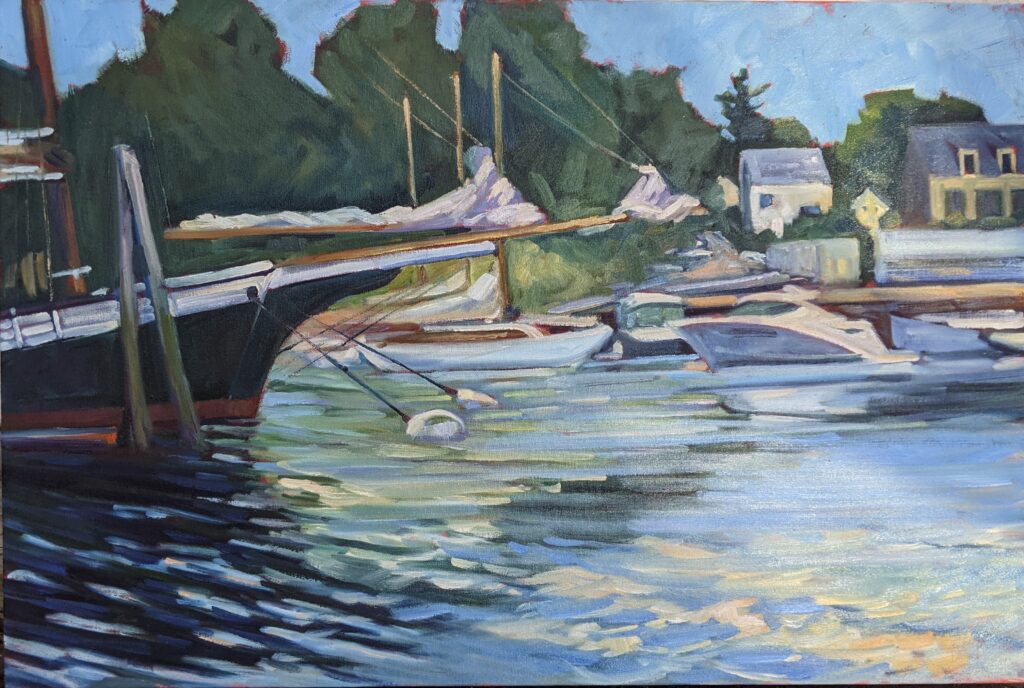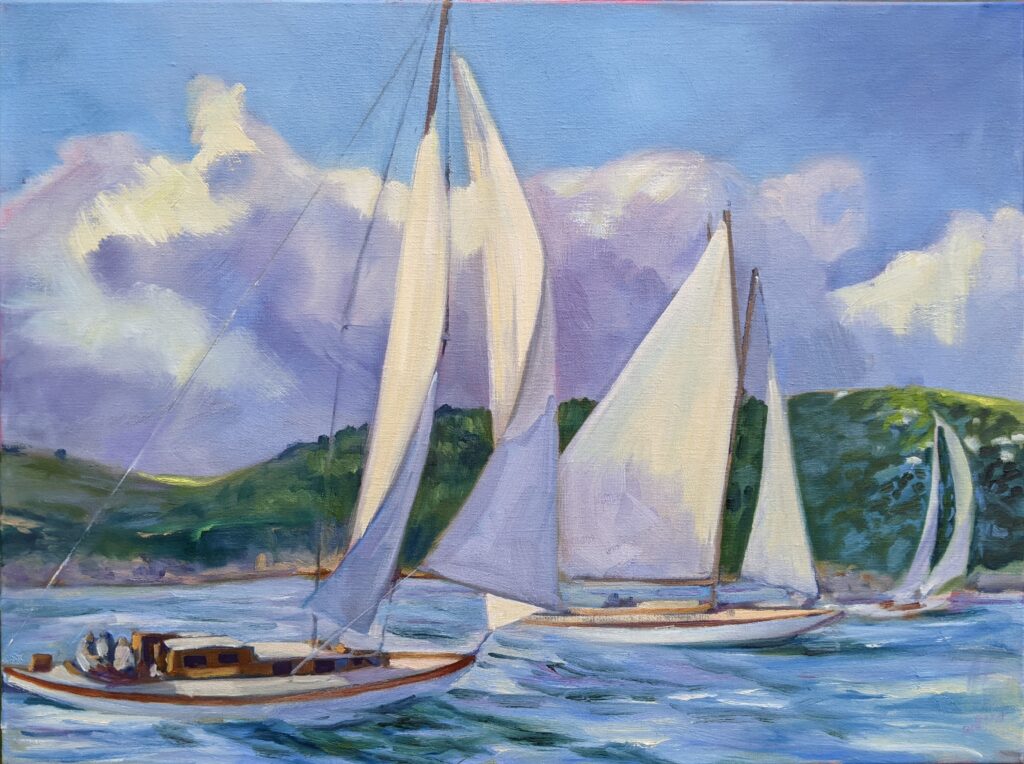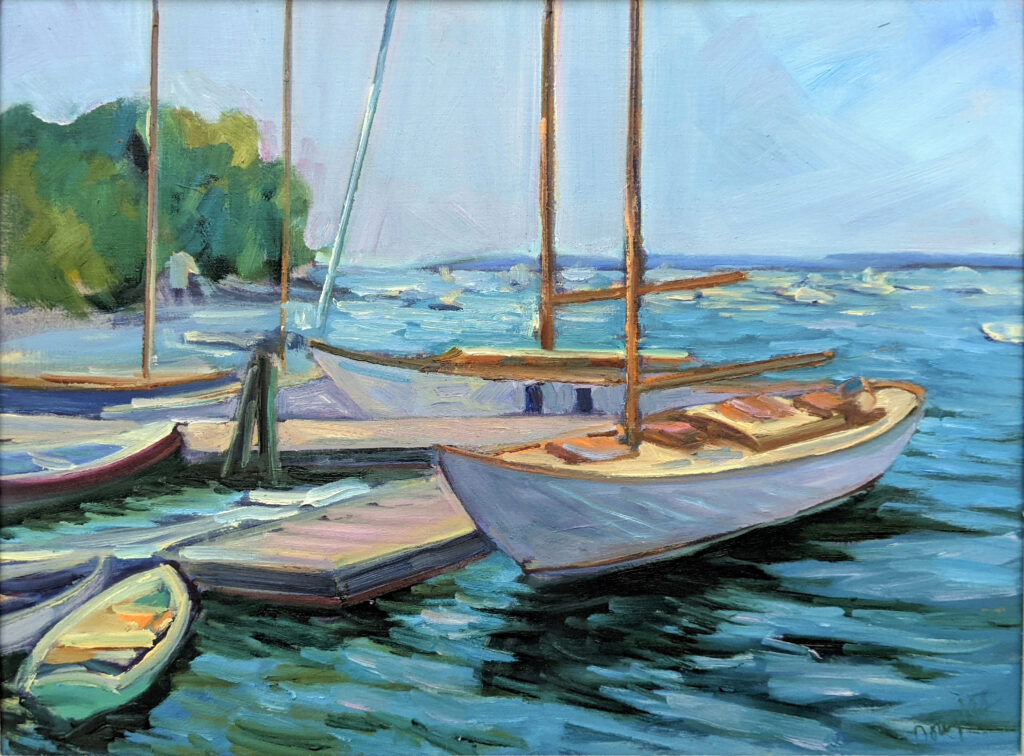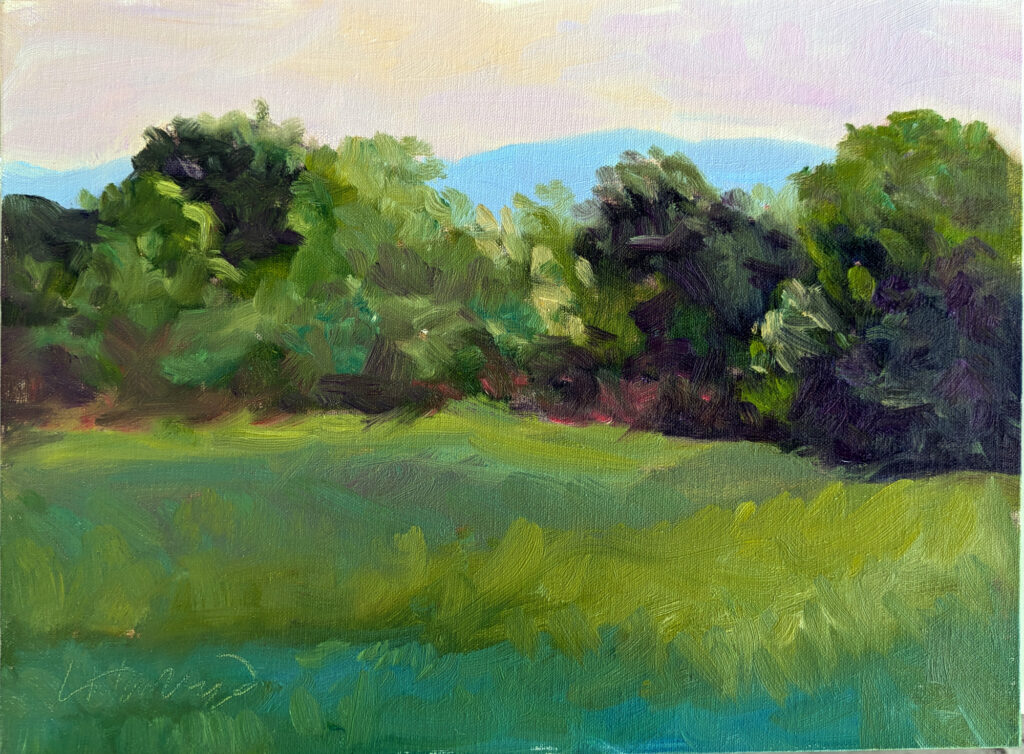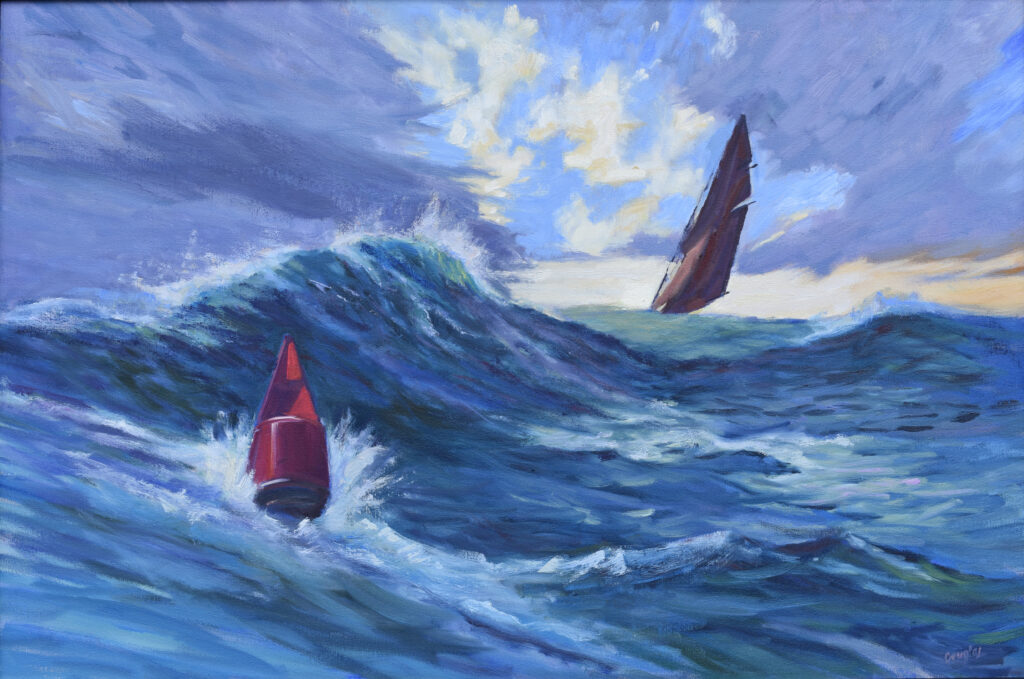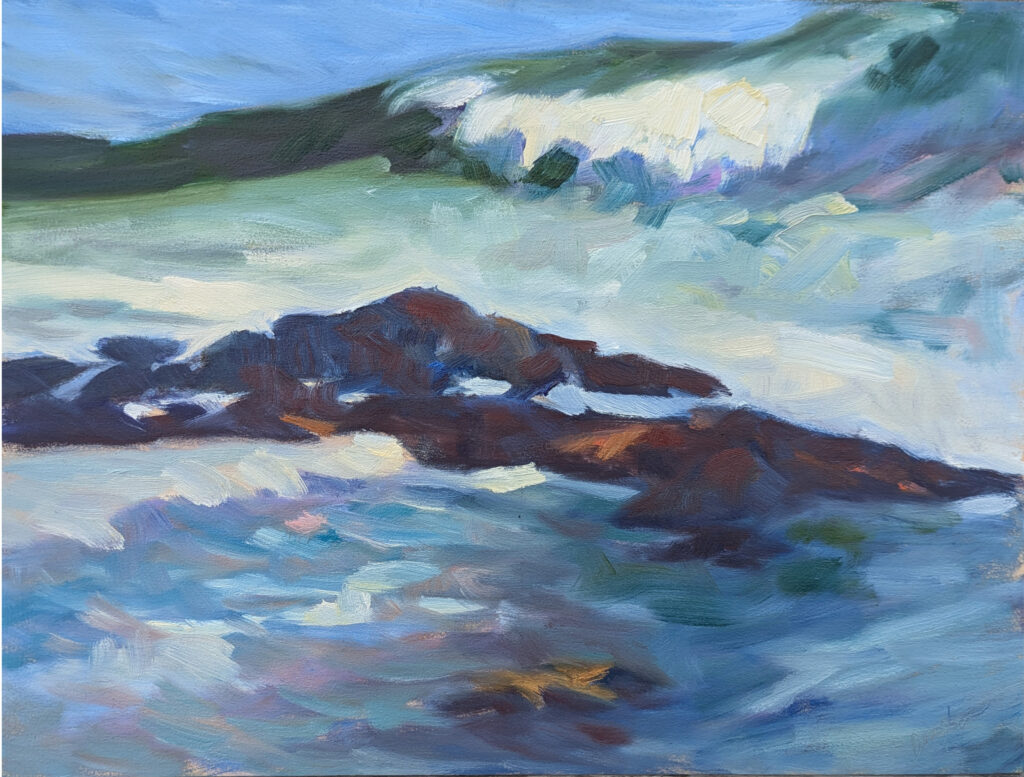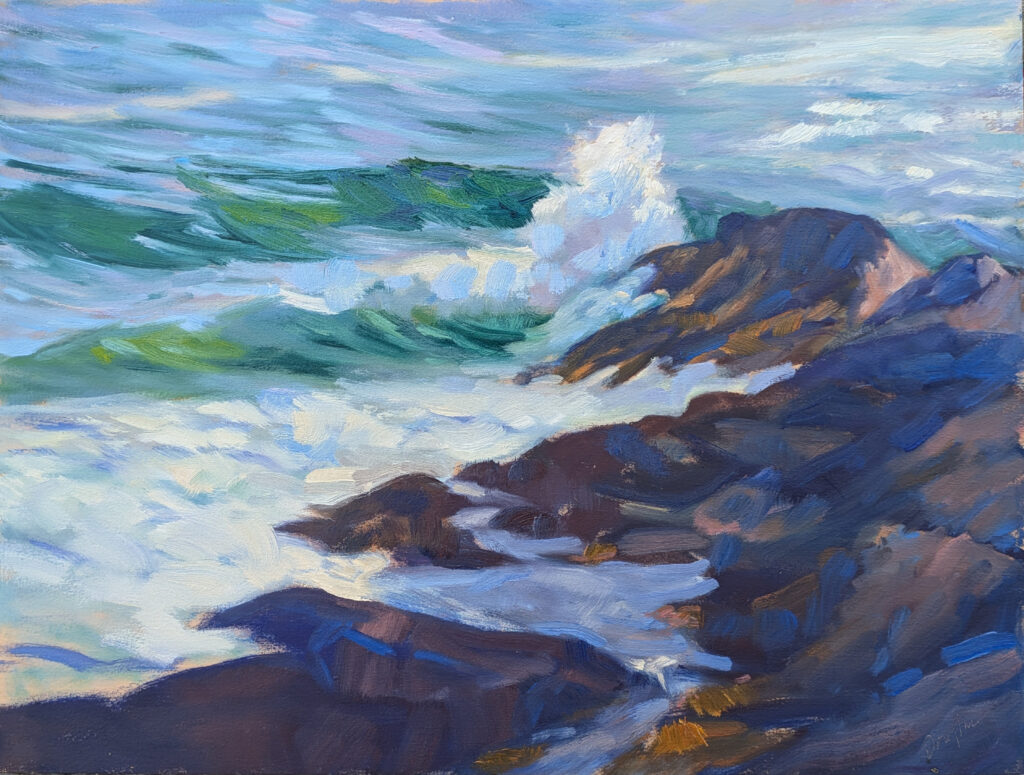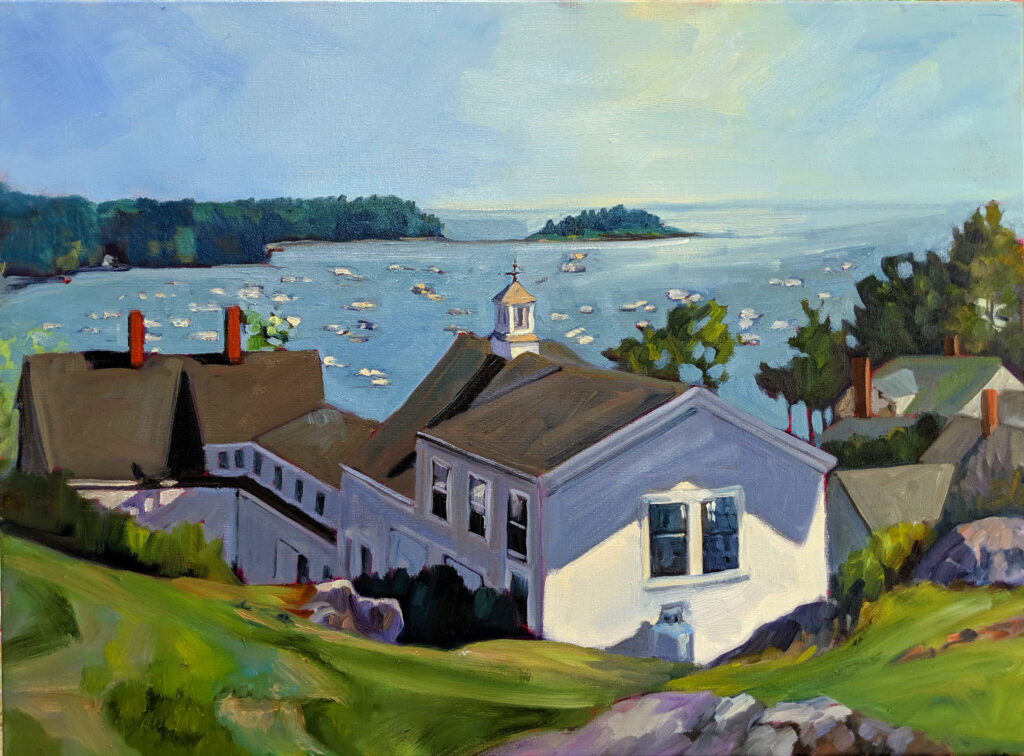
Monday Morning Art School: why is instruction important when learning to paint?

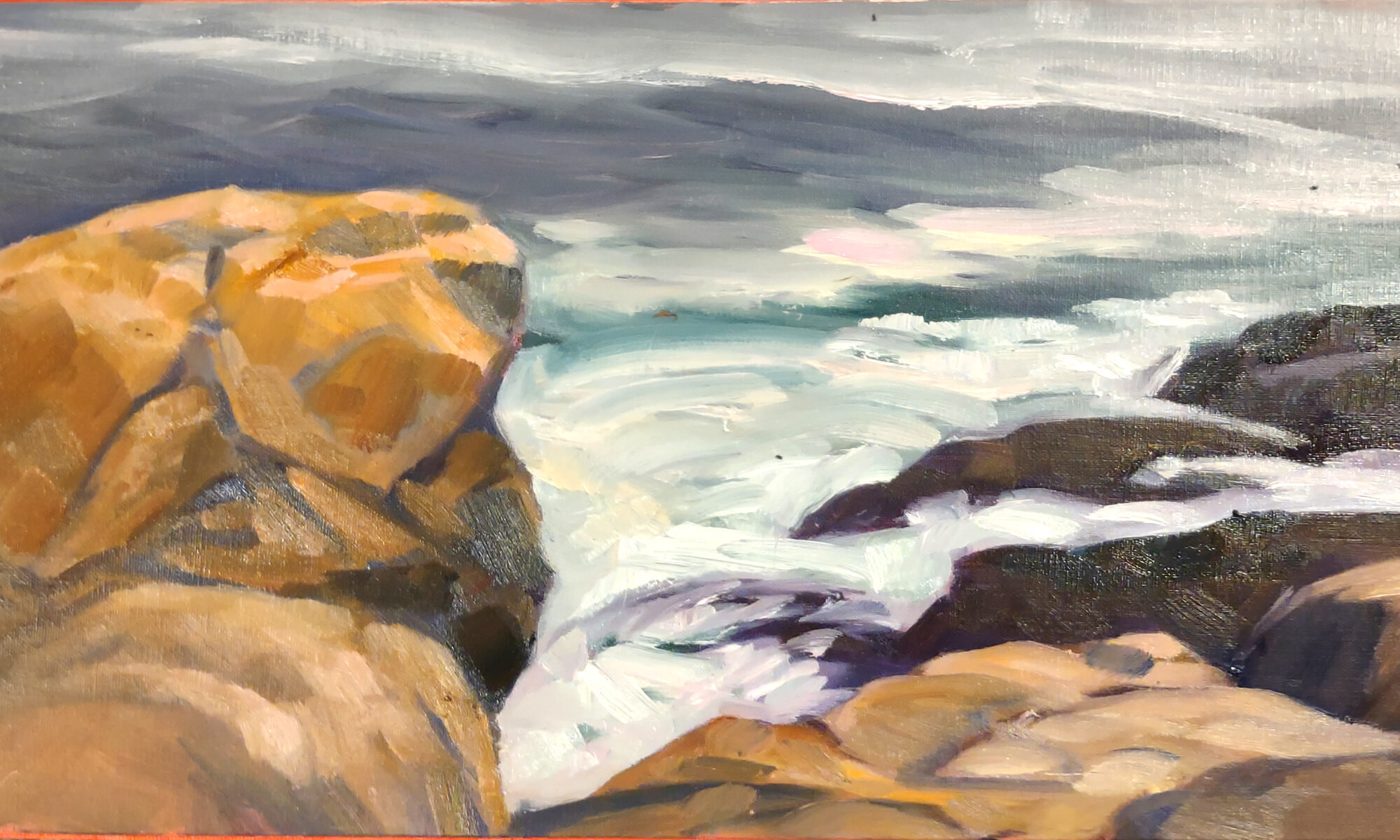
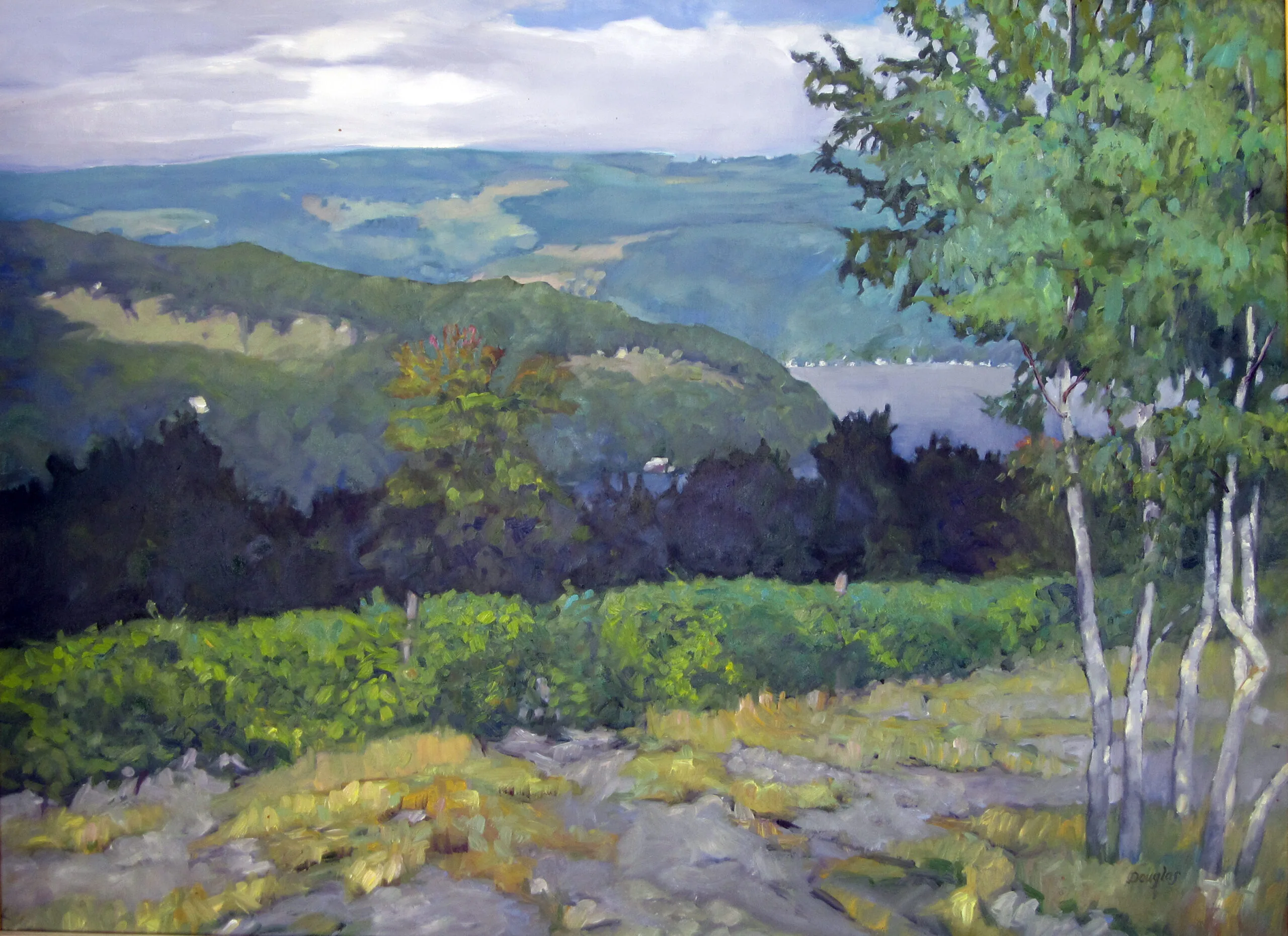
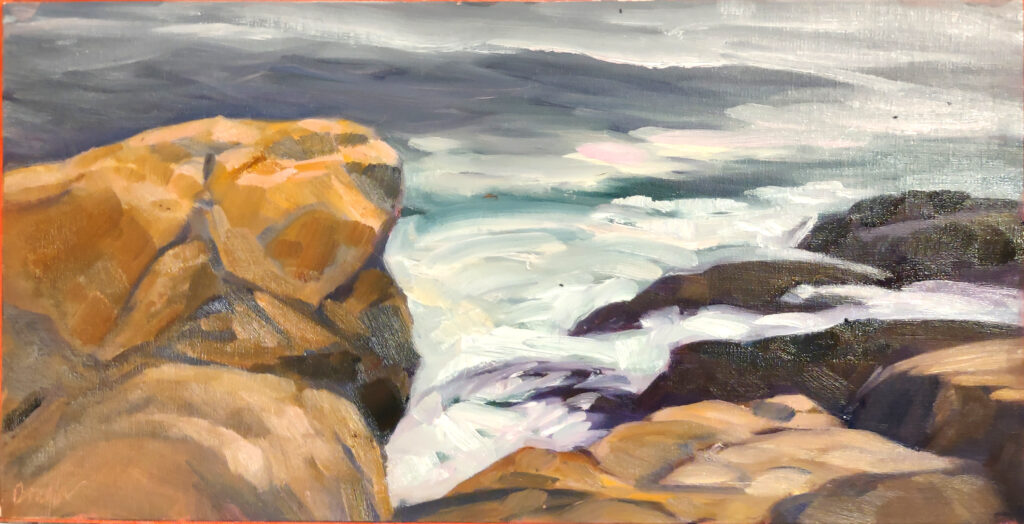
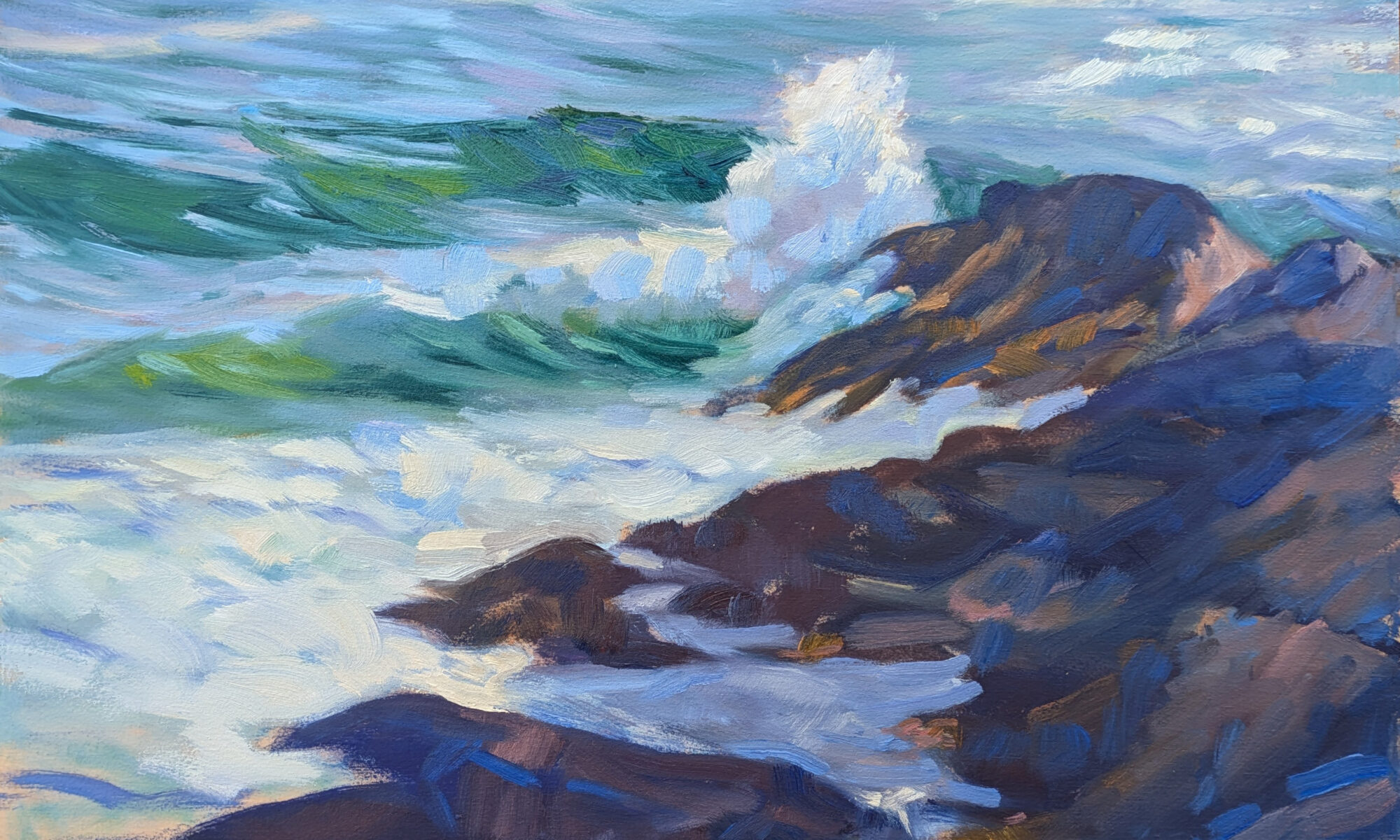
Beach erosion, 9X12, Carol L. Douglas, oil on canvas, private collection.

I’ve been both a student and a self-learner, so I speak from experience. Painting instruction provides structure, feedback, and foundational knowledge that self-teaching lacks.

Painting is made up of design elements like value, color, composition, edges, and brushwork. Instruction helps you learn how these elements work together.

Without guidance, we can spend years reinventing the wheel. A good teacher—and the emphasis has to be on ‘good’—helps you skip those detours and make real progress faster. You’re no longer guessing, you’re working with a purpose.

A good teacher can point out technical problems or compositional issues you wouldn’t notice on your own. Learning technique from an expert gives you tools to express your ideas more clearly and with confidence.

More than anything, painting is about learning to see—not just to recognize objects, but to observe light, shadow, shape, proportion, and color relationships. A good teacher trains your eye to notice what really matters.

I have three different paths to learning painting available now. Isn’t it time to choose one and get started?

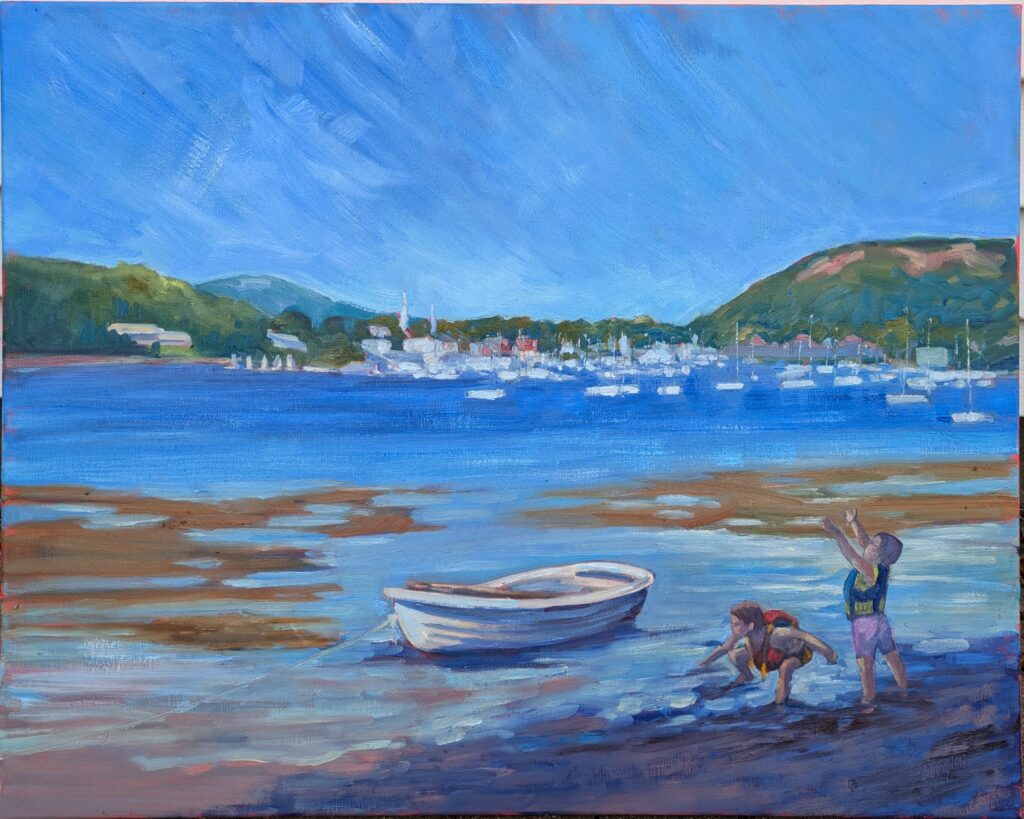
Beach toys, 9X12, oil on canvasboard, Carol L. Douglas, private collection

Option 1: Workshops

Sea and Sky at Acadia National Park

This is my longest running workshop, in America’s first national park. This is a student favorite and personal favorite. Enjoy all-inclusive accommodation or join us as a commuter. August 3-8, 2025.

Find Your Authentic Voice in Plein Air, Berkshires, MA

The Berkshires are easily accessible from NYC and Boston, and a perfect blend of natural, historic, and agricultural beauty. August 11-15, 2025.

Immersive In-Person Fall Workshop, Rockport, ME

Spend a week of deep art engagement in Rockport, Maine, with fellow artists. This five-day session will open a new chapter in your journey as an artist. October 6-10, 2025

Beach Saplings, Carol L. Douglas, 9X12, oil on canvas, $869 framed.

Option 2: Zoom classes starting in mid-August

Don’t be confused because the names of these classes are similar; they’re two different approaches to the same question. The Monday night class is for those who need more guidance on the nuts-and-bolts business of painting. The Tuesday night class is for those who need critique and overall direction. If you have questions about which class to take, email me and we’ll chat.

What I Did on My Summer Vacation: For Intermediate Painters Mondays, 8/18 – 9/29 6-9 PM, EST

This class is perfect for anyone in an early or intermediate phase, or returning after time away. No pressure, no jargon—just encouragement and direction.

This relaxed, supportive class is designed for artists who want to build confidence and paint in a community setting. Bring any work you’ve done (even if it’s just sketches or photos!) and I’ll help you take the next steps. 

You’ll learn:

  • How to strengthen your summer paintings
  • Foundations of good composition and color
  • Tips for setting up and painting from life or photos
  • How to give and receive useful critique

What I Did on My Summer Vacation: For Advanced Painters Tuesdays, 8/19 – 9/30 6-9 PM, EST

This critique-driven class is for artists who are ready to refine their work and push it further. Bring in pieces for serious, constructive feedback—finished or in-progress—and use weekly exercises to rework, reframe, or respond to your summer output.

Each week offers:

  • In-depth group critique
  • Guided prompts to explore composition, editing, and intention
  • Focused painting time with optional instructor feedback
Fish Beach, Carol L. Douglas, 9X12, oil on archival canvasboard, private collection

Option 3: Work at your own pace, from your own studio

Seven Protocols for Successful Oil Painters

If you’re looking for more consistent, beautiful results in your painting, you need a repeatable protocol. In this online course, discover a system that will reliably improve your oil paintings. New for 2023, I’m offering a 7-part online course. Each class includes video content, quizzes, and exercises to do in your own studio at your own pace.
You don’t like your painting? Get over it.

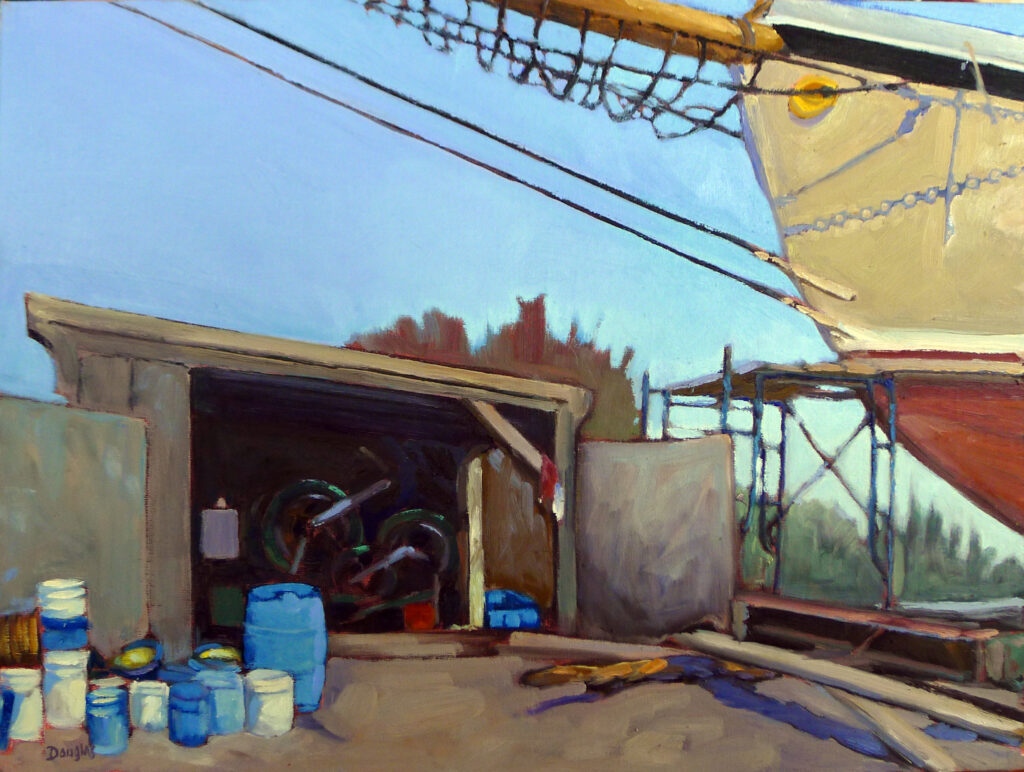
American Eagle in Drydock, 12X16, $1159 unframed includes shipping and handling in continental US.

“Everyone always says they don’t like their painting,” a student said to me during my last workshop. “It’s like saying, ‘I don’t like my butt in jeans.’ Nobody likes their butt in jeans, but we have to move past that.”

“That’s only true of half the population,” I laughed. “If men think about it at all, they think their butts look great in jeans.”

Feeling like all your paintings are bad is painfully common among artists, especially when we’re pushing ourselves to grow. Here’s how to move through that self-doubt mindset:

Recognize it as a sign of growth

Self-doubt often shows up right before a breakthrough. It means your eye is improving faster than your hand. You can see what’s wrong—but not yet fix it. That’s not failure. It’s progress.

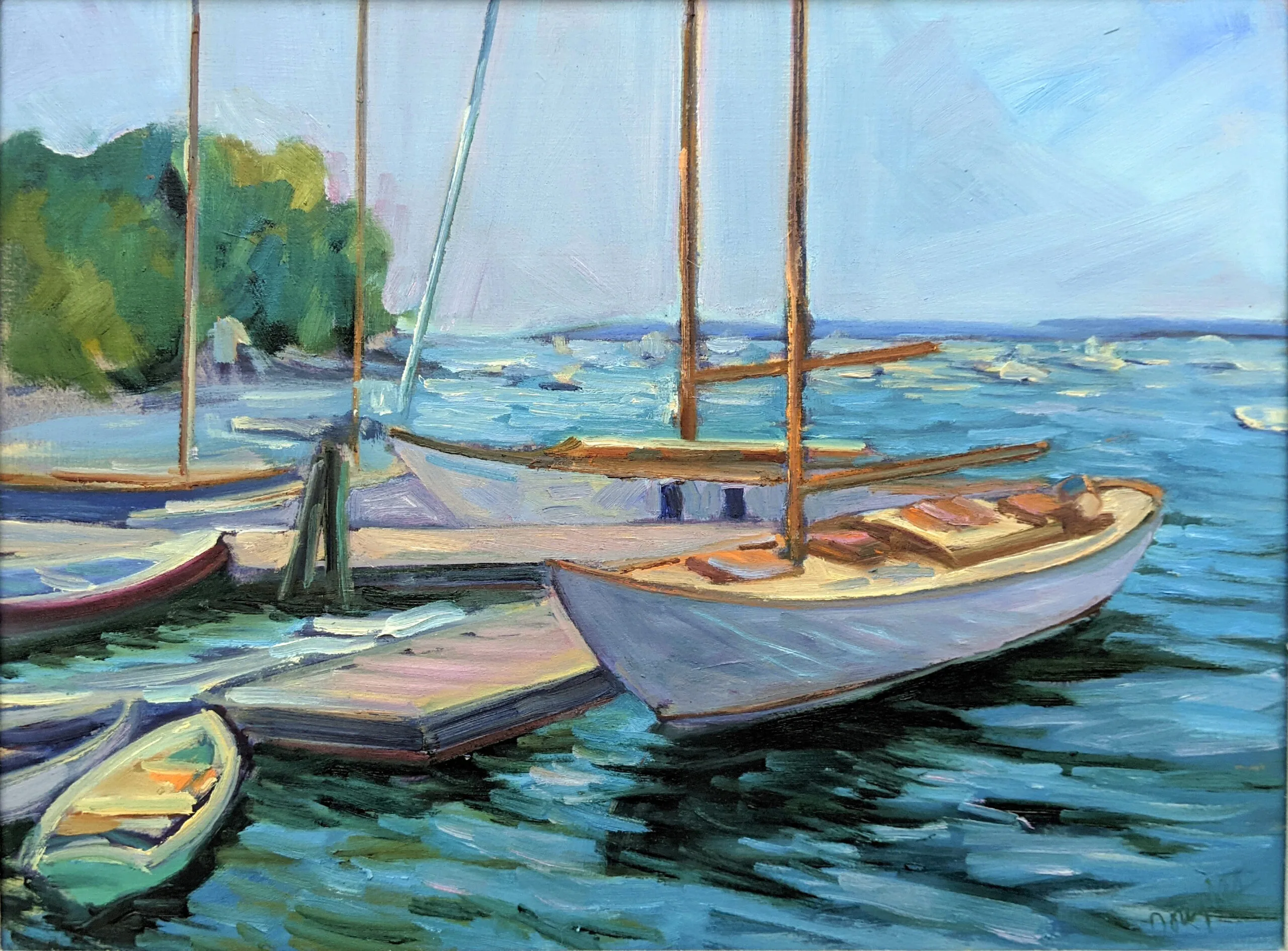
Camden Harbor, Midsummer, oil on canvas, 24X36 $3188 includes shipping in continental US.

You are not your painting

Bad paintings do not mean you’re a failure. Your job is not to be good every time you paint. Your job is to show up, make the work, and learn from it. Distance yourself from your work enough to critique it without self-loathing.

How much better are you than you were a year ago?

Look at what you painted last year. You’ll probably see how much you’ve improved. You’ll also see paintings that you thought were terrible that you quite like today. Progress is always easier to see in hindsight.

Finish it anyway

Even if it feels like a hot mess, finish that painting. There’s discipline in following something through to the end. Often, what seems hopeless halfway through turns into something interesting. And sometimes real progress feels ‘off’ to us, because it’s something we’ve never seen before. (That’s why I discourage painters from immediately scraping out work they don’t like.)

Skylarking II, 18×24, oil on linen, $1855, includes shipping in the continental US.

We’re not perfect

Not every painting needs to be good. Some are just learning opportunities. You only get better by making a lot of work, some of which will be bad. That’s normal. That’s healthy. That’s how we grow.

You should visit my studio and see my stack of bad paintings. It’s a good thing I have a sander and know how to use it.

Keep painting

This part is non-negotiable. Even if you think it’s all bad, keep painting anyway. Don’t wait to feel confident. Don’t wait to be inspired. Keep painting, and trust that quality will follow quantity.

Beautiful Dream, oil on archival canvasboard, $1449 framed includes shipping and handling in continental US.

Some questions to ask yourself

  • What does ‘bad’ mean to you? What are you actually criticizing? This is where formal criticism is helpful, because it removes emotion from the process.
  • What did you learn from this painting?
  • Who are you trying to impress?  Be honest—are you painting for you, your peers, Instagram, your teacher, or an ideal version of yourself?
  • How and what would you paint if nobody was ever going to see the results?
  • What would you tell me if I said “I hate my painting”? I doubt you’d agree, and you deserve the same objectivity, compassion and insight you’d offer to me.

Registration is now open for workshops in 2026! Reserve your spot:

Can’t commit to a full workshop? Work online at your own pace:

Seven Protocols for Successful Oil Painters

What does it mean to paint with your own artistic voice?

Carol L. Douglas painting at Acadia National Park
Lauren Hammond painting this lovely landscape at last year’s Berkshire workshop.

What does it mean to paint with your own artistic voice? For many of us, that question remains even after years of making art. We learn technique, we study the masters. But deep down, we want to know what makes our work uniquely ours.

Voice vs. style

Your artistic voice is different from your style. Your voice is your personal, authentic point of view—what you want to say through your work. It reflects your values, interests, emotional tone, and subject matter choices. Your voice comes from who you are, not what you do.

Your style, on the other hand, is the visual language you use to express your voice. Style includes recognizable elements like brushwork, color palette, composition, and technique.

While style is what viewers notice first, it’s not fixed; it evolves and changes. Your artistic voice is much more important. It’s what you’re saying and why.

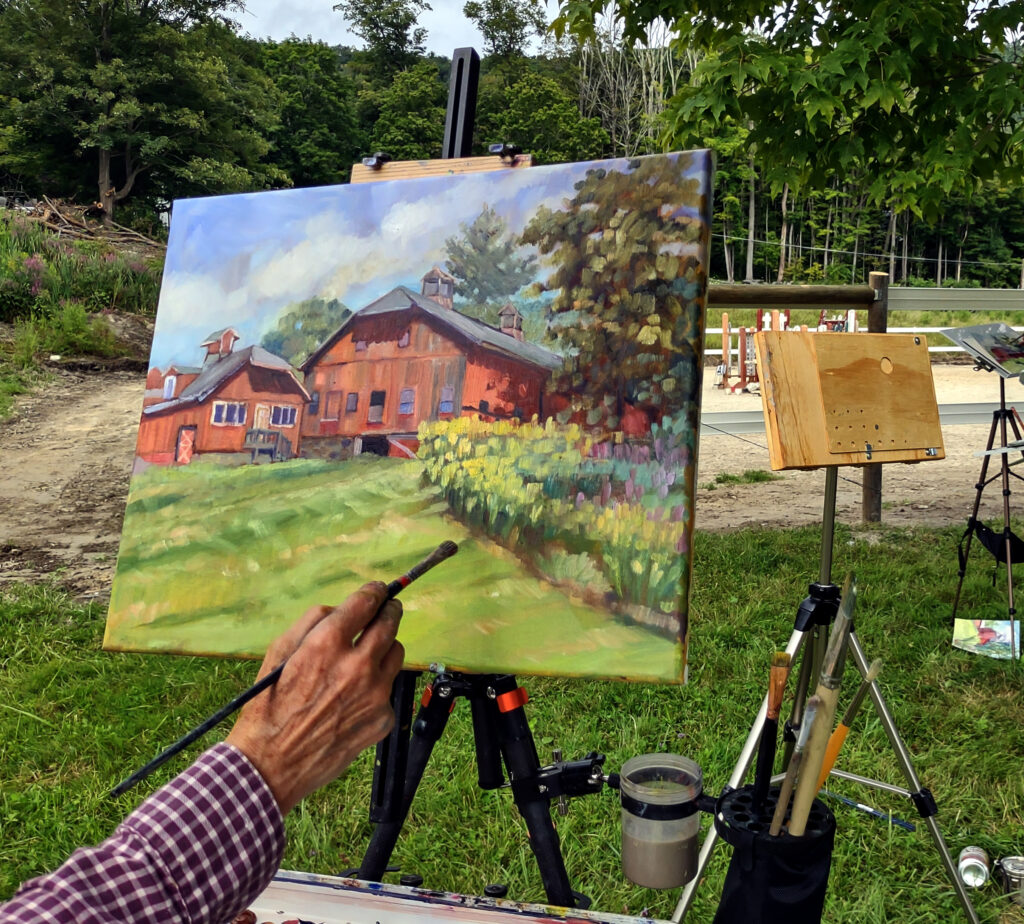
Cassie Sano’s painting of Undermountain Farm’s Victorian barn from the Berkshire workshop.

Teasing out your artistic voice

That’s the heart of Find Your Authentic Voice in Plein Air, a five-day immersive plein air painting workshop the second week of August. It will be held in the pastoral beauty of the western Massachusetts Berkshires, a place I really love.

Finding a style is illusory; it’s a moving target and nothing you should concentrate on. This plein air painting workshop invites you to leave behind mimicry and perfectionism. Instead, step confidently into your own creative point of view. I’ve designed it not just to improve your technique, but to reconnect you with the why of painting—to discover what moves you, and to translate that honestly onto the canvas.

The Berkshires provide a perfect setting for this kind of deep creative work. Rolling hills, shaded glens, historic farms, orchards and vibrant meadows offer subjects that are varied but never overwhelming. We’ll work outdoors each day, with each different location designed to capture different moods and light.

The Berkshires are calm and contemplative, although they have their dramatic moments. But I assure you that no two days are the same, and no two paintings will come out alike.

We’ll start with quick value studies, gesture sketches and color notes. From there, we’ll move into longer painting sessions. While these are to some degree self-directed, I’ll be making rounds, offering personalized feedback and encouragement.

Topics range, but we’re always addressing the core question: What are you really trying to say with this painting? Of course, I don’t really want you to answer that with words, but with visual imagery.

If a subject speaks to you, paint it. If a painting starts to veer in an unexpected direction, follow it. This plein air painting workshop encourages risk, revision, and rethinking, all in the service of finding something true.

The Berkshires landscape ranges from the pastoral beauty of Shaker communities to wilderness.

By the fourth day of every workshop, common patterns begin to emerge. You might notice you’re interested in the patterns of dark and light, or you may love quiet compositions. These patterns are signposts pointing toward your authentic voice.

I’ve been teaching plein air painting workshops for a long time, and I’ve noticed that by the end of the week, students are painting better and more confidently. They know what elements call to them, and they have the tools to answer that call with clarity and presence.

Find Your Authentic Voice in Plein Air is more than a plein air painting workshop; it’s a creative reset. It’s for painters who are ready to go beyond technique and into expression. It’s for those who want to see the landscape—and themselves—with new eyes. And it’s for anyone who’s ever asked, “What do I have to say as an artist?”

On a completely different note

Disco Fever
Thursday, July 17, 2025, 5-7 PM
19 Elm Street, Camden

Tomorrow is our disco night for Camden’s Third Thursday Art Walk. We’ll be at Lone Pine Real Estate, at 19 Elm St., Camden from 5-7 PM. My buddy Nate Quinn will be the DJ, and we’re featuring paintings by Rachel Houlihan (who has been giving me the gimlet eye about this disco idea all month), Stephen Florimbi and me.

In that we’re shooting for a Studio 54 vibe, I’m bringing champagne along with soft drinks and wine.

For all of you who’ve asked, here are my Betsey Johnson sequinned platform sneakers. I’ll only be wearing these if I’m NOT painting.

Registration is now open for workshops in 2026! Reserve your spot:

Can’t commit to a full workshop? Work online at your own pace:

Seven Protocols for Successful Oil Painters

Monday Morning Art School: choosing a plein air easel or pochade box

The Gloucester-style easel is great for park-n-paint but I really can’t carry mine very far.

I finished last week’s workshop with a plein air easel show-and-tell at my gallery, because a recurring question is, “what kind of easel is best for me?”

There’s no one-size-fits-all answer, so before you start looking, ask yourself these questions:

  • What size paintings do you typically do outdoors? There are maximum sizes for each plein air easel, and they don’t perform well once you exceed that.
  • What medium do you use—oil, acrylic, watercolor, gouache or pastel?
  • Do you prefer fast setup and light weight, or something more stable in high winds?
  • How do you usually travel to paint?
    • Park-n-paint, where you paint near or out of your car.
      Backpacking or hiking to painting sites.
      Flying to workshops.
  • How frequently will you paint outdoors? A daily painter needs a more stable plein air easel than a once-a-month painter.
  • How handy are you? Paint boxes are simple; a good craftsman can build or modify most designs. However, if you don’t know which end of the screwdriver means business, you’re better off buying one off the shelf.

Remember, all plein air easels and pochade boxes are compromises, which is why I’ve ended up with so darn many of them.

How not to treat your Mabef M-27 watercolor easel…

Watercolors vs. oil painting

Watercolor painters who work small may need no plein air easel at all; they can do just fine with a folding chair and their work on their lap. If you plan to work larger, a pivot head is important. There are a number of options for this, including the Mabef M-27 field easel (here at Dick Blick, here at Amazon).  It can hold a full sheet of watercolor paper on a Gatorboard support and the angle adjusts very quickly. It’s also usable for other mediums, but there are easier plein air easels for oils and acrylics. Also, balancing a palette on its arms is sometimes an exercise in frustration.

Pivot heads are not just for watercolor

There are several other pivot-head systems on the market, and I generally like them because they divorce the support from the often-heavy paint box. The Leder easel at $159 (not including the tripod) is reasonably priced for a solid, stable, painting system. It can hold a canvas up to 24″ tall, which is large enough for most plein air work. You must buy your own tripod and paint box, but that has some advantages. You’re not hauling around a heavy wooden box, because you can pair it with a Masterson Sta-Wet palette box, which is far lighter. It’s also a great system for pastels, because it allows you to use your existing pastel box. In fact, you can flip between media quickly. (Ed says that if you use the code Carol10, you’ll get a 10% discount.)

Terrie Perrine’s pastel box on her Leder easel. Building your own box is a great solution if you’re handy with tools.

Guerrilla Painter boxes are rock solid but too heavy for me (I just gave my last one to a friend). They do make a fabulous support, the No. 17 Flex Easel. It still requires a tripod with a pivot head and some kind of box, but En Plein Air Pro makes an excellent shelf that will hold your stuff.

Another option in this family is the Coulter Art Box, which has a pivot head and a box with a wraparound support that grabs the legs of your tripod.

This is where being handy is helpful; many artists have modified or built flat paint boxes at a fraction of the cost of an off-the-shelf version. I built mine.

Pochade boxes

There’s so much variety in pochade boxes that I can’t possibly mention every choice. For most fieldwork I use an Easy L box, which I have in three sizes, including an 8X10 that’s light enough to backpack. I bring an Easy L box when I’m flying.

The New Wave u.go pochade is a simple, elegant design, but even the largest is really only suitable for smaller work. Its mixing area is very shallow; that’s a problem if you use lots of paint. However, the palette does lift out so you can freeze it, and it’s lightweight.

Strada makes the only aluminum pochade boxes that I know of. That’s a pity, because aluminum is less prone to moisture damage than wood. It doesn’t result in much weight savings, however.

About your tripod

A good carbon-fiber tripod and a ball head with a quick-release plate may set you back more than your pochade box. The good news is that they’re lightweight, stable, and almost indestructible. I have only one; I swap it out every time I change pochade boxes.

My students from my plein air workshop last week. Front row: Phoenix Barra, Aurise Randall, David Griffin. Back row: Helena Van Hemmen, Jeanne-Marie Van Hemmen, Lori Galan, Yves Roblin, Marlene Van Aardt, Amy Sirianni, LuAnn Dunkinson, Tim Moran, and me. Missing: Rachel Houlihan. (Photo courtesy of Bill Marr.)

Gloucester-style easel

For years, I used a cheap knock-off of the Gloucester easel. Mine finally snapped in a high wind. The replacement was so warped that I returned it. If you want this style easel, you need the Take-It Easel.

The Gloucester-style easel is invaluable for large work or windy days, but it’s too heavy for me to carry very far. Weight is the big reason so many artists use the park-n-paint approach to plein air. It’s easy, but it’s limiting.

What not to buy

I’ve written about how Google drove me toward inexpensive and fatally-flawed Meeden pochade boxes. It’s always frustrating to watch students struggling with terrible equipment..

Many people have been given a French box easel by loving friends or relatives. If you have one, by all means use it, but don’t voluntarily inflict one on yourself. They’re heavy and difficult to set up. Pochade boxes are lighter and nimbler.

Registration is now open for workshops in 2026! Reserve your spot:

Can’t commit to a full workshop? Work online at your own pace:

Seven Protocols for Successful Oil Painters

Two art shows, coming right up!

Oh, announcements, announcements!

David Griffin painting this week (photo courtesy of Amy Sirianni)

Come over this evening and see my students’ art show

Advanced Painting workshop student show
Friday, July 11, 2025, 4-7 PM
394 Commercial Street, Rockport, ME 04856

My Advanced Painting workshop students have been working like mad all week, and this evening, we’ll exhibit their vibrant, exciting work at my gallery, at 394 Commercial Street, Rockport. Let’s celebrate their passion, creativity, and, above all, the growth they’ve achieved in this intense week of work.

Painting on Beech Hill (photo courtesy of Amy Sirianni)

This show features work by twelve painters who’ve had the courage (and endurance) to follow me around to my haunts in midcoast Maine, from the harbor at Owls Head to the panoramic view off Beech Hill, to a village street scene in Camden, and more. These artists paint in a range of styles, from loose expressionism to careful observational drawing. And they range in age from 16 to… well, my contemporaries.

It’s been a fabulous weather week (photo courtesy of Amy Sirianni)

This exhibition isn’t just about the finished paintings—it’s about what happens when people give themselves permission to let loose. I’ve been teaching adults for several decades, and I’m always amazed by how willing they are to take artistic risks.

The reception will take place tonight from 4-7 PM, with light refreshments and an opportunity to meet the artists. Please join us!

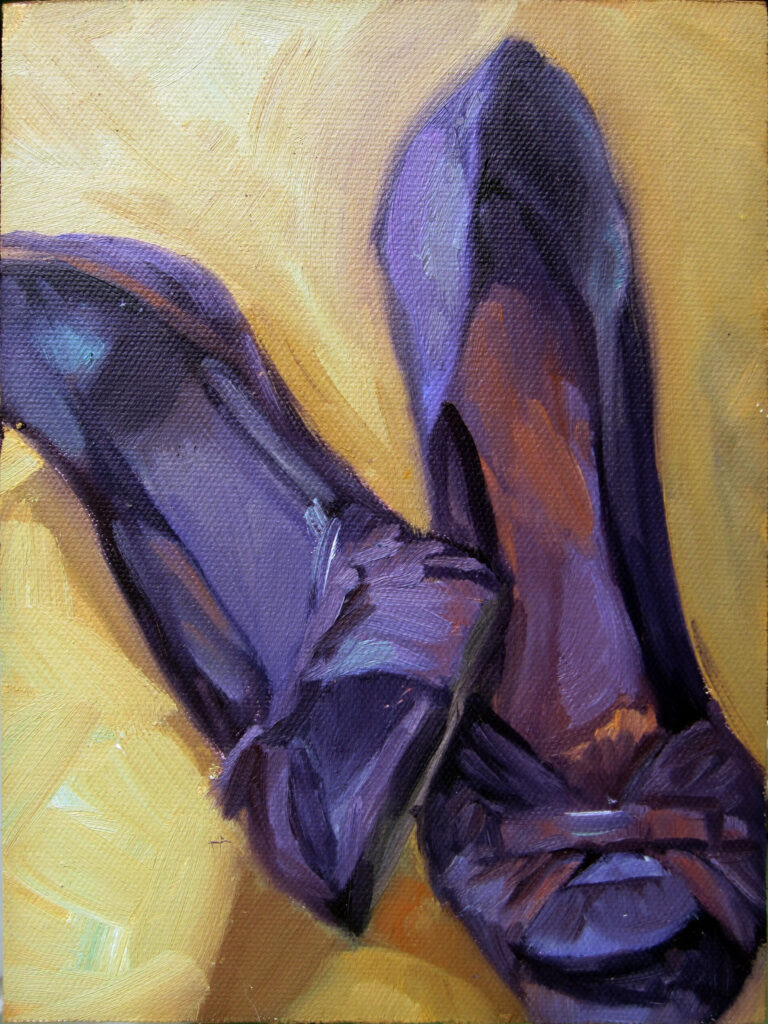
Prom Shoes 2, oil on archival canvasboard, 6X8, $435.

Next week, bring your dancing shoes

Disco Fever
Thursday, July 17, 2025, 5-7 PM
19 Elm Street, Camden

Shine up your sequins and dust off your platform shoes. Lone Pine Real Estate (and I) will present Disco Fever,a night of art, glitter, groove and good vibes, from 5-7 PM, July 17, 2025 at 19 Elm St., Camden.

In addition to the glitz and glamour of the disco era, the event will feature work by Camden painter Rachel Houlihan, Rockport painter Stephen Florimbi, and, of course, me. The DJ will be Nate Quinn, who wasn’t even born when disco was in fashion.

I came of age in the disco era, so I never mind a little bling. I’ll be wearing my sequined Betsey Johnson platform sneakers (because too much of a good thing is a great thing). And of course, disco makes a ruckus, which is why it’s the perfect compliment to the Camden Art Walk. Let’s see if we can make more noise than those crazy kids down on Bay View Street.

Registration is now open for workshops in 2026! Reserve your spot:

Can’t commit to a full workshop? Work online at your own pace:

Seven Protocols for Successful Oil Painters

Why don’t I teach shorter painting workshops?

Camden Harbor from Curtis Island, oil on canvas, $2782 unframed includes shipping and handling in continental United States.

I’m teaching an advanced painting workshop this week. Today is the third day, and when my students departed yesterday, they all looked a little tired. OK, a lot tired. It’s a lot to work from 9 to 4 in open air, while trying to integrate new concepts.

A fellow teacher once told me that she had been asked to compress a four-week beginner course into two days. “I think it’s a disservice,” she said. “That’s a lot of information to compress into a much shorter time. So, either it’s a very shallow dive or there’s so much information compressed so tightly that half of it gets lost.”

I’m terrible at taking pictures while teaching, but one of my students set up in the shade of an old schooner, and I thought her easel looked darn cute there.

I am often asked about shorter painting workshops as well. They fit neatly into a weekend and the cost is lower, so they’re easier to sell. If they’re subject-based, like ‘painting sunsets,’ they can work because these painting workshops are inherently shallow. They work best for people who already know the rudiments of painting; otherwise, they’re a bit too much like sip-and-paints.

But two or three days are insufficient when it’s a question of really developing style, color fluency, composition and form. And if you understand these concepts, you don’t need a special painting workshop on sunsets or water; you have the tools to paint anything you want.

Downtown Rockport, 14X18, oil on archival canvasboard, framed, $1594 includes shipping and handling in continental US.

What can go wrong? A lot.

Basic protocols for watercolor and oils run to about seven discrete steps, depending on how you break them down. Here are, roughly, the steps for oil painting:

  1. Set up your palette with all colors out, organized in a useful manner.
  2. Do a value drawing.
  3. Crop your drawing and identify and strengthen big shapes and movements.
  4. Transfer the drawing to canvas with paint as a monochromatic grisaille.
  5. Underpaint big shapes making sure value, chroma and hue are correct.
  6. Divide big shapes and develop details.
  7. Add highlights, detail and impasto as desired.

Let’s just consider #2. It’s almost useless for me to just tell you to do a sketch. In fact, if I did that, you’d have to wonder why you didn’t just draw on the canvas instead. You need insight into what you’re looking for, what makes a good composition, and different ways to do that preparatory composition.

Maynard Dixon Clouds, 11X14, oil on archival canvas board, $869 includes shipping in continental US.

I can (and sometimes do) rattle off a lecture on these points, but that is the just the start of the process of discovery. Unfortunately, in a two-day painting workshop, that’s about all the time we’d have for the step many artists consider most crucial to the development of a good painting. You, the student, then go home and consult your notes. They become a slavish list of dos-and-don’ts, rather than a framework for a deeper understanding.

It’s far better that I start with an exercise that allows you to build understanding of composition on your own. That, in a nutshell, is the difference between a book and interactive teaching. It’s why people take painting workshops in the first place.

That kind of teaching takes time.

Arthur Wesley Dow, the popularizer of Notan, had his students work for weeks on line before they eventually graduated to masses and then finally to greyscale and color. His students included Georgia O’KeeffeCharles SheelerCharles Burchfield, and other 20th century art luminaries, so he was definitely onto something. Learning to paint properly takes time.

This is a revision of a post from 2022.

Registration is now open for workshops in 2026! Reserve your spot:

Can’t commit to a full workshop? Work online at your own pace:

Seven Protocols for Successful Oil Painters

Monday Morning Art School: maximize your painting workshop

Main Street, Owl’s Head, oil on archival canvasboard, $1623 includes shipping and handling in continental US.

The hardest thing for a teacher is the student who says, “yes, but…” to everything one tells them. I should know; I tend to be one of those myself. I know what it means to stubbornly protect what I already know, to rely on my own skills instead of opening my mind to new concepts.

The Vineyard, oil on linen, 30X40, $5072 framed, includes shipping and handling in continental US.

Come prepared

Study the supply list, but don’t just run right out and buy everything on it. Every teacher has a reason for asking for specific materials. In my case, it’s that I teach a system of paired primaries. You can’t understand color theory without the right paints. Another teacher might emphasize beautiful mark-making. If you don’t buy the brushes he suggests, how are you going to understand his technique?

A tube of cadmium green that I once bought for a workshop and never opened still rankles. I never want to do that to my students. When you study with me, I want you to read my supply lists. If something confuses you, or you think you already have a similar item, email and ask.

(If you find yourself buying something for one of my classes or workshops and not using it, would you let me know? It means I’m missing something.)

Bring the right clothes. I send my students a packing list for clothes and personal belongings. But modify it for the weather you’re expecting. Don’t ignore the insect repellant and sunscreen.

The Surf is Cranking Up, 8X16, oil on linenboard, $903 includes shipping and handling in continental US.

Know what you’re getting into.

“How can you stand this? It’s all so green!” an urban painter once said to me after a week in the Adirondacks.

There are no Starbucks in Acadia National Park or on the clear, still waters of Penobscot Bay. If you’re dependent on your latte macchiato, you may be uncomfortable at first. But the beauty of America’s wild places more than makes up for it. (And somehow, there’s always coffee, even where there’s no cell phone reception.)

Take notes

There’s a sketchbook on my supply list; plan on writing as much as you draw. If you write down key points, you’ll remember them far better than if you just read my handouts.

Listen for new ideas and ask questions. If I can’t stop and answer them mid-stream, save them for after the demo. Participate in discussions and know that your voice is valued; I’ve learned more from my students than from anyone else.

Home Farm, 20X24, oil on canvas, $2898 framed includes shipping and handling in continental US.

Be prepared to get down and dirty.

I’m not talking about the outdoors here, I’m talking about change and growth. I am highly competitive myself, so it’s difficult for me to feel like I’m struggling. However, it’s in challenge that we make progress. Use your teacher’s method while you’re at the workshop, even if you feel like you’ve stepped back ten years in your development. That’s a temporary problem.

You can disregard what you learn when you go home, or incorporate only small pieces into your technique, but you signed up for the workshop to grow and change. You can’t do that if you cling to your own technique.

Connect with your classmates

There’s power in those relationships. Exchange email addresses. Keep in contact. Follow them on Instagram or Twitter. You’ll learn as much from each other as you will from me.

This was originally posted in March, 2023, but since I’m teaching a workshop starting today, I thought it was worth repeating.

Registration is now open for workshops in 2026! Reserve your spot:

Can’t commit to a full workshop? Work online at your own pace:

Seven Protocols for Successful Oil Painters

Creative vacations

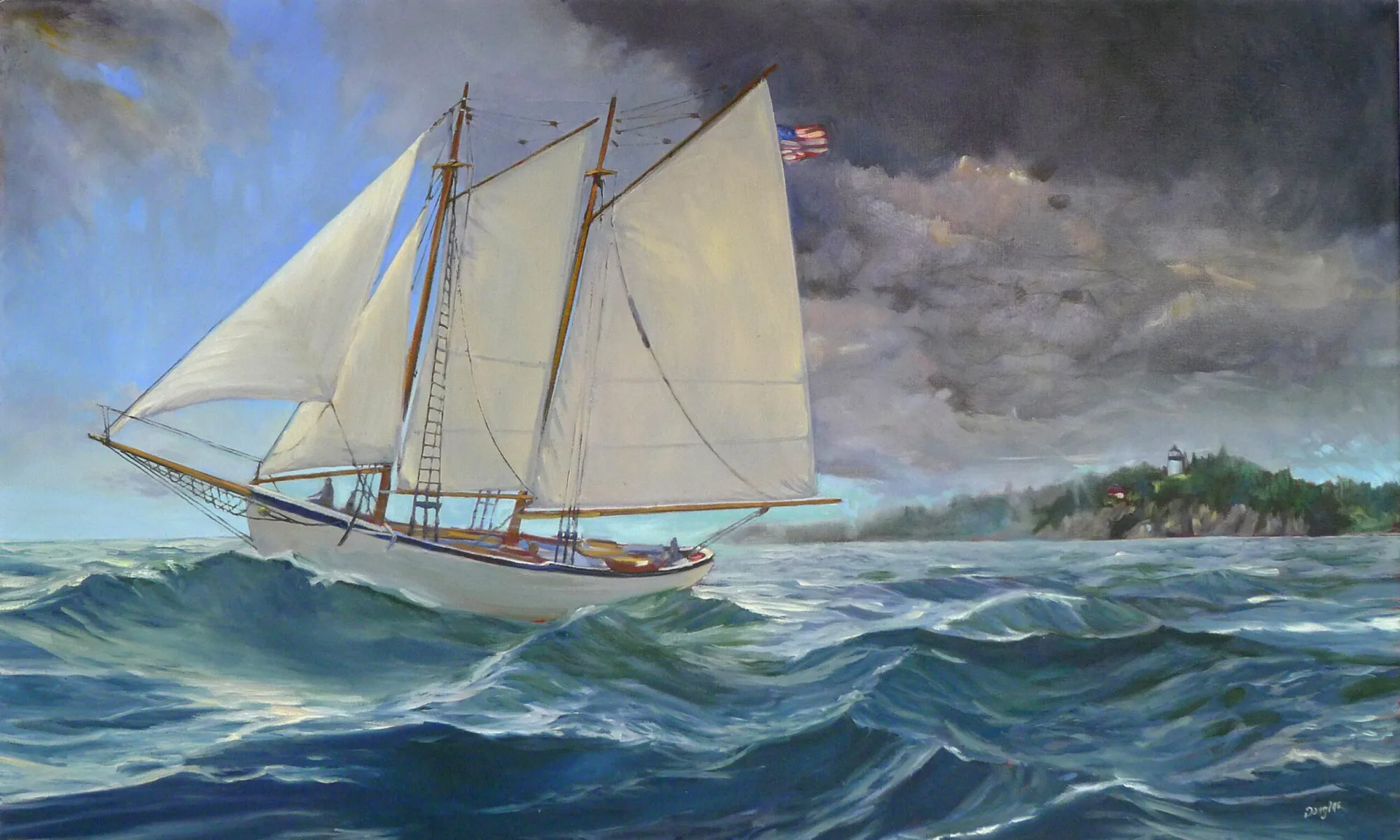
Heavy Weather (Ketch Angelique), 24X36, oil on canvas, framed, $3985 includes shipping and handling in continental US.

The 4th of July kicks off vacation season here in Maine. Right on schedule, Bloomberg tells us, Taking Predictable Vacations Is Bad for Your Brain. (A writer replies, “Tell me you don’t have kids without telling me,” but I beg to disagree. I’ve taken many unusual vacations with my kids and grandkids; they seem to thrive on them.)

Maine is a great place to avoid the predictable. I had my most hair-raising experience as a parent on the beach in Ogunquit, so I speak from experience in saying it’s not exactly like the Jersey Shore up here.

Of course, I’m not suggesting you risk your kids’ lives. Unpredictable can mean a lot of things. Maine is no shopping destination, but it sure is great for hiking, biking, kayaking, and sailing.

Surf’s Up is 12X16, on a prepared birch surface. $1159 includes shipping and handling in the Continental US.

Why do creative vacations matter?

Our ancestors had way too much instability in their lives, which is why we suppose vacations should be relaxing—we’ve been told they’re for rest and regeneration. We humans are hardwired for exploration and challenge, but modern man is stuck in a rut.

Highly predictable vacations allow our brains to languish (and, I’ll add, we tend to drink too much on them). Experiences outside our comfort zone stimulate thought, but they also kick in a healthy physiological response.

Dopamine, the neurotransmitter associated with pleasure and motivation, is released when we are challenged. Predictable vacations may not trigger the same level of dopamine release as novel experiences, according to St. Luke’s Penn Foundation.
When an activity is a bit off-kilter or outré, we perversely enjoy it more. When we stick to the tried-and-true, our brains don’t receive the same stimulation and challenge as they do when we’re surprised. New experiences increase our neuroplasticity. That’s great for cognitive function and resilience.

Skylarking II, 18×24, oil on linen, $1855, includes shipping in the continental US.

I’m not advocating killing yourself by taking foolish risks, as too many young influencers seem to do these days. But there are other options to take us out of our comfort zones.

Regular readers know I like to take go rambling in the British style, where you go from inn to pub to inn on foot. It’s certainly not because I love blisters, heat exhaustion, or dehydration, but as soon as I’m done with one year’s adventure, I’m eagerly thinking about the next (which I think will be in the Orkneys). Equally, some of my best trips have been madcap drives, including a memorable 10,000 mile painting excursion across Alaska and Canada. I find these things so much more interesting than Orlando.

High Surf, 12X16, oil on prepared birch painting surface, $1159 includes shipping and handling in continental US.

A painting workshop is the ultimate in creative vacations

I start teaching an advanced plein air painting workshop on Monday here in Rockport, and I have three others on my calendar for the summer. A plein air workshop is a great way to push yourself outside your comfort zone. And painting has an additional benefit, because many studies have shown it’s great in itself for neural health.

Research shows that hobbies—any hobbies—prevent depression and reduce anxiety. But the most effective hobbies are the creative hobbies, according to The Journal of Positive Psychology. Creativity has a positive effect, not only on the day when we make stuff, but on subsequent days as well. (For anyone waiting around for inspiration, the same research tells us that feeling good doesn’t push us into greater creative effort.)

If you’re looking to get the biggest restorative bang for your buck from a creative vacation, you can’t do better than a painting workshop.

Registration is now open for workshops in 2026! Reserve your spot:

Can’t commit to a full workshop? Work online at your own pace:

Seven Protocols for Successful Oil Painters

Accidentally funny art

The Daphnephoria, c.1874-76 by Sir Frederic Leighton, courtesy National Museums Liverpool

Pippa Passes is Robert Browning’s great verse drama that gave us the immortal line, “God’s in His heaven—All’s right with the world!” It also contains a monumental howler:

Then, owls and bats,
Cowls and twats,
Monks and nuns, in a cloister’s moods,
Adjourn to the oak-stump pantry!

Browning mistakenly thought the vulgarity twat (British slang for a woman’s genitals) meant a nun’s wimple.

Is that pine tree flipping you off?

I was reminded of this by a story in the Boston Globe, which says that the new Maine license plates may be flipping us off. I have those plates on my truck. It’s accidentally funny art, one of those things you don’t unsee.

Thank goodness the world is full of accidentally funny art. Sometimes, over time the artist’s intent is misunderstood or we viewers bring modern associations to the work. Or, what was common symbolism of the time is considered rude in our culture. For example, breast milk represented charity, motherhood, and sacrifice in Renaissance art, but the Caritas Romanas (a woman breastfeeding an ancient man) looks downright pervy to modern viewers.

Then there’s pomposity. Washington Crossing the Delaware by Emanuel Leutze is heroic, iconic, and beautifully painted. It’s also impossible. Nobody could stand up in a tiny boat being buffeted by ice. Modern viewers can’t help but see it as over-the-top.

The Ambassadors” by Hans Holbein the Younger (1533) is an early example of an optical projection called anamorphosis. There are scientific and cultural objects on the shelves between the two subjects, but then there’s a weird, distorted skull floating near the floor. It makes sense in its setting in London’s National Gallery, but is inscrutable on the internet.

Detail from The Fall of the Giants, 1532-4, Giulio Romano, courtesy Palazzo de Te, Mantua

For many works, shifting cultural perspectives change what we see in the painting. Giulio Romano’s panoramic mural Fall of the Giants, based on Ovid‘s Metamorphoses, is an example. To Renaissance viewers, it was a Mannerist masterpiece that illustrated one of the most influential works of western literature. To modern viewers, it reads like bad comic book art.

Before books were mass-produced, they were mostly devotional. The artisans who made them also illustrated them, often with small drawings now called marginalia. These were often devout, but they were also scatological or sexually explicit.

A nude bishop chastises a pooping cleric in the Gorleston Psalter, c. 1310-1324. Courtesy British Library

Hieronymus Bosch’s The Garden of Earthly Delights is another example of a painting that can’t be understood by modern audiences. It’s not just its strange and fantastical world; its interpretation of lust that leaves us scratching our heads.

Then there’s the vast arena of what we moderns read as kitsch or schmaltz. To me, one of the most egregious examples of accidentally funny art is Sir Frederic Leighton’s Flaming June, although almost all of his paintings crack me up. The Pre-Raphaelites were terrifically kitschy, as was Sir Edwin Henry Landseer.

Note that I haven’t written a word about ugly Renaissance babies. That has been memed to death.

There are modern examples, of course, including the infamous botched Ecce Homo restoration by Cecilia Giménez in Borja, Spain. Ironically, subsequent interest has been so high that the painting has made significant money for the church, the community, and for the terrible artist herself.

The late American artist Thomas Kinkade has to be included in any list of accidentally funny art. His idealized villages of sugary perfection always appear to be on fire. He crossed over the line to self-parody long before he died of acute alcohol and Valium intoxication. I can laugh about his paintings, but his death was pure tragedy.

Registration is now open for workshops in 2026! Reserve your spot:

Can’t commit to a full workshop? Work online at your own pace:

Seven Protocols for Successful Oil Painters

Monday Morning Art School: where do I start?

Downtown Rockport, 14X18, oil on archival canvasboard, framed, $1594 includes shipping and handling in continental US.

“I want to learn to paint but have no idea where to start,” a reader wrote. That’s a common problem, one that can express itself with questions about cost or not knowing what medium to pick.

First, the pernicious lie of talent

I’ve written extensively about talent, but I’ll just note that in art, as in everything, success is 99% perspiration and 1% inspiration.

How to choose a medium

There is no one ‘best’ medium. I’ve had students work in oils, acrylics, watercolor, gouache, pastel and even egg-tempera. Every painting medium has the potential to be highly-detailed or highly-expressive.

Home Port, 18X24,, $2318 includes shipping and handling in continental US.

I usually ask students what painters and paintings they like, and work back from there. A person who is gaga over Edgar Degas’ pastels should probably consider pastels; a person who loves the luminosity of Wolf Kahn’s oil paintings need look no farther than oil paint.

There is no one ‘safer’ medium, because the hazards of artists’ paints lie in the pigments. The same pigments are used across all mediums, and the risk has declined considerably. Industry has brought us many safe analogues for older, more toxic pigments.

Oil painters once used turpentine as solvent, but that has been replaced by odorless mineral spirits. Acrylic polymers have low toxicity, but we dump the residue into our sewers and their environmental impact is an area of ongoing research. Watercolors and gouache use tap water as well, but they aren’t plastics; their health and environmental impact is nil. Pastels are often sold in sets without the individual pigments identified. For that reason, they shouldn’t be used without gloves or a skin barrier. Where there’s pastel dust, a good HEPA filter is imperative. All of these risks are manageable, but they do require consideration.

There’s no one medium that’s cheaper over the long haul. Whereas oil painters go through more paint, watercolor brushes are more expensive. In my experience (and I’ve used them all) the costs average out over time.

Camden Harbor from Curtis Island, oil on canvas, $2782 unframed includes shipping and handling in continental United States.

Where do I start?

I’m happy to share my supply lists, which you can find in this blog post. However, what you need depends on what you’re trying to do. For example, studio painting uses the same pigments and brushes as plein air, but the easel requirements are very different.

Starting to learn to paint can feel overwhelming. There’s fear of doing it wrong, of wasting time or materials or of making something that doesn’t match the vision in our heads. Don’t let that last one scare you; I’ve been painting for almost sixty years and have never quite matched the vision in my head.

One of the rookie errors of learning to paint is to try to buy your way to success. Art supply companies make their millions on impulse buyers. That can take the form of paints and brushes you don’t need, or it can take the form of cheap materials that will never do what you want them to do.

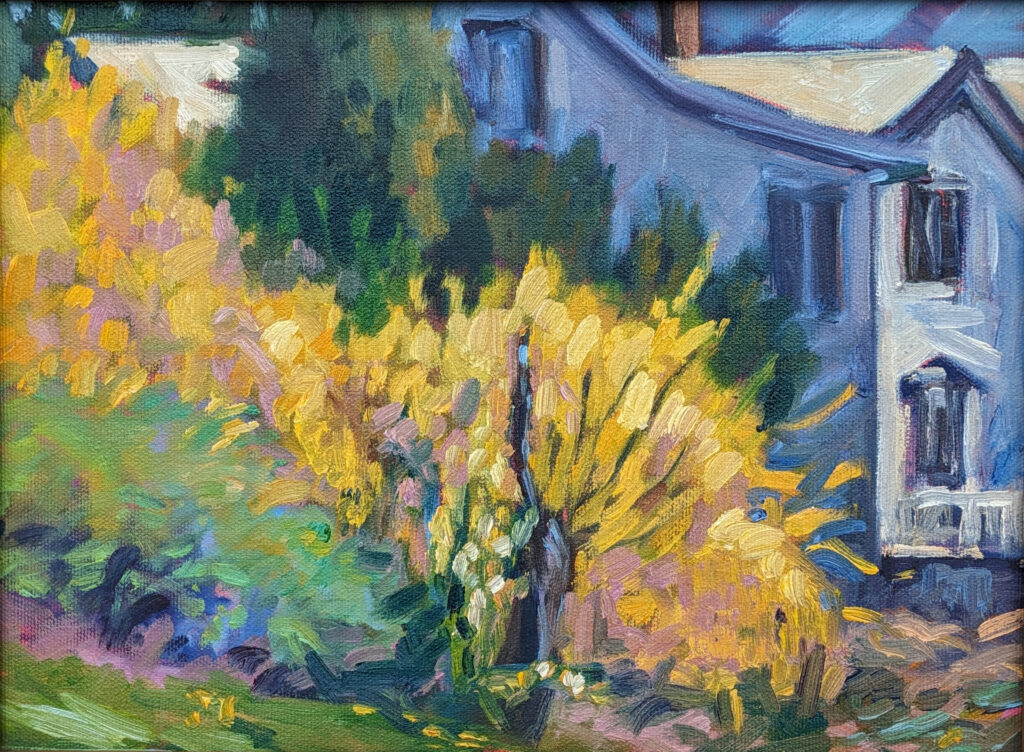
Forsythia at Three Chimneys, oil on archival canvasboard, $869 framed includes shipping and handling in continental United States.

I believe you will save money and time by taking classes first. Above all, don’t agonize. I’ve made a million dumb mistakes, but they’re part of the learning process.

I used to have a student who started every painting by telling me, “I’m going to give this to ___ for ___.” It wiped her out, every single time. We should always start with the process, not the result. Every painting we do is practice for the next one that comes along.

Registration is now open for workshops in 2026! Reserve your spot:

Can’t commit to a full workshop? Work online at your own pace:

Seven Protocols for Successful Oil Painters