Yesterday I had a long drive and conversation with artist Jane Chapin about what we’re doing and why. You’d think at our ages we’d long ago figured out the purpose of art. However, that is a constantly-shifting question.
For a long time, painting is a question of mastery. Later, it becomes a question of meaning. For artist and collector alike, the purpose of art can be elusive.
What is art, anyway?
I like to say that fine art is anything that’s made without any practical purpose whatsoever; a game with one active and many passive players. Art is, after all, just one expression of human creativity, imagination and skill.
Does that mean art doesn’t necessarily have a purpose?
Art doesn’t always have a practical purpose, but it almost always has a function. That might be emotional, intellectual, aesthetic or cultural. Its function may even be to defy or question the idea of purpose.
It’s more likely that art does have a broadly-defined purpose. That could be the expression of ideas, experiences, or even propaganda. Art plays a large part in our shared shaped identities, which is why we can so frequently identify the socioeconomic and ethnic background of people just by looking at pictures on their walls. And art influences people’s emotional states.
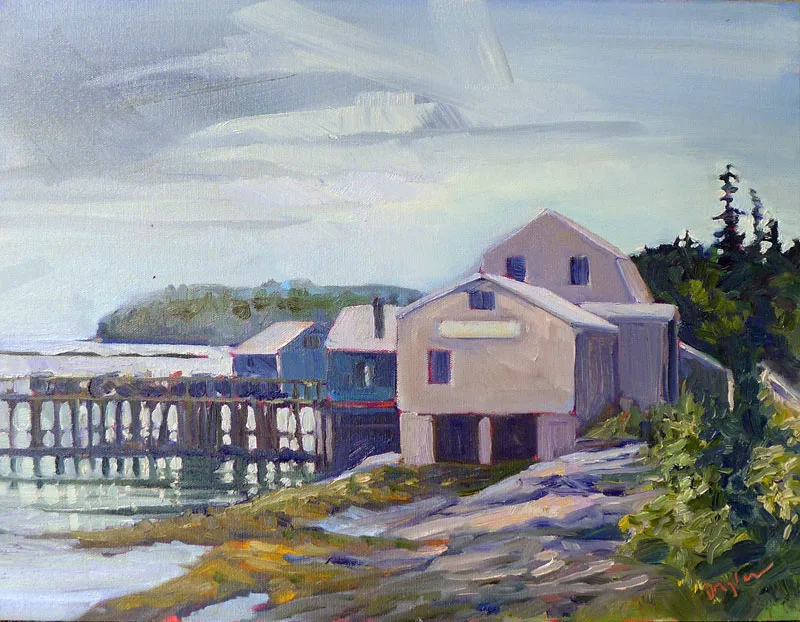
What is my art supposed to do, anyway?
This is the question I found myself batting around with Jane. It’s no longer enough to paint beautiful landscapes; I’ve got another itch in there to be satisfied.
Of course, art is not supposed to do anything in particular—its function varies across time, cultures, and personalities. But periodically I need to ask:
- Am I trying to express inner feelings, thoughts or memories?
- Am I trying to communicate ideas? If so, can I put them into words?
- Or, am I trying to deliver messages that might be hard to express with words alone?
- Am I trying to evoke an aesthetic or sensory response?
- Am I trying to go where nobody has gone before? If so, how?
- Am I trying to be disruptive or subversive?
Of course, artists can be trying to do more than one of those things at the same time. Right now, I’m debating how I rank those goals in importance to me. How would you rank their importance to you?
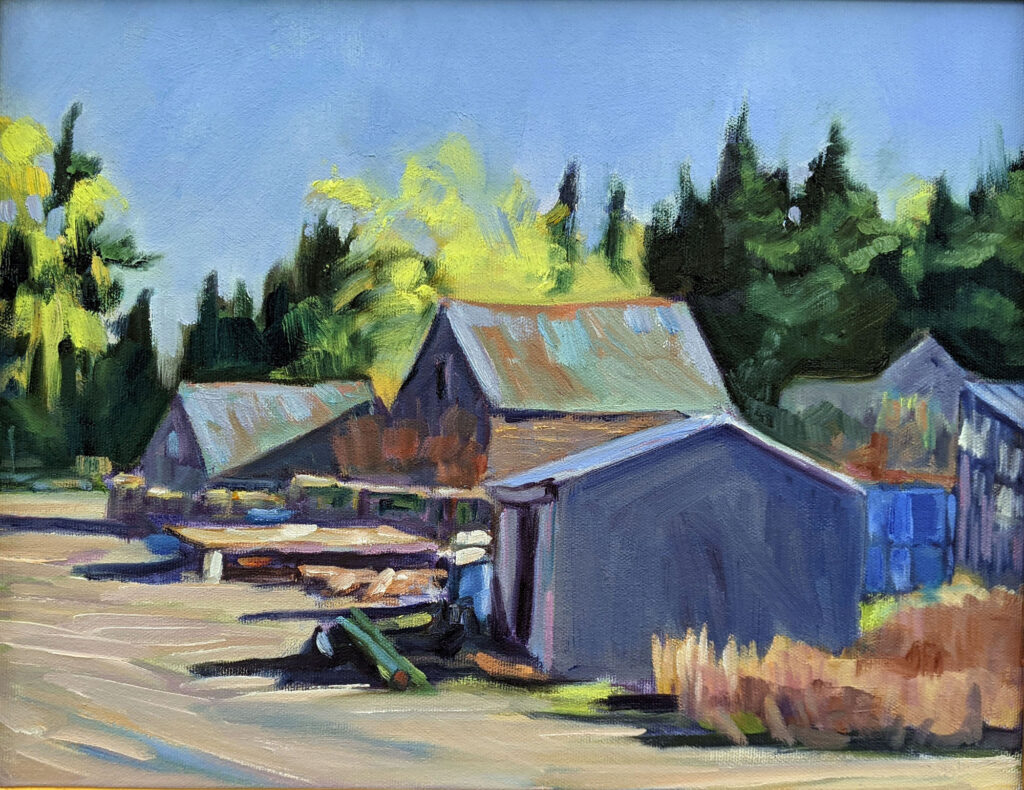
Why do people hang art on their walls?
Years ago, I painted a series on misogyny. I learned an important lesson: most people don’t want huge pictures of abused women on their walls. While there’s a place for intellectual paintings, some subjects are not going to attract buyers.
In my experience, the main reasons people buy paintings is that the work resonates with them aesthetically and they have an emotional connection with it. (That’s why landscape is so important to us.) Following that, art is a way to express one’s identity, tastes and values. It can be a cultural and social signifier (for those who think that way). Yes, art can be a décor item. For some of us, it’s aspirational; we hope to paint like that person someday.
I have a lot of original art in my house and most of it is, frankly, sentimental—paintings by people I know and admire, or places I love, or of my kids. None, I’m happy to say, is there to cover up marks in my walls.
Registration is now open for workshops in 2026! Reserve your spot:
- Sea & Sky | Acadia National Park, ME, August 2–7, 2026
- Find your Authentic Voice in Plein Air | Berkshires, MA, August 10-14, 2026
- New! Color Clinic 2026 | Rockport, ME, October 3-4, 2026
- New! Composition Week 2026 | Rockport, ME, October 5-9, 2026
Can’t commit to a full workshop? Work online at your own pace:
To me the beauty and life giving spirt of natural places are very important! Especially so in this off balance time.
Besides the simple joy of creating, I would say the #3 is what most resonates with me: delivering messages that are hard to completely express with words. And of course, making art is the introverts dream anyway – talking is not required, either before or after 🙂