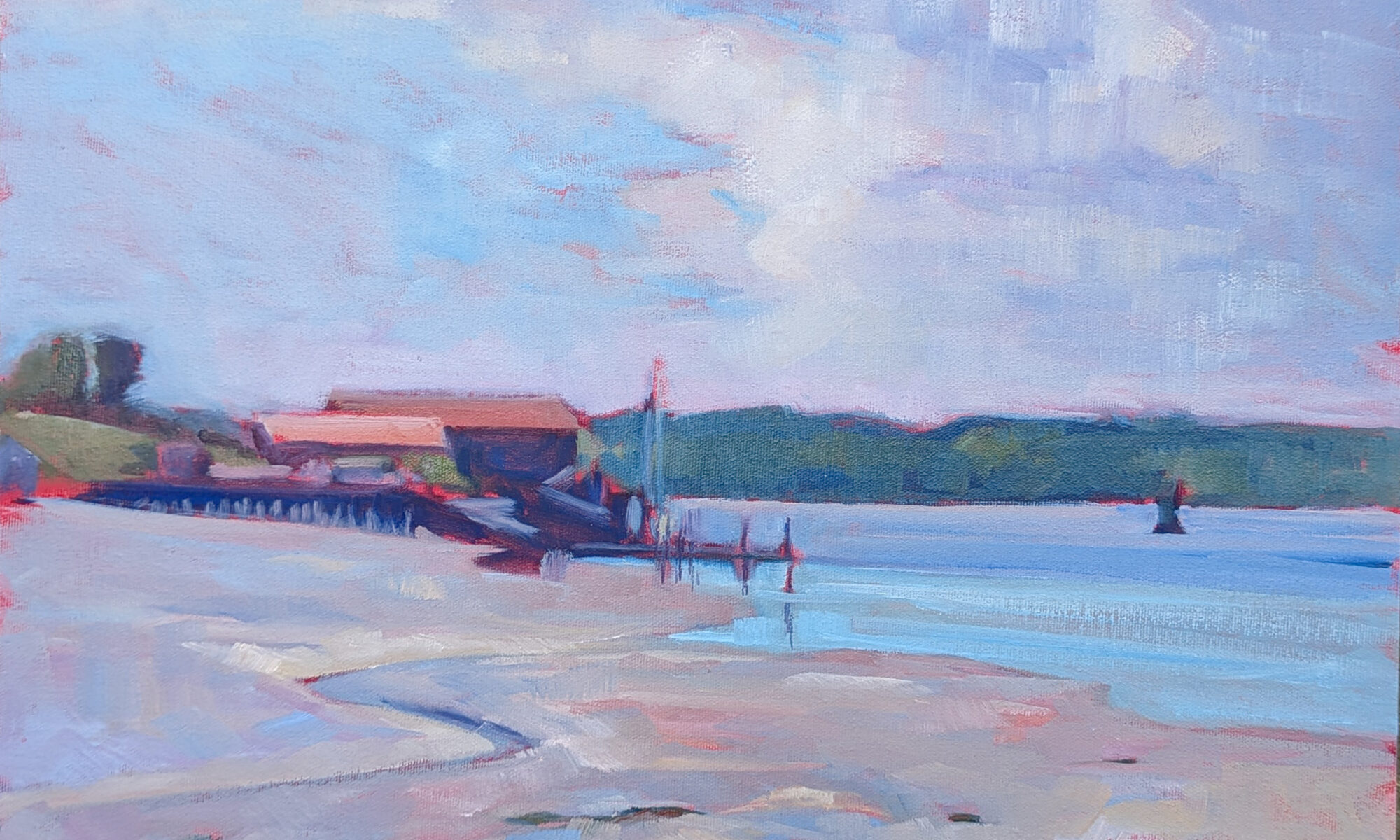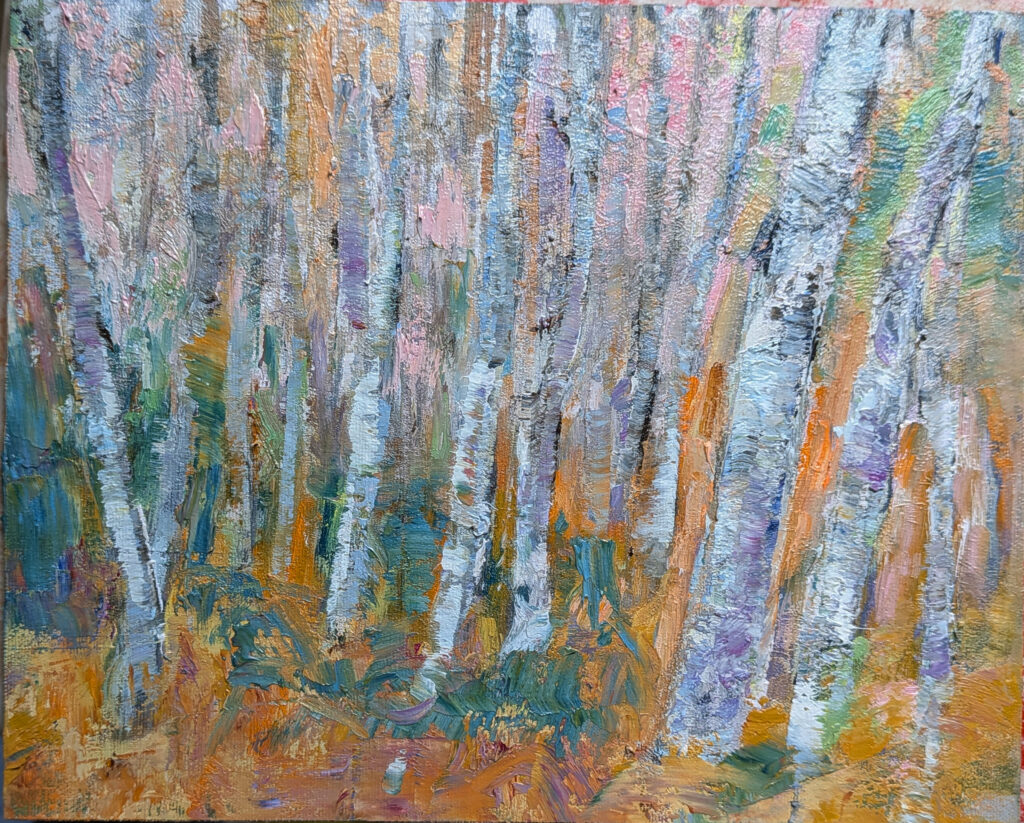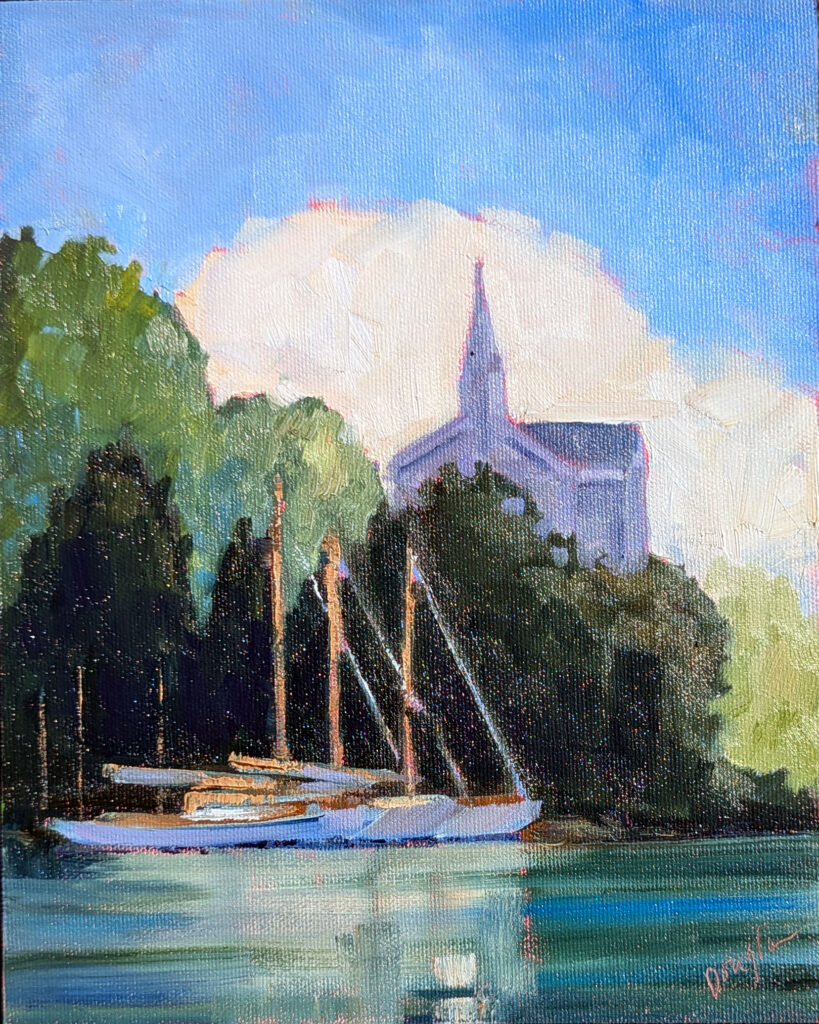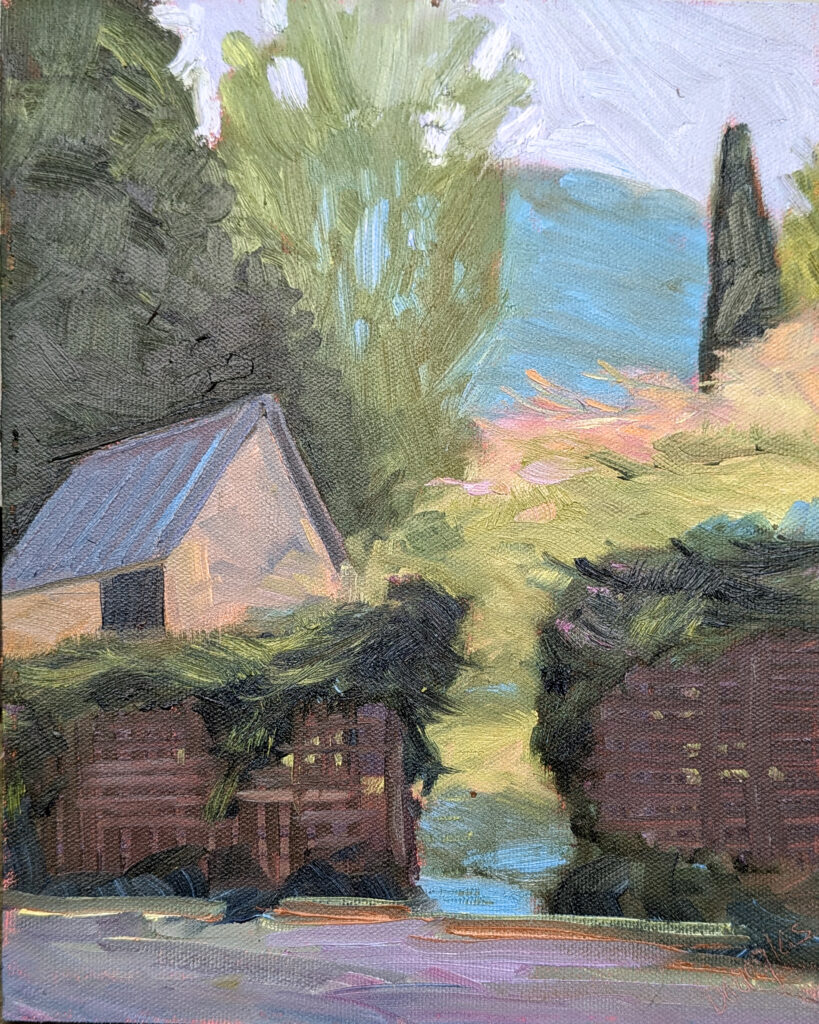
Camden on Canvas: 21 painters, three days, one fabulous Maine landscape

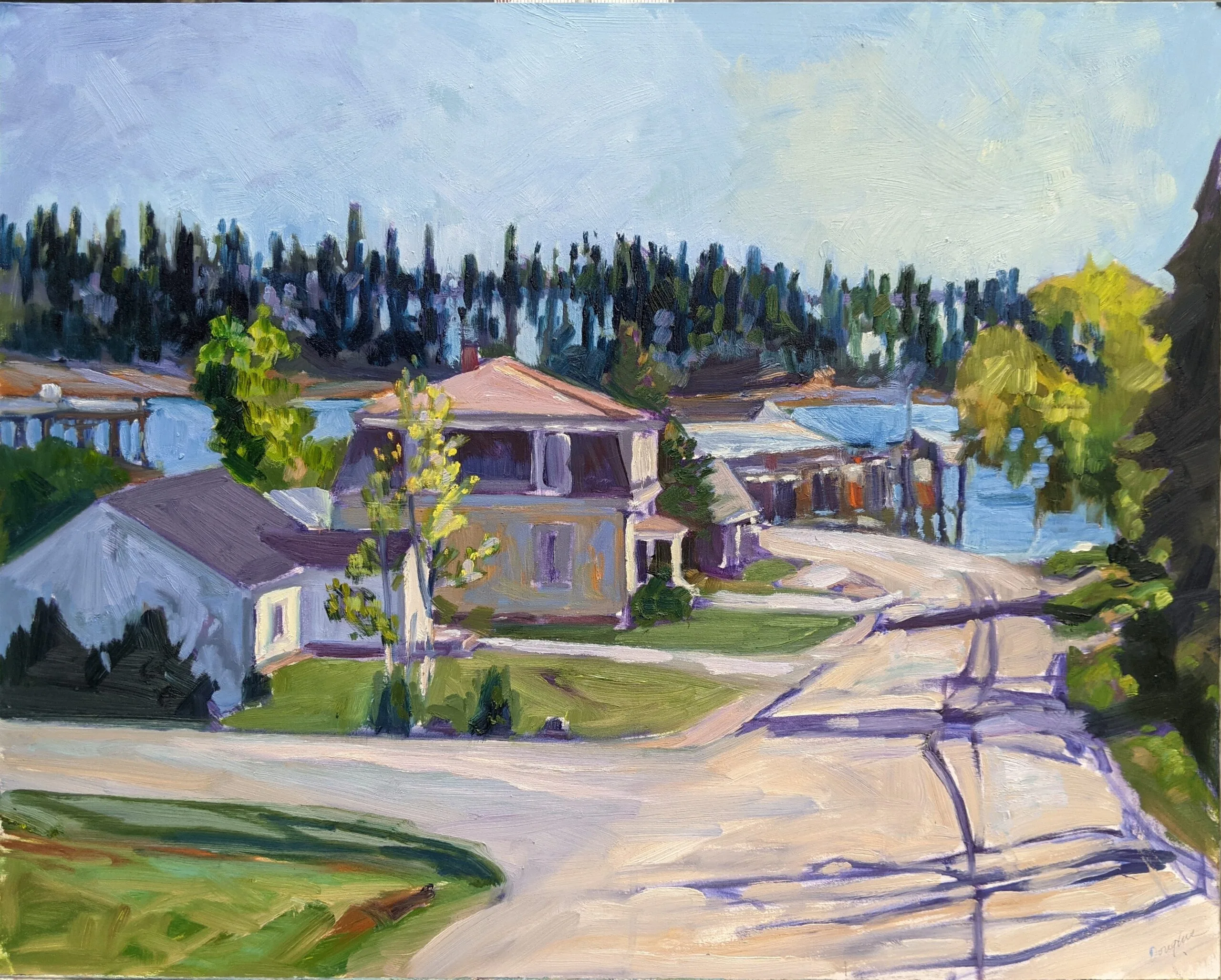
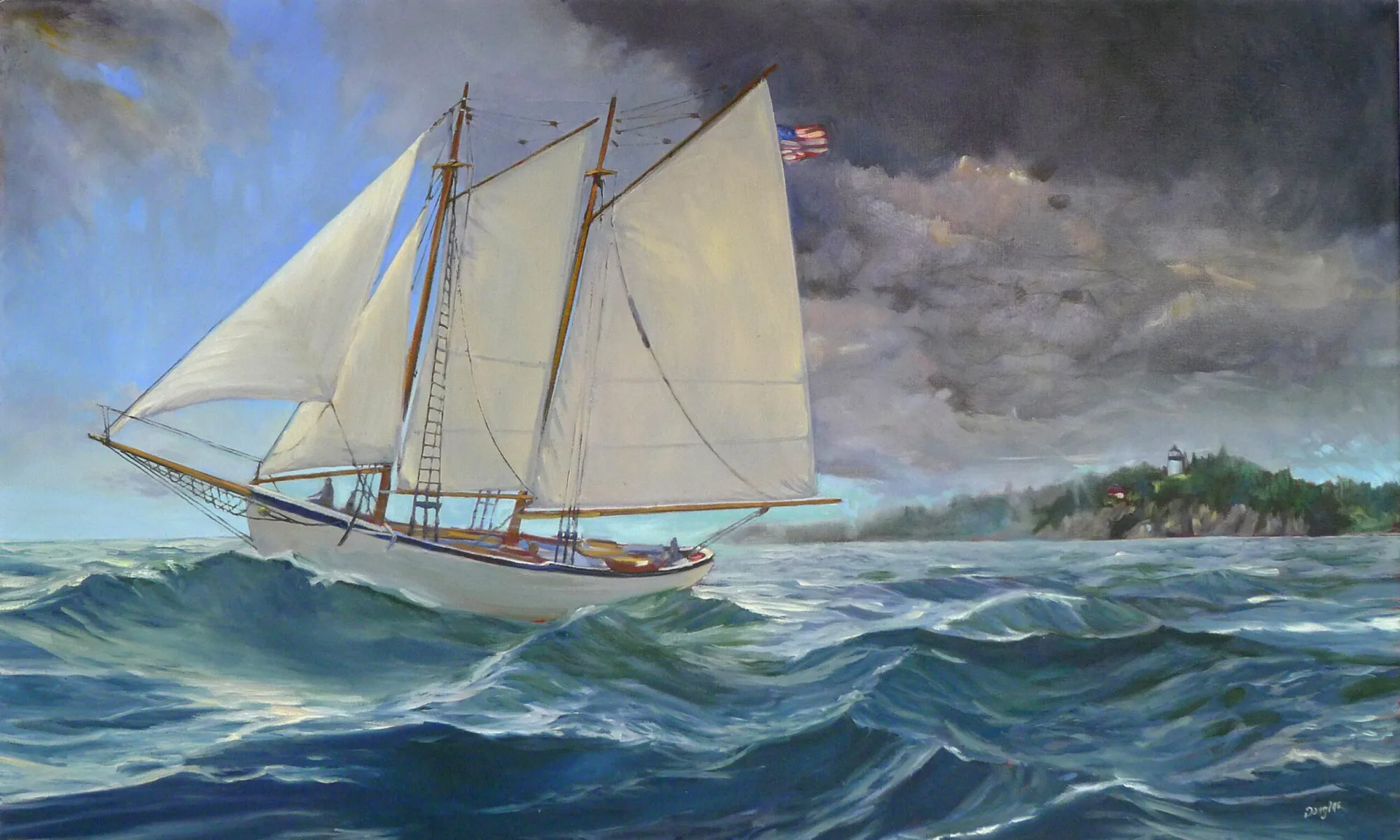
An earlier painting for Camden on Canvas, 24X36, called “So Many Boats!” Private collection.

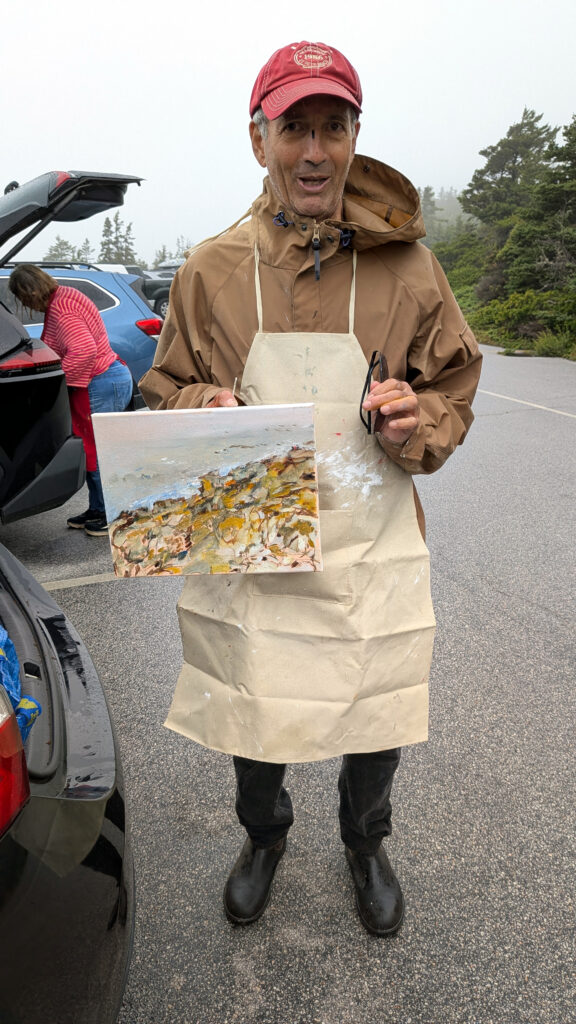
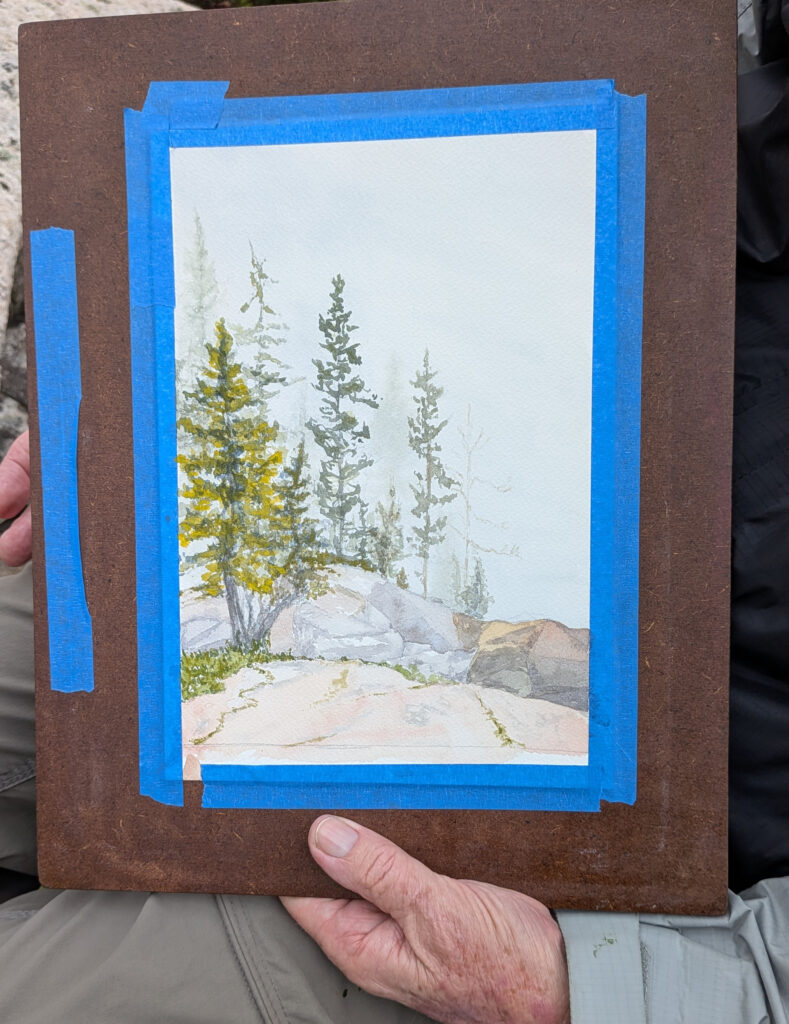
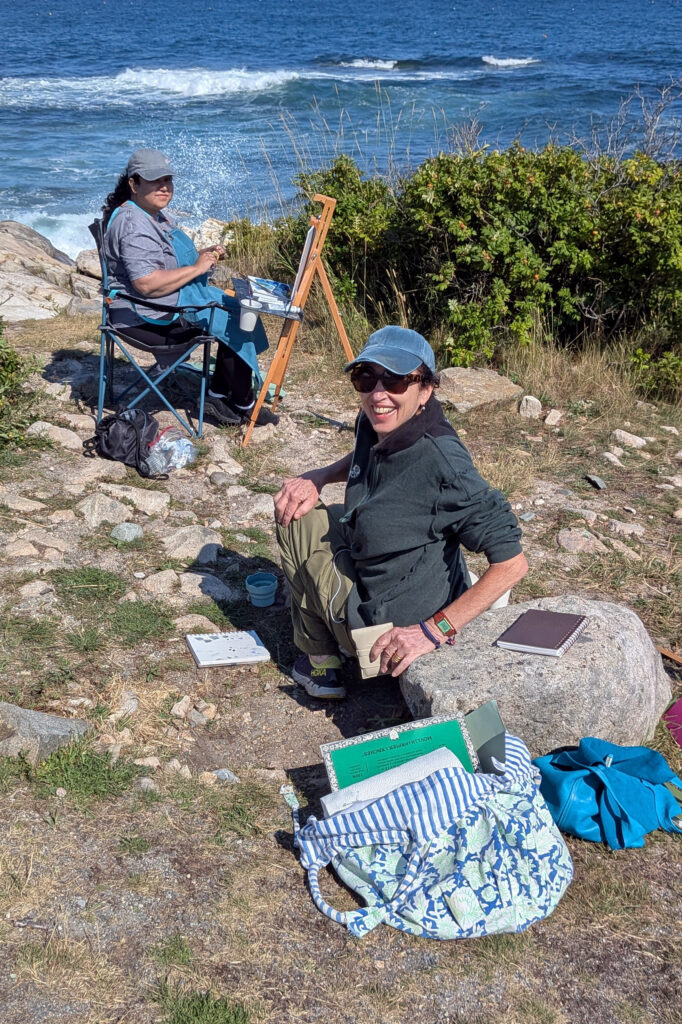
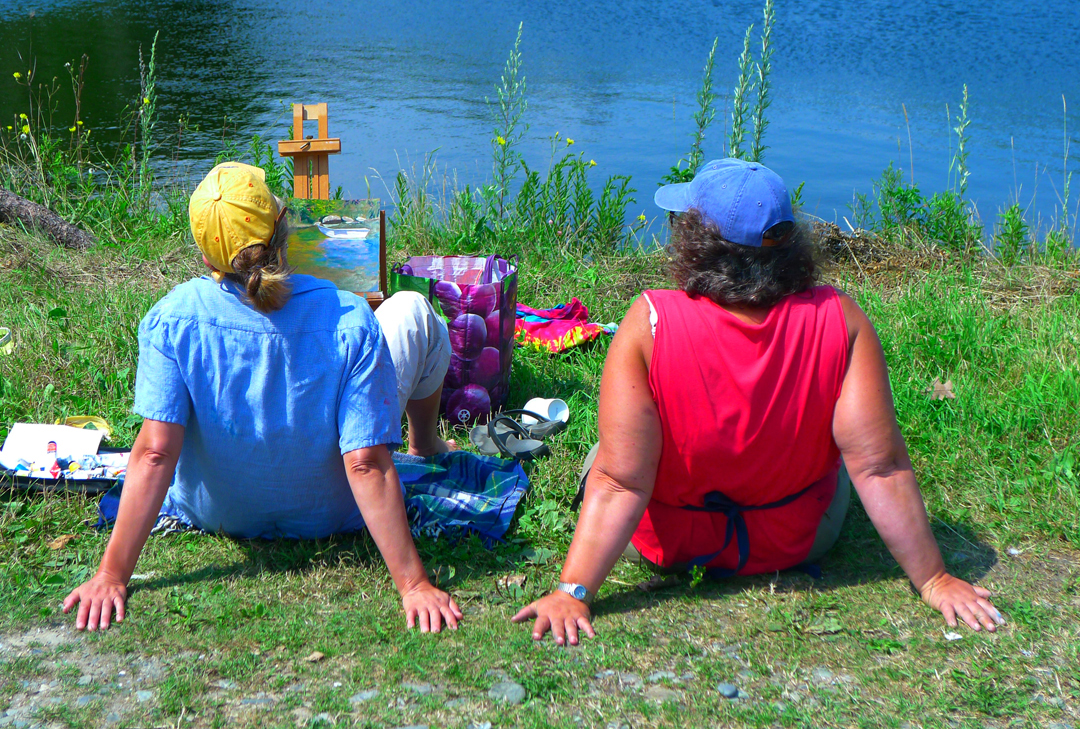
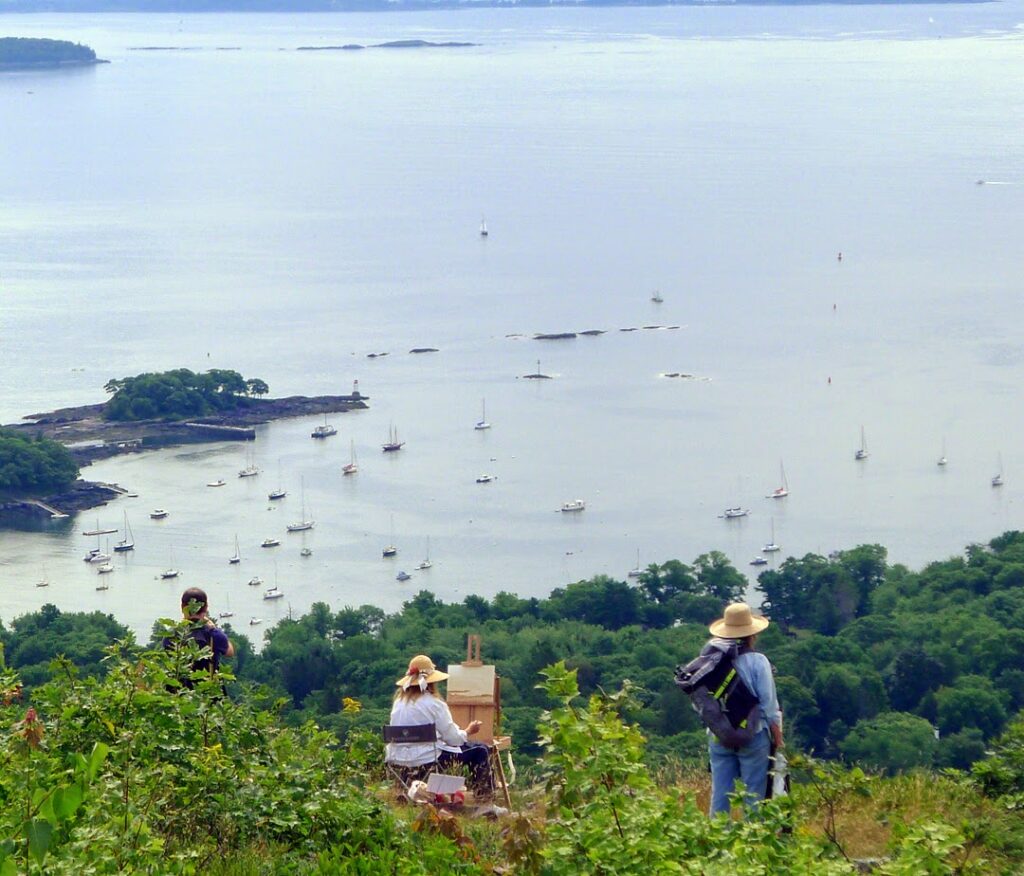
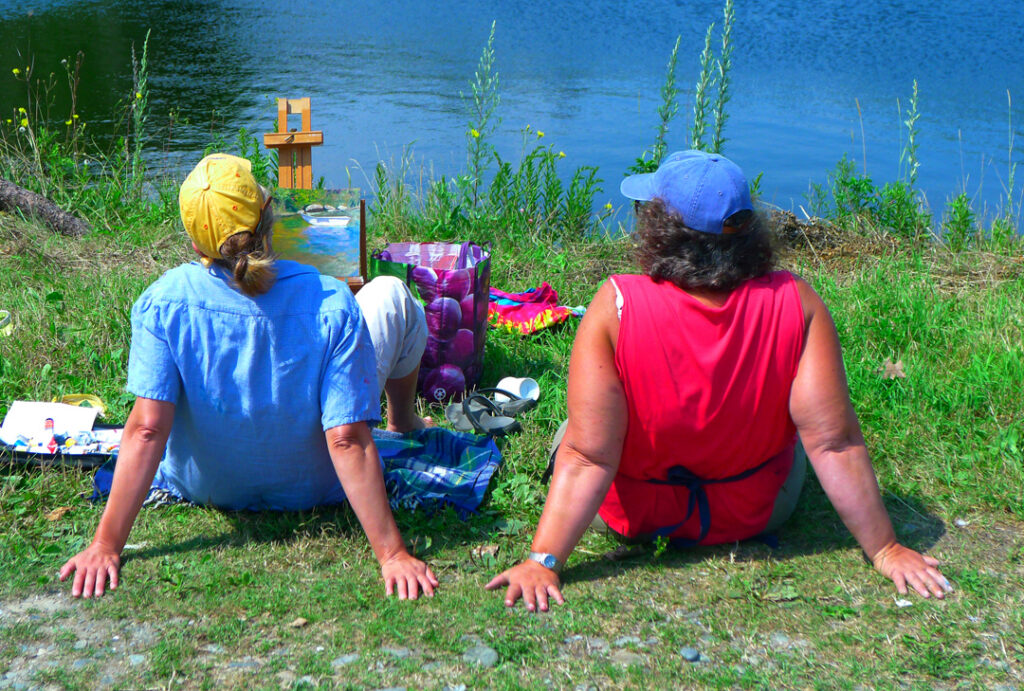
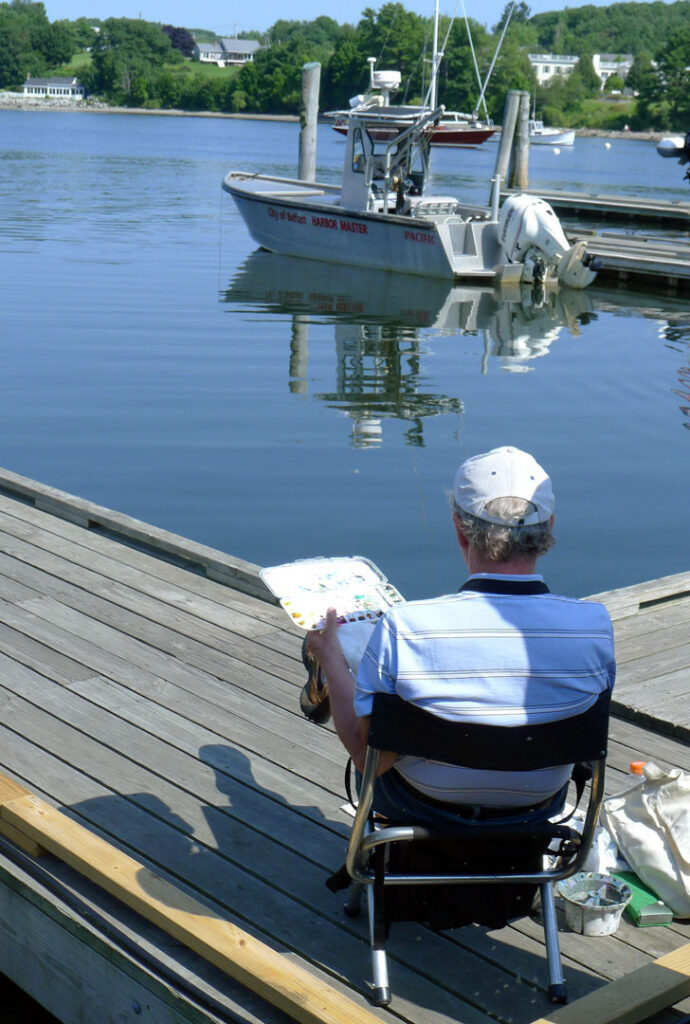
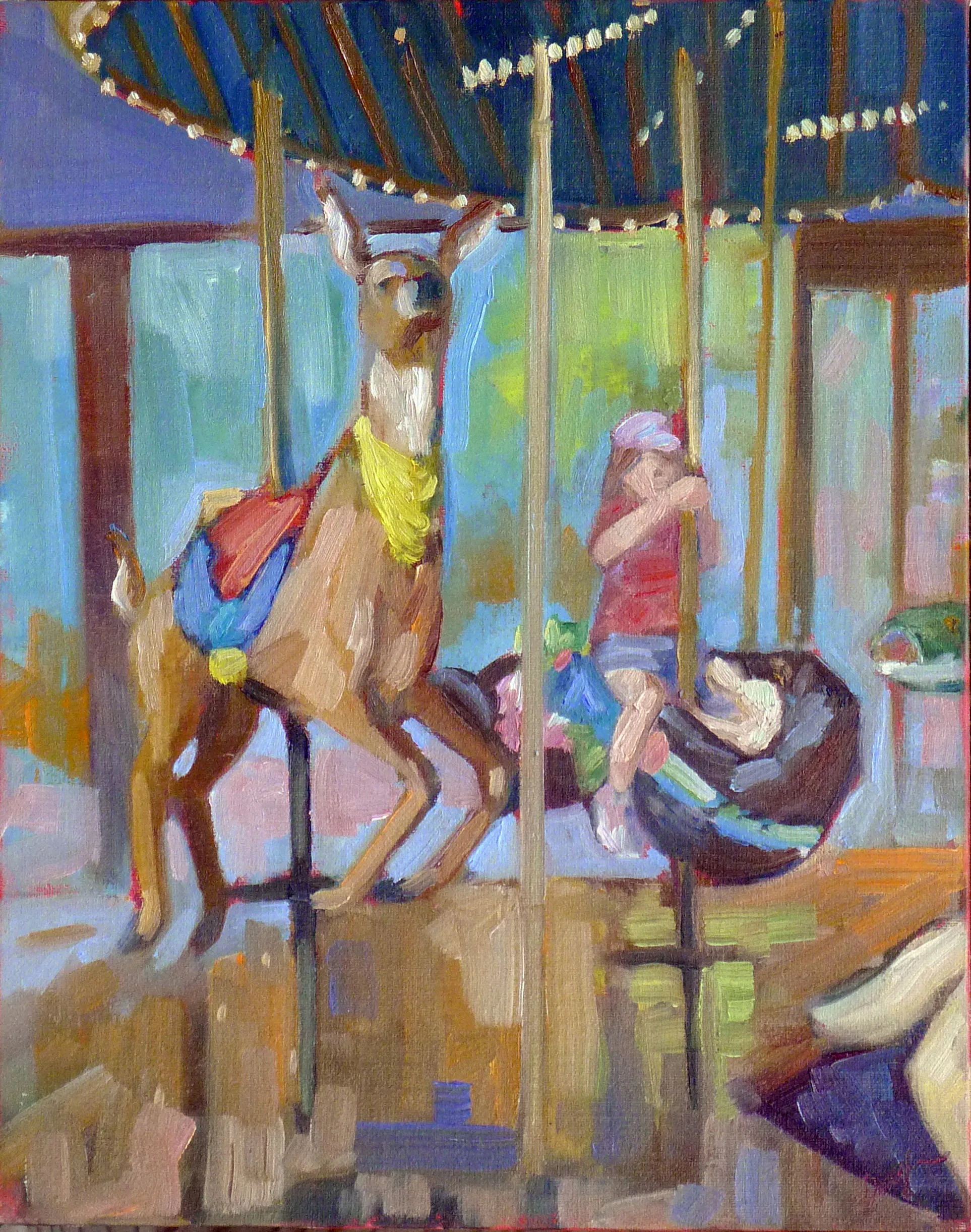
Camden on Canvas starts today! This annual plein-air painting fundraiser, hosted by the Camden Public Library, runs August 21–23, 2026. It’s brought 21 notable New England landscape painters to Camden and surrounding communities. And for all of you who’ve asked me if there are lots of artists in my neck of the woods, a rollcall reveals that a lot of us call midcoast Maine our home.

They are (in alphabetical order) Tom Bucci, Dan Corey, Ken DeWaard, Carol Douglas, Cooper Dragonette, Stephan Giannini, Roberta Goschke, Mary Ann Heinzen, Alison Hill, Jill Hoy, Eric Jacobsen, Nathaniel Meyer, Colin Page, Scott Redfern, Björn Runquist, Matthew Russ, Doug Smith, Marianne Smith, Janet Sutherland, Greta Van Campen, Michael Vermette, Russ Whitten and Peter Yesis.

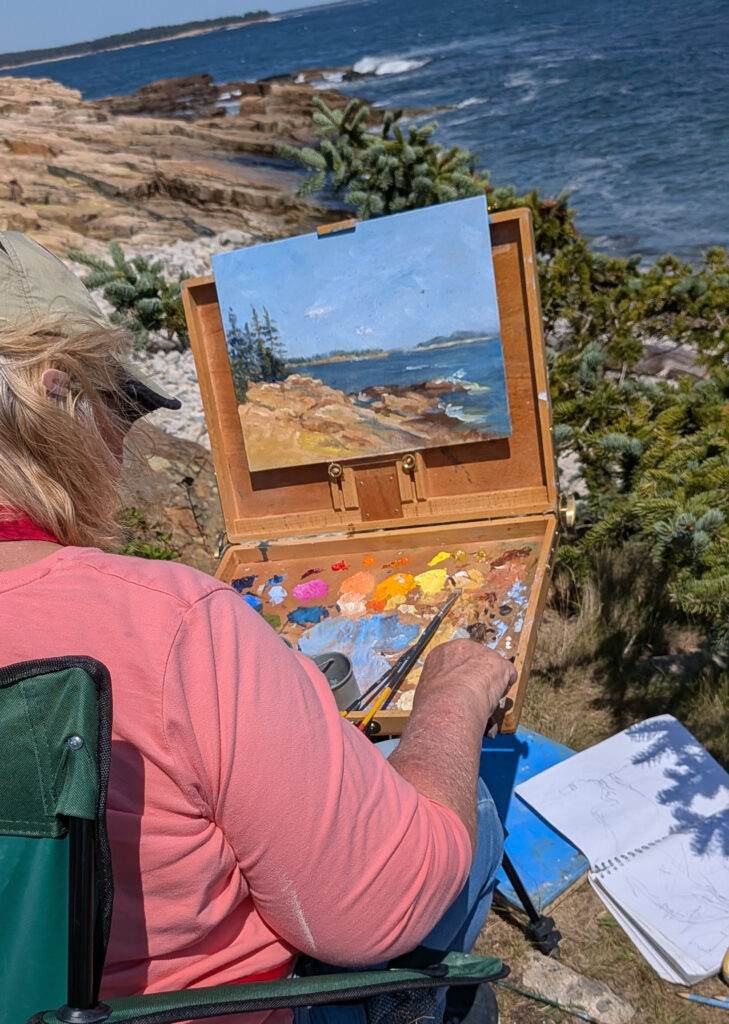
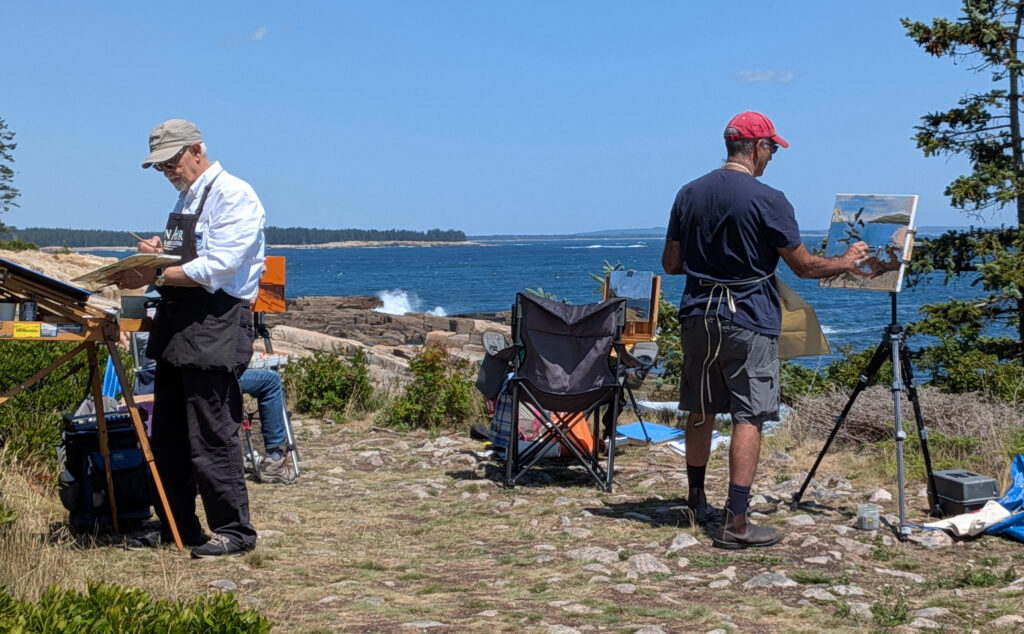
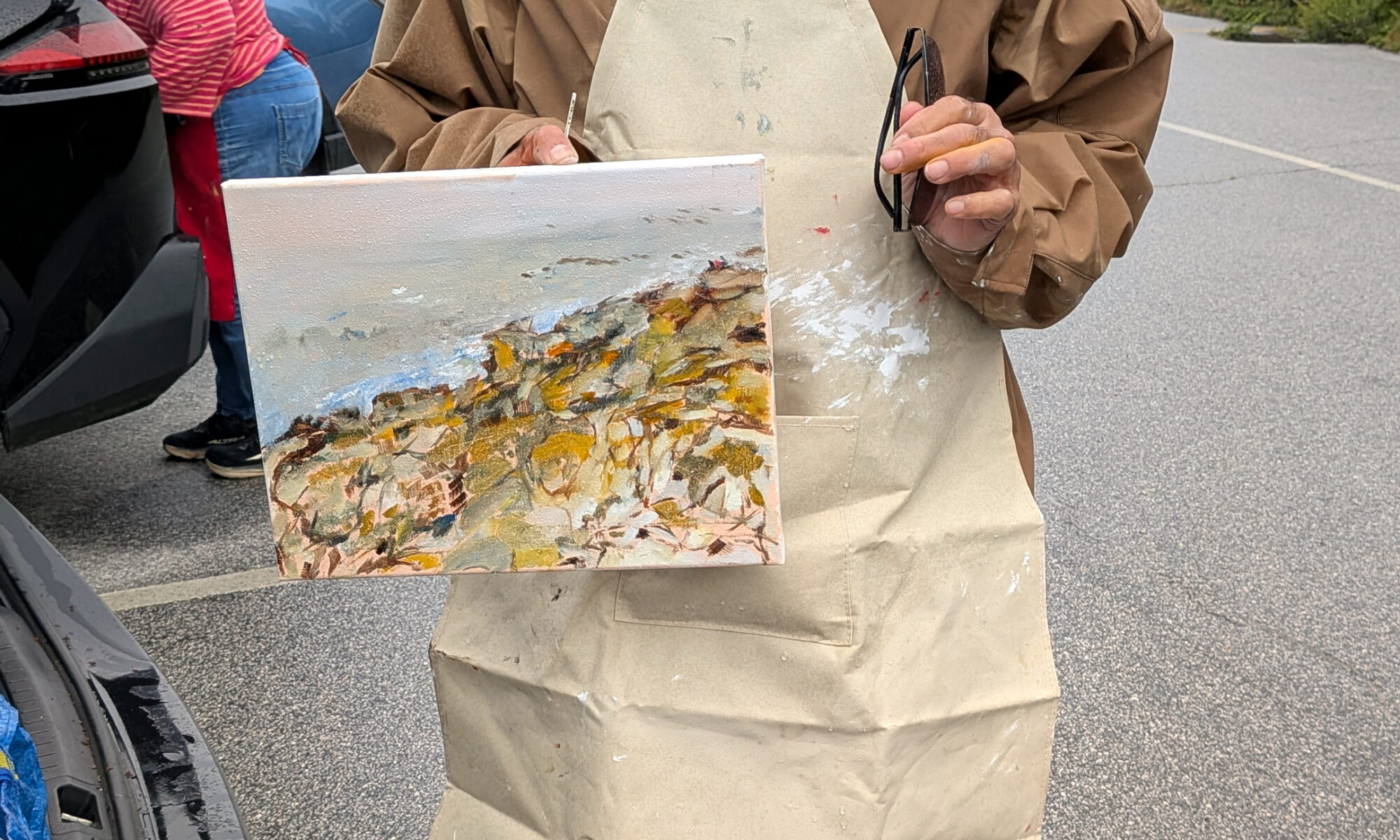
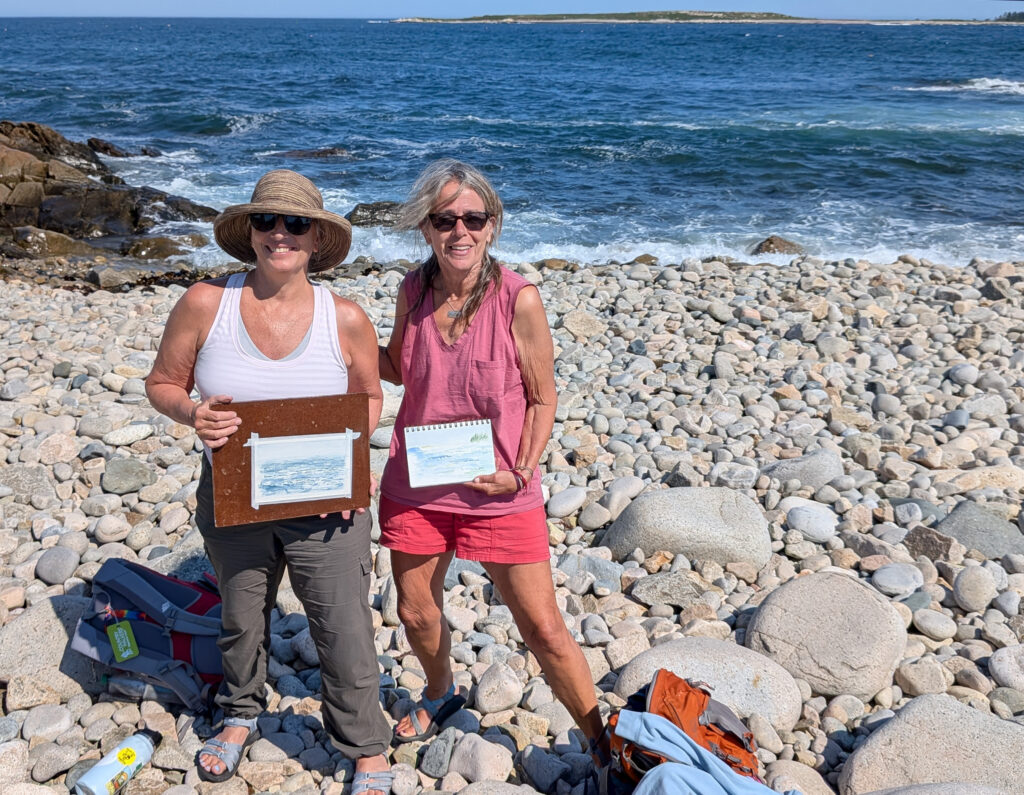
For three days, we will set up our easels outdoors and paint the Maine landscape. As of this morning, I’m planning to start on Bayview Street, somewhere near Frye, and paint the street scene from the back of my pickup truck. But of course, the cloud cover, the light, and my mood will all influence where I end up. I suggest you stop by the Camden on Canvas Information Tent outside the library’s Atlantic Avenue entrance. There you’ll find information about participating artists, with a map showing where we’re painting. The tent is open from 9 am to 5 pm Friday and Saturday, and from 9 am to noon Sunday. You can also check the Camden Public Library’s Facebook page for updates on artist locations.
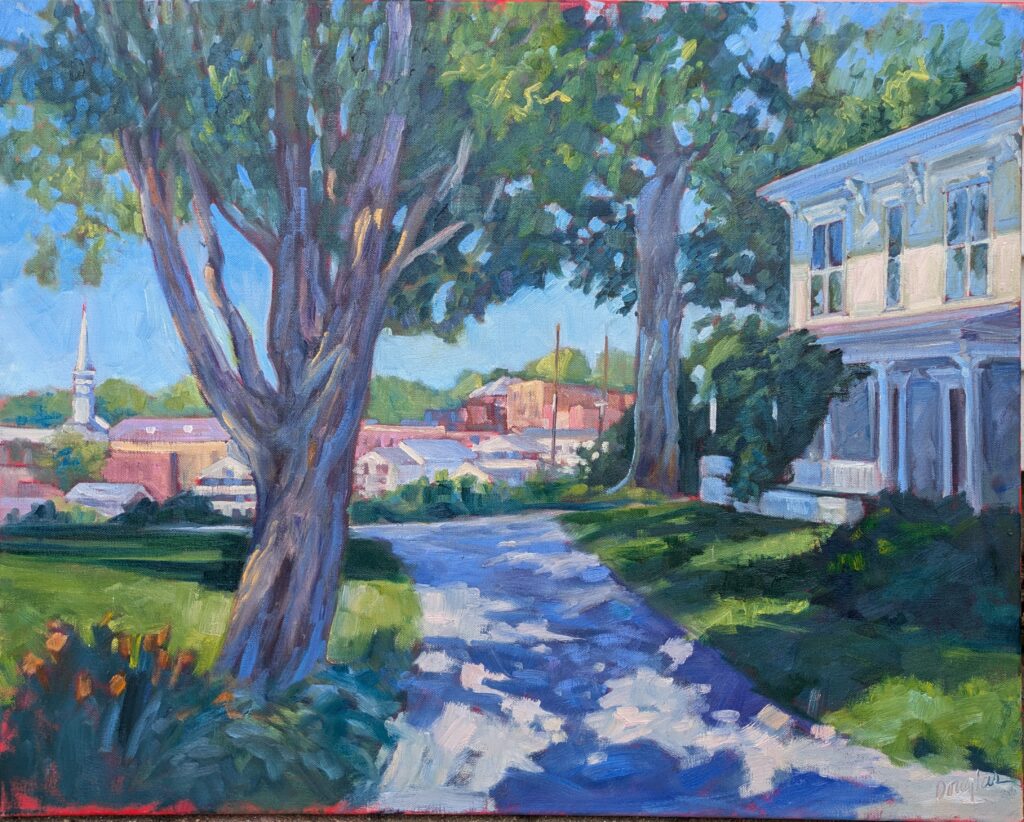
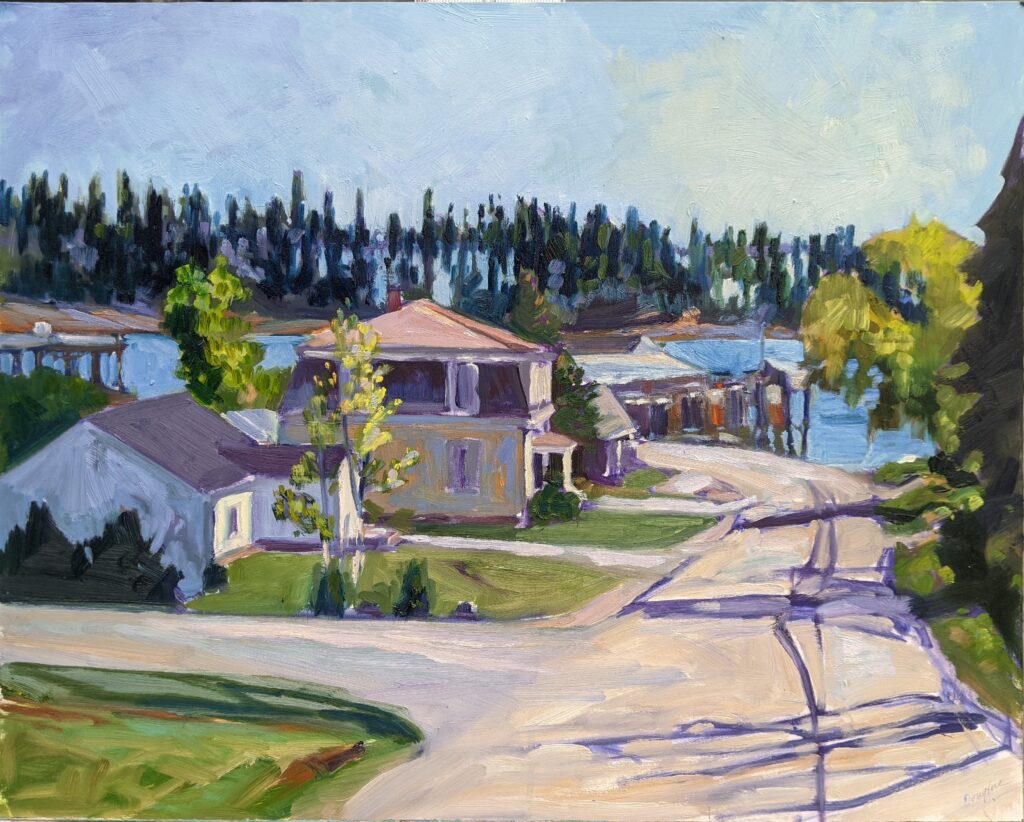
An earlier painting for Camden on Canvas, called “Sea Street,” 24X30, oil on canvas, private collection.

I’ve been doing this event since it started, and it’s a wonderful town-wide party that just happens to feature some great painters. We landscape painters are sometimes terrific storytellers and sometimes flat-out liars; the scene that surrounds us is filtered through our individual, subjective viewpoints. If you’ve ever been curious about how that works, the best way to really understand it is to watch fresh paintings develop from blank canvas to finished work.

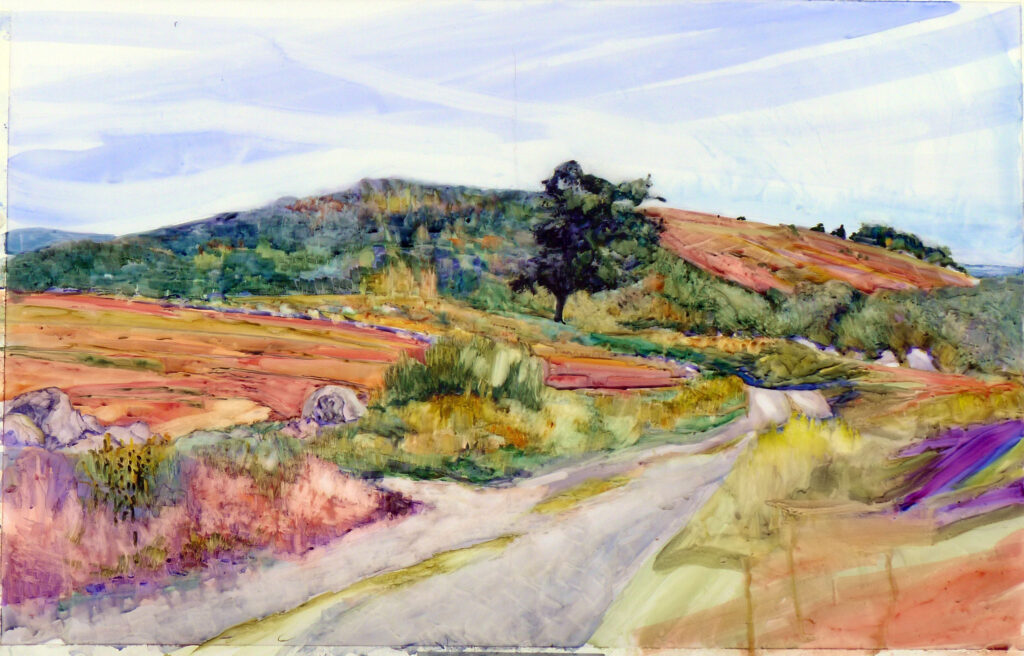
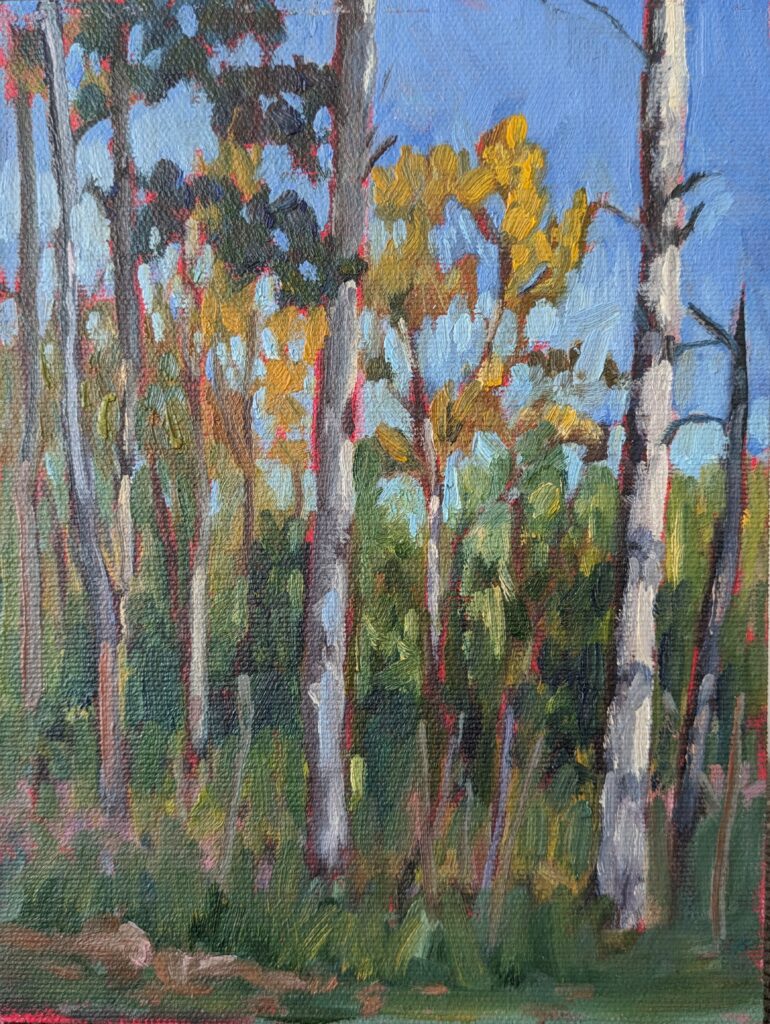
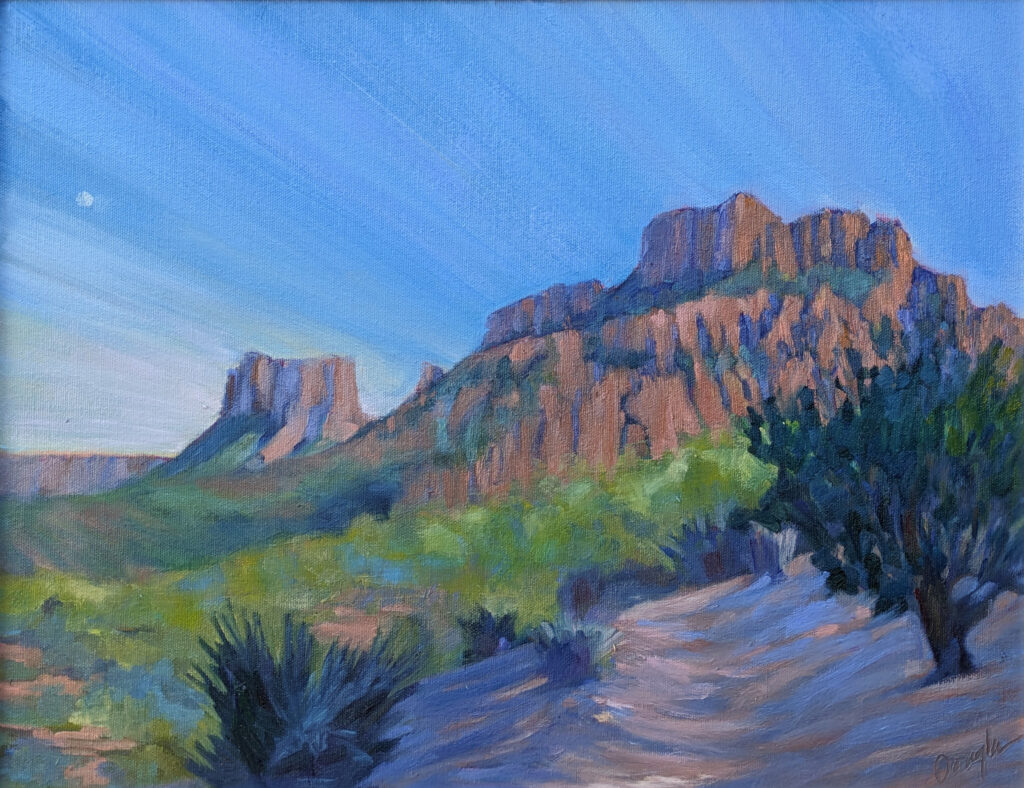
An earlier painting for Camden on Canvas, done from on Bald Mountain, 36X24, oil on canvas, private collection.

And you can buy them, too

On Sunday, August 23, from 1 to 3 pm, these paintings will be displayed in a special wet-paint exhibit at the historic Camden Amphitheatre. (If you’ve never been to Camden, the amphitheatre was designed by Fletcher Steele and the park by the Olmsted Brothers. Both are worth a visit even without an art event.)

These paintings will carry the energy, brushwork and immediacy of a weekend spent painting outdoors.

The weekend culminates Sunday afternoon with a Reception and Live Auction from 4 to 6 pm at the Amphitheatre. Come see the paintings, meet the artists, enjoy light hors d’oeuvres and drinks and take home a new piece of Maine landscape art.

Auctioneer Kaja Veilleux of Thomaston Place Auction Galleries will get the bidding underway at 5 pm. He’s always entertaining.

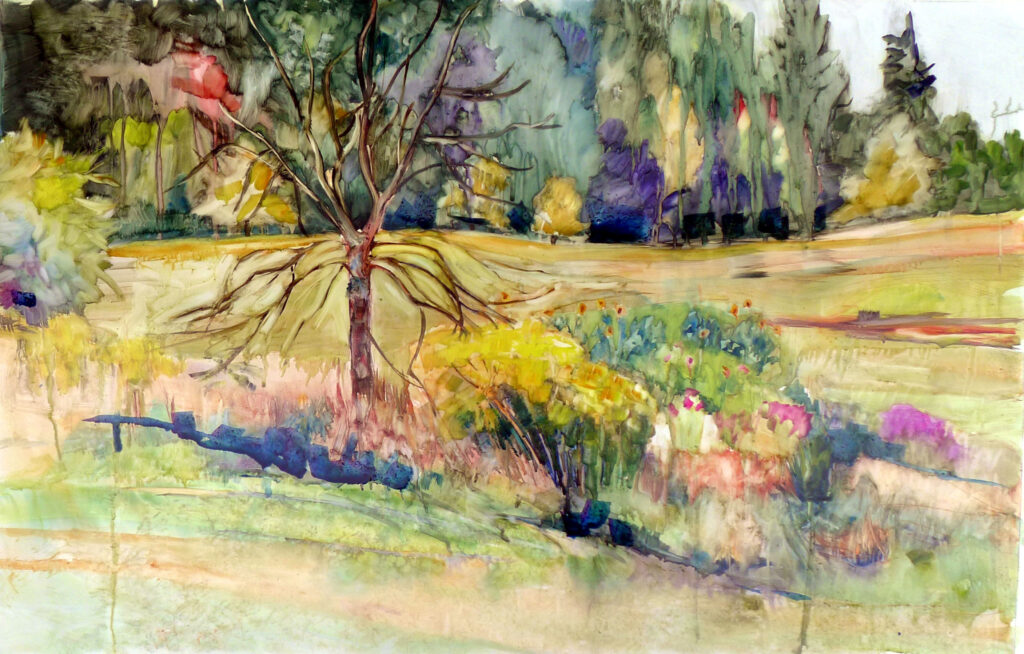
An earlier painting from Camden on Canvas, of Curtis Island Lighthouse, 24X36, oil on canvas, private collection.

Best of all, tickets to the Reception and Live Auction are complimentary this year. Pre-registration is encouraged but not required.

The proceeds are split equally between the artists and the Camden Public Library’s Campaign for the Future, making this a fundraiser that supports both working artists and an important community institution.

As Library Executive Director Kristy Kilfoyle put it, Camden on Canvas celebrates “the power of creativity and cultural enrichment.”

I have just two workshops left in 2026! Reserve your spot:

Can’t commit to a full workshop? Work online at your own pace:
Seven Protocols for Successful Oil Painters

How to sell original art

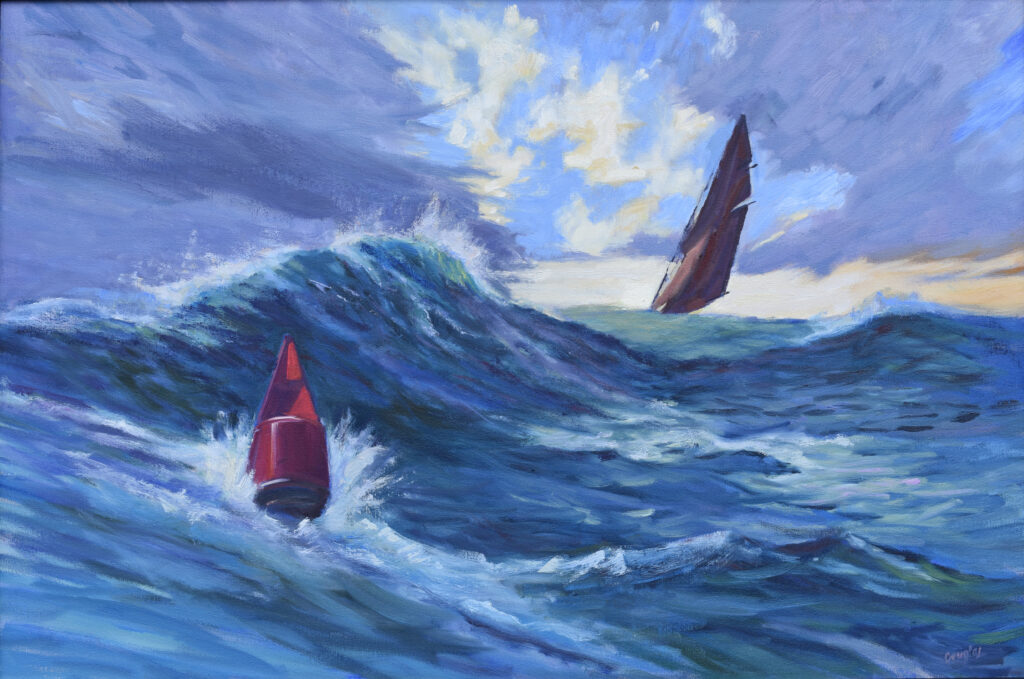
Heavy Weather (Ketch Angelique), 24X36, oil on canvas, for more details, click on image.

I met a lovely lady in Lenox, MA last week. Twice she asked me, “how much is that painting?” Twice, she told me, “I can’t afford it.”

When someone says that, they’re usually not talking about price. They can be expressing uncertainty about their priorities, the timing or their interest. Those are all legitimate concerns. Still, understanding them helps us understand how to sell original art.

Price and value are two different things

Painting prices vary widely, based on skill, experience and public profile. A customer who doesn’t get that is unlikely to understand why one painting costs several times what another does. That’s true even if they understand implicitly why Ferragamo is priced differently from Uniqlo. Educating them on the difference isn’t a quick process.

For each buyer, the question is not what the painting is worth, but what that painting is worth to them. Your goal is to show them what they’re getting that they won’t get elsewhere. These are often intangibles like craftsmanship, exclusivity or even bragging rights.

Pensive 8X10, oil on archival canvasboard. Click on image for more information.

What do they mean?

“I can’t afford it,” is often followed by, “but I’m sure it’s worth every penny.” What they’re really saying is, “it costs too much for me at this moment.”

When I bought my car this spring, I had a number in mind, based on a web search. I drive my cars for a long time. When I started to carefully consider features, I realized that spending more up front would actually give me better value.

If, at the beginning of my shopping, I’d been asked if I could afford what I eventually paid, I’d have said no. I could afford it; I just didn’t want to spend money that way. I didn’t realize at the time that the higher price was worth it.

Luxury purchases are judged in years, not days

A great example is Princess Anne’s wardrobe. She buys fine pieces and wears them for decades. Original artwork is even more durable than her evening clothes. A good painting has every chance of becoming an appreciable asset or family heirloom. Twenty years from now, your buyers won’t even remember the purchase price, but the painting will continue to be valuable.

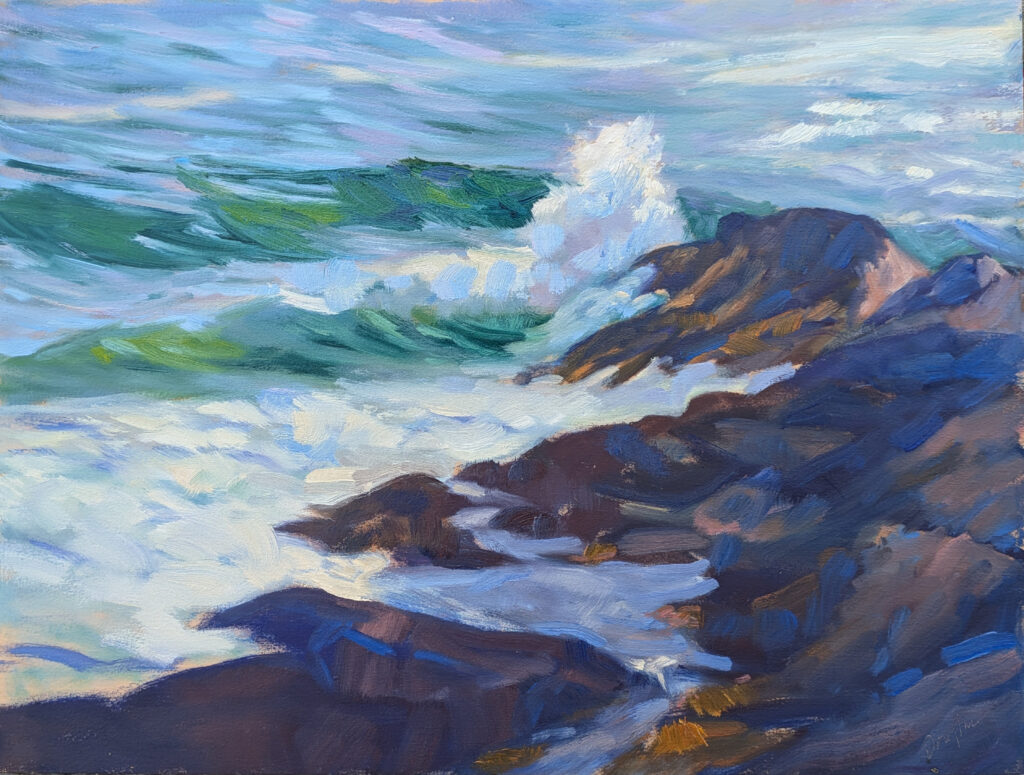
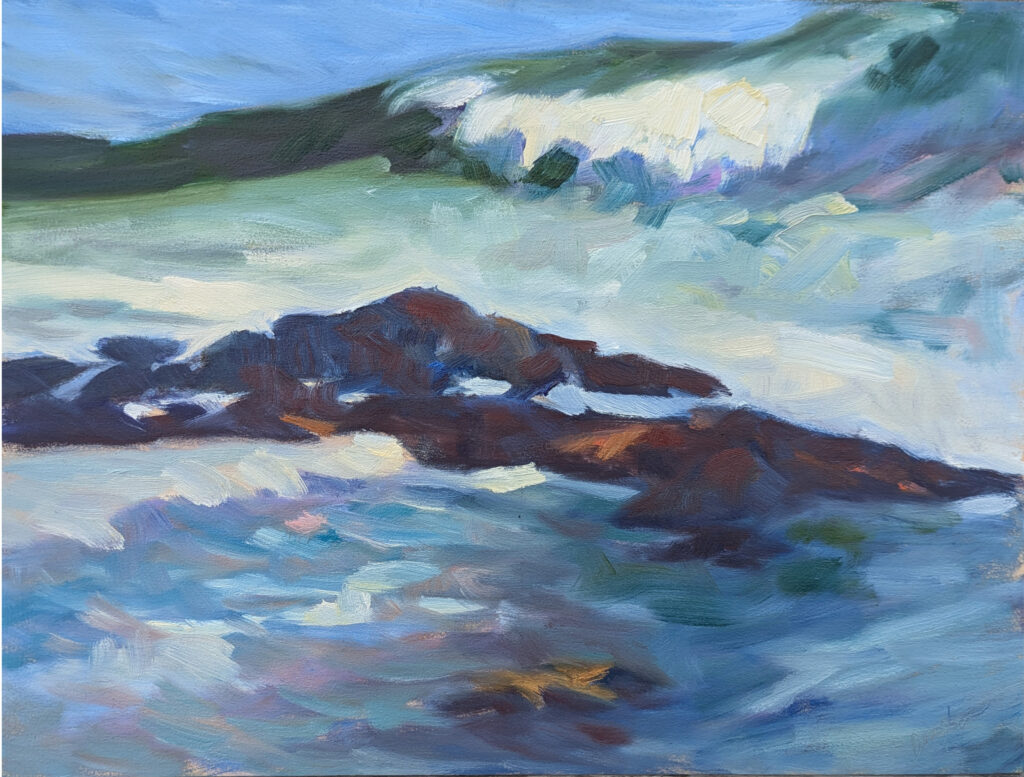
High Surf, 12X16, oil on prepared birch painting surface, for more information, click on image.

What makes your work unique?

Luxury goods are not always about more, better, bigger. They’re often about an indefinable quality that can’t be duplicated. There will always be less expensive paintings. There aren’t less expensive versions of your particular painting.

My painting prices represent my sales history, my profile as a painter, writer and teacher and my competence with the brush. What do your prices reflect? That is a hard question, but if you can’t answer it, how will you convey value to your customers?

Put the cost into perspective

Without minimizing the investment, help your customer realize that the painting they’re buying is meant to be appreciated and enjoyed for decades. Put that way, the cost is surprisingly low. This is especially important when talking to first-time art buyers, who may be subconsciously comparing your prices to Wayfair.

Surf’s Up is 12X16, on a prepared birch surface. $1159 includes shipping and handling in the Continental US.

When someone doesn’t pick up what you’re putting down

I’m a lot more confident about the value of my work than I was thirty years ago. Ironically, confidence increases credibility. I’m not going to pressure anyone; it’s far better for both of us if the customer buys something he or she really loves than something they’re unsure about.

Pressure undermines luxury sales.

Never apologize for your price

Avoid statements like, “I know it’s expensive,” or “I wish I could make it cheaper.” Avoid justifications like “this represents thirty years of experience,” or “this work has eighty hours in it.”

Original art isn’t a necessity. It’s something people choose because it enriches their lives. If a painting speaks to the buyer, it’s probably going to sell itself. Your biggest job is to not undermine the sale.

Ultimately, art buyers don’t need to be convinced that the item is priced fairly. They need to be convinced that it is worth owning.

I have just two workshops left in 2026! Reserve your spot:

Can’t commit to a full workshop? Work online at your own pace:
Seven Protocols for Successful Oil Painters

Monday Morning Art School: why loose brushwork in painting?

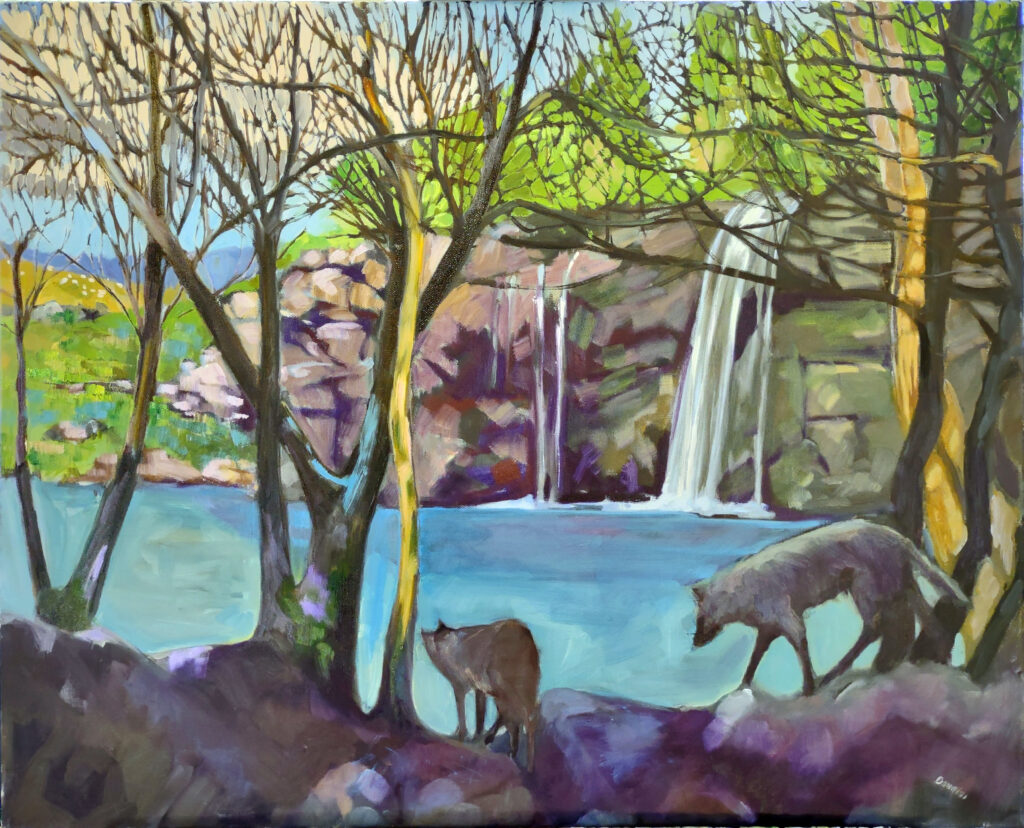
Ravenous Wolves, oil on canvas, 24X30. For more information, click on the image.

There have always been painters who embraced rough, broken marks. However, at the end of the 18th century, painters like Francisco Goya and J.M.W. Turner began a permanent break from the polish of strict academic painting. Where did loose brushwork in painting come from, and is it still relevant today?

A quick note before we get into it

Claim your spot in Painting Water, Monday evenings or Painting Nocturnes, Tuesday evenings. Both are 6-9 PM, starting the week of August 17, 2026, which is today.

This is my last Zoom session until I get back from Sedona Plein Air at the end of October. That’s because I’m teaching and eventing non-stop until then.

I upload videos of these online classes and you have access to them for as long as there’s YouTube. That means you can review them if you need a refresher or have to cut out early.

Brooding Skies, 8X10, oil on archival canvasboard, click on image for more information.

The Industrial Revolution

The 18th and early 19th century saw the development of steam power, textile mills, canals and railroads, making muscle much less important. At the end of the 19th century, electricity, petroleum, steel, chemicals, telecommunications and the internal-combustion engine were introduced. That gave us assembly lines, automobiles, electrical grids, telephones, skyscrapers and mass consumer goods.

The second half of the 20th century brought computers, electronics, telecommunications, robotics, satellites and the internet. Now we’re grappling with artificial intelligence, machine learning, cloud computing, sensors, robotics, biotechnology, autonomous vehicles and, of course, the Internet of Things. Rapid change makes us edgy, but it’s important to remember that those prior phases had the same effect on the people who lived through them.

Art responded to each phase of the Industrial Revolution in unique ways. But with each of them we saw more of the artist and less of the subject in artwork. Visible brushstrokes said, “this was made by a human,” in a world which felt increasingly standardized.

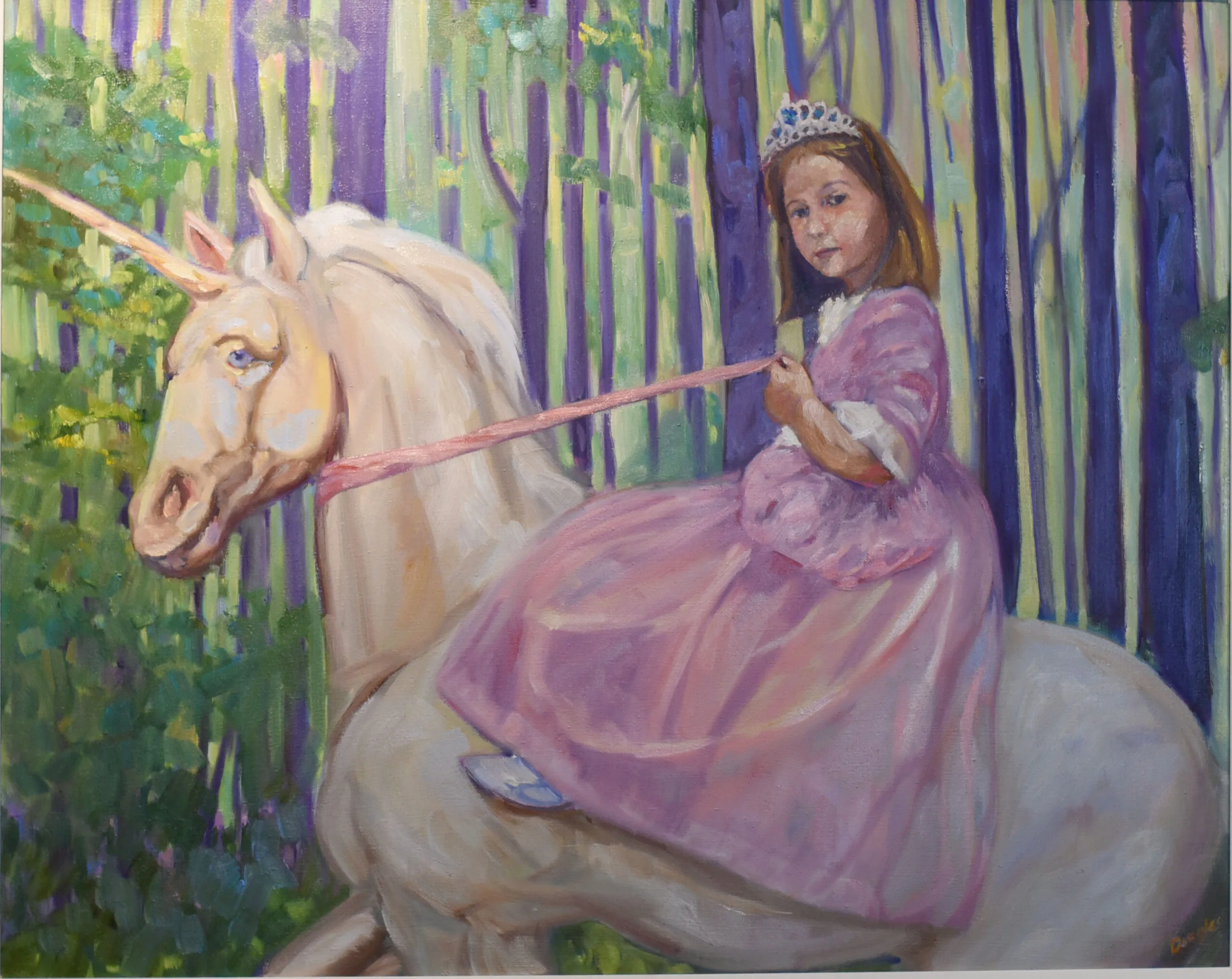
In Control (Grace and her Unicorn), 24X30, $3,478 framed, oil on canvas, includes shipping in continental United States.

Impressionism and plein air painting

Plein air painting was an important part of Impressionism . Because conditions outdoors shift so fast, plein air painting rewards economy. Plein air painters learn to ‘set it and foret it.’ That produces fresh, economical marks.

Plein air painting is the biggest and most influential painting movement of my lifetime. Its mark-making isn’t going out of style any time soon.

Modernism

Modernist painters increasingly treated the painting as an object in itself, rather than a reflection of reality. Painters like Paul Cézanne and Vincent van Gogh used brushwork to create both emotional tone and structure.

Modernism emphasized subjective vision over realistic representation. The disillusionment and anxiety of the 20th century, with its endless wars, meant that this vision was often fragmented, dark and distorted. In Abstract Expressionism, loose brushwork often was the subject.

Photography

Once photographs could record appearances with accuracy, painting lost its practical purpose, which had been to record people, places, ideas and events. Painters were forced to ask, what can I do that a camera can’t?

Loose brushwork was one answer. This helped shift painting from representation into interpretation.

Certificate of authenticity

Your brushwork is as individual as your handwriting. It’s one thing technology can’t (yet) duplicate. And it’s why we value loose brushwork in painting more than ever; the physical act of painting is imbedded in the work.

Brushstrokes record movement, speed, pressure, hesitation and decision, just as handwriting does. It has become a dominant part of modern style; we recognize the person in the mark.

Brushwork signals confidence

Bravura brushwork suggests decisiveness, mastery, speed, physical engagement, risk and freedom. These are things our culture values, so we find loose brushwork in painting far more exciting than carefully-blended marks (although there is room for both in a good painting).

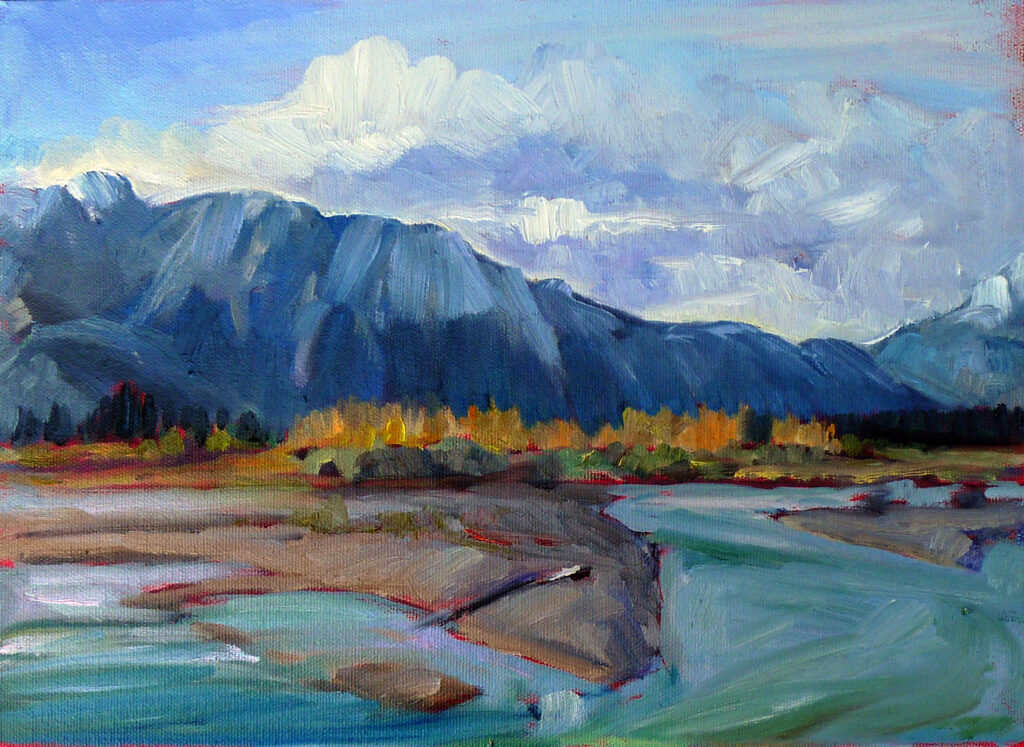
Athabasca River Confluence, 9X12, click on image for more information.

Looseness isn’t the same thing as good painting

Bravura brushwork only works if the painter knows what each stroke is meant to accomplish. Otherwise, it’s mere sloppiness.

Loose brushwork has to sit on a base of careful drawing, good composition and well-considered color. Great painters with flamboyant brushwork have a wealth of technique supporting their apparent spontaneity. They know proportion, value, edges, color relationships, anatomy, perspective and composition well enough that they can hit the right mark on the first strike (which is what alla prima means).

The big question

If looseness is now the language of serious painting, is there still anything rebellious or exploratory in being loose? Does looseness still matter in the 21st century? For me, the answer is yes but I leave you to make that choice yourself.

I have just two workshops left in 2026! Reserve your spot:

Can’t commit to a full workshop? Work online at your own pace:
Seven Protocols for Successful Oil Painters

Plein air painting waste and the plastic bag ban

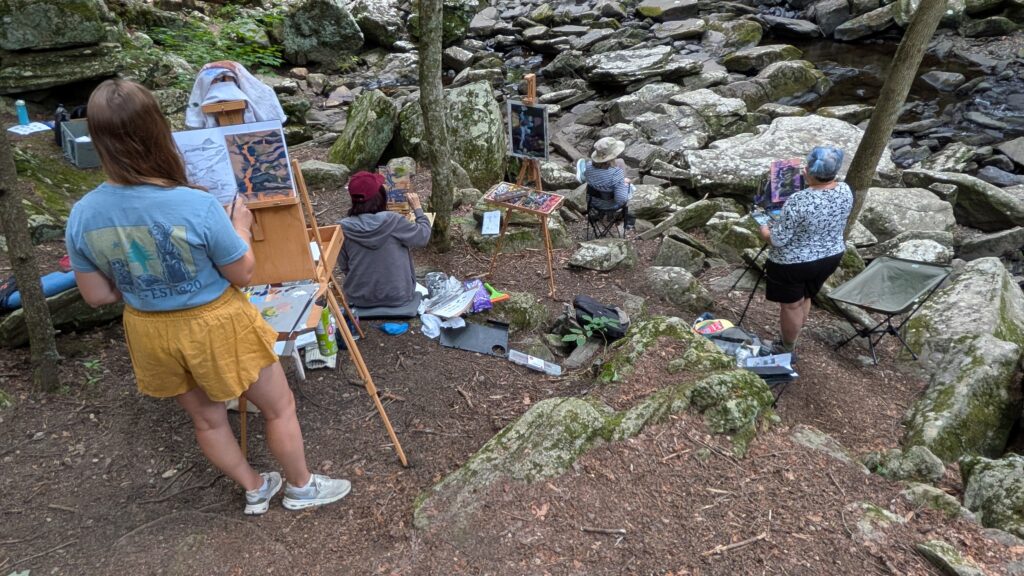
Intrepid painters at Wahconah Falls State Park (Berkshires workshop).

In the old days, my highest-rated blog post was this essay on folding plastic bags to fit in your kit. (Now it’s this debunking of tetrochromacy; don’t ask me why.)

Today, 12 states have plastic-bag bans: Maine, Vermont, Rhode Island, Connecticut, New York, New Jersey, Delaware, Colorado, Washington, Oregon, California, and Hawaii.

My county was an early adopter, and I supported the plastic bag ban. Not because it cut down on plastics; grocery bags comprise a miniscule part of America’s plastic consumption. I was sick of seeing bags hanging from trees, fences and shrubs. The prevailing winds in coastal Maine blow towards the ocean. Sea urchins, jellyfish and the other denizens of tidal pools don’t need to be dodging plastic bags.

However, I’ve noticed in recent workshops that my students have a harder time dealing with plein air painting waste now that plastic grocery bags are less plentiful.

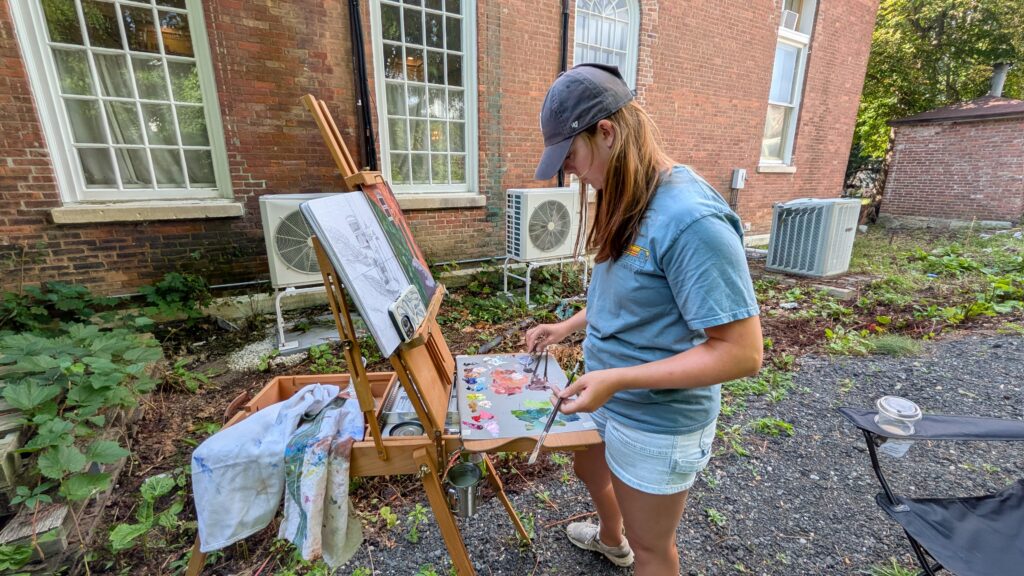
Alicia made a beautiful painting in a real Ashcan School setting (Berkshires workshop).

Short weekly class session starts next Monday

Claim your spot in Painting Water, Monday evenings or Painting Nocturnes, Tuesday evenings. Both are 6-9 PM, starting the week of August 17, 2026, which is next week.

This is my last Zoom session until I get back from Sedona Plein Air at the end of October. That’s because I’m teaching and eventing non-stop until then.

I upload videos of these online classes and you have access to them for as long as there’s YouTube. That means you can review them if you need a refresher or have to cut out early.

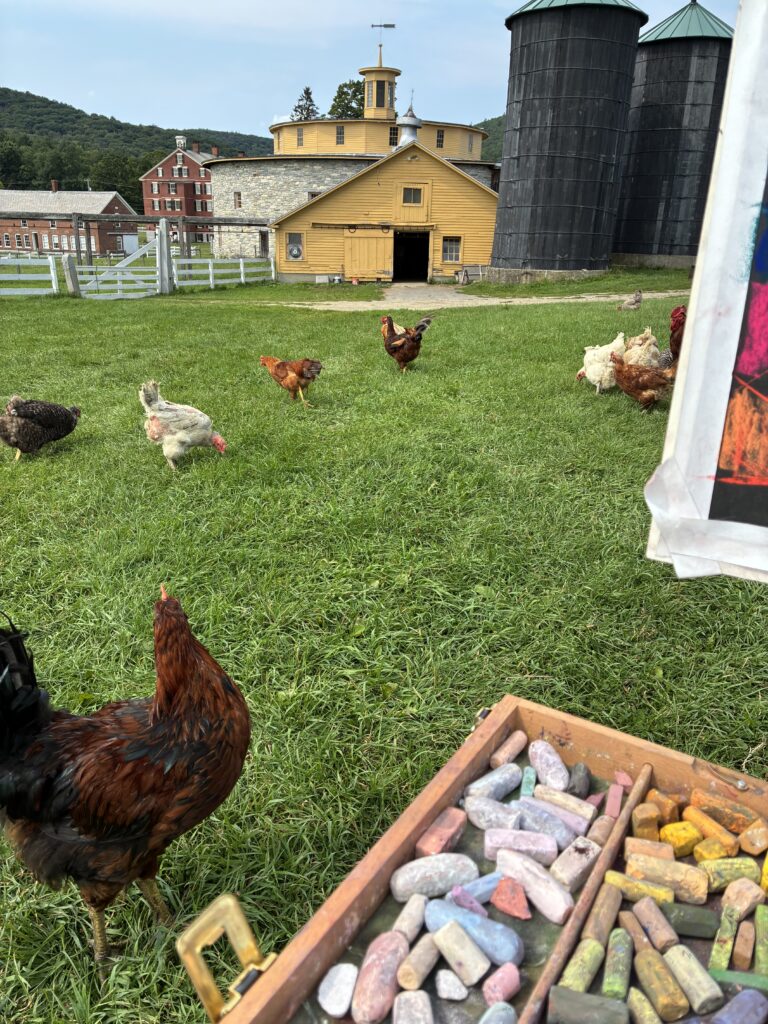
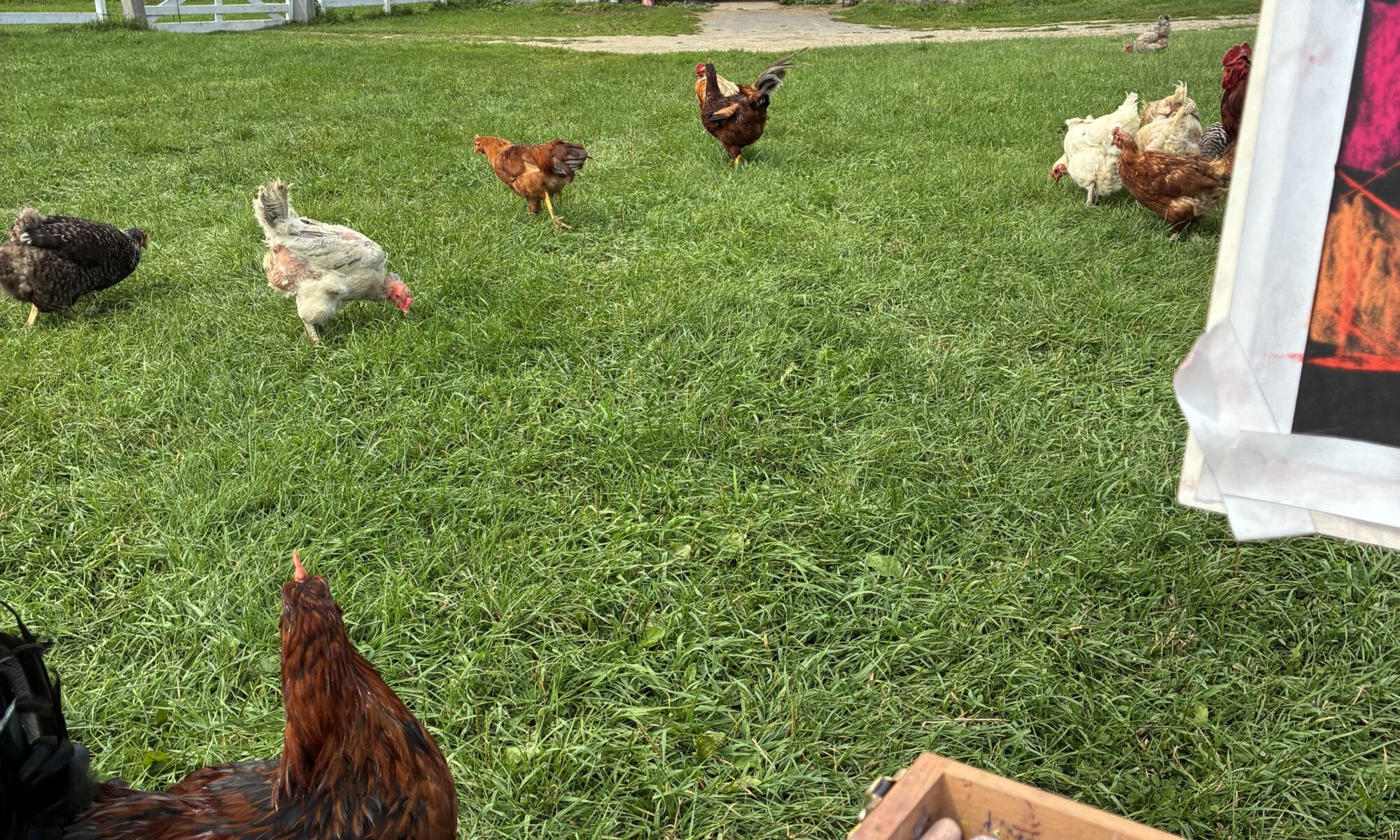
My city-slicker student Jackie wasn’t keen on the chickens, but they seemed to love her! (Berkshires workshop)

BYOB (Bring Your Own Bag)

Obviously, we want to carry in, carry out. We’re stewards of the landscape, after all.

I don’t like the lightweight trash receptacles that are meant to hang from your easel. They’re heavier and bigger than a plastic bag. Emptying them in a trash can may be no big deal in Manhattan, but it’s a pain in less civilized areas. They tumble around in your car until you empty them. That’s an opportunity to get paint on the upholstery. Then you have to fold them and remember to put them back in your kit.

Washable reusable bags put pigments into the water stream. Paper bags leak. The humble plastic bag remains the most practical answer, but in the bag-ban states, we have to buy rolls of 1-gallon trash bags. I’ve resigned myself to it.

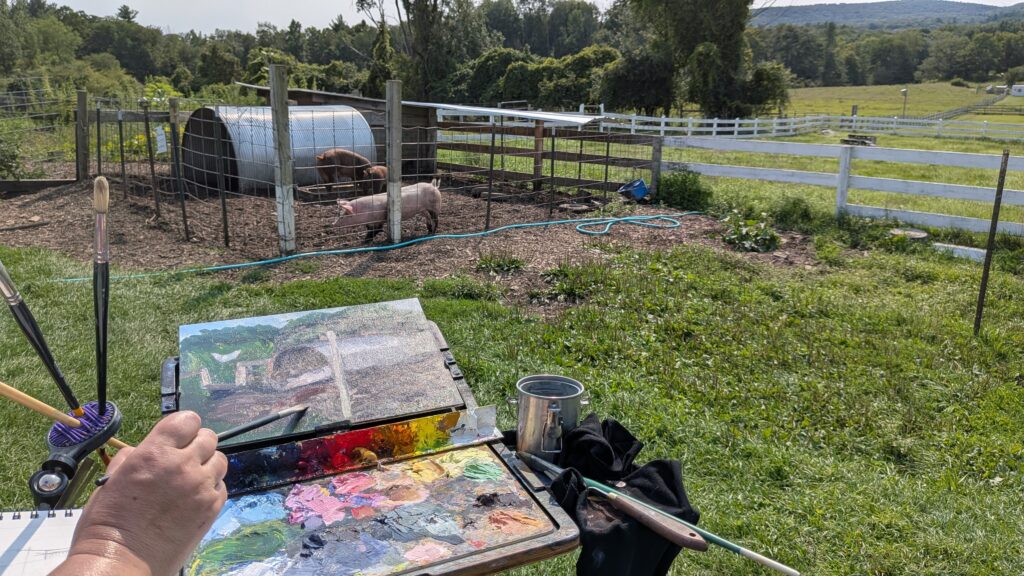
Linda tried to take a pig home with her after she painted its portrait (Berkshires workshop).

Trash is tough if you forget the bag

Without a trash bag, plein air painting waste can be difficult to manage. Used paper towels and rags accumulate quickly. There are foul, sticky palette scrapings, bits of tape, plastic gloves, sandwich wrappers, tissues and other trash.

I’ve been forced to tuck dirty rags into my pockets. Worse is to set them down until you pack up. They get paint on the ground and can blow away. A dirty paper towel isn’t just unsightly litter. Pigments shouldn’t be added to the landscape.

One of the pleasures of plein air painting is that you develop an intimate relationship with a particular piece of land. That means you also notice the garbage. I hike daily and find coffee cups, soda cans, dog poop, candy wrappers, tissues, etc. along the trail.

Your painting kit should contain everything you need to make the painting and everything you need to pack up and leave no trace. We are guests in the landscape. Our goal should be to leave our little patch of earth looking as we found it, if not better.

I have just two workshops left in 2026! Reserve your spot:

Can’t commit to a full workshop? Work online at your own pace:
Seven Protocols for Successful Oil Painters

What artists can learn from beginners

Grey Birches, 8X10, oil on archival canvasboard, for more information, click on image.

I have two painting students, PhDs in chemistry and electrical engineering. One is a novice acrylic painter; the other a more-advanced watercolorist. In recent months, they’ve been emailing about blue, not in the artist’s way, but the scientist’s. (I’m just following along.)

Among other things, they’ve demonstrated that some blues’ chroma increases when you add a little white. That flies in the face of conventional wisdom, which says paint will never be more intense than it is straight out of the tube.

I suppose thirty more years of looking at blue paint and I’d have drawn the same conclusion, but they’ve bypassed that painful learning process. This has immediately changed how I paint.

Meanwhile, a student from last week’s Schoodic workshop sent me a note about the watercolor skills he’s developing. What interested me was what he has learned from teaching beginners in a volunteer parks program. “Some of my best basic skills teachers,” he wrote, “are the novices I help.”

Maine Coast, 8X10, oil on archival canvasboard, for more information, click on image.

Short weekly class session starts next Monday

Claim your spot in Painting Water, Monday evenings or Painting Nocturnes, Tuesday evenings. Both are 6-9 PM, starting the week of August 17, 2026, which is next week.

This is my last Zoom session until I get back from Sedona Plein Air at the end of October. That’s because I’m teaching and eventing non-stop until then.

I upload videos of these online classes and you have access to them for as long as there’s YouTube. That means you can review them if you need a refresher or have to cut out early.

Beginners aren’t burdened by what they think they know

My student noticed that the novices he worked with were unconcerned with detail. They weren’t adding every rock, tree or branch because it was in front of them. They weren’t trying to reproduce the entire landscape.

That reminded him to reconsider the fundamentals of his own work. Were the values correct? Was the drawing accurate? Was he making decisions about composition, or simply recording what was there?

Off Pearl Street, 8X10, oil on archival canvasboard, for more information, click on image.

What artists can learn from beginners

I have formal instruction from the Art Students League and elsewhere. But the hours I’ve spent teaching have taught me as much or more. By having to explain technique, I’ve internalized it. By having to answer questions, I’ve researched things I knew nothing about. By listening, I’ve learned. Adults will challenge you when you’re vague or wrong. That’s a very good thing.

Am I too old to learn to paint?

On Monday, a woman watching me teach in the Berkshires told me, “I always wanted to paint but I’m too old.” She was my age, but she didn’t believe me when I said it wasn’t true.

I felt the same way when, at 38, I pivoted into a full-time painting career. Thirty years later, I’m very glad for all the other experiences I brought into my art career.

Every adult learner wonders about whether they left it too late. However, they come to art with knowledge and experience that an 18-year-old can’t understand. All of it translates into their art, whether it’s an understanding of process, years spent working with their hands or 10,000 miles trekking through nature. Adult learners take the long view; they don’t expect immediate excellence. That gives them the patience to not quit when painting seems daunting.

Thomaston, ME, 14X18, oil on archival canvasboard. Click on image for more information.

Quirky self-expression

One of the last week’s students made some very unusual paintings. Her work was very detailed for conventional plein air painting, which tends towards speed and freshness. However, it had a magical folkloric quality. That raised a discussion of why we value looseness in the first place, and why it’s important for teachers to not force students into the teacher’s style.

We don’t have to imitate another painter’s choices to learn from them. Sometimes the most useful thing another artist can do is challenge our assumptions about how painting is supposed to work.

I have just two workshops left in 2026! Reserve your spot:

Can’t commit to a full workshop? Work online at your own pace:
Seven Protocols for Successful Oil Painters

Monday Morning Art School: painting solvents and mediums

Clary Hill Blueberry Barrens, watercolor on Yupo, ~24X36. Click on image for more information.

“Painting mediums are like steroids,” I told my students at last week’s workshop. “They’re invaluable when necessary, but deadly when misused.” What are all those solvents, mediums, oils, gels, retarders and flow improvers, anyway? What do they actually do?

One thing painting solvents and mediums can do is create more problems than they solve, when not used correctly.

Short weekly class session starts next Monday

Claim your spot in Painting Water, Monday evenings or Painting Nocturnes, Tuesday evenings. Both are 6-9 PM, starting the week of August 17, 2026, which is next week.

This is my last Zoom session until I get back from Sedona Plein Air at the end of October. That’s because I’m teaching and eventing non-stop until then.

I upload videos of these online classes and you have access to them for as long as there’s YouTube. That means you can review them if you need a refresher or have to cut out early.

Main Street, Owl’s Head, oil on archival canvasboard. For more information, click on image.

What is the difference between solvent and medium?

Solvent is the liquid that dissolves paint to make a solution. In oils, the solvent is usually odorless mineral spirits (OMS). In acrylics and watercolors, the solvent is water. Solvent is used to thin paint and clean brushes.

Painting medium changes how paint works and dries. It can speed up or slow down drying time, make paint thick or thin, add gloss or matte shine or create special textures without breaking the paint’s bond. Let’s look at these separately for each medium.

Oil paint

Oil paint already contains siccative (drying) oil, in which the pigment is suspended. You don’t need to add anything to make it work.

Solvent (OMS) is useful only in the early stages. Use it sparingly. It makes paint flow, but as it evaporates, it leaves a film of dull, oxidized pigment.

Linseed, walnut and safflower are siccative oils, and they dry by oxidation, not evaporation. They are the base for all oil paints and make paint more fluid, transparent and glossy. However, excess oil can soften edges and layers excessively, leading to overmixed paint and future problems with drying and cracking.

Mediums and gels are made by adding drying agents, solvents and varnishes to those oils. These mixtures are designed to change paint handling, making it more fluid, buttery, transparent or to speed up or slow down drying.

Students should always learn to paint with straight paint first and then add either medium or oils only as necessary. You need to know what paint itself can do before you start modifying it.

Rachel’s Garden, ~24×35, watercolor on Yupo, museum-grade plexiglass. For more information, click on image.

Watercolor

Watercolor is wonderfully uncomplicated. Add more water and paint becomes more transparent and fluid. Add less and you get stronger, more concentrated color.

There are additives for watercolors, such as ox gall (flow enhancer), blending medium, granulation medium, pearlescent medium and texture gel, but these are optional, not necessary. If your watercolor isn’t behaving, the answer isn’t in a bottle; it’s in your water-to-pigment ratio.

Acrylics

Acrylics dry by evaporation and form a plastic film.

Water can thin acrylic, but excessive dilution can interfere with the paint’s binder and produce a weak film; most guidelines recommend staying under 25–50%. If you want very fluid paint, use an acrylic medium.

Acrylic gels change the body and transparency of the paint. Soft gel, heavy gel and other formulations make paint thicker, thinner, more transparent, or more dimensional.

Retarder slows acrylic’s drying time. This is very useful for plein air, when acrylics can be frustratingly fast-drying. The ‘right’ amount varies depending on temperature and humidity. Too much retarder can interfere with drying and weaken the surface. If you find you’re always using retarder, consider switching over to a product with retarder built in like Golden Open Acrylics.

Evening in the Garden, 9X12, oil on archival canvasboard, for more information, click on image.

Every additive changes your paint

If you’re constantly adding solvent, oil or gel because your paint isn’t doing what you want, the problem isn’t the paint; it’s how you’re using it. You may need to wet (activate) your watercolors more thoroughly before you start painting. You may be trying to drag new life out of dried-out oil paint. You may need to learn how to keep acrylics open in the field. How do you learn these things? It seems to me a workshop is a good place to start.

I have just two workshops left in 2026! Reserve your spot:

Can’t commit to a full workshop? Work online at your own pace:
Seven Protocols for Successful Oil Painters

Stop copying in your landscape painting

Lynda Mussen is a regular for this workshop, and her painting is better every year.

Overlooking the Mt. Desert Narrows of Frenchman’s Bay (as we have been this week at my Schoodic workshop), the temptation is to simply copy what’s in front of us. That’s understandable. The scene is sublime, the birds are warbling, the ocean rolls ceaselessly towards us. Surely Nature is in charge of what to paint.

Nope. Nature is giving us raw material, not a finished composition. What’s there is too vast to capture in any one landscape painting. (That’s why your vacation snapshots are often so disappointing, by the way.) We must edit and compose ruthlessly, or our viewers will be left starved of the feeling of the place.

When I teach plein air workshops, students often ask whether they can change something. They’re tentative about moving a tree, eliminating a line of spruces or shifting Cadillac Mountain a little to the left. This is especially true of new painters.

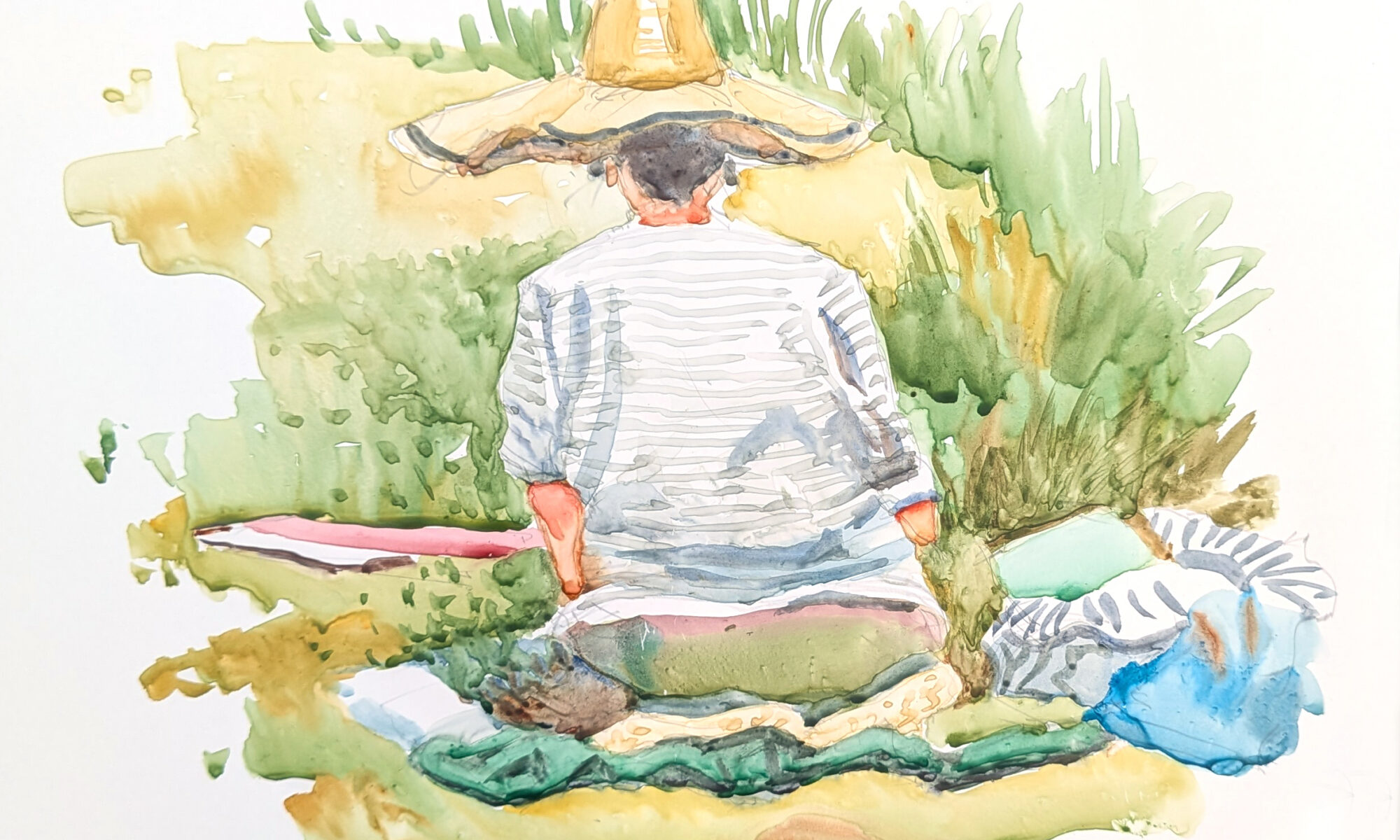
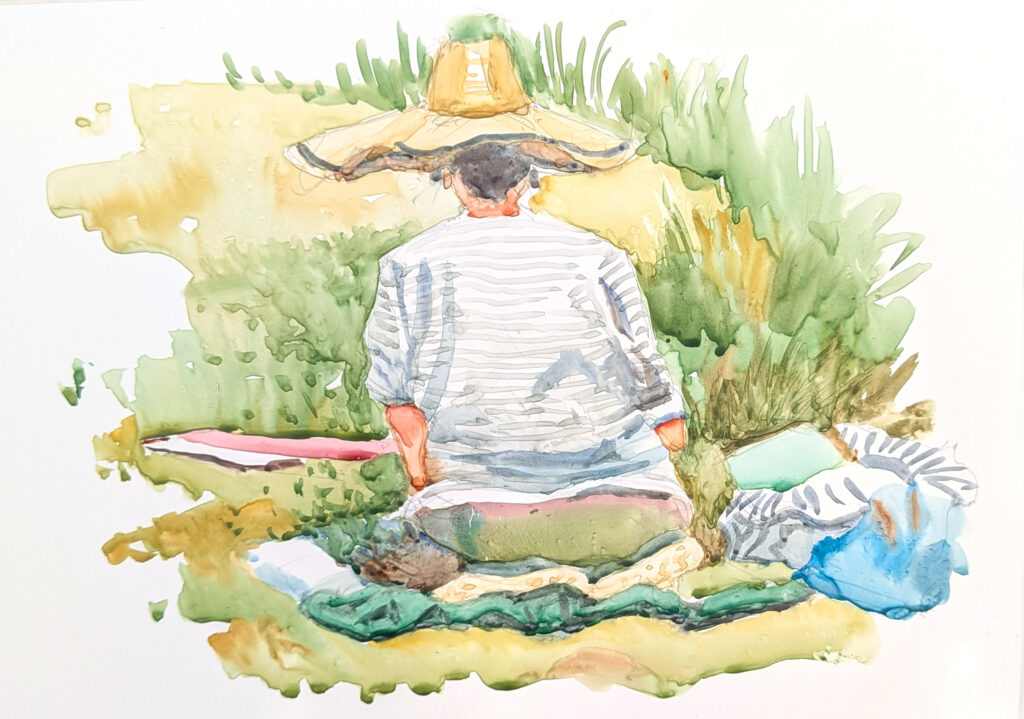
Frank Costantino did this wonderful sketch of Cynthia while she was painting.

A quick note on weekly classes before we get into it

Claim your spot in Painting Nocturnes, Tuesday evenings or Painting Water, Monday evenings. Both are 6-9 PM, starting the week of August 17, 2026, and they’re filling up.

I upload videos of these online classes and you have access to them for as long as there’s YouTube. That means you can review them if you need a refresher or have to cut out early.

There are two answers to this question.

  • Even people intimately familiar with the place won’t notice the edits in your landscape painting. They react to the sense of place, not the details.
  • The sun is going to rearrange everything in your composition anyway, so why worry about moving a tree?

The landscape is not static. Shadows march across fields. Clouds drift overhead. Tide rises. Wind whistles. Boats glide through your carefully composed picture. The color temperature changes as the day winds through its courses.

Even photography isn’t objective. Every camera lens has a different focal length and field of view, and is set for different apertures and exposures. This changes how the camera records a scene as much as the painter’s eye does.

Karolina almost finished with her painting of the rock faces of Schoodic.

Your job is to organize visual chaos into something coherent.

How you organize your landscape painting is far more important than whether you’ve placed the rocks in exactly the same place that Nature did. You’ll hold the viewer’s eye when he or she can move naturally through the picture. That depends on the value structure, whether the color relationships feel convincing and whether the painting captures the experience of standing there. I’ve written extensively on the science behind this, starting here and here.

How do we do that?

Sometimes that means simplifying, sometimes it means exaggerating, sometimes it means leaving things out altogether.

The great landscape painters have always edited reality. The Impressionists used optical mixing to simulate the real glitter of light. The Hudson River School rearranged mountains and rivers to strengthen composition and make their point about America’s destiny. Even painstakingly realistic landscape painters like Rackstraw Downes are constantly deciding what deserves attention and what doesn’t.

Frank and Aaron, hard at work.

Is this dishonest?

Of course not. It’s the very essence of painting.

Imagine reading a novel that recorded every conversation, every meal, every minute of every day exactly as it happened. That’s À la recherche du temps perdu by Marcel Proust, and it’s excruciatingly dull. Writers edit to reveal meaning, and painters should do exactly the same thing.

Instead of asking, “How do I paint what I see?” ask what attracted you to this scene in the first place. That’s the painting; everything else is just border work.

Once painters stop trying to copy every leaf and stone their work becomes more believable. The painting has structure, intention and a clear visual hierarchy that viewers can enter into.

Your job is to interpret the landscape, not copy it.

I have just two workshops left in 2026! Reserve your spot:

Can’t commit to a full workshop? Work online at your own pace:
Seven Protocols for Successful Oil Painters

Ticks and the plein air painter

No ticks on the beach! Janet and Tricia told me the lint-roller secret to removing ticks from your dog and clothes.

“Are ticks as bad as the article in the New Yorker made them out to be?” a student asked me as she prepares for next week’s plein air workshop in the Berkshires.

Yes, ticks deserve respect. No, they shouldn’t keep you from painting outdoors.

If you live in the Hudson Valley (as she does) or anywhere in New England or the mid-Atlantic states, you’re already in tick country. Avoiding the great outdoors will reduce your exposure, but who wants to live like that? Use sensible precautions rather than staying indoors during the best part of the year.

A quick note on weekly classes before we get into it

Claim your spot in Painting Nocturnes, Tuesday evenings or Painting Water, Monday evenings. Both are 6-9 PM, starting the week of August 17, 2026.

I upload videos of these online classes and you have access to them for as long as there’s YouTube. That means you can review them if you need a refresher or have to cut out early.

Aaron’s very first oil painting. It was a crazy start to the week, with fog, wind and spattering rain, but my students all pushed through it.

How to avoid ticks

Wear long trousers, tuck your cuffs into your socks if you’re hiking through brush, and treat your clothing and shoes or use a good insect repellent.

I spend an unusual amount of time outdoors. I stay out of tall grass, use insect repellent and bathe when I get home, taking time to look for ticks.

Two students in this week’s Schoodic plein air workshop told me that they keep lint rollers in their cars. They’re inexpensive, handy tools to catch unattached ticks on your clothes, gear, and pets before you go inside.

Ticks are patient and remarkably durable. They wait on grasses and low vegetation for something warm-blooded to brush past. Plein air painters generally set up in open places with good views. That limits our exposure but doesn’t eliminate it.

Ticks are surprisingly slow. It can take them all day to decide where to latch on. A thorough check when you get back to your room is usually enough to catch any hitchhikers before they become a problem.

I carry a small tick removal tool on my keyring. They’re inexpensive and weigh almost nothing. I’ve used it on my dog many times, even though he’s on tick repellent. Dogs are a serious tick vector, especially if they ramble. Check your furry friend carefully before bringing him or her inside.

Mark’s watercolor of the fog in the spruces off Schoodic Point.

If you do find a tick

If you do have the bad luck to find an attached tick, don’t just pull it off; use a tick key or fine-tooth tweezers. Grasp the tick as close to the surface of your skin as possible. Using steady, even pressure, pull the tick upward in one swift motion without jerking or twisting it. If parts of the tick are left inside your skin, try to remove them with the tweezers. If you’re not able to, allow your skin to heal. That’s not my advice; it’s the Mayo Clinic’s.

The classic signs of an infected tick bite are an expanding bull’s-eye or red skin rash, flu-like aches, and a fever, but I’ve known people with Lyme Disease who developed none of these symptoms. If anything seems out of sorts after a tick bite, contact your medical provider and insist on a tick panel.

Sufia and Cynthia on day 2 of Schoodic. By Tuesday morning, the weather was brilliant, and it will be great the rest of the week!

Don’t let them steal your joy

The last time I had an attached tick was twenty years ago, when I was living in Rochester, NY. I’m cautious but not paranoid. I am not going to let them steal my love of the outdoors.

The goal of a plein air workshop isn’t to prove how tough you are. It’s to learn to see better, simplify complex landscapes, and enjoy painting in beautiful places. We choose locations that offer excellent subjects, convenient access, and comfortable working conditions. I want people to spend their time concentrating on color, value, and design.

So, pack your paints, bring a hat, apply your bug spray, and perform a quick tick check before showering. Then focus on the real challenge: deciding what to paint next. That’s a much happier question.

I have just two workshops left in 2026! Reserve your spot:

Can’t commit to a full workshop? Work online at your own pace:
Seven Protocols for Successful Oil Painters

Monday Morning Art School: what kind of learner are you?

Painting on a beautiful morning along Penobscot Bay.

I’ve made a Buzzfeed-style quiz, below, to help you figure out what kind of painting student you are. (I’m not a programmer, but I made up the questions. When Laura started telling me about “raw HTML/CSS/JS” I just closed my ears until she finished. That’s the kind of quality control I’m proud of.)

There are no wrong answers.

A great workshop includes a certain amount of lounging around on a summer afternoon.
Question 1 of 5

Loading question…

Every one of these student types eventually ends up in the same place. An apprentice becomes a builder becomes a problem solver becomes an independent. That’s the natural progression of learning to paint.

My own workshops are designed around that journey. I demonstrate, but only enough to illustrate a principle. Real learning happens when you’re standing at your easel wrestling with changing light, shifting weather, and your own decisions. That’s when I can help you understand not just what to do, but why.

Your goal is never to leave with one successful painting. It’s to leave with the confidence to make your next hundred paintings better than your last hundred.

Different things appeal to different painters, and that’s okay!

“The Berkshires workshop was a delightful experience — it’s a part of the world that I wasn’t very familiar with, and it was lovely to spend time there, with an interesting variety of settings.  Carol always focuses on providing value and helping students move their painting to the next level.   Her workshops are a good balance of honing specific techniques with plenty of time to paint.”  (Julie Dirksen)

I have just two workshops left in 2026! Reserve your spot:

Can’t commit to a full workshop? Work online at your own pace:
Seven Protocols for Successful Oil Painters

The most important decision in plein air painting

Eastern Manitoba River, 6X8, oil on archival canvasboard, click on image for more information.

The wallpaper and carpet is gone, so I’m ready for my contractor when he shows up. (Hah!) I’ve moved on to packing for Sea & Sky at Acadia National Park and Find your Authentic Voice in Plein Air in the Berkshires (August 10-14).

I try to protect my students from too much bystander-commentary, but some of it inevitably slips through. (Some of this is unintentional, which is why you should be chary of having private conversations where painters might lurk in the shrubbery.) People say some silly things:

“Are you going to put me in it?” “I wish I had your talent.” “Do you sell these?” and my personal favorite: “That looks like so much fun!”

Moonrise, 12X16, oil on archival canvasboard. For more information, click on image.

Yes, it’s fun, but it’s not easy.

The landscape seems to drowse perpetually in quiet slumber, but in fact it suffers from restless-leg syndrome. This morning the sky went from overcast to austere blue. First there were no shadows; after they arrived, they quickly dwindled to noonday nothing. Now the wind has come around and is exposing the silvery underside of leaves. This evening there may be fog, there may be rain or it may clear.

A quick note on weekly classes before we get into it

Claim your spot in Painting Nocturnes, Tuesday evenings or Painting Water, Monday evenings. Both are 6-9 PM, starting the week of August 17, 2026.

I upload videos of these online classes and you have access to them for as long as there’s YouTube. That means you can review them if you need a refresher or have to cut out early.

Rachel’s Garden, ~24×35, watercolor on Yupo, museum-grade plexiglass. For more information, click on image.

How do plein air painters ever finish anything?

We aren’t painting everything we see. Plein air painting is generally done in two- or three-hour bursts. After that the light has changed so much that it’s hard to continue. Plein air is generally played fast and loose.

Asking yourself “why do I care about this” is a good first step. What caught your eye in the scene? Was it the rhythm of dark spruce against the bright ocean light? The gentle curve of an orchard sweeping down towards the mountains? If there’s no subject in the scene that compels you as a painter, it’s unlikely that your finished work will compel any viewers, either.

Once you’ve figured out the reason, your job is to place that idea front and center. Everything else is subservient.

Best Buds, 11X14, oil on canvasboard. For more information, click on image.

Memory is part of painting

If someone walks through your scene, you can’t ask them to stand still unless you’re willing to pay a modeling fee. It’s always helpful to keep a sketchbook handy, for figures, cloud formations, sailboats, etc. Your finished painting will ultimately be a combination of direct observation, remembered impressions and informed invention.

The most important decision you’ll ever make as a plein air painter

It’s true of all painting, but particularly true in landscape: the most important decision is what not to paint.

Ask yourself: If I leave this out, does the painting become clearer? In so many cases, the answer is yes.

Painting is all about organizing a beautiful chaos into a coherent design. We’re arranging shapes, values, colors, edges, and rhythms so the viewer experiences what moved us to paint that scene in the first place.

I have just two workshops left in 2026! Reserve your spot:

Can’t commit to a full workshop? Work online at your own pace:
Seven Protocols for Successful Oil Painters