How to choose the right painting class or art workshop

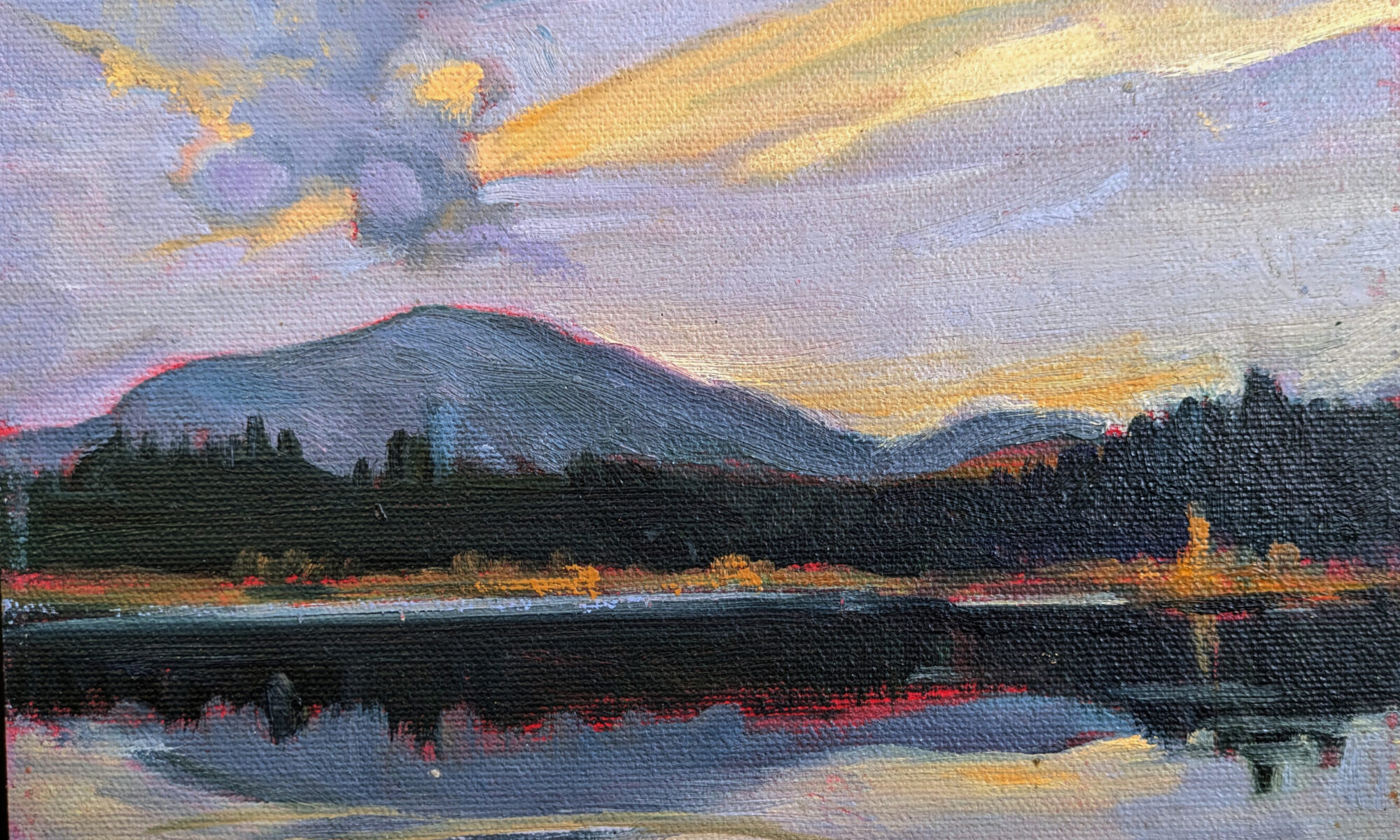
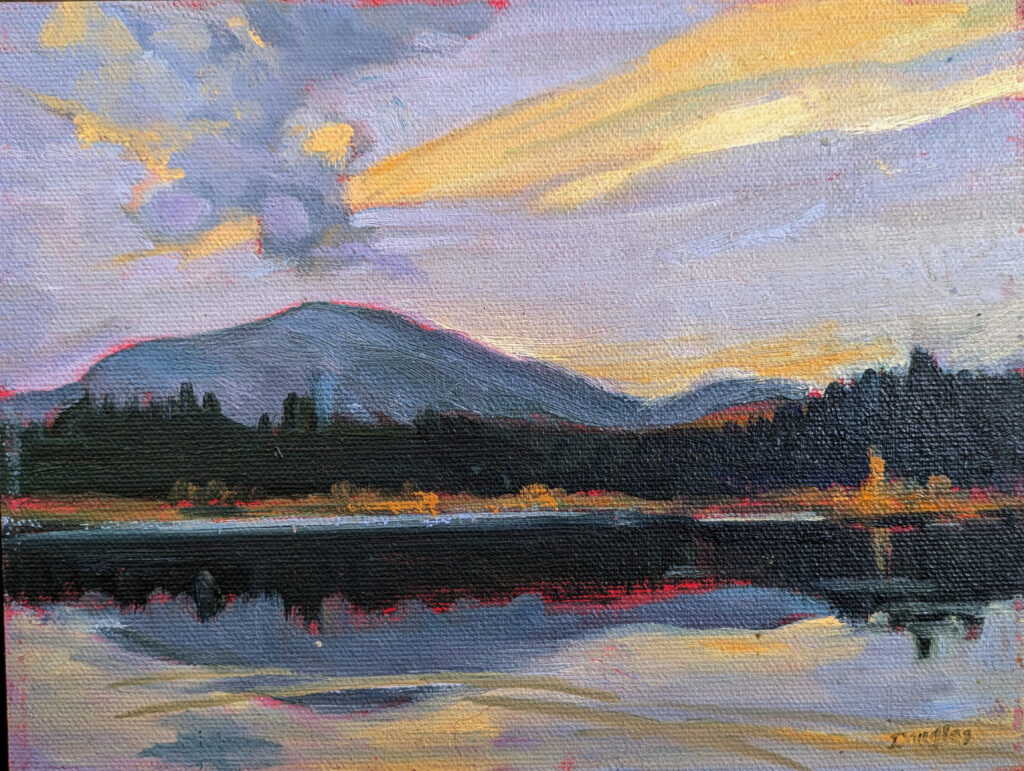
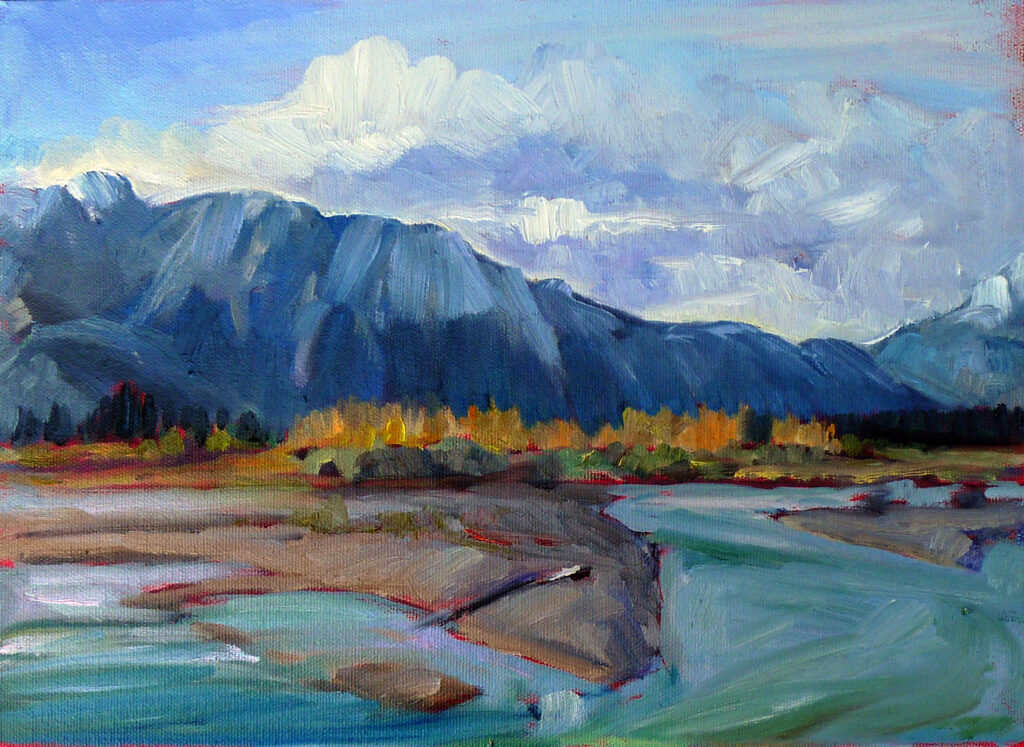
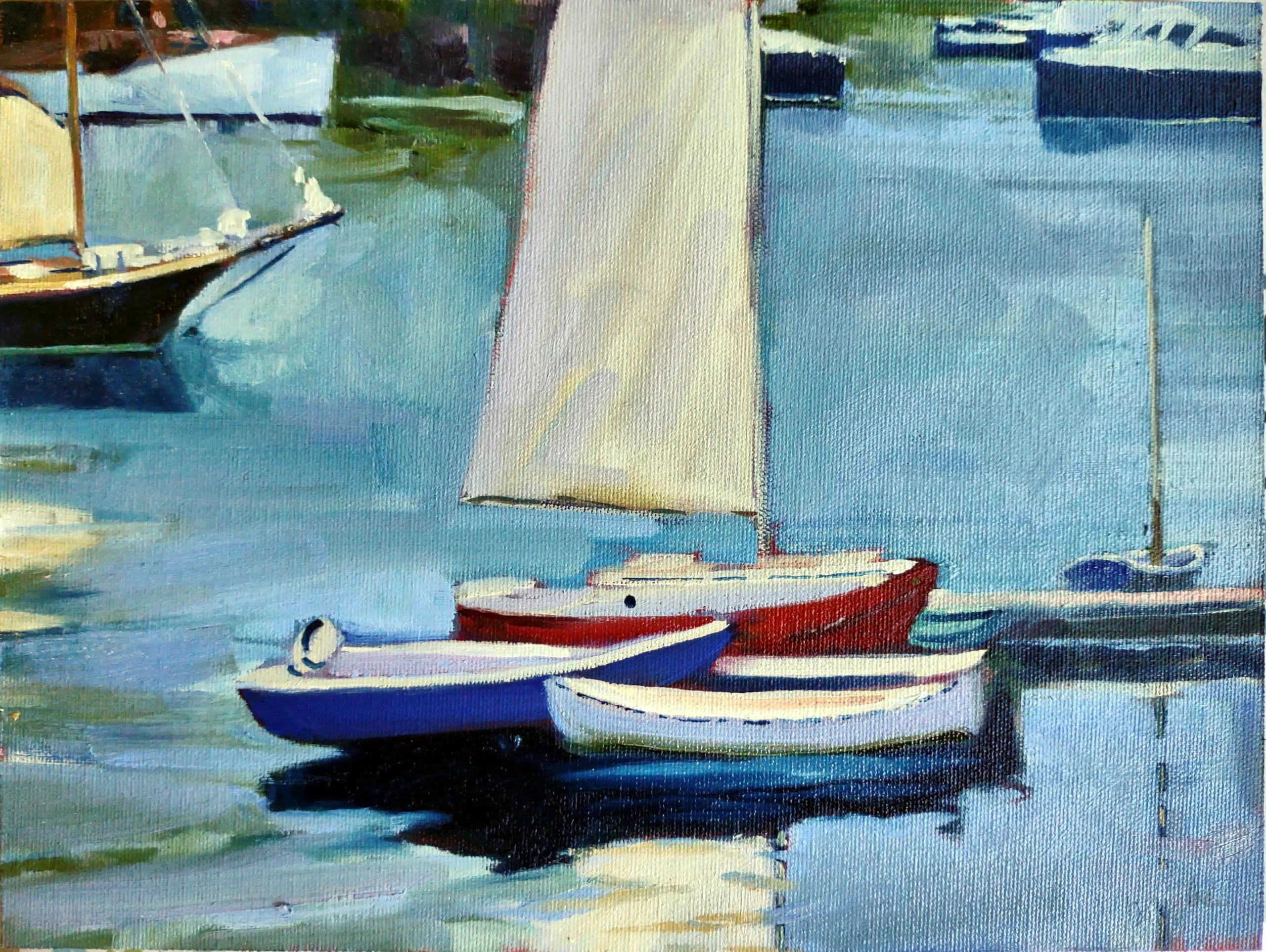
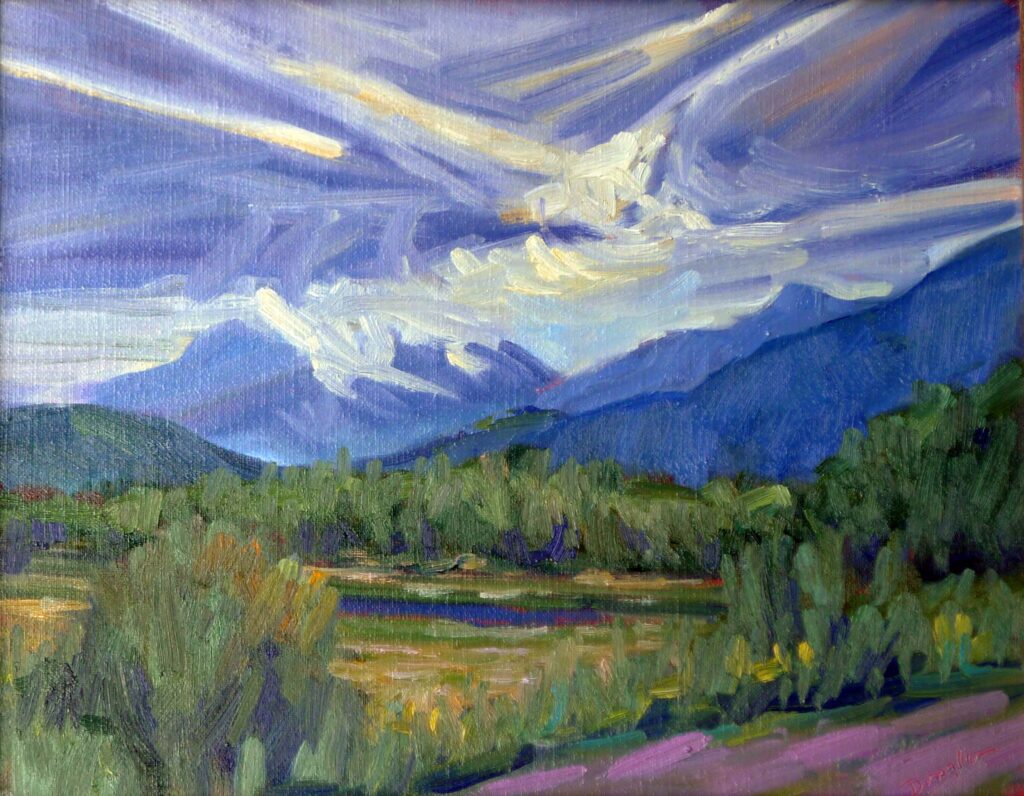
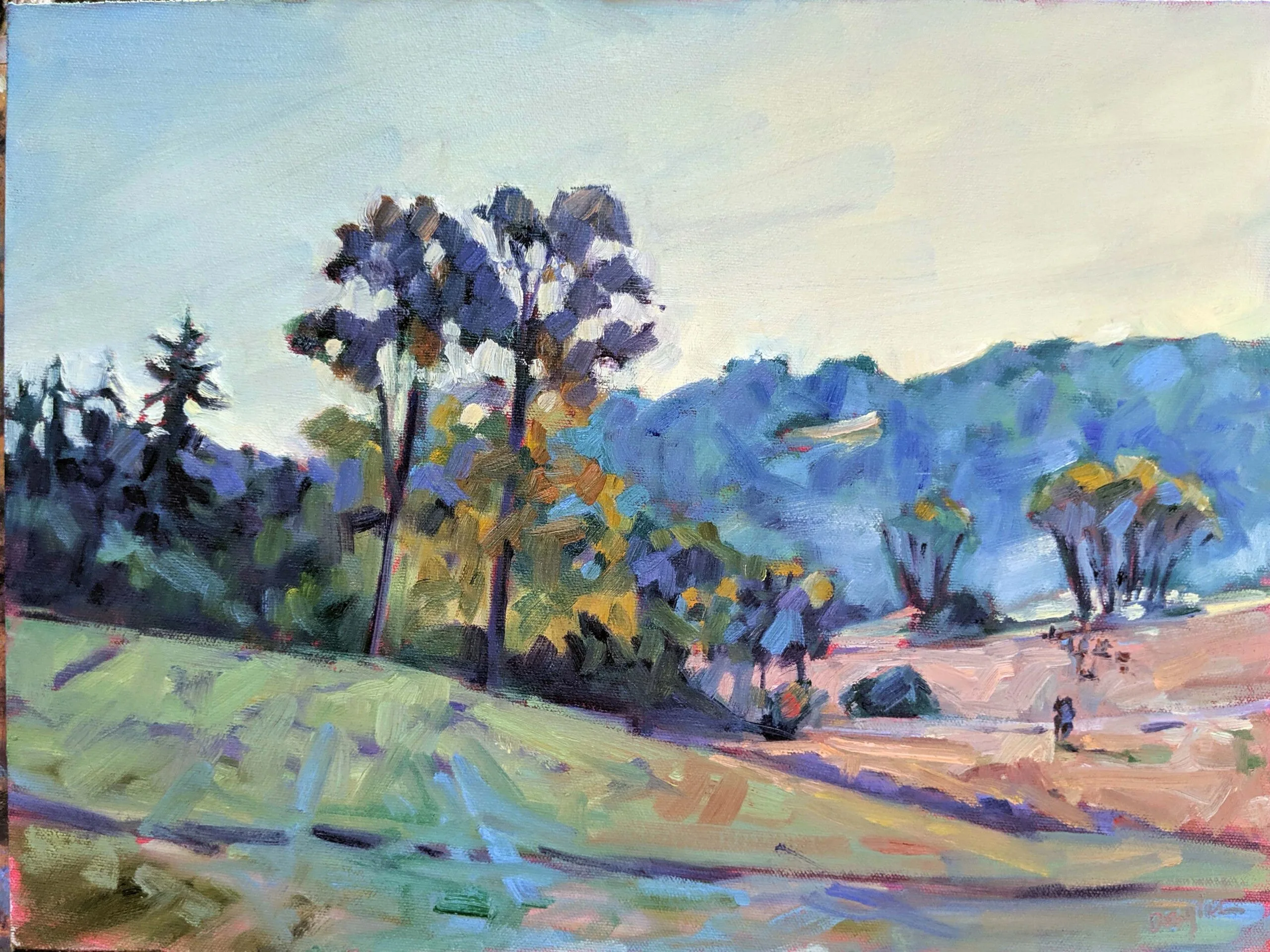
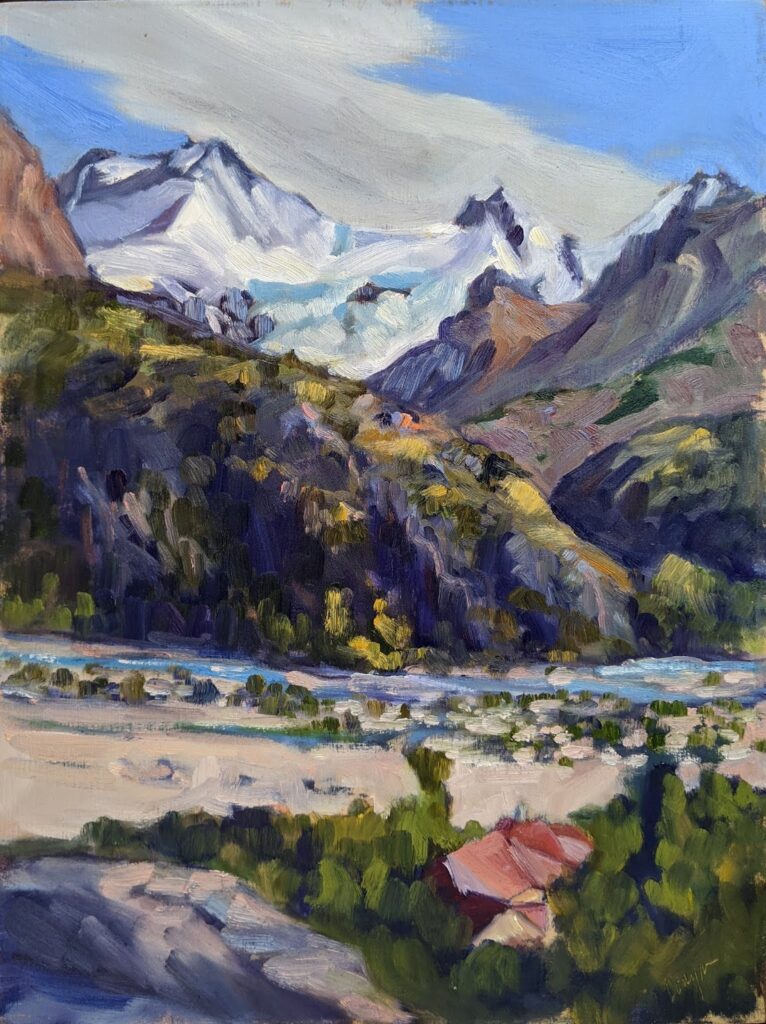
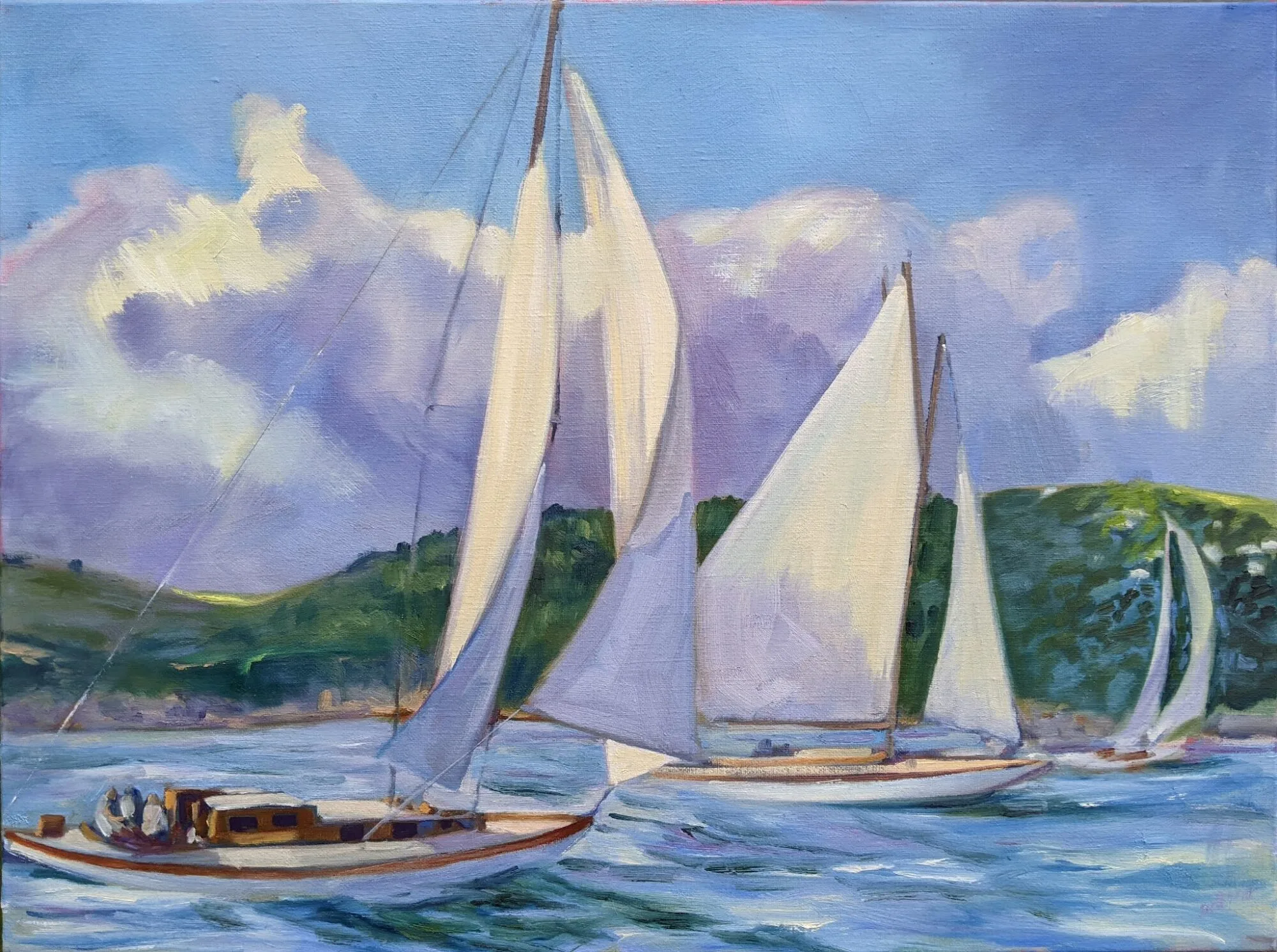
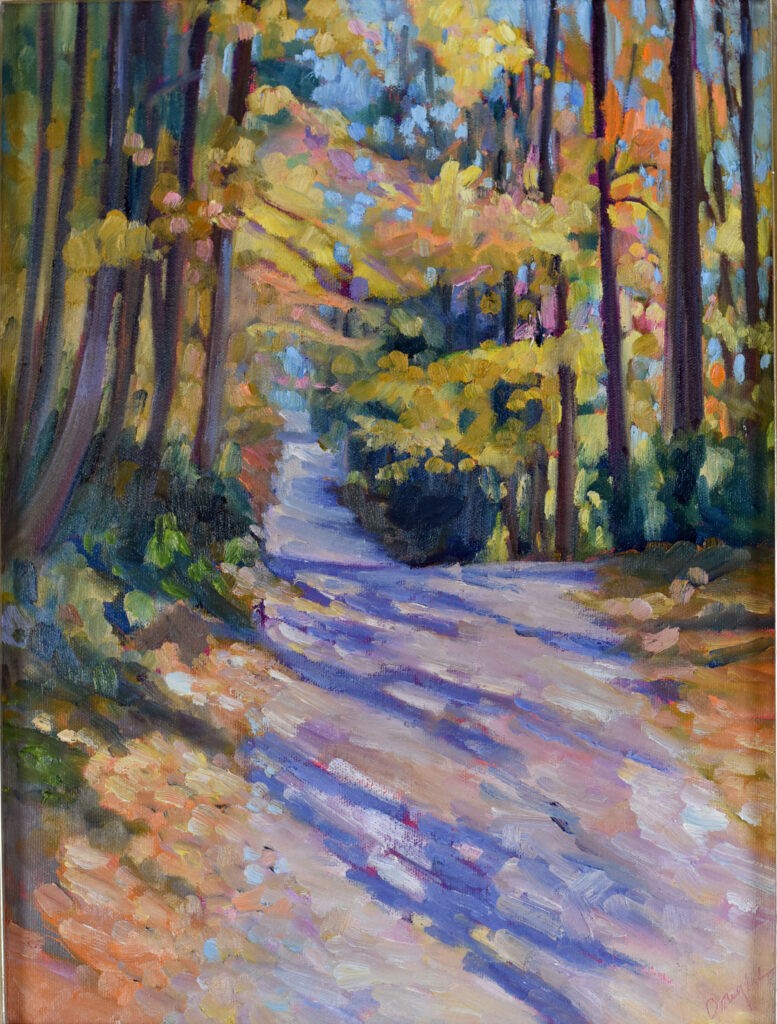
Beauchamp Point, Autumn Leaves, 12X16, oil on archival canvasboard, $1449 framed includes shipping and handling in continental US.

Choosing the right painting class or art workshop can dramatically improve your painting skills — but with so many online art classes, in-person workshops, and video courses available, how do you know which one will actually move your work forward?

I recently spent time helping my friend Karen figure out which of my upcoming classes would best serve her. That decision wasn’t about whether she was a beginner or advanced painter. It was about identifying what she needed to learn next.

The best painting instruction meets you at your next developmental step, not your current skill level.
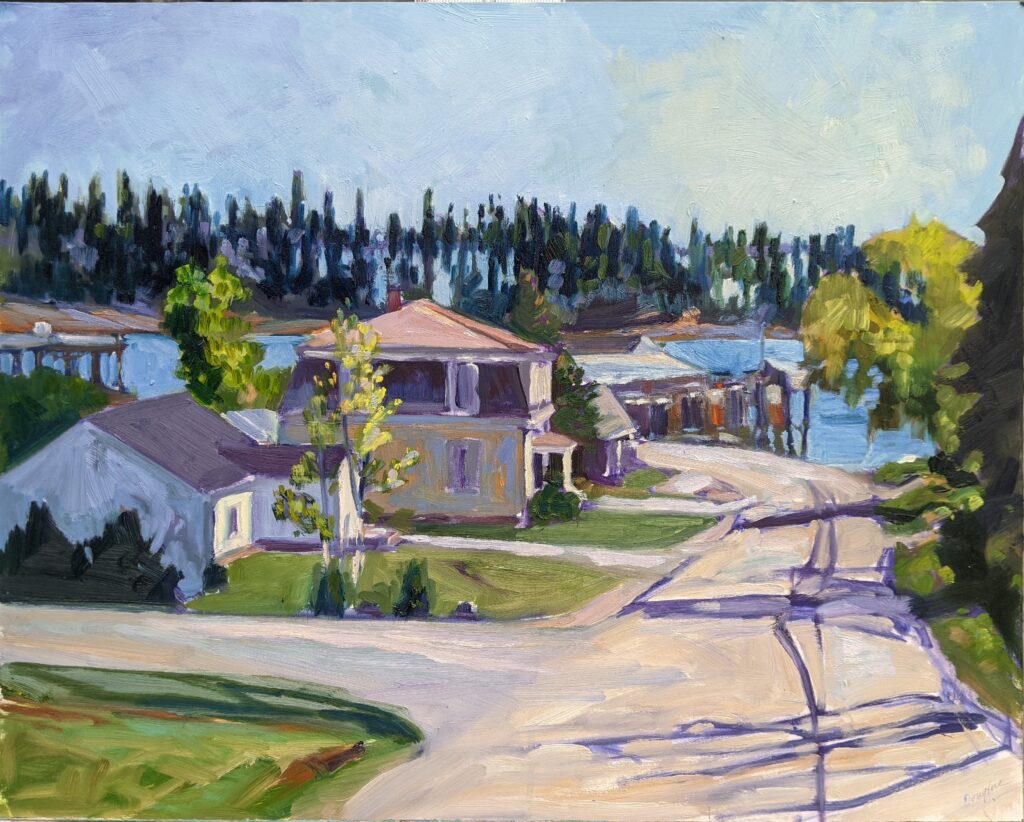
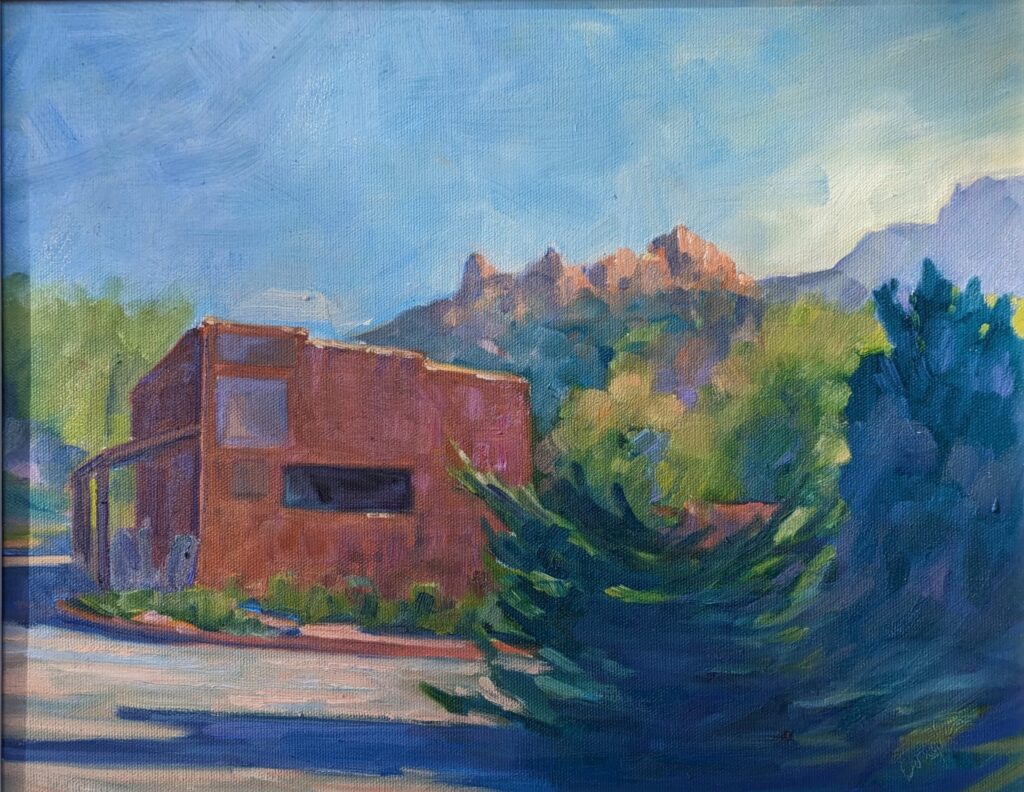
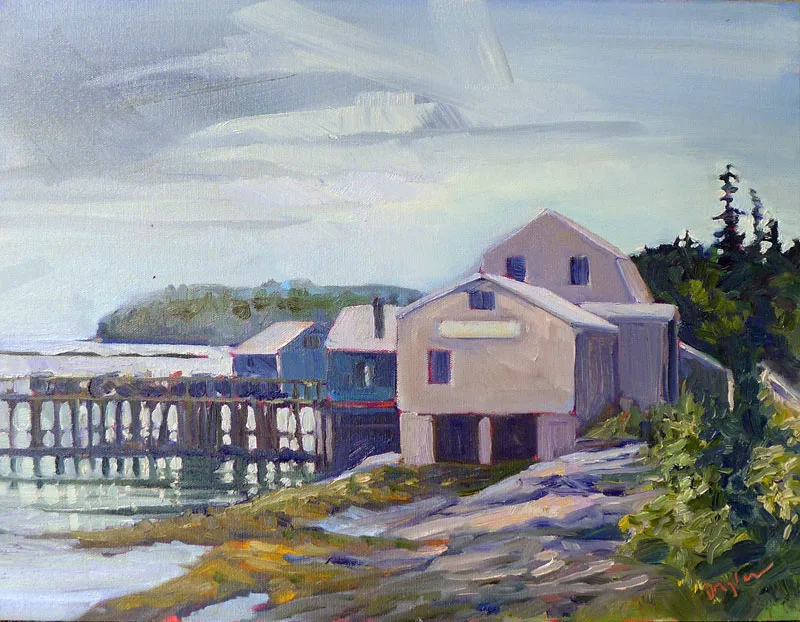
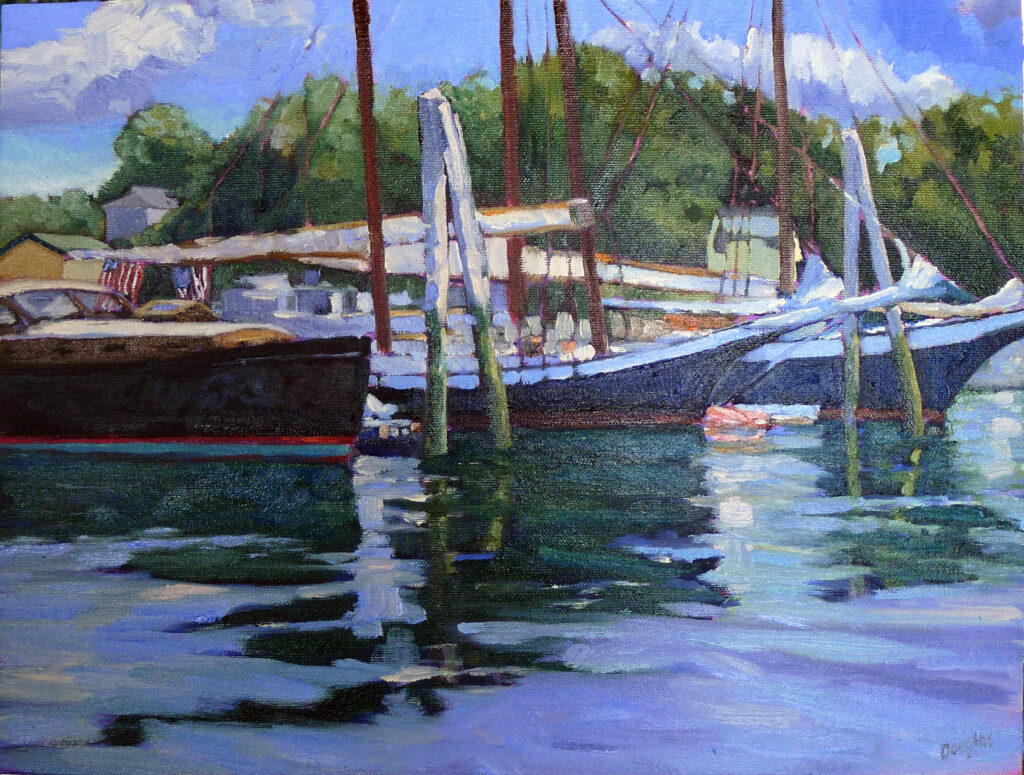
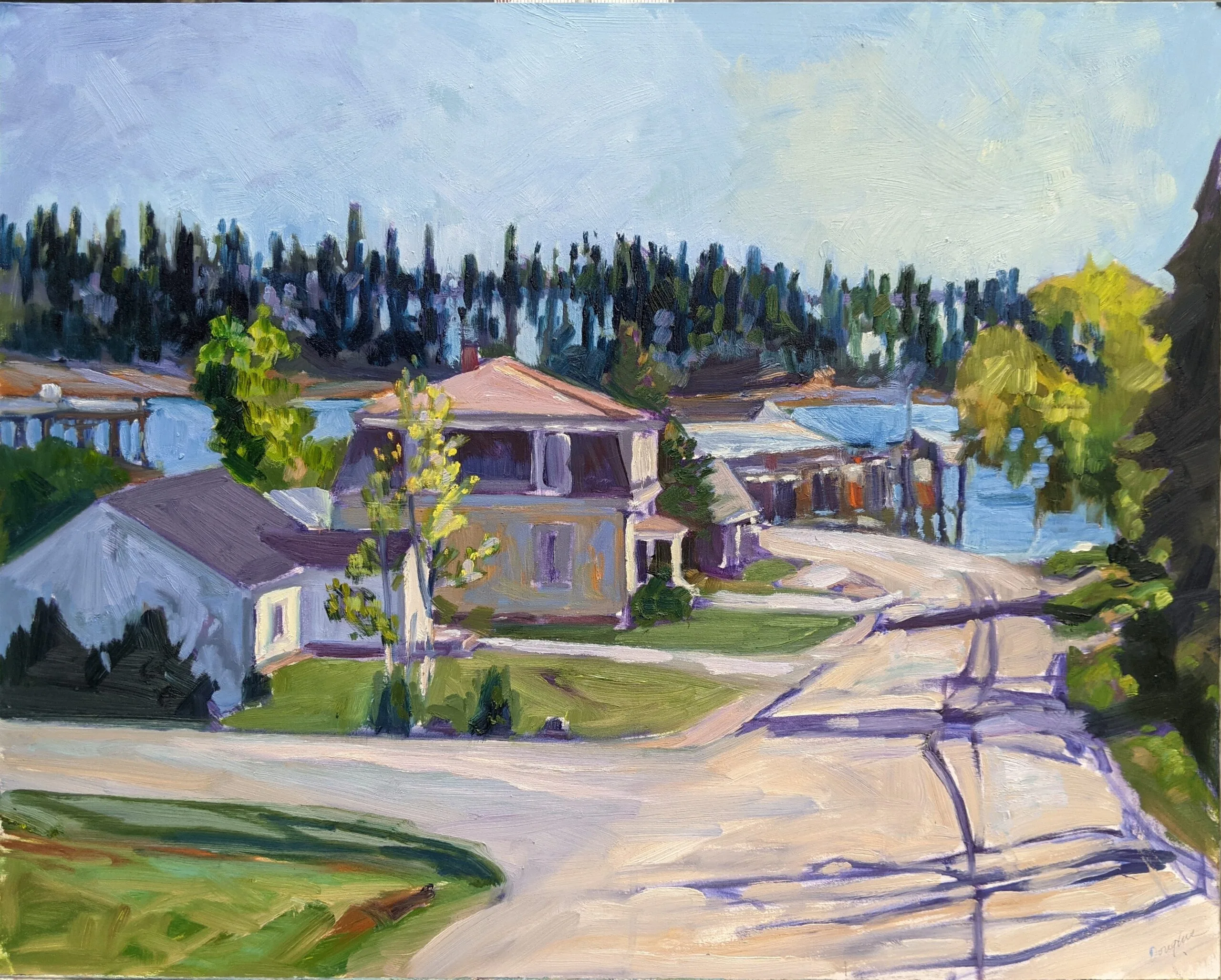
Main Street, Owl’s Head, oil on archival canvasboard, $1623 includes shipping and handling in continental US.

What matters most when choosing a painting class

Clear skill goals
Before you sign up, ask yourself: what do I want to improve? Do you want stronger observational skills, better composition, more color confidence or more expressive brushwork? The most effective painting classes focus on specific, teachable skills and provide a roadmap so you leave with measurable progress, not just inspiration.

A teaching style you connect with
Some art instructors teach step-by-step demos. Others emphasize design principles and independent problem-solving. Look for classes where the style of instruction feels clear, encouraging, and tailored to your pace. And personality matters. Even a brilliant painter won’t help you grow if the teaching environment feels tense or dismissive.

Feedback and interaction
Interactive painting workshops accelerate learning far more than passive video lessons. Zoom classes and workshops that include real-time critiques and Q&A are especially valuable.
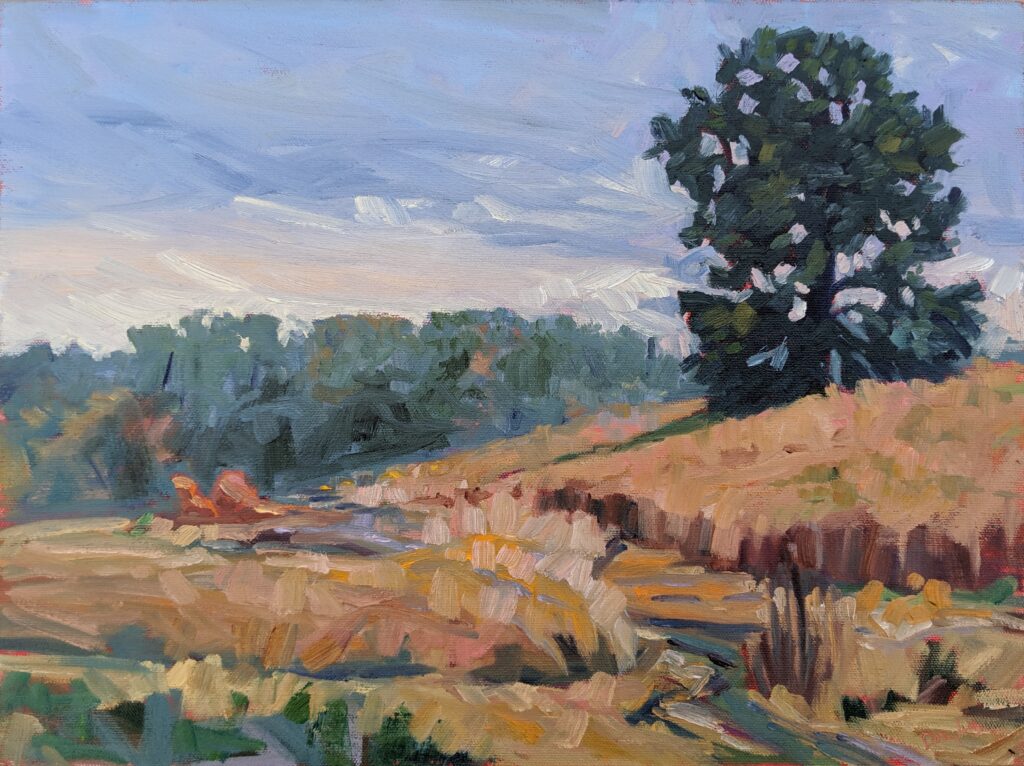
Autumn farm, oil on canvasboard, $1449 framed includes shipping and handling in continental US.

Of course, live instruction isn’t always feasible. That’s why I also offer Seven Protocols for Successful Oil Painters. It’s a structured foundation in oil painting principles designed to strengthen your independent studio practice. It’s not a replacement for live instruction, but it builds essential fundamentals.

Community and accountability
Learning alongside others builds motivation and accountability. Workshops and classes with peer interaction help you stay inspired and keep practicing long after the class ends.

Focus on fundamentals and expression
Good painting instruction balances foundation (how to see, how to plan, how to mix color) with artistic expression (style, gesture, brushwork). Technique alone doesn’t create strong art. A great class also teaches you how to see and how to interpret.

Checklist for choosing a painting class

  • Read the course description carefully. Does it clearly match your goals?
  • Make sure the instructor can articulate process, not just demonstrate it.
  • Check class size. Too large means no feedback. Too small leads to the hovering by the teacher.
  • Choose classes that include critique and interaction.
  • Commit to practicing between sessions. That’s where real artistic growth happens.
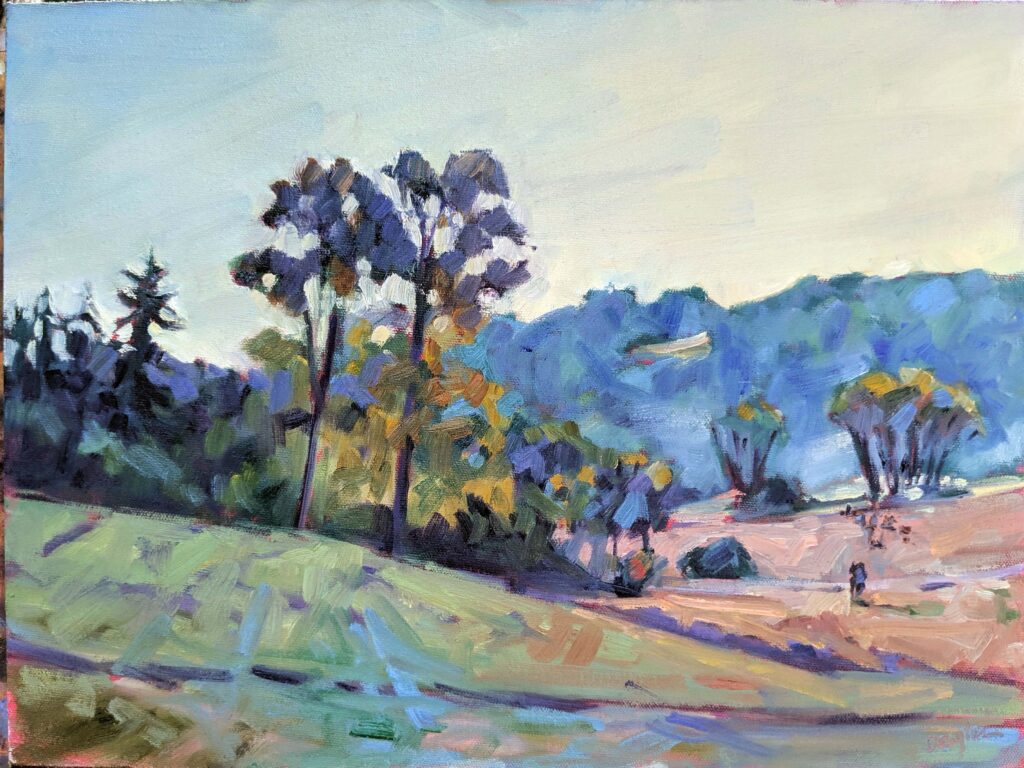
Autumn Farm, Evening Blues, oil on canvasboard, $1449 framed includes shipping and handling in continental US.

How to see like a painter

One of the biggest leaps any painter can make is learning to see like an artist sees — not just looking at reality, but interpreting it. That’s where my Zoom class How to see like a painter shines.

This class helps you:

  • Train your observational eye;
  • Break complex forms into rhythmic patterns of shapes and values;
  • Understand structure;
  • Look with intention, not assumptions;
  • Work from photos without being a slave to them.

Whether you’re a beginner painter or have decades of experience, improving how you see will transform how your work reads on canvas. The class meets on Monday evenings starting next week. Here’s more information, including a link to enroll.

Painterliness, looseness and bravura brushwork

One of the most common questions I’m asked is how to put confident, lively strokes down so your painting feels energized rather than stiff. That’s the focus of my Zoom class Painterliness, looseness and bravura brushwork.

In this class you’ll learn:

  • How to loosen up your hand and mind;
  • Techniques for dynamic, expressive brushwork;
  • Balancing control and freedom;
  • Creating dynamic surfaces.

This class is for painters of all levels. The class meets on Tuesday evenings starting next week. Here’s more information, including a link to enroll.

(Note: both classes have a bye-week March 9-10 while I’m in Sedona, AZ teaching Canyon Color for the Painter.)

Registration is now open for workshops in 2026! Reserve your spot:

Can’t commit to a full workshop? Work online at your own pace:
Seven Protocols for Successful Oil Painters

Why drawing is essential for better painting composition

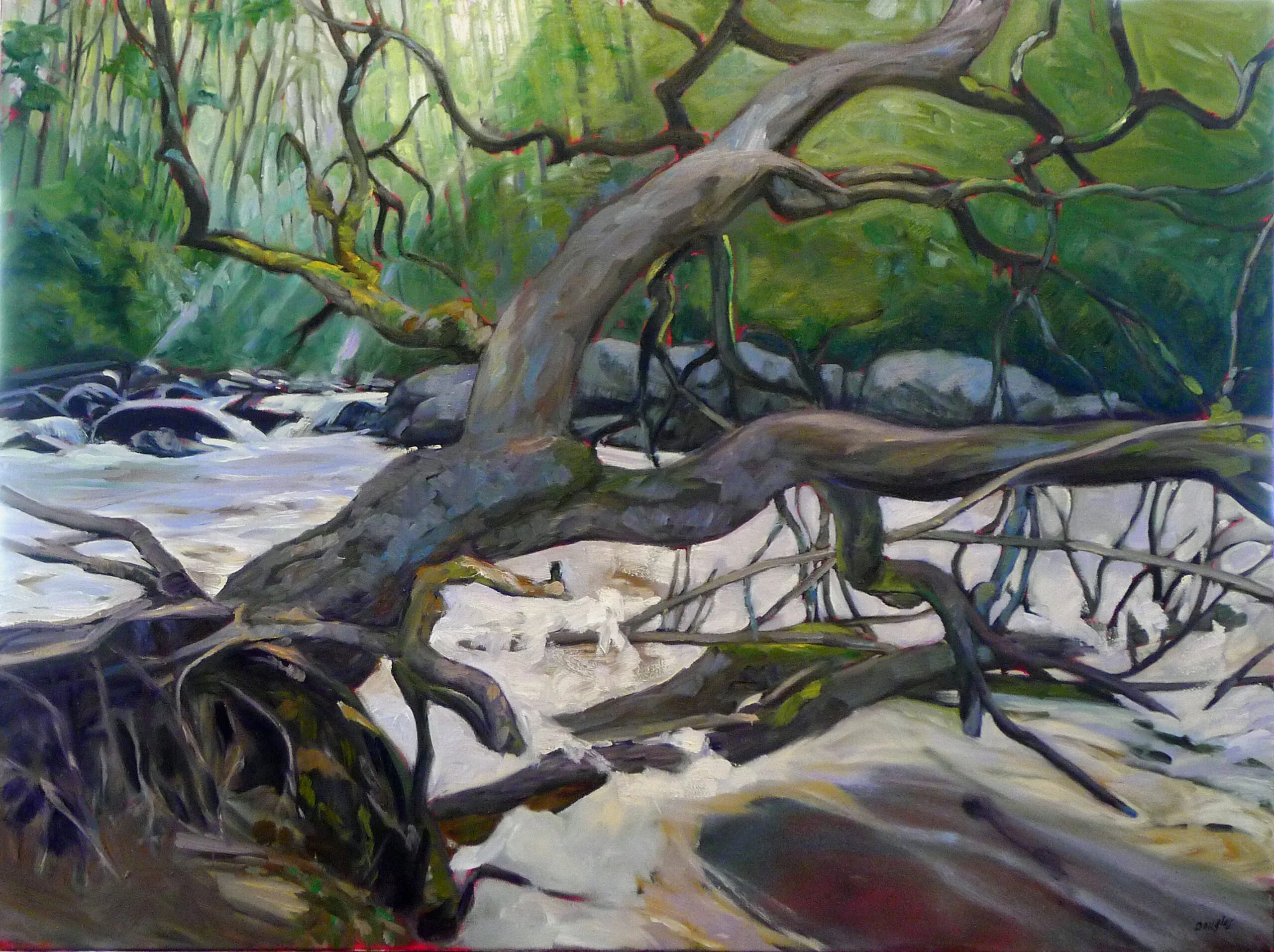
Deadwood, oil on linen, 30X40, $5072.00 framed, includes shipping and handling in continental US.

Drawing is just thinking on paper, which is why I wonder why more people don’t do it.

I don’t mean the kind of drawing that gets framed and hung on the wall. I mean the scrappy, workmanlike, problem-solving kind. The kind with arrows, numbers and scratched-out lines. The kind you do fast, running through several iterations in order to work out ideas. Carpenters do them; gardeners do them; engineers do them. So why are so many painters—whose work is first and foremost visual representation—resistant to drawing?

I only do pretty drawings on Sunday. The rest of the week, I do fast compositional studies. These are visual notes about structure, value, and design. They’re where I wrestle with composition before I ever dip a brush into paint.

All Flesh is as Grass, oil on linen, 30X40, $5072 framed, includes shipping and handling in continental US.

It’s nearly impossible to save a painting with bad composition, which is why strong painting composition starts with drawing. You can tweak the color harmony. You can punch the contrast. You can add tchotchkes. But if the underlying design is weak, the painting can’t be resuscitated.

That’s why I encourage my students to start with drawing.

Value studies for painting

In plein air painting, drawing quickly to establish value masses is essential because the light changes rapidly. When I’m planning a plein air painting, I don’t start with color. I investigate the interplay of dark and light shapes. Because while all three aspects of color (hue, chroma and value) are important, value is the first thing we see. That’s built into the eye-brain system.

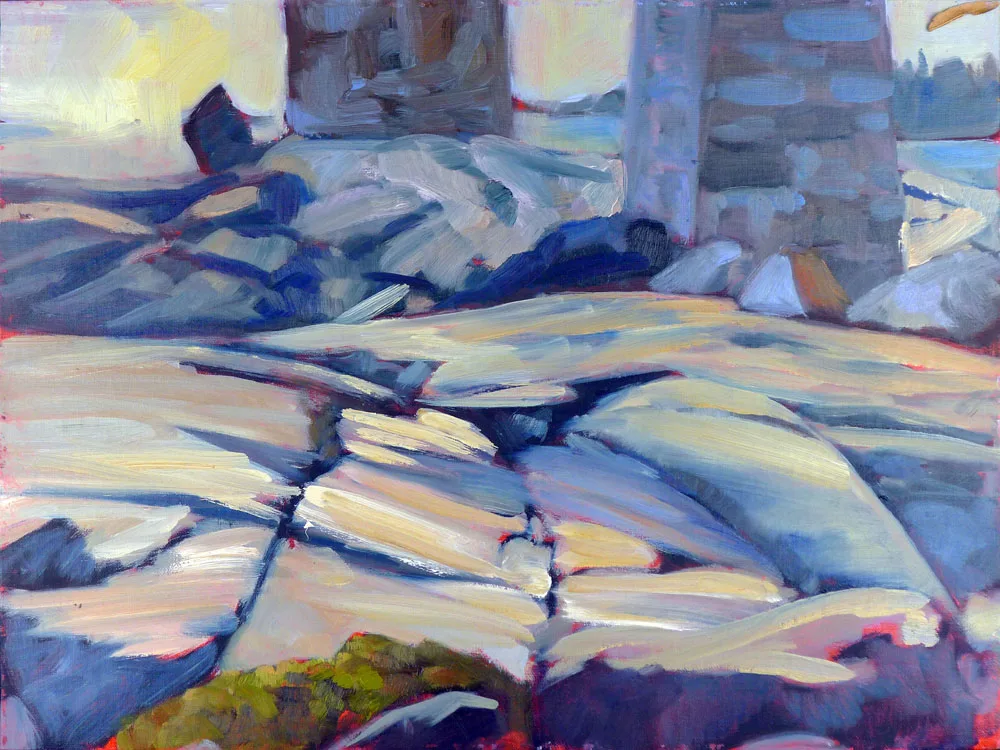
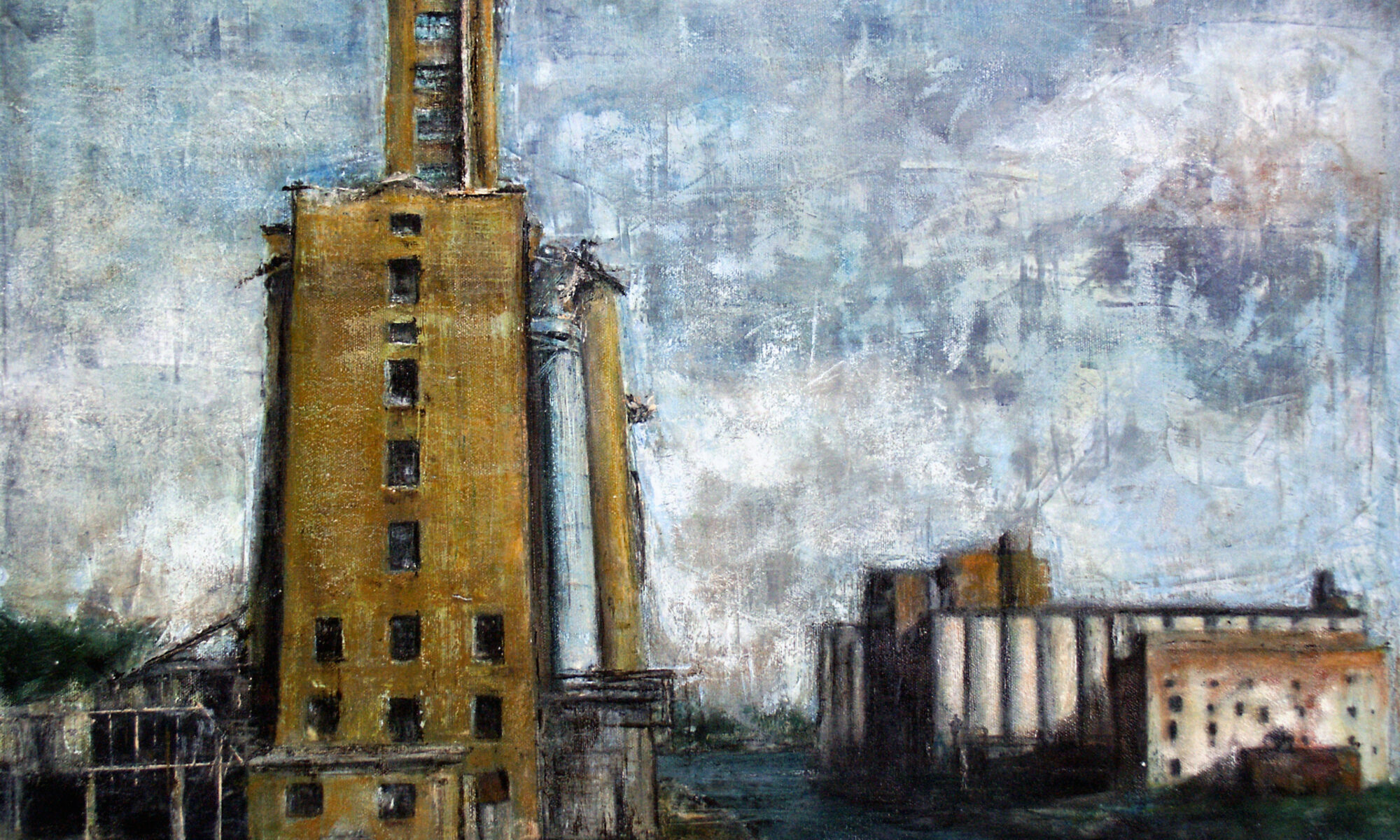
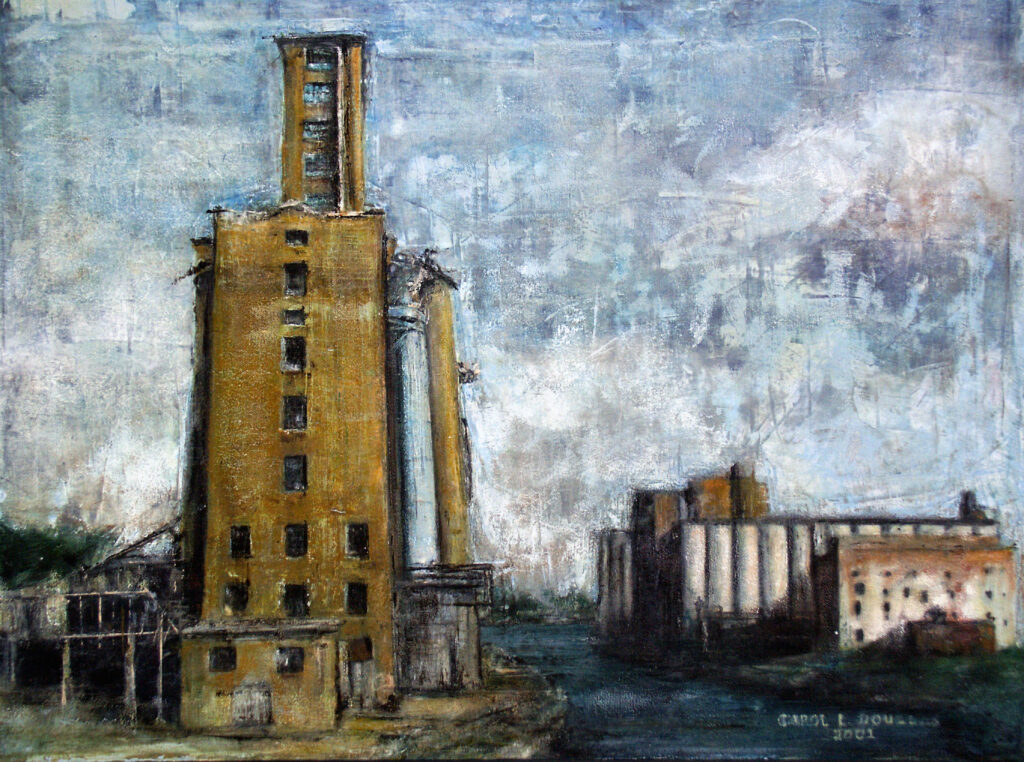
Grain elevators, Buffalo, NY, 18X24 in a handmade cherry frame. $2318 includes shipping in continental US.

How to improve painting composition

In the classical atelier tradition, students spend a long time in drawing classes before they’re allowed to paint. That isn’t snobbery; it’s practical. Good painting rests on good draftsmanship.

Drawing clarifies value patterns before color seduces you. It reveals tangents before they sabotage your focal point. It tests whether your big shapes are interesting or not.

In my own work, I often do three or four thumbnail sketches before committing to canvas. I shift horizon lines. I exaggerate diagonals. I simplify multiple objects into a single mass. I change up the importance of various elements. I’m not trying to draw expressively; I’m trying to be clear.

That clarity pays dividends later. When cold wind is whipping down Beech Hill or shadows are lengthening across a cliff face, I don’t have to reinvent the structure.

If you struggle with muddy paintings, scattered focal points, or unbalanced compositions, the problem isn’t your paint handling. It’s your planning.

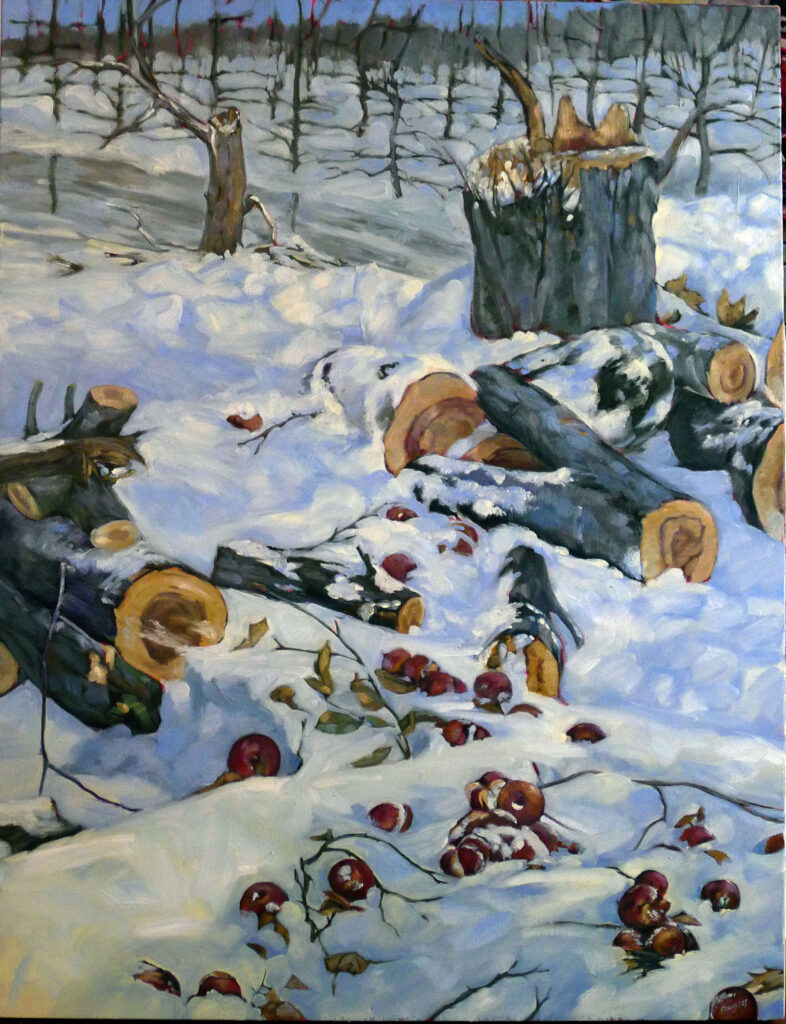
Winter lambing, oil on linen, 30X40, $5072 framed, includes shipping and handling in continental US.

Drawing for painting

People who tell me, “I can’t draw a straight line,” believe drawing is a gift. In fact, it’s a simple system of measuring distances and angles. It doesn’t take long to learn. I taught my friend Amy Vail to draw in one short session; a week later, she was drawing like an old pro.

Drawing needn’t be any more refined than the task at hand requires. That may be a plan for a chicken coop or a finished portrait, but the basic skills are the same. In either case, drawing is thinking made visible. The more you practice that kind of thinking—through value studies, compositional sketches, and disciplined observation—the more confident your painting process becomes. You are less reactive and more in control. Your painting failure rate will drop way down.

If you want to improve your painting composition and value structure, join my How to See Like a Painter Zoom class, starting next Monday. It’s not a drawing class per se, but it focuses on the compositional elements that make drawings work, including the question of how to work from photos without being a slave to them. Or, consider Painterliness: Looseness and Bravura Brushwork, which meets on Tuesday evenings. It will focus on avoiding overworked, timid paintings by getting the mark intentional and right on the first strike.

Registration is now open for workshops in 2026! Reserve your spot:

Can’t commit to a full workshop? Work online at your own pace:
Seven Protocols for Successful Oil Painters

Why I’m rebuilding this art blog around painting and process

Pensive 8X10, oil on archival canvasboard, $522 includes shipping and handling in continental US.

This art blog has always been about painting—about color strategy, composition, light, and the daily work of becoming a better painter. But over the years, many of you have written to me complaining about the ads in on my blog. You’ve said they’re distracting and clutter up your feed. They break the spell just when you’re settling into a serious discussion about art.

My assistant Laura valiantly tried to keep the impact of ads down. When Google added a new kind of ad, she ruthlessly suppressed it. She cut back on the total number of ads shown, but they always seemed to creep back up.

Grand Canyon at sunset, oil on canvasboard, 9X12, $696 includes shipping and handling in continental United States.

My dilemma

Those ads helped keep the lights on. Not in a champagne-and-caviar way, but in a beer-and-sausage way. But while I was selling space on my own website, I was buying much pricier ad space elsewhere. (Google generates most of its revenues from advertising.)

Although many people said they were willing to pay for content, this blog has thousands of subscribers. Moving them over to a subscription platform is way more than I can manage right now.

A better experience for you

This week, I removed all third-party advertising from this site. That means no more ads for foot fungus medication, no more embedded tracking and no more distractions.

When you land here, I want you looking at art and reading about process. I want you thinking about light and value and composition, not wondering why I think you need orthopedic shoes. (For what it’s worth, I have never controlled the content of the ads. That’s generated from the viewer’s side, which is why all my ads right now are from car dealers.)

This is partly about cleaning up the look of my blog, but it’s also about reclaiming some of the human connection. Consider this a compositional edit: less noise, more paint.

This blog has been a conversation between working artists, aspiring artists and art collectors for more than two decades, across several platforms. It’s a place where we can talk honestly about what it means to wrestle with paint, doubt, ambition, meaning and the business side of this calling.

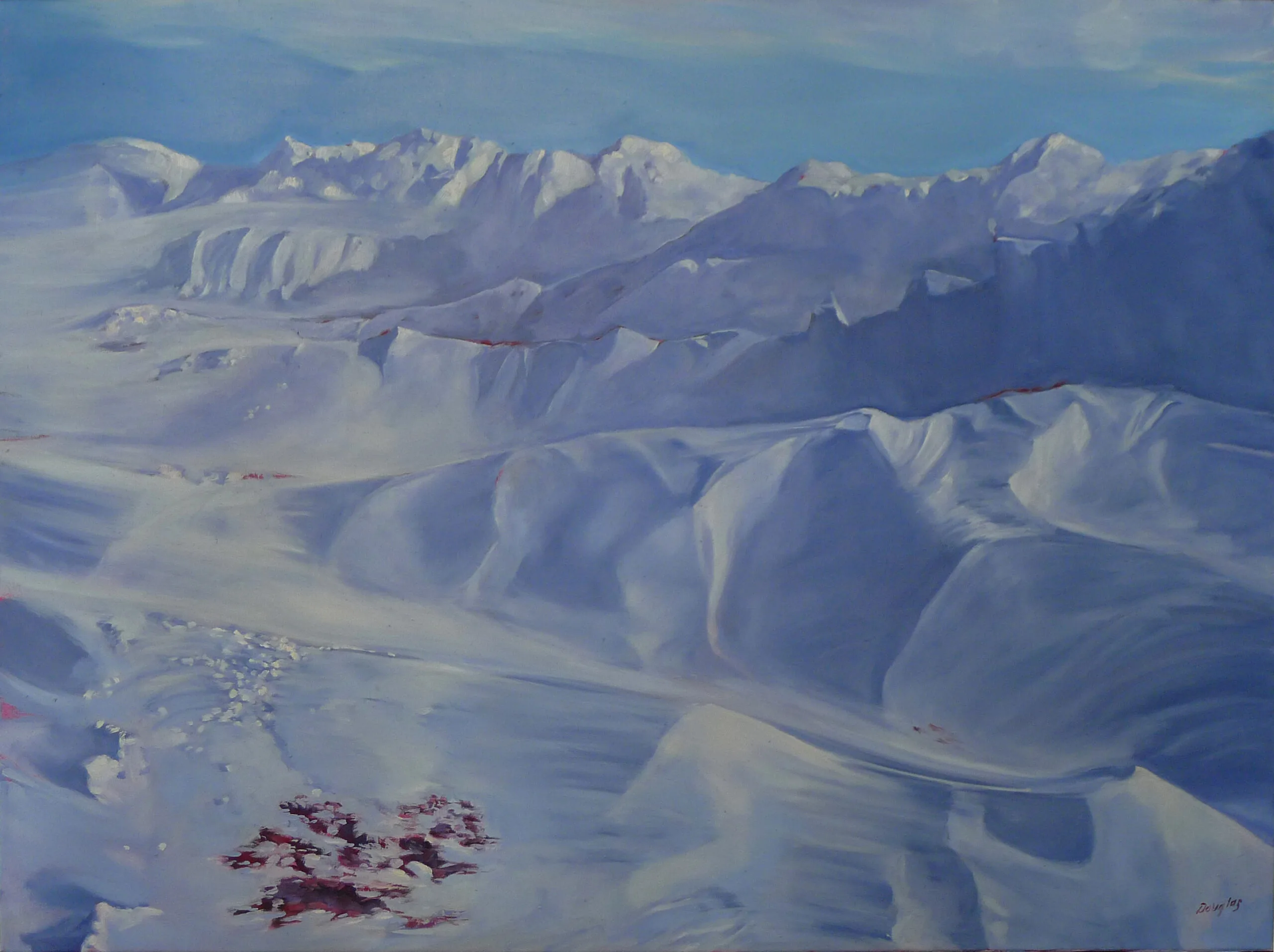
Avalanche Country, 9X12, oil on archival canvasboard, unframed, $696 includes shipping and handling in continental US.

Instead of betting on algorithms, I’m betting on you

I will keep sharing painting tutorials, essays on composition and color strategy, and field reports from plein air workshops and art festivals. I’ll keep teaching what I know about color strategy, composition and the audacity required to put brush to canvas.

At the same time, I will talk about my paintings, my workshops and my classes. Not as random advertising interruptions, but as invitations. My goal isn’t to sell you stuff you don’t need. It’s to connect you with the paintings, workshops and classes that might be of genuine value to you.

I give you a cleaner, calmer, ad-free experience. In return, if and when something I offer serves your needs, you support that. That feels like a fair trade.

I’m calling this an experiment, and I’ll reassess it in a few months. Since so much of social media is experimentation, I don’t know how this will work. But I do know I would rather have fewer engaged, thoughtful readers than lots of annoyed visitors clicking quickly past pop-ups.

Art is built on attention, concentration and presence. It seems contradictory to preach those values while surrounding the conversation with digital noise.

Cold Spring Day, 11X14, $869 includes shipping and handling in continental US.

What do you think?

I’d love for you to be my partner in this next phase. Does the site feel better to you? Calmer? More focused? What kind of content should I prioritize now that we’ve cleared out the clutter?

If you’re looking for an art blog focused on serious painting instruction—color strategy, composition, value structure, painterly brushwork and so much more—you’re in the right place. This site remains committed to practical guidance for working and aspiring painters.

Invest in your craft

Online painting class: How to See Like a Painter
Monday evenings, 6-9 PM
Feb 23-March 2, March 16-April 6

How to see like a painter: retrain your eyes to look past labels and focus on the architecture of a scene—the actual “bones” of the image.

Online painting class: Painterliness: Looseness and Bravura Brushwork
Tuesday evenings, 6-9 PM
Feb 24-March 3, March 17-April 7

Painterliness is less about a look than a way of thinking. We’ll focus on how to let a painting feel alive rather than overworked or timid.

Sedona Plein Air Painting Workshop: Canyon Color for the Painter, March 9-13, 2026

Paint en plein air in Sedona’s luminous red rock canyons and gain practical color skills. Wide, sunlit expanses provide an ideal classroom for seeing bold hue and subtle value relationships.

Registration is now open for workshops in 2026! Reserve your spot:

Can’t commit to a full workshop? Work online at your own pace:
Seven Protocols for Successful Oil Painters

Where creativity meets the business of art

Early Light is 11X14, oil on archival canvasboard, $869 includes shipping and handling in the continental US.

I consider it a great blessing to work in Sedona, AZ twice a year—in October for the Sedona Plein Air Festival and in March to teach Canyon Color for the Painter, a five-day plein air workshop. (There are a few openings left.)

This year I’ll also be presenting at the Sedona Arts Center’s Sedona Entrepreneurial Artist Development Program (SEAD), March 14-15. It’s a fast-paced, two-day intensive designed to help artists get serious and strategic about their creative careers. Anyone baffled by the business of art would benefit from this.

I presented last year as well. It was lots of fun for both for the presenters and the participants. Although I have an established art practice, I came away with ideas that have benefitted me during the past year.

Early Morning at Moon Lake, 6X8, oil on archival canvasboard, $348 includes shipping and handling in continental US.

SEAD helps artists step back and look at their art practice through a business lens, without losing their creative voice. You’ll work on all aspects of the business of art, including strategic planning, artist statements and résumés, branding and storytelling, marketing, audience engagement and financial organization.

Each artist leaves with an individualized strategic plan. If you complete the program and submit an approved plan within a year, you can then apply for a $500 implementation grant.

What’s my part in this?

My friend Bobbi Heath is wont to say, “A professional artist is one who collects sales tax and pays income tax on their earnings.” (If you should and don’t, you’re taking a terrible risk.) Since I’m an artist with the soul of an accountant, I get down into the weeds, walking people through the business structure they need to be successful.

None of this needs to take away from your creativity. If set up properly, it can run in the background.

Moonrise, 12X16, $1159 includes shipping and handling in continental US.

Who it’s for
This program is designed for visual artists at any stage—emerging through established—who want a stronger, more sustainable path forward.

Key dates:
• Apply by February 15, 2026. That’s Monday, so don’t mess around!
• Notification: February 27, 2026
• Reception: March 13, 2026
• Program: March 14–15, 2026

Applicants must be 18+ and not full-time college students. Space is limited to 20 artists, so early applications are encouraged.

Apply now! And of course if you’re there anyway, you may as well take Canyon Color for the Painter, which runs the prior week.

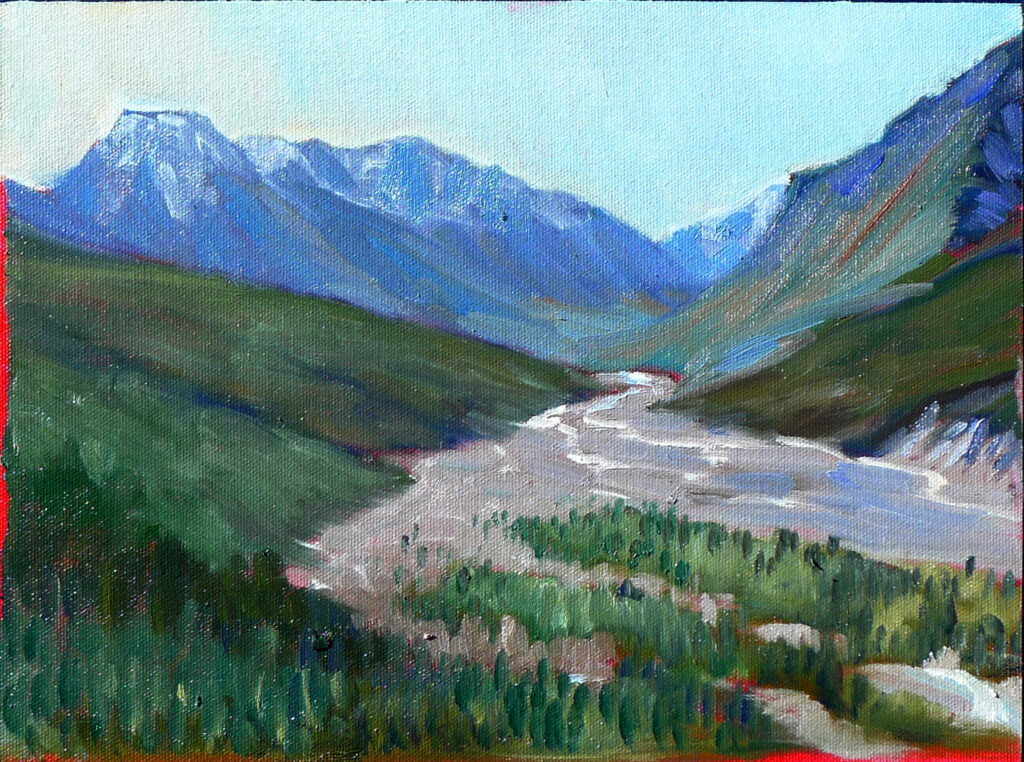
Athabasca River Confluence, 9X12, $696 includes shipping and handling in continental US.

In case you were wondering

Sedona Arts Center was founded in 1958, making it one year older than me. It’s a nonprofit hub for Northern Arizona’s arts community, and offers year-round classes and workshops, exhibitions, festivals, and cultural programming.

Registration is now open for workshops in 2026! Reserve your spot:

Can’t commit to a full workshop? Work online at your own pace:
Seven Protocols for Successful Oil Painters

Monday Morning Art School: creating a color strategy

Main Street, Owl’s Head, oil on archival canvasboard, $1623 includes shipping and handling in continental US.

When possible, I like to take my workshop students to see Colin Page. Not only is he a gifted painter, he’s very articulate about process and equally generous with his time.

He was once speaking to a large group and someone asked him, “how do you decide which color to start with?”

“I start with the easiest,” he answered. I cracked up, which was both rude and disruptive. (Don’t worry; I’ve already apologized.) It took me a year, but I finally realized what he was saying. By starting with the easiest (i.e. most obvious) color and building color harmonies around it, he ends up with coherent color in his paintings.

American Eagle in Drydock, 12X16, $1159 unframed includes shipping and handling in continental US.

Stop being reactive

Scientists estimate that the human eye-brain combination can distinguish about a million different colors. If you doubt that, just look around the room you’re sitting in. As I write this, there’s the color in my wallpaper, which is lit differently on each wall. There is light streaming in through my south window, but the same blinds appear very different in each of the east-facing windows. There are multicolored books and papers, and all the different shades in the folds of the laundry on my dresser. There are variations in my dog’s coat, my quilt, the wooden furniture and the painted floor… and on and on. It’s very easy to get bogged down in that mass of color. Nature offers infinite color information; our job is to edit.

What colors are we looking at?

Unless we’re doing art, most of us don’t spend a lot of time thinking about the colors we see. We track a dominant color environment, a few supporting color families and perhaps a handful of accidental color notes (accents). If we’re interested in making paintings that replicate human perception, we should ruthlessly simplify nature’s color complexity into something coherent.

That starts with identifying the fundamental color structure. Is our painting about warm light and cool shadow? Dusty desert neutrals? Dim light and suppressed chroma? High-key, bouncing light? We should answer that before we pick up our brushes, because everything is subordinate to that color structure. I can (and do) teach about color harmonies, but the specifics matter less than understanding why they’re important.

One partner (color) must lead in this dance; supporting colors should then harmonize with it. Then there are accent notes, or accidental colors. These are brief moments that energize the whole composition. Remember, if everything is an accent, nothing is. If everything is too rigidly controlled, your painting will be a yawn.

Value structure is a critical part of color strategy. Yes, you can put cool notes in warm highlights, as long as they’re done judiciously and don’t overrun the structure. Likewise, there can be warm notes in cool shadows, with the same restriction. But what is sacrosanct is the value structure itself.

Main Street, Owl’s Head, oil on archival canvasboard, $1623 includes shipping and handling in continental US.

Color strategy makes for more efficient painting

Thinking out your color strategy in advance will save you lots of flailing around. Plein air painters in particular don’t have the luxury of endless correction. If you already know your palette relationships, you can mix decisively.

Muddy color is almost always caused by dithering. When you don’t know where you’re going, you keep adjusting. Eventually everything averages into a grey-brown dreariness.

The Surf is Cranking Up, 8×16, $903 includes shipping and handling in continental United States.

Practical hints

Before you start your next painting, you should:

Know what color you’re going to lead with;

Know what color harmony you’re going to use to support that color;

Understand the color temperature of the light and the shadow.

My Sedona workshop, Canyon Color for the Painter, will focus on mastering color relationships. They’re so easy to see in the clear light of the southwest, but you can take those lessons anywhere. I’m really looking forward to seeing you there!

Registration is now open for workshops in 2026! Reserve your spot:

Can’t commit to a full workshop? Work online at your own pace:
Seven Protocols for Successful Oil Painters

Staying motivated in the lonely studio

Three Graces, oil on archival canvasboard, $1159 framed includes shipping and handling in continental US.

I meant to go outside to paint yesterday, but Ken DeWaard and Eric Jacobsen were both busy. I spent three hours in meetings. Then I needed to write this post. While I finally got some painting done, it wasn’t nearly enough.

The battle for me isn’t in front of my easel, it’s getting to my easel.

Painting is not performance art; the real work happens when we’re alone. Still, it’s a form of communication—of ideas, emotions and principles. That contradiction is a challenge.

Camden Harbor, Midsummer, oil on canvas, 24X36 $3188 includes shipping in continental US.

What motivates us?

Motivation shouldn’t be based on inspiration, but on the process itself. For me, that means setting strict working hours and insisting I spend some time in my studio every day. I’m constantly reminding myself that painting should be my default activity, not the reward for getting everything else done.

The solitary artist thrives on rhythm. Working at the same time of day in the same place removes the friction of negotiating with yourself about when and whether to paint. It also tells your brain it’s time to drop into painting mode.

One of the most reliable ways to stay motivated is to narrow your vision. Focusing on results is paralyzing. Set out to explore one specific problem or paint one passage. My friend Sari Gaby used to call the work she did at the end of the day “border work.” She meant attacking the small, concrete problems that are easy to act on. That’s where I start, because it helps me organize my thoughts for the bigger questions.

Carol L. Douglas painting workshops 2026
Larky Morning at Rockport Harbor, 11X14, on linen, $869 unframed includes shipping in continental US.

If success means painting a masterpiece, we’re all doomed. If success means putting in an honest session of looking, thinking and problem-solving, we’ll stay motivated. Sometimes, the win is in sticking with it when painting goes sideways. We succeed incrementally, day by day.

Give yourself permission to do bad work

With no one else around, my inner editor gets very loud. I counter that by treating my studio as a workshop, not a gallery. That means I paint studies, make messes, chase amorphous ideas, draw. The more experimental my mindset, the less precious the outcome and the more likely that I’ll head in new directions.

It helps to remember that painting is a long game. When I’m working alone, it’s too easy to judge today’s results as a final verdict on my ability. They aren’t. They’re one point in a decades-long dialogue with paint. Some paintings are clumsy. Some are surprisingly good. Most are just the next step in the process.

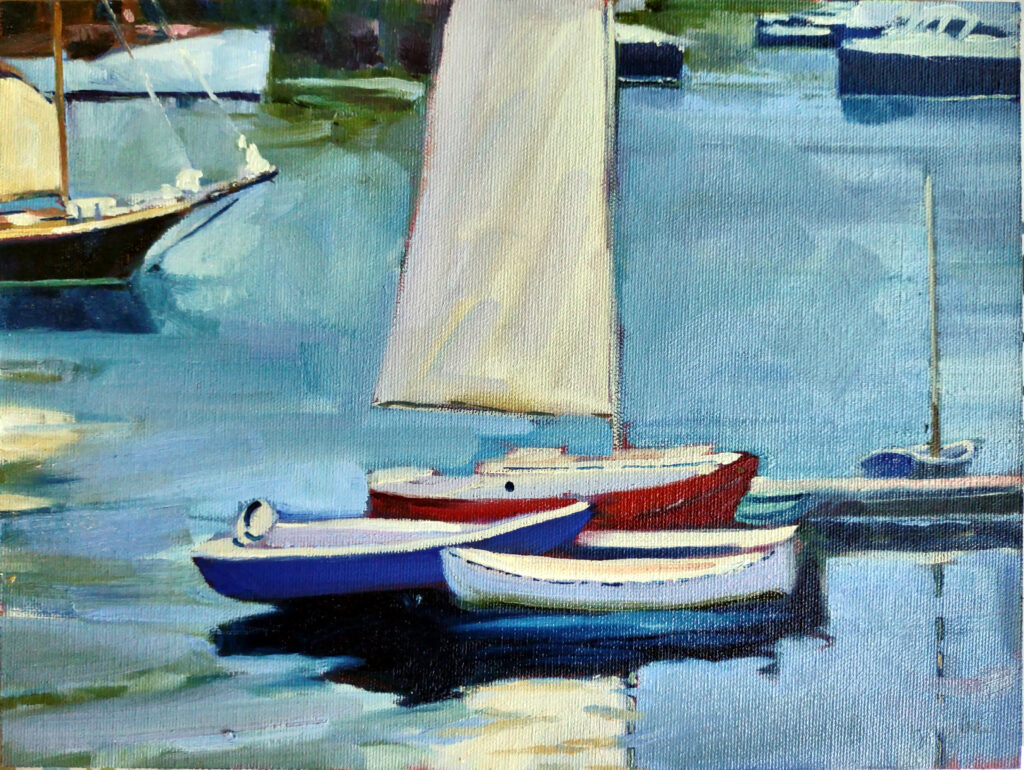
Drying Sails, 9X12, oil on canvasboard, $869 framed. Includes shipping and handling in continental US.

We all need connection

Solitude is necessary, but as Proverbs says, “as iron sharpens iron, so one person sharpens another.” Close relationships improve, refine and strengthen individuals. Accountability, encouragement and honest (sometimes difficult) conversation make us all more effective. 

Artists need to feel part of a larger conversation. Read about painters you admire. Study their work. Join classes, workshops and critique groups. I regularly hear from students that my weekly classes keep them painting.

If getting to the easel is hard, you don’t have to solve that alone. My Zoom classes give you a standing appointment with important concepts and other painters who are wrestling with the same problems you are. Think of these classes as a form of productive companionship. You still do the work, but you’re plugged into a larger conversation that keeps you moving forward.

If you’re ready to start showing up more consistently, I’d love to have you join us:

How to See Like a Painter, Monday evenings, 6-9 PM, Feb 23-March 2, March 16-April 6

Painterliness: Looseness and Bravura Brushwork, Tuesday evenings, 6-9 PM, Feb 24-March 3, March 17-April 7

Registration is now open for workshops in 2026! Reserve your spot:

Can’t commit to a full workshop? Work online at your own pace:

Seven Protocols for Successful Oil Painters

Painting the living language of canyons and buttes

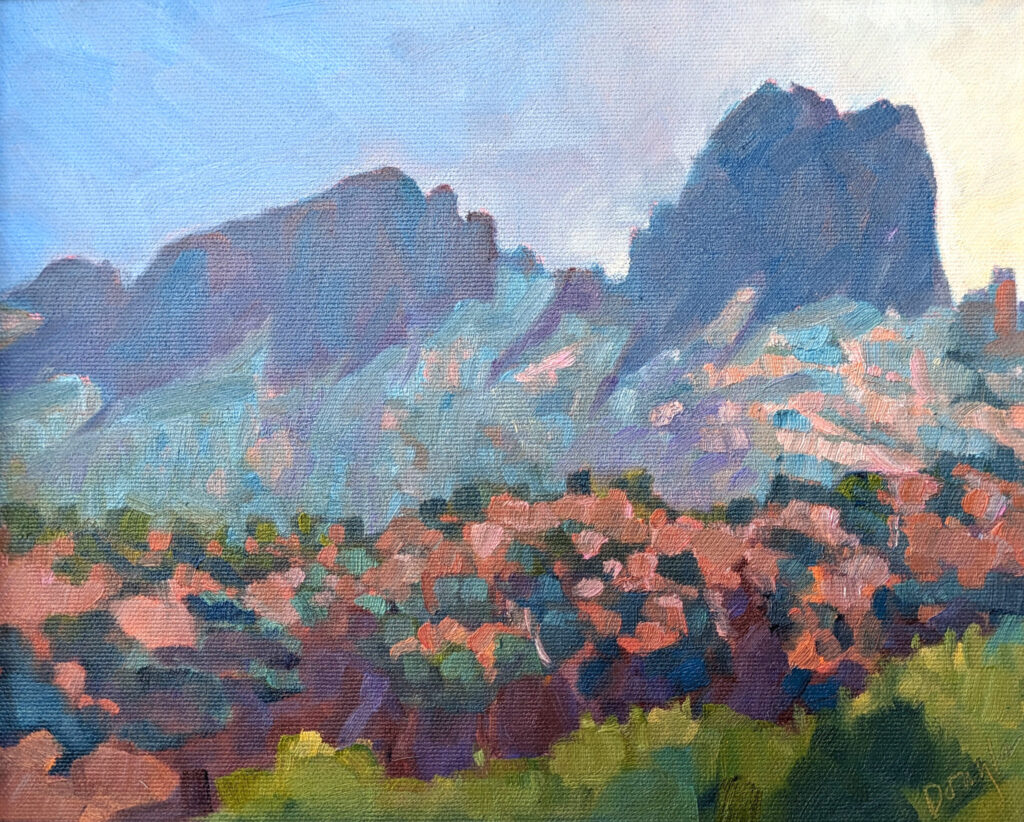
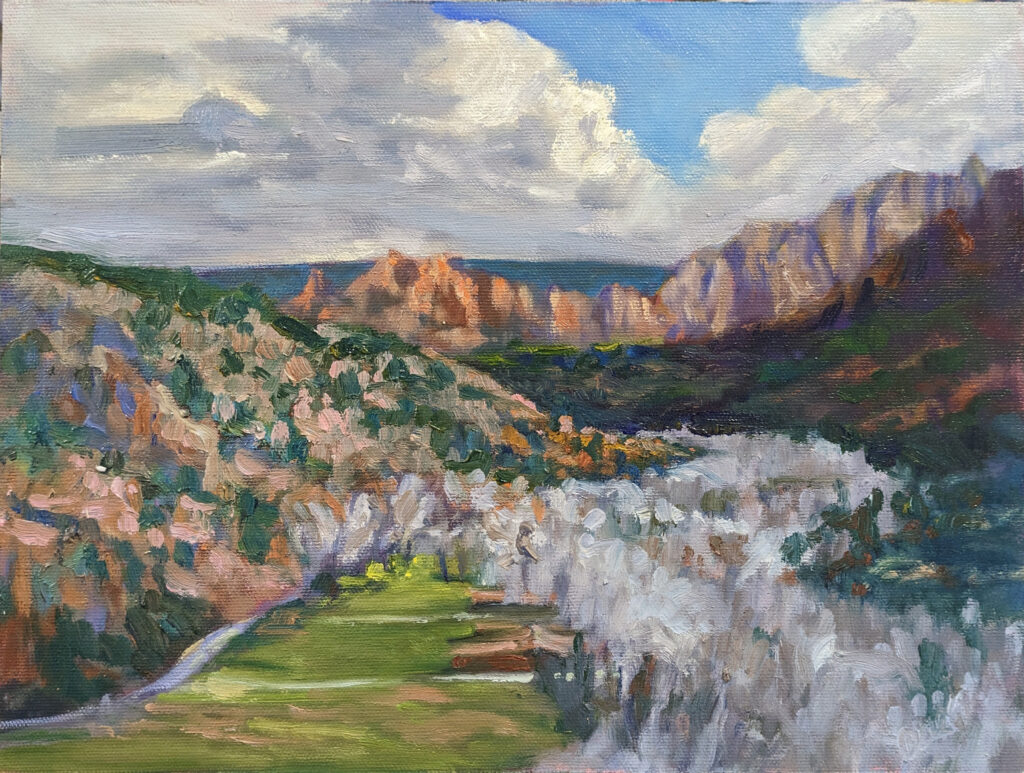
Along Boynton Canyon Road, 9X12, oil on birch, available through Sedona Arts Center.

Geologic time is humbling. It took more than 300 million years to make the layer cake of sandstone, siltstone, and limestone that eventually became the Schnebly Hill formation in Sedona. The tectonic uplift and erosion that carved it into what we see today took 80 million years. Compared to that, our own span of existence is impossibly short.

The shapes and colors of the red rocks of the Colorado Plateau are astonishing. This is iron-rich sandstone. It catches the light and shifts from cool violets to blazing oranges and reds. There are hoodoos and spires, canyons and buttes. Although they change at a sub-glacial pace, there is movement and rhythm written all over them.

Every time I’m in Arizona to paint, I understand their form a little better. Oak Creek Canyon isn’t just a cavernous hole, and the massifs are not simply towering shapes. They are dynamic, the very language of color, light and geological poetry.

Cliffs, 12X12, oil on birch, private collection.

The dialogue between earth and time

Many Native Americans viewed rocks as animated, rather than inanimate. The Ojibwe considered rock formations and cliffs to be alive with unseen spirits. Algonquin-speaking peoples used terms like manitou to describe the spiritual power that rests everywhere, including within ‘spirit stones.’ I don’t think of rocks as alive in that sense, but I can read their geology well enough to picture how they’re constantly in motion.

The dialogue between earth and time is difficult to paint. Since reference photos don’t adequately describe the scale or light, painting the high desert requires actually being there. The dust-dry air of Sedona filters light in ways you can’t fully grasp until you’ve seen it firsthand. Shadows have a cool clarity, and highlights sing with warmth and saturation.

Then there’s the swift movement of the light, in the warm glow of dawn against a cliff face or the shifting shadows that move across layered rock strata. It helps to visualize these gigantic rock formations as vast theaters of shifting color and contrast.

Carol L. Douglas painting at Acadia National Park
Sunlight and shadows, oil on birch, 14X18, private collection.

They are complex compositions of value, edge and form. Shifting, reflected light, atmospheric perspective and above all the rhythm of shapes tell their story. I find the long views to be the most difficult subject (which is why I return to them over and over). Done right, the towering forms are a scaffold, the story moving from foreground to midground to distant horizon, each plane with its own emotional tone. That’s why I think paintings capture the high desert better than photos do.

In plein air painting, every form is a challenge—to simplify the complexity, balance the hard edges of rock against the fleeting softness of cloud shadows, or make deep crevices feel alive on a modest 9×12 panel. Canyons and buttes become conductors of color relationships, inviting you to push beyond the literal.

Lone pines, 14X18, oil on birch, available through Sedona Arts Center.

If you’ve ever felt the tug of a landscape, if you’ve ever wanted to paint buttes, spires and hoodoos, or if you’re just plain cold after this long winter, I invite you to join me for Canyon Color for the Painter: a Plein Air Workshop at the Sedona Arts Center, March 9–13, 2026. You’ll learn to lead with color, build compelling compositions, and translate the hidden symphonies of light and land into your own plein air paintings. Register now and let the canyon teach you to paint with deeper insight and confidence.

Registration is now open for workshops in 2026! Reserve your spot:

Can’t commit to a full workshop? Work online at your own pace:
Seven Protocols for Successful Oil Painters

Monday Morning Art School: painterly, loose brushwork

Marshall Point Rock Study
Marshall Point, oil on archival canvasboard, 9X12, $696, includes shipping and handling in continental US.

Today is Candlemas, one of the oldest feasts in Christendom. It came to North America through the Pennsylvania Dutch as Groundhog Day. That’s also the midpoint of astronomical winter.

Northerners know the whole “six more weeks of winter” thing is hooey. Winter ends at the spring equinox; this year that’s March 20. Yes, that’s six weeks away, but we’ve been known to have snow into May.

Traditionally, Candlemas is observed by eating crepes because there’s nothing like carb-loading this time of year. I plan on having wild blueberries with mine.

Now, to work

Two paintings by Lauren Hammond, courtesy of the artist.

In last week’s Zoom class, Lauren Hammond showed two paintings, above. One was a careful study of storm clouds over Lake Winnipesaukee. The other was a small abstraction of the same subject. The first is more factual; the second is more tempestuous. “It took me fifteen minutes,” she protested when I told her I loved the abstraction. That’s not true. She should include the hours it took her to do the carefully-realized painting as well, because all simplification rests on getting it right in the first place.

Loose is not easier

Loose brushwork isn’t sloppiness. Instead, it’s a confident economy that only comes after one truly understands the composition, values and color relationships.

Loose brushwork looks effortless because the artist has already figured out what matters and what doesn’t. He or she has internalized the way shapes interact, the rhythm of edges and the push and pull of light and dark. Once that happens, they can let go and paint with abandon. Mark-making is no longer tentative; it is the result of decisive choice. That’s the heart of painterliness.

Sometimes painting students seek looseness before they’re ready. You cannot break rules that you haven’t yet mastered. Without good structure, amorphous marks just look confused. True looseness is an informed choice. It’s a freedom that arises from discipline, not in spite of it.

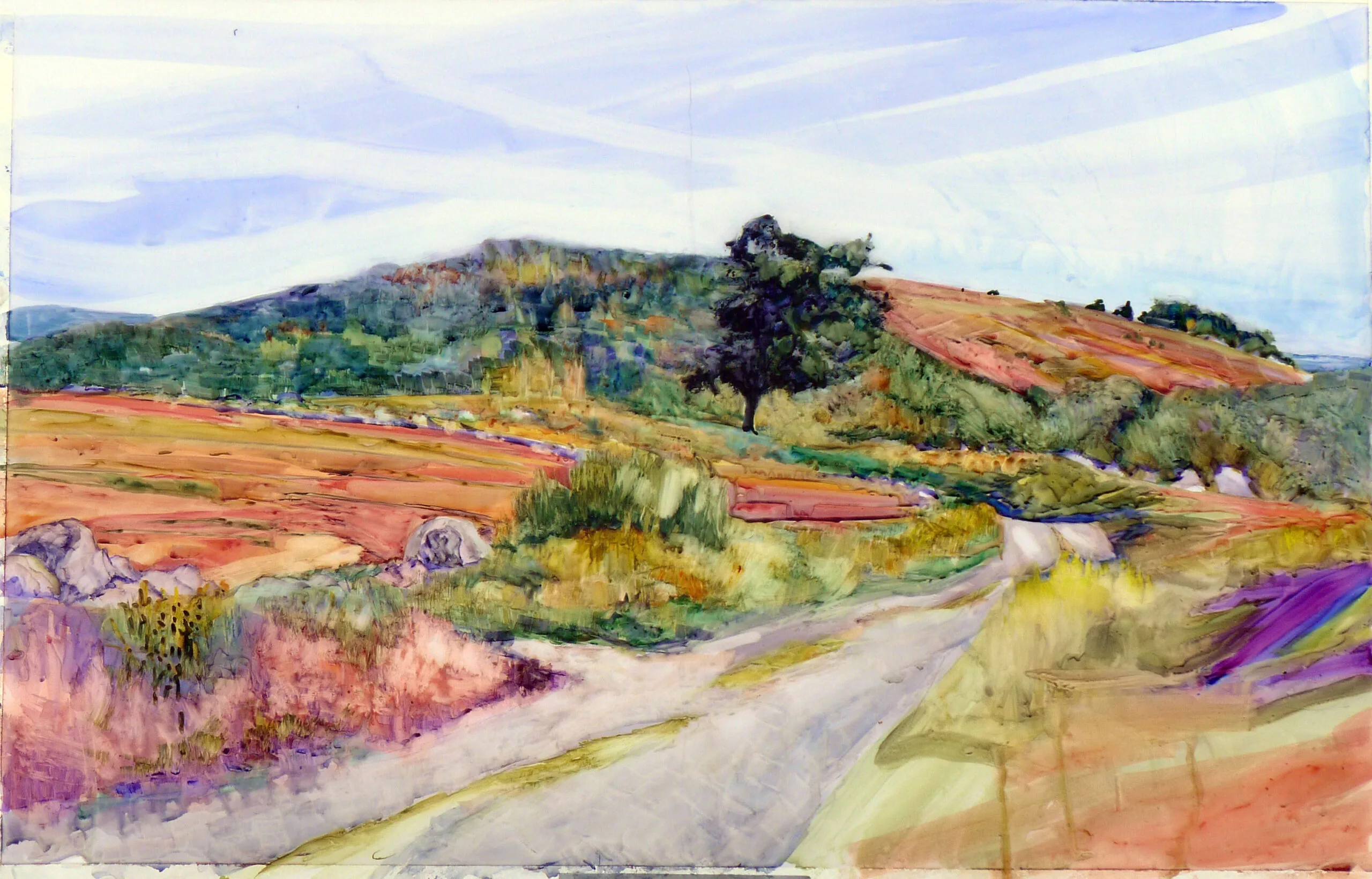
Clary Hill Blueberry Barrens, watercolor on Yupo, ~24X36, $3985 framed includes shipping and handling in continental US.

Clarity

You can’t be genuinely loose until you are utterly clear on the subject you’re painting. Before you add bravura brushwork, you must establish the composition’s anchor points: the big shapes, the value relationships that give your painting weight and coherence and the color harmonies. These are the scaffolding of painting and can never be ignored. Build well and you give yourself the freedom to break out in dynamic ways.

This is just like learning a language. First you master vocabulary and grammar. Only after you are comfortable with structure can you play with idiom and nuance. Without that basis there’s no poetry in either painting or language.

Fog over Whiteface Mountain, 11X14, $1087 framed includes shipping and handling in continental US.

Good juicy, gestural marks aren’t by accident. They should be well-placed in the context of the composition and support the goals of the painting. This can be intuitive or subliminal, but it’s always the result of experience. The experienced painter knows when to let loose and when to hold back.

If you’re ready to move beyond tentative marks and learn to paint with clarity and confidence, I’ve created a class specifically to guide you. In Painterliness, Looseness and Bravura Brushwork, we break down the principles that allow expressive looseness to emerge. You’ll learn how to see what truly matters in your painting, and how to let go with purpose and vitality. This Zoom class runs on Tuesday evenings from 6-9 PM, from February 24 to April 7, and is strictly limited in size so that I can give each of you the attention you deserve.

Registration is now open for workshops in 2026! Reserve your spot:

Can’t commit to a full workshop? Work online at your own pace:

Seven Protocols for Successful Oil Painters

High desert dawn

Mather Point at dawn (Grand Canyon), oil on canvasboard, 9X12, , $696 includes shipping and handling in continental United States.

I’m teaching at Sedona the week of March 9-13, but before that, I’ll slip in a quick trip to the Grand Canyon (weather permitting) to do some painting. The light is mercurial and the scene is complex. That forces simplification and speed.

My first trip to paint at the Grand Canyon was with a student. There was snow on the ground but I camped under the stars with gear loaned to me by Ed Buonvecchio. My second trip was with Laura Martinez-Bianco. I had my own equipment and froze. Last fall, Ed and Laura and I camped together. This time, we’re staying in a hotel.

Mather Point is a quiet place if you arrive early enough. It’s by no means empty before dawn, because hardy visitors want to see the first light flash across the canyon. Setting up fast is not my strongest suit, but dawn doesn’t linger. One minute the walls are violet-blue; the next, they’re on fire.

Grand Canyon at sunset, oil on canvasboard, 9X12, $696 includes shipping and handling in continental United States.

When I painted Mather Point at Dawn, I wasn’t there to make a pretty picture. I was there to explore that moment when the reds start to rip across the canyon. The first light crept in sideways, barely touching the upper rims. The sky was a soft pastel adagio. The canyon below stayed dark and cool.

As the sun lifted, the canyon snapped into focus. Warm planes flared against cool shadows. Edges sharpened, softened and were lost again. It was impossible to get the details wrong because the details never stay the same. Nothing is highlighted long enough to be fully understood. You must accept being often wrong and just keep moving.

Even with this, it’s easy to be led astray in the bigger picture. It’s difficult to be patient and make a preparatory sketch when the light is changing before your eyes. However, that’s also when a preparatory sketch is critical.

As the sun rose across the canyon, the shadows cooled. The sky moved from its luminous pale rainbow of colors into the deep blue of a western day.

Grand Canyon, late morning, 8X16, oil on archival linenboard, $722 includes shipping and handling in continental United States.

By the time the sun was up, my painting was done. The light had moved on to another version, and then one after that, and then one after that. People stopped to talk and ask questions. I slowly let my focus slip and packed up my gear.

This little painting doesn’t try to tell the story of the Grand Canyon. It represents a narrow window of time, a few moments of light, a handful of choices. In its best form, that’s what plein air painting should be.

The high desert of Arizona and the Grand Canyon are like no other places I paint. You have little idea if the vista in front of you is a mile, ten miles or a hundred miles wide. Of course, that’s why people come here from all over the world. Time and scale are suspended.

Dawn along Upper Red Rock Loop Road, Sedona, 20X24 oil on canvas, $2318 unframed includes shipping and handling in continental US.

I’m heading back to the desert this March. Join me for Canyon Color for the Painter: a Plein Air Workshop at the Sedona Arts Center, March 9-13, 2026. Questions? Email me here.

Registration is now open for workshops in 2026! Reserve your spot:

Can’t commit to a full workshop? Work online at your own pace:
Seven Protocols for Successful Oil Painters

Monday Morning Art School: retraining your eyes

Autumn farm, oil on canvasboard, $1449 framed includes shipping and handling in continental US.

When I’m bored or stressed, I doodle a human eye. I’ve been doing this since I was a little girl, and my drawing has (naturally) gotten better. Still, I’m not really drawing an eye, but my idea of an eye.

This is fine when doodling, but not so good when painting from life. There has been a red boat in Rockport harbor for years. It used to be Becca & Meagan, but in 2017 it was replaced by Hemingway. Over several weeks, I corrected Ann when she drew it. Finally, exasperated, she pointed out to me that I was wrong. I had looked at Becca & Meagan for so long that I was no longer seeing what was there.

Most trees are several times as tall as their canopy is wide. Proportional to their canopy, their trunks are mere slivers. Yet painting students often shorten trees and broaden their trunks. This is because we’re anthropocentric. We perceive their trunks as up close, their canopies as far away. Our tree-shaped idea is shaped by our experience and perception.

Southern Beech, 9X12, oil on Baltic birch, $696 includes shipping and handling in continental United States.

Drawing based on experience and assumptions feels fluent. These are well-trodden pathways in the brain. Stepping back, however, we realize that our drawing falls short of reality.

(For the record, I’m all for drawing from the mind’s eye outward, but that’s a different discipline, and it requires the best drawing chops of all.)

Autumn Farm, Evening Blues, oil on canvasboard, $1449 framed includes shipping and handling in continental US.

Retraining your eyes is a lifelong practice

Our everyday vision edits aggressively, both for efficiency and sanity. Any activity that requires fast reflexes would otherwise be impossible. Our brains quickly name things and move on to deal with them.

Painterly seeing, on the other hand, must be the exact opposite of this. The brain has to be tricked into slowing down. It must replace instant recognition with relationships: light against shadow, warm against cool, hard edges dissolving into soft ones, shapes locking together like pieces of a puzzle. When we don’t do this, we default to clichés: green leaves, brown rocks, blue skies.

As my confession above tells you, even experienced painters get visually lazy. We rely on habits that once served us well but now quietly flatten our work. The cure is not more paint, better brushes or a new medium. The cure is learning and relearning how to actually see.

Painting improves fastest when seeing improves first. Brushwork follows perception. Color follows value. Confidence follows clarity. When painters struggle, it’s rarely because they can’t paint, because that’s actually the easy part. It’s because they aren’t seeing what’s there.

How to See Like a Painter, my Zoom class starting February 23, is designed to interrupt symbolic thinking and rebuild visual awareness from the ground up. We focus on how painters analyze scenes, simplify complexity and organize chaos into clear, compelling compositions.

The Whole Enchilada, 12X16, oil on archival canvas, $1159 unframed includes shipping and handling in continental United States.

This isn’t about copying reality or painting tighter. It’s about painting truer to the experience of light and spatial relationships. If you’ve ever said, “It looked better in real life,” this class is for you.

Whether you work in oil, watercolor, acrylic or pastel, the fundamentals of painterly seeing apply. If you’re ready to retrain your eyes, question your assumptions, and sharpen the most important tool you have—your perception—I’d love to work with you. There’s more information here. (For my upcoming Tuesday class on painterliness, see here.)

Registration is now open for workshops in 2026! Reserve your spot:

Can’t commit to a full workshop? Work online at your own pace:
Seven Protocols for Successful Oil Painters