Struggle and failure are not problems

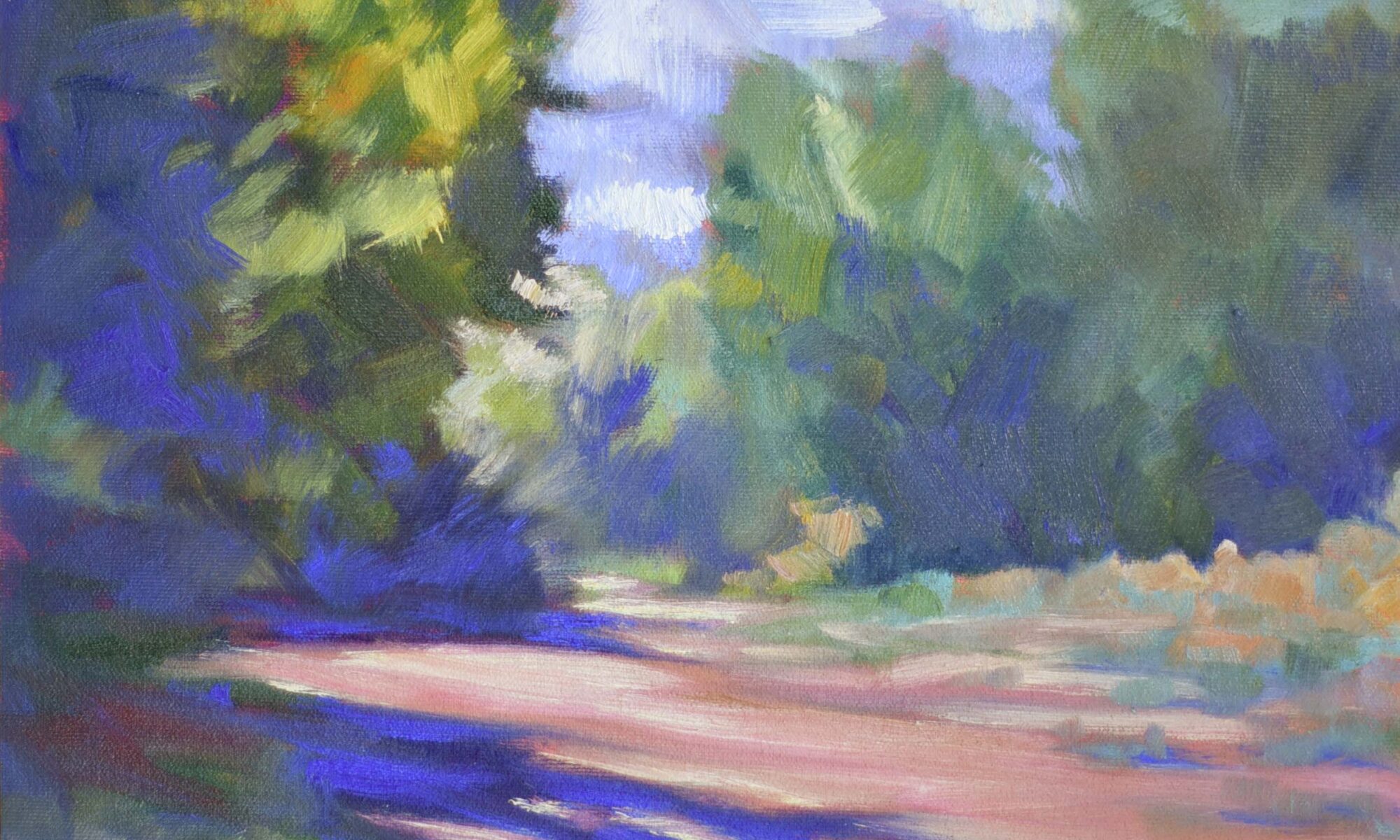
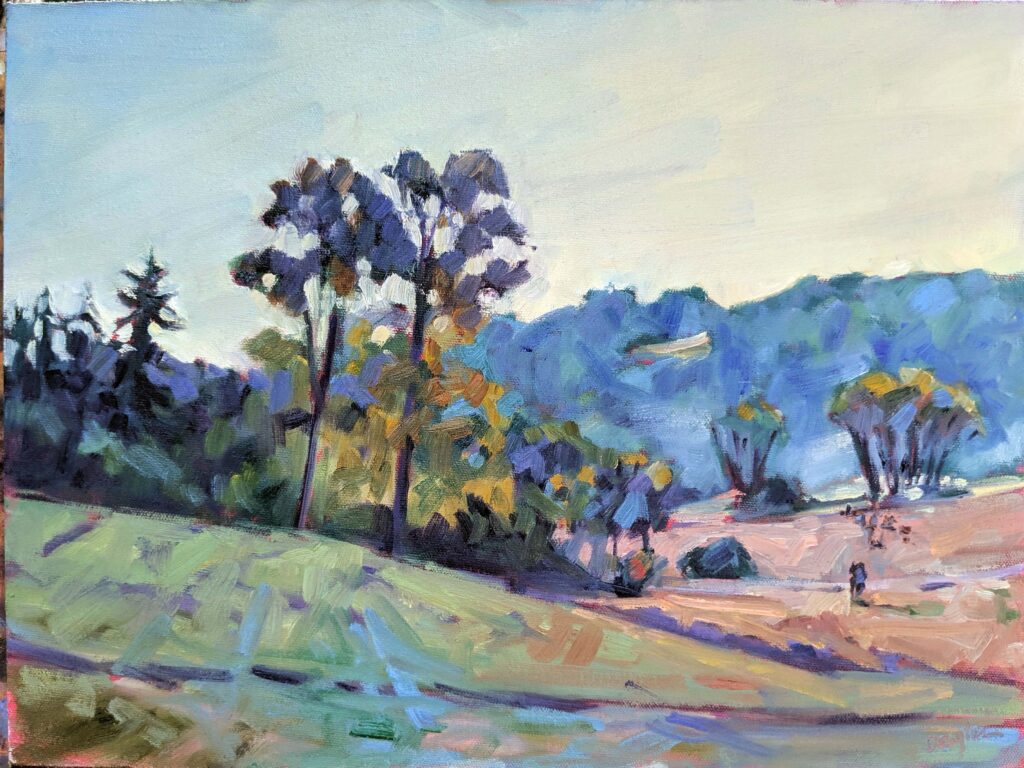
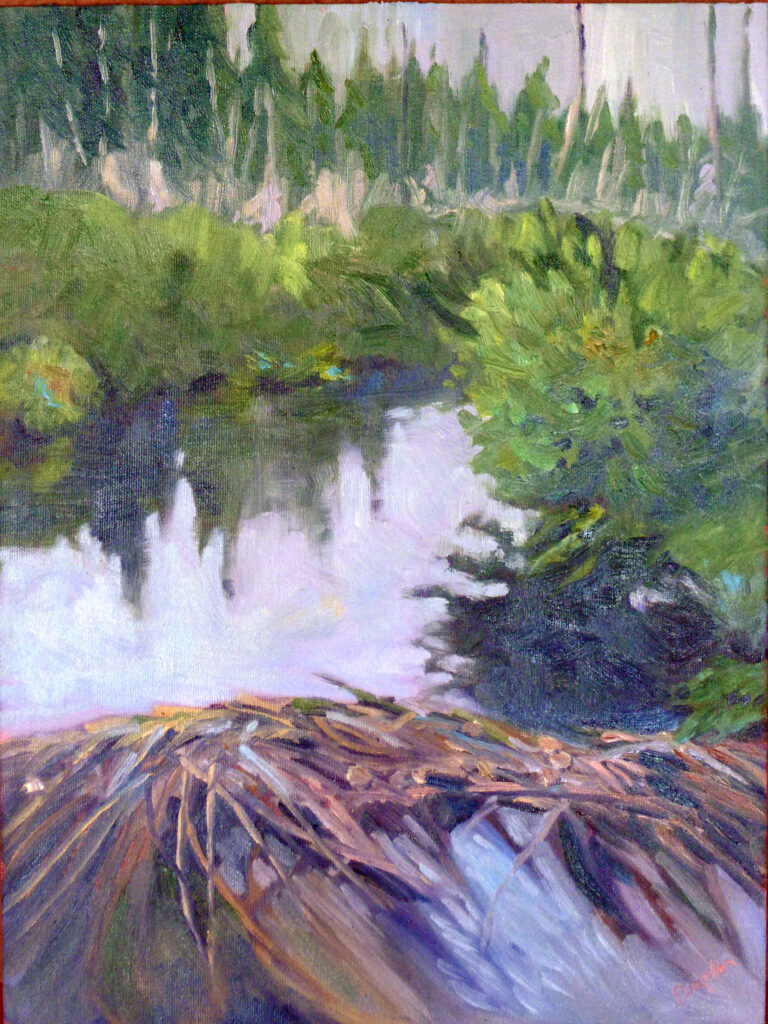
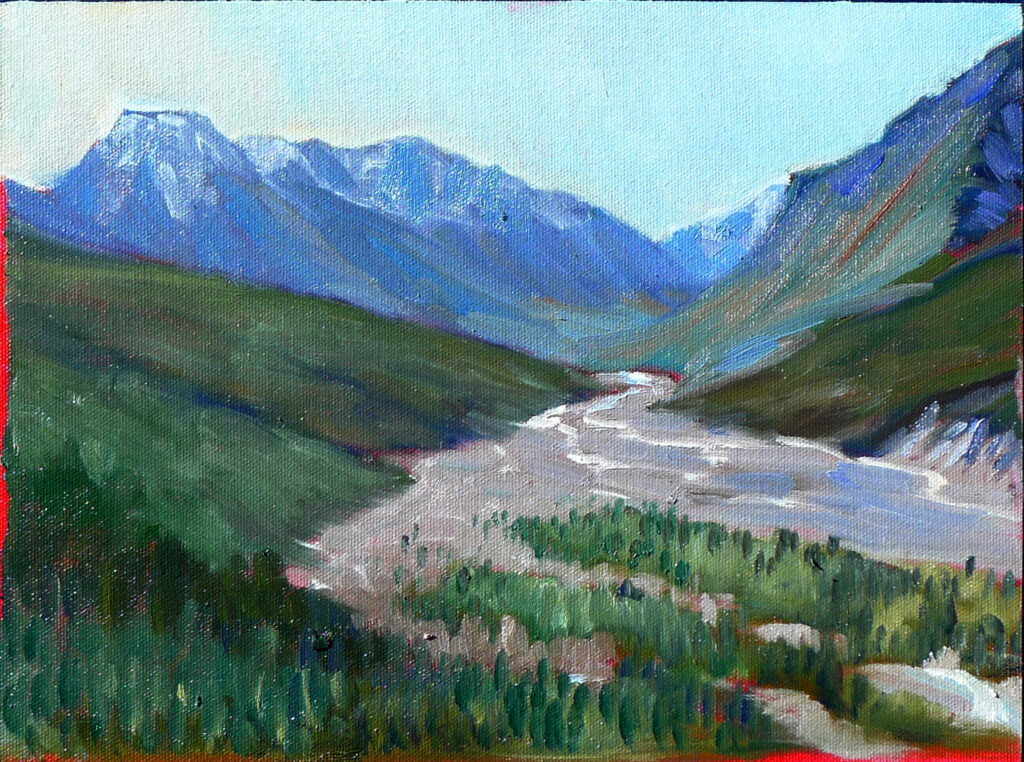
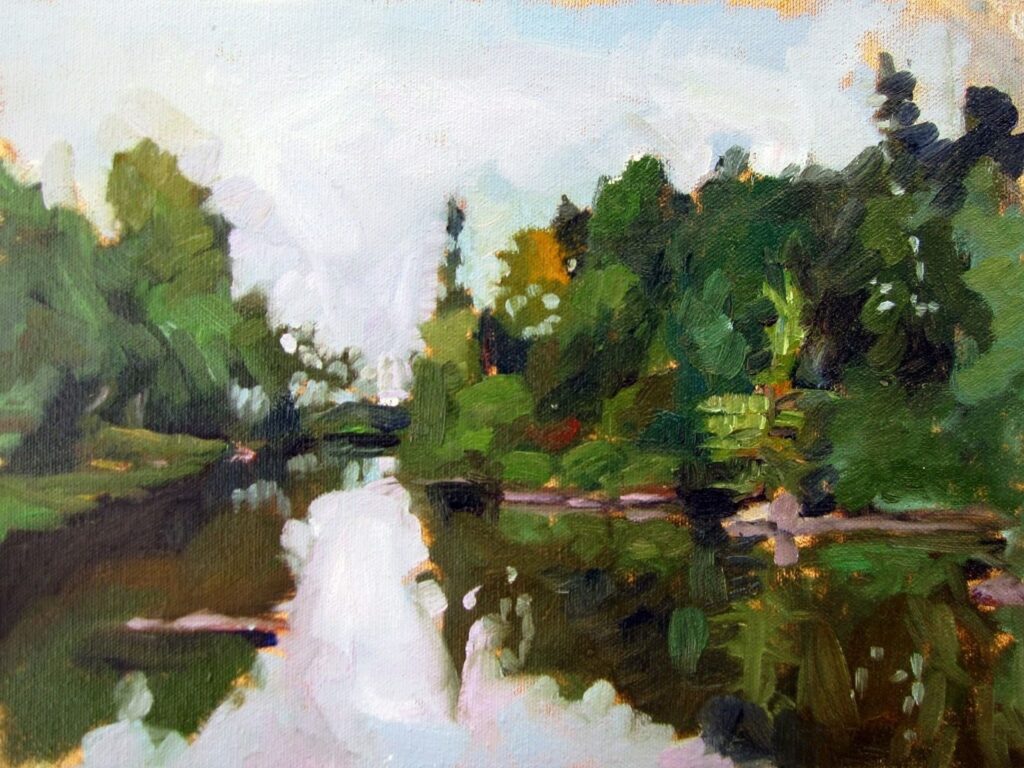
Inlet, 9X12, oil on archival canvasboard, $869 includes shipping and handling in continental US

On Tuesday, my painting student apologized for not finishing his homework. He’s got lots of stuff started, but nothing finished. “Don’t worry about it,” I answered. “I’m in exactly the same place.”

I’ve been fired up about painting since I got back from Sedona in October, but I have nothing I want to show anyone—not my drawings, nor my paintings. I’m working on three things simultaneously this week. They’re slow going, in territory I’ve never explored before.
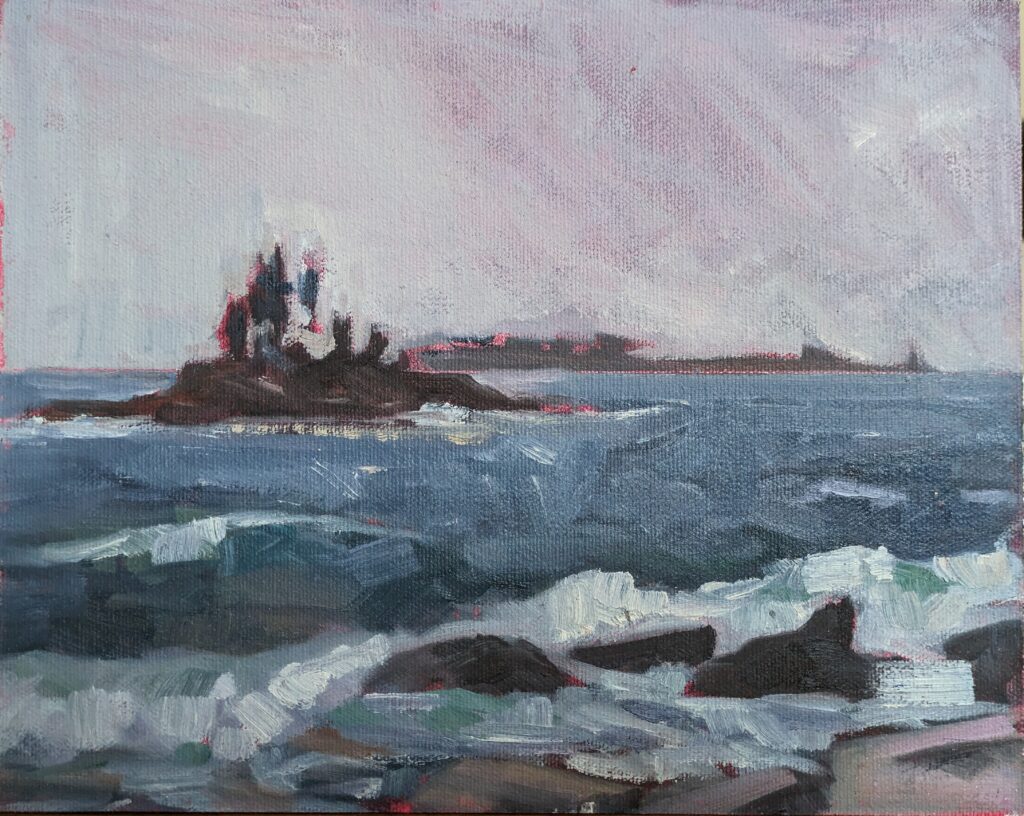
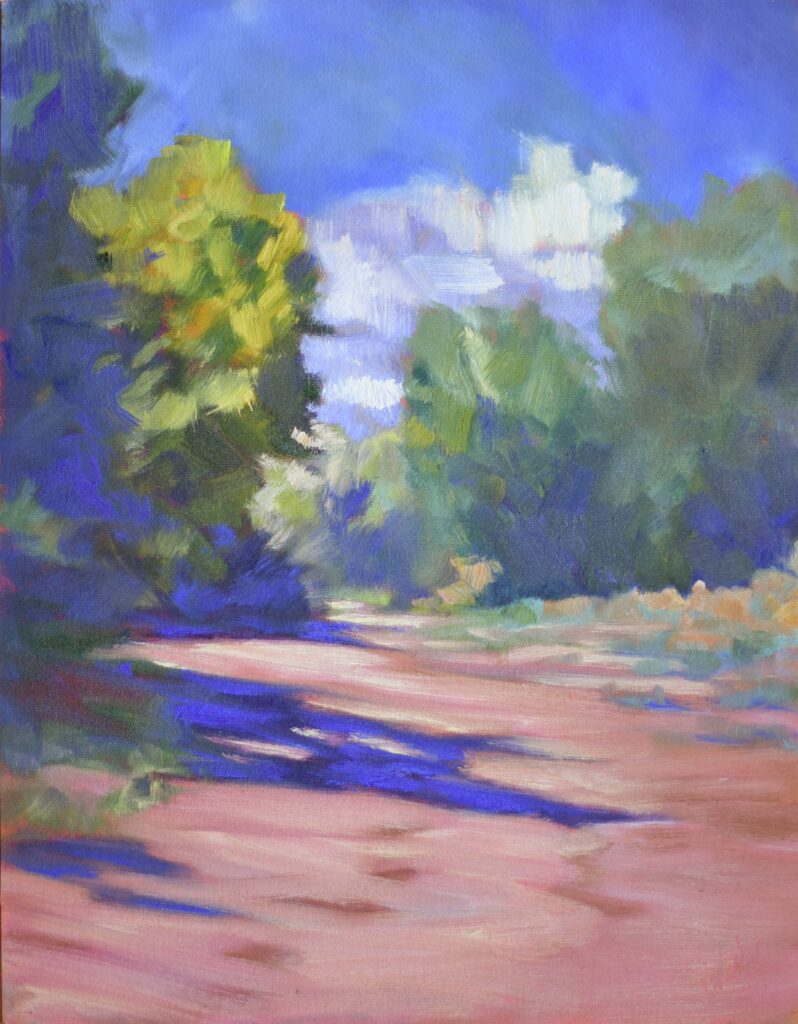
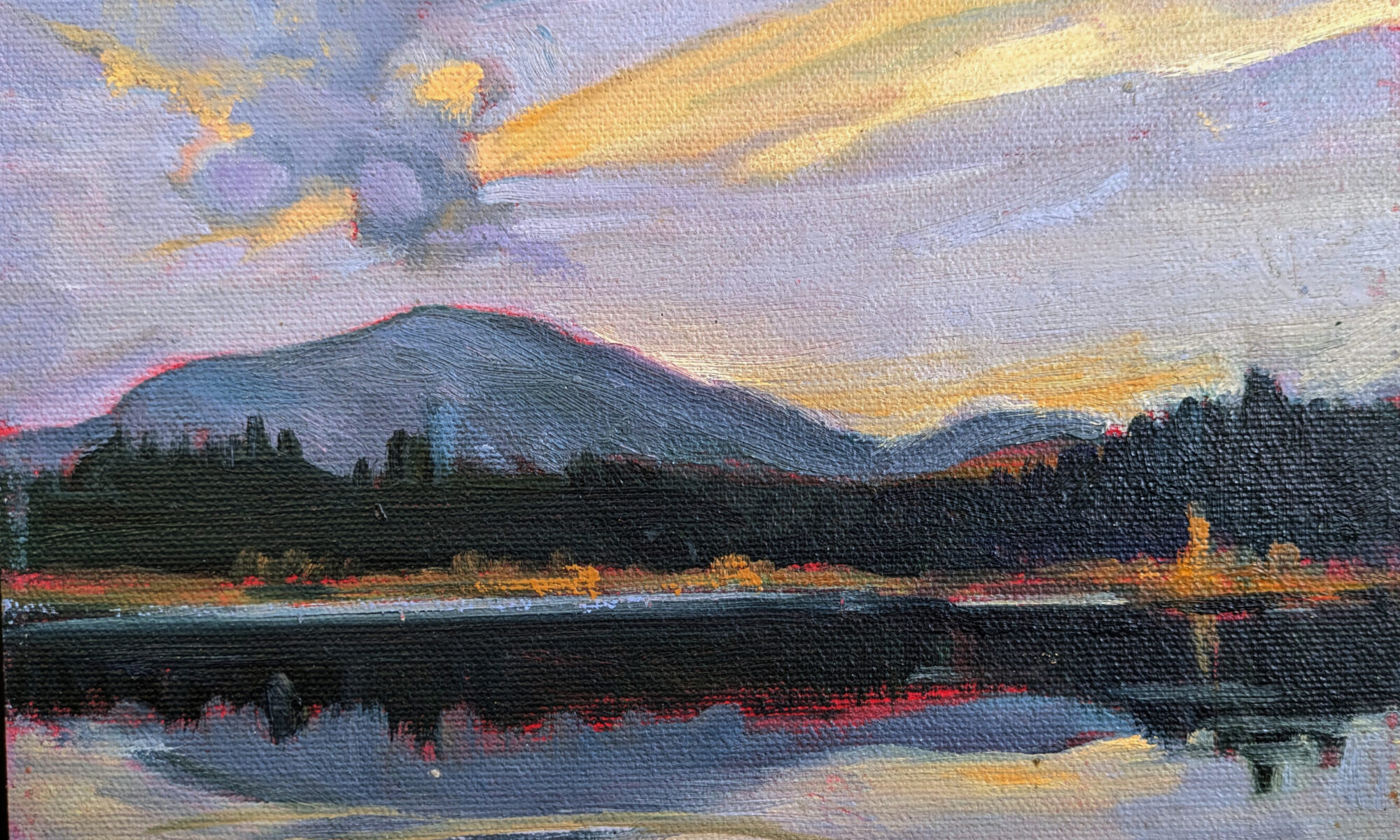
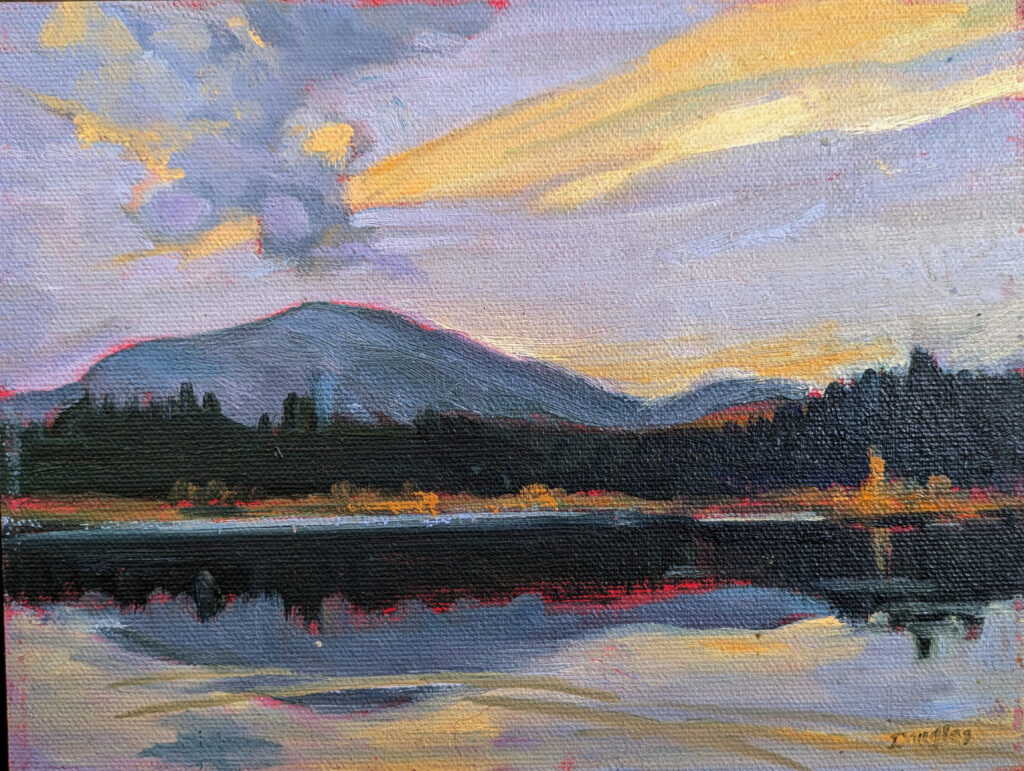
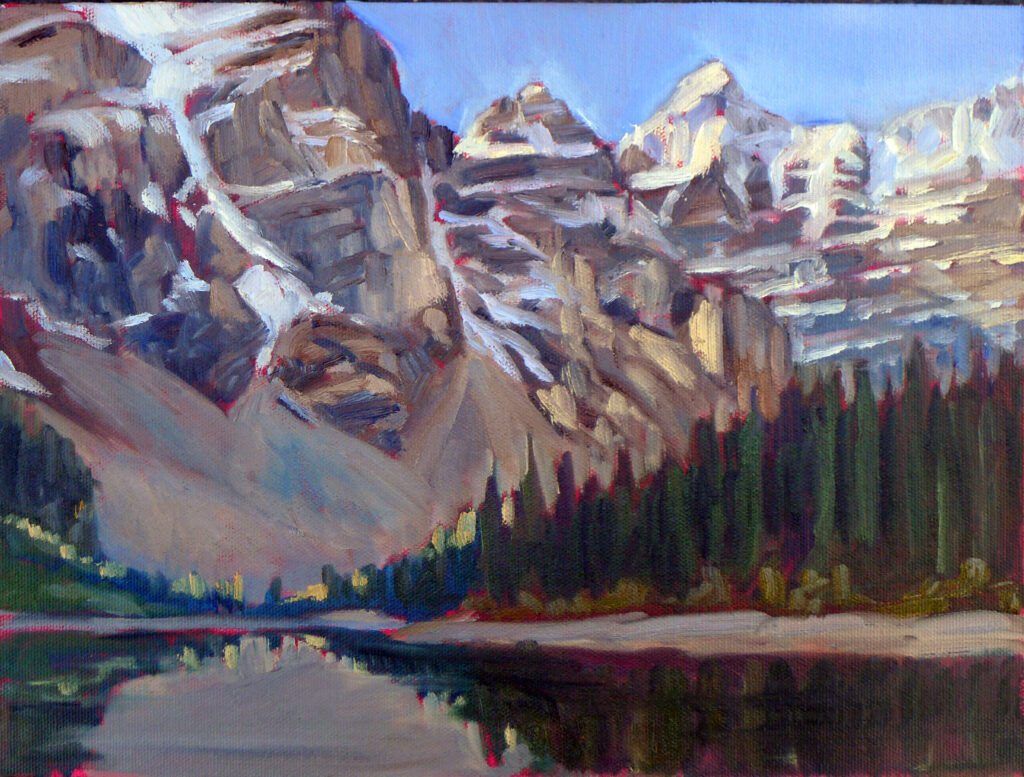
Brooding Skies, 8X10, oil on archival canvasboard, $522

What painting is not

Painting is not performance art, but today we’re expected to post two or three new things on Instagram every week, or make reels where it looks as if we never stumble, stop to think, or throw down our brushes in irritation.

For most lines of work, productivity equals finished products, neatly packaged for sale. And if you never finished anything, art would be a pointless exercise. But painting is not linear, especially if you’re trying to grow. Alex Katz admitted to destroying a thousand paintings during his first ten years as a painter. Much of the real work of painting happens in the thinking and tinkering phase.

Contrary to popular thinking, struggle and failure are not problems. In fact, they’re a sign that something important is happening.

When we’re painting a lot and finishing little, it’s because we’re exploring. We’re testing ideas, pushing habits and breaking patterns that once felt comfortable. That’s messy, uncomfortable work.
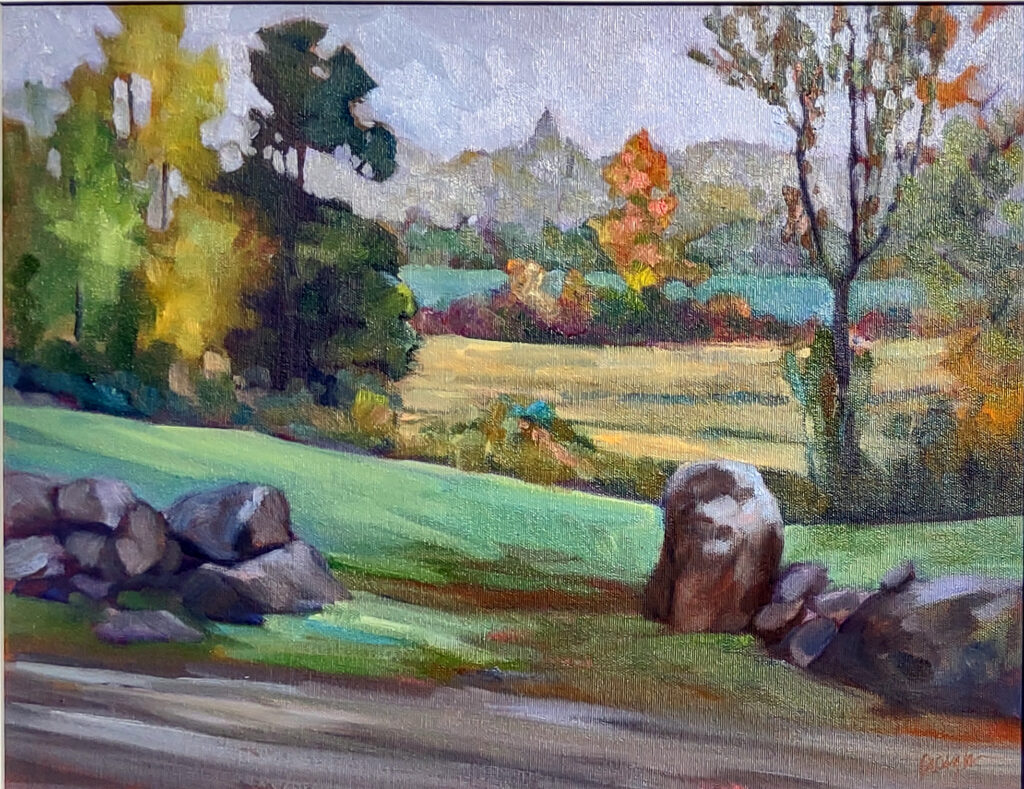
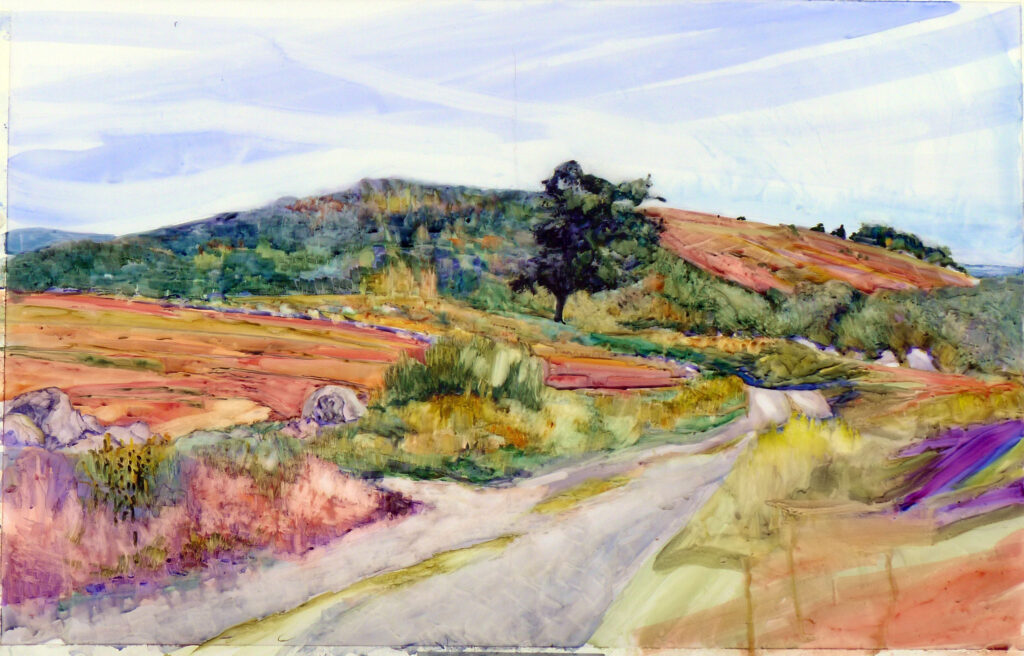
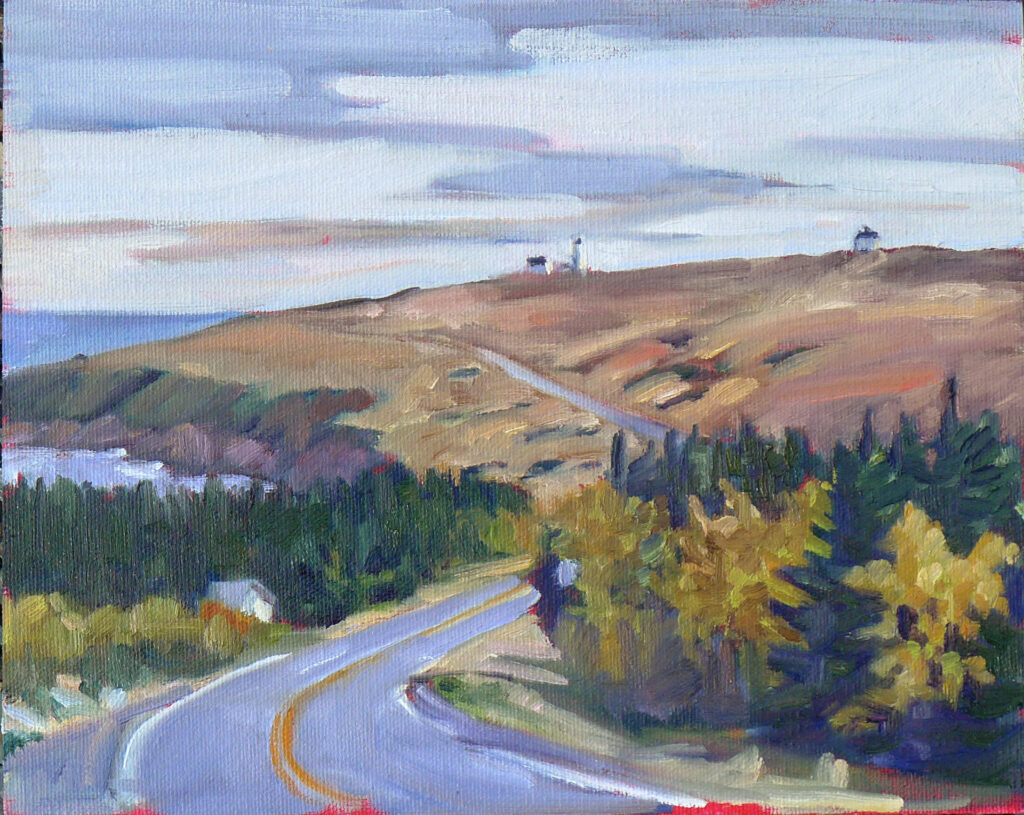
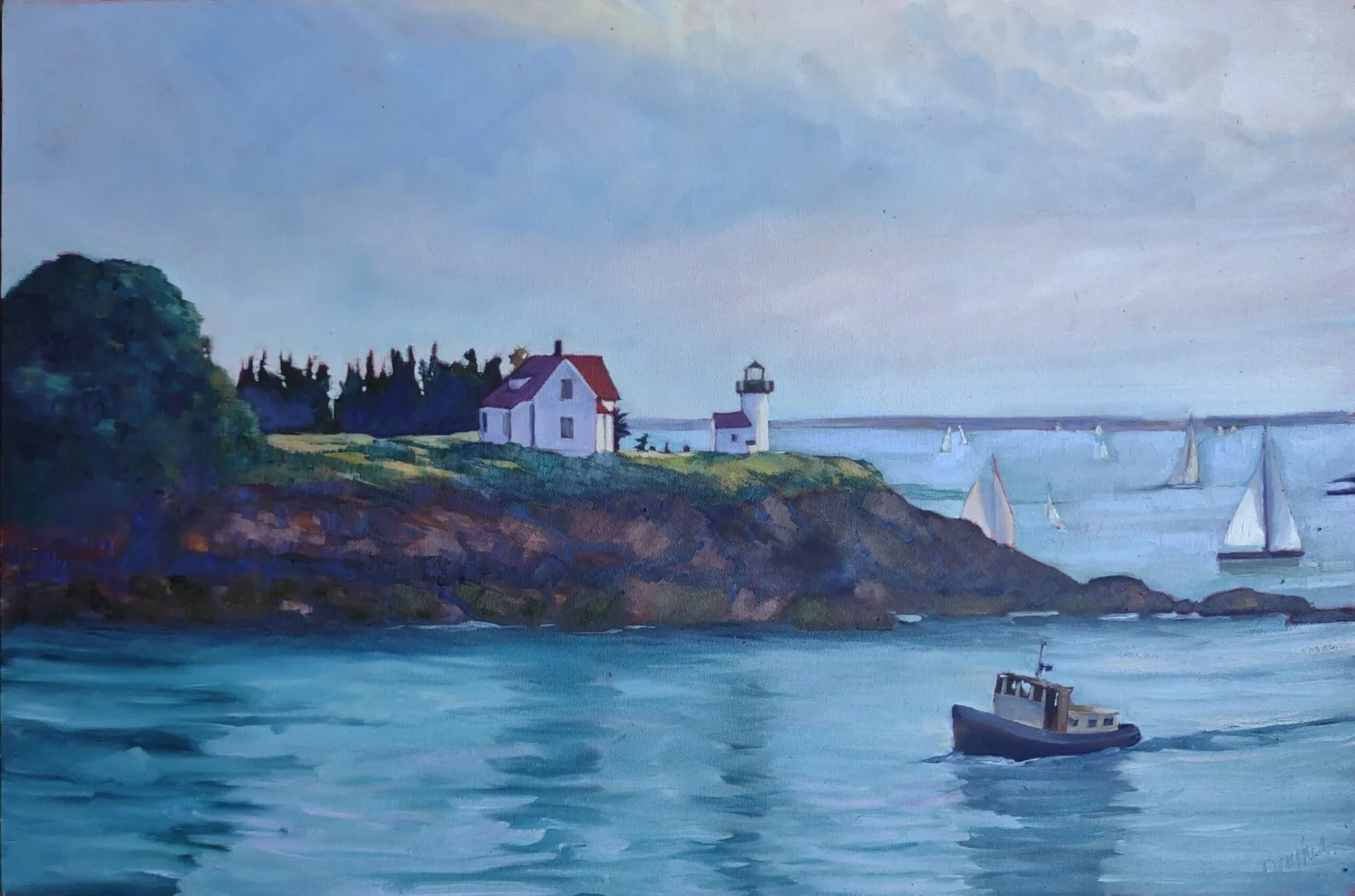
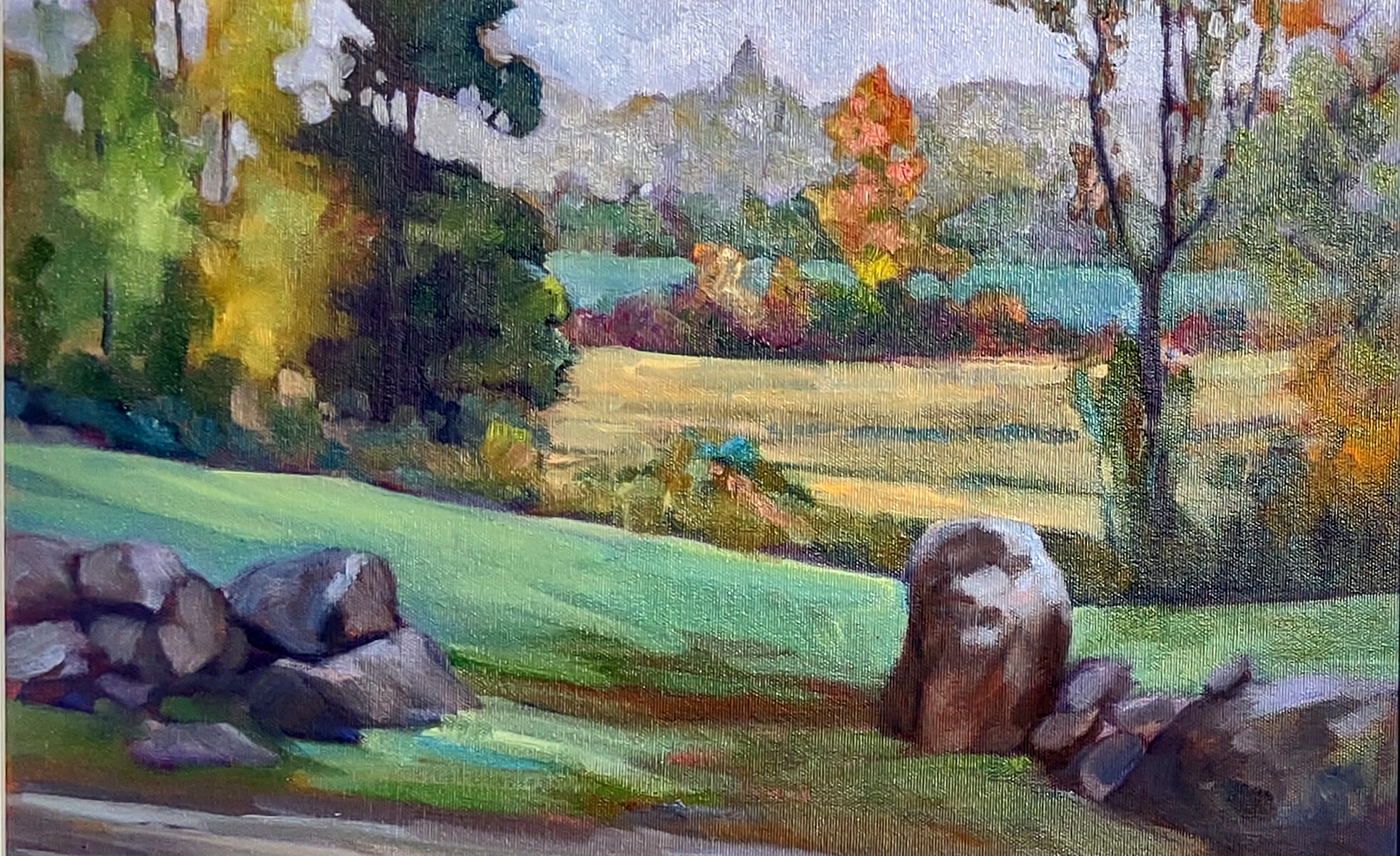
Stone Wall, Salt Marshes, 14×18, $1594 framed includes shipping and handling in continental US.

What’s really happening

We’re training our eyes. We’re developing new visual language. We’re discovering which choices lead somewhere and which ones are non-starters.

I’ve noticed that when students are learning something new, they’re often temporarily worse than they were before. I like to frame that in terms of playing the piano. Pianists often learn the left-hand part and the right-hand part separately. When we put them together, it can feel like we can’t remember either part. It takes a little while for the whole to gel.

In painting, there’s a strong temptation to force work to completion just to prove that we’ve still ‘got it.’ But that is like practicing a musical part with the errors left in. It locks in old solutions precisely when we’re trying to leave them behind.

Slow-to-finish paintings are not evidence of failure; they’re evidence of risk-taking. We’re asking harder questions, and not settling for something that’s just okay.

Practice

There’s a reason musicians practice and athletes train. But, fifteen-minute painting-a-day challenges are no substitute for concerted, deep effort. Concert musicians practice up to 40 hours a week.

If your studio is full of half-resolved attempts but your brush is rarely at rest, don’t panic. Ask yourself:

  • What am I learning right now?
  • What am I testing?
  • What feels uncertain—but promising?
  • What needs work?
  • Where do I want this to go?
  • Why do I want it to go there?

My student in Trust the Process showed us this fortune cookie that she got right before class on Monday. It made me smile.

That class is full up but if you’re interested in How to see like a painter or Painterliness: Looseness and Bravura Brushwork, they’re registering now.

Registration is now open for workshops in 2026! Reserve your spot:

Can’t commit to a full workshop? Work online at your own pace:
Seven Protocols for Successful Oil Painters

Seeing, brushwork and color are the painter’s trifecta

The Fleeting Hand of Time, 9X12, oil on archival canvasboard, $696 includes shipping and handling in continental US.

Most painters stall because they’re trying to solve too many problems at once. Students make real leaps forward when they start building skills in a sensible order. That’s what this trio of learning opportunities is designed to do.

Color, brushwork and composition are a three-legged stool. You must learn to see, orchestrate color and express your ideas with confidence.

Mather Point at dawn (Grand Canyon), oil on canvasboard, 9X12, , $696 includes shipping and handling in continental United States.

How to See Like a Painter (Zoom class)

Everything starts with perception. If you can’t see clearly, no amount of technique will save you. How to See Like a Painter is an interactive online painting class focused on visual analysis. That’s a skill most artists ignore, yet need the most.

We will dig into value relationships, shape and focal hierarchy, edges and—most importantly—the difference between what you think you know and what you’re actually seeing. Once you understand how to simplify complexity, your decisions will get stronger and faster.

The class meets Monday evenings, 6-9 PM EST on Feb 23-March 2 and March 16-April 6.

Here is more information and online registration.

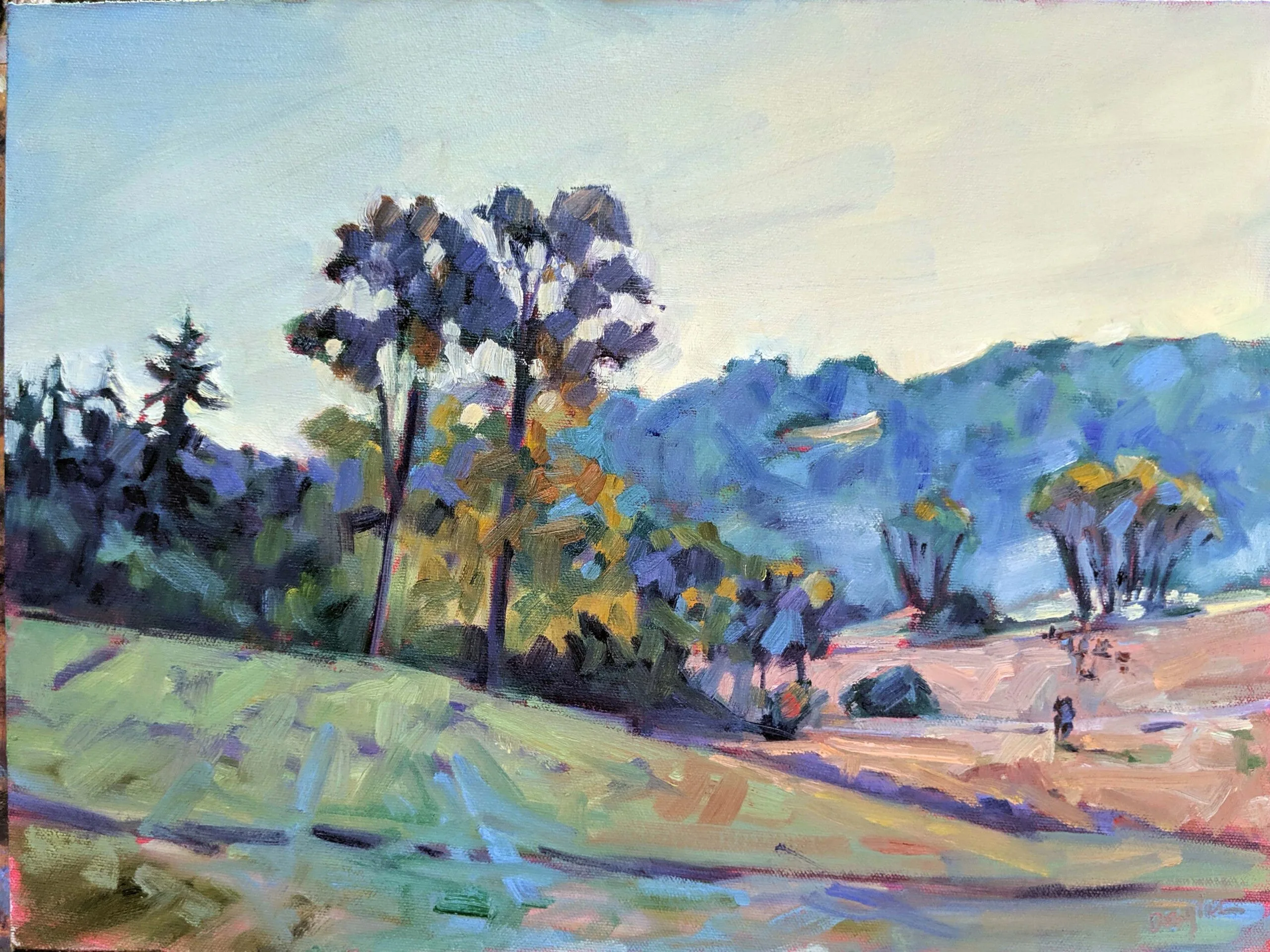
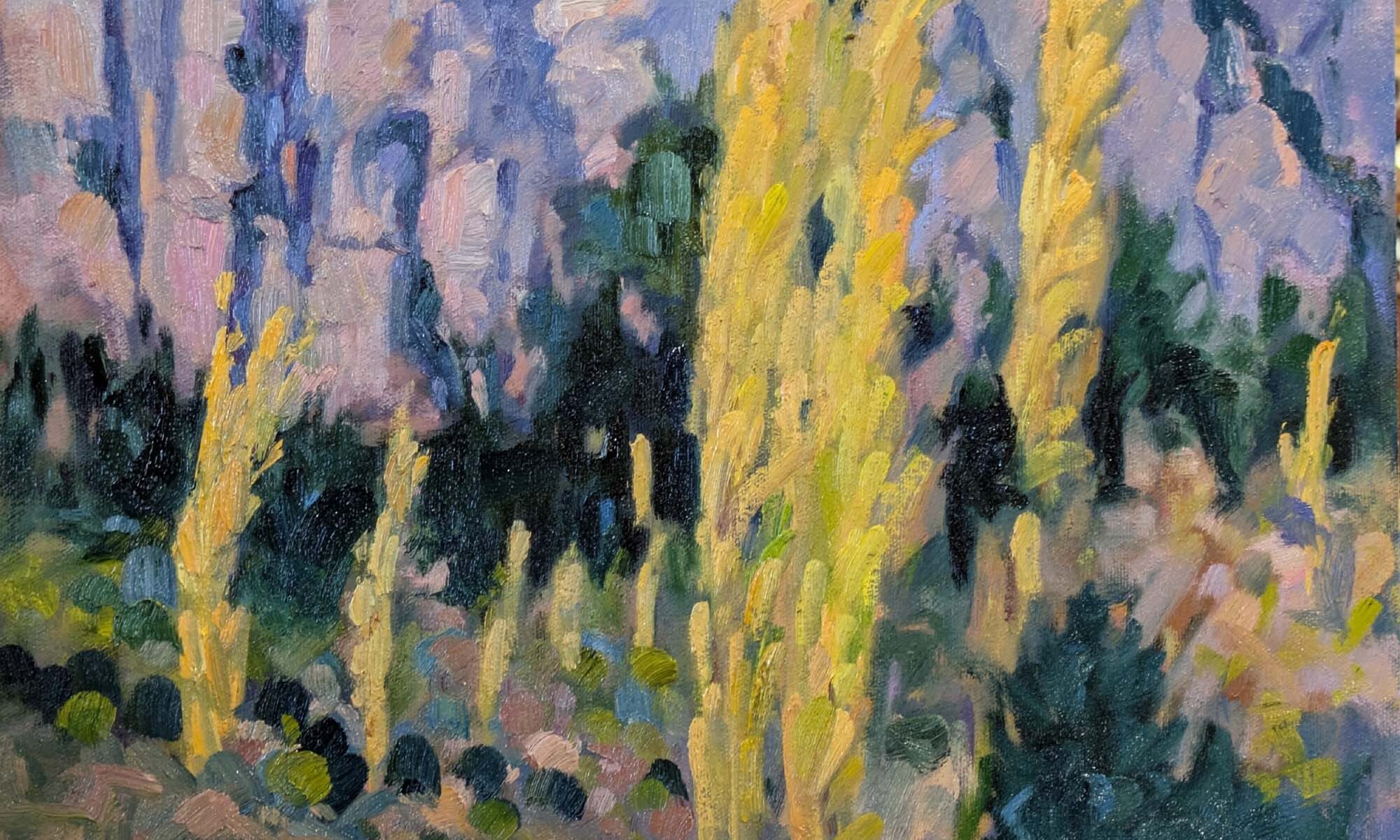
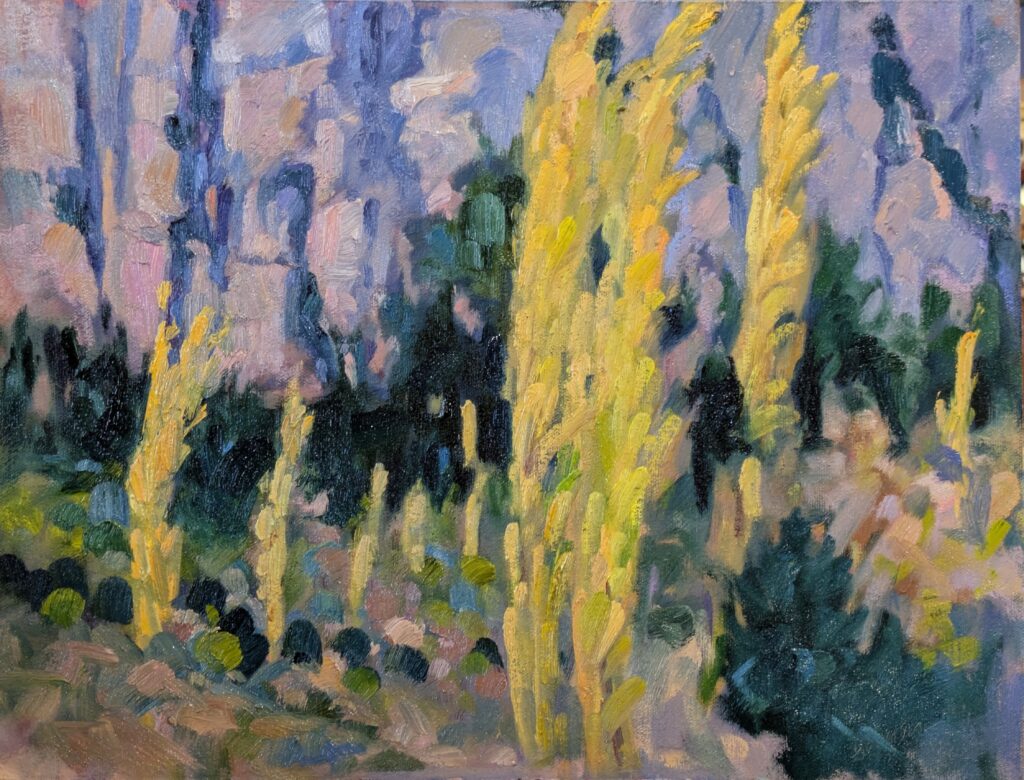
Poplars, 12X16, oils on archival canvasboard, $1159 includes shipping and handling in continental US.

Painterliness, looseness and bravura brushwork (Zoom class)

Painterliness, looseness and bravura brushwork is an interactive online class devoted to expressive paint handling. We talk about economy, confidence, and when to set it and forget it. Looseness isn’t sloppiness; it’s clarity delivered with energy.

This class helps you escape overworking and replace it with confident, readable brushwork. You’ll learn how to load the brush, commit to a stroke and let your surface do some heavy lifting. If your paintings feel tight, stiff or hesitant, this class is for you.

The class meets Tuesday evenings, 6-9 EST on Feb 24-March 3 and March 17-April 7.

Here is more information and online registration.

For either Zoom class, we have had students from across the US and Canada and Great Britain. If you can tune in at those times and are fluent enough in English to talk about art, we’d love to have you join us.

Canyon Color for the Painter: A Sedona Plein Air Workshop

Why is there a one-week break in middle of these Zoom classes? I’m heading to Sedona, AZ to teach Canyon Color for the Painter: A Sedona Plein Air Workshop, March 9-13.

Sedona is one of the most demanding and rewarding outdoor classrooms on earth, which is why I love it. The desert doesn’t forgive lazy color thinking. Light is strong, shadows are crisp, and color temperature shifts happen fast.

In this workshop, we focus on color strategy: how to simplify without dulling, how to exaggerate without lying, and how to organize color so your painting reads brilliantly from across the room. You’ll apply new skills directly to the landscape, with real-time feedback and lessons. I keep my workshop numbers low enough to give every person individual attention. Sign up quickly, as this workshop is filling fast.

Cottonwoods along the Rio Verde River, $696 unframed, oil on Baltic birch.

Which one should I take?

In a perfect world, you’d have the time and energy to take all three. Together, they address the core problems all painters face: unclear seeing, timid execution and confused color. But I know that’s not practical.

Ask yourself which of these core problems you need the most work on: brushwork, composition or color. And then register for the class which will help you the most. If I can help you with your choice, email me.

(Frankly, looking at this weekend’s brutal temperatures in the northern US, I’d also factor in the desert warmth. Southwest has a fare sale until Friday. 😉)

Registration is now open for workshops in 2026! Reserve your spot:

Can’t commit to a full workshop? Work online at your own pace:

Seven Protocols for Successful Oil Painters

Monday Morning Art School: desert lessons

Cliffs, 12X12, oil on birch, private collection.

Arizona (especially Sedona’s red-rock country) looks simple from a distance. Big shapes. Big color. Big sky. That apparent simplicity is exactly what makes it hard to paint well.

Every landscape has its own rules, and the desert is particularly unforgiving to painters who arrive armed with assumptions instead of observation. I know this because a long time ago I did exactly that. What did the Arizona desert teach me about painting light and color? More things than I can list, but below are the main points.

View across the Verde Valley, 11X14, oil on birch panel. Available through Sedona Arts Center.

Capturing desert light 

Capturing desert light starts with understanding that Arizona’s atmosphere is clean, dry, and thin. There’s very little haze to soften transitions. As a result, value contrasts are stronger than you may be used to, and color temperature shifts are abrupt. Sunlit planes are warmer than expected, except at midday. The shadows snap cool, sometimes dramatically so. That’s from a distance. Up close, there’s a tremendous amount of color bouncing around the shadows. They are often higher in chroma than the sun-bleached parts of the picture.

If your painting feels flat, it’s often because you aren’t respecting color temperature enough.

Carol L. Douglas painting at Acadia National Park
Sunlight and shadows, oil on birch, 14X18, private collection.

Painting rock formations 

Painting rocks is less about detail and more about structure. From individual rocks to gigantic massifs, rock formations are built from planes. Start by identifying the major directional faces of the rock and assign them clear value families. Vertical planes can read darker than sloped ones, and ledges catch light differently still. At the vast scale of the desert, texture and detail are almost an afterthought. If you paint every crack and striation, you’ll destroy your painting—and your mind.

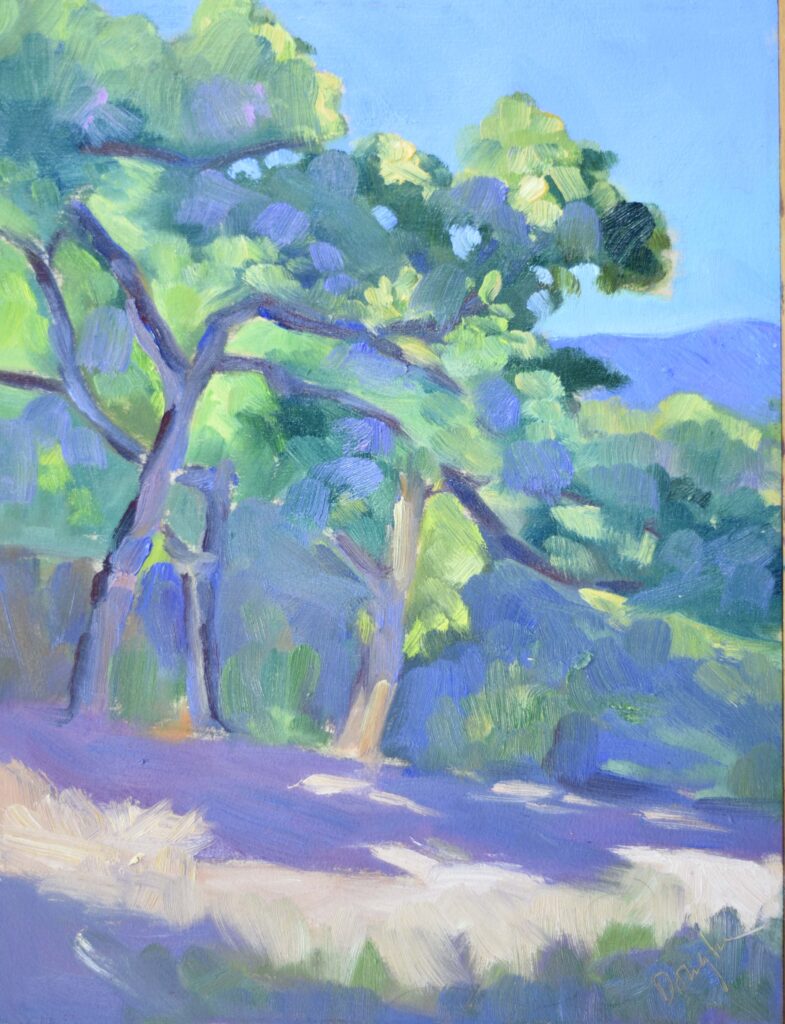
Lone pines, 14X18, oil on birch, available through Sedona Arts Center.

Working fast in changing light 

Working fast is not optional in the desert. The light moves quickly, and shadows can crawl across a canyon wall in minutes. This is where the preparatory sketch earns its keep. Adapt it for desert conditions by simplifying even more than usual. Four different value steps are sufficient. If you can’t organize the scene in ten minutes, you won’t fix it in two hours. And you’ll be mighty glad to have that sketch when the light shifts.

Color mixing for arid landscapes 

Color mixing for arid landscapes is where many painters go off the rails. Yes, rocks are orange and bluffs are ochre. But Sedona and the wider Southwest are full of violets, cool reds, muted greens and dusty neutrals. Shadows are often infused with unexpected color. Adjust temperature rather than dialing up saturation. If everything is intense, nothing is.

The desert doesn’t reward fussing. It rewards decisiveness, clear value structure, and honest color. Arizona’s landscape will teach you quickly where your habits help you—and where they don’t. That’s why painters keep coming back. The desert is a tough teacher, but it never wastes your time.

Want to learn more?

This March, I’m leading a 5-day plein air workshop in Arizona, and I’d love for you to join me.

Canyon Color for the Painter: A Plein Air Workshop will be held through the Sedona Arts Center, March 9–13, 2026. This immersive week-long workshop is designed for painters in oil, acrylic, pastel, watercolor, gouache, and all experience levels.

You can register directly on Sedona Arts Center’s website, here. Or, contact me if you have questions. I’m happy to answer anything about the workshop, skill requirements, materials or what to expect painting in the desert.

Registration is now open for workshops in 2026! Reserve your spot:

Can’t commit to a full workshop? Work online at your own pace:

Seven Protocols for Successful Oil Painters

Arizona’s light changes everything

Crepuscular rays from Forest Road 525, 8X16, oil on linenboard. Available through Sedona Arts Center.

Painters think about light the way sailors talk about wind. We don’t perceive either of them directly, but they influence everything we do.

I’ve been painting and teaching in Sedona, AZ for several years now (and am very blessed to do so). There’s something about high desert painting that transforms the way we see color. The warm light and the color of the shadows falling across canyon walls are different from anywhere else. I don’t think that’s just because the light is brighter, although it is. It behaves differently from the filtered light of the northeast.

Sedona’s colors are over the top. There are red rock buttes, sheer ochre cliffs and cool green pines and junipers, all under a brilliant blue sky. That can fool painters into always using the most saturated colors possible. That’s a trap. The real story isn’t the color of the rocks, it’s what the light does to them.

Country path, 14X18, oil on archival canvasboard, $1,275 includes shipping and handling in continental US.

Sedona sits high, dry, and clear. There’s seldom atmospheric haze to soften edges or dissolve forms. As a result, values snap into focus. Shadows aren’t murky or vague; they’re cool, transparent and very colorful. You can’t get away with ho-hum darks.

The intense warmth of the red rocks complicates what we understand about color temperature. They bounce warm light into shadow areas, creating a running dialogue between warm and cool. Shadows contain more color than sun-bleached planes. That’s counter to what we think should happen.

Hammerhead cumulonimbus cloud over Posse Grounds Park, 9X12, oil on canvasboard, available through Sedona Arts Center.

Wanna try it?

This March, I’m leading a 5-day plein air workshop in Arizona, and I’d love for you to join me.

Canyon Color for the Painter: A Plein Air Workshop will be held through the Sedona Arts Center, March 9–13, 2026. This immersive week-long workshop is designed for painters in oil, acrylic, pastel, watercolor, gouache, and at all experience levels.

You’ll master advanced color strategies that elevate your plein air and studio work. Through practical lessons, focused exercises, and daily on-site painting sessions, you’ll gain time-saving techniques, build stronger compositions, and harness color and line to direct the viewer’s eye with authority.

You’ll refine your unique artistic voice while strengthening foundational skills in drawing, observation, and brushwork. Whether you paint boldly or seek more control and clarity, this workshop offers deep insights, supportive instruction and meaningful feedback. And did I mention it’s lots of fun?

Sycamore Shadows, 14X18, oil on archival canvasboard, available through Sedona Arts Center.

Reserve your spot now for an unforgettable artistic journey.

This workshop includes:

  • Demonstration and instruction
  • Supervised plein air painting sessions
  • Targeted exercises
  • Critique and discussion
  • Individual feedback

This is a great opportunity to break out of comfortable patterns and push your skills, all while enjoying the great cultural and natural resources of Sedona.

Questions

You can register directly on Sedona Arts Center’s website, here. Or, contact me if you have questions. I’m happy to answer anything about the workshop, skill requirements, materials or what to expect painting in the desert.

Registration is now open for workshops in 2026! Reserve your spot:

Can’t commit to a full workshop? Work online at your own pace:
Seven Protocols for Successful Oil Painters

Who painted it better?

The Hay Wain, 1821, John Constable, courtesy National Gallery (London). This picture was one of three Constables selected for the Salon of 1824.

A recent op-ed piece by Waldemar Janusczak says that J.M.W. Turner would defeat John Constable in three rounds, based on his early talent, his breadth of travel and style and his influence on future painters. Stuff and nonsense, I say.

Modern plein air painting

Artists have been sketching outdoors for as long as there has been art, but Constable was the seminal figure in making it a movement. He made outdoor painting central, systematic, and intellectually serious. Since plein air painting has been the most important movement in figurative art since his time, that makes his influence at least as important as Turner’s influence on abstraction.

Before Constable, outdoor work was preliminary. Field sketches were to be improved, idealized, romanticized and rearranged in the studio to suit classical taste. The natural world was a reference, not the final authority.

Venice: The Dogana and San Giorgio Maggiore, c. 1834, JMW Turner, National Gallery of Art (Washington, DC)

Constable believed that nature itself was the subject. He painted it as investigation, not as rough notes. His famous cloud studies were often dated, timed, and annotated with weather conditions. His approach was revolutionary.

In the early 19th century, working outdoors at scale was unheard of. So was taking the landscape of your home seriously. Instead, aspiring artists (like Turner) made the obligatory grand tour of Europe, focusing on Italy. The real issue is how far they traveled artistically, and the answer for both is: very far indeed.

French painters at the 1824 Salon were stunned by the freshness of Constable’s palette, his broken brushwork and the rawness of his field studies. These could only come from the real observation of nature. This directly inspired the Barbizon School painters, who in turn passed these ideas along to Impressionism. Constable may seldom have left England, but his work sent ripples across Europe. Without his insistence on painting outdoors, modern landscape painting would look very different today.

Seascape Study with Rain Cloud, c.1824, John Constable, courtesy Royal Academy of Arts (London)

Today, plein air has a vast global influence, being both participatory and accessible. What it isn’t is avant garde. Perhaps that makes it less important to art critics. 

False framing

Turner was born in April, 1775 and Constable in June, 1776, making these their 250th birthdays. It’s tempting to see them as rivals, but any kind of competitive comparison is a false framing. It misrepresents what art and artists are all about.

Turner and Constable were very different painters, not opponents in a zero-sum game. Yes, there’s a famous story from the Royal Academy Exhibition of 1832 where Turner saw Constable’s warm canvas set against his own cool canvas. The legend goes that Turner slapped a blob of red onto his canvas at the last moment and Constable quipped, “He has been here, and fired a gun.” But that says more about gossip culture than it does about the two men.

Rain, Steam and Speed – The Great Western Railway, 1844, JMW Turner, courtesy National Gallery (London)

Why do winner-loser narratives persist in the world of art criticism? They’re easy clickbait. They fit tidy tropes but they distort a deeper truth. There is no hierarchy of greatness when it comes to painters. They all have audiences to whom they speak and lessons they impart.

Framing art in terms of competition is pernicious, whether that competition is a local art show or a master-painter designation by an organization. It makes painters take fewer risks, work towards the mainstream, and constantly look over their shoulders.

Registration is now open for workshops in 2026! Reserve your spot:

Can’t commit to a full workshop? Work online at your own pace:
Seven Protocols for Successful Oil Painters

Monday Morning Art School: you asked ChatGPT what?

My students love to send me things they know will interest me, but sometimes they send me things to make my hair stand on end. As a courtesy, I’ve obliterated the OP’s name and photograph, but you really asked ChatGPT to tell you what paints to buy? And you put 32 paints on your palette? And now you want to know about color theory?

Assuming OP bought regular-size tubes of paints, they set her back $15-20 each. For 32 paints, that’s between $480 and $640. All those paints won’t make her a better painter. They’ll make her a worse painter, because she’ll never learn about color theory and color mixing.

A few years ago, I mailed a small sample of paints to a student in South Carolina. She was frustrated with her paints and I was equally frustrated watching her try and fail to hit color notes. What I sent her was a simple, primary-color limited palette: QoR brand Ultramarine BlueNickel Azo Yellow, and Quinacridone Magenta. This is what she did with them:

A color chart done with just three pigments: ultramarine blue, nickel-azo yellow, and quinacridone magenta.

Learn to love limited palette

A limited palette sounds like a restriction, but it’s a shortcut to clarity and cohesiveness. Instead of dabbing in all those paint pots, you learn to mix and marry color.

Learning to mix color teaches you more about color theory than any color wheel. You discover how complements neutralize each other, how color temperature works to create form, and how value does the heavy lifting in painting.

Color harmony and consistency

When all your colors are mixed from the same small family, they are innately related—that’s a shortcut to color harmony. There are no out-of-tune notes screaming for attention. For beginners, who often struggle with garish or muddy color, limited palette creates a more consistent color voice.

Painters need to learn the working characteristics of their paints, including hue, value, chroma, transparency, granulation (in watercolor) and dry time (in oils). That’s hard enough to master for just a few paints.

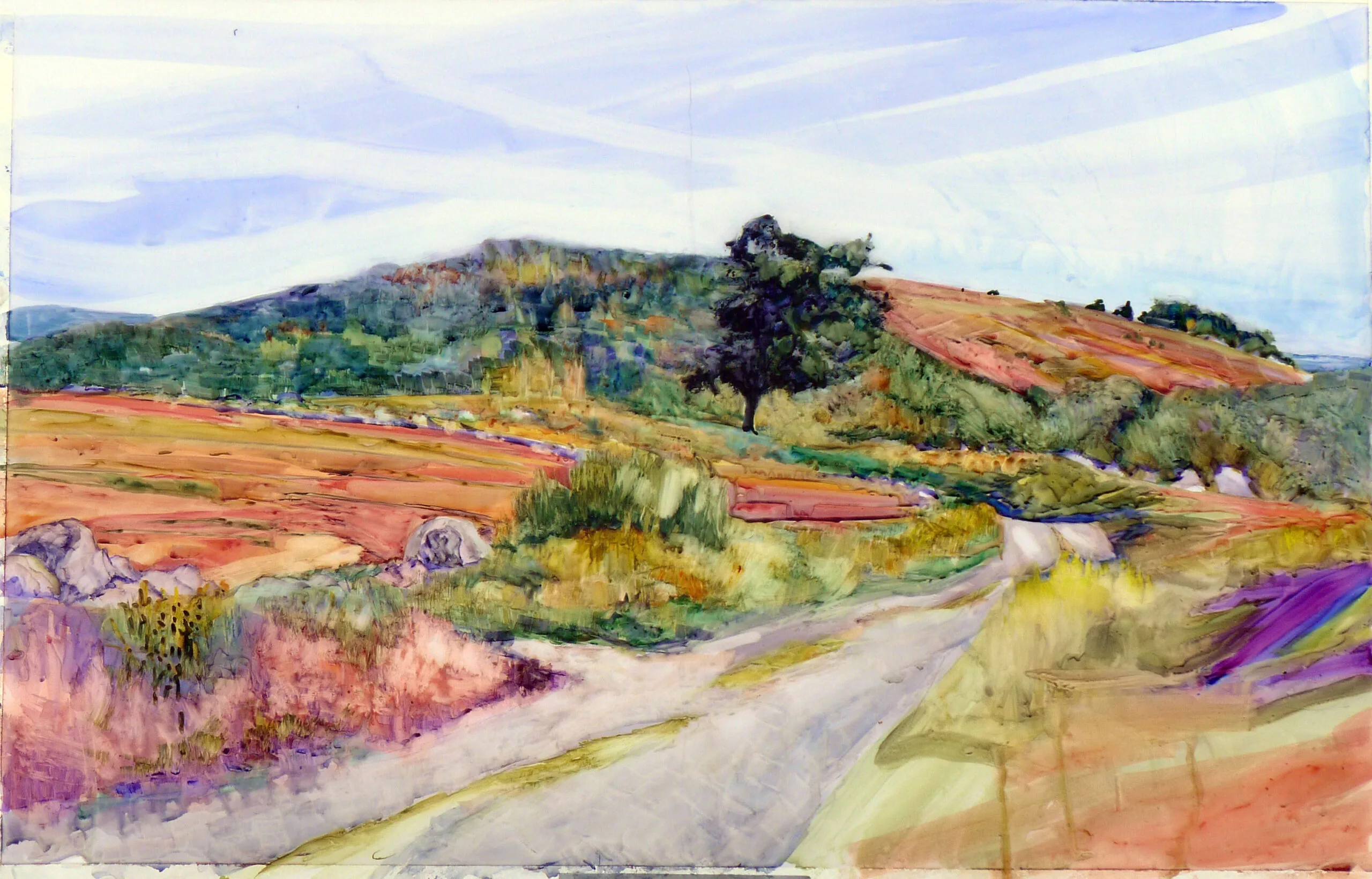
Clary Hill Blueberry Barrens, watercolor on Yupo, ~24X36, $3985 framed includes shipping and handling in continental US.

Decisiveness

With fewer choices, you spend less time dithering and more time painting. That’s invaluable in alla prima and plein air, but it matters any time you pick up a brush. You’re not hunting for the perfect color on your oversized palette; you’re learning to make what you need. This builds confidence and speed.

We can play fast and loose with hue if value is right, which is why pink or yellow skies can make perfect sense in paintings. When pigment options are reduced, we’re forced to shift our attention to value, which is more important than hue.

By stripping color back to basics, we also see form, edges and composition more clearly.

Autumn Farm, Evening Blues, oil on canvasboard, $1449 framed includes shipping and handling in continental US.

A limited palette is a tool, not a moral position

Once you understand what each pigment on your palette does, you can expand with intention. But I’ll note that I’m using the same number of paints I was thirty years ago, with very few modifications. They’re simply not necessary.

In the end, a limited palette isn’t about limitation at all. It’s about focus. By reducing choices, you sharpen your eye, strengthen your technique, and let painting be about seeing rather than collecting colors. That’s a lesson worth revisiting at every stage of an artist’s journey.

And, by the way, I’d have freely shared my palette recommendations with this artist. She’d have had hundred of bucks to spend more intelligently… and most of her paint wells would have remained empty.

Registration is now open for workshops in 2026! Reserve your spot:

Can’t commit to a full workshop? Work online at your own pace:

Seven Protocols for Successful Oil Painters

Meaning Is a Moving Target

Byzantine Church mosaics, MonrealeSicily, late 12th century, courtesy Wikipedia.

In my Tuesday class, I ask students to think like artists from different historical periods. I want them to understand why they choose a certain style. Is it popular right now, or does it truly fit their personality and goals?

We looked at The Census of Bethlehem by Pieter Brueghel the Elder. One student asked, “Would this be considered a masterpiece today? And was it a masterpiece when it was painted?” I think the answer to the first question is yes. Contemporary painting is searching for the Next Big Thing, even though no one knows what that will be. The second question is harder to answer. Much of the art from Brueghel’s time no longer exists. Historians estimate that about 90% of religious art in England was destroyed during the early Protestant Reformation, and the losses in the Low Countries and Germany were probably just as great.

Mary Magdalen announcing the Resurrection to the Apostles, St Albans Psalter, English, 1120–1145, courtesy Wikipedia.

We discussed two art terms that have changed meaning since the Renaissance. Naturalism once meant careful, accurate depiction of the visible world. Today, it also has social justice implications. Humanism has always emphasized human reason and potential, but for Renaissance thinkers, those ideas were still firmly grounded in belief in God.

I didn’t spend enough time explaining the Medieval mindset that the Renaissance rejected. Medieval art was not meant to be understood the way we approach art today. Ideas we now take for granted, like realism, self-expression and originality, were not important to Medieval artists or audiences.

Late 14th century French Gothic triptych, probably for a lay owner, with scenes from the Life of the Virgin, courtesy Wikipedia.

Medieval art is symbolic. Paintings, manuscripts, and mosaics were not created mainly for beauty, but to teach theology. Every color, gesture, and figure had meaning that would have been obvious to a Medieval viewer steeped in Christian belief. Blue symbolized heaven, purity, and the Virgin Mary. Gold represented God’s eternal, unchanging realm. When Christ appears larger than other figures, it is not a mistake in perspective but a statement of spiritual importance.

Medieval artists were not trying to imitate the visible world. Their goal was to show what the world meant, not what it looked like. Perspective, shadows and anatomical accuracy mattered little when the purpose of art was spiritual salvation. These works were tools for prayer, meditation and instruction.

The Bamberg Apocalypse, from the Ottonian Reichenau School, achieves monumentality in a small scale. 1000–1020, courtesy Wikipedia.

Today, much of that symbolic language is lost. Without understanding the visual code, we see only stiff figures in strange clothing.

Medieval art existed within churches, monasteries and manuscripts. It was part of a world filled with ritual, incense, music and shared belief. Removed from that setting, it becomes harder to understand. We ask, “Is this good art?” when the original question was, “Does this lead the soul toward God?”

Most Medieval artists remain anonymous because individual fame did not matter. The work belonged to the church, the community and ultimately to God. Tradition carried authority, and innovation was viewed with suspicion. This stands in sharp contrast to our modern idea of the genius artist.

Recently, a friend sent me the above cartoon. Another friend, who has advanced degrees in art history and religion, replied, “At this point, any art hanging on a wall is hopelessly traditional. Piling it on the floor is the only way forward.”

The post-modern art world, as secular as it is, has much in common with Medieval art. Skill at depicting the natural world is less important than the message, and the message is often still inscrutable.

Registration is now open for workshops in 2026! Reserve your spot:

Can’t commit to a full workshop? Work online at your own pace:

Seven Protocols for Successful Oil Painters

Do artists practice truthiness?

Stock (AI generated) image of an elk allegedly in New Hampshire.

Truthiness was the Word of the Year in 2005, but it really should be the word of the first quarter of this century. That’s especially true where AI images are concerned. “A hotel in North Conway [NH] just opened,” a student texted me. “In their photo deck was a stock image with the stock numbers still attached. The accompanying text encouraged tourists to come see the elk frolicking in winter in New Hampshire.”

Elk have a vast range that includes central Asia through Siberia, east Asia and North America. However, the ones from New England are extinct. Elk were briefly, unsuccessfully introduced to New Hampshire in the 1950s. There are none in the wild, although there are lots of other fascinating beasts, including moose, deer, black bears, beavers, bobcats and foxes.  

No visitor is going to chance upon an elk while hiking in the New Hampshire woods. Furthermore, that poor imaginary animal is the victim of extreme social-media body-image pressure. He’s severely underweight for a bull elk. And, while we’re on the subject, that’s awfully languid water for the Granite State.

My student recognized this as fraudulent because she’s a New Hampshire native. But someone who comes from elsewhere expecting to see elk frolicking at Lake Winnipesaukee will be mighty cheesed off.

The Pope wearing a Balenciaga puffer jacket was a widely disseminated fake image that fooled many. But why would he need hard winter gear in Rome anyway?

As of late 2025, approximately 30-33% of ad creatives were built or enhanced using generative AI, a figure projected to rise to nearly 40% in 2026. Separate data indicates that up to 71% of all images shared on social media may be AI-generated

Truth vs. Truthiness

Truthiness is the feeling that something is true. The term was popularized by Stephen Colbert to describe claims that sound right, align with our beliefs or flatter our instincts without being supported by evidence.

One of the innumerable images of Joe Biden and Donald Trump being all folksy together that flooded the internet during the last election cycle.

Truthiness relies on intuition, emotion and, above all, repetition. It’s persuasive rather than accurate. Nothing is truthier than AI imagery. I hate to bring up politics, but do you remember the brief period when the internet was flooded with AI images of Joe Biden and Donald Trump buddying up? They were so warm and fuzzy that no informed voter could have believed them, but they played on our longing for human connection, civility and normality.

AI imagery borrows the language of reality without the substance, just as truthiness in rhetoric does.

This image is making the rounds as “Little Known Natural Wonders of Wyoming: Mountain Spring Arch.” There are many things in Wyoming that are fantastic, but water running uphill onto an arch isn’t one of them.

But aren’t artists already practicing truthiness?

A statement is objectively true when it accurately describes how things actually are. We immediately think of scientific (measurable evidence) truth, but truth may also be moral, ethical or emotional. That’s why we have the concept of absolute truth, which is objective (exists whether or not you believe it), universal (applies everywhere, not just in a particular culture or era) and unchanging.

Truth remains true even if it’s unpopular, inconvenient, or boring. And that’s the artist’s job, even when he or she uses imagination to express it.

Registration is now open for workshops in 2026! Reserve your spot:

Can’t commit to a full workshop? Work online at your own pace:

Seven Protocols for Successful Oil Painters

Monday Morning Art School: clueless about brushes

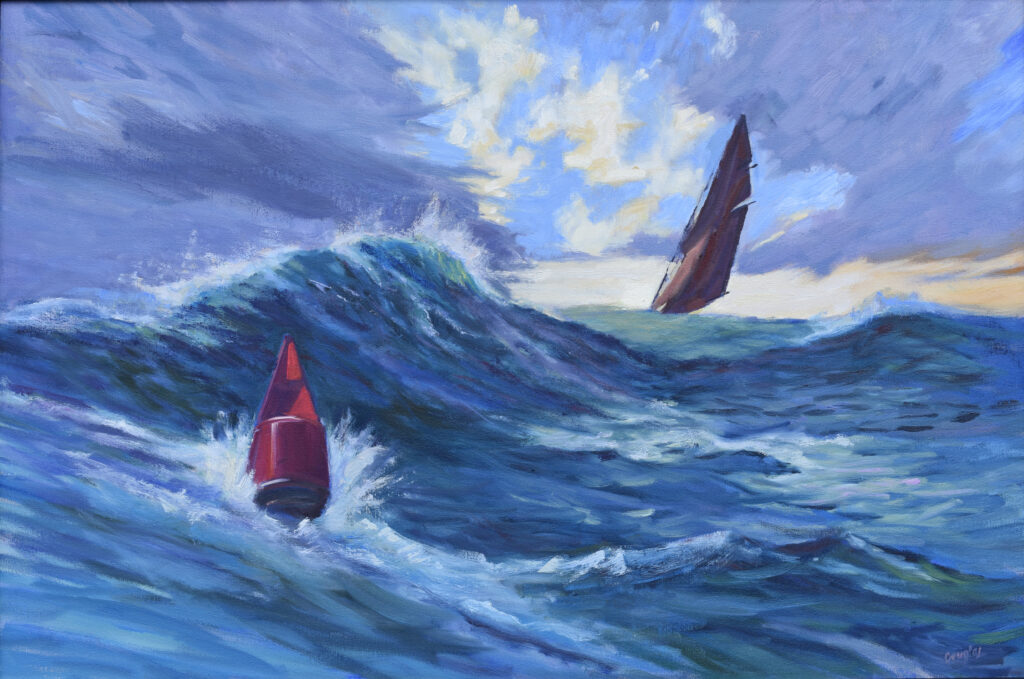
Heavy Weather (Ketch Angelique), 24X36, oil on canvas, framed, $3985 includes shipping and handling in continental US.

“I’m clueless about what different brushes do,” a student emailed. She’s not alone. Walk into any art supply store and you’re confronted by a bewildering wall of fine-art painting brushes. They differ in hair, length, spring and, most visibly, in shape. And still, with all that variety, I can manage to not find the brushes I’m looking for. Each brush speaks differently, and painters develop strong preferences that can, however, change over time as our styles evolve. Knowing what brush to grab is part of learning how to paint.

I’ve written in detail about what brushes do, here and here. But let’s talk more generally about brushes.

Clary Hill Blueberry Barrens, watercolor on Yupo, ~24X36, $3985 framed includes shipping and handling in continental US.

Brush history

Brush evolution began in antiquity; as paint varied in viscosity, it required different brushes. Western painting started off with fairly simple round brushes. Meanwhile, Chinese calligraphy had very different requirements: a pointed round end with a full belly that could make either precise or broad strokes. We look for similar brushes in watercolor painting today.

By the Middle Ages, manuscript illumination called for fine squirrel and sable hair brushes. But brushes were still less important than today. There is a famous legend about Giovanni Bellini‘s admiration for Albrecht Dürer‘s incredible technique in painting hair. Bellini asked Dürer for the brushes he used. Dürer showed him his ordinary collection of brushes and demonstrated his technique by painting a long, flowing strand of hair with remarkable precision.

Brushes weren’t standardized until the 19th century, when their manufacture was industrialized. This coincided with Impressionism, when visible brushwork became not a flaw but a feature. Stiffer bristles and brighter shapes supported looser, faster painting.

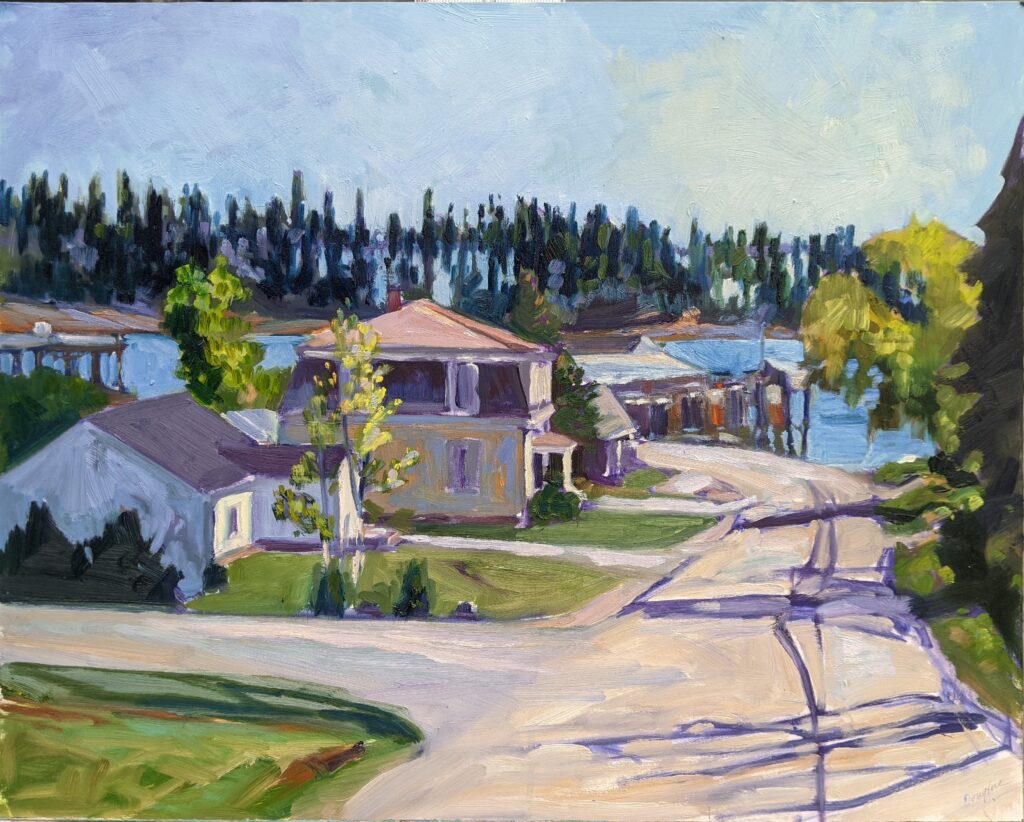
Main Street, Owl’s Head, oil on archival canvasboard, $1623 includes shipping and handling in continental US.

What do different brush shapes do?

Round brushes taper to a point, which means they can draw a line, place a dot, or broaden into a stroke with pressure. In watercolor painting, a good round brush can carry a surprising amount of pigment and still snap to a sharp point for detail. In oil painting and acrylic painting, rounds are excellent for drawing into wet paint, placing accents, and working smaller passages.

Flat brushes have a squared-off edge and long hairs that hold paint evenly. They excel at laying down broad, confident strokes. Flats are perfect for blocking in large shapes, cutting clean edges, and establishing planes. Turn one on its side and you get a thin line; press it flat and you cover ground quickly.

Brights are just short flats. The reduced hair length makes them stiffer and more controllable. That stiffness is ideal for pushing thicker paint in oil painting or for scrubbing color into the surface in acrylic painting. If you like visible brushwork and a sense of physical paint, brights give you that muscular quality.

Filberts combine the coverage of a flat with the gentleness of a round. They naturally create organic edges, perfect for modeling form. They’re especially useful when you want transitions without fussing.

Angle brushes have a slanted edge that makes them excellent for controlled strokes and awkward angles.

Quebec Brook, oil on archival canvasboard, $1449 framed includes shipping and handling in continental US.

Fan brushes are not for painting happy little trees. Fan brushes can soften edges, blend transitions, or suggest texture like grasses, hair, or water reflections. The key is restraint.

Mop brushes are for watercolor painting. Their full, rounded shape holds a great deal of water, making them ideal for washes, soft skies, and seamless transitions.

Ultimately, brush shapes don’t make a painting good or bad. They shape how you think and how your hand moves. Experimenting with different fine-art painting brushes teaches you to see stroke, edge, and texture as choices rather than accidents. And that—more than owning the ‘right’ brush—is where real progress begins.

Registration is now open for workshops in 2026! Reserve your spot:

Can’t commit to a full workshop? Work online at your own pace:

Seven Protocols for Successful Oil Painters

What’s your New Year’s resolution?

Cape Spear, Newfoundland, 8X10, oil on archival canvasboard, $522 includes shipping and handling within continental US.

I’ve been so busy the last few weeks—make that months—that I haven’t had a moment to think about New Year’s resolutions. Which makes me think that my first resolution ought to be to slow down a bit and be more deliberative. (How one changes the patterns of a lifetime, I don’t know.)

On January 1, we’re tempted to vow dramatic transformations: paint every day, get into a major gallery, finally master watercolor, be fearless forever. By midmonth, real life elbows its way back in, and those grand promises collapse under the weight of laundry, taxes, and unfinished canvases.

Early Morning at Moon Lake, 6X8, oil on archival canvasboard, $348 includes shipping and handling in continental US.

What kind of resolutions actually work?

Show up consistently. Not heroically. Not perfectly. Just consistently. Painting three focused days a week for a year will do more for your artistic development than a single month of a daily painting challenge. Skill is built through repetition and attention. Consistency beats intensity every time.

Practice fundamentals. Aspiring artists often believe that once you understand drawing, composition, or color theory, you’re done with them. I’m certainly not done with them; in fact, I revisit fundamentals endlessly. Value studies, thumbnail sketches, and color-mixing exercises aren’t remedial—they’re maintenance. Make room in your life for work that isn’t meant to be framed, shared, or sold.

Avalanche Country, 9X12, oil on archival canvasboard, unframed, $696 includes shipping and handling in continental US.

Give yourself permission to make bad paintings. That’s not failure; that’s how an artistic voice develops. Social media has blurred the line between the solitary pursuit of painting and performance art. When every painting feels like it has to justify itself to an audience, development dies.

Look at work that’s better than your own. Visit museums. Read about painters you admire. Copy masterworks. Ask why a composition works, why a color sings, why a brushstroke feels inevitable.

Finish things. That forces you to resolve problems instead of avoiding them. Even if the result disappoints you, completing a piece builds confidence and discipline, two qualities every aspiring artist needs more than raw talent.

Be patient. Painting is a long game. There is no moment when you suddenly stop struggling. The struggle is the work. If you’re frustrated, you’re probably learning. If your taste feels more advanced than your ability, congratulations—you’re on the path to development.

Lake Moraine, 9X12, oil on archival canvasboard, $696 unframed includes shipping and handling in continental US.

Learn from others

If one of your New Year’s resolutions is to take your art practice more seriously, a good class or workshop provides structure, accountability, and expert guidance. These are the things that make resolutions stick. There is nothing like the peer pressure of a class to keep you working.

This is your last chance to sign up for my Monday evening Zoom class, Trust the Process (making technique tell the story you want to tell). (Tuesday’s class is sold out). Consider this your invitation to turn a well-intentioned resolution into real progress in the studio.

Registration is now open for workshops in 2026! Reserve your spot:

Can’t commit to a full workshop? Work online at your own pace:

Seven Protocols for Successful Oil Painters